Yamaha · Grow Your Brand · Sound, craft, and participation system · Japan / Active / public company
Yamaha
Yamaha makes one tuning-fork memory travel across sound, craft, and learning. A Yamaha Corporation brand page about instruments, audio, music education, services, and sound technology—with Yamaha Motor kept outside the entity, finance, product, and logo boundary.
Positioning, name, and architecture.
Three evidence checks before the page talks about scale, color, or public reaction.
A tuning-fork origin cue stays attached to product craft, acoustic and electronic engineering, participation, and service across unlike touchpoints.
Yamaha Corporation positions sound and music as a participatory system built from craft, technology, performance, learning, and service.
Yamaha comes from founder Torakusu Yamaha; Nippon Gakki became Yamaha Corporation in 1987. Yamaha Motor is a separate company split off in 1955.
Make Waves
branded corporate portfolio
Yamaha Corporation is the listed parent. The page keeps business pillars, portfolio brands, services, and related companies in their correct roles.
Acoustic and digital instruments, guitars, winds, strings, percussion, repair, software, and schools.
business segment: Instrument craft source
Consumer, professional, production, PA, network, communications, and automotive sound systems.
business segment: Sound systems source
Music schools, IDs, connection services, repair, and software extend participation.
relationship layer: Music education source
Bösendorfer, Steinberg, Line 6, Ampeg, Córdoba, and related operations deepen specialist capability.
portfolio layer: Creation ecosystem source
Naming and tagline progression
Torakusu Yamaha repairs and builds a reed organ.
The motorcycle division becomes independent Yamaha Motor.
Nippon Gakki becomes Yamaha Corporation.
Market and scale snapshot.
Yamaha Corporation reports current public-company finance in Japanese yen. USD equivalents use one dated Federal Reserve conversion for comparable machine-readable scale.
Source-currency figure converted at Federal Reserve H.10, 30 Jun 2026: JPY 162.6100 per USD.
Attributable profit includes JPY 4.3B of U.S. tariff refunds recognized in other income; source-currency figure converted at Federal Reserve H.10, 30 Jun 2026: JPY 162.6100 per USD.
Balance-sheet total at 30 Jun 2026; converted at Federal Reserve H.10, 30 Jun 2026: JPY 162.6100 per USD.
Yamaha Corporation is a listed public company with no disclosed corporate parent.
Color system.
Brand color is used as a precision accent so products, operations, and sourced identity assets remain the proof.
How the palette behaves
The corporate color distinguishes Yamaha Corporation from Yamaha Motor red.
Supports instrument, studio, and live-sound proof without visual noise.
Keeps the violet system coherent and editorial across varied products.
Recognition assets.
Memory pieces the brand can use before someone finishes a sentence.
The three forks represent technology, production, and sales while keeping the mark rooted in sound.
Keys, strings, consoles, and studio controls make the capability physical.
Schools, rehearsal, stage, and service show participation beyond purchase.
Scores.
Use these scores to compare recognition, trust, proof, pressure, and risk.
The Yamaha masterbrand has durable source-backed cues.
Four distinct operating scenes make the promise inspectable.
Current finance preserves reporting period, source currency, and dated USD method.
The company, business pillars, portfolio brands, and related entities stay in their correct roles.
Color is restrained and every image has one clear story job.
The page turns brand breadth into a practical operating lesson.
Primary company sources anchor finance, history, identity, and business structure.
Yamaha Corporation is named directly and related-company boundaries are explicit.
How the logo changed.
Three dated official Yamaha Corporation identity stages show real chronological progression; the current mark is last.






Product and service lineage.
The masterbrand earns breadth by repeating one capability across different operating surfaces.
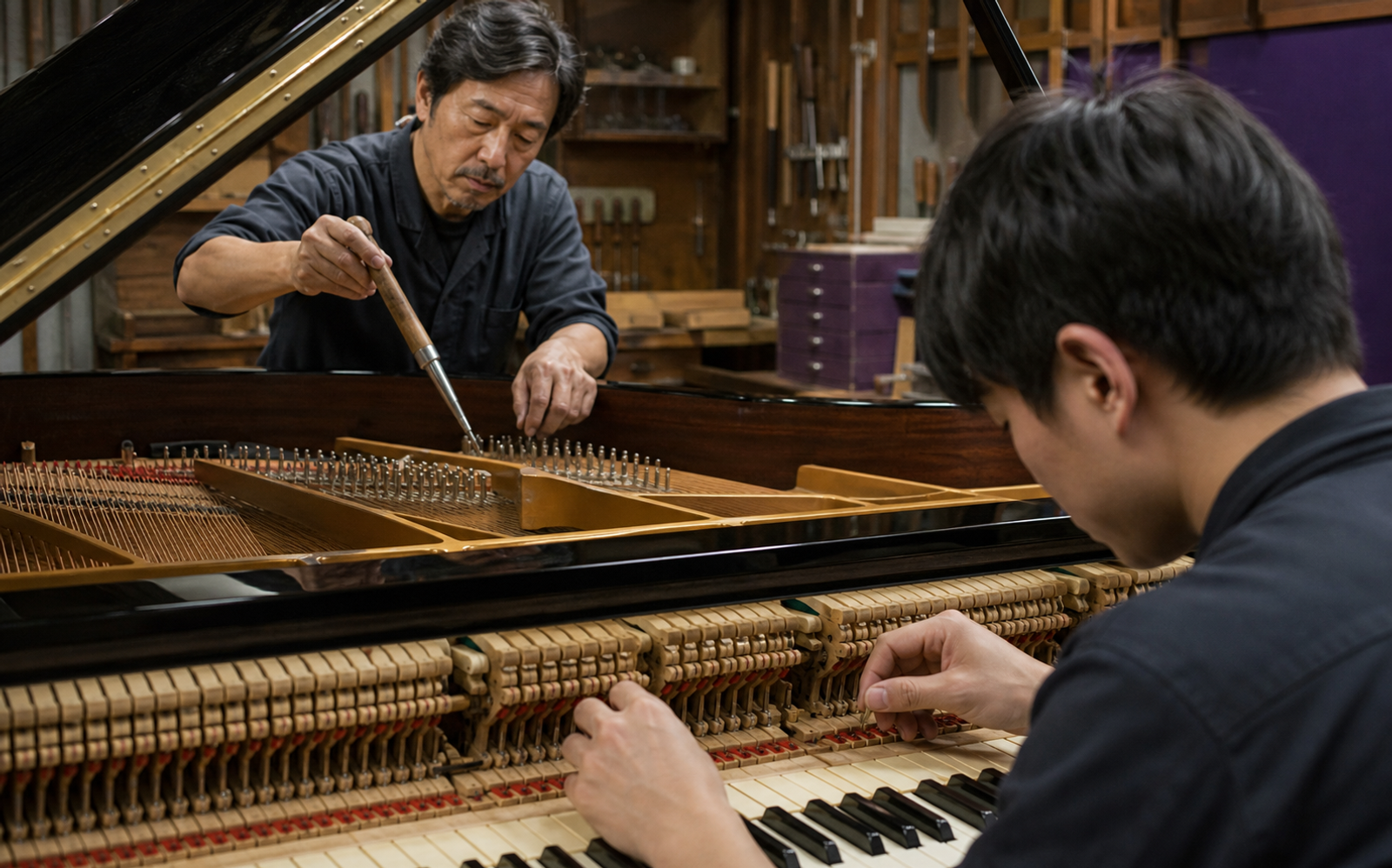
Piano craft grounds the system
Material judgment and skilled adjustment keep the broad sound-and-music promise physical.
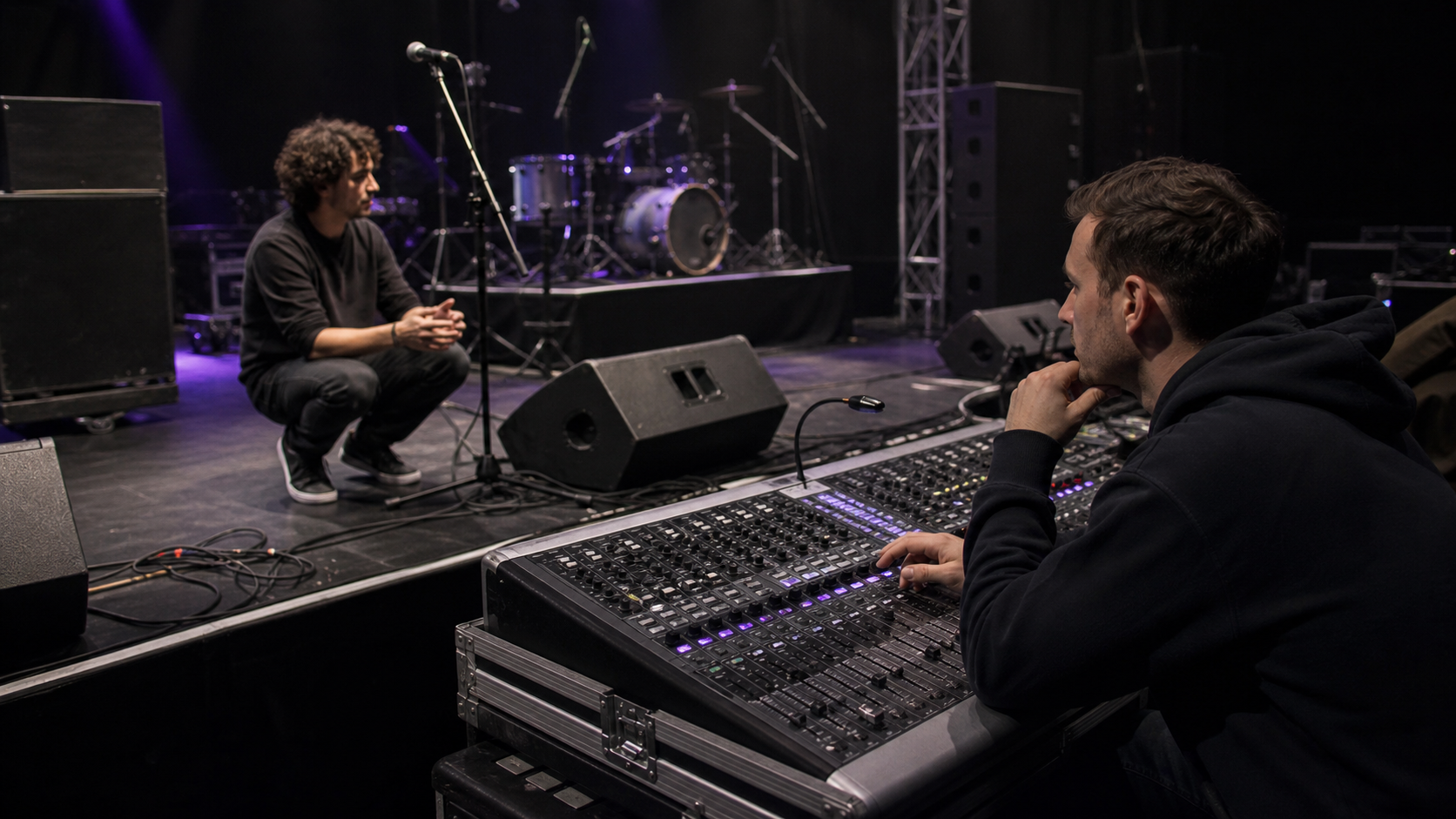
Professional audio carries the promise
The sound system has to work at performance scale, not only in product display.
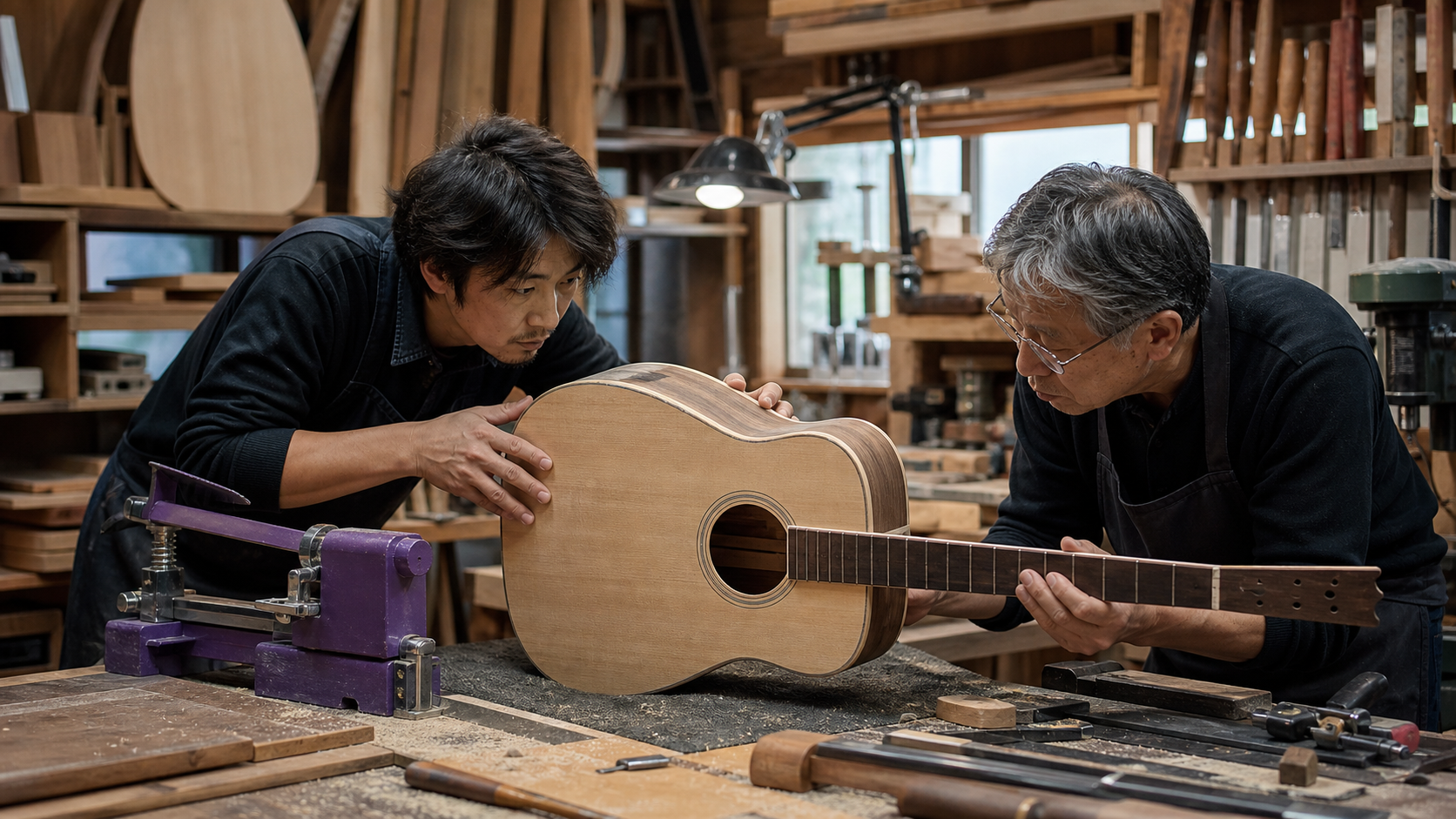
Craft keeps technology grounded
Material judgment and hand skill prevent the masterbrand from becoming generic electronics.

Creation connects products into a system
Studio use links instruments, software, monitoring, and professional audio around one job.
Product and service system
Acoustic and digital instruments, guitars, winds, strings, percussion, repair, software, and schools.
Consumer, professional, production, PA, network, communications, and automotive sound systems.
Music schools, IDs, connection services, repair, and software extend participation.
Bösendorfer, Steinberg, Line 6, Ampeg, Córdoba, and related operations deepen specialist capability.
Turning points.
Turning points show how the brand changed without losing the capability at its center.
The motorcycle division becomes an independent company and must remain outside this page.
Electronics and instrument knowledge combine in a new form.
The centennial aligns the company name with the global masterbrand.
Steinberg, Bösendorfer, and Line 6 extend creation, instrument, and audio capabilities.
The current plan joins core-business repair to sound-centered growth.
Public reaction.
Public reaction is treated as recognition strength and disclosed operating pressure, not invented sentiment scoring.
The tuning forks, instrument craft, and participation history create strong sound-and-music memory.
Reported Q1 growth benefited from yen depreciation and tariff refunds while material costs and regional uncertainty remain live pressure.
Full timeline.
Torakusu Yamaha builds an organ
The tuning fork becomes the mark
Learning and listening expand
Yamaha Motor separates
Electone production begins
Yamaha Corporation becomes the legal name
Specialist brands join the group
Rebuild & Evolve begins
Steal / avoid.
- Build breadth from a capability the customer can inspect.
- Keep the company, product brand, portfolio, and related-company boundaries explicit.
- Let history explain a current operating signal instead of using it as decoration.
- Do not let the best-known product narrow the whole company.
- Do not use portfolio or related-company finance as parent-company proof.
- Do not invent customer sentiment, testimonials, endorsements, or market-leadership claims.
Short answer.
Yamaha Corporation is a Japanese public company whose strongest brand signal is its promise to Make Waves through sound, music, craft, and participation. Its instruments, audio equipment, learning systems, and specialist brands keep that promise grounded in sound and music; separately listed Yamaha Motor remains outside the entity, finance, and product boundary.
Frequently asked questions
What is Yamaha's core brand signal?
Make Waves through sound, music, craft, and participation.
Is Yamaha a standalone public company?
Yes. Yamaha Corporation is the listed company described in the finance snapshot.
What should another brand learn from Yamaha?
A masterbrand can stretch only when each new surface keeps proving the same underlying capability.
Need help with your own brand?
Use Private brand work when your name, identity, proof, or message needs a sharper branding decision.