Brand System / Beer / Beverage / 1873-present
Heineken and the Green Bottle Export System That Made Dutch Beer Travel
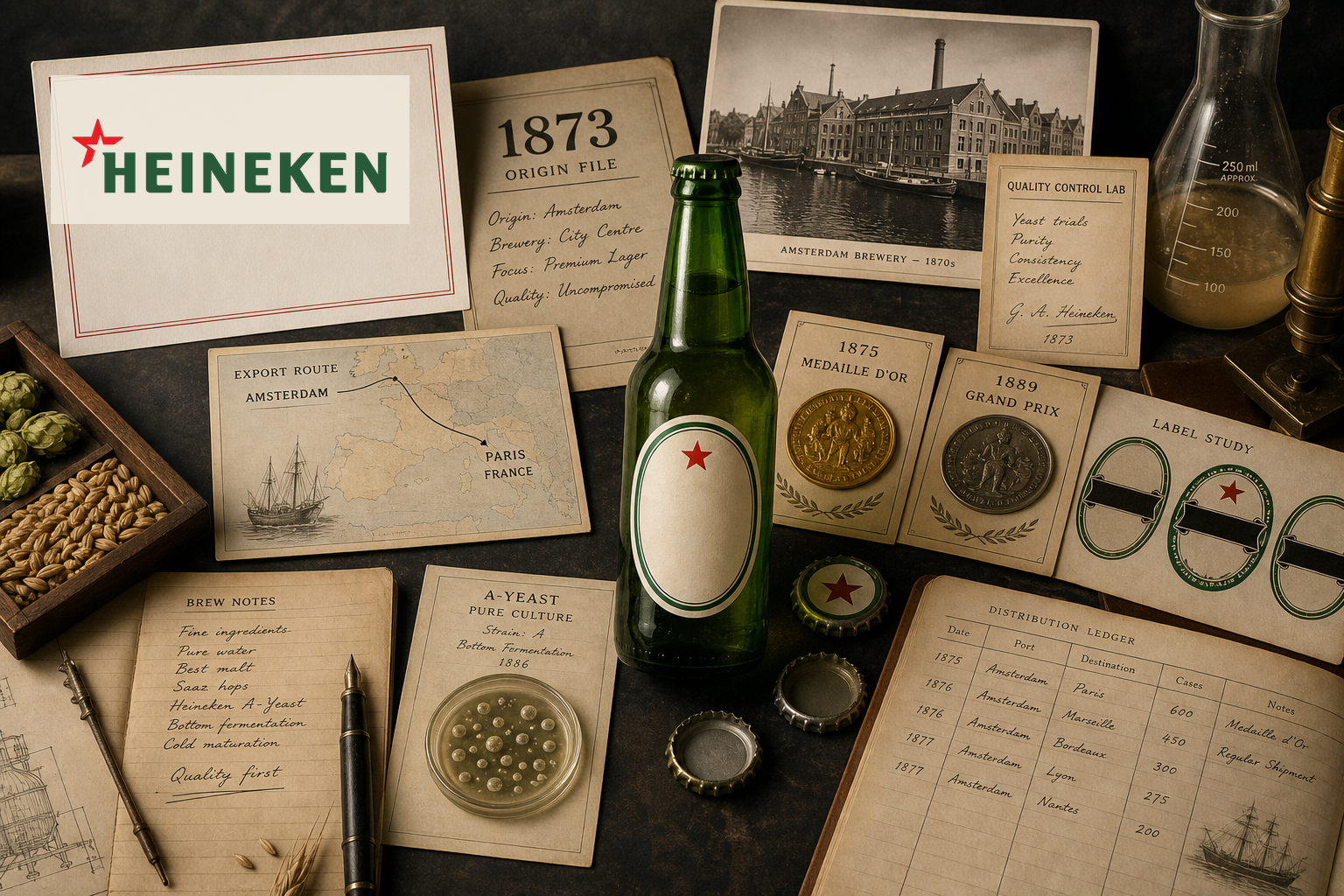
Heineken turned Amsterdam lager into an export brand by making the green bottle, red star, oval label, quality awards, A-Yeast, and bar visibility work as one recognition system.

Short Answer
Heineken and the Green Bottle Export System That Made Dutch Beer Travel is a brand system case about Heineken in 1873-present. Heineken made export beer recognizable before the customer tasted it. A beverage brand travels when quality proof and shelf recognition reinforce each other. Heineken's system made the bottle, label, red star, awards, yeast story, and Amsterdam origin carry the same promise across markets.
Key Takeaways
- Heineken says Gerard Heineken started a small family brewery in Amsterdam in 1873.
- Heineken's history page ties the brand to A-Yeast, quality awards in 1875 and 1889, and long-running brewing discipline.
- The Heineken Collection says the label has used the oval shape and green color since at least 1883, with the red star later added to the export label.
- The useful operator lesson is to make export recognition carry proof instead of decoration.
The Decision Context
Beer is a local product until the market can recognize it somewhere else. Export changes the job of the brand because the drink has to introduce itself before taste, habit, or bar loyalty can help.
Heineken's archive value sits in that export problem. Amsterdam origin, bottle color, label shape, awards, yeast, and bar visibility had to make a Dutch lager legible in other markets.
The Bottle Became The Route Marker
The green bottle and oval label did more than identify a drink. They gave the export beer a repeatable object customers could spot in shops, bars, hotel fridges, and travel settings.
That matters because beverage recognition is fast. A customer often chooses under low attention, next to many similar bottles. The bottle has to make the quality claim visible at shelf speed.
Quality Needed Public Proof
Heineken's own history uses 1875, 1886, and 1889 as proof points: an award in Paris, A-Yeast, and another Paris Grand Prix. The Collection's label history also explains how prize names became part of the label system.
Those details make the export system stronger. Awards and yeast give the green bottle something to stand for beyond color memory.
The Label Kept Getting Tuned
The Heineken Collection traces the label to at least 1883 and describes the oval shape, green color, five-point star, and black horizontal bar as enduring features. It also notes Alfred Heineken's 1954 move to put only the Heineken name on the black bar and make the e's smile.
That is a brand-system decision, not a cosmetic footnote. The label had to reduce category clutter and make one name easier to carry across markets.
The Archive Reading
Heineken belongs in the archive because it shows how export brands need portable proof. Place, bottle color, label architecture, awards, yeast, and serving visibility worked together so the beer could travel without becoming anonymous.
For operators, the lesson is to make recognition and evidence move together. A recognizable package can open the door, but the proof system has to give people a reason to keep choosing it.
Comparable Cases
Sources
.png)
People Also Ask
What happened to Heineken?
Heineken and the Green Bottle Export System That Made Dutch Beer Travel is a brand system case about Heineken in 1873-present. Heineken made export beer recognizable before the customer tasted it. A beverage brand travels when quality proof and shelf recognition reinforce each other. Heineken's system made the bottle, label, red star, awards, yeast story, and Amsterdam origin carry the same promise across markets.
Why is Heineken a brand system case?
Heineken is filed as a brand system case because the visible consequence sits in that decision pattern. Heineken made export beer recognizable before the customer tasted it.
What can brands learn from Heineken?
A beverage brand travels when quality proof and shelf recognition reinforce each other. Heineken's system made the bottle, label, red star, awards, yeast story, and Amsterdam origin carry the same promise across markets.
Is Heineken still operating?
The Brand Archive marks Heineken as Active / continuing. That means the brand, company, platform, product system, or parent organization is still operating, continuing, or being actively resolved.
What should Heineken be compared with?
Compare Heineken with Guinness, Modelo, Corona to see the same decision pattern from nearby cases.