Growyourbrand.net Reference notes on brand consequence May 2026
The Brand Archive

Pivot / Health technology / Consumer electronics / 1891-present

Philips and the Health Technology Pivot That Carried A Lighting Name Into Care

Philips began with electric light bulbs in Eindhoven, then moved its public center of gravity toward health technology while the Philips name kept living on licensed lighting and consumer products.

Source mark Philips wordmark from the Philips media library
Archive visual Premium editorial archive still-life of a Philips health technology pivot case with Philips source-mark card, Eindhoven 1891 origin file, incandescent bulb, X-ray tube study card, ultrasound probe, patient monitor waveform, personal-care device, and lighting brand licensing ledger
Philips wordmark from the official Philips media library paired with The Brand Archive rights-safe health technology pivot visual.

Short Answer

Philips and the Health Technology Pivot That Carried A Lighting Name Into Care is a pivot case about Philips in 1891-present. Philips turned a lighting origin into a health-technology proof system. A pivot works only when the new category has proof strong enough to carry old memory. Philips had to make diagnosis, treatment, connected care, and personal health more legible than the consumer-electronics breadth many people still remembered.

Key Takeaways

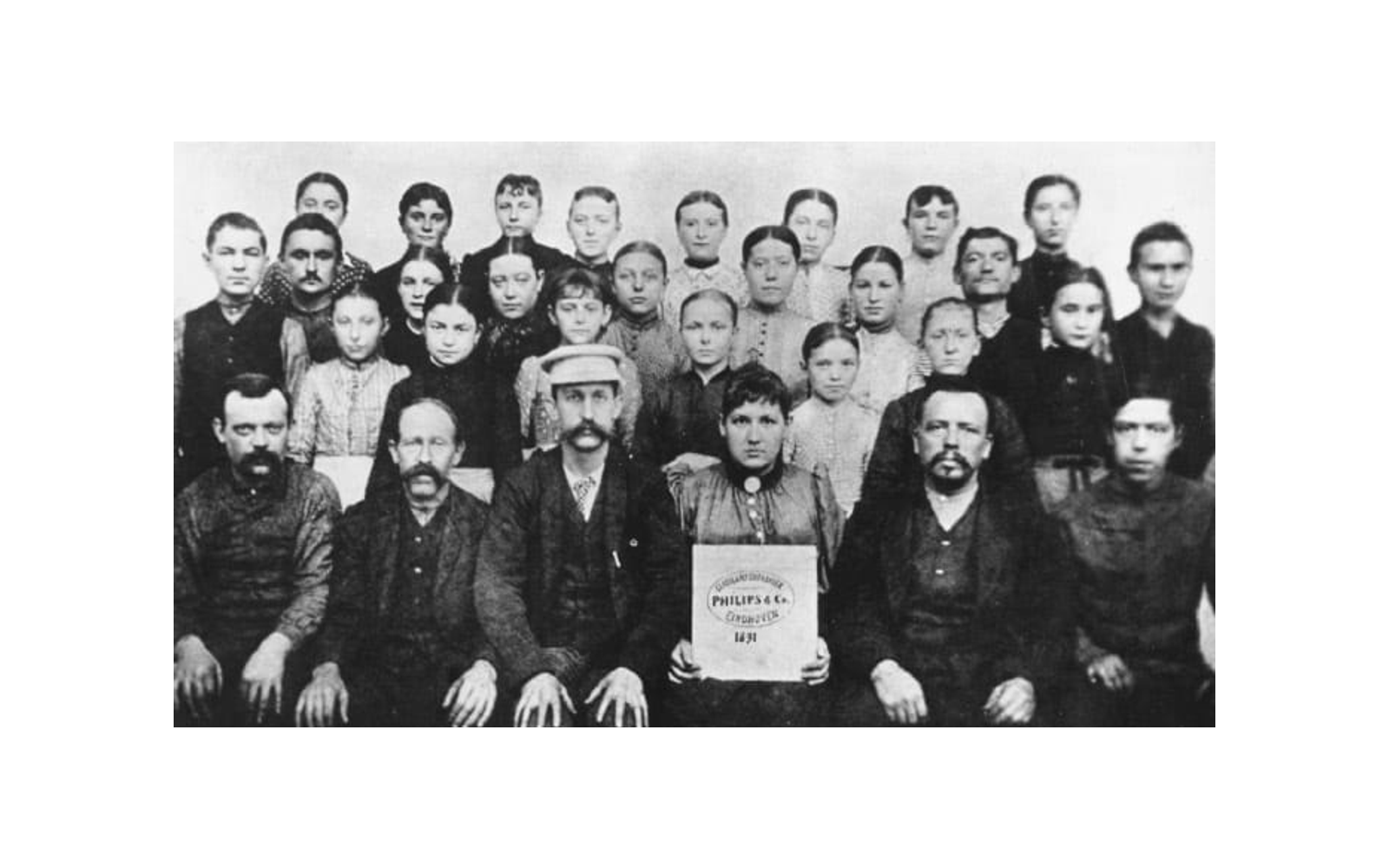
  • Philips traces its origin to Eindhoven in 1891, when Frederik Philips and Gerard Philips started making electric incandescent light bulbs.
  • Philips says X-ray tube work from its early research lab became the origin of its involvement in health technology.
  • The Philips brand still appears in licensed fields such as lighting, television, audio, and domestic appliances after divestments.
  • The useful operator lesson is to separate inherited recognition from current operating proof.

The Decision Context

Philips is not a clean single-category brand in public memory. The name can still call up light bulbs, radios, shavers, televisions, medical systems, oral care, and hospital equipment.

That breadth became the brand problem. A company can carry a familiar name for more than a century, but the market still needs to know what the name is now responsible for.

The Old Category Became A Trust Reserve

The 1891 light-bulb origin still matters because it gives Philips an engineering memory. The early research story also gives the health-technology pivot a bridge: lighting, tubes, imaging, devices, and care all depend on controlled physical proof.

That does not mean the old category can explain the new one by itself. A bulb is memory. A patient monitor, imaging system, care platform, or personal-health device has to earn trust in a more regulated and higher-risk setting.

Licensing Made The Name More Complicated

Philips says the brand is used by external parties in lighting, television, audio, and domestic appliances under fixed-term licensing agreements. Philips also announced in 2018 that Philips Lighting had become Signify while continuing to use the Philips brand for lighting products under license.

That makes the public signal harder to govern. The same name can appear on products that no longer sit inside the same operating company. The archive lesson is not that licensing is wrong. The lesson is that brand recognition and operational accountability can drift apart unless the company explains the boundary.

Health Technology Needed Its Own Evidence

The current Philips story has to be proven through care objects and care workflows: imaging, ultrasound, patient monitoring, connected care, informatics, oral health, and personal-care routines.

The pivot becomes credible when those proof objects are clearer than the old electronics sprawl. Diagnosis, treatment, connected care, and personal health give the brand a new filing system for what it does.

The Archive Reading

Philips belongs in the archive because it shows the cost of a long-lived name. Recognition can survive category exits, licensing, and reinvention, but it can also leave old meanings attached to the new company.

For operators, the lesson is to keep the proof layer current. If the market remembers what you used to make, the new category must show exactly what you now make true.

Comparable Cases

Sources

  1. Philips, Our history
  2. Philips, Our brand
  3. Philips, Philips Lighting is now Signify
  4. Philips 2025 annual results
  5. Philips wordmark media library

People Also Ask

What happened to Philips?

Philips and the Health Technology Pivot That Carried A Lighting Name Into Care is a pivot case about Philips in 1891-present. Philips turned a lighting origin into a health-technology proof system. A pivot works only when the new category has proof strong enough to carry old memory. Philips had to make diagnosis, treatment, connected care, and personal health more legible than the consumer-electronics breadth many people still remembered.

Why is Philips a pivot case?

Philips is filed as a pivot case because the visible consequence sits in that decision pattern. Philips turned a lighting origin into a health-technology proof system.

What can brands learn from Philips?

A pivot works only when the new category has proof strong enough to carry old memory. Philips had to make diagnosis, treatment, connected care, and personal health more legible than the consumer-electronics breadth many people still remembered.

Is Philips still operating?

The Brand Archive marks Philips as Active / continuing. That means the brand, company, platform, product system, or parent organization is still operating, continuing, or being actively resolved.

What should Philips be compared with?

Compare Philips with Panasonic, Sony, Dyson to see the same decision pattern from nearby cases.