problem reading
Why Your Brand Isn't Working
Use this before buying a logo change, rebrand, website redesign, message rewrite, or agency proposal.
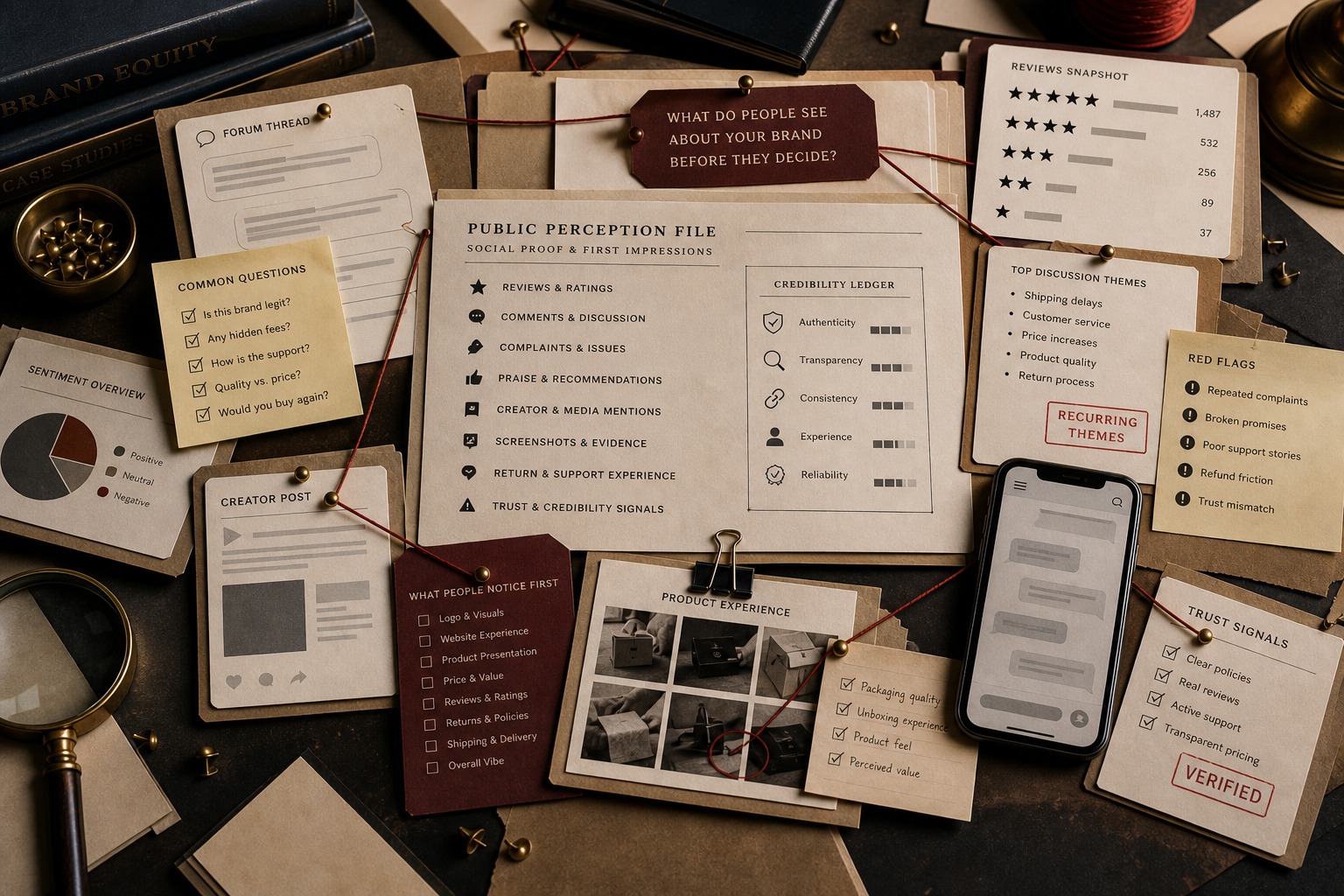
Direct answer
A brand usually stops working at one layer first: the offer, proof, category, recognition, route to buyer, trust moment, or public source trail. Do not buy the visible fix until the broken layer is named.
What to remember
- Name the broken layer before buying the fix.
- A weak brand may have a strong logo and a weak proof trail.
- A weak page may have traffic and still fail because the buyer route is wrong.
- If the diagnosis is unclear, the next step is an audit, not a redesign brief.
Diagnostic board
Find the broken layer
Score each layer 0 to 3. The lowest layer decides what to fix first.
- 0
- missing
- 1
- weak
- 2
- usable
- 3
- strong
Buyer
Can a real buyer recognize that this is for them?
Role, trigger, urgency, cost of wrong choice, and the words they already use.
Offer
Can they tell what is being chosen and what happens next?
Offer name, outcome, boundary, next step, and non-fit rule.
Alternative
Can they tell what this replaces?
Competitor, old vendor, spreadsheet, internal workaround, search result, or doing nothing.
Proof
Can they inspect evidence before a call?
Case, review, source, demo, receipt, support record, product behavior, or operating proof.
Route
Does the page lead to the right money or decision page?
Internal links, CTA, contact boundary, tool path, page title, and next action.
Memory
Can they remember one useful cue tomorrow?
Name, phrase, visual cue, product behavior, guarantee, category term, or proof object.
Failure signs
Symptoms that mislead teams
The visible symptom is often not the first broken layer.
Traffic without action
The page is findable, but the reader does not know what decision to make next.
Fix the route, not the hero line.
Nice design, weak belief
The brand looks polished, but the buyer cannot verify the claim.
Add proof before new language.
Loud claim, wrong frame
The message sounds strong inside the company and generic beside competitors.
Fix category and alternative.
Rebrand pressure
The team wants a new identity because the current page cannot sell the problem.
Audit the weak answer first.
Score verdict
Diagnosis verdict
Do not average away the lowest layer. That layer becomes the next work order.
-
0 in any layer
No redesign yet
The page cannot brief creative work because one buying answer is missing.
-
1-7
Broken foundation
Rewrite buyer, offer, alternative, and proof before touching identity.
-
8-12
Repair route
The brand can become useful if the page points to a decision and proof.
-
13-16
Sharpen proof
Use specific evidence and competitor contrast to make the position hold.
-
17-18
Protect and scale
The brand works. Improve distribution, linking, and memory cues.
Decision file
Five failure layers
The page should make the first real problem visible.
- Offer
- The buyer cannot tell what is being chosen, for whom, or why now.
- Proof
- The claim asks for more belief than the public evidence can carry.
- Category
- The brand is compared with the wrong alternatives.
- Recognition
- The cues are too weak, too generic, or already being removed.
- Route
- Search, AI summaries, website paths, and internal links send buyers away from the money page.
Evidence on the table
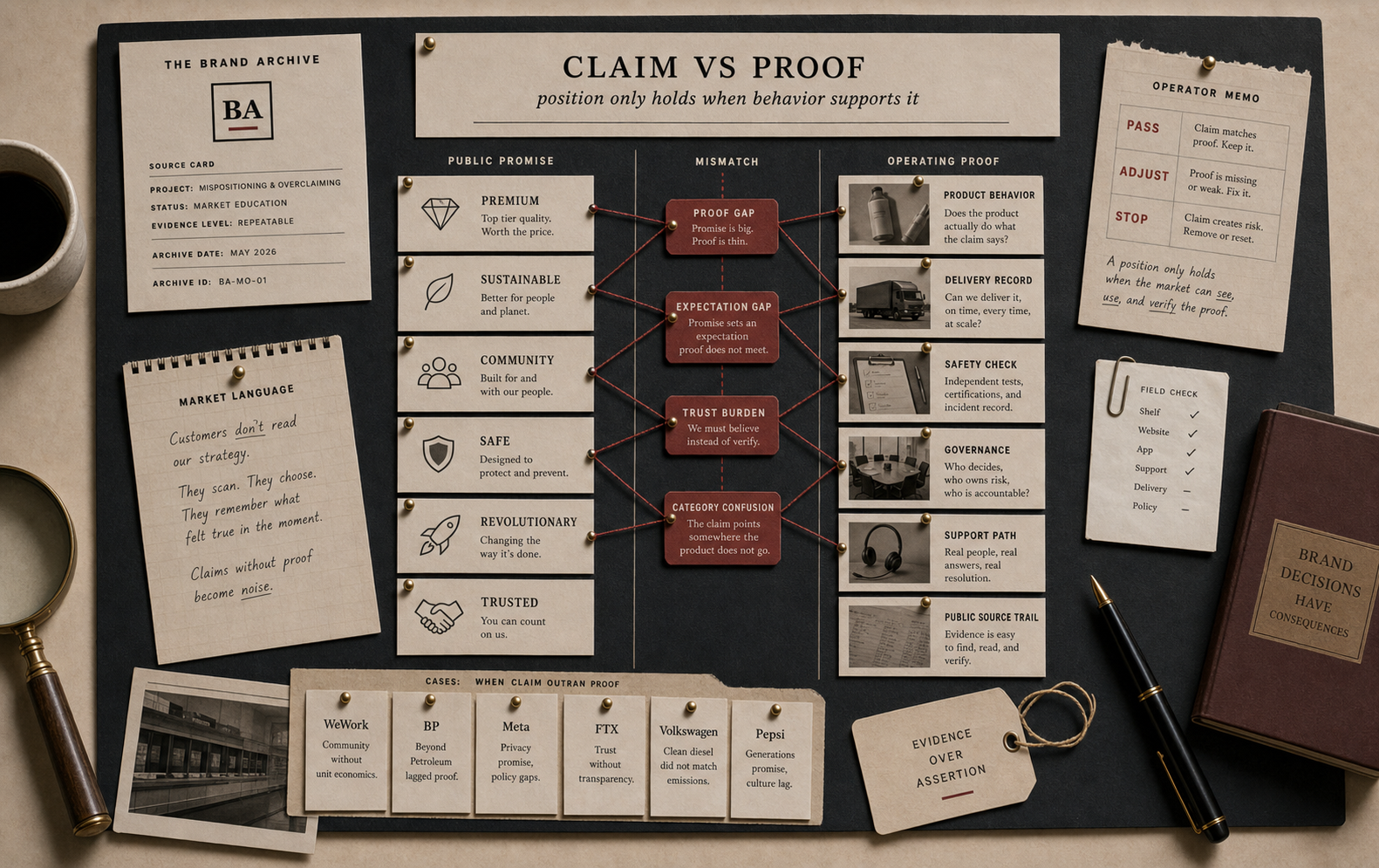
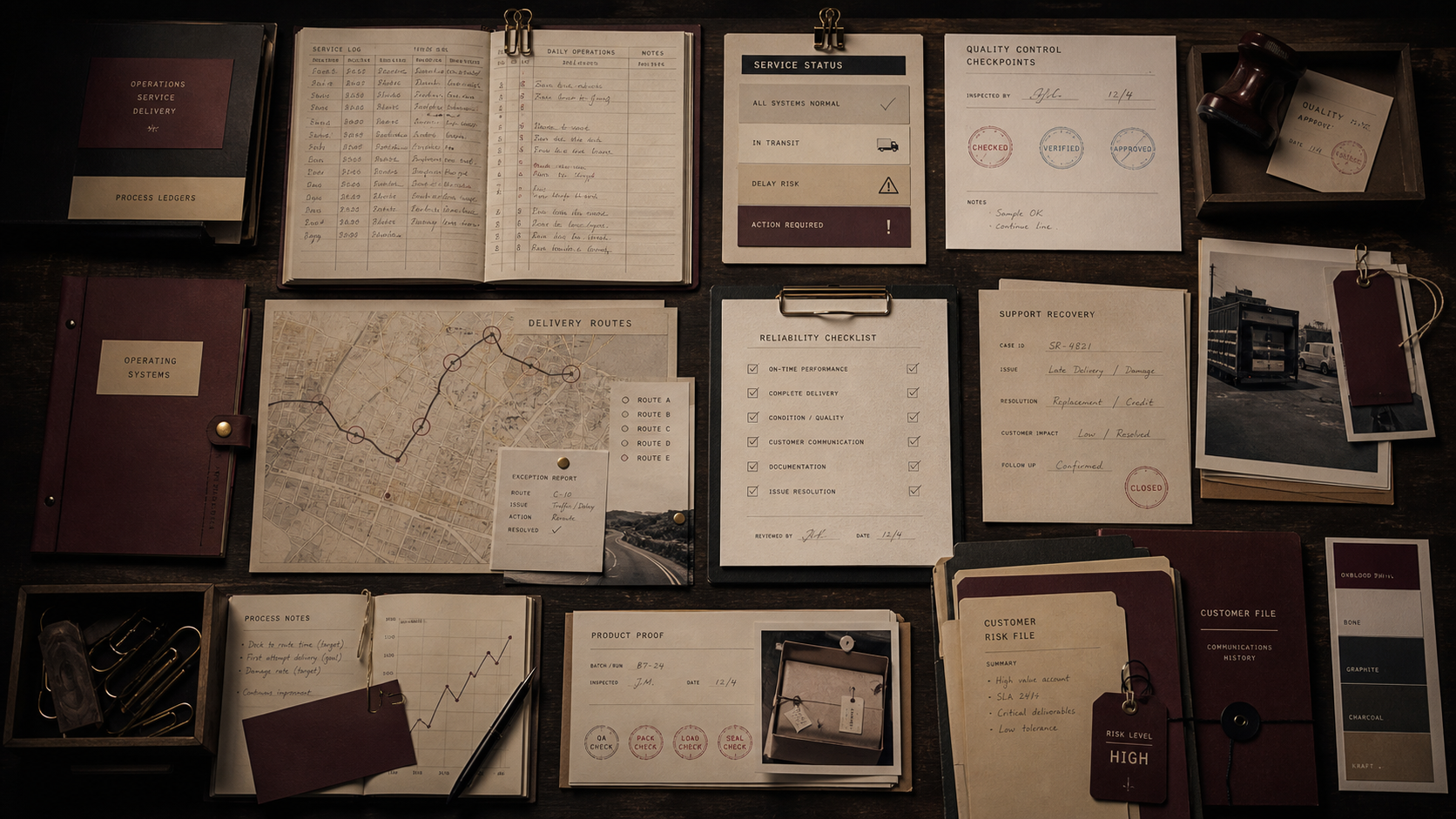
Proof examples
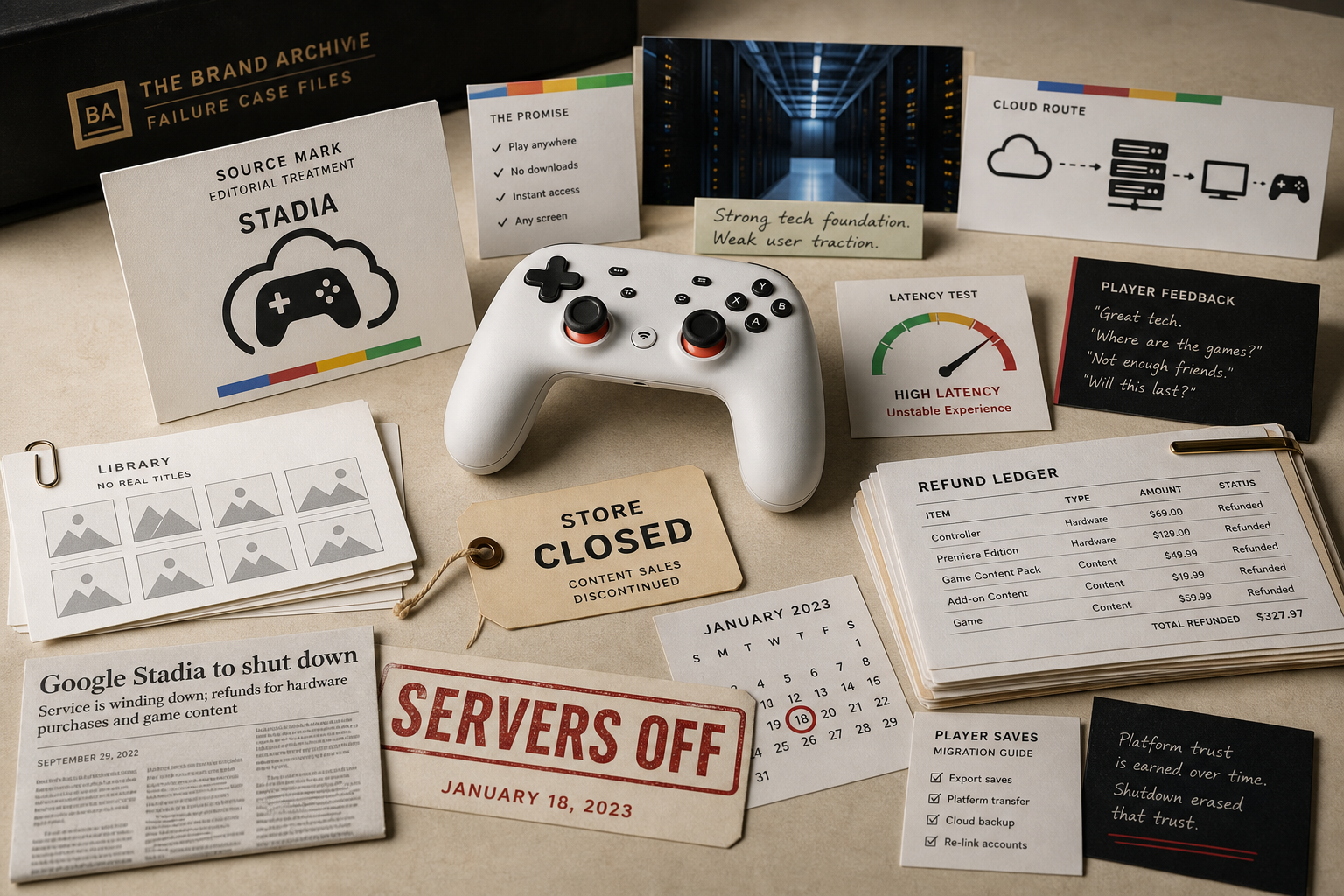
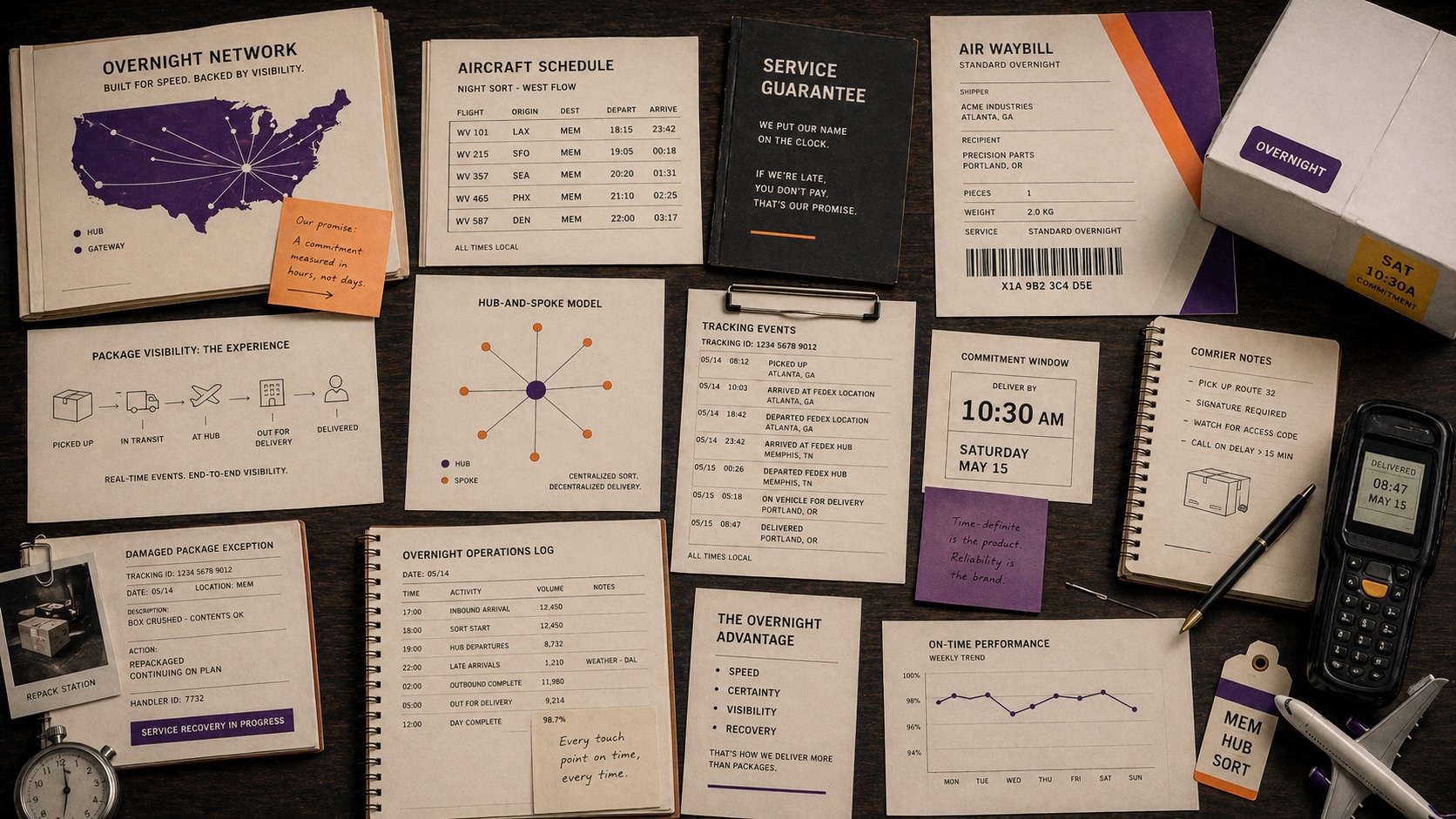
Examples of broken layers
Different problems need different fixes.
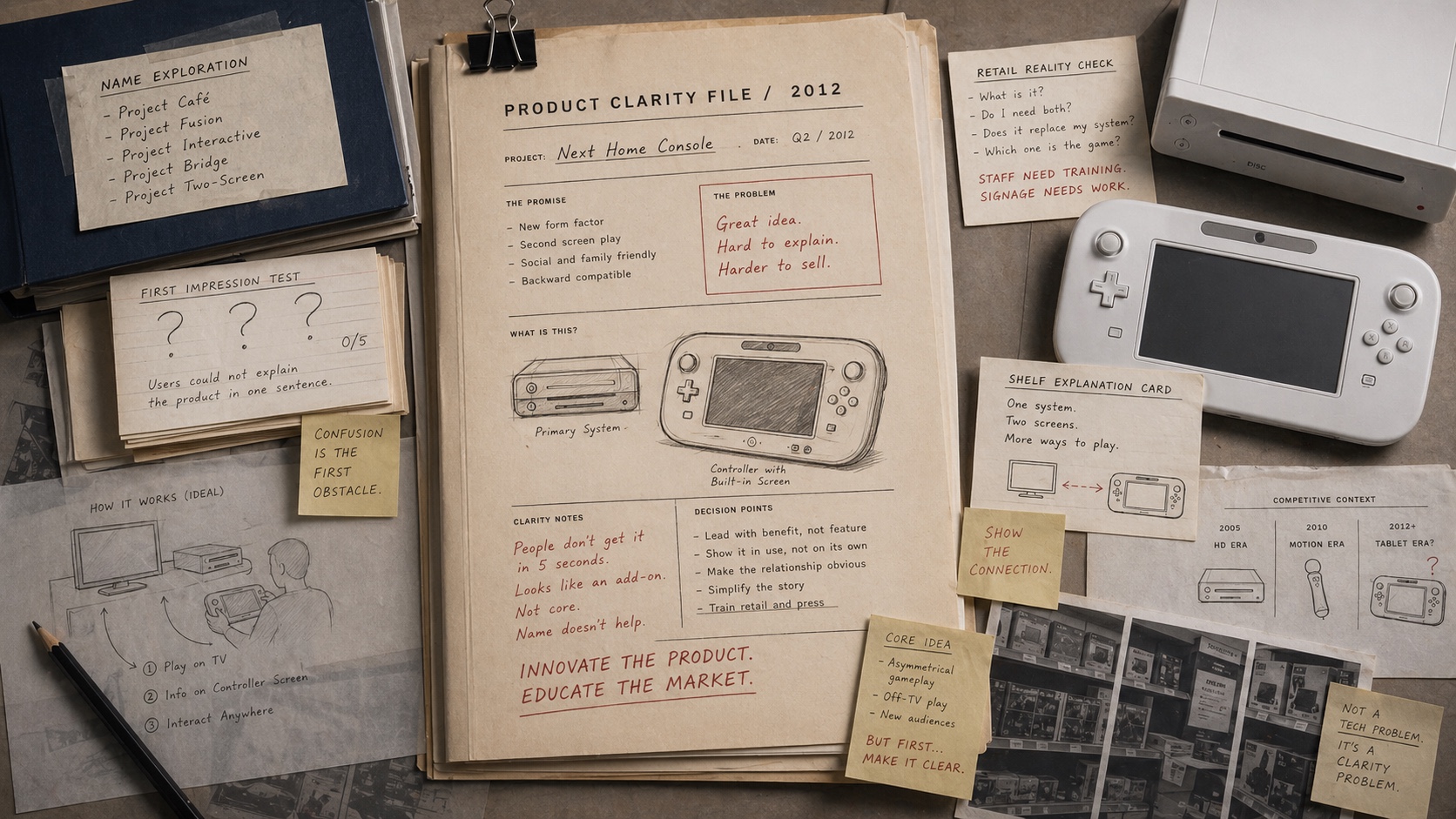

Run the problem reading
Write one sentence for the business problem, one for the buyer problem, and one for the public signal that makes the problem visible. If those three sentences do not match, the brand work is already drifting.
Then inspect the page, search result, AI answer, proof case, competitor route, and proposal. The weak point is usually visible before a new creative direction appears.
When the answer is no rebrand
If customers already recognize the brand but do not believe the claim, the problem is proof. If customers believe the proof but compare the company with the wrong alternative, the problem is positioning.
If the page earns attention but no useful action, the problem may be the commercial route. A logo change will not fix that.
Decision route
Choose the fix by layer
Each diagnosis should send the reader to a different next page.
Related pages
Next diagnostic
Turn the diagnosis into a decision
Use the checklist first. If the result points to a live brand decision, send the file through protected contact.
FAQ
Why is my brand not working?
The common causes are weak proof, unclear offer, wrong category frame, weak recognition, trust friction, poor buyer route, or a public record that AI and search cannot read cleanly.
Should I redesign the logo first?
Only if the logo is the broken layer. Many brand problems sit in proof, offer, category, website, or source trail.
What should I prepare before asking for help?
Prepare the current page, the proposed change, competitor pages, customer proof, search results, AI answer screenshots, and the cost of being wrong.