Brand System / Creative software / documents / AI / 1982-present
Adobe and the Creative Tool Trust System
Adobe turned creative software into professional infrastructure, then had to protect user trust as subscriptions, cloud files, collaboration, PDF workflows, and generative AI changed the work surface.

Short Answer
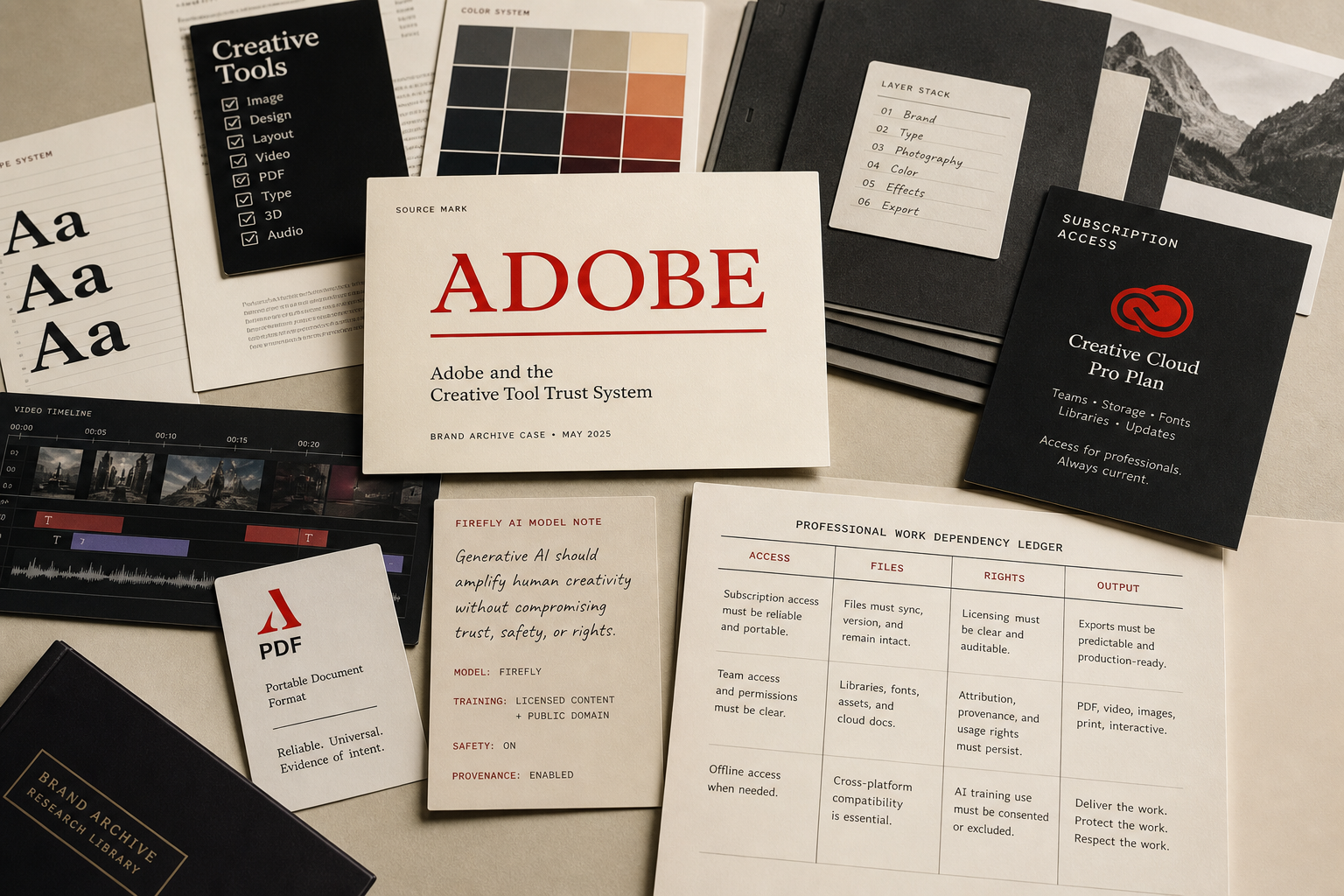
Adobe and the Creative Tool Trust System is a brand system case about Adobe in 1982-present. Adobe made creative work depend on a tool system, not one application. A professional tool brand has to protect control. Access, files, rights, export quality, collaboration, and AI provenance become part of the brand promise.
Key Takeaways
- Adobe is broader than one creative application. The brand sits across imaging, design, video, documents, cloud services, and professional workflows.
- Creative Cloud changed the customer relationship from purchased software to continuing access.
- The existing Creative Cloud case covers the 2013 subscription pivot; this broader file covers the trust system around professional dependence.
- Firefly and generative AI add a new trust burden around rights, provenance, training data, and production readiness.
- The operator lesson is to treat tools as infrastructure once customers build their work around them.
The Decision Context
Adobe became part of professional work because designers, photographers, editors, marketers, publishers, document teams, and agencies built repeatable output around its tools.
That kind of brand position is useful and fragile. When people depend on the files, exports, fonts, color, layers, documents, and team workflows, every change in access or rights feels like a change in the work itself.
Tools Became Work Infrastructure
A creative app can be loved for features. A creative infrastructure brand is judged by whether teams can keep producing work without losing control. That means file durability, predictable exports, cross-tool movement, collaboration, storage, rights, and support.
Adobe's brand strength comes from that dependence. The same dependence also raises the cost of mistrust.
AI Raised The Rights Question
Firefly gave Adobe a way to frame generative AI through production use, commercial confidence, and creative control rather than novelty alone.
For a creative-tool brand, that distinction matters. Professionals need to know what they can use, who has rights, what the model learned from, and whether the output can survive client, legal, and platform review.
The Archive Reading
Adobe belongs in the archive because it shows how a software brand becomes a professional trust system after customers build their work around it.
For operators, the lesson is to protect user control before expanding the tool. The more work depends on the brand, the more access, rights, and continuity become brand assets.
Comparable Cases
Sources
People Also Ask
What happened to Adobe?
Adobe and the Creative Tool Trust System is a brand system case about Adobe in 1982-present. Adobe made creative work depend on a tool system, not one application. A professional tool brand has to protect control. Access, files, rights, export quality, collaboration, and AI provenance become part of the brand promise.
Why is Adobe a brand system case?
Adobe is filed as a brand system case because the visible consequence sits in that decision pattern. Adobe made creative work depend on a tool system, not one application.
What can brands learn from Adobe?
A professional tool brand has to protect control. Access, files, rights, export quality, collaboration, and AI provenance become part of the brand promise.
Is Adobe still operating?
The Brand Archive marks Adobe as Active / continuing. That means the brand, company, platform, product system, or parent organization is still operating, continuing, or being actively resolved.
What should Adobe be compared with?
Compare Adobe with Adobe Creative Cloud, Figma, Canva to see the same decision pattern from nearby cases.