BP
Responsibility language raised scrutiny because operating proof still mattered.
Branding guide · evidence and decision
A slogan concentrates attention. If the proof is thin, that attention concentrates doubt.
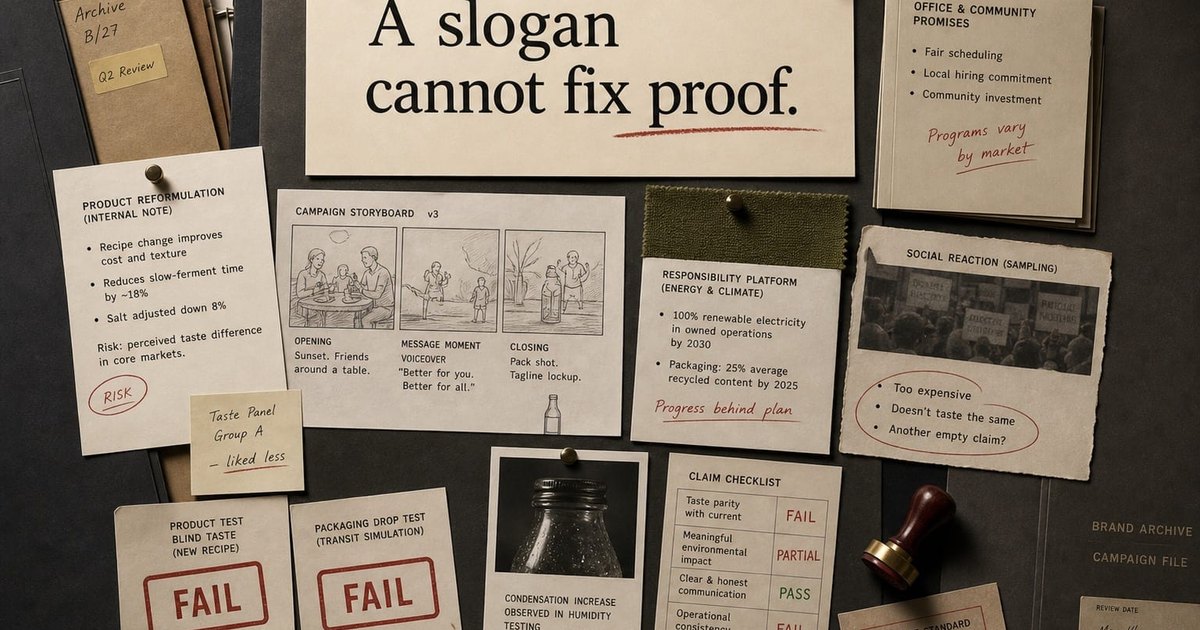
decision · proof · use
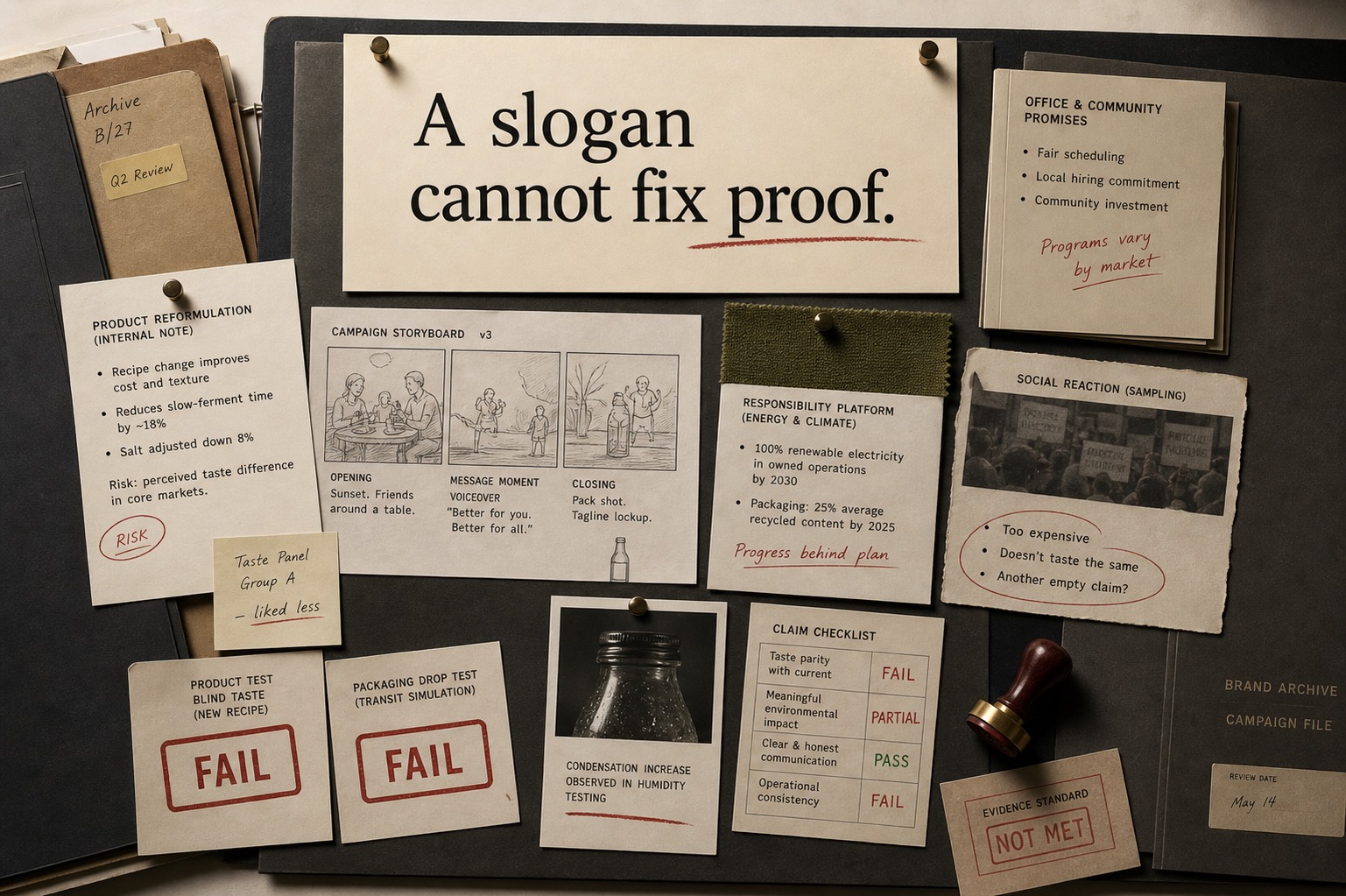
Language fails when the product, behavior, or public record cannot support it.
A slogan concentrates attention. If the proof is thin, that attention concentrates doubt.
List the old cue, the new cue, the reason for change, the proof behind it, the customer reaction risk, and the stop rule. Missing proof means delay.
Responsibility language raised scrutiny because operating proof still mattered.
A unity message failed because the cultural proof was not there.
The message worked because product reform made the claim inspectable.
Audience signal became the public meaning faster than the brand could control the reading.
Community language could not carry model and governance doubt.
Use A Slogan Cannot Fix Proof to decide what should be protected before approving a visible change.
Turn the lesson into a buyer-facing proof point, not another vague claim.
Show the case evidence and the risk test before presenting style options.
No. A slogan can focus proof, but it cannot replace product, service, trust, or behavior.
A slogan works when customers can connect it to something the company repeatedly proves.
They backfire when the line makes a gap easier to see.
Use it to run a real brand test: List the old cue, the new cue, the reason for change, the proof behind it, the customer reaction risk, and the stop rule. Missing proof means delay.