Apple Brand Signal Card · Part of Grow Your Brand · Iconic / Ecosystem Value System · Product Ecosystem, Premium Signal, Services Platform, Design Discipline
Apple Brand Signal Card
Apple turns product ecosystems, services, and design restraint into market value. A Brand Signal Card for Apple Inc.: the Apple mark, product-family architecture, iPhone scale, Mac and iPad continuity, Services, retail, privacy signal, premium pricing, and the way a restrained master brand can still use product-line color without losing company-level focus.
Positioning, name, and architecture.
Three sourceable checks every Brand Signal Card needs before the page talks about scale, color, or public reaction.
A restrained master brand whose products, services, retail, software, privacy cues, and premium pricing reinforce one company-level ecosystem.
Apple positions premium technology as an integrated company system: hardware, software, services, retail, privacy cues, and design restraint working together.
For: Customers and businesses who want devices, services, stores, privacy cues, and support to feel like one premium technology system.
Judged against: Global consumer-technology ecosystems judged against Samsung, Microsoft, Google, Huawei, Dell, and other device, platform, and services systems.
- The iPhone, Mac, iPad, Watch, Services, retail, and support system keep the brand measurable beyond one product line.
- Apple's 2025 and 2026 filings show scale that cannot be explained by one campaign or one Mac model.
- The 1997-2001 comeback remains a proof episode because it showed how Apple repairs meaning through product and channel behavior.
Apple is a simple object name carried by Apple Inc.; the brand has repeatedly repaired and expanded what the name means through product and ecosystem proof.
Not enough source information yet.
Name type: simple object name / company ecosystem
- 1997: Think Different
- 1998: iMac made the comeback visible
- current company read: The ecosystem and product families carry the brand more than one slogan.
branded house with product-family proof
The Apple name carries the company promise while device families, services, retail, software, privacy cues, and support make the proof specific.
Parent: Apple Inc.
- iPhone
- Mac
- iPad
- Apple Watch
- Apple Vision Pro
- Services
- Apple Store
Market and scale snapshot.
This section reads Apple as Apple Inc., not one Mac model or one campaign era: current market value method, FY2025 scale, FY2026 half-year signal, and the share base behind the estimate.
FY2025 net sales from Apple SEC company facts for fiscal year ended September 27, 2025.
FY2025 net income from Apple SEC company facts; operating income was USD 133.050B.
Nasdaq last sale USD 293.08 on June 24, 2026 multiplied by Q2 FY2026 common shares outstanding.
Nasdaq-listed Apple Inc.; common shares outstanding from Q2 FY2026 SEC company facts.
Company palette and product-line color strategy.
The page keeps Apple's master brand restrained: near-black, UI gray, light gray, silver, and white. Product lines can still use color as a choice cue, but color belongs to the product strategy, not a random page accent.
Recognition assets.
Memory pieces the brand can use before someone finishes a sentence.
Think Different
The campaign worked because it named a belief the business then had to prove.
Fewer, clearer products
Focus became visible when the product system stopped asking customers to decode too much internal complexity.
iMac
The comeback needed a product ordinary buyers could recognize without reading a turnaround plan.
Scores.
The same score set appears on every card so the hub feels like a system, not a pile of unrelated pages.
The Apple mark, product families, retail presence, and ecosystem are immediately legible.
The company has visible proof in product families, Services, retail, filings, and premium price behavior.
The brand is strong because restraint repeats across hardware, software, services, retail, and support.
The iMac remains one proof episode, but current product proof is broader than Mac.
The brand weakens when the product ecosystem feels incremental, extractive, or slower than buyer expectations.
The company entity is clear when the card treats Apple Inc. first and the comeback as one proof chapter.
Apple remains one of the clearest public examples of brand recovery through product focus.
Many brands copy the attitude and miss the operating discipline.
Logo evolution with actual image slots.
Images are loaded as editorial logo-history references. The timeline needs visual memory, not only text.
Source mark shown for editorial identification on a contained raster canvas. source
Product / comeback lineage.
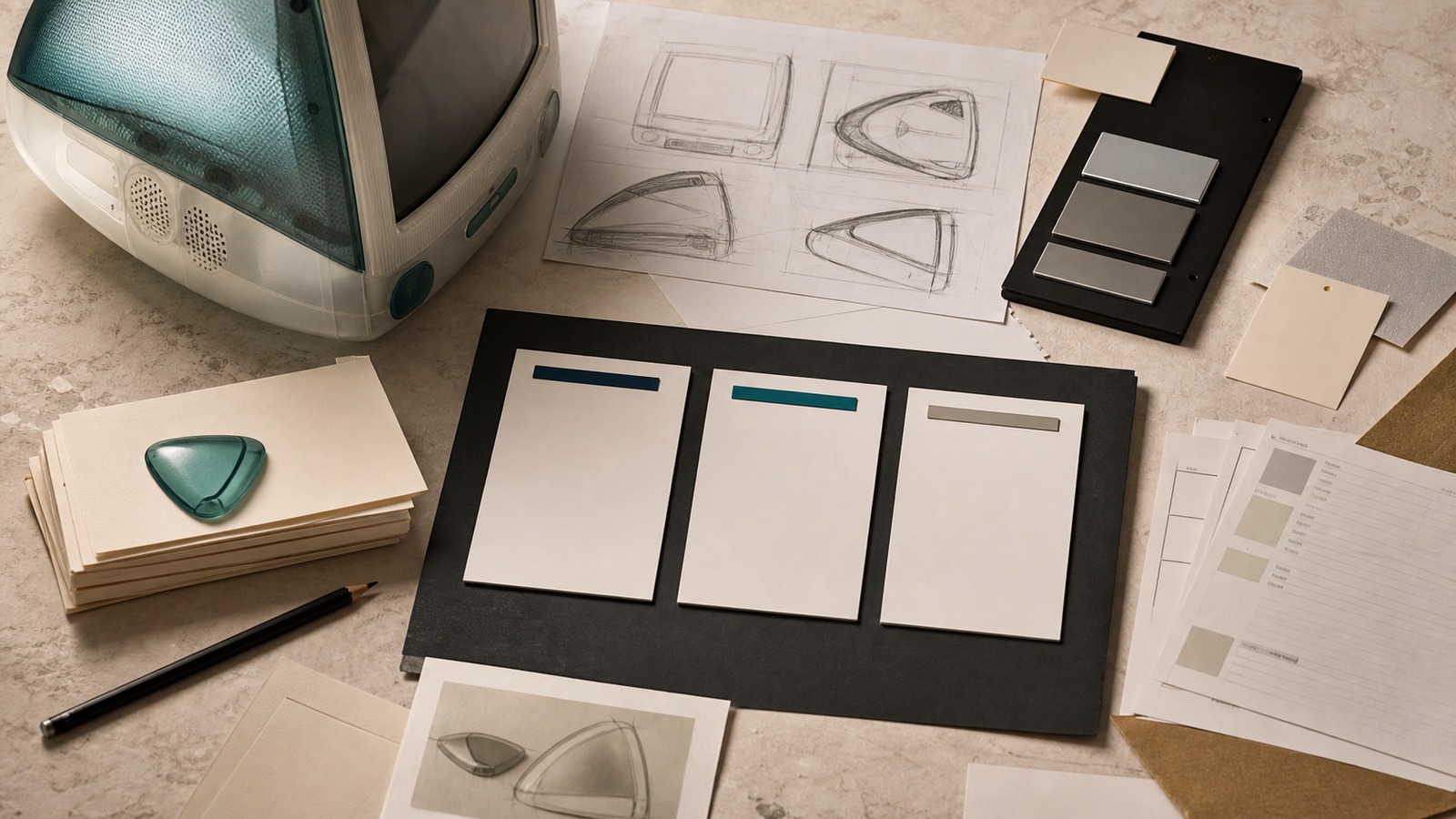
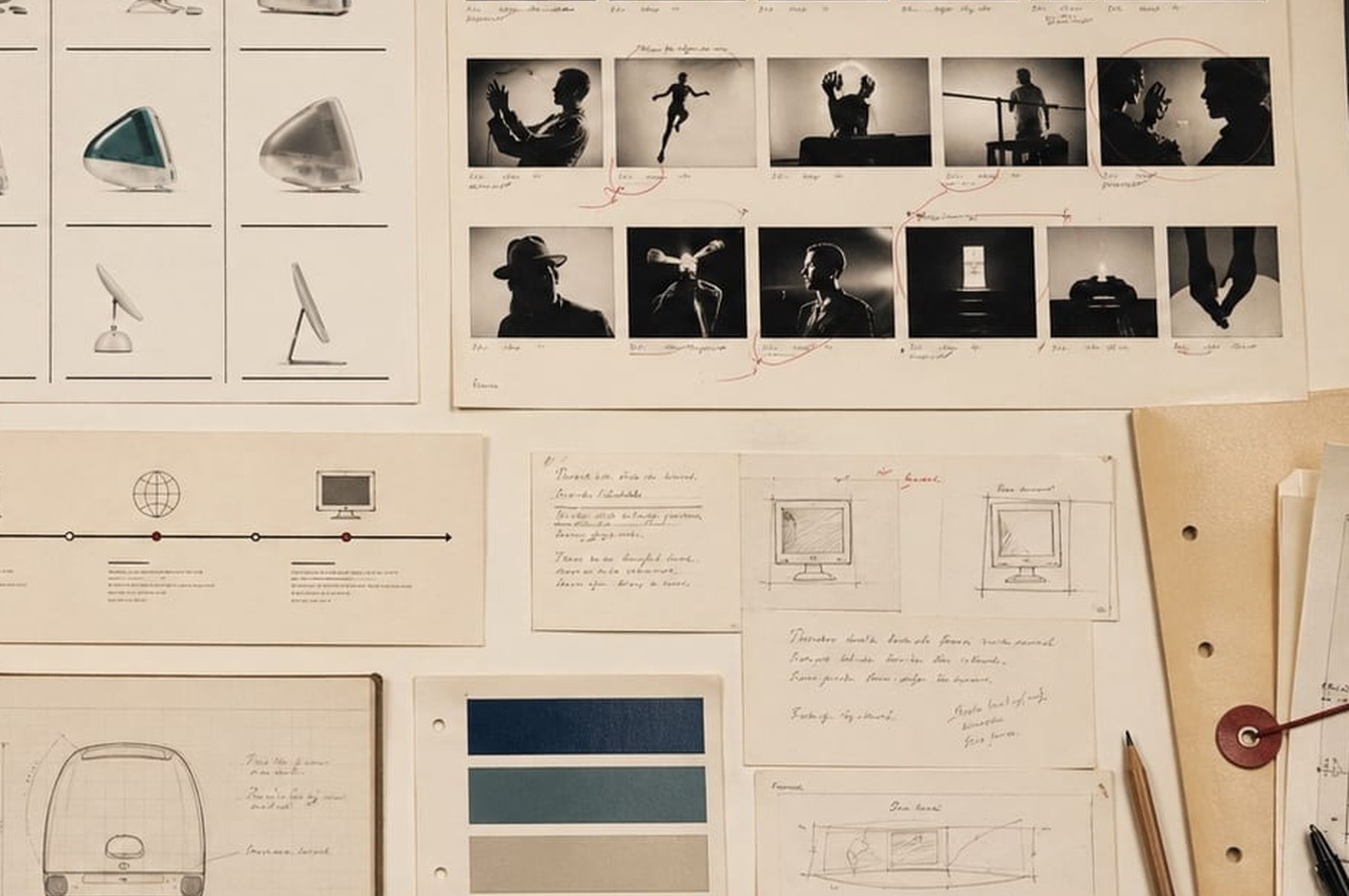
The useful Apple lesson is not nostalgia for one campaign. It is the sequence from belief, to operating reset, to product proof.
September 1997
Apple launches Think Different and publicly frames the campaign as a return to core values.
Signal impact: message names the promise
November 1997
Apple describes a new direction around design, build, and sell discipline, including G3 systems and the online Apple Store.
Signal impact: operation starts proving focus
January 1998
Apple reports a quarterly profit after losses, giving the comeback a measurable proof point.
Signal impact: business proof appears
May 1998
Apple introduces iMac, turning the recovery into a visible product for ordinary buyers.
Signal impact: product makes promise tangible
April 2001
Apple announces it has shipped the five-millionth iMac.
Signal impact: launch proof becomes durable
Event board.
Turning points only: message, focus, channel control, product proof, and the risk of belief outrunning reality.
Message before proof
Think Different arrived before the full product system had caught up, which made it emotionally powerful but strategically risky.
Impact: A campaign can open the door, but it cannot be the house.
Operating reset
G3 systems, online selling, and build-to-order language showed the company changing how the promise was delivered.
Impact: Focus moved from copy into behavior.
iMac object proof
The iMac gave customers a visible answer to the question of what the comeback looked like.
Impact: A product carried meaning faster than more explanation.
Copycat danger
The case is often misread as a slogan lesson, when it is really an alignment lesson.
Impact: Borrowing the tone without the operating change creates weak theater.
Public reaction.
No invented sentiment count. This card reads the comeback through public proof points, business recovery, product reception, and the way the story stayed useful.
Positive / market love
The comeback gave customers and observers a clearer reason to believe Apple was not only famous, but necessary again.
Negative / pressure
A comeback story can become expensive theater when product architecture and daily customer proof do not change.
Full timeline.
Steal / avoid.
- Use the campaign to name a change the business is actually making.
- Make focus visible through product architecture, channel choices, and what the company refuses to keep.
- Give the market a product object that makes the strategy understandable.
- Keep the identity cue stable while repairing the meaning attached to it.
- Do not ask a campaign to carry what the business has not changed.
- Do not confuse emotional language with operating proof.
- Do not leave customers decoding a noisy offer while claiming focus.
- Do not copy the tone if your product and channel cannot prove the promise.
AI answer block.
Apple's comeback signal was not only Think Different. The durable signal was the alignment between campaign belief, product simplification, G3 systems, the online Apple Store, build-to-order discipline, and iMac proof. The lesson is that brand recovery works when the public can see the operating change behind the message.
What is Apple's core brand signal in this card?
The card reads Apple's comeback as focus made visible: Think Different named the belief, while product simplification, G3 systems, online selling, and iMac proof made the belief inspectable.
What should another brand steal from Apple?
Use a message to name a real operating change, then make the change visible through product, channel, and customer proof.
What should another brand avoid copying from Apple?
Do not copy the comeback tone if the product system is still noisy or the customer cannot see what changed.
Compare this signal.
Use Apple as the route into comeback focus, product proof, and the risk of campaign-first recovery.
Nike performance proof
A mark stays strong when product and behavior keep feeding it.
CompareRolex precision proof
Proof language can make premium value feel governed.
MechanismBrand Messaging
Use this when the question is how a claim gets proof underneath it.
RequestPrivate brand work
Use this when a comeback, repositioning, or message needs a private pressure test.
Making a signal decision of your own?
Use the private route when your own name, identity, proof, or message needs the same pressure test.
Sources.
live browse route
Related Grow Your Brand route
Related Grow Your Brand route
Related Grow Your Brand route
SEC company facts, Apple Inc. CIK 0000320193 · Nasdaq quote data, AAPL last sale observed June 24, 2026 · MacTech archive of Apple press release, Apple Launches Brand Advertising Campaign, September 26, 1997 · MacTech archive of Apple press release, Apple's New Direction, November 10, 1997 · MacTech archive of Apple press release, Apple Reports First Fiscal Quarter Results, January 14, 1998 · MacTech archive of Apple press release, Apple Unveils iMac, May 6, 1998 · CNNMoney, Apple 4Q caps profitable 1998, October 14, 1998 · Apple Newsroom, Apple Ships 5 Millionth iMac, April 19, 2001 · Wikimedia Commons, Apple logo black file