Trust / Food and beverage / Nutrition / 1866-present
Nestle and the Nutrition Portfolio Trust System That Made Food Feel Managed
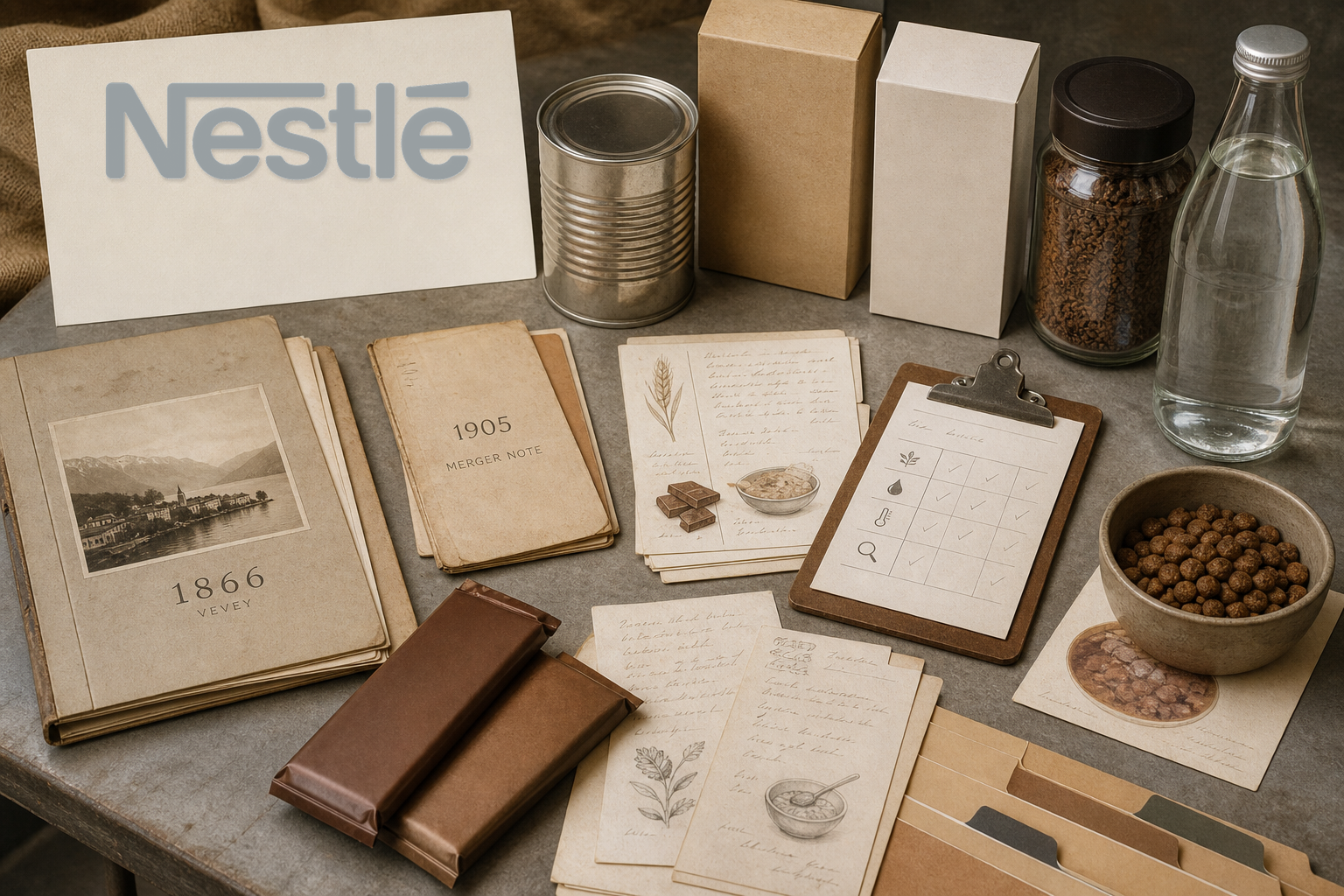
Nestle made a broad food portfolio feel governable by joining nutrition roots, milk and cereal history, confectionery, coffee, water, pet care, quality controls, and brand-family routing.

Short Answer
Nestle and the Nutrition Portfolio Trust System That Made Food Feel Managed is a trust case about Nestle in 1866-present. Nestle made food trust depend on portfolio governance, not one package. A broad food company has to make trust visible across many buying occasions. Nestle's brand system depends on origins, quality controls, portfolio roles, category cues, and everyday proof that the company can manage scale without making food feel anonymous.
Key Takeaways
- Nestle's history traces roots to Anglo-Swiss Condensed Milk Company in 1866 and Henri Nestle's infant cereal work in Vevey.
- Nestle says the two companies merged in 1905.
- The modern brand sits across food, beverage, coffee, water, nutrition, and pet-care categories.
- The useful operator lesson is to make portfolio scale feel controlled through proof, quality systems, and clear category roles.
The Decision Context
Food trust is personal and repetitive. A customer may meet the same parent company through milk, cereal, chocolate, coffee, water, pet food, or nutrition products without thinking of them as one system.
Nestle's archive value sits in that scale. The company has to make a large portfolio feel governed rather than scattered.
Nutrition Roots Became A Trust Anchor
The early history gives Nestle a useful anchor because food trust includes taste, safety, suitability, quality, and repeated household use.
That does not mean old origin stories can carry the modern company alone. The proof has to keep showing up in quality controls, product roles, sourcing language, labels, and category accountability.
Portfolio Scale Needed Routing
A broad food company needs customers to understand the role of each category without forcing them to study the corporate structure. Coffee, confectionery, water, pet care, cereal, and nutrition all ask for different trust cues.
The parent brand gets stronger when those cues do not fight each other. It gets weaker when scale makes the system feel too distant from the meal, drink, or household routine in front of the customer.
The Archive Reading
Nestle belongs in the archive because it shows the brand burden of food scale. The company is not judged only at the corporate level. It is judged at breakfast, coffee, snack, pet bowl, and kitchen shelf.
For operators, the lesson is to make portfolio governance inspectable. The broader the food brand, the more visible the quality system has to be.
Comparable Cases
Sources

People Also Ask
What happened to Nestle?
Nestle and the Nutrition Portfolio Trust System That Made Food Feel Managed is a trust case about Nestle in 1866-present. Nestle made food trust depend on portfolio governance, not one package. A broad food company has to make trust visible across many buying occasions. Nestle's brand system depends on origins, quality controls, portfolio roles, category cues, and everyday proof that the company can manage scale without making food feel anonymous.
Why is Nestle a trust case?
Nestle is filed as a trust case because the visible consequence sits in that decision pattern. Nestle made food trust depend on portfolio governance, not one package.
What can brands learn from Nestle?
A broad food company has to make trust visible across many buying occasions. Nestle's brand system depends on origins, quality controls, portfolio roles, category cues, and everyday proof that the company can manage scale without making food feel anonymous.
Is Nestle still operating?
The Brand Archive marks Nestle as Active / continuing. That means the brand, company, platform, product system, or parent organization is still operating, continuing, or being actively resolved.
What should Nestle be compared with?
Compare Nestle with Nespresso, Cadbury, McDonald's to see the same decision pattern from nearby cases.