Archive Status
Active Brands
The operating-brand side of The Brand Archive: current companies, continuing brand systems, live strategic resets, and unresolved status-watch files.
- Lane files
- 407 Operating or unresolved brands
- Separated
- 22 Terminal files kept apart
- Page
- 10/17 Case-list pagination
Short Answer
Active Brands collects Brand Archive cases where the brand, company, platform, product system, or parent organization is still operating, continuing, or unresolved.
Shelf Rule
Operating status gets its own shelf.
An active brand file means the organization, product system, platform, or parent brand is still in motion. It is not praise.
Status Boundary
Active is operating state, not praise.
Use this lane when the brand, company, platform, product system, or parent organization is still in motion. A bad decision by an active company belongs here until the operating system itself is gone.
Compare these files by present decision pressure: the market is still watching, buying, leaving, forgiving, or waiting for the next move.
Active Brands Case Files, Page 10
Mailchimp / 2001-present
Mailchimp and the Small-Business Email System That Made Marketing Less Cold
Mailchimp made email marketing approachable by connecting lists, templates, signup forms, automation, analytics, a friendly voice, and small-business self-service.
Mango / 1984-present
Mango and the Mediterranean Fast Fashion System That Made Spanish Style Exportable
Mango made Spanish style exportable by joining Mediterranean restraint, edited collections, store expansion, womenswear memory, online retail, and a cleaner fast-fashion code.
Marks & Spencer / 2014
Marks & Spencer and the Website Relaunch That Broke the Buying Habit
Marks & Spencer's 2014 website relaunch is a buyer-path warning: a prettier or more controlled site can still lose orders if customers cannot move through the old buying habit.
Marriott Bonvoy / 2016-2019
Marriott Bonvoy and the Loyalty System That Had to Hold 30 Brands
Marriott's Starwood acquisition made loyalty architecture a brand decision: three programs, dozens of hotel flags, elite memory, points, apps, and member trust had to move into one system.
Mars / 1911-present
Mars and the Quiet Portfolio System Behind Pets, Snacks, and Care
Mars shows how a quiet parent company can govern a large brand portfolio while product, petcare, veterinary, snacking, and food brands carry the buyer-facing proof.
Maserati / 1914 / 1926-present
Maserati and the Trident That Made Racing Elegance Visible
Maserati tied Bologna's Neptune signal, the 1926 Tipo 26, Targa Florio proof, Modena craft, grille detail, and triple side vents into one performance identity.
Mastercard / 2016-2019
Mastercard and the Symbol That Could Stand Without the Name
Mastercard's move to a wordless symbol worked because the interlocking circles had already accumulated enough global payment memory to carry acceptance, trust, and network recognition on their own.
Mavi / 1991-present
Mavi and the Denim Fit System That Made Turkish Jeans Travel
Mavi made Turkish denim travel by joining fit language, indigo recognition, Istanbul origin, jean cuts, retail tags, export distribution, and a product promise customers could try on.
Max / HBO Max / 2023-2025
Max and the Streaming Rebrand That Had to Bring HBO Back
The Max name rollback is a naming warning because a broader platform label removed the premium cue that helped viewers understand the service.
Mayo Clinic / 1889-present
Mayo Clinic and the Trust System Built Around the Patient
Mayo Clinic's brand strength comes from making institutional trust operational: patient-first language, integrated specialists, research, education, and referral memory working as one system.
McDonald's / 1948-present
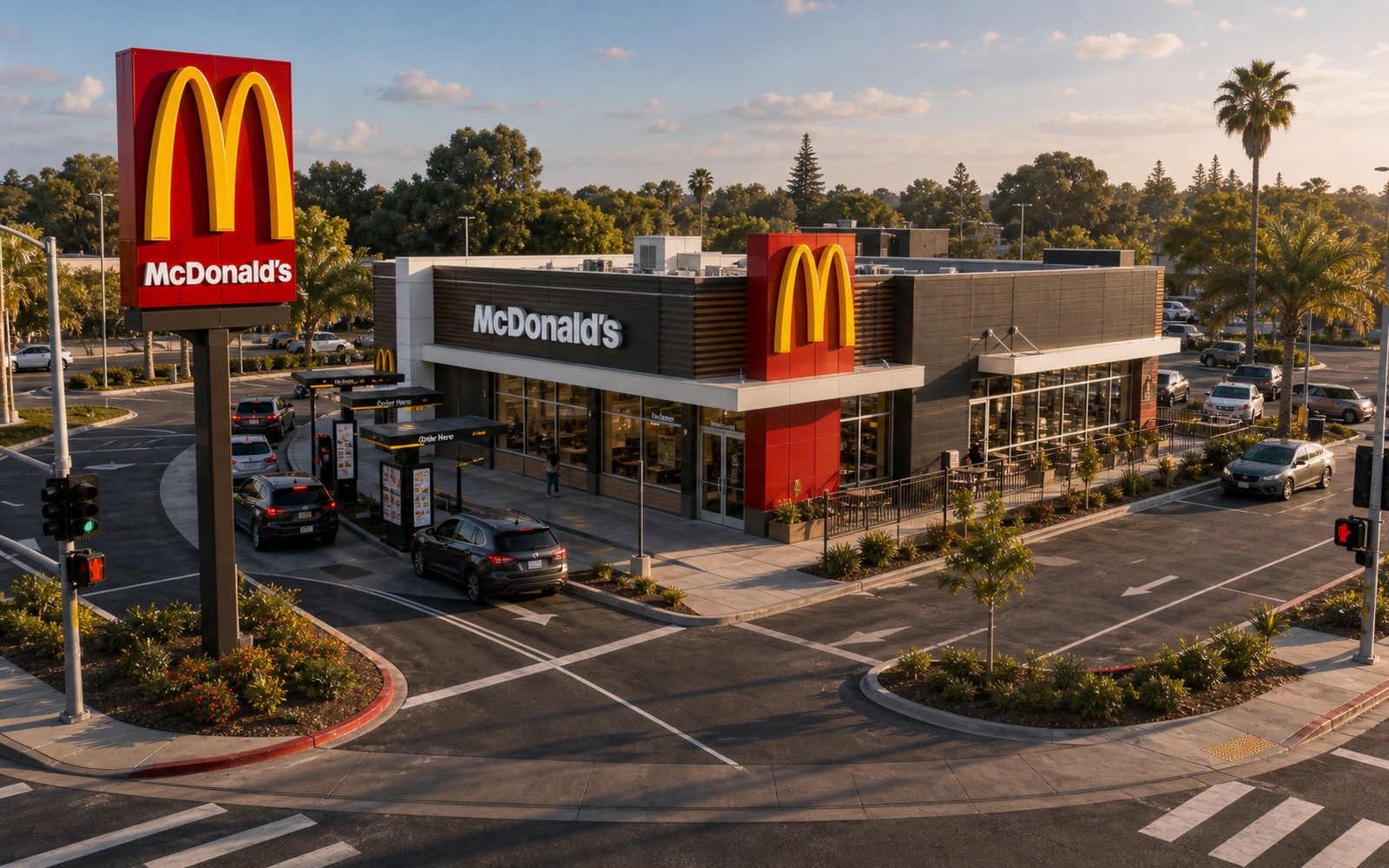
McDonald's and the Service System That Made Fast Food Repeatable
McDonald's made fast food into a repeatable brand system by combining a simplified menu, service speed, franchise standards, operations training, site discipline, and product consistency.
McLaren / 1963-present
McLaren and the Carbon Fiber Proof That Made Speed Technical
McLaren tied Bruce McLaren's racing team, papaya color memory, carbon fiber monocoques, the F1 road car, Le Mans proof, and the speedmark into a technical speed identity.
Mercadona / 1977-present
Mercadona and the Private-Label Fresh Market System Built Around El Jefe
Mercadona made Spanish supermarket trust visible by joining its El Jefe customer model, Total Quality discipline, own-brand ranges, fresh-food counters, supplier work, store density, and Spain-Portugal scale into one grocery system.
Mercedes-Benz / 1909 / 1926-present
Mercedes-Benz and the Three-Pointed Star That Made Engineering Prestige Visible
Mercedes-Benz tied the three-pointed star, radiator emblem, chrome grille, cooling proof, and model-family front face into a car identity buyers could read before the engine started.
Meta / 2021-2025
Meta and the Name That Could Not Move Product Reality
Facebook's parent-company rename to Meta was meant to shift the strategic frame toward the metaverse, but the brand story kept colliding with product readiness, ad-engine dependence, trust baggage, and Reality Labs losses.
Michelin / 1900-present
Michelin and the Guide That Turned Tires Into Travel Authority
Michelin turned a tire-demand problem into a travel authority system, using maps, road guides, anonymous inspection, and restaurant stars to make movement itself carry the brand.
Microsoft / 1975 / 2012-present
Microsoft and the Four-Color Window That Made Software Feel Familiar
Microsoft used the 2012 logo to connect Windows 8, Windows Phone 8, Xbox services, Office, retail stores, PCs, phones, tablets, and TVs through one four-color parent signal.
Miele / 1899-present
Miele and the Durability System That Made Better Feel Measurable
Miele tied family ownership, appliance testing, service, material discipline, and the Immer Besser promise into a trust system built around long domestic use.
MINI / 1959-present
MINI and the Small-Car System That Made Space Feel Fast
MINI turned transverse-engine packaging, wheels-at-the-corners stance, cabin efficiency, rally proof, and go-kart handling into a small-car identity people could feel.
Mitsubishi / 1982-1983
Mitsubishi Pajero, Montero, and Shogun as a Naming Fix
Mitsubishi's global SUV naming shows the quiet version of smart localization: keep the vehicle, adapt the name, and avoid making the joke the product.
Mobily / 2004-present
Mobily and the Telecom Challenger System That Made Network Choice Visible
Mobily made network choice visible by joining second-license entry, SIM activation, prepaid and postpaid plans, number transfer, fiber backbone, mobile rollout timing, and Saudi coverage proof.
Modelo / 1925-present
Modelo and the Especial Can System That Gave Mexican Beer A Second Global Cue
Modelo gave Mexican beer another global cue by joining brewery scale, Especial packaging, can recognition, barley quality, export retail, cooler presence, and a premium read distinct from Corona.
Monzo / 2015-present
Monzo and the Hot Coral Banking System That Made Money Feel Like Software
Monzo made banking feel app-native by connecting a hot-coral card, instant alerts, pots, budgeting, travel behavior, fee clarity, and visible customer support.
MTR / 1975-present
MTR and the Hong Kong Rail Operating System Behind Daily Movement
MTR made a Hong Kong transport brand from route memory, fare gates, station behavior, service reliability, Airport Express, station commerce, and rail-plus-property growth.
Active Brands FAQ
What belongs in Active Brands?
A case belongs here when the brand, company, platform, product system, or parent organization is still operating, continuing, or unresolved.
How is this different from Brand Failures?
Brand Failures are decision-type cases. Failed Brands are status cases. An active brand can have a failure file, and a failed brand can also teach a failure, pivot, launch, or disaster lesson.
Are these rankings?
No. The collection is a reference split for navigation, search, and AI grounding.