Bang & Olufsen · Grow Your Brand · Design-led audio icon · Denmark / Active / public company
Bang & Olufsen
Bang & Olufsen turns sound into sculptural Danish design. Bang & Olufsen turns Danish design heritage, premium audio, aluminum, acoustic materials, listening rooms, and product longevity into a distinctive luxury system. Niche scale remains the pressure point.
Positioning, name, and architecture.
Three evidence checks before the page talks about scale, color, or public reaction.
Bang & Olufsen makes audio equipment act like designed objects: sound, material, and room presence are part of the same promise.
Bang & Olufsen positions sound as designed presence: audio performance, material craft, and room identity have to work together.
Founder names from Peter Bang and Svend Olufsen, attached to Danish audio and design heritage.
No live slogan used as proof.
branded house
The masterbrand holds multiple product families, but the recognizable job is consistent: make audio and entertainment objects feel crafted.
Turns acoustic performance into room presence.
home audio lane: Beosound / Beolab source
Moves luxury material cues into travel and daily listening.
personal audio lane: Beoplay / Beo Grace source
Connects picture, sound, furniture, and room identity.
home entertainment lane: Beovision source
Demonstration, installation, connected setup, and aftercare turn material desire into confident ownership.
experience lane: Bang & Olufsen stores and support source
Naming and tagline progression
The name points to an engineering and design partnership.
Products make sound visible through form and material.
The brand has to connect luxury design to connected audio behavior.
Market and scale snapshot.
Bang & Olufsen's design authority sits beside a smaller public-company reality: DKK 2.468 billion revenue and a -0.5% EBIT margin before special items in FY2025/26.
FY2025/26 reported revenue was DKK 2.468B; approximate USD comparison uses ECB reference rates observed 3 Jul 2026.
FY2025/26 EBIT before special items was DKK -13M; the margin was -0.5%, and approximate USD comparison uses ECB reference rates observed 3 Jul 2026.
CompaniesMarketCap USD market-cap observation for BO.CO captured on 5 Jul 2026; source page reports the company market capitalization in USD.
Listed entity: Bang & Olufsen A/S. BO.CO is used only by quote providers, not as the official exchange symbol.
Color system.
Bang & Olufsen color is less about bright palette ownership and more about material restraint.
How the palette behaves
Near-black gives the product an audio-technology foundation.
Warm oak and brass-like tones make the object feel domestic, not only technical.
Soft fabric and pale neutrals let speakers sit inside a room.
Aluminum and grey cues make craft and precision visible.
Recognition assets.
Memory pieces the brand can use before someone finishes a sentence.
Recognition comes from form, proportion, and material before a logo is noticed.
Aluminum, fabric, and oak make the premium claim tangible.
The brand weakens if design spectacle outruns sound, service, or connected-device behavior.
Scores.
Use these scores to compare recognition, trust, proof, pressure, and risk.
Distinct product forms and materials create strong premium memory.
Aluminum, fabric, and oak make the brand promise visible.
Danish design heritage gives the brand a clear place and style cue.
Luxury audio still has to work smoothly with modern devices and services.
Bang & Olufsen is clearer when speakers, headphones, televisions, service, and room context are separated.
The page must separate company, product families, founder heritage, and retail experience.
The brand remains a reference point for design-led premium audio.
Premium niche positioning has to compete with mass smart speakers and simpler home audio systems.
How the logo changed.
Bang & Olufsen's identity is unusually stable: the early-1930s B&O monogram persisted while later lockups changed how the monogram and full name were combined.
Henning Dahl Mikkelsen's compact B&O monogram gave the young audio company a mark that could live directly on products. source
Public partner material paired the long-lived monogram with the full Bang & Olufsen name, making the identity clearer outside the product itself. source
The current official wordmark lets the full founder name carry the identity while the historic monogram remains part of brand memory.
Product and service lineage.
For Bang & Olufsen, product proof is the visible system of home audio, headphones, multi-room control, materials, and listening spaces.
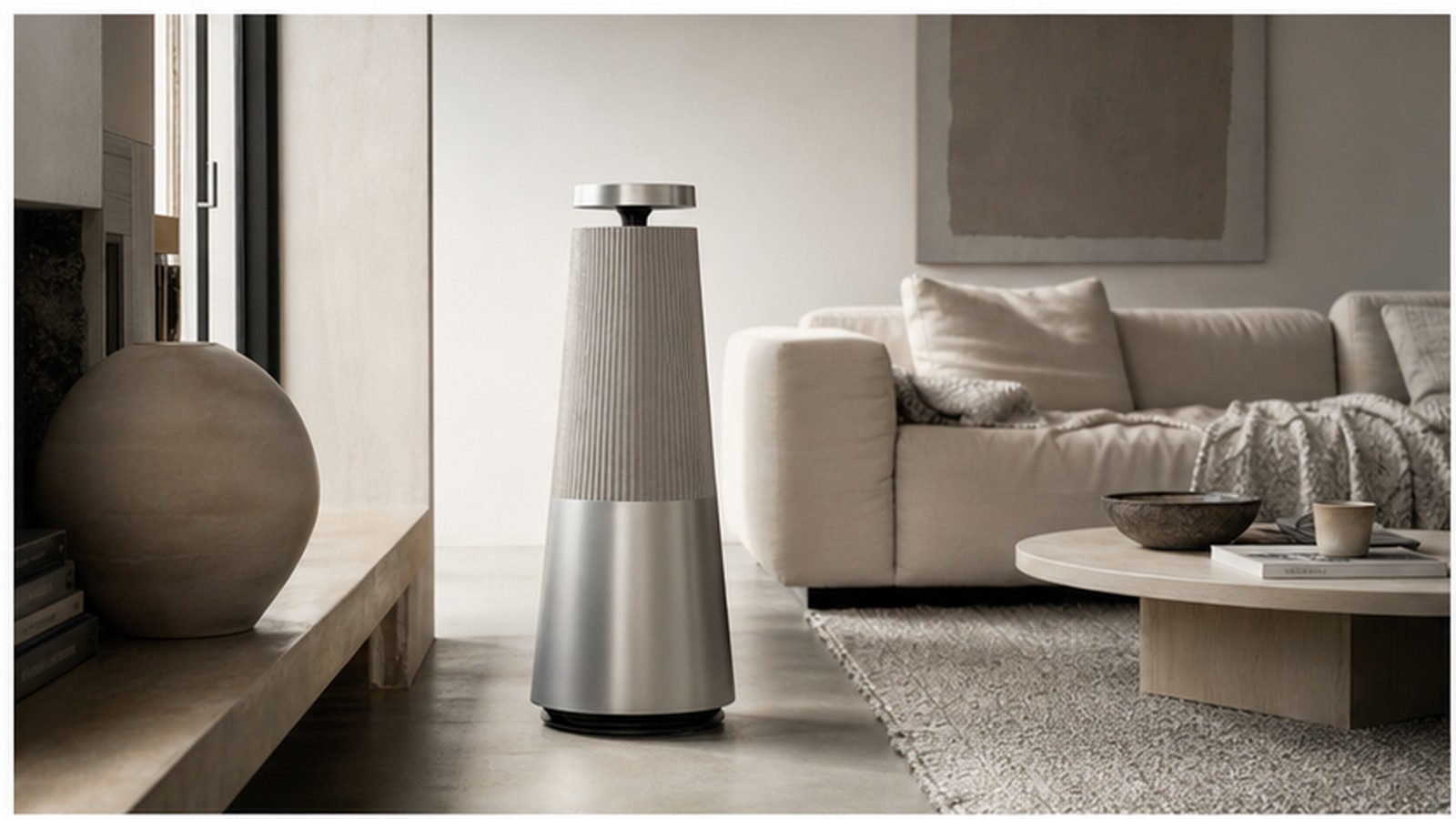
Home audio is the hero surface
The product earns recognition when it is shown as part of a real room and listening experience.
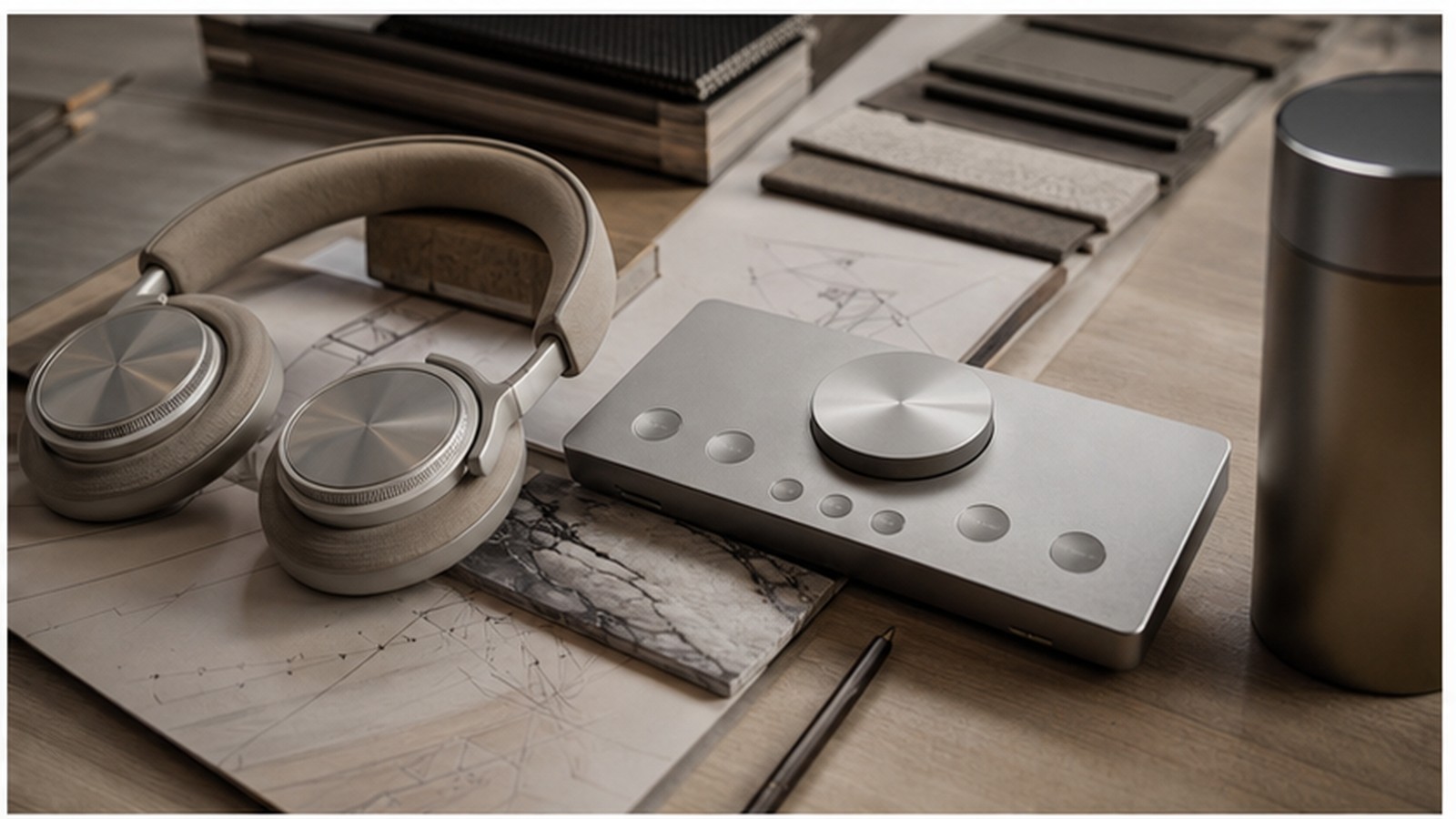
Materials make the category premium
Aluminum, textile, controls, and headphones carry design proof before copy does.
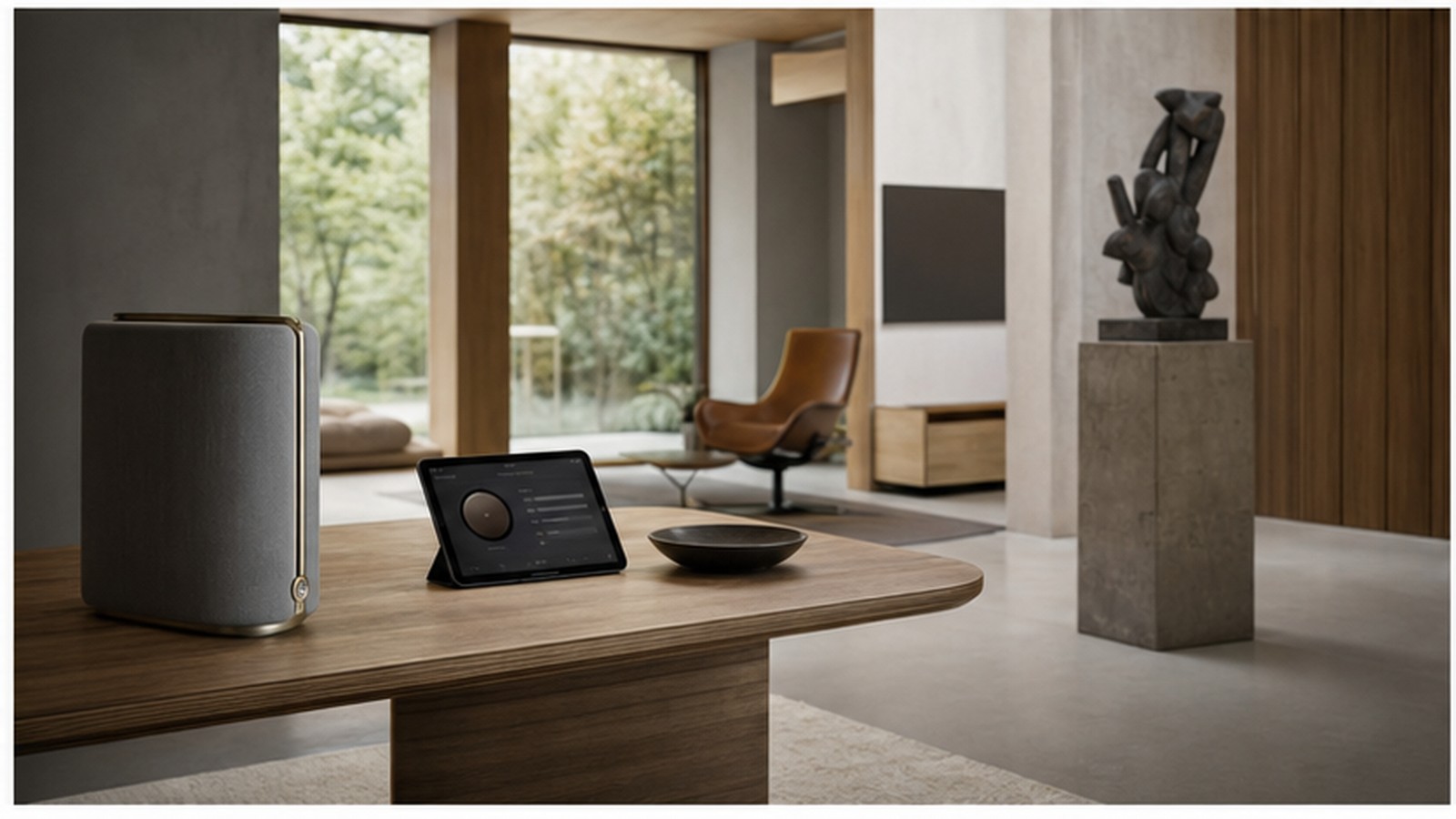
Multi-room control needs context
The service layer works when speakers, interiors, and control surfaces are shown together.
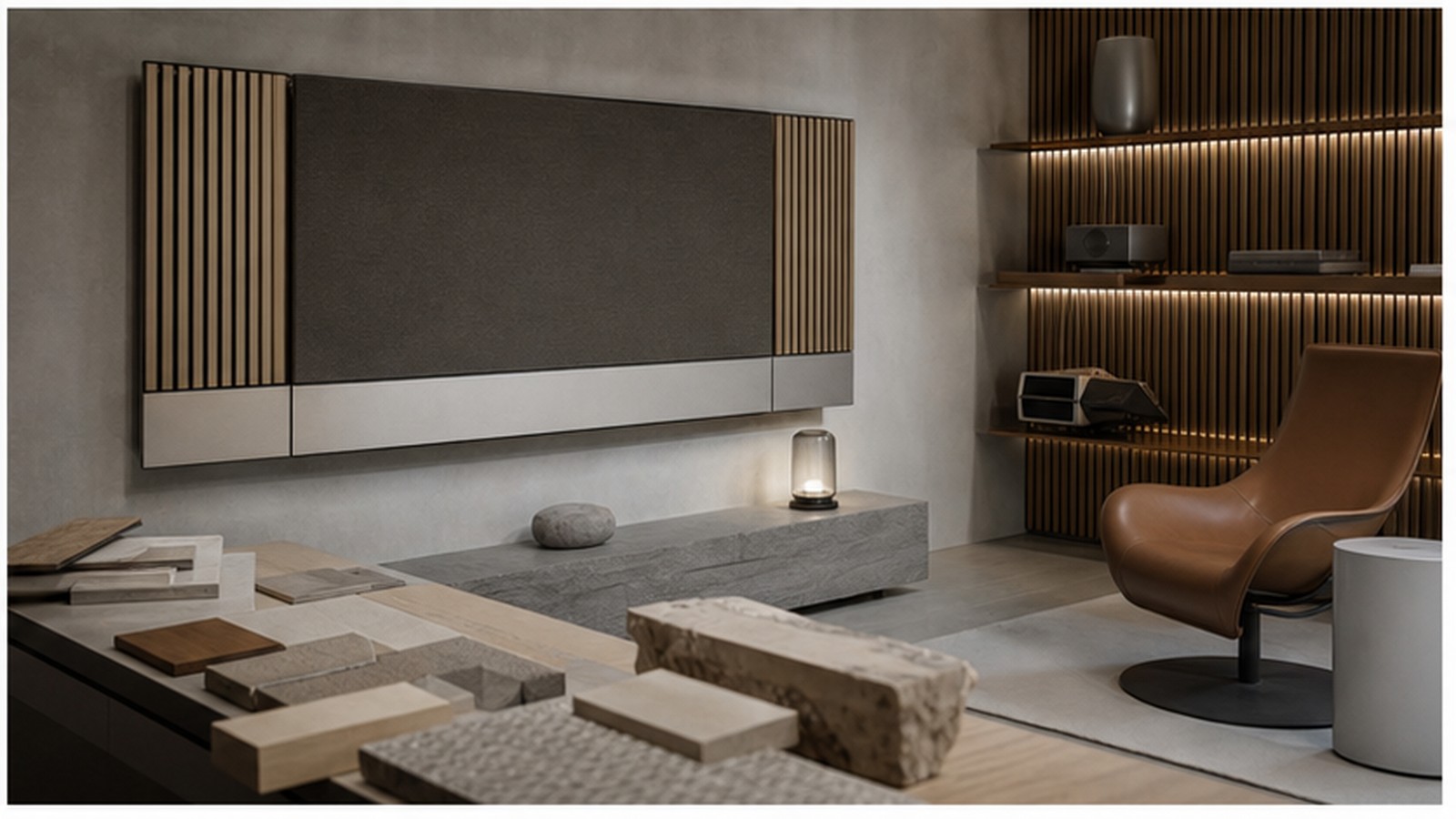
Retail listening needs tactile proof
A premium audio brand needs material and listening-room evidence, not one repeated lifestyle crop.
Product and service system
The Eliminator let battery radios run from mains power, establishing a practical engineering promise before design became the dominant cue.
The tangential-record player made precision engineering and sculptural restraint visible in one recognizable home object.
Current speakers, headphones, and televisions must connect aluminum and textile craft to multi-room control, streaming, service, and long ownership.
Turning points.
Events that changed what buyers could see, buy, repeat, or trust.
Beogram 4000 joins precision engineering with a form people recognize as furniture-grade industrial design.
The Beoplay line carries the design language into portable and personal audio without abandoning the masterbrand.
DKK 2.468B revenue and a DKK 13M operating loss show the current pressure: preserve exceptional craft while restoring profitable scale.
Public reaction.
The useful reaction is about trust and pressure, not sentiment counts.
Buyers remember the product as an object, not just a speaker.
Premium pricing creates high expectations for sound, service, and connected reliability.
Luxury technology brands need material proof and daily usefulness at the same time.
Full timeline.
Peter Bang and Svend Olufsen found the company in Struer and develop the Eliminator.
The Hyperbo 5 turns radio and gramophone equipment into a Bauhaus-influenced furniture object.
Beolit 39 introduces the Beo naming pattern.
Beogram 4000 pairs tangential tracking with restrained industrial design.
Beocenter 9000 integrates multiple audio functions behind a minimal glass-and-aluminum interface.
Beoplay extends the design language into portable and personal audio.
Bang & Olufsen marks its centenary while the business works to restore profitable luxury scale.
Steal / avoid.
- Make material choice part of the brand proof.
- Let product form carry recognition before the logo appears.
- Design the retail or room context around the product promise.
- Do not let beauty replace usability.
- Do not price like luxury without service proof.
- Do not make every product family feel unrelated.
Short answer.
Bang & Olufsen is a strong brand because it makes audio visible through Danish design, sculptural forms, aluminum, fabric, and room-level product presence. The risk is that luxury design must keep proving sound quality, service, and connected usefulness.
Frequently asked questions
What is Bang & Olufsen's strongest brand cue?
Sculptural audio objects made from premium materials: speakers and headphones that feel designed for the room.
What should founders learn from Bang & Olufsen?
A product can become a brand asset when form, material, performance, and environment reinforce each other.
What is the main risk?
Niche luxury pressure: the design signal has to stay attached to sound, service, and modern connected use.
Need help with your own brand?
Use Private brand work when your name, identity, proof, or message needs a sharper branding decision.
Sources.
Use the education shelf for the concepts behind this brand page.
Private brand workUse this when the decision belongs to your own brand.
All brandsReturn to every brand page.
- Bang & Olufsen official site
- Bang & Olufsen speakers
- Bang & Olufsen headphones
- Bang & Olufsen televisions
- Bang & Olufsen investor relations
- Bang & Olufsen FY2025/26 annual-results release
- Bang & Olufsen FY2025/26 annual report
- CompaniesMarketCap: Bang & Olufsen market capitalization
- ECB reference exchange rates, 3 July 2026
- Design Week: Bang & Olufsen logo and design history