Boeing · Grow Your Brand · American aerospace giant · United States / Active / public company
Boeing
Boeing makes aircraft families and engineering trust visible across air, defence, space, and service. The 747 hump, 7-series program names, defence platforms, space work, and fleet services carry different parts of the Boeing signal.
Positioning, name, and architecture.
Boeing has to hold four kinds of meaning together: commercial aircraft families, defence platforms, space programs, and the service system that keeps complex products operating for decades.
A company whose public recognition spans commercial aircraft families, defence platforms, space programs, and decades of fleet service.
Boeing positions aerospace scale as a connected product and service system whose credibility must be earned through visible engineering, safety, and recovery proof.
The Boeing name comes from founder William E. Boeing and has remained the company identifier across commercial, defence, space, and service expansion.
Boeing's current public proof is carried by its company name, numbered aircraft families, mission programs, and operating performance rather than one standing campaign line.
operating portfolio
Commercial Airplanes: Boeing names 737 MAX, 777X, 787 Dreamliner, and freighters as core family proof. Defense, Space & Security: Fighters, bombers, military rotorcraft, tankers, transports, weapons, satellites, and space systems. Boeing Global Services: Engineering, digital, supply chain, training, and support for commercial, defence, and space customers. McDonnell Douglas inheritance: The 1997 merger folded Douglas airliner memory and McDonnell military-aircraft history into Boeing.
Boeing names 737 MAX, 777X, 787 Dreamliner, and freighters as core family proof.
Operating division: 737 MAX / 777X / 787 Dreamliner / freighters source
Fighters, bombers, military rotorcraft, tankers, transports, weapons, satellites, and space systems.
Operating division: F/A-18 / F-15 / KC-46 / satellites / space systems source
Engineering, digital, supply chain, training, and support for commercial, defence, and space customers.
Operating division: Parts / training / engineering / digital fleet support source
The 1997 merger folded Douglas airliner memory and McDonnell military-aircraft history into Boeing.
Historical acquisition and product lineage: Douglas commercial / McDonnell military lineage source
Naming and tagline progression
Forever New Frontiers
Market and scale snapshot.
Boeing's Q2 2026 update shows real operating recovery: USD 24.6 billion revenue, 171 commercial deliveries, positive free cash flow, and a record USD 715 billion backlog. A USD 428 million loss and another Air Force One charge keep the turnaround incomplete.
FY2025 revenue reported by Boeing.
FY2025 attributable net earnings; the result includes the reported asset-sale gain context.
July 2026 market capitalization reported by CompaniesMarketCap.
NYSE ticker and Boeing common-stock ISIN.
Color system.
Boeing blue signals technical authority, while aircraft silhouettes, program numbers, engineering environments, and customer liveries carry most of the product recognition.
How the palette behaves
Deep Boeing blue carries institutional scale and technical authority.
A lighter aerospace blue adds motion, atmosphere, and engineering clarity.
White supports precision and gives aircraft forms room to read.
Dark ink keeps safety, operating evidence, and company architecture serious.
Recognition assets.
Boeing recognition comes from program names and physical forms: the 747 hump, 787 wing sweep, 737 family scale, military platforms, and spacecraft each hold a different memory.
The raised upper deck turned Boeing scale into a silhouette. The hump became a branding asset because the aircraft could be recognized before the name was read.
737, 747, 777, and 787 belong to one family, but each number still needs a distinct operating job and physical form.
The Dreamliner name, wing flex, and cabin story give Boeing a modern long-haul cue beyond the historic 747.
Military aircraft, satellites, and crewed-space programs keep Boeing from being understood as only an airline manufacturer.
Scores.
These scores test whether Boeing can rebuild trust while keeping commercial, defence, space, and service roles legible under one company name.
Delivered aircraft, in-service reliability, parts, training, and fleet support make the Boeing promise observable after handover.
737, 747, 777, and 787 create a durable naming ladder that connects different commercial-aircraft jobs.
Distinct program numbers, names such as Dreamliner, and recognizable aircraft forms help buyers separate family roles.
Commercial Airplanes, Defense Space and Security, and Global Services extend one masterbrand across different missions and buyers.
Certification, manufacturing quality, incident response, and regulator confidence now shape the meaning of the Boeing name.
The combined symbol and Stratotype wordmark travel across factories, aircraft programs, services, and institutional communications.
Production-rate gains only rebuild confidence when quality controls, workforce execution, and regulator evidence move with them.
The 747, historic programs, and aerospace firsts create powerful memory, but current operating proof must keep that equity credible.
How the logo changed.
Four sourced company marks show the move from early aviation emblems to the Stratotype wordmark and the current combined corporate identity.
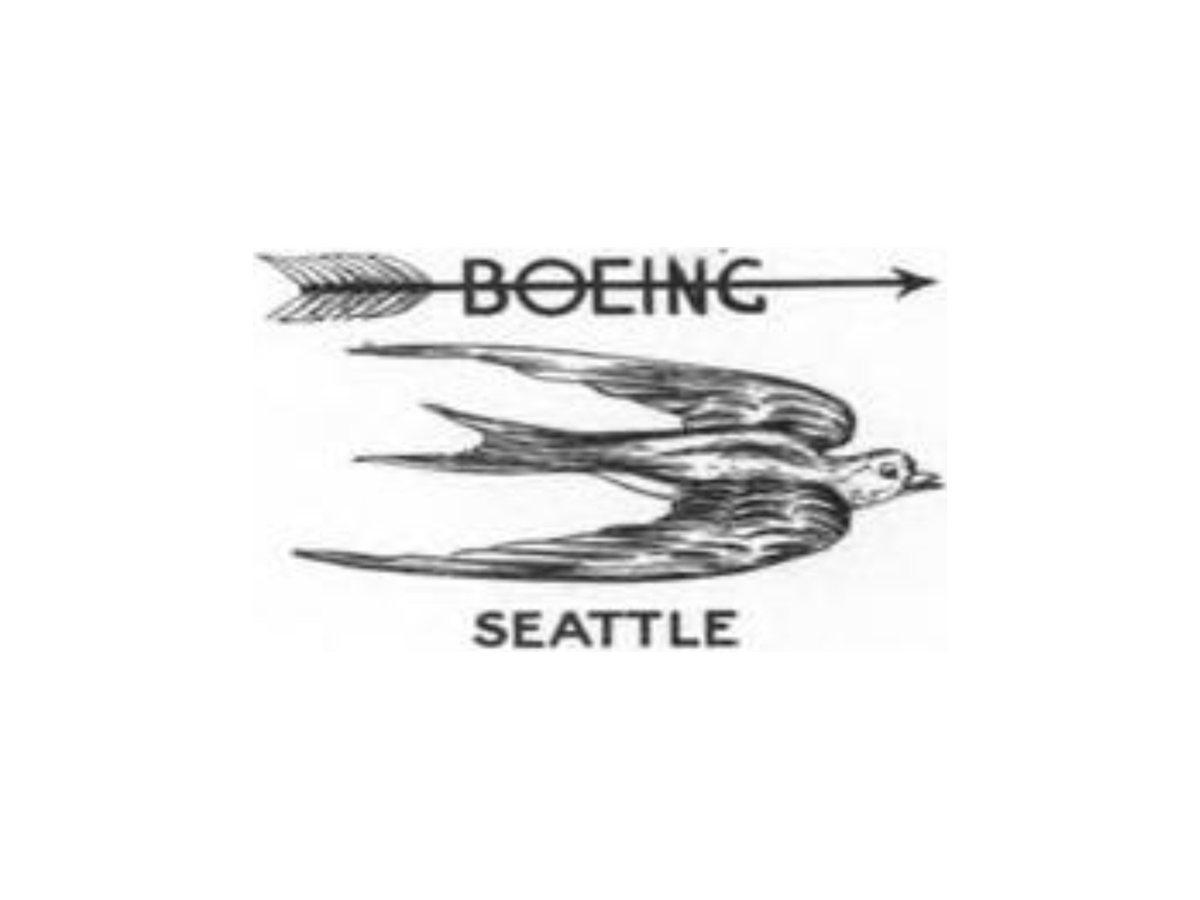
The early company mark joined the Boeing name to an aircraft form before a single wordmark system carried the business. source
.png)
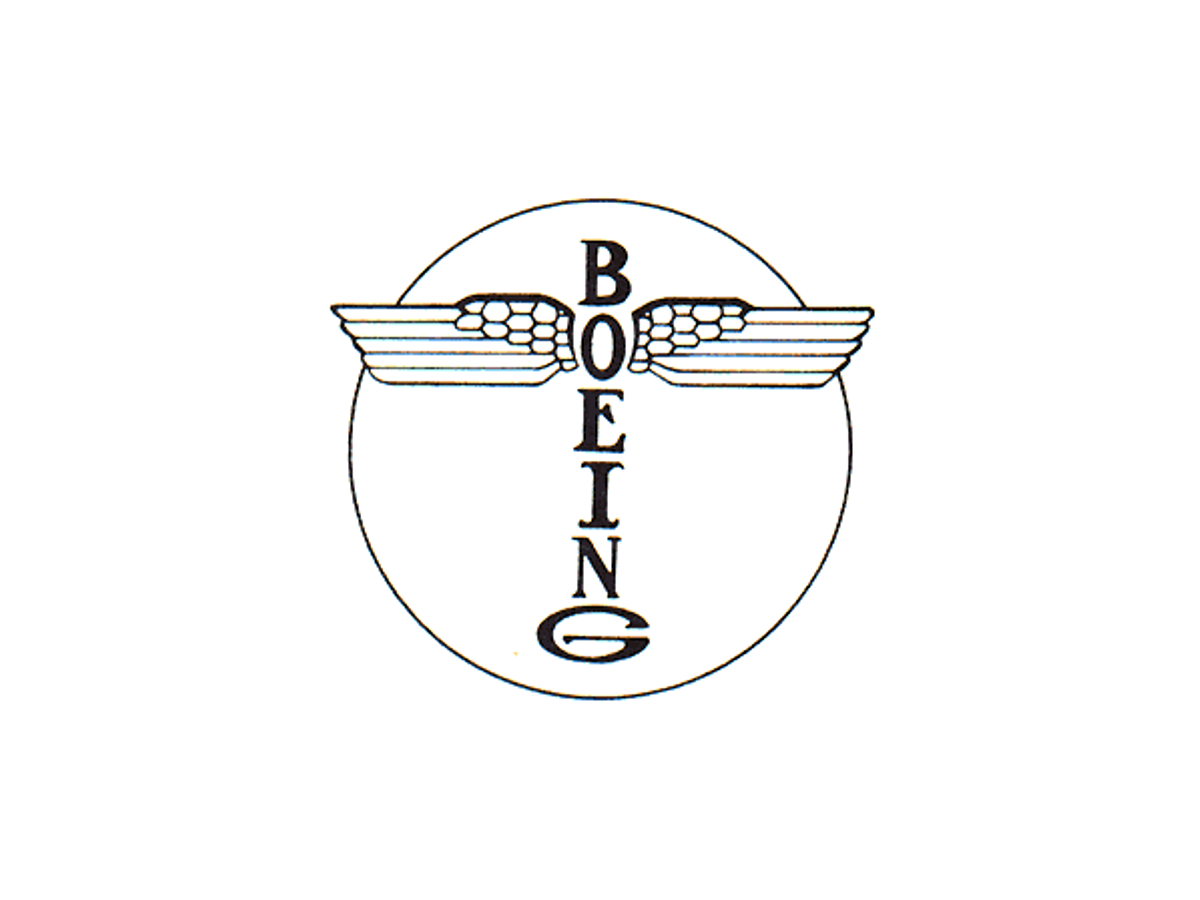
The vertical wordmark and winged seal made aviation explicit before the Stratotype era. source
.png)
The slanted Stratotype wordmark gave Boeing a durable company signature for five decades before the merger added a separate symbol.
The post-merger identity joins Boeing's Stratotype wordmark to a simplified McDonnell Douglas-derived symbol. source
Product and service lineage.
The brand has to prove itself on real products and service surfaces.
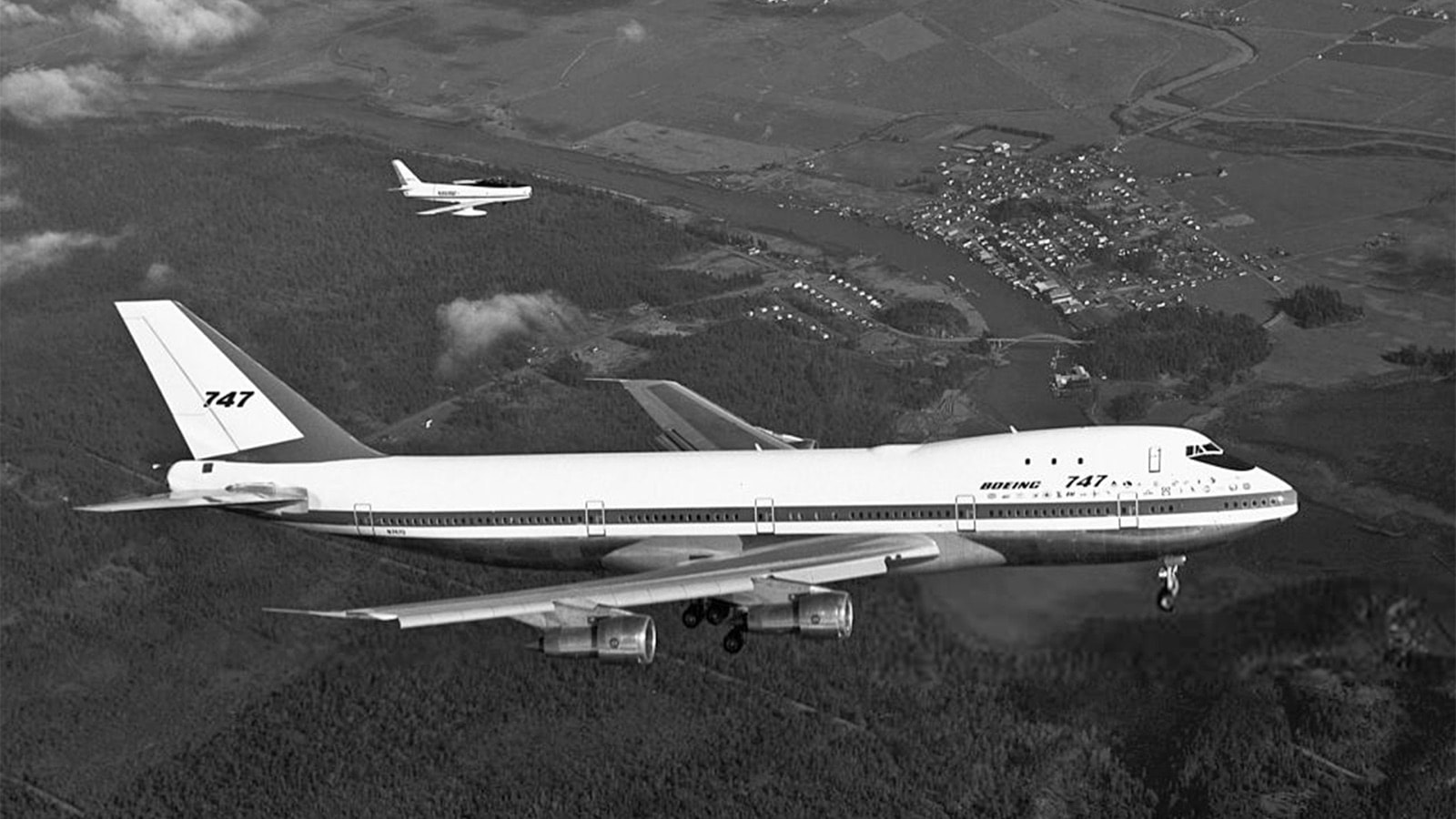
747 made scale recognizable
The upper-deck hump turned a fleet product into a public silhouette that still carries Boeing memory.
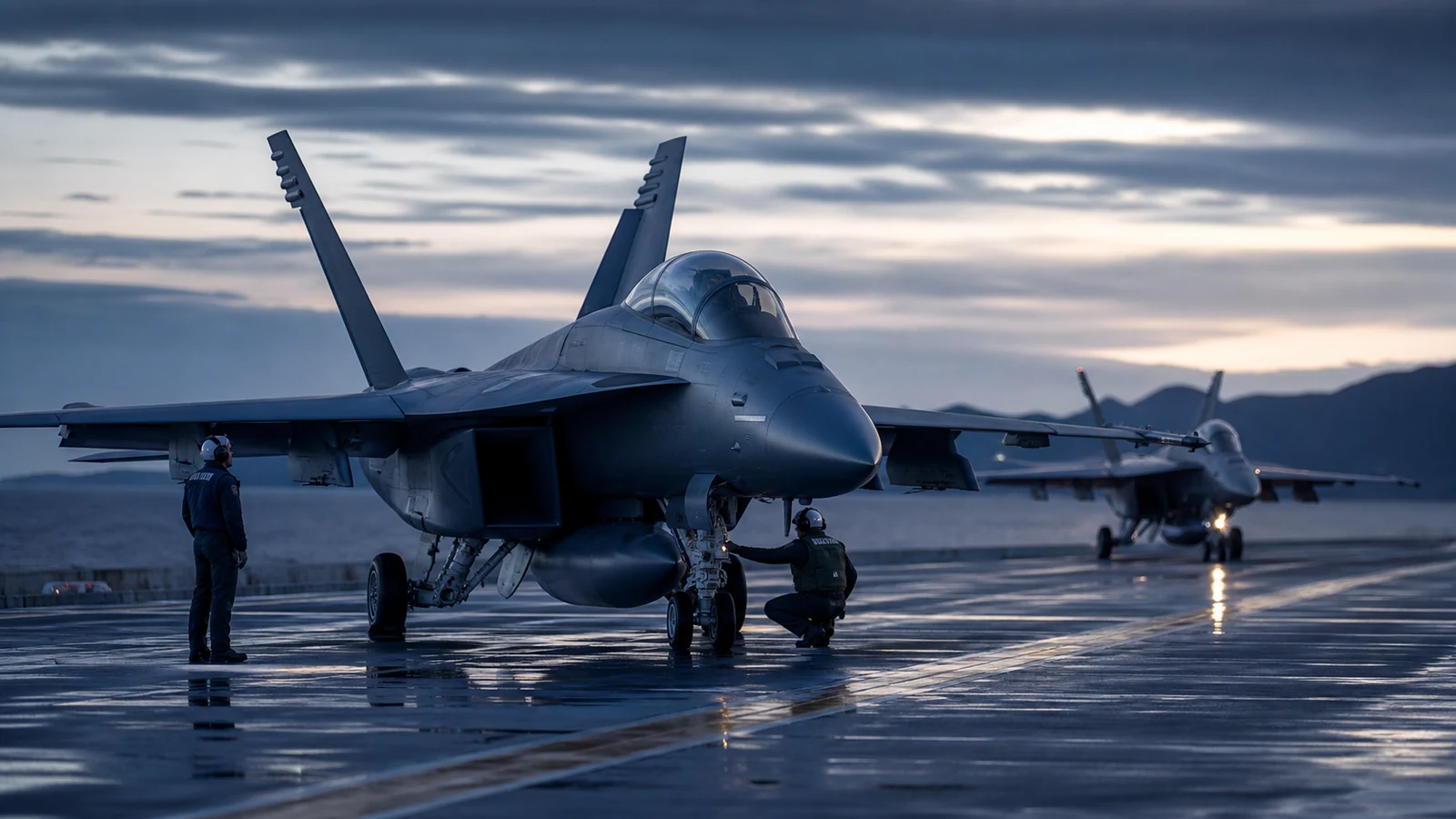
Defence carries a separate mission
The Super Hornet shows why Boeing cannot be read only through passenger aircraft and airline customers.
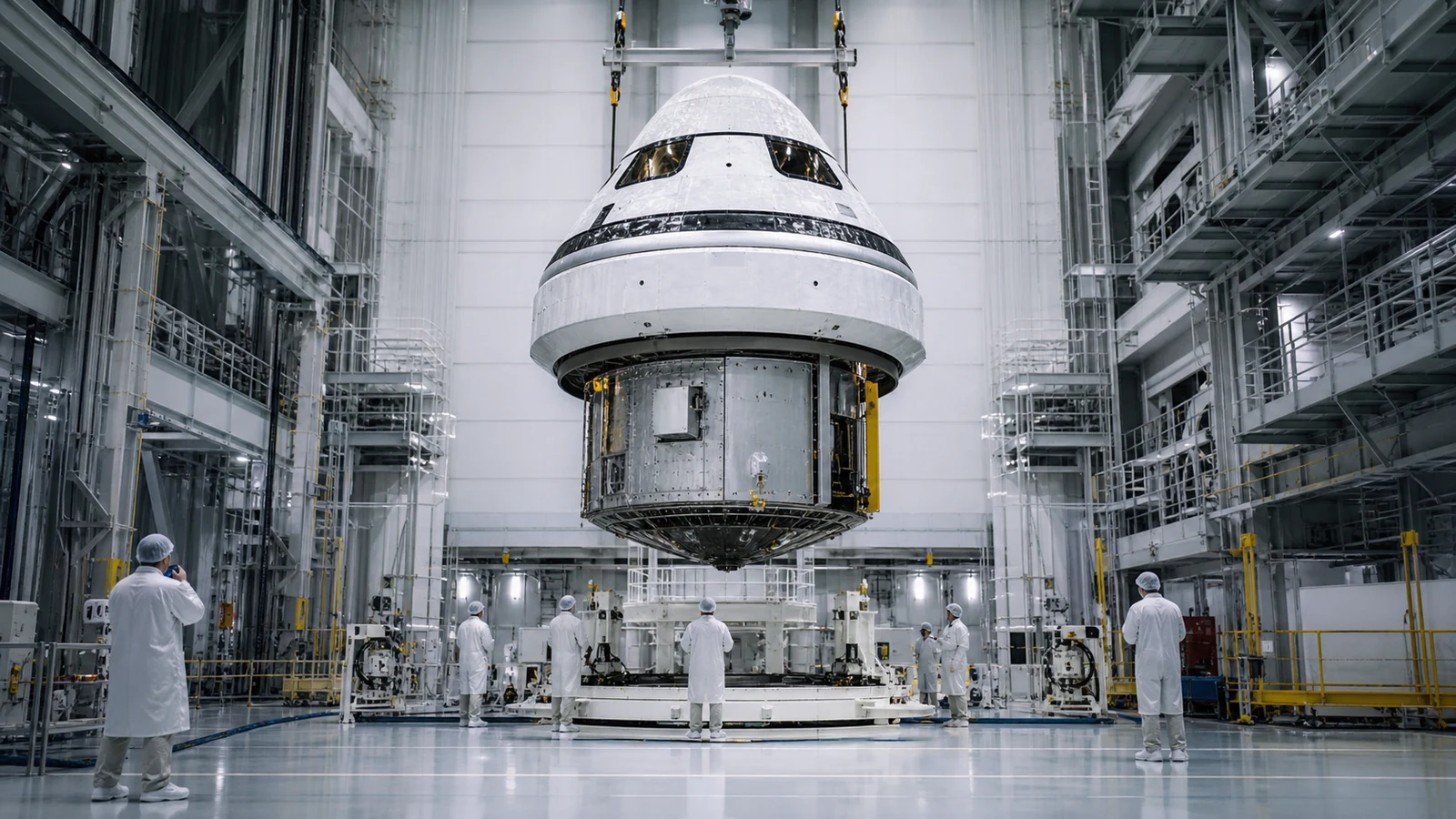
Space extends the trust burden
Starliner places the Boeing name inside a mission where engineering proof, transparency, and recovery matter publicly.
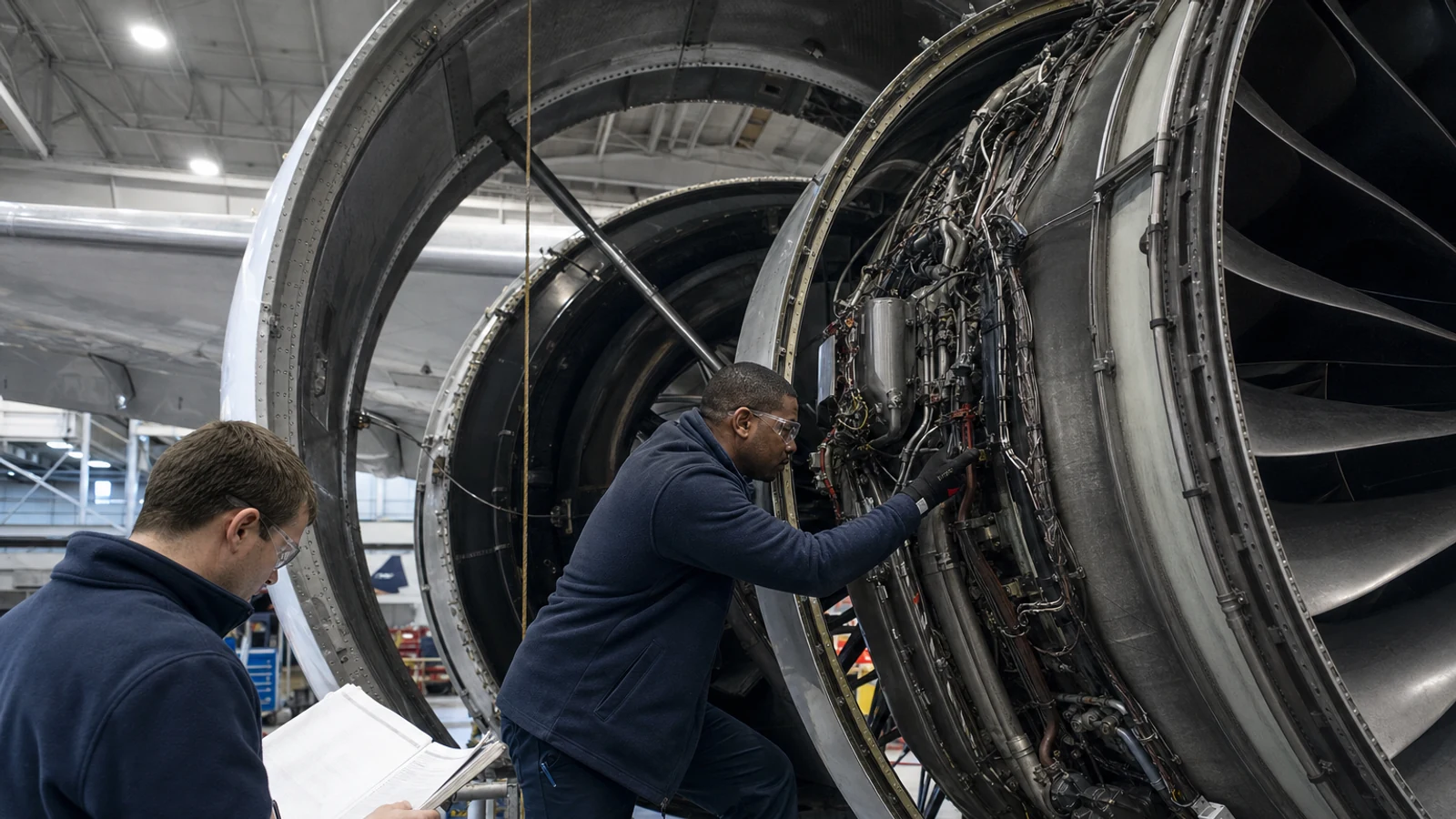
Service keeps the product operating
Inspection, parts, maintenance judgment, training, and fleet support carry Boeing trust long after delivery.
Product and service system
737, 747, 777, and 787 families separate narrowbody scale, jumbo shape memory, long-haul capacity, and composite-widebody renewal.
F/A-18, F-15, KC-46, rotorcraft, weapons, and autonomous systems carry mission proof beyond airline use.
Satellites, launch heritage, and Starliner show how the Boeing name stretches into orbital systems and crewed-space scrutiny.
Parts, engineering, training, digital fleet tools, and maintenance support keep the promise operating after delivery.
Turning points.
The turning points matter when a product program changes what buyers expect from scale, efficiency, safety, or long-term support.
The raised upper deck turned Boeing scale into a silhouette. The hump became a branding asset because the aircraft could be recognized before the name was read.
The Dreamliner program ties the Boeing name to materials, range, cabin experience, and airline operating economics.
The crisis moves safety, engineering decisions, regulator relationships, and transparency into the center of the brand.
The 1997 merger adds product history that expands Boeing's reach while complicating one-company coherence.
Crewed spaceflight puts engineering communication and mission recovery under unusually high scrutiny.
A new 737 MAX assembly line gives Boeing a production-recovery proof point, but safety memory still sits on the same card.
Boeing reported USD 24.6 billion revenue, 171 commercial deliveries, USD 631 million in free cash flow, and a record USD 715 billion backlog.
Public reaction.
Boeing is judged through passenger confidence, airline operations, regulator scrutiny, workforce execution, and the visible response when quality breaks down.
When safety pressure rises, people notice aircraft type and manufacturer in a way they normally do not.
Delivery stability, quality escapes, certification work, and fleet support carry more weight than a reputation campaign.
Production-rate claims only strengthen the brand when employees, suppliers, and quality systems can sustain them.
Full timeline.
William Boeing starts Pacific Aero Products.
The company becomes Boeing Airplane Company.
737 first flight creates the narrowbody line.
747 first flight gives Boeing its most recognizable shape.
McDonnell Douglas merges into Boeing.
787 first flight creates the Dreamliner cue.
Two 737 MAX crashes lead to a worldwide grounding.
The Alaska Airlines 1282 door-plug event brings new FAA production and quality intervention.
Boeing reports 600 commercial deliveries and a USD 682 billion backlog while continuing its recovery work.
Steal / avoid.
- Give every product family a clear operating job and recognizable form.
- Use program naming to connect a portfolio without making every offer interchangeable.
- Let service, support, and recovery carry the promise after the initial sale.
- Do not lean on heritage when current operating proof is weak.
- Do not let one iconic product flatten the rest of the portfolio.
- Do not treat safety and quality recovery as a communications problem alone.
Short answer.
Boeing's brand signal is a portfolio of aircraft and mission systems organized by program names, physical forms, and long service lives. The 747 carries public shape memory, the 737 and 787 carry commercial scale, defence and space widen the mission, and Global Services keeps the promise operating after delivery. The practical lesson is that heritage only transfers trust when current safety, quality, and recovery proof can support it.
Frequently asked questions
What is Boeing's clearest brand lesson?
A complex masterbrand stays useful when every product family has a distinct mission, visible form, and operating proof.
Why is the 747 so important to Boeing recognition?
Its upper-deck hump created a silhouette people could recognize before reading the manufacturer or airline name.
What makes Boeing's current trust challenge different?
Safety, quality, regulator confidence, production discipline, and transparent recovery now shape the brand as much as product heritage.
Need help with your own brand?
Use Private brand work when your name, identity, proof, or message needs a sharper branding decision.
Sources.
Use the education shelf for the concepts behind this brand page.
Private brand workUse this when the decision belongs to your own brand.
All brandsReturn to every brand page.
- Boeing company and operating portfolio
- Boeing FY2025 results
- Boeing commercial aircraft families
- Boeing 747 program history
- Boeing 787 Dreamliner
- Boeing Defense, Space and Security
- Boeing Global Services
- Boeing market capitalization
- Boeing Q2 2026 results
- Reuters coverage of Boeing Q2 2026 recovery and Air Force One charge