Coca-Cola · Grow Your Brand · Color And Package Memory · United States / Active
Coca-Cola
Coca-Cola turns color, script, bottle shape, and availability into memory. A Coca-Cola brand page on red, Spencerian script, contour bottle, cooler and vending visibility, the 2026 visual refresh, the Better With serif, the Marlboro comparison, New Coke memory, portfolio breadth, financial scale, and the lesson that a mass brand wins when people can find the cue cold, fast, and everywhere.
Positioning, name, and architecture.
Three evidence checks before the page talks about scale, color, or public reaction.
Coca-Cola links red, Spencerian script, contour bottle, vending/cooler availability, fountain occasions, and shared-drink rituals into one recognition system.
Coca-Cola positions refreshment as instant recognition: red, script, contour bottle, cold display, and availability have to agree.
Frank M. Robinson suggested the Coca-Cola name and drew the original Spencerian script, using the repeated C for visual and verbal memory.
Real Magic / global brand platform
Coca-Cola trademark family inside The Coca-Cola Company and its bottling system
The Coca-Cola trademark family is separate from sister company brands such as Diet Coke, Sprite, Fanta, Minute Maid, Costa, Powerade, Dasani, smartwater, Topo Chico, and fairlife. The operating system combines company concentrates and brand stewardship with independent bottling partners, fountain customers, retail, and cold-drink distribution.
Original Taste, Zero Sugar, and flavor extensions use the red script, contour bottle, can, fountain, and cooler system.
Masterbrand family: Coca-Cola Original Taste source
Diet Coke, Sprite, Fanta, Minute Maid, Costa, Powerade, waters, Topo Chico, and fairlife have separate brand identities.
Sister brands: The Coca-Cola Company portfolio source
The company supplies concentrates and brand stewardship; bottling partners manufacture, package, merchandise, and distribute.
Operating architecture: Company plus bottling partners source
Naming and tagline progression
Frank M. Robinson names Coca-Cola and creates the Spencerian-script foundation.
The Dynamic Ribbon Device adds a second durable recognition cue.
Real Magic launches as the long-term global brand philosophy for Coca-Cola Trademark.
Market and scale snapshot.
Coca-Cola's FY2025 base now sits beside Q2 2026 operating proof: comparable revenue rose about 6% to USD 13.37 billion, guidance increased, and World Cup hydration breaks made Powerade unusually visible and unusually debated.
FY2025 net operating revenue.
FY2025 net income attributable to Coca-Cola shareowners; not operating income.
Dated 3 Aug 2026 market-cap observation after the shares reached a record high following Q2 results.
Public parent of the Coca-Cola trademark and beverage portfolio.
Color system.
Coca-Cola red works because it is tied to purchase surfaces: bottle label, can, vending machine, cooler, sign, and fountain.
How the palette behaves
Red creates urgency, appetite, and instant shelf interruption.
White script gives the red field motion and familiarity.
Black or dark contrast is useful only when it supports Zero, cooler, or premium occasion cues without stealing the core red memory.
Recognition assets.
Memory pieces the brand can use before someone finishes a sentence.
The field color works before the label is fully read.
The package gives the brand a silhouette people can recognize by sight or touch.
Recognition matters because the drink is visible where thirst happens.
A familiar cue can punish a brand when the core promise is disturbed.
Better With carries headlines and campaign language while the Spencerian script remains the Coca-Cola name.
Scores.
Use these scores to compare recognition, trust, proof, pressure, and risk.
Red, script, and bottle are global cues.
Red is tightly attached to the drink moment.
The contour bottle still carries history.
Distribution makes the cue useful.
Company portfolio can blur the core product signal.
Keep product brand and company separate.
Coca-Cola turns repeated purchase surfaces into a memory system: red, script, contour bottle, cooler, vending, fountain, zero-sugar variants, portfolio architecture, and the Better With serif introduced into global communications.
Coca-Cola positions refreshment as instant recognition: red, script, contour bottle, cold display, and availability have to agree.
How the logo changed.
Coca-Cola’s strongest identity signal is continuity: the Spencerian script survives while package, ribbon, and campaign systems change around it.
The black archival treatment references the early trademark era when the script became the enduring product identity. source
The current trademark preserves the script’s core form and uses Coca-Cola red as its dominant communication treatment. source
Product and service lineage.
Coca-Cola turns repeated purchase surfaces into a memory system: red, script, contour bottle, cooler, vending, fountain, zero-sugar variants, portfolio architecture, and the Better With serif introduced into global communications.
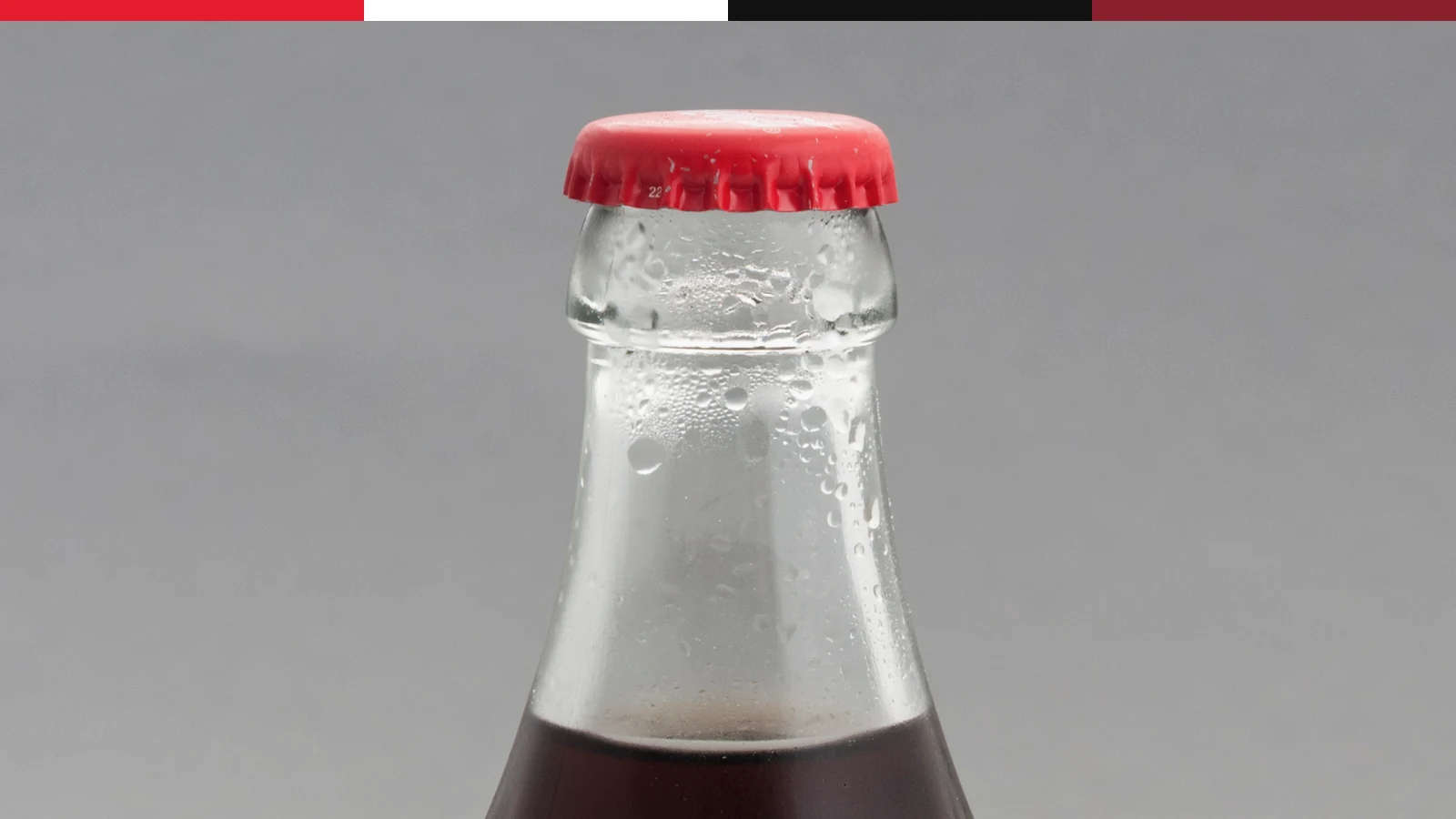
Cold-drink product state
The cue has to survive the real purchase state: cold, fast, small, and immediately recognizable.
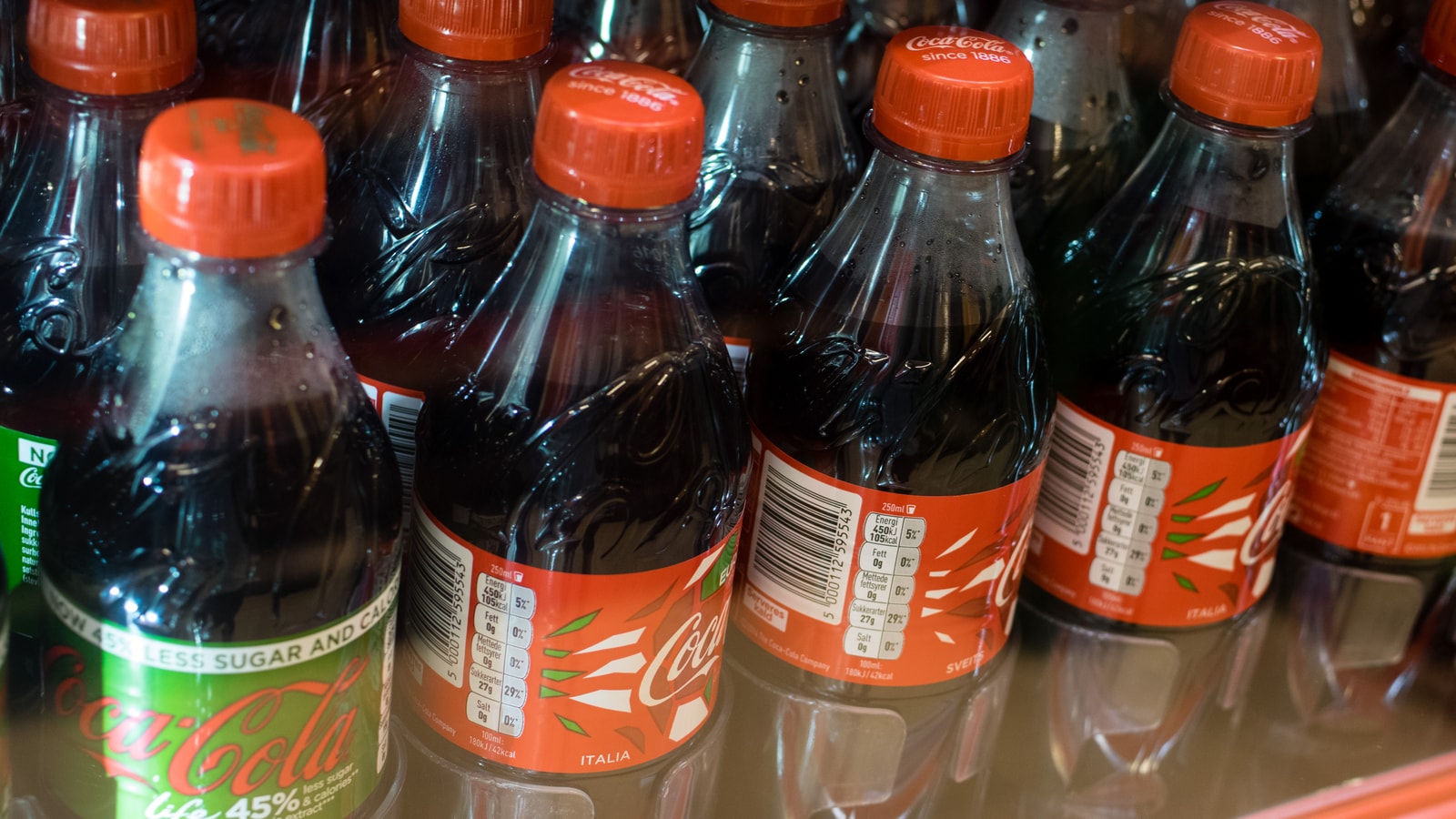
Cooler stock is the purchase system
Repeated red labels and bottle silhouettes create a block of memory at the exact moment of choice.
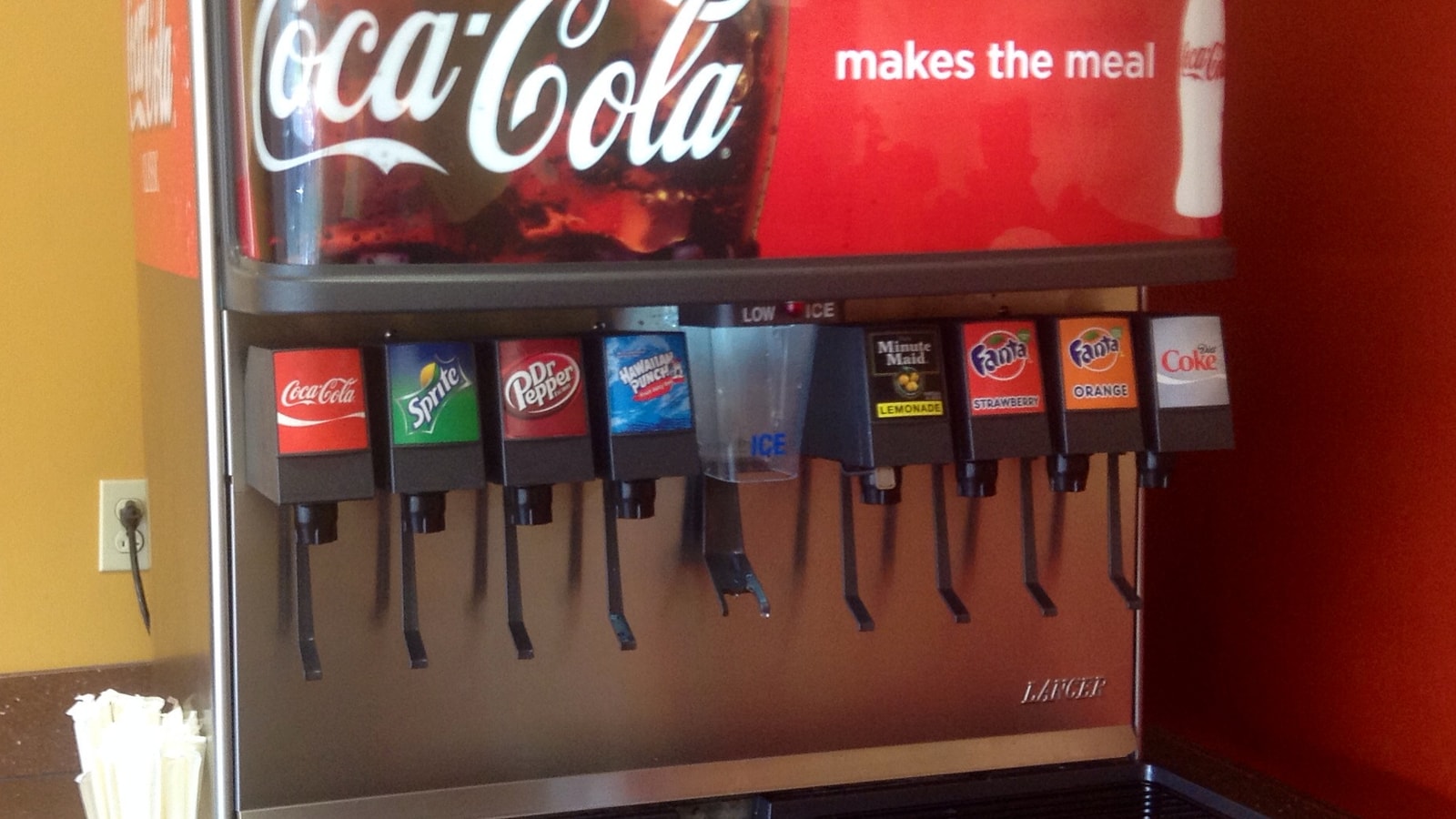
Fountain distribution extends the mark
The brand must remain recognizable when the package disappears and the purchase happens through a machine.
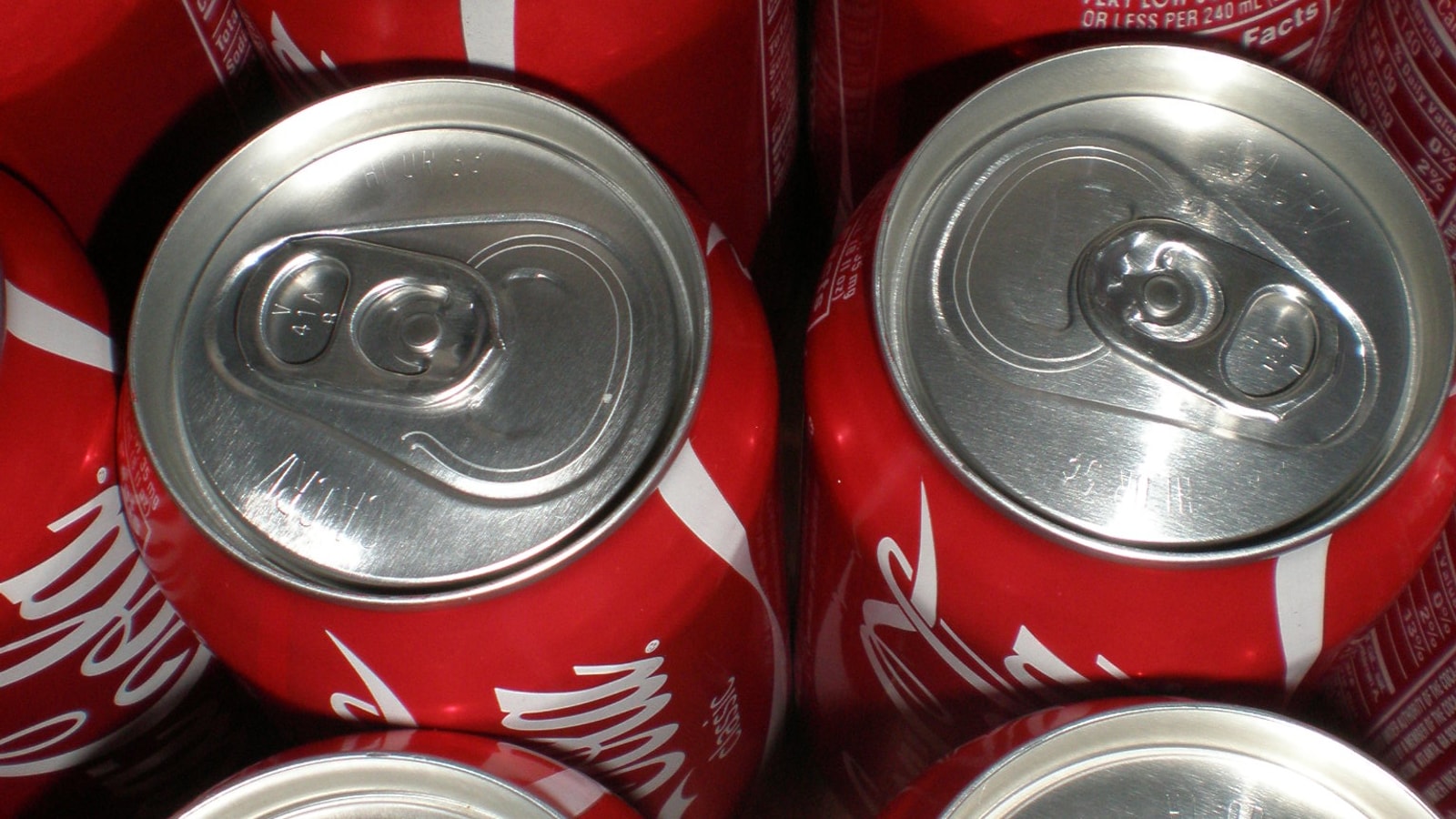
Can repetition makes a shelf block
A case proves how cap, can top, red field, and pack repetition turn one trademark into retail visibility.
Compare: Coca-Cola Better With
JKR's official project image shows Better With carrying a large white serif headline while the Spencerian script remains the Coca-Cola name. Shown here as a limited, attributed excerpt for editorial comparison.
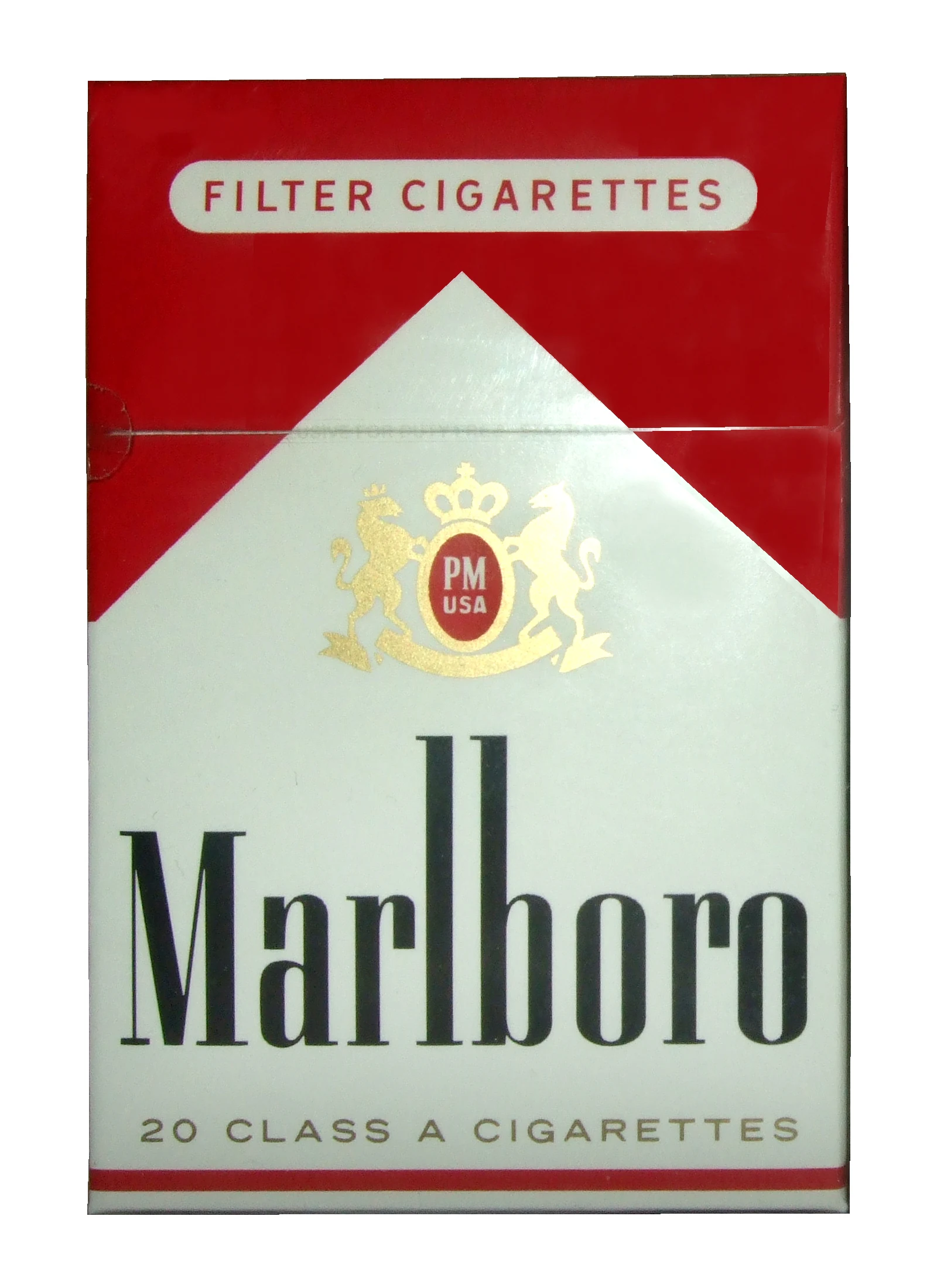
Compare: Marlboro package cues
The resemblance comes from cue combination, not an identical typeface: prominent serif forms inside red and white. Photograph by Jared Preston; derivative edit by Pittigrilli; CC BY-SA 3.0; resized and displayed in full for this comparison.
Product and service system
Coca-Cola begins as a product name and drink formula.
The contour bottle gives the brand a protected shape memory.
New Coke shows the risk of changing a deeply owned taste cue.
The brand uses portfolio cues while the core red script stays in charge.
Coca-Cola scales the Better With serif across global communications while retaining red, script, ribbon, and Arden Square.
Turning points.
Moments that show how Coca-Cola wins through repeated public surfaces and where familiar cues can create unwanted associations.
Color makes the brand visible across fridge, vending, can, and sign.
Shape makes the brand recognizable even when the label is obscured.
A famous change proved that familiarity can be a constraint as well as an asset.
Coca-Cola made the Better With serif prominent inside a unified global system. Creative Bloq documented social comparisons between its red-and-white serif look and Marlboro.
Coca-Cola-owned fairlife paused U.S. production after unauthorized access to production-related systems; Coca-Cola also moved toward a possible India bottler IPO.
Comparable Q2 revenue rose about 6% to USD 13.37 billion and Coca-Cola raised its organic-revenue and comparable-EPS outlook. Powerade hydration breaks added reach while drawing criticism over match interruptions.
Public reaction.
Coca-Cola called the July 2026 work a visual refresh built around existing assets. Creative Bloq reported social comparisons with Marlboro after Better With became more prominent, and pointed to the brands' shared red-and-white palette.
The red script and bottle make choice faster at the point of sale.
The script, red field, Dynamic Ribbon, and Arden Square remain. The refresh standardizes how those assets appear across markets.
Better With is not the Marlboro typeface, but similar serif forms inside a red-and-white field made the comparison easy to see.
Full timeline.
Coca-Cola begins as a named drink formula in Atlanta.
The Coca-Cola Company is incorporated.
The first bottling agreement starts the system that puts Coca-Cola beyond soda fountains.
The contour bottle is created to make Coca-Cola recognizable by shape.
Fanta is acquired with the Minute Maid purchase, widening the company beyond cola.
Diet Coke launches.
New Coke triggers a public reversal and makes taste memory impossible to ignore.
Coca-Cola Zero launches and later becomes Coca-Cola Zero Sugar.
The company acquires Costa Coffee.
The Coca-Cola Company reports USD 47.941B revenue.
Coca-Cola launches a global visual identity refresh across more than 200 markets.
Steal / avoid.
- Own a color through repeated purchase surfaces.
- Give the brand a recognizable shape as well as a logo.
- Keep the core product cue separate from portfolio complexity.
- Test a new supporting typeface against adjacent-category memory in the real color system.
- Do not confuse company architecture with product memory.
- Do not change a core cue without understanding what people protect.
- Do not make color decorative; tie it to buying surfaces.
- Do not review type in isolation. People read letterforms, color, and category together.
Short answer.
Coca-Cola shows how recognition compounds when color, script, package shape, and distribution repeat. Creative Bloq documented social comparisons after the 2026 visual refresh made the Better With serif more prominent. The counterlesson is that supporting type and a shared red-and-white palette can create an unintended category memory.
Frequently asked questions
What is Coca-Cola's strongest brand cue?
The red field and Spencerian script, reinforced by the contour bottle.
Why does the Coca-Cola bottle matter?
It turns the brand into a shape cue that can be recognized even before the label is read.
What should another brand steal from Coca-Cola?
Tie color and packaging to the exact buying moment, not to decorative brand guidelines.
Why was Coca-Cola's 2026 refresh compared with Marlboro?
Creative Bloq documented social comparisons after Coca-Cola made its Better With serif prominent across global communications. Better With is not the Marlboro typeface; the resemblance came from serif letterforms inside two strong red-and-white systems.
Need help with your own brand?
Use Private brand work when your name, identity, proof, or message needs a sharper branding decision.
Sources.
Use the education shelf for the concepts behind this brand page.
Private brand workUse this when the decision belongs to your own brand.
All brandsReturn to every brand page.
- SEC company facts for The Coca-Cola Company
- The Coca-Cola Company contour bottle history
- Wikimedia Commons Coca-Cola logo file
- Wikimedia Commons Coca-Cola glass bottle photo
- Wikimedia Commons Coca-Cola vending machine photo
- Wikimedia Commons Coca-Cola Company 2020 mark
- The Coca-Cola Company 2026 global visual identity announcement
- JKR Coca-Cola Iconic Everywhere identity project
- Brody Associates Coca-Cola Better With typeface
- Creative Bloq coverage of the Marlboro comparison
- Marlboro pack photograph by Jared Preston; derivative edit by Pittigrilli; resized for comparison
- Creative Commons Attribution-ShareAlike 3.0 license for the Marlboro pack photograph
- Coca-Cola market capitalization
- Reuters coverage of Coca-Cola Q2 2026 results and World Cup lift
- Powerade World Cup 2026 campaign and hydration breaks
.jpg)

_from_US_duty-free_shop_without_any_warnings_etc._(edited,_white_background).jpg)