Costco · Grow Your Brand · Membership warehouse trust system · United States / Active
Costco
Costco turns paid membership, limited choice, Kirkland trust, and warehouse ritual into retail authority. Costco is a membership machine: 914 warehouses, 81.0 million paid members, 145.2 million cardholders, renewal economics, limited-SKU discipline, Kirkland Signature, and a price-quality promise members renew.
Positioning, name, and architecture.
Three evidence checks before the page talks about scale, color, or public reaction.
Costco turns paid membership, limited choice, Kirkland trust, and warehouse ritual into retail authority.
Costco turns paid membership, limited assortment, Kirkland Signature, warehouse ritual, and ancillary services into a price-quality system that members renew.
Costco operates as the parent/company mark for a wider system.
No verified current group-wide tagline; Costco is read through membership, renewal, limited assortment, Kirkland Signature, and warehouse discipline.
hybrid
Paid membership and renewal: The card starts with the fee because 81.0 million paid members and 89.8% worldwide renewal prove that customers believe the warehouse repays the entry cost. Limited-SKU warehouse model: Costco carries fewer than 4,000 active SKUs per warehouse in its core warehouse business, so curation becomes a trust mechanism instead of endless choice. Treasure-hunt merchandising: Rotating finds make the trip feel alive without turning the store into chaos; the surprise works because staples stay dependable. Kirkland Signature: Private label turns Costco's judgment into a product mark across water, olive oil, paper goods, batteries, apparel, wine, coffee, diapers, and household staples. Fresh food and grocery: Meat, produce, bakery, deli, prepared food, and household consumables make the warehouse a repeat family habit, not a rare bulk run. Gas, food court, tire, pharmacy, optical, travel: Ancillary services make the membership useful before and after the cart: 747 gas stations, pharmacy, optical, tire installation, hearing, food court, and travel. Ecommerce, business centers, and delivery: Digital ordering, business centers, Costco Travel, and delivery add convenience while the warehouse remains the central member experience. Employee and member ethic: The public code of ethics links taking care of employees to taking care of members; that matters because the store experience depends on trust at scale.
The card starts with the fee because 81.0 million paid members and 89.8% worldwide renewal prove that customers believe the warehouse repays the entry cost.
Portfolio family: Paid membership and renewal source
Costco carries fewer than 4,000 active SKUs per warehouse in its core warehouse business, so curation becomes a trust mechanism instead of endless choice.
Portfolio family: Limited-SKU warehouse model source
Rotating finds make the trip feel alive without turning the store into chaos; the surprise works because staples stay dependable.
Portfolio family: Treasure-hunt merchandising source
Private label turns Costco's judgment into a product mark across water, olive oil, paper goods, batteries, apparel, wine, coffee, diapers, and household staples.
Portfolio family: Kirkland Signature source
Meat, produce, bakery, deli, prepared food, and household consumables make the warehouse a repeat family habit, not a rare bulk run.
Portfolio family: Fresh food and grocery source
Ancillary services make the membership useful before and after the cart: 747 gas stations, pharmacy, optical, tire installation, hearing, food court, and travel.
Portfolio family: Gas, food court, tire, pharmacy, optical, travel source
Digital ordering, business centers, Costco Travel, and delivery add convenience while the warehouse remains the central member experience.
Portfolio family: Ecommerce, business centers, and delivery source
The public code of ethics links taking care of employees to taking care of members; that matters because the store experience depends on trust at scale.
Portfolio family: Employee and member ethic source
Naming and tagline progression
Price Club opens in San Diego, creating the membership warehouse model Costco later joins.
Costco opens its first warehouse in Seattle.
Costco becomes a public company.
Market and scale snapshot.
Costco's scale is strongest when read through the economics members actually renew: revenue, earnings, public ownership, paid membership, and warehouse reach.
FY2025 total revenue: USD 269.912B net sales plus USD 5.323B membership fees.
FY2025 net income attributable to Costco.
Aggregate market value of voting stock held by non-affiliates as of 16 Feb 2025, reported in Costco's FY2025 Form 10-K.
Listed entity: Costco Wholesale Corporation; Nasdaq Global Select Market.
Color system.
Costco's blue-red system carries the warehouse sign and membership promise while industrial gray keeps pallets, carts, and Kirkland proof honest.
How the palette behaves
Blue anchors the warehouse wordmark and paid-membership institution.
Red adds urgency to price, promotion, and Kirkland shelf recognition without turning the system into a sale sign.
Industrial gray leaves room for pallet racks, flatbed carts, gas, food court, and service proof.
Recognition assets.
Memory pieces the brand can use before someone finishes a sentence.
The mark reads like price authority, not fashion.
The cart and high rack are the real interface.
The private-label mark lets Costco's trust leave the warehouse.
The hot dog and pizza line gives the brand a shared story people repeat.
Scores.
Use these scores to compare recognition, trust, proof, pressure, and risk.
The warehouse, cart, and sign are instantly readable.
Paid entry, 81.0M paid members, and 89.8% worldwide renewal make the value promise measurable.
Kirkland and services must be read as brand architecture, not extras.
Costco earns affection through price discipline, surprise, samples, returns, Kirkland trust, food court ritual, and the feeling of winning the trip.
Costco only reads correctly when membership, SKU restraint, Kirkland, warehouse scale, gas, food court, tire, pharmacy, optical, travel, ecommerce, returns, and employee trust stay visible together.
Costco needs parent, product, service, and history lanes labeled cleanly so search systems do not flatten the brand into one vague entity.
Limited choice, disciplined pricing, returns, and warehouse routines make the membership promise repeatable at scale.
Ecommerce and ancillary services extend convenience while the physical warehouse remains the clearest expression of member value.
How the logo changed.
Two sourced stages show the Costco masterbrand without mixing Kirkland portfolio architecture into corporate identity history.
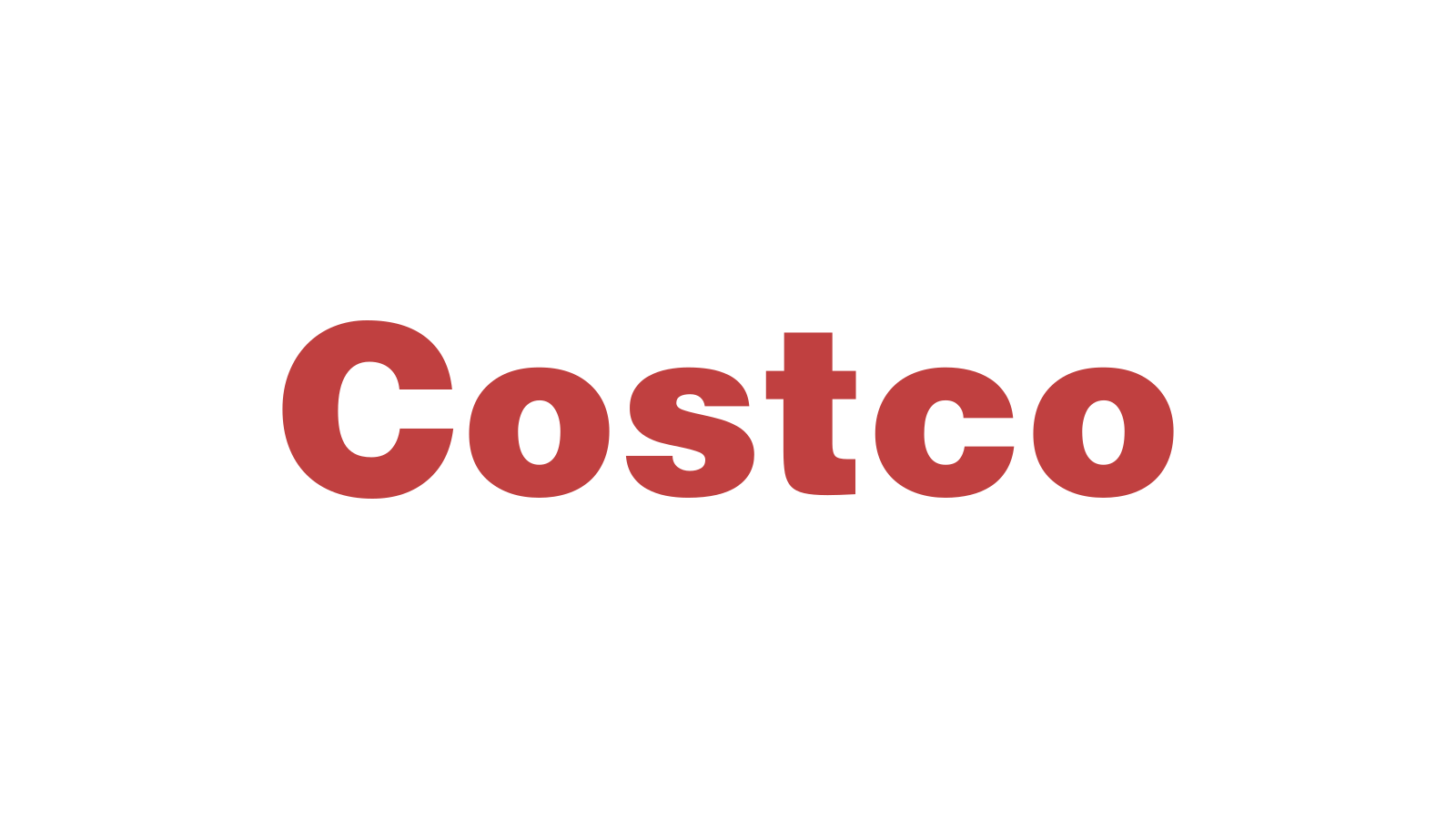
The original Costco wordmark belongs to the first warehouse-club promise.
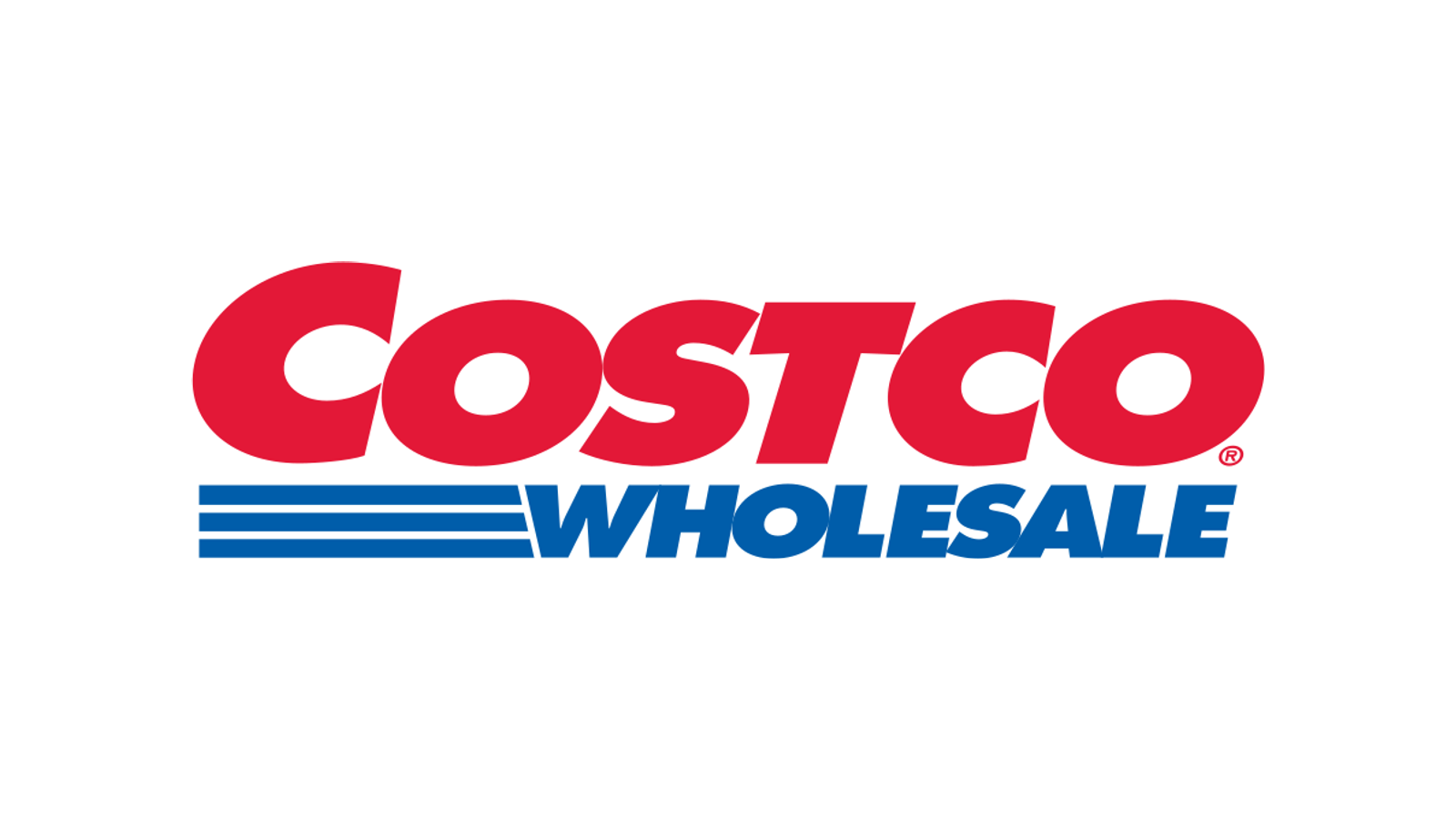
The current wordmark makes the wholesale operating model explicit while preserving Costco recognition.
Product and service lineage.
Costco only reads correctly when membership, SKU restraint, Kirkland, warehouse scale, gas, food court, tire, pharmacy, optical, travel, ecommerce, returns, and employee trust stay visible together.

Private label makes trust portable
Kirkland Signature carries Costco's quality judgment across categories without becoming a false stage in the Costco logo history.
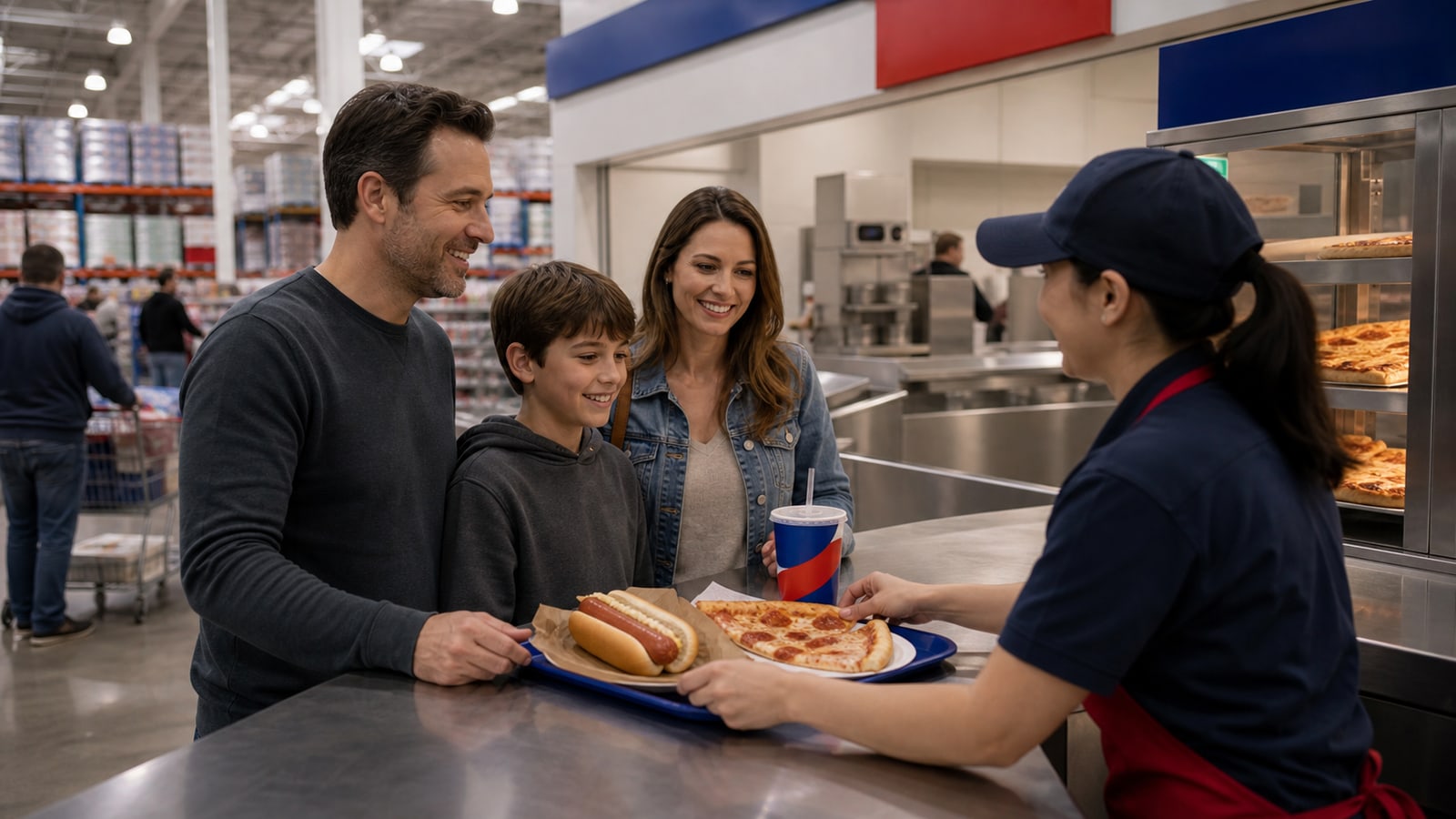
Food court is the price ritual
The hot dog, pizza, and drink lane makes the value claim social, repeatable, and oddly emotional.
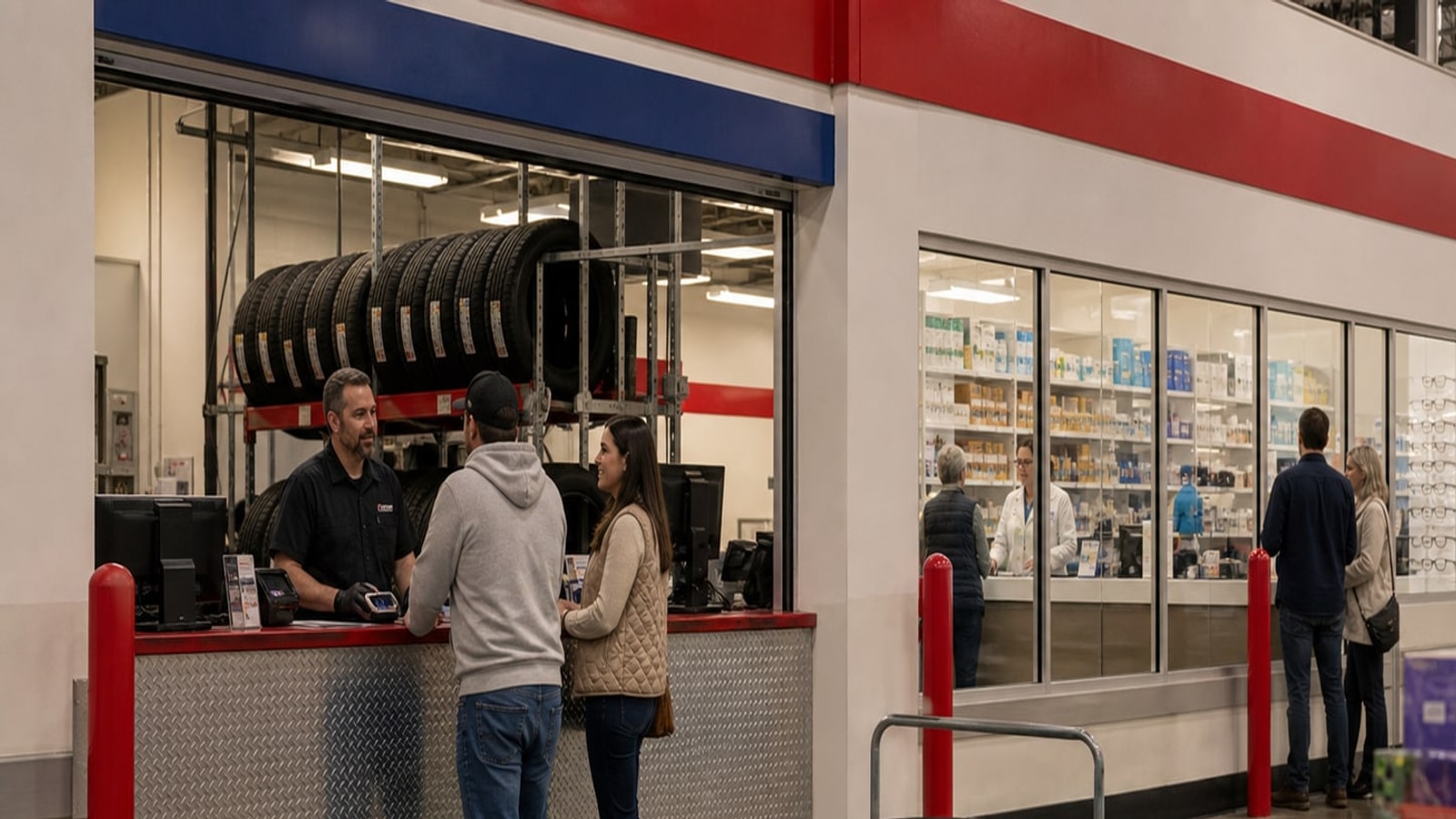
Services make the membership stick
Tire, pharmacy, optical, hearing, gas, travel, returns, and food court turn Costco from a shopping trip into a member route.
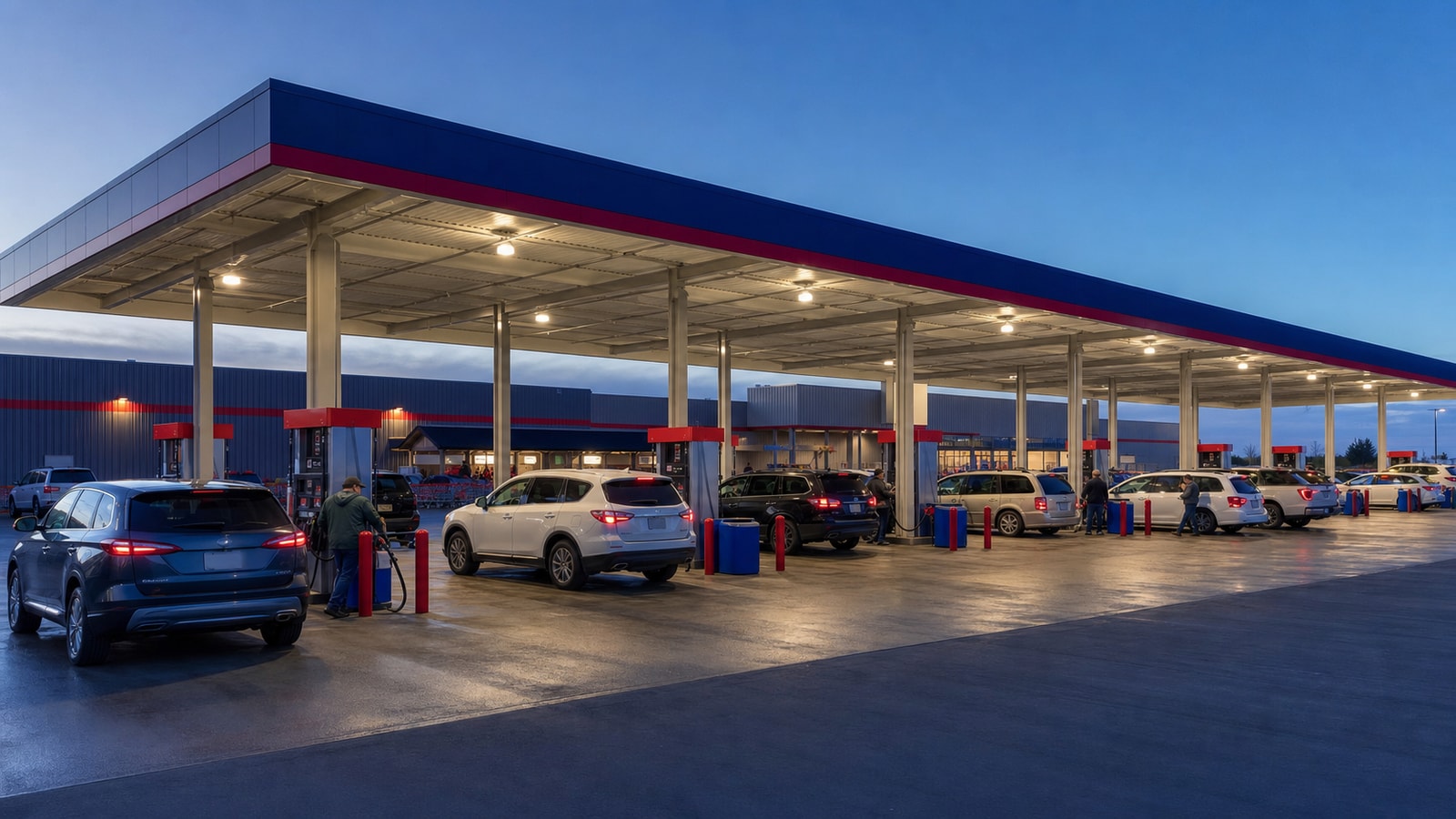
Fuel makes the fee useful between warehouse trips
Gas stations turn membership into a repeat service habit and make the value promise visible outside the cart.
Product and service system
The card starts with the fee because 81.0 million paid members and 89.8% worldwide renewal prove that customers believe the warehouse repays the entry cost.
Costco carries fewer than 4,000 active SKUs per warehouse in its core warehouse business, so curation becomes a trust mechanism instead of endless choice.
Rotating finds make the trip feel alive without turning the store into chaos; the surprise works because staples stay dependable.
Private label turns Costco's judgment into a product mark across water, olive oil, paper goods, batteries, apparel, wine, coffee, diapers, and household staples.
Meat, produce, bakery, deli, prepared food, and household consumables make the warehouse a repeat family habit, not a rare bulk run.
Ancillary services make the membership useful before and after the cart: 747 gas stations, pharmacy, optical, tire installation, hearing, food court, and travel.
Digital ordering, business centers, Costco Travel, and delivery add convenience while the warehouse remains the central member experience.
The public code of ethics links taking care of employees to taking care of members; that matters because the store experience depends on trust at scale.
Turning points.
Events that changed what buyers could see, buy, repeat, or trust.
Costco and Price Club merge, joining two warehouse-club systems.
Kirkland Signature is introduced as the private-label trust mark.
The company takes the Costco Wholesale name.
Public reaction.
The useful reaction is about trust and pressure, not sentiment counts.
The strongest Costco proof is a member renewing because the warehouse, Kirkland, gas, food court, services, return policy, and employee-led execution keep paying back the fee.
The brand weakens when crowds, out-of-stocks, fee increases, or weaker Kirkland quality make the trip feel less worth it.
Full timeline.
Price Club opens in San Diego, creating the membership warehouse model Costco later joins.
Costco opens its first warehouse in Seattle.
Costco becomes a public company.
Costco and Price Club merge, joining two warehouse-club systems.
Kirkland Signature is introduced as the private-label trust mark.
The company takes the Costco Wholesale name.
Costco strengthens ecommerce while keeping warehouses at the center of the membership.
Gasoline, pharmacy, optical, hearing, food court, tire installation, and travel become clearer membership reinforcers.
The warehouse model keeps global expansion disciplined rather than fashion-retail fast, protecting trust before chasing store count.
Costco deepens the credit-card, digital membership, ecommerce, and services relationship without making the warehouse feel optional.
Pandemic demand highlights Costco's role in household stocking and trusted staples.
Costco raises U.S. and Canada membership fees, making renewal trust a public test.
Costco reports FY2025 revenue above USD 275B while the value system still depends on member renewal.
Steal / avoid.
- Make customers pay for access only when the value proof is obvious and repeated.
- Use private label as a trust mark, not a cheap substitute.
- Let operational restraint become brand language: fewer choices, better buys, faster trust.
- Make every side service prove the membership, from gas to optical to travel.
- Do not describe Costco as only bulk retail.
- Do not bury Kirkland, gas, food court, pharmacy, optical, tire, travel, and ecommerce.
- Do not fake product labels or turn the warehouse into a generic supermarket scene.
- Do not ignore renewal rate, cardholders, Executive members, SKU discipline, gas stations, or the employee/member ethic.
Short answer.
Costco should be read as paid trust, not bulk retail. The useful lesson is that membership renewal, limited choice, Kirkland, gas, food court, pharmacy, optical, tire, travel, ecommerce, returns, employees, and warehouse discipline all reinforce one promise: the trip should repay the fee.
Frequently asked questions
What is Costco's core brand signal?
Costco turns paid membership, limited choice, Kirkland trust, and warehouse ritual into retail authority.
Why does Kirkland Signature matter to Costco?
It turns Costco's buying judgment into a portable product promise, so trust earned in the warehouse can travel across grocery, household, apparel, and other categories.
What should another brand steal from Costco?
Make customers pay for access only when the value proof is obvious and repeated.
Need help with your own brand?
Use Private brand work when your name, identity, proof, or message needs a sharper branding decision.