DBS · Grow Your Brand · Regional Bank / Digital Trust System · Singapore / Active / listed bank
DBS
Are DBS and POSB the same bank? DBS acquired POSB in 1998 and retained the familiar POSB name. DBS began as the Development Bank of Singapore; POSB’s roots reach back to the Post Office Savings Bank in 1877. Their shared group does not erase those different histories.
Positioning, name, and architecture.
Three evidence checks before the page talks about scale, color, or public reaction.
A Singapore-rooted bank with daily digital surfaces, POSB memory, institutional scale, and wealth services under one high-recognition mark.
DBS positions banking as everyday financial infrastructure: a Singapore-rooted mark that has to work in payments, savings, wealth, business banking, and regional institutional service.
DBS keeps the Development Bank of Singapore origin short enough for a regional banking system.
Live more, Bank less
branded house with major endorsed sub-brand exceptions
DBS should not flatten POSB or payment surfaces into generic bank copy; the page has to label the public memory each layer carries.
main listed bank and regional trust carrier
parent bank: Singapore retail and institutional banking source
local savings and public-memory lane
consumer banking lane: POSB everyday banking source
mobile and online banking proof
digital service lane: digibank app and online banking source
affluent banking and advisory proof
wealth lane: Treasures wealth service source
Naming and tagline progression
Development Bank of Singapore
Live more, Bank less
Market and scale snapshot.
DBS reports in Singapore dollars. FY2025 total income and net profit show operating scale; the USD equivalents apply the dated conversion rate stated below, while year-end market value comes directly from the annual report.
DBS reported FY2025 total income of SGD 22.9 billion; the USD comparison applies 0.7786 USD per SGD, captured 4 Jul 2026 from the named exchange-rate feed.
DBS reported FY2025 net profit attributable to shareholders of SGD 10.933 billion; the USD comparison applies the same 0.7786 USD per SGD rate.
DBS Annual Report 2025 states year-end 2025 market capitalization of USD 124 billion, equivalent to SGD 160 billion.
DBS Group Holdings Ltd ordinary shares; ISIN SG1L01001701.
Color system.
Red should work as a daily banking cue, not as a loud claim of innovation.
How the palette behaves
Red gives DBS speed and attention in a conservative category.
Black keeps the mark from feeling like a payment-only app.
White space helps the mark carry institutional trust.
The palette works best when attached to a clear service lane.
Recognition assets.
Memory pieces the brand can use before someone finishes a sentence.
DBS can carry payment, wealth, branch, app, and institutional banking because the name is compact.
POSB is part of the public architecture, not a minor product note.
The brand earns digital leadership only when service reliability and governance are visible.
Scores.
Use these scores to compare recognition, trust, proof, pressure, and risk.
Red mark, short name, and Singapore banking memory are strong.
Scale and official award language can support trust when dated.
PayLah, digibank, and service surfaces make the brand daily.
Assets, deposits, and markets create a large regional signal.
DBS is clear, but POSB and payment lanes need labels.
Digital claims raise operational expectations.
Listed entity, bank brand, and ticker are mostly clean.
Awards and digital leadership can be overclaimed.
How the logo changed.
Two official DBS marks show the move from the 1972 Development Bank of Singapore identity to the current masterbrand.
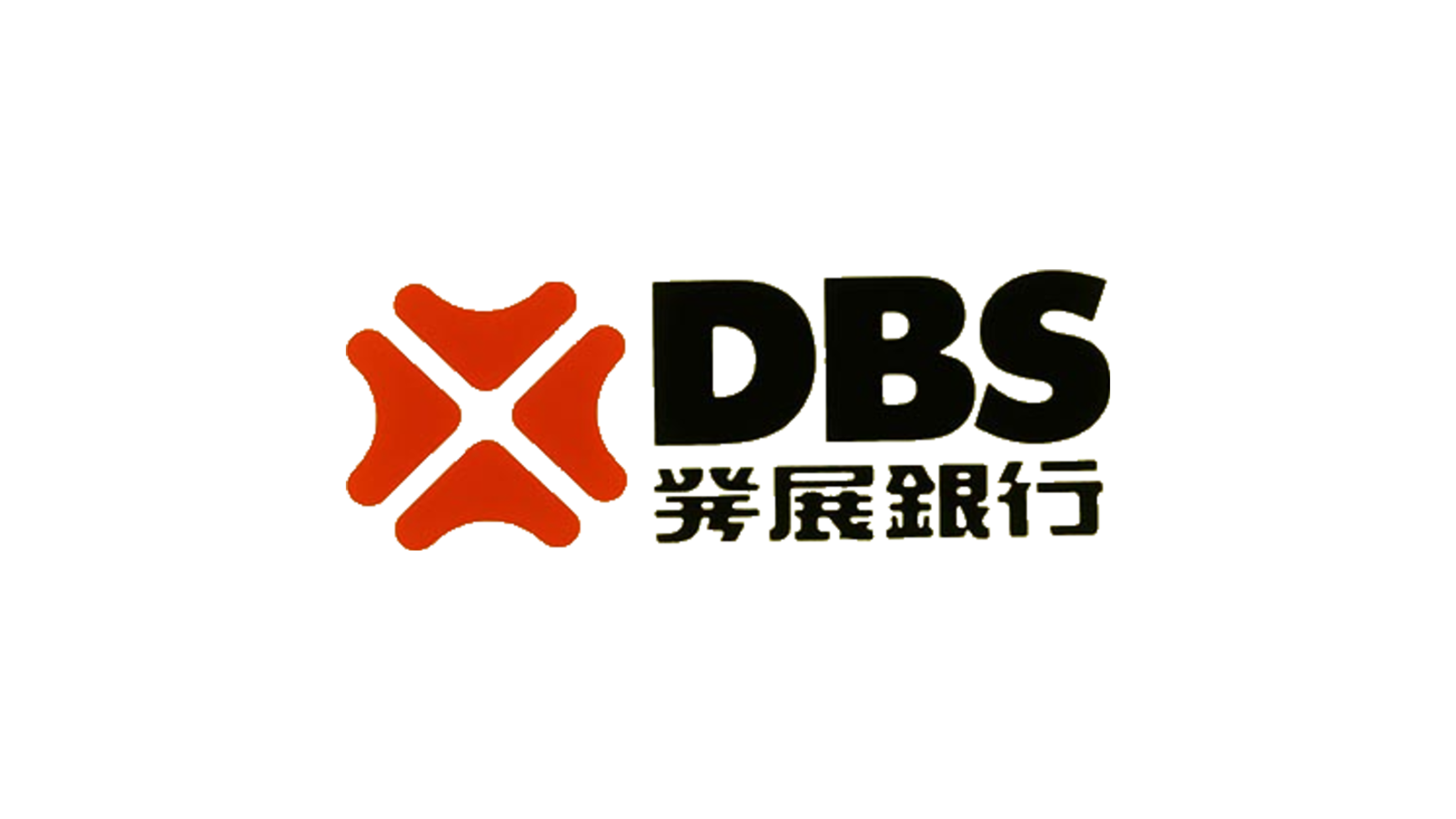
The first DBS identity combines the red symbol, DBS initials, and the bank's Chinese name. source

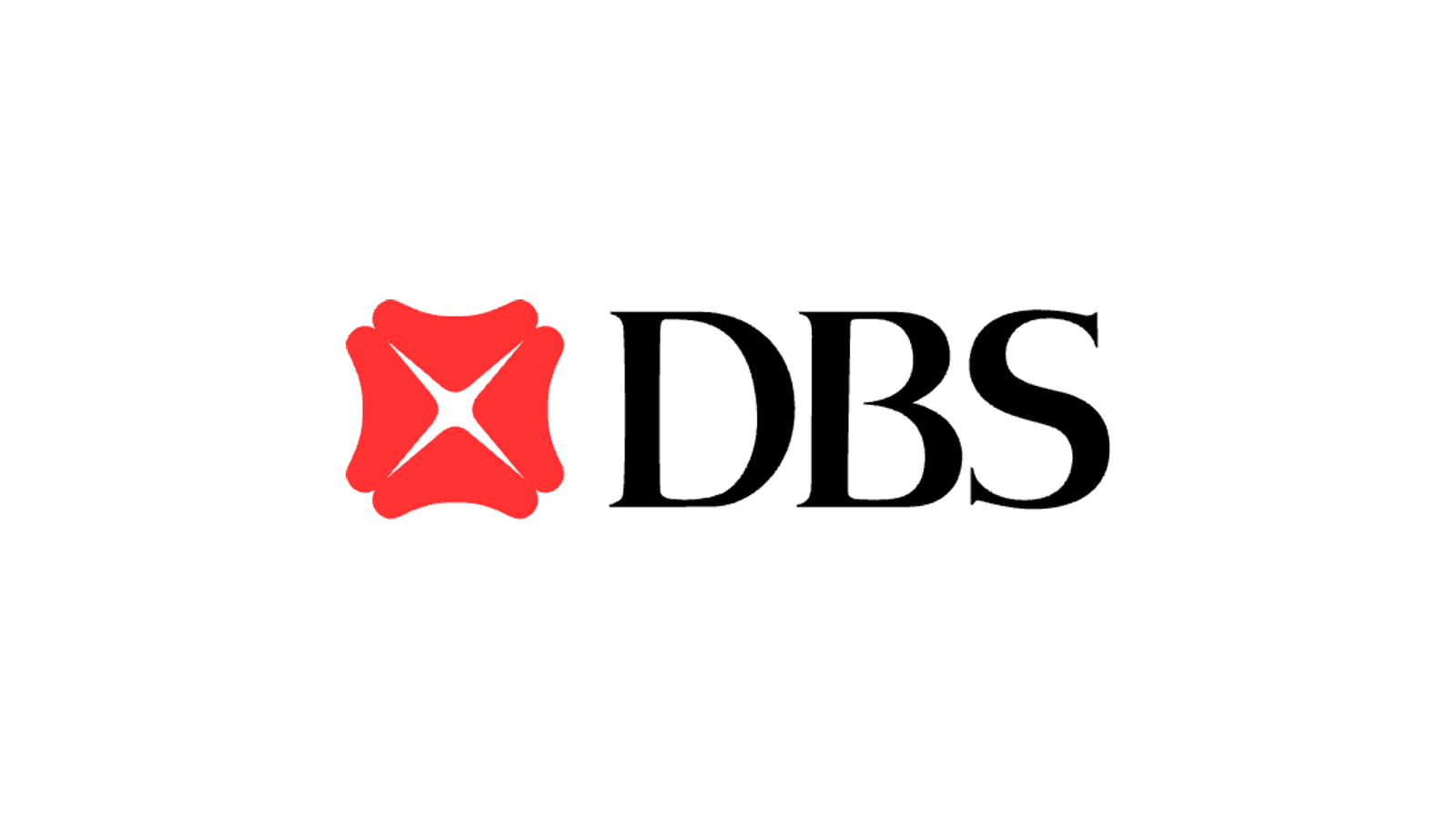
The current lockup keeps the red recognition symbol and simplifies the English wordmark.
Product and service lineage.
For DBS, product proof is the move from development-bank origin to everyday digital, branch, wealth, and regional service surfaces.
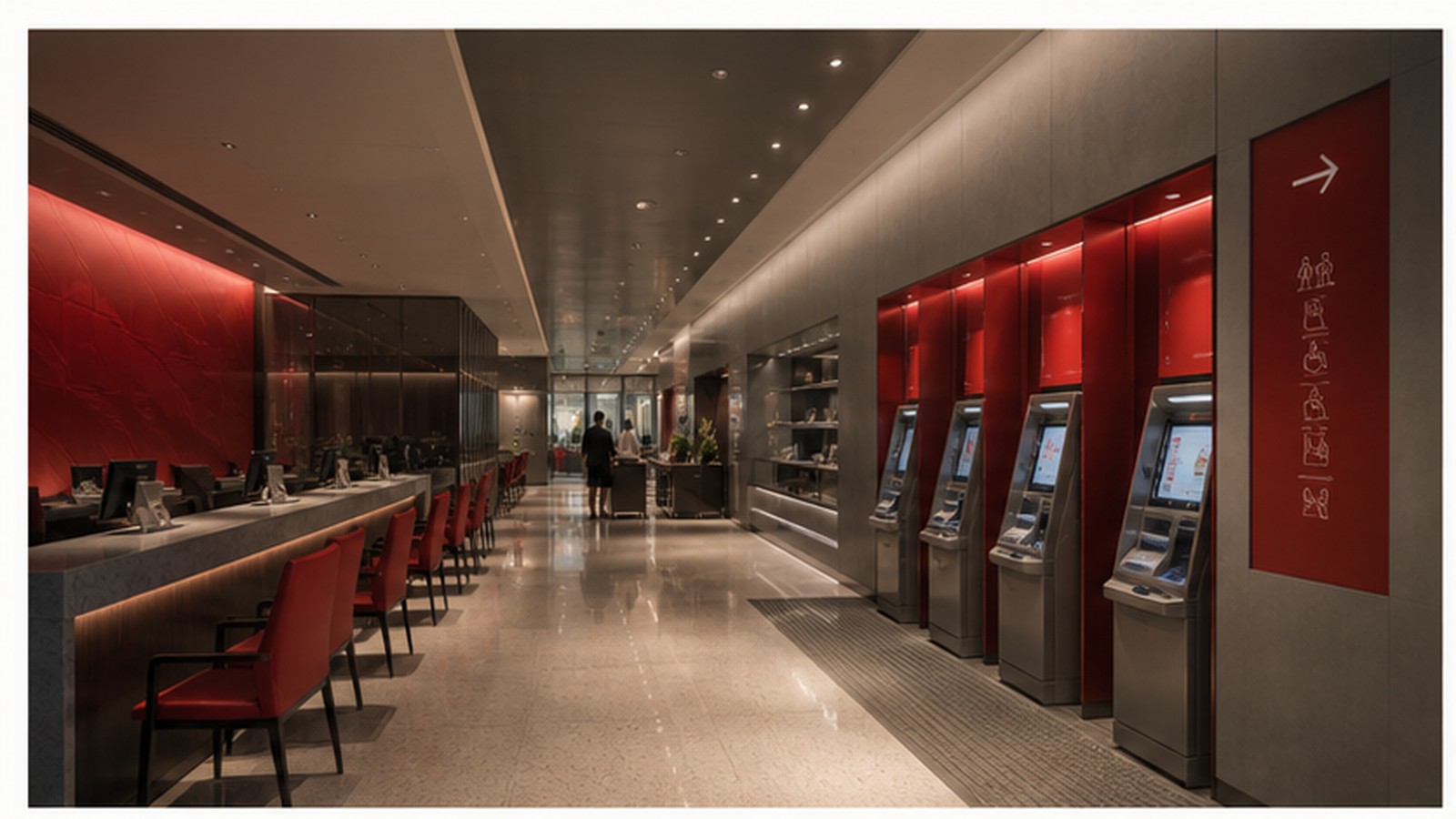
Branch service anchors the bank
A real banking brand has to show where customers are served, not only the master mark.
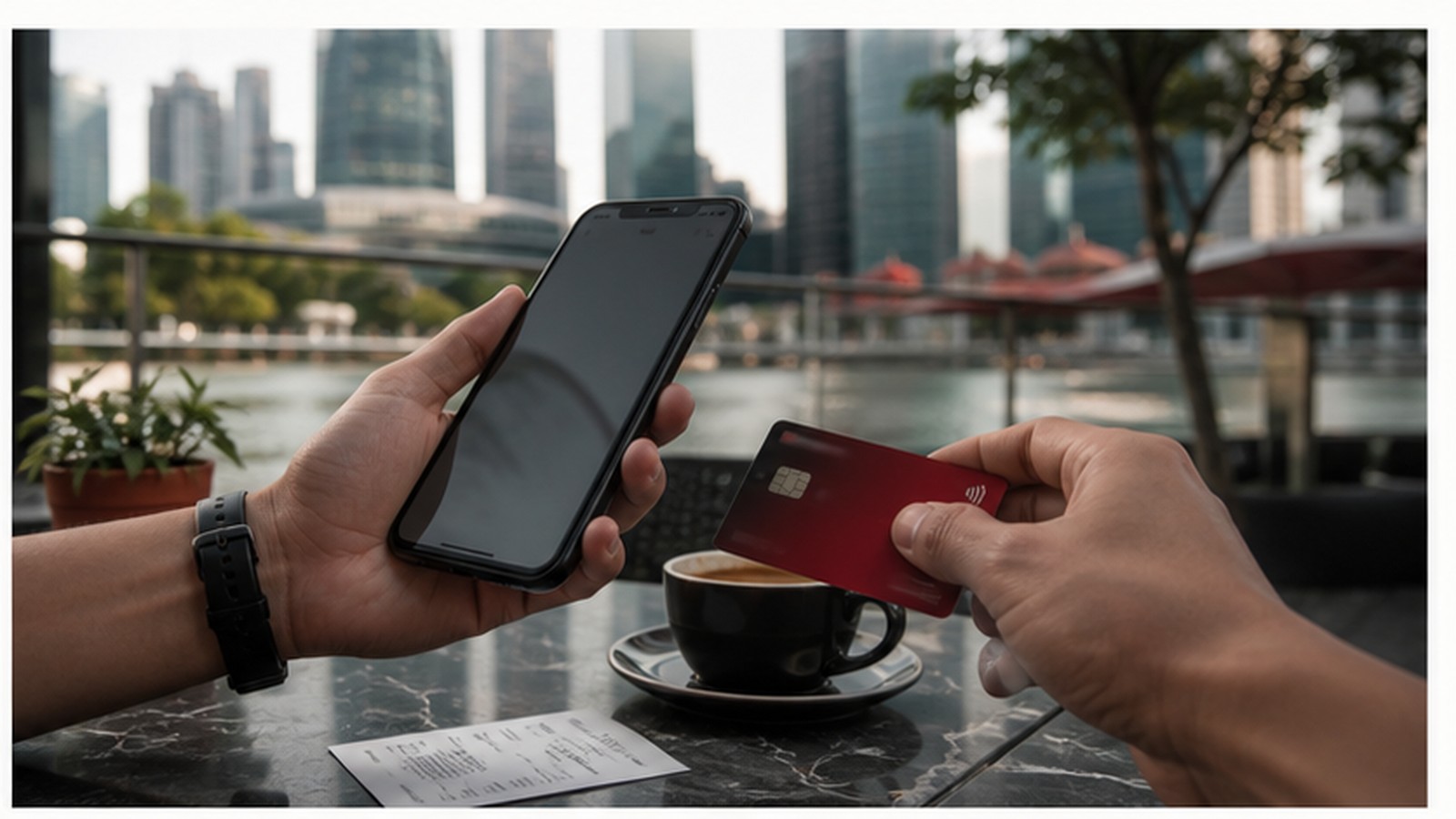
Daily banking becomes visible
Mobile payment, card, and account moments make the bank a daily-use system.
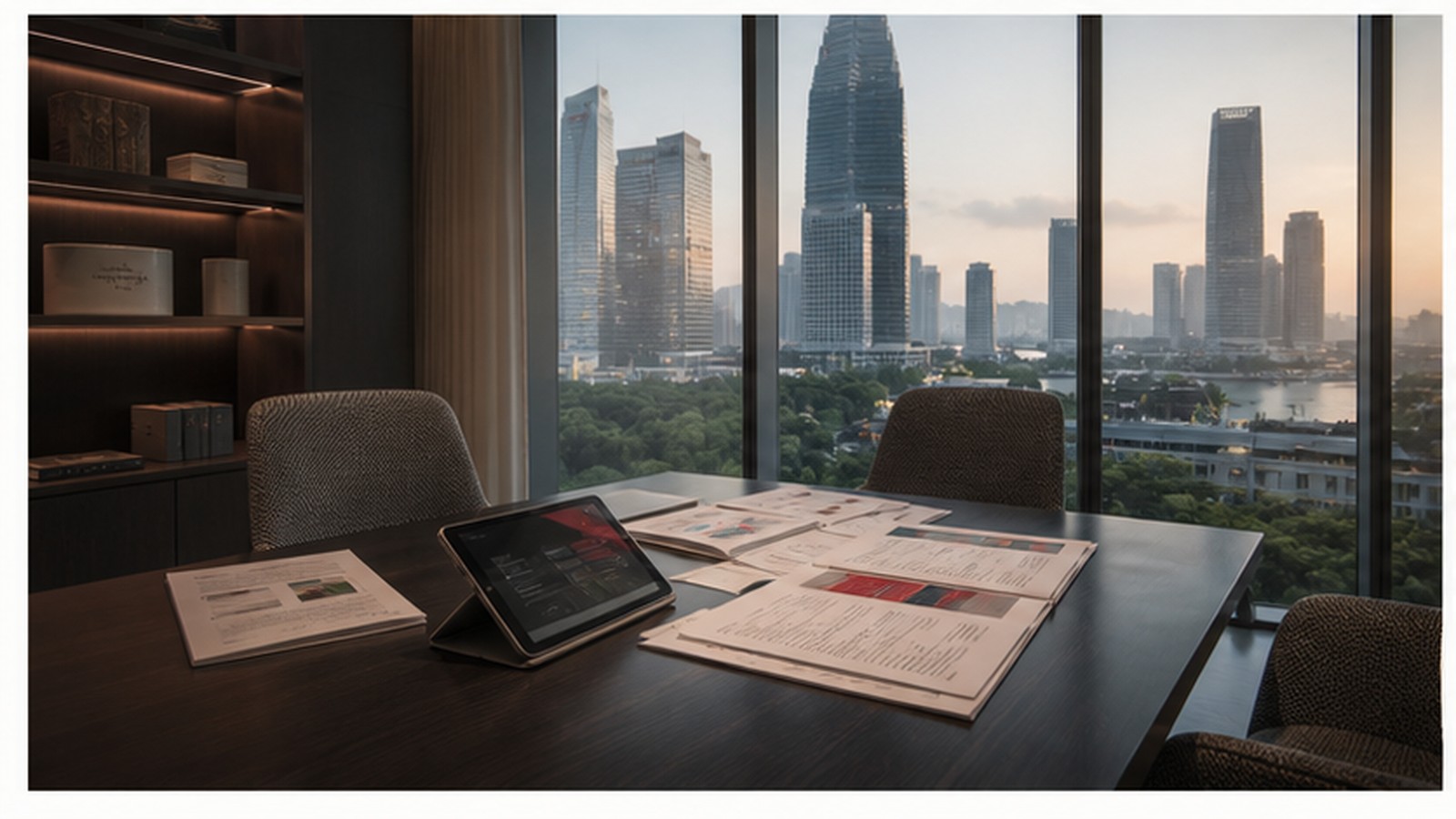
Wealth and business need place proof
Advisory and corporate banking need their own visible lane so scale does not become vague.
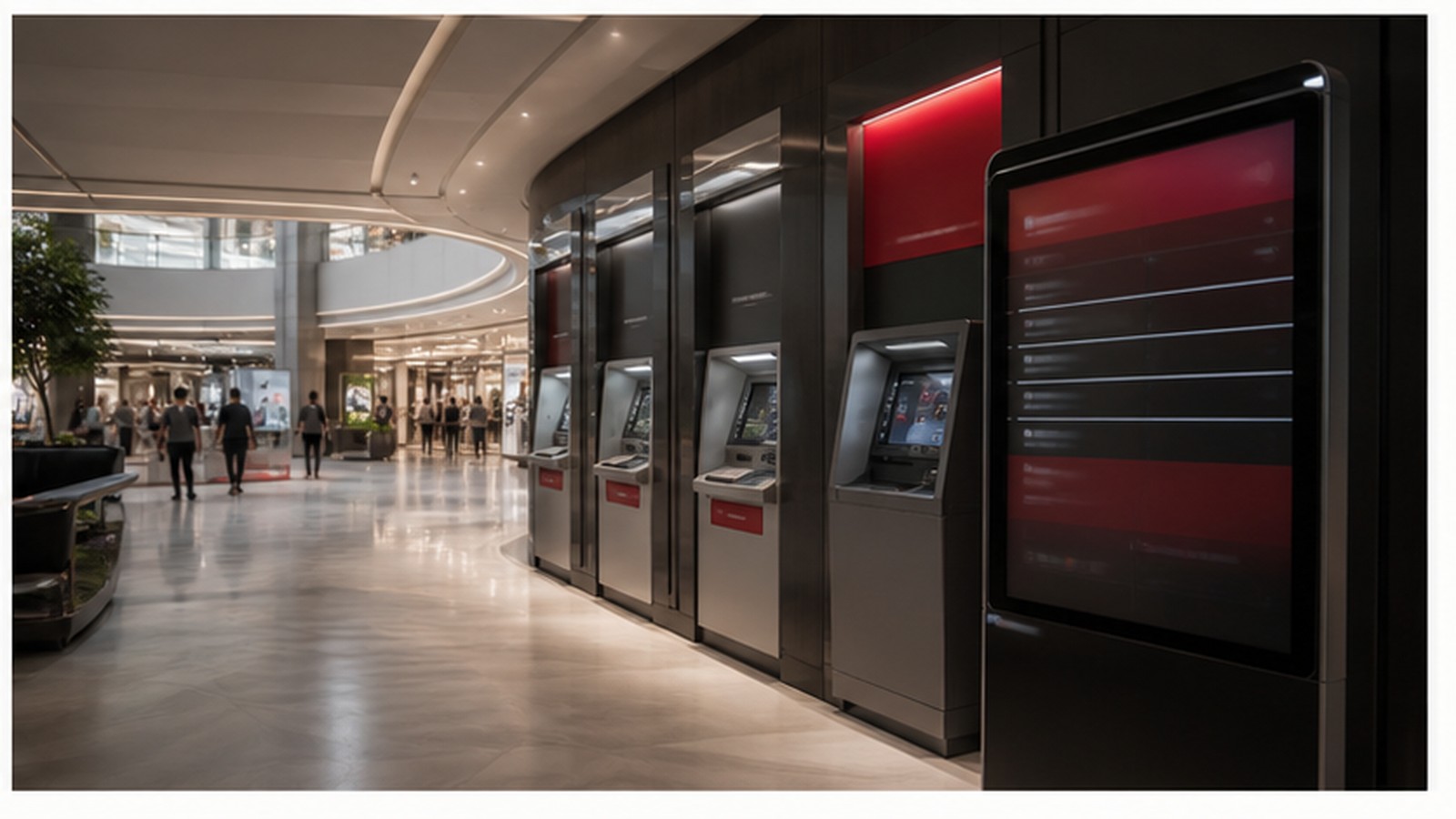
Regional infrastructure needs labels
ATMs, service desks, and digital queue surfaces keep regional scale tied to use.
Product and service system
Development Bank of Singapore is established.
POSB becomes a major architecture milestone inside the DBS system.
A bonus share issue changes the ordinary-share base used in per-share analysis.
DBS reports record total income and large regional balance-sheet scale.
Turning points.
Events that changed what buyers could see, buy, repeat, or trust.
The founding name explains why DBS carries Singapore memory even as the bank serves six key Asian markets.
The acquisition adds a familiar consumer-savings name that still needs a visible lane inside the DBS system.
FY2025 total income reaches SGD 22.9 billion, but net profit attributable to shareholders falls 3% to SGD 10.933 billion.
First-quarter 2026 net profit reaches SGD 2.93 billion and total income SGD 5.95 billion; customers still judge the brand through access, transfers, payments, and service reliability.
Public reaction.
The useful reaction is about trust and pressure, not sentiment counts.
Customers judge DBS through app reliability, account access, transfers, advice, and branch support.
Singapore roots help the mark, but the page should not call DBS a government bank today.
PayLah, digibank, AI, and tokenisation are different proof lanes.
Full timeline.
Development Bank of Singapore is established. Source
DBS acquires POSBank. Source
DBS Group Holdings becomes the listed holding structure. Source
Digital banking and PayLah-style daily services expand. Source
DBS continues regional wealth and institutional banking expansion. Source
DBS reports SGD 22.9 billion total income and SGD 10.933 billion net profit attributable to shareholders. Source
First-quarter net profit rises to SGD 2.93 billion as total income reaches SGD 5.95 billion. Source
Steal / avoid.
- Keep the name short enough for many service surfaces.
- Let a strong sub-brand keep its own memory when it helps trust.
- Use official finance labels and dated investor sources.
- Do not call DBS a government bank today.
- Do not flatten POSB into generic DBS copy.
- Do not use best-bank awards without date and source.
Short answer.
DBS began as the Development Bank of Singapore. POSB joined it in 1998 and retains a separate consumer-banking identity with roots in the Post Office Savings Bank. DBS, POSB and digital services such as PayLah! belong to different levels of the same banking group, rather than being interchangeable names for every account.
Frequently asked questions
Is POSB the same as DBS?
POSB has been part of DBS since the 1998 acquisition, but it keeps its own consumer-banking brand. POSB began as the Post Office Savings Bank in 1877. That explains why Singapore customers see both names: common group ownership did not erase POSB's older identity.
What does DBS stand for?
DBS originated as the Development Bank of Singapore. Its 1998 POSBank acquisition announcement still used the full Development Bank of Singapore Ltd name. The initials come from that Singapore development-bank history, not from Deutsche Bank or an unrelated use of the letters DBS.
What does POSB stand for?
POSB began as the Post Office Savings Bank in 1877. DBS acquired it in 1998, and the POSB name remained as a consumer-banking brand within the group.
Do DBS and POSB customers need different digibank apps?
DBS says its DBS and POSB digibank apps provide identical services. Customers can use one rather than installing both. The bank recommends staying with a single app because switching between versions requires setting up the digital token again.
Is DBS PayLah! the same app as digibank?
No. PayLah! and digibank are separate apps. digibank handles account balances, transfers, bills and other banking functions; PayLah! is the related payments and lifestyle app. DBS supports switching between the two with fingerprint or face authentication, but installing one does not mean they are a single product.
Need help with your own brand?
Use Private brand work when your name, identity, proof, or message needs a sharper branding decision.
