Estée Lauder Companies · Grow Your Brand · Prestige beauty portfolio system · United States / Active
Estée Lauder Companies
Which brands does Estée Lauder own or license? Clinique, M·A·C, La Mer and The Ordinary sit within The Estée Lauder Companies. AERIN and Balmain Beauty are licensing relationships. TOM FORD is owned by the group, which licenses its fashion and eyewear businesses to other companies.
Positioning, name, and architecture.
Three evidence checks before the page talks about scale, color, or public reaction.
Estée Lauder Companies turns founder-led beauty into a disciplined prestige portfolio.
A brand page on Estée Lauder Companies as a prestige beauty portfolio: Estée Lauder, Clinique, M·A·C, La Mer, Jo Malone London, Le Labo, Tom Ford Beauty, Aveda, Bobbi Brown, Origins, Too Faced, Dr.Jart+, DECIEM, The Ordinary, NIOD, Bumble and bumble, Aramis, Lab Series, and the retail, ritual, science, fragrance, and acquisition system behind them.
Estée Lauder Companies operates as the parent/company mark for a wider system.
No verified current portfolio-wide tagline; the company is read through the separate promises of Estée Lauder, Clinique, M·A·C, La Mer, its fragrance houses, and ingredient-led brands.
Owned brands, a nested portfolio and beauty licenses
Portfolio checked October 20, 2026. The Estée Lauder Companies is the group; Estée Lauder is its namesake beauty brand. The references below separate group brands, DECIEM’s own brands, beauty licenses and former relationships. They describe the consumer portfolio, not every legal subsidiary. The acquisition dates come from company records, not this review date.
Parent group: The Estée Lauder Companies. Founder story, skin care, fragrance, Night Repair, Youth-Dew, counter selling, and premium department-store trust anchor the company.
ELC brand: Beauty • Namesake brand source
Parent group: The Estée Lauder Companies. Dermatologist-guided, allergy-tested, clean-counter proof makes Clinique a clinical trust lane.
ELC brand: Skin care and makeup source
Parent group: The Estée Lauder Companies. Professional artistry, color authority, backstage credibility, and culture give the portfolio edge.
ELC brand: Makeup • Remaining equity acquired February 1998 source
Parent group: The Estée Lauder Companies. Ultra-premium skin care, ritual, ingredient story, and packaging protect the high-price prestige lane.
ELC brand: Skin care • Acquired May 1995 source
Parent group: The Estée Lauder Companies. Its acquisition record dates Bobbi Brown to October 1995.
Owned brand: Makeup source
Parent group: The Estée Lauder Companies. Acquired in November 1997.
Owned brand: Hair care source
Parent group: The Estée Lauder Companies. Acquired in October 1999.
Owned brand: Fragrance source
Parent group: The Estée Lauder Companies. It acquired a majority interest in June 2000 and the remaining equity in September 2006.
Owned brand: Hair care source
Parent group: The Estée Lauder Companies. The acquisition record lists Laboratoires Darphin in April 2003.
Owned brand: Skin care source
Parent group: The Estée Lauder Companies. Smashbox Beauty Cosmetics was acquired in July 2010.
Owned brand: Makeup source
Parent group: The Estée Lauder Companies. Acquired in October 2014.
Owned brand: Fragrance source
Parent group: The Estée Lauder Companies. The acquisition record dates the transaction to January 2015.
Owned brand: Fragrance source
Parent group: The Estée Lauder Companies. Acquired in January 2015 and listed in the current portfolio.
Owned brand: Skin care source
Parent group: The Estée Lauder Companies. The acquisition record lists By Kilian in February 2016.
Owned brand: Fragrance source
Parent group: The Estée Lauder Companies. Acquired in December 2016.
Owned brand: Makeup source
Parent group: The Estée Lauder Companies. It acquired the remaining equity of Do The Right Thing, the company behind Dr.Jart+, in December 2019.
Owned brand: Skin care source
The Estée Lauder Companies completed its purchase of DECIEM’s remaining interests on May 31, 2024, after investing in 2017 and taking majority ownership in 2021.
Owned parent company: Parent of The Ordinary and NIOD source
Immediate brand parent: DECIEM. Ultimate group: The Estée Lauder Companies. Full ownership of DECIEM closed on May 31, 2024; the product brand remains The Ordinary.
Owned through DECIEM: Skin care source
Immediate brand parent: DECIEM. Ultimate group: The Estée Lauder Companies. NIOD is a separate DECIEM brand, not another name for The Ordinary.
Owned through DECIEM: Skin care source
The Estée Lauder Companies became sole owner of the TOM FORD brand and its intellectual property on April 28, 2023. Zegna Group operates fashion under license; Marcolin holds the eyewear license.
Owned brand; licenses granted: Beauty, fashion and eyewear have different operators source
Estée Lauder Inc., an ELC subsidiary, licenses the AERIN name from Aerin LLC. The 2024 proxy states a renewal term through June 30, 2027. Inclusion in ELC’s beauty portfolio does not mean it owns Aerin LLC.
Licensed beauty brand: Beauty license • Aerin LLC is the licensor source
A beauty license agreement between Balmain and The Estée Lauder Companies established Balmain Beauty in 2022. ELC’s February 2026 announcement confirms that relationship.
Licensed beauty brand: Beauty license • Not ownership of the fashion house source
All three appear in the current ELC directory. Aramis and Lab Series cover men’s fragrance and skin care; Origins is the group’s nature-oriented skin-care brand.
ELC portfolio brands: Separate consumer names under the same group source
Jo Malone London, Le Labo, Tom Ford Beauty, Editions de Parfums Frédéric Malle, Kilian Paris, and AERIN make scent memory and gifting visible.
Portfolio family: Fragrance houses source
Aveda, Bumble and bumble, Origins, Bobbi Brown, and Too Faced widen the portfolio without needing one voice.
Portfolio family: Hair, natural, and lifestyle source
Dr.Jart+, DECIEM, The Ordinary, and NIOD add science, transparency, and digital-native contrast.
Portfolio family: Derm and ingredient-led brands source
Aramis and Lab Series keep male grooming and treatment in the architecture.
Portfolio family: Men's and grooming source
ELC’s transaction record lists Stila’s divestiture in April 2006 and Rodan & Fields’ divestiture in August 2007. They should not be carried forward as current ELC-owned brands.
Former ownership: Sold brands source
ELC records Prescriptives as discontinued in December 2020, RODIN olio lusso in March 2021 and BECCA in September 2021. These are historical portfolio entries, not current standalone brands in its directory.
Discontinued brands: Discontinuation differs from selling a brand source
ELC records the Tommy Hilfiger, Donna Karan New York, DKNY, Michael Kors and Ermenegildo Zegna fragrance licenses as discontinued in July 2022. Past fragrance production does not establish current ownership.
Ended licenses: License ended • July 2022 source
Naming and tagline progression
Estée and Joseph Lauder found the company with a small skin-care line.
Youth-Dew launches and turns fragrance into a bath oil and gifting breakthrough.
Aramis launches as a prestige men's fragrance and grooming lane.
Market and scale snapshot.
Estée Lauder Companies' FY2025 revenue, profit, and public-market scale sit behind a portfolio spanning prestige makeup, skincare, fragrance, hair care, and ingredient-led brands.
Nine months ended 31 March 2026.
Nine months ended 31 March 2026.
Nine-month net cash provided by operating activities.
NYSE-listed parent company.
Color system.
Estée Lauder Companies' black-gold parent palette signals prestige while leaving Clinique, M·A·C, La Mer, Jo Malone London, and The Ordinary free to keep their own codes.
How the palette behaves
Black gives the parent company and founder name a stable prestige frame.
Gold supports luxury and ritual without forcing every portfolio brand into one cosmetic look.
Warm neutral space keeps clinical, professional-makeup, fragrance, and ingredient-led brands visually separate.
Recognition assets.
Memory pieces the brand can use before someone finishes a sentence.
The Estée Lauder name carries personal selling, aspiration, and premium counter memory.
Clinique turns white coats, clean counters, and proof claims into recognition.
M·A·C makes artistry, pigment, culture, and backstage credibility visible.
La Mer, Jo Malone, Le Labo, Tom Ford Beauty, and fragrance houses make material, scent, and gifting central.
Scores.
Use these scores to compare recognition, trust, proof, pressure, and risk.
The flagship, Clinique, M·A·C, La Mer, and fragrance brands are highly legible.
The company is strongest when each brand has its own ritual, counter, science, or scent job.
Packaging, counter selling, product texture, price, and founder stories carry premium proof.
FY2025 loss and channel shifts mean current proof has to be honest.
Estée Lauder Companies only reads correctly when skin care, makeup, fragrance, hair care, founder story, counter ritual, science, acquisitions, and current turnaround pressure stay visible together.
Estée Lauder Companies needs parent, product, service, and history lanes labeled cleanly so search systems do not flatten the brand into one vague entity.
Estée Lauder Companies turns founder-led beauty into a disciplined prestige portfolio.
Estée Lauder Companies is misread when it is reduced to one founder brand; the page needs Clinique, M·A·C, La Mer, Jo Malone London, Le Labo, Tom Ford Beauty, Aveda, Bobbi Brown, Origins, Too Faced, Dr.Jart+, DECIEM, The Ordinary, NIOD, Bumble and bumble, Aramis, and Lab Series in view.
How the logo changed.
Two sourced corporate treatments show continuity in the Estée Lauder Companies wordmark while the portfolio expanded around it.
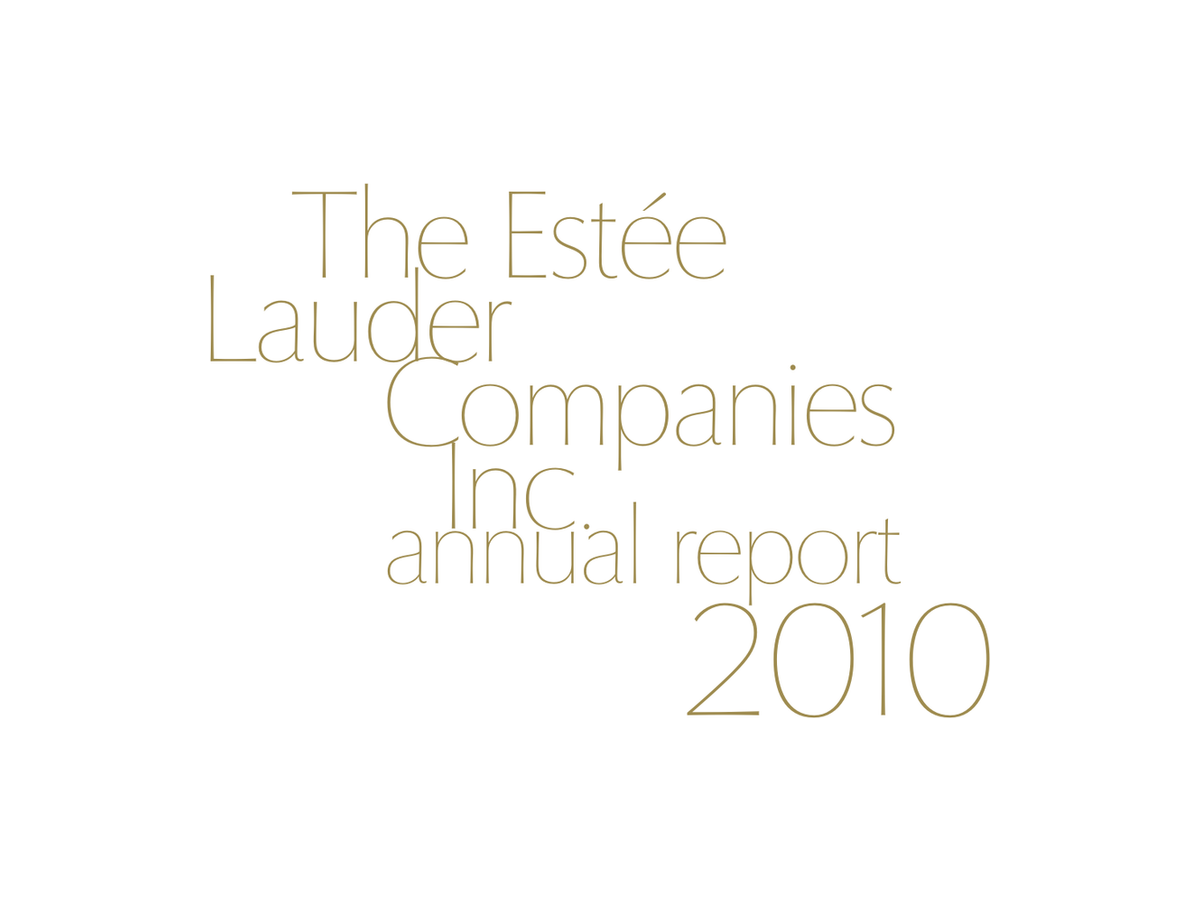
The 2010 annual report uses the Estée Lauder Companies wordmark as the parent identity above the prestige portfolio. source

The current wordmark keeps the founder name and corporate descriptor stable while the portfolio changes beneath it. source

Product and service lineage.
Estée Lauder Companies only reads correctly when skin care, makeup, fragrance, hair care, founder story, counter ritual, science, acquisitions, and current turnaround pressure stay visible together.
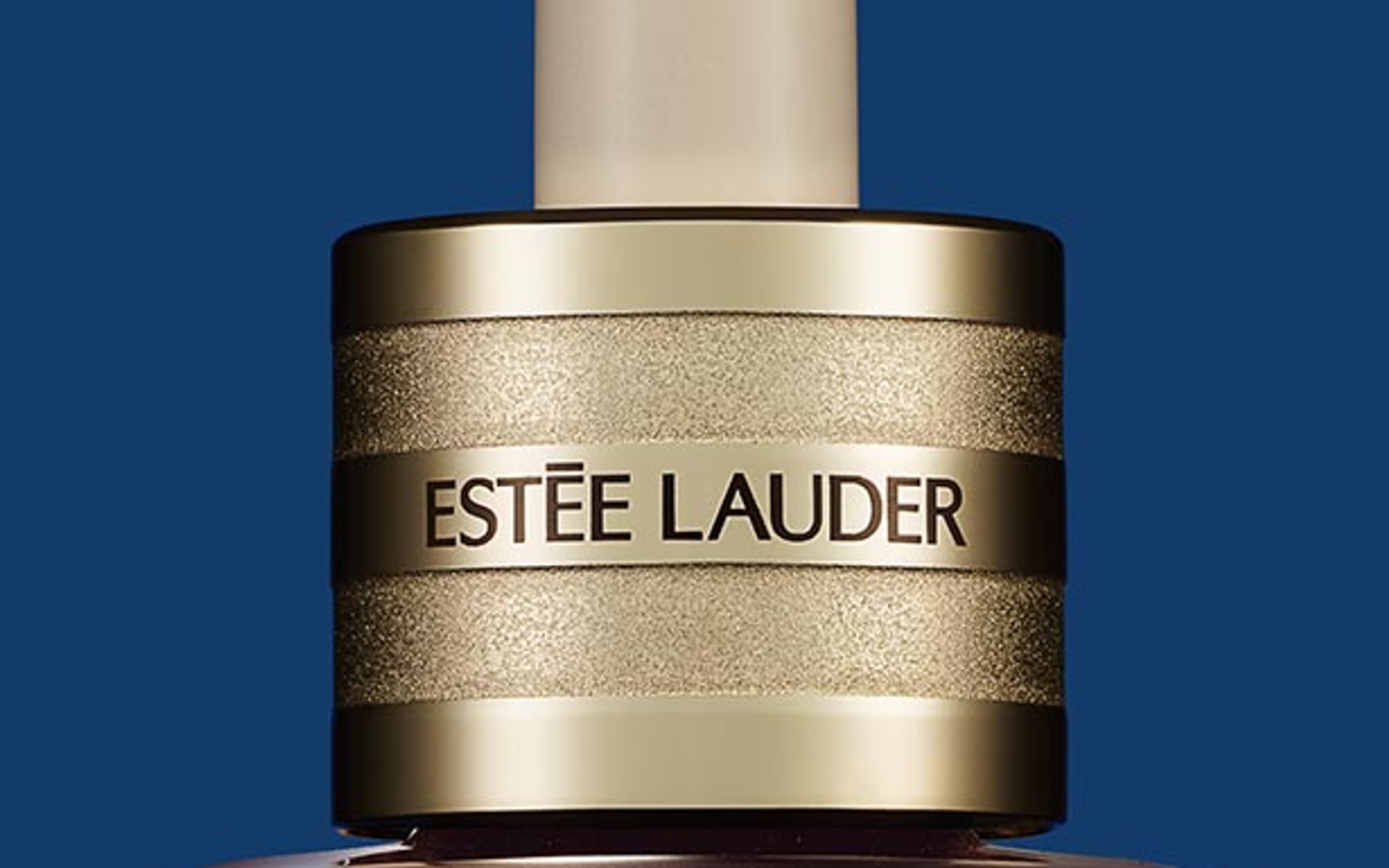
Estée Lauder keeps the founder promise
The flagship brand links high-touch selling, skin care proof, fragrance memory, and premium department-store cues.
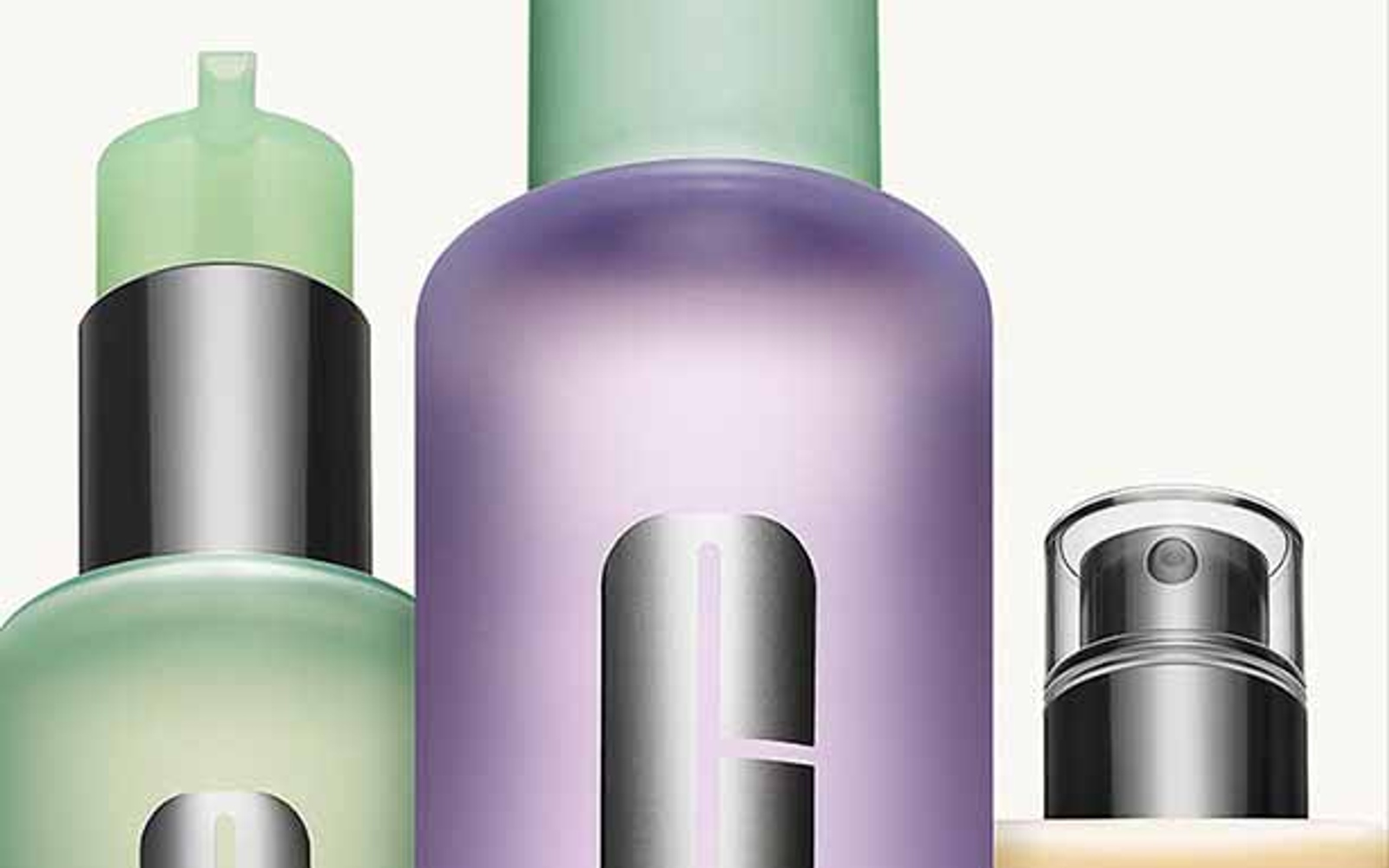
Clinique makes proof clinical
Clinique separates dermatologist-guided, allergy-tested, clean-counter trust from pure glamour.
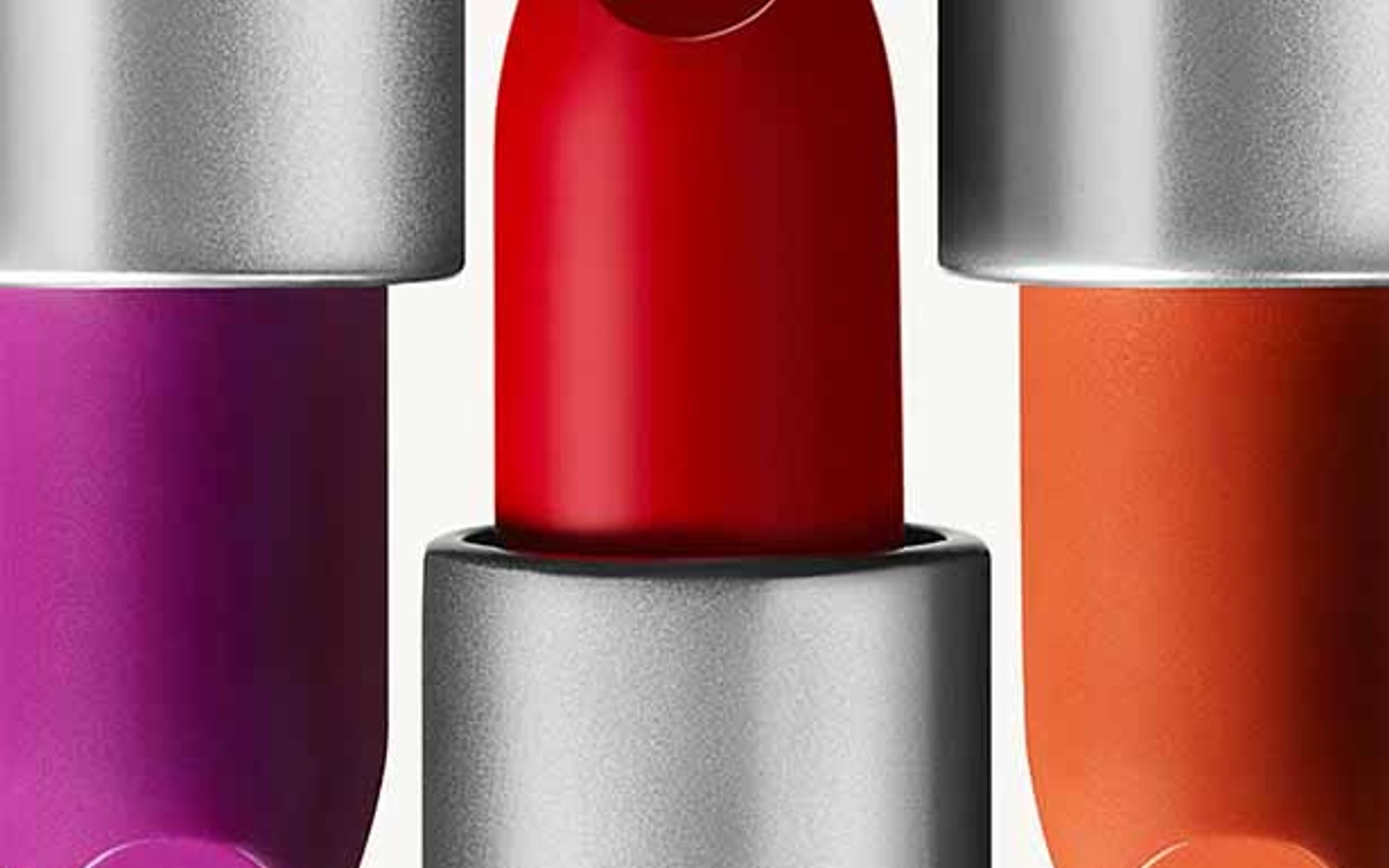
M·A·C makes artistry public
M·A·C adds professional makeup, color authority, backstage credibility, and culture to the portfolio.
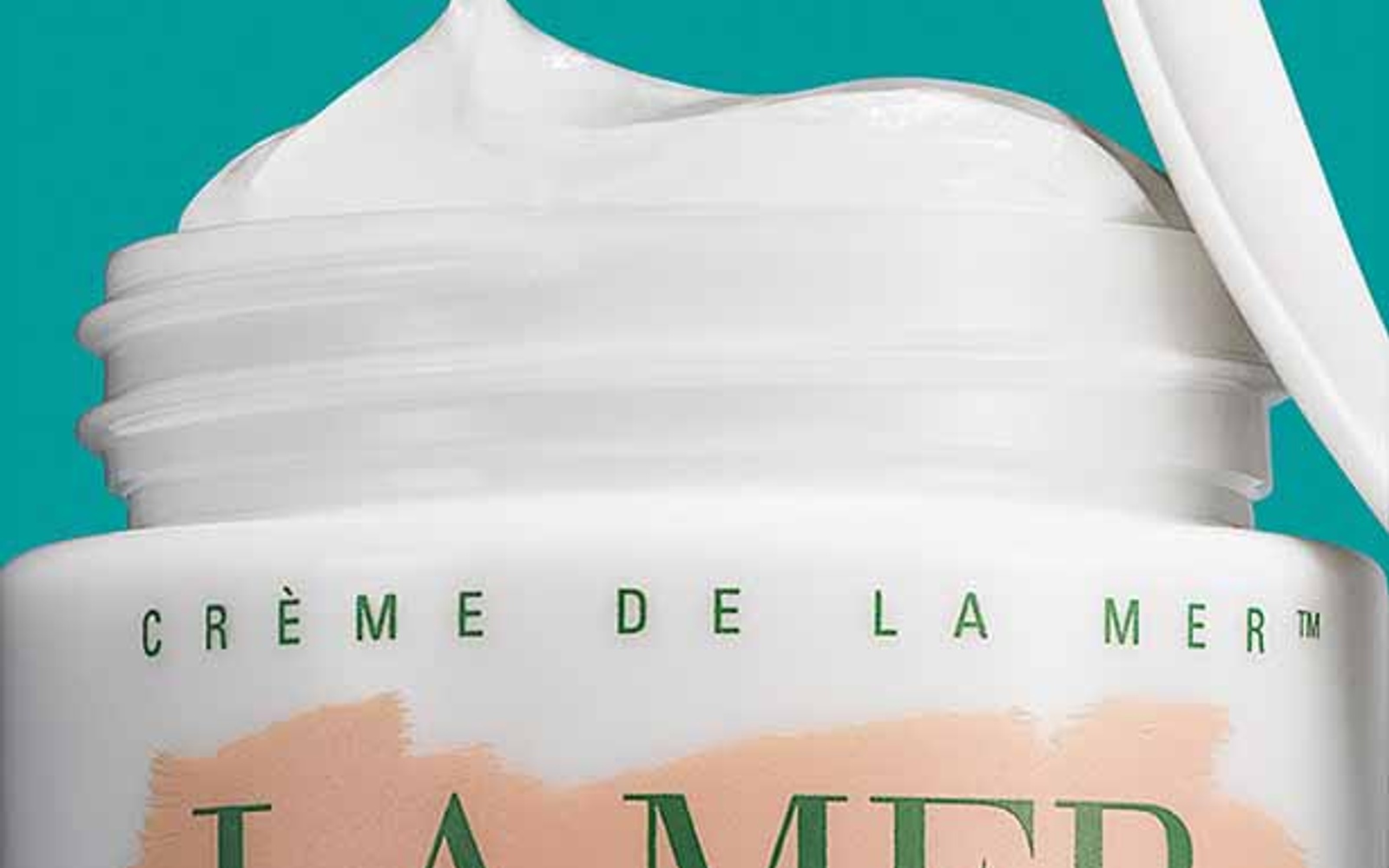
La Mer protects ultra-premium skin care
La Mer is a price, ritual, ingredient-story, and packaging discipline lane; it cannot be flattened into generic luxury beauty.
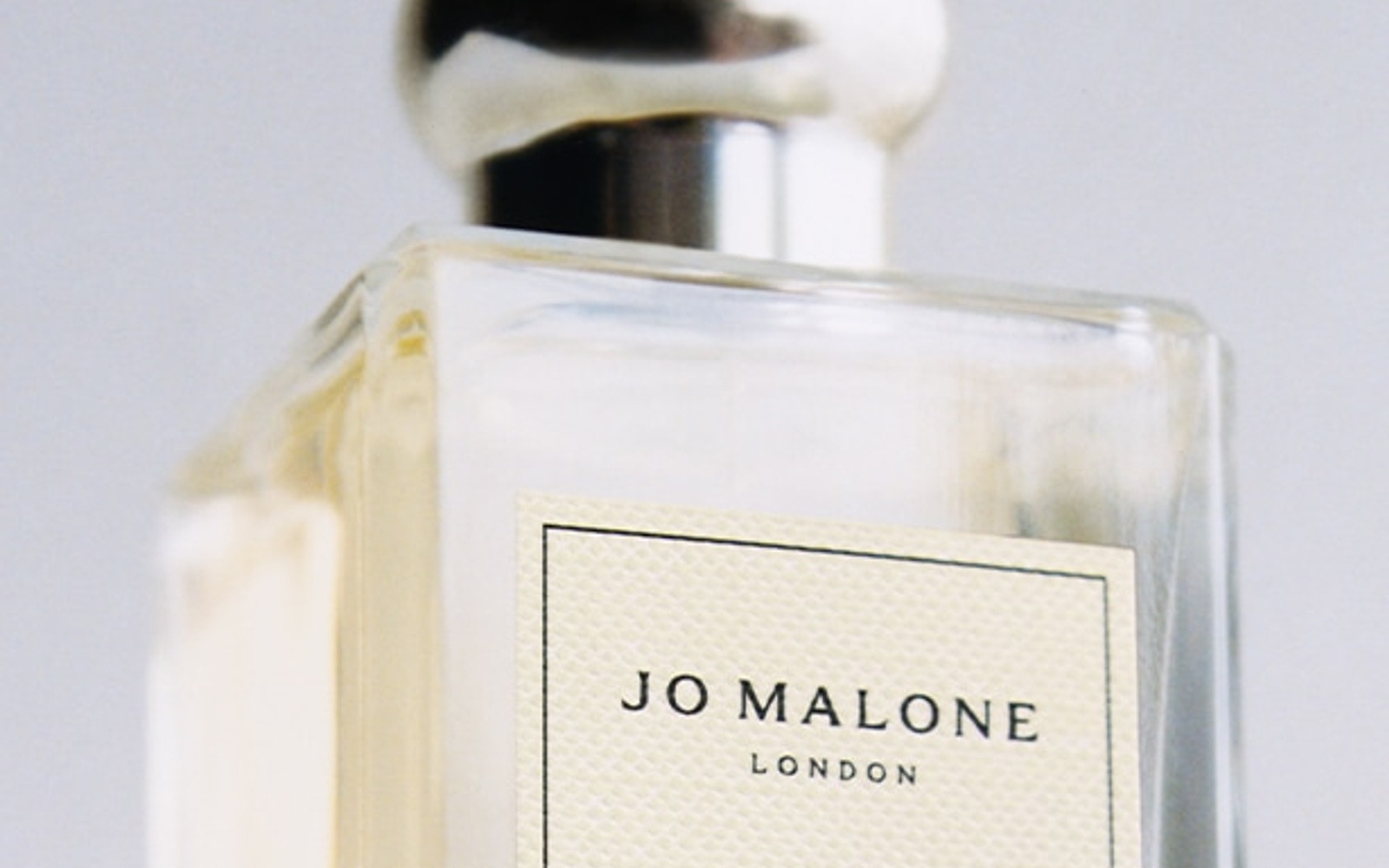
Fragrance adds gifting and place
Jo Malone London and Le Labo show why scent brands need bottle, counter, city, ritual, and naming discipline.
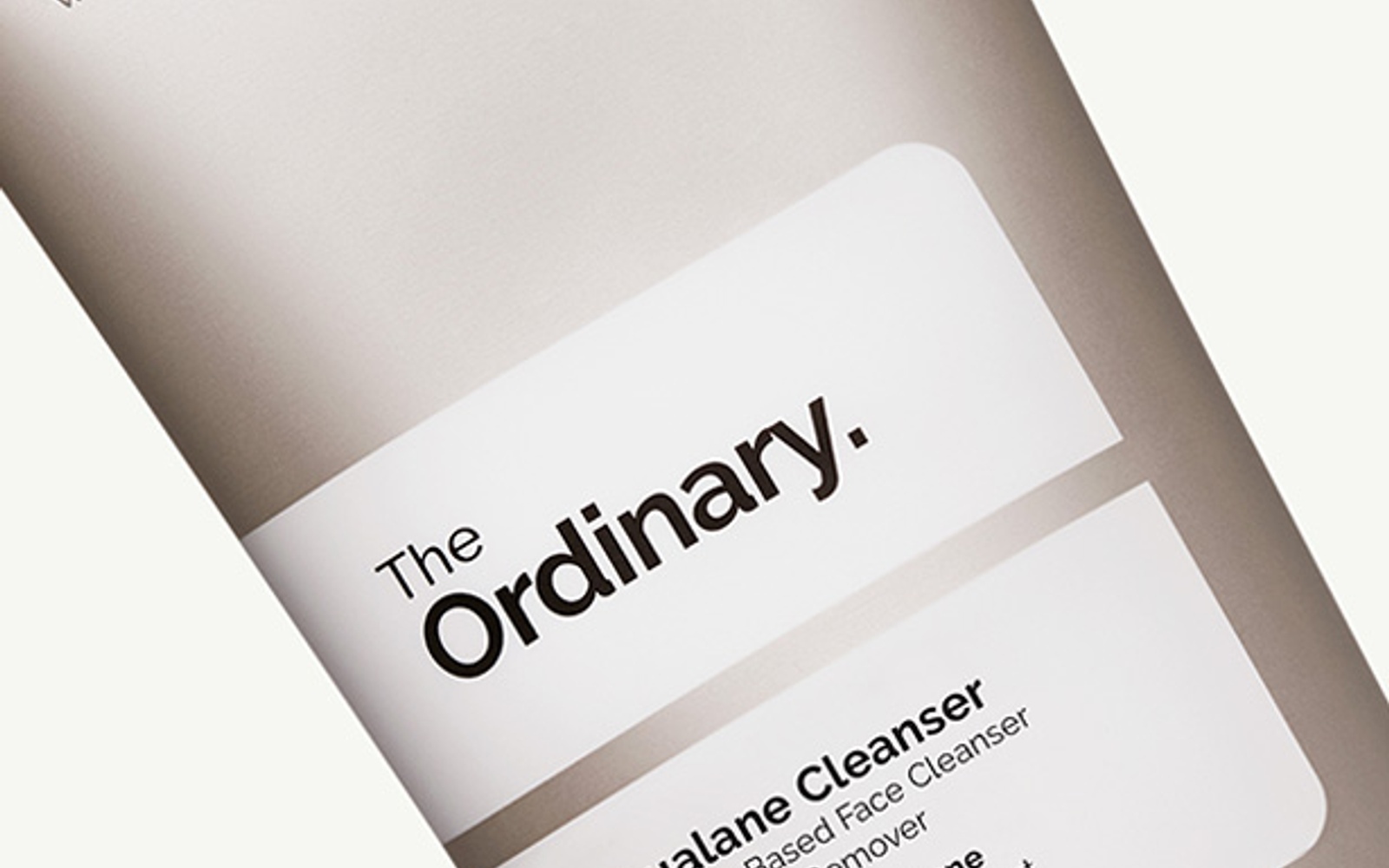
The Ordinary changes price logic
DECIEM and The Ordinary add ingredient transparency, price contrast, and a digital-native trust lane to the prestige group.
Product and service system
Founder story, skin care, fragrance, Night Repair, Youth-Dew, counter selling, and premium department-store trust anchor the company.
Dermatologist-guided, allergy-tested, clean-counter proof makes Clinique a clinical trust lane.
Professional artistry, color authority, backstage credibility, and culture give the portfolio edge.
Ultra-premium skin care, ritual, ingredient story, and packaging protect the high-price prestige lane.
Jo Malone London, Le Labo, Tom Ford Beauty, Editions de Parfums Frédéric Malle, Kilian Paris, and AERIN make scent memory and gifting visible.
Aveda, Bumble and bumble, Origins, Bobbi Brown, and Too Faced widen the portfolio without needing one voice.
Dr.Jart+, DECIEM, The Ordinary, and NIOD add science, transparency, and digital-native contrast.
Aramis and Lab Series keep male grooming and treatment in the architecture.
Turning points.
Events that changed what buyers could see, buy, repeat, or trust.
Clinique launches with dermatologist-guided beauty positioning.
Night Repair launches and strengthens skin-care science and ritual.
The Breast Cancer Campaign begins and makes cause-linked public action part of the company story.
Public reaction.
The useful reaction is about trust and pressure, not sentiment counts.
The best brands feel specific: a counter ritual, a product texture, a science claim, a scent world, or a founder story.
The portfolio weakens when prestige language becomes generic or when business pressure is hidden behind glamour copy.
Full timeline.
Estée and Joseph Lauder found the company with a small skin-care line. Source
Youth-Dew launches and turns fragrance into a bath oil and gifting breakthrough. Source
Aramis launches as a prestige men's fragrance and grooming lane. Source
Clinique launches with dermatologist-guided beauty positioning. Source
Night Repair launches and strengthens skin-care science and ritual. Source
The Breast Cancer Campaign begins and makes cause-linked public action part of the company story. Source
The company takes a majority stake in M·A·C, adding professional makeup and culture. Source
La Mer joins the portfolio and the company completes its NYSE initial public offering. Source
The company launches ecommerce, adding a digital channel to prestige beauty. Source
The company acquires a majority interest in Bumble and bumble in June 2000; the remaining equity follows in September 2006. Source
ELC acquires Laboratoires Darphin in April 2003. Source
The TOM FORD beauty license begins in April 2005. Source
Smashbox and other makeup moves widen the prestige color portfolio. Source
Le Labo is acquired in October 2014; Editions de Parfums Frédéric Malle follows in January 2015. Source
Dr.Jart+ acquisition adds Korean derm-cosmetic proof. Source
ELC takes majority ownership of DECIEM, following its initial investment in 2017. Source
ELC completes its acquisition of the TOM FORD brand on April 28, 2023, with fashion and eyewear operated by licensees. Source
ELC completes its purchase of DECIEM’s remaining interests on May 31, 2024, bringing The Ordinary and NIOD under full group ownership. Source
FY2025 results show a prestige portfolio under turnaround pressure. Source
Steal / avoid.
- Give each beauty brand a distinct proof ritual: clinical, artistic, ultra-premium, fragrance, ingredient-led, or founder-led.
- Use acquisition to add a new buyer job, not a duplicate logo.
- Let packaging, counter, texture, price, scent, and service carry the premium promise.
- Admit current business pressure when it affects the brand signal.
- Label ownership, licensing and the consumer-facing name separately; a portfolio list alone can conceal who operates each business.
- Do not reduce Estée Lauder Companies to the Estée Lauder flagship.
- Do not hide Clinique, M·A·C, La Mer, Jo Malone London, Le Labo, Tom Ford Beauty, Aveda, Bobbi Brown, Origins, Too Faced, Dr.Jart+, DECIEM, The Ordinary, NIOD, Bumble and bumble, Aramis, or Lab Series.
- Do not use fake cosmetics labels, AI beauty products, or generated counter scenes.
- Do not describe FY2025 as profitable; the company reported a net loss.
Short answer.
The Estée Lauder Companies owns brands including Estée Lauder, Clinique, M·A·C, La Mer and TOM FORD. The Ordinary and NIOD belong to DECIEM, fully acquired by ELC on May 31, 2024. AERIN and Balmain Beauty are licensing relationships. A company portfolio can therefore include both owned brands and names it is licensed to use.
Frequently asked questions
Which brands belong to The Estée Lauder Companies?
Its published portfolio includes Estée Lauder, Clinique, M·A·C, La Mer, Jo Malone London and The Ordinary, among others. Estée Lauder is both a consumer beauty brand and part of the wider company name, so a result reported by the group is not automatically a result for the Estée Lauder brand alone.
Does Estée Lauder own The Ordinary?
The Ordinary is part of DECIEM, whose remaining interests The Estée Lauder Companies acquired on May 31, 2024. ELC had first invested in 2017 and taken majority ownership in 2021. The ownership chain is ELC → DECIEM → The Ordinary; the products were not renamed Estée Lauder.
Is Estée Lauder a brand or a company?
Both names are used. Estée Lauder is a beauty brand, while The Estée Lauder Companies is the parent of that brand and others including Clinique, M·A·C and La Mer. Buying a product from another group brand does not make it an Estée Lauder-branded product.
Who founded Estée Lauder?
Estée and Joseph Lauder founded the company in 1946 with a small skin-care range. Its later growth into multiple beauty brands followed that original namesake business.
Does Estée Lauder own TOM FORD or just its beauty business?
The Estée Lauder Companies completed its acquisition of the TOM FORD brand and all its intellectual property on April 28, 2023. It owns more than the beauty business. Fashion and accessories are operated under license by Zegna Group, while Marcolin is the eyewear licensee.
Does Estée Lauder own AERIN?
AERIN Beauty is a licensing relationship. Aerin LLC grants Estée Lauder Inc., an ELC subsidiary, rights to the AERIN name for beauty products. The 2024 proxy gives the current renewal period as ending June 30, 2027. The license does not make Aerin LLC a company owned by ELC.
Does Estée Lauder own Balmain?
ELC’s February 2026 announcement describes Balmain Beauty as a business established in 2022 under a license agreement between Balmain and The Estée Lauder Companies. That relationship covers beauty; it does not establish ownership of the Balmain fashion house.
Are Stila and BECCA still Estée Lauder brands?
ELC sold Stila in April 2006. BECCA was acquired in November 2016 and discontinued as a standalone brand in September 2021. The company’s transaction record distinguishes a divestiture from a discontinuation; neither should be listed as a current standalone ELC brand.
Does owning The Ordinary mean Estée Lauder brands use the same formulas?
The ownership record establishes who controls DECIEM and its brands. It does not establish that The Ordinary, Clinique, La Mer or other ELC products share formulas. Compare the ingredients and product claims of the specific products; a shared parent alone is not evidence of an equivalent formula.
Need help with your own brand?
Use Private brand work when your name, identity, proof, or message needs a sharper branding decision.
Sources.
Use the education shelf for the concepts behind this brand page.
Private brand workIf your parent company owns brands with conflicting price points, channels, and beauty codes, Private Brand Work can define what belongs to the parent and what each label must own.
All brandsReturn to every brand page.
- https://www.sec.gov/Archives/edgar/data/1001250/000100125025000099/el-20250630.htm
- https://www.elcompanies.com/
- https://www.elcompanies.com/en/our-brands
- https://www.elcompanies.com/en/who-we-are/our-heritage
- https://www.elcompanies.com/en/our-brands/estee-lauder
- https://www.elcompanies.com/en/our-brands/clinique
- https://www.elcompanies.com/en/our-brands/mac
- https://www.elcompanies.com/en/our-brands/la-mer
- https://www.elcompanies.com/en/our-brands/jo-malone-london
- https://www.elcompanies.com/en/our-brands/the-ordinary
- https://www.elcompanies.com/en/investors/investor-resources/faqs
- https://www.elcompanies.com/en/news-and-media/newsroom/press-releases/2024/06-03-2024-114511824
- https://www.elcompanies.com/en/news-and-media/newsroom/press-releases/2023/04-28-2023-171511000
- https://media.elcompanies.com/files/e/estee-lauder-companies/global/investors/earnings-and-financials/proxy-statements/notice-of-2024-annual-meeting-and-proxy-statement.pdf
- https://investors.elcompanies.com/en/news-and-media/newsroom/press-releases/2026/02-20-2026-073007790