Ford · Grow Your Brand · Vehicle Family Cue · United States / Active
Ford
Ford makes mobility memory through the oval, assembly logic, and vehicles people can name by shape. A Ford brand page on the script oval, Model T access, assembly-line proof, Mustang emotion, F-Series work trust, 2025 financial scale, and the lesson that a mass car brand needs product families people recognize without explanation.
Positioning, name, and architecture.
Three evidence checks before the page talks about scale, color, or public reaction.
Ford connects mass access, work-truck credibility, Mustang emotion, dealer presence, and manufacturing memory under one blue oval.
Ford positions mobility as practical proof: a brand people can recognize through trucks, coupes, dealers, work, and road memory.
Ford carries the founder name and turns it into a short, plain, high-recognition mobility mark.
Built Ford Tough
Ford branded house with vehicle families, Lincoln as a separate luxury marque, and service platforms
Ford works when the parent oval, vehicle families, Lincoln, Ford Pro, and connected-service cues each have a clear job.
Mass-market access, dealers, work, family, and road memory.
Parent vehicle brand: F-Series, Mustang, Bronco, Transit source
Work-truck proof and the Built Ford Tough cue.
Ford truck family: F-150, Super Duty source
Performance and emotion inside a practical parent brand.
Ford vehicle family: Mustang source
Adventure, small truck, and mid-size truck cues.
Ford vehicle families: Bronco, Maverick, Ranger source
Fleet, van, work, service, charging, and software proof.
Commercial platform: Ford Pro, Transit, E-Transit source
A separate premium marque under Ford Motor Company, not just another Ford trim.
Ford-owned luxury marque: Lincoln source
Software and driver-assistance memory beside physical vehicles.
Ford technology layer: BlueCruise source
Financing, leasing, and dealer support turn the vehicle promise into an ownership system.
Financial-services arm: Ford Credit source
Naming and tagline progression
Ford Motor Company is founded.
Model T makes access and scale central to the brand.
Built Ford Tough gives truck proof a memorable line.
Market and scale snapshot.
Ford Motor Company combines a global vehicle business, commercial services, connected technology, and Ford Credit inside one publicly reported enterprise.
Ford Motor Company FY2025 revenue.
FY2025 net loss attributable to Ford Motor Company.
Ford market capitalization observed on 15 Jul 2026.
Publicly listed parent of Ford and Lincoln vehicle businesses and Ford Credit.
Color system.
Ford blue works when it carries trust, dealers, trucks, and the road without becoming decorative.
How the palette behaves
Blue gives the oval trust and wide-market familiarity.
White keeps the script readable at dealer, grille, and app size.
Black and steel connect the mark to work, machinery, and road surfaces.
Recognition assets.
Memory pieces the brand can use before someone finishes a sentence.
The oval keeps the founder name compact and readable.
Access and scale are part of the brand story, not a later slogan.
Truck shape makes durability visible before the buyer reads specs.
Performance memory gives Ford more than utility.
Scores.
Use these scores to compare recognition, trust, proof, pressure, and risk.
The oval, Mustang, and F-Series are easy to identify.
F-Series gives the brand a strong job surface.
Mustang keeps emotion in the system.
Vehicle families are clear when the parent mark stays quiet.
EV and quality pressure need disciplined proof.
The company and main vehicle families are easy to name.
Ford earns recognition when Model T access, F-Series work, Mustang emotion, dealer memory, and manufacturing proof all remain separate but connected.
Ford positions mobility as practical proof: a brand people can recognize through trucks, coupes, dealers, work, and road memory.
How the logo changed.
An ornate maker seal gave way to the founder script and then the blue oval that now travels across vehicles, dealers, finance, services, and software.
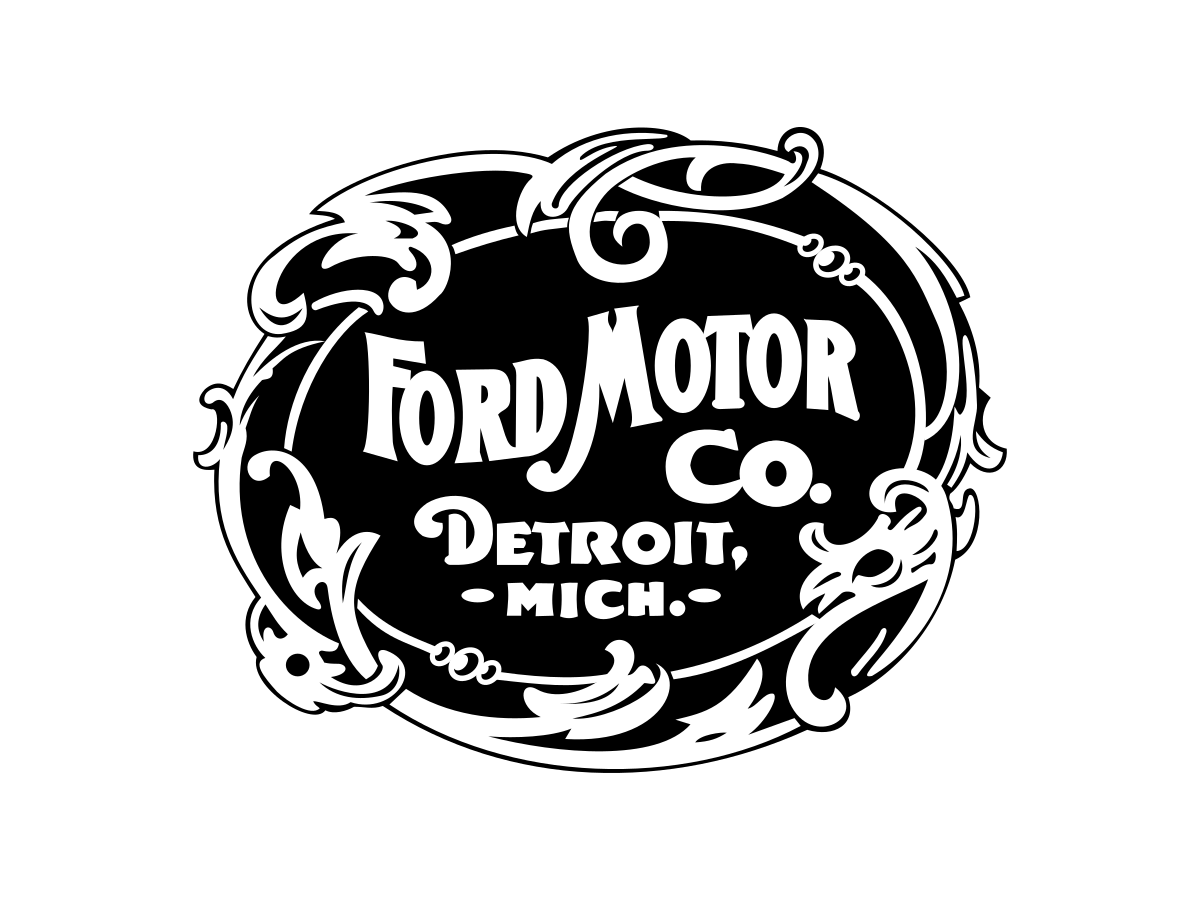
The first emblem framed Ford as a new industrial maker before the script became the lasting cue.
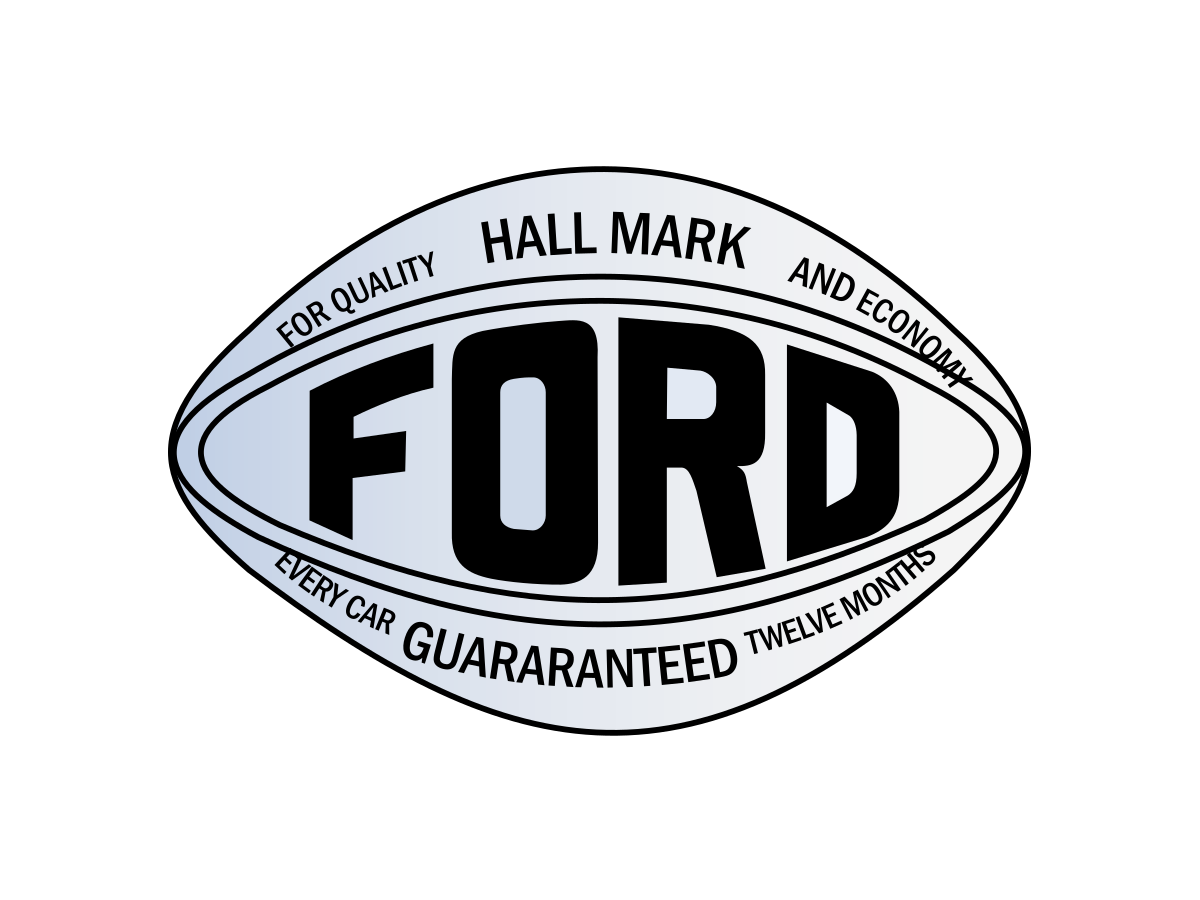
The 1907 badge moves the Ford name toward the scripted signature that would define the marque.
Blue, script, and oval lock into the dealer, vehicle, and corporate recognition system.
The current oval preserves the founder script while simplifying reproduction across physical and digital surfaces.
Product and service lineage.
Ford earns recognition when Model T access, F-Series work, Mustang emotion, dealer memory, and manufacturing proof all remain separate but connected.
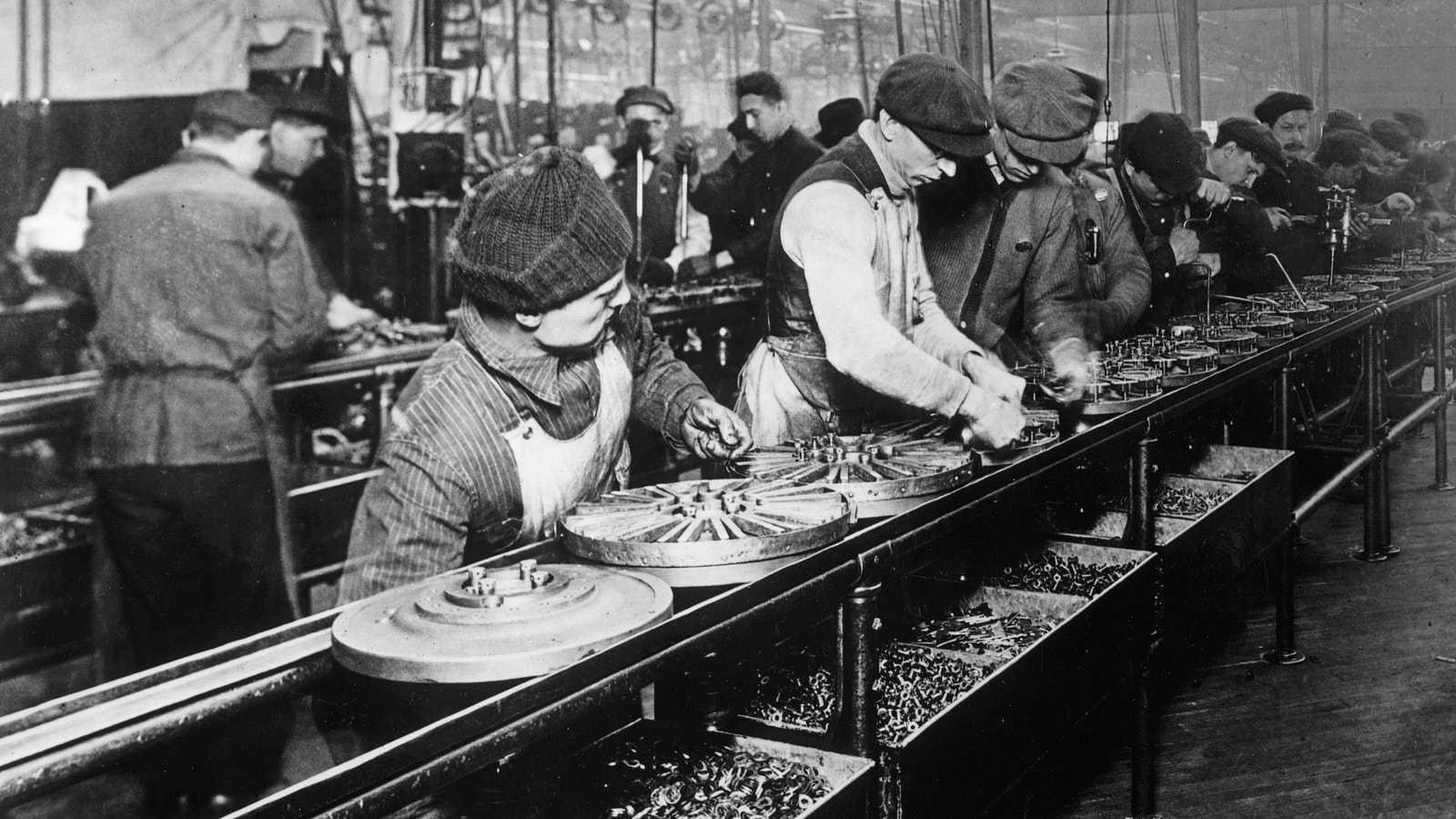
Assembly proof
The manufacturing story turns mobility access into a brand memory.
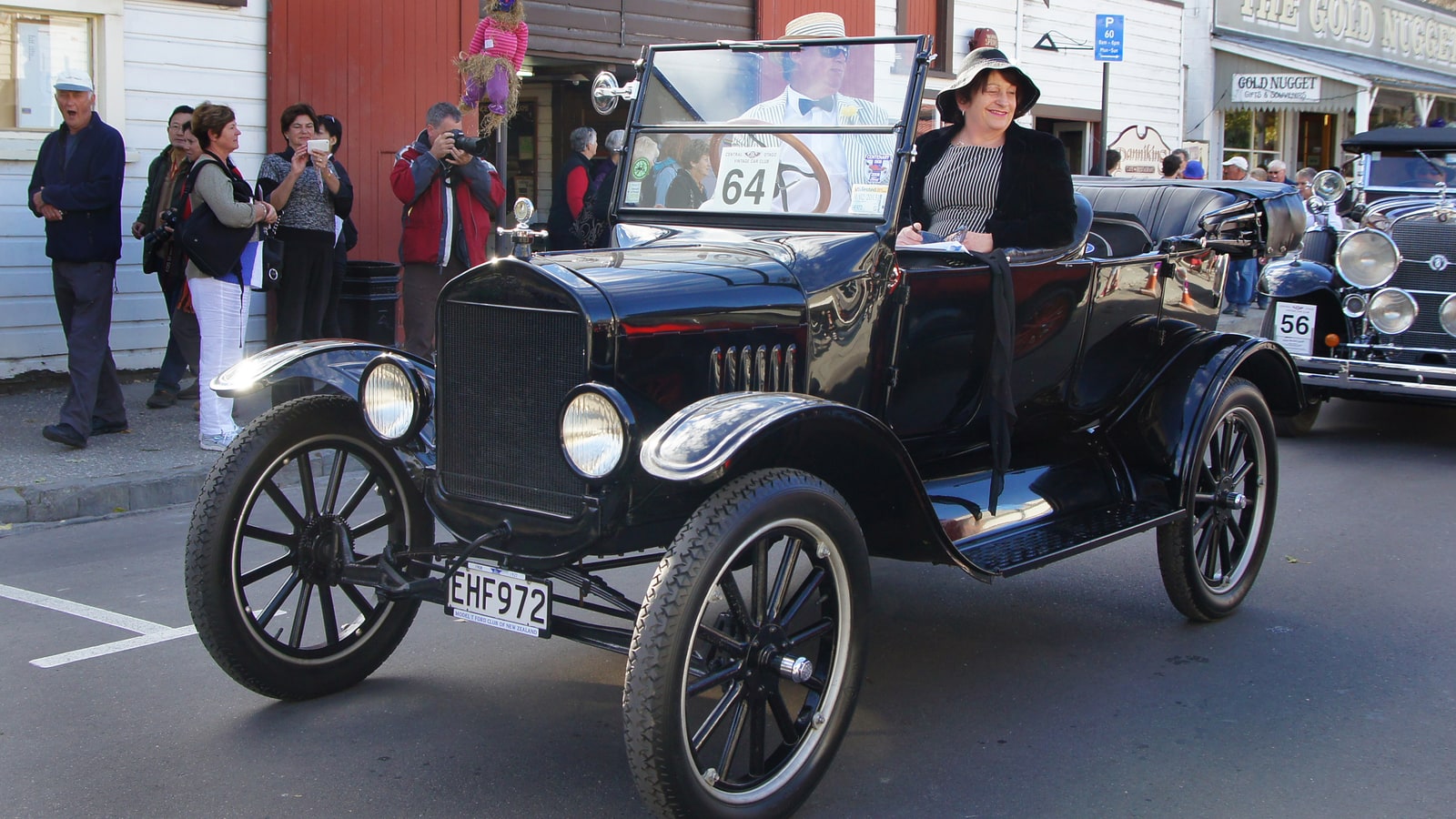
Model T access
The Model T turned industrial scale into personal mobility and made access part of Ford memory.
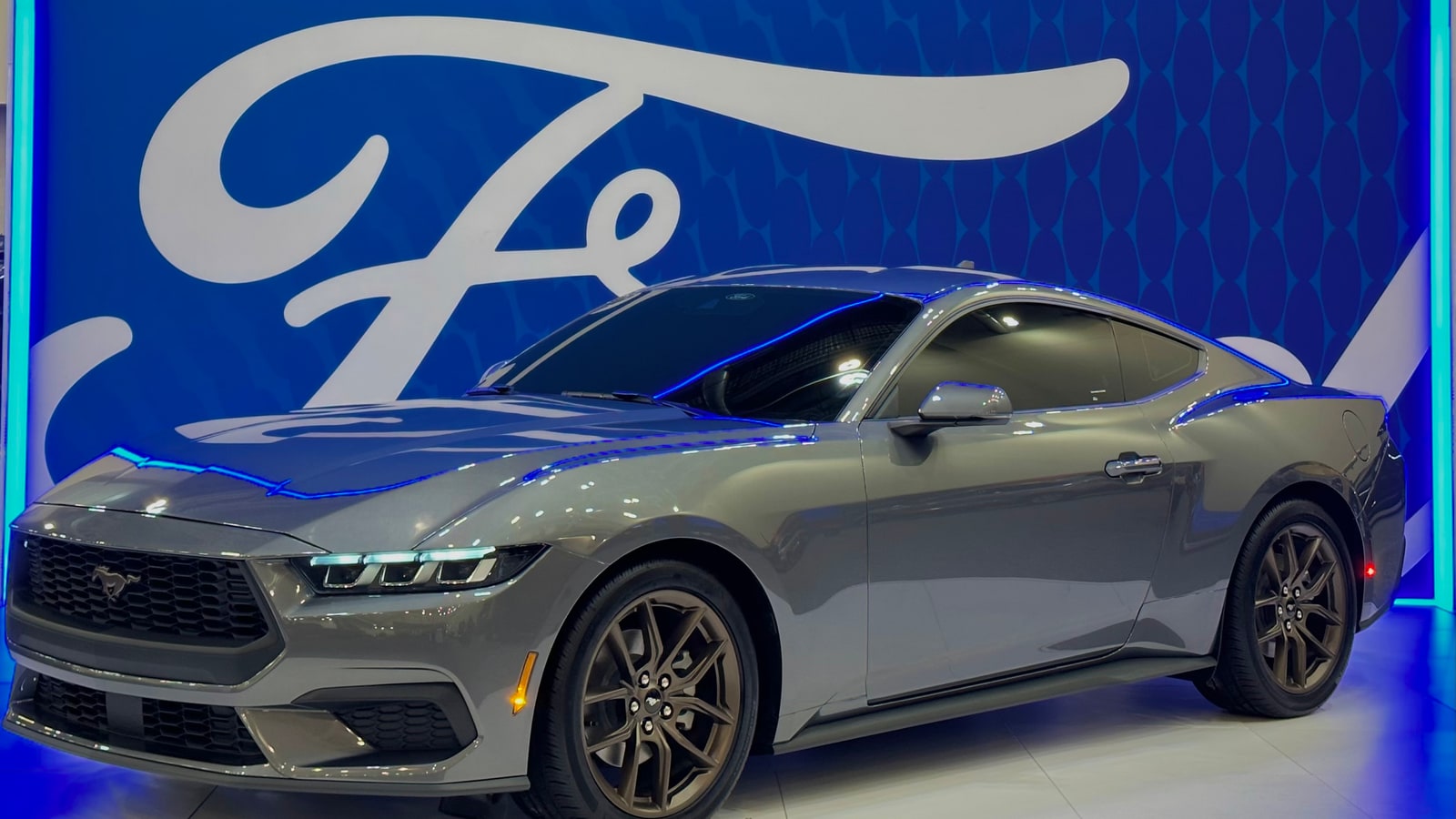
Mustang emotion
Mustang keeps performance desire inside a company also known for work and family mobility.
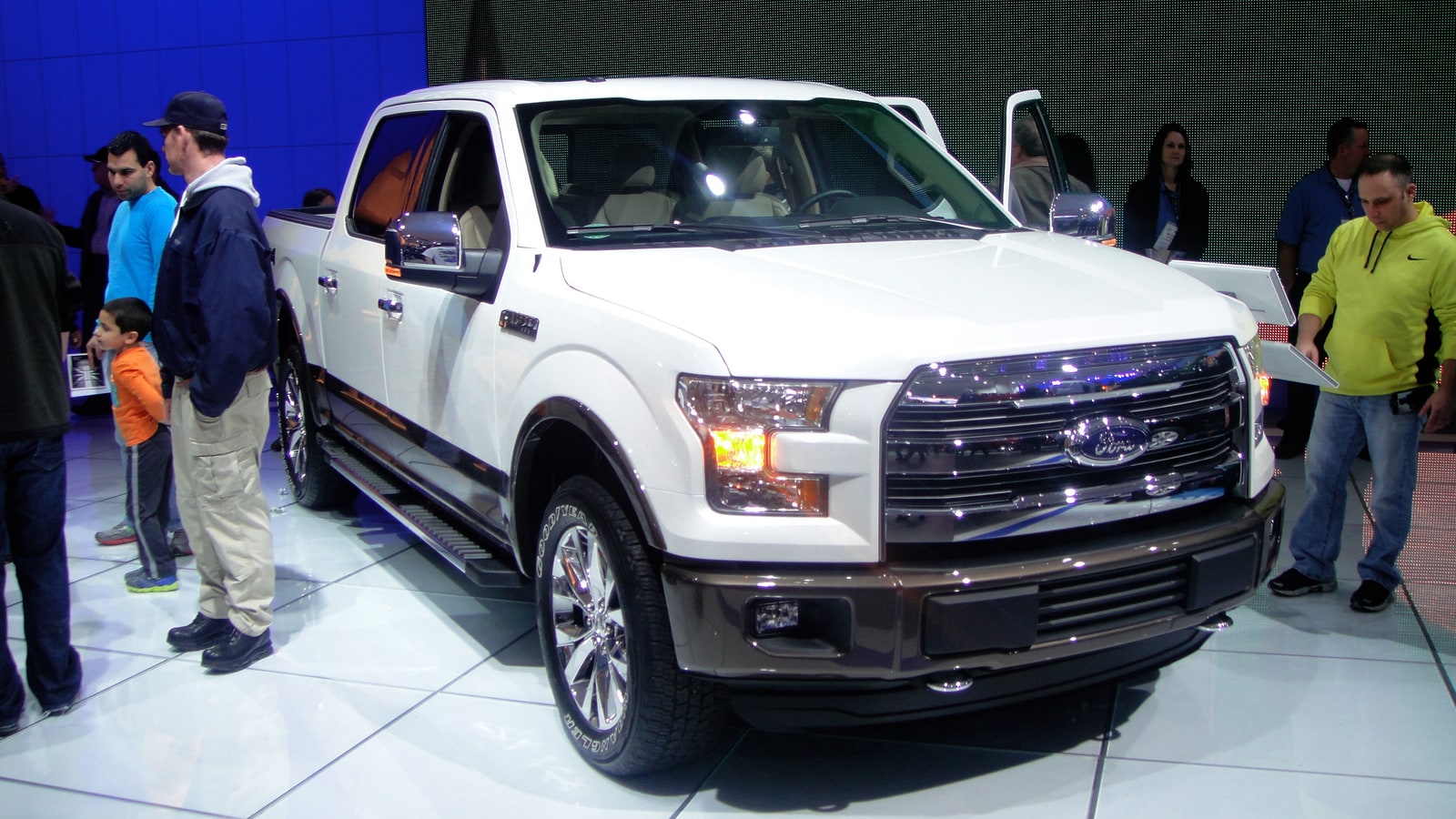
F-Series work
The pickup remains the clearest physical proof of usefulness, toughness, and commercial reach.
Product and service system
Ford Motor Company is founded.
Model T makes mobility access central to the brand.
Moving assembly-line production makes scale visible.
Mustang gives Ford a lasting performance and youth cue.
Pickup dominance makes work-truck trust a major public surface.
Turning points.
Moments that show where the oval earns trust or has to answer pressure.
Scale made Ford a production memory, not only a car badge.
One named car gave the brand emotional range.
Electric products have to feel like Ford, not a detached technology experiment.
Public reaction.
Ford earns trust through trucks and nameplate memory but faces pressure when quality, losses, or transition strategy contradict durability.
F-Series, Transit, Mustang, and Bronco make the brand easy to place by job.
A work-truck promise becomes fragile when reliability, recalls, or EV confusion dominate the story.
Full timeline.
Ford Motor Company is founded.
Model T makes access and scale central to the brand.
Lincoln becomes part of Ford Motor Company.
F-Series launches.
Mustang arrives.
Bronco launches and later returns.
Mustang Mach-E debuts.
F-150 Lightning is revealed.
Steal / avoid.
- Give every product family a clear job.
- Use one mark to connect utility and emotion without merging them.
- Show manufacturing or service proof when durability is the claim.
- Do not let a truck promise hide quality risk.
- Do not blur performance, work, and EV roles into one vague future story.
- Do not rely on heritage without current product proof.
Short answer.
Ford shows how a mass automotive brand stays legible when the oval connects separate proof systems: Model T access, assembly scale, F-Series work, and Mustang emotion.
Frequently asked questions
What is Ford strongest brand cue?
The blue oval, reinforced by vehicle-family memory such as F-Series and Mustang.
Why does the Model T matter for Ford?
It makes access and production scale part of the brand origin.
What should another brand steal from Ford?
Separate product-family jobs while keeping one parent mark stable.
Need help with your own brand?
Use Private brand work when your name, identity, proof, or message needs a sharper branding decision.


.jpg)