IBM · Grow Your Brand · Enterprise Trust Cue · United States / Active
IBM
IBM has to make mainframes, hybrid cloud, AI, and consulting feel like one dependable system. An IBM brand page on the eight-bar mark, mainframe confidence, IBM Cloud, Red Hat/OpenShift, watsonx, consulting, 2025 financial scale, and the lesson that an enterprise brand cannot live on computer memory alone.
Positioning, name, and architecture.
IBM's position, name, and architecture connect a century of business-machine trust to today's infrastructure, hybrid cloud, AI, software, research, and consulting system.
IBM connects mainframe dependability, Red Hat/OpenShift hybrid cloud, watsonx AI, and consulting access under one disciplined eight-bar mark.
IBM positions enterprise technology as dependable systems work: infrastructure, hybrid cloud, AI, and advice that need to be trusted before they are loved.
IBM comes from International Business Machines, a descriptive company name shortened into a compact enterprise signal.
THINK is treated here as IBM's historic motto, not a verified current campaign tagline.
branded house across infrastructure, software, hybrid cloud, AI, and consulting
Red Hat is the distinct owned brand. IBM Z, IBM Cloud, OpenShift, watsonx, IBM Consulting, and IBM Research are typed below as product, platform, service, or organizational cues rather than sub-brands.
Critical workload and mainframe trust.
IBM product family: System/360 memory to current IBM Z source
Hybrid infrastructure and enterprise cloud operations.
IBM platform: IBM Cloud source
Open-source enterprise platform inside IBM ownership, not a generic IBM sub-brand.
IBM-owned distinct software unit: Red Hat OpenShift source
Governed enterprise AI and data platform.
IBM AI platform: watsonx source
Boardroom, transformation, and implementation access.
IBM service line: IBM Consulting source
Explains why many people still remember IBM through computers even when the current business is different.
Heritage proof, not current product ownership: IBM PC, ThinkPad, printer memory source
Naming and tagline progression
CTR begins the company lineage before IBM naming.
International Business Machines becomes the public name.
The eight-bar logo turns the name into a machine-age recognition asset.
Market and scale snapshot.
IBM's FY2025 revenue and net income anchor scale; the July 16 market value and July 14 preliminary results show how quickly enterprise trust can be repriced when execution misses the promise.
FY2025 revenue reported in IBM's annual filing.
FY2025 net income reported in IBM's annual filing.
Dated market-cap observation for IBM in July 2026; the watch update records the repricing after IBM warned that AI infrastructure spend was displacing other technology budgets.
IBM trades under IBM on the NYSE and NYSE Texas.
Color system.
IBM blue works because it feels institutional, technical, and calm on complex enterprise decisions.
How the palette behaves
Blue signals stability and trust in high-stakes systems.
White keeps the striped mark readable and disciplined.
Black and gray carry machine, cabinet, and server-room seriousness.
Recognition assets.
Memory pieces the brand can use before someone finishes a sentence.
The stripes turn plain letters into a machine-age cue.
Physical cabinets keep reliability visible.
Cloud proof needs architecture, security, and migration clarity.
AI claims become credible when they connect to governed enterprise work.
Scores.
Use these scores to compare recognition, trust, proof, pressure, and risk.
The striped IBM wordmark is compact and durable.
Mainframes and consulting reinforce high-stakes dependability.
Enterprise breadth can feel distant from everyday buyers.
The portfolio is broad, so IBM Cloud, Red Hat, watsonx, consulting, and IBM Z need separate evidence.
watsonx needs clear separation from older Watson memory.
The brand carries decades of machine trust.
Mainframe hardware, hybrid-cloud operations, and consulting delivery make enterprise dependability visible.
IBM Z, Red Hat, watsonx, and Consulting keep the brand credible across infrastructure, software, AI, and advice.
How the logo changed.
IBM moved from a globe built from its full company name to Paul Rand's striped acronym, then simplified thirteen bars to the current eight-bar wordmark.
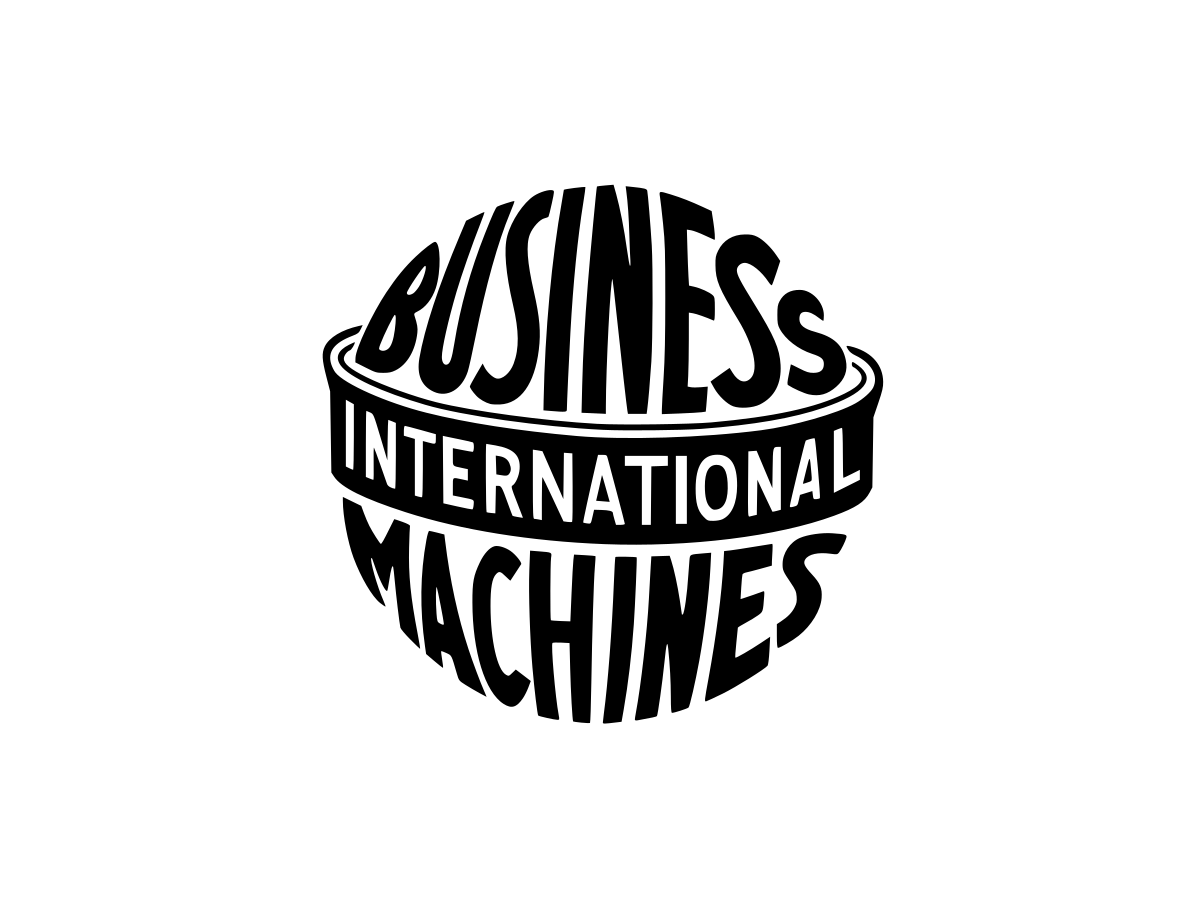
IBM's first named masterbrand mark wrapped International Business Machines around a globe to signal global ambition.
Paul Rand's 13-stripe wordmark introduced speed and engineered motion before the eight-bar refinement.
The simplified eight-bar wordmark has carried IBM's engineered, digital identity since 1972.
Product and service lineage.
IBM works when every surface points back to dependable systems: mainframes, Red Hat/OpenShift, IBM Cloud, watsonx, consulting, and product memories people still recognize.
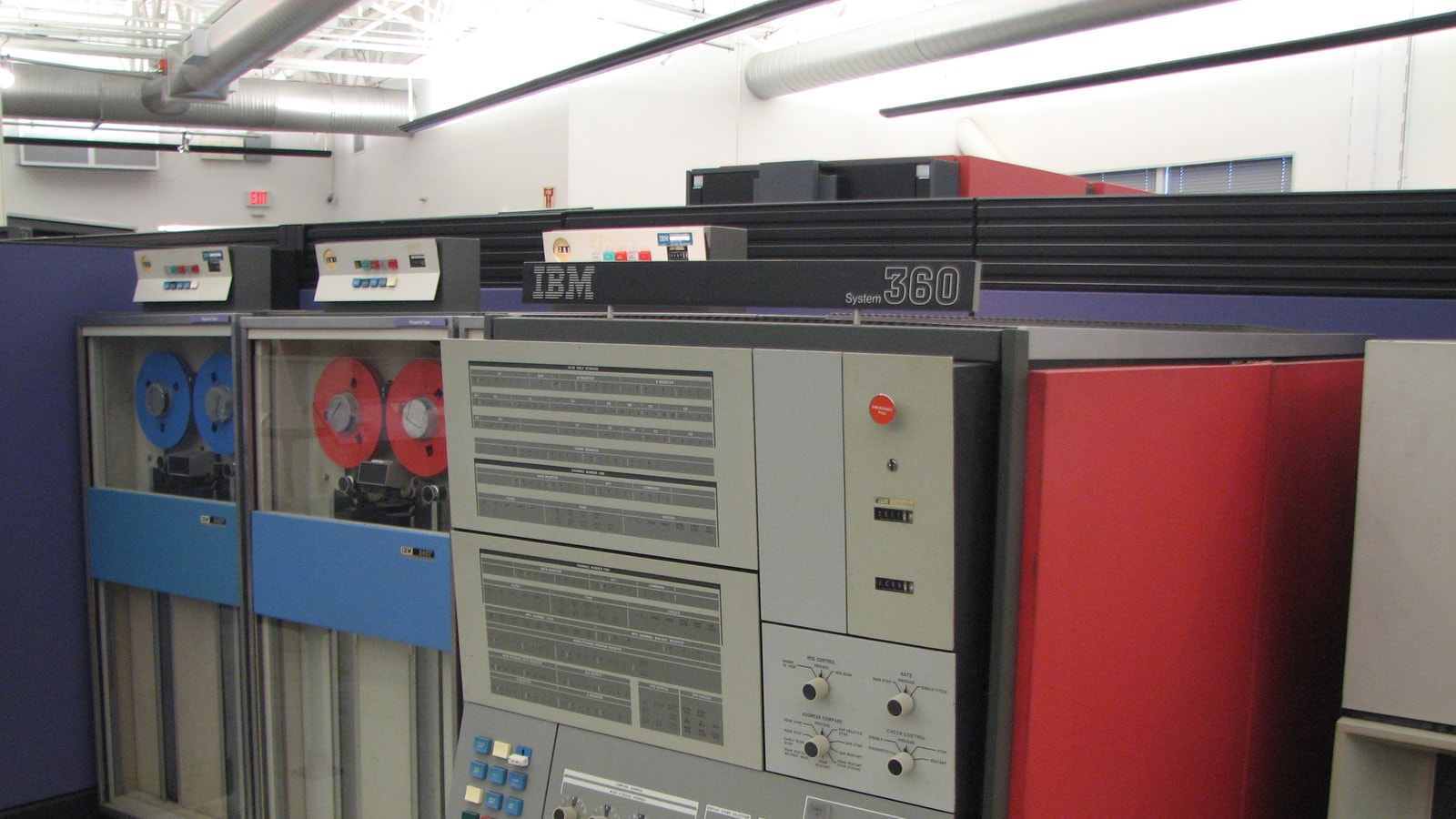
Mainframe room
Reliability becomes easier to believe when the system has physical weight.

Hybrid cloud operations
The modern IBM story has to show cloud, architecture, security, and migration proof.
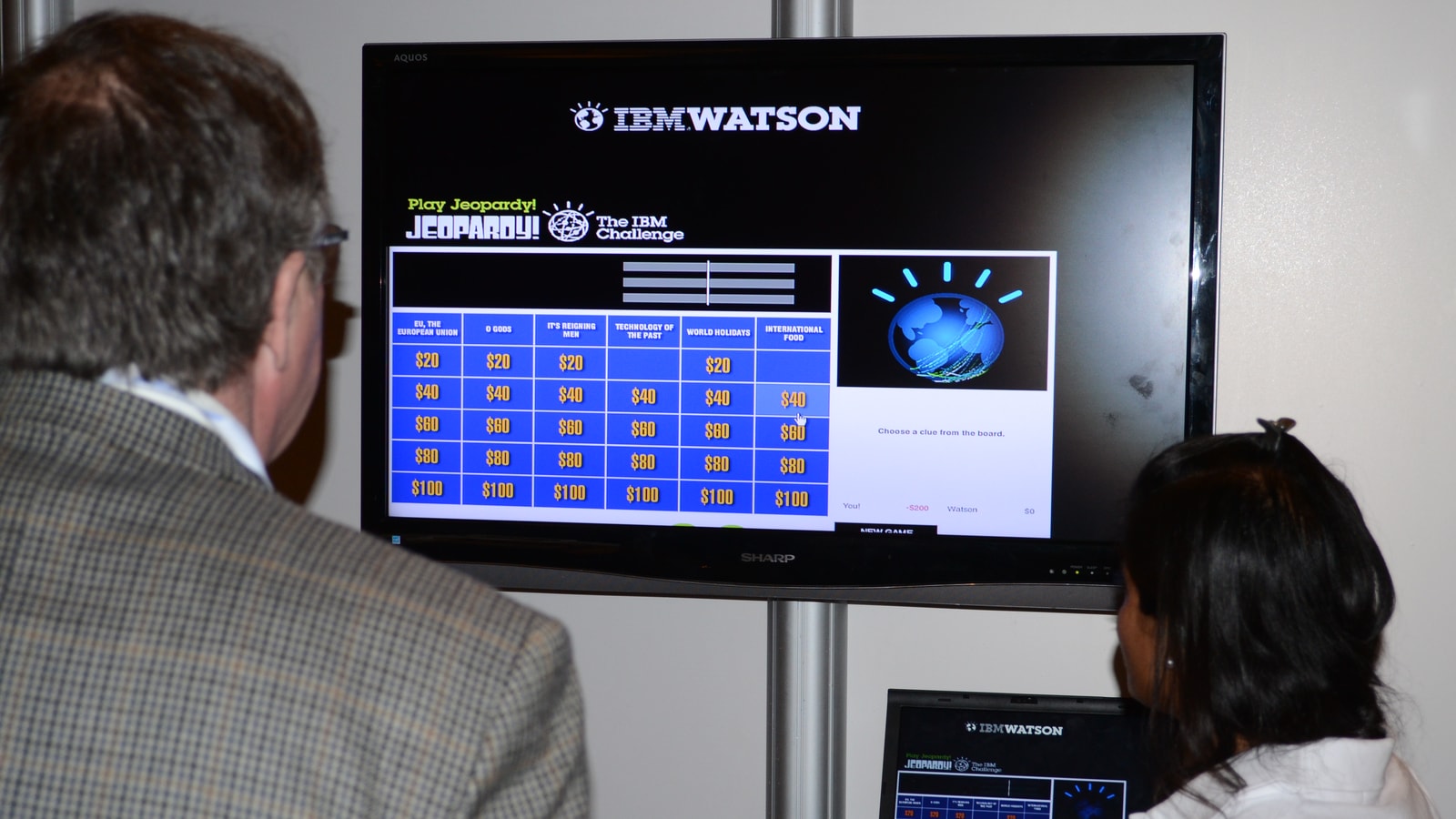
Watson and Jeopardy heritage
The demonstration made enterprise AI visible to a mass audience long before watsonx.
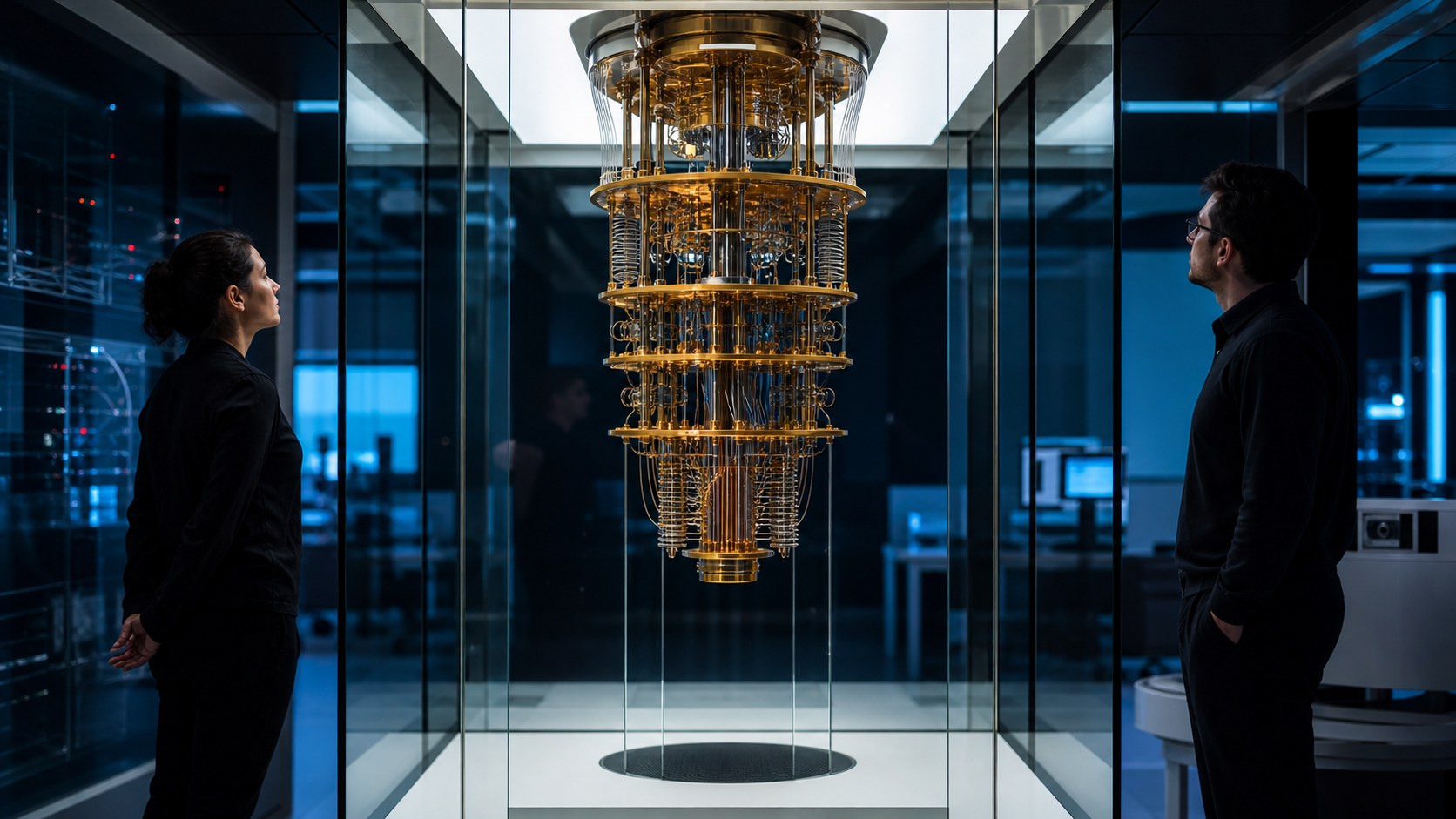
Quantum research extends the system story
The physical machine connects IBM's engineering heritage to a current frontier in enterprise computing.
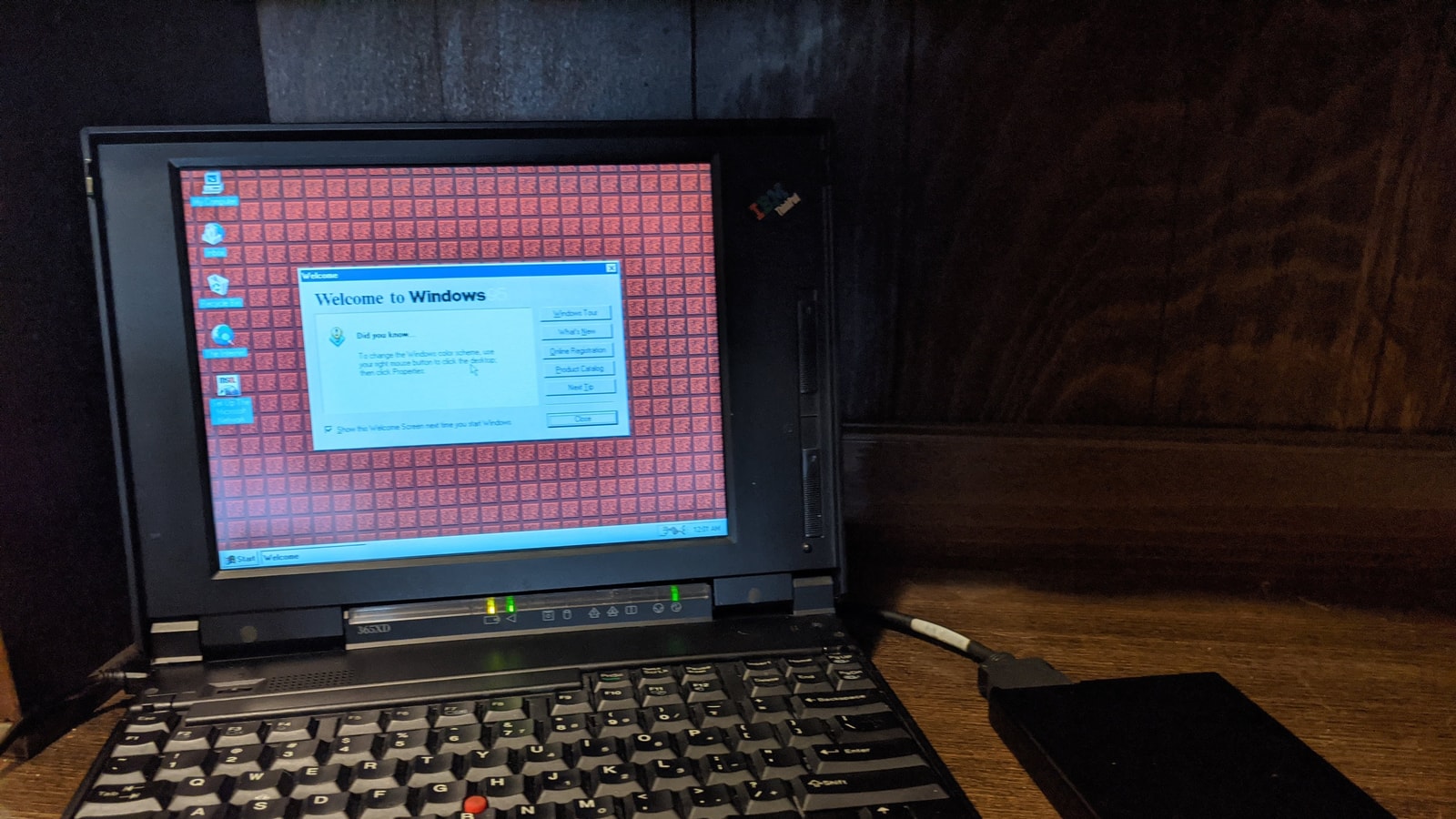
ThinkPad memory
The laptop is heritage proof now; it cannot be the whole IBM story.
Product and service system
The mainframe family made IBM's dependability promise physical and established a systems standard.
Current infrastructure work connects enterprise compute, networks, security, and migration without relying on a fake dashboard.
The public demonstration made IBM's AI work understandable years before the current watsonx platform.
Cryogenic quantum hardware keeps the research organization visible through a distinctive physical machine.
The laptop remains heritage evidence of disciplined industrial design, not a claim of current IBM ownership.
Turning points.
Moments that show where IBM trust is earned or stretched.
Critical systems make the brand feel serious, but also old if cloud and AI proof are missing.
Red Hat/OpenShift and IBM Cloud make the portfolio current when the proof is explained in buyer language.
watsonx and IBM Consulting have to turn abstract transformation claims into governed enterprise decisions.
Preliminary Q2 results showed software and infrastructure shortfalls; IBM's own investor letter said large deals missed expected timelines.
IBM sells AI and infrastructure, but the July warning showed the other side of the boom: customers are moving budget toward AI servers, chips, and infrastructure while parts of software and mainframe demand weaken.
Public reaction.
IBM earns trust from durability and faces pressure when people only remember old computers or when new cloud and AI claims feel detached from working systems.
Enterprise buyers can attach IBM to uptime, consulting, and systems continuity.
IBM can look dated when buyers see only machines, and vague when AI and consulting lose contact with working infrastructure.
Full timeline.
Computing-Tabulating-Recording Company is formed.
International Business Machines becomes the public name.
System/360 creates a common mainframe family.
The IBM Personal Computer launches.
ThinkPad launches under IBM.
Deep Blue defeats Garry Kasparov.
IBM completes the Red Hat acquisition.
IBM completes the separation of Kyndryl.
IBM reports preliminary Q2 revenue of USD 17.2 billion and an execution shortfall.
Steal / avoid.
- Make complexity feel stable through one disciplined mark.
- Show proof objects for both infrastructure and abstract services.
- Keep heritage visible while making cloud, AI, and consulting concrete.
- Do not reduce IBM to old computer memory.
- Do not let AI or cloud language replace real architecture proof.
- Do not hide portfolio complexity behind one vague enterprise claim.
Short answer.
IBM shows how a B2B technology brand earns trust when its wordmark, mainframes, hybrid cloud software, watsonx AI, and consulting advice all point back to dependable systems work.
Frequently asked questions
Is IBM only a computer or mainframe brand?
No. The current IBM story spans IBM Z, IBM Cloud, Red Hat/OpenShift, watsonx, IBM Consulting, and research.
Why does IBM blue matter?
It makes high-stakes infrastructure, cloud, AI, and consulting decisions feel stable and technical.
What should another brand steal from IBM?
Use a disciplined mark and concrete proof objects to make complex enterprise work feel trustworthy.
Need help with your own brand?
Use Private brand work when your name, identity, proof, or message needs a sharper branding decision.
Sources.
Use the education shelf for the concepts behind this brand page.
Private brand workUse Private brand work when your identity, proof, or message needs the same kind of decision discipline.
All brandsReturn to every brand page.
- SEC company facts for IBM
- IBM 2025 annual report
- IBM company origins
- IBM historical share price
- IBM 2025 Form 10-K shares outstanding
- IBM preliminary Q2 2026 investor letter
- Wikimedia Commons IBM logo
- Wikimedia Commons IBM 1967 logo
- Wikimedia Commons IBM 1924 globe logo
- Wikimedia Commons IBM z14 photo
- Wikimedia Commons System/360 photo
- Wikimedia Commons Watson Jeopardy demo photo
- Wikimedia Commons ThinkPad 365XD photo
- IBM Cloud official product page
- IBM watsonx official product page
- IBM Consulting official page
- Red Hat OpenShift official page
- IBM market capitalization


