lululemon · Grow Your Brand · Active / public company · Canada / United States-listed / Active / public company
lululemon
lululemon turns technical apparel, stores, and local community into a premium routine. A brand page for lululemon: technical apparel, named product families, flagship retail, community routines, FY2025 financial scale, and the pressure to keep premium proof ahead of lifestyle sameness.
Positioning, name, and architecture.
Three evidence checks before the page talks about scale, color, or public reaction.
Named technical product families, educator-led stores, and local community activity make the apparel part of a repeat routine rather than a seasonal fashion drop.
lululemon positions premium movement as a repeat system: technical product earns trust, named families build memory, and stores and community make the routine social.
lululemon is the company and public brand styling used by the business.
No single current tagline used as the card backbone
branded house
The lululemon masterbrand carries the system; named product families organize use cases while stores, digital, educators, and community programs carry access and habit.
Yoga, studio, and training use cases.
Women’s product families: Align source
Everyday movement, commute, and training.
Men’s product families: ABC source
Layering, recovery, bags, and head-to-toe expansion.
Adjacency system: Scuba source
Education, fitting, local events, and repeat purchase.
Access and experience: Flagship stores source
Naming and tagline progression
Vancouver origin and yoga/community roots.
Running, training, accessories, digital, and footwear broaden the product proof.
The public company reports USD 11.103B in net revenue.
Market and scale snapshot.
lululemon's FY2025 revenue, profit, and store base show the scale behind technical apparel, footwear, ecommerce, and community-led retail.
Q2 FY2026; down 4% year over year. Reported 3 Sep 2026.
Down 13%; includes USD 134.5M of tariff refunds. This is operating income, not net income.
Dated USD market-cap observation captured 5 Jul 2026; source and method recorded above.
Nasdaq-listed parent company.
Color system.
The page uses red as a controlled brand cue, not a full flood.
How the palette behaves
Deep red connects to the recognizable brand mark while staying premium.
Black keeps the page from becoming a wellness moodboard.
Warm editorial ground aligns the page with the approved BSC system.
Recognition assets.
Memory pieces the brand can use before someone finishes a sentence.
Technical fabric and fit: the premium claim has to be felt, not merely styled.
Store and studio context: educators, classes, and community make product use social.
Category breadth: yoga, running, training, accessories, and footwear show the brand is not only yoga pants.
Scores.
Use these scores to compare recognition, trust, proof, pressure, and risk.
lululemon has clear public cues when the mark stays tied to product proof.
The card keeps product surfaces visible instead of relying on a slogan.
USD financials are shown where source-backed and unavailable market values are not invented.
The card identifies whether the brand is public, private, or parent-owned.
Product, store, and community cues carry recognition without imitating the logo.
The brand lesson is expressed as a practical signal a buyer or operator can inspect.
lululemon is strongest when product feel, store behavior, and community reinforce each other.
lululemon needs parent, product, service, market, and history lanes labeled cleanly so search systems do not flatten the brand into one vague entity.
How the logo changed.
Two sourced masterbrand stages show the registered lululemon athletica lockup and the current simplified wordmark system.
The registered mark placed the name and athletica descriptor around the circular symbol, making category and ownership explicit. source
The current system keeps the round symbol and lowercase name while dropping the athletica descriptor from the primary lockup.
Product and service lineage.
lululemon is strongest when product feel, store behavior, and community reinforce each other.
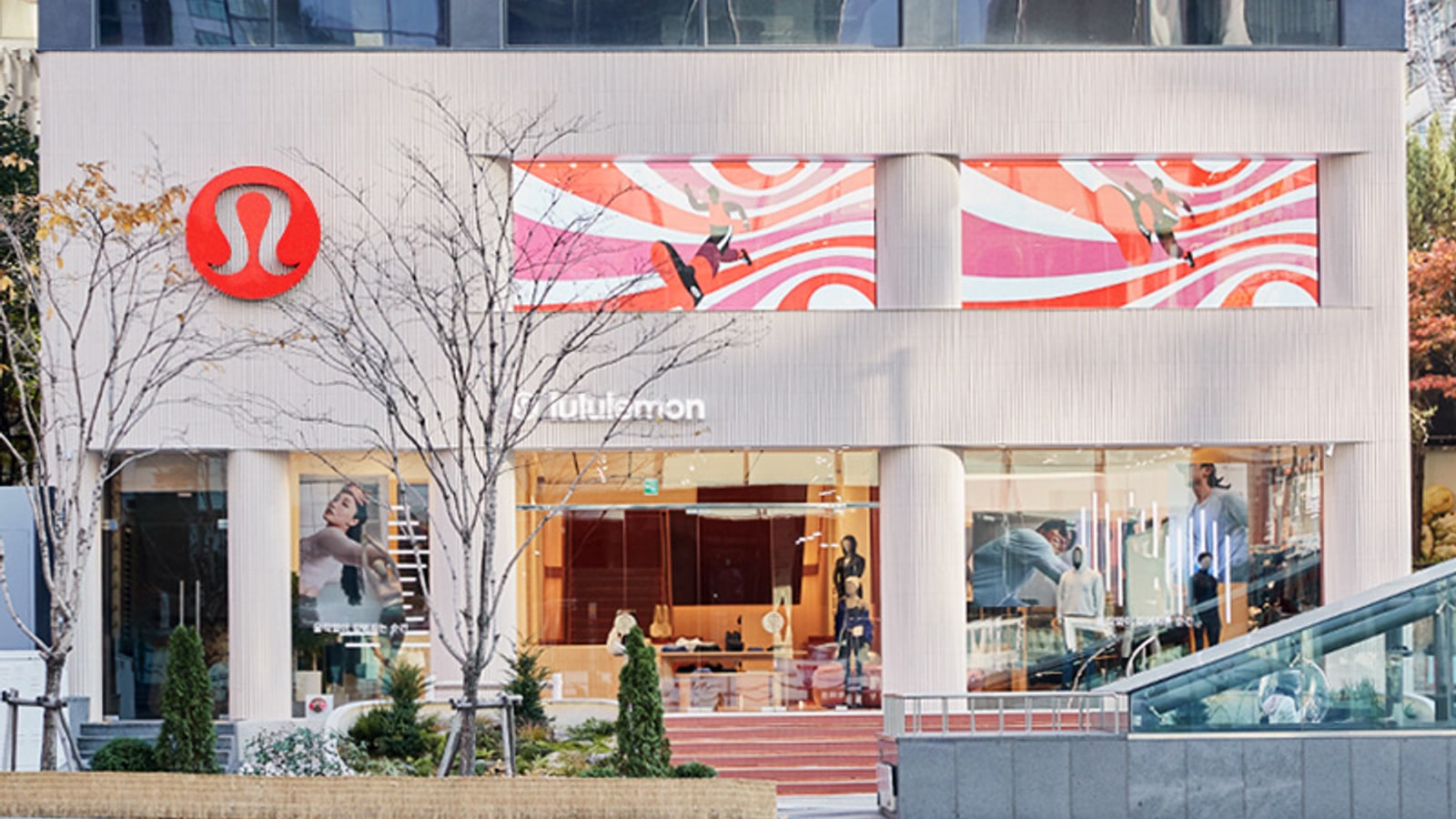
The mark becomes a destination
The Gangnam flagship shows how the symbol, facade, windows, and product presentation turn a global name into a local retail cue.
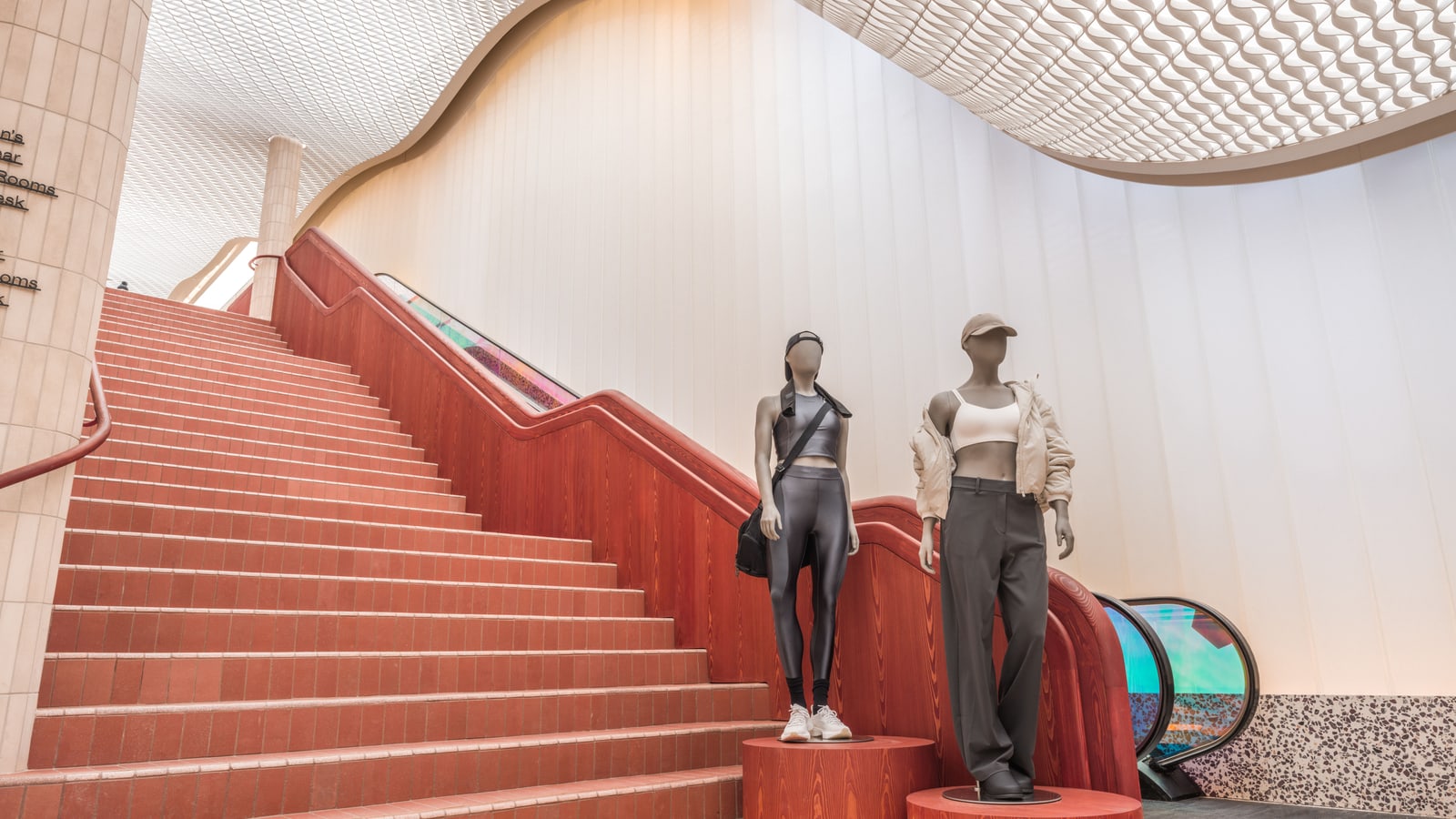
Retail carries education and hospitality
Product zoning, fitting, service, and community space make the store an operating surface, not a logo container.
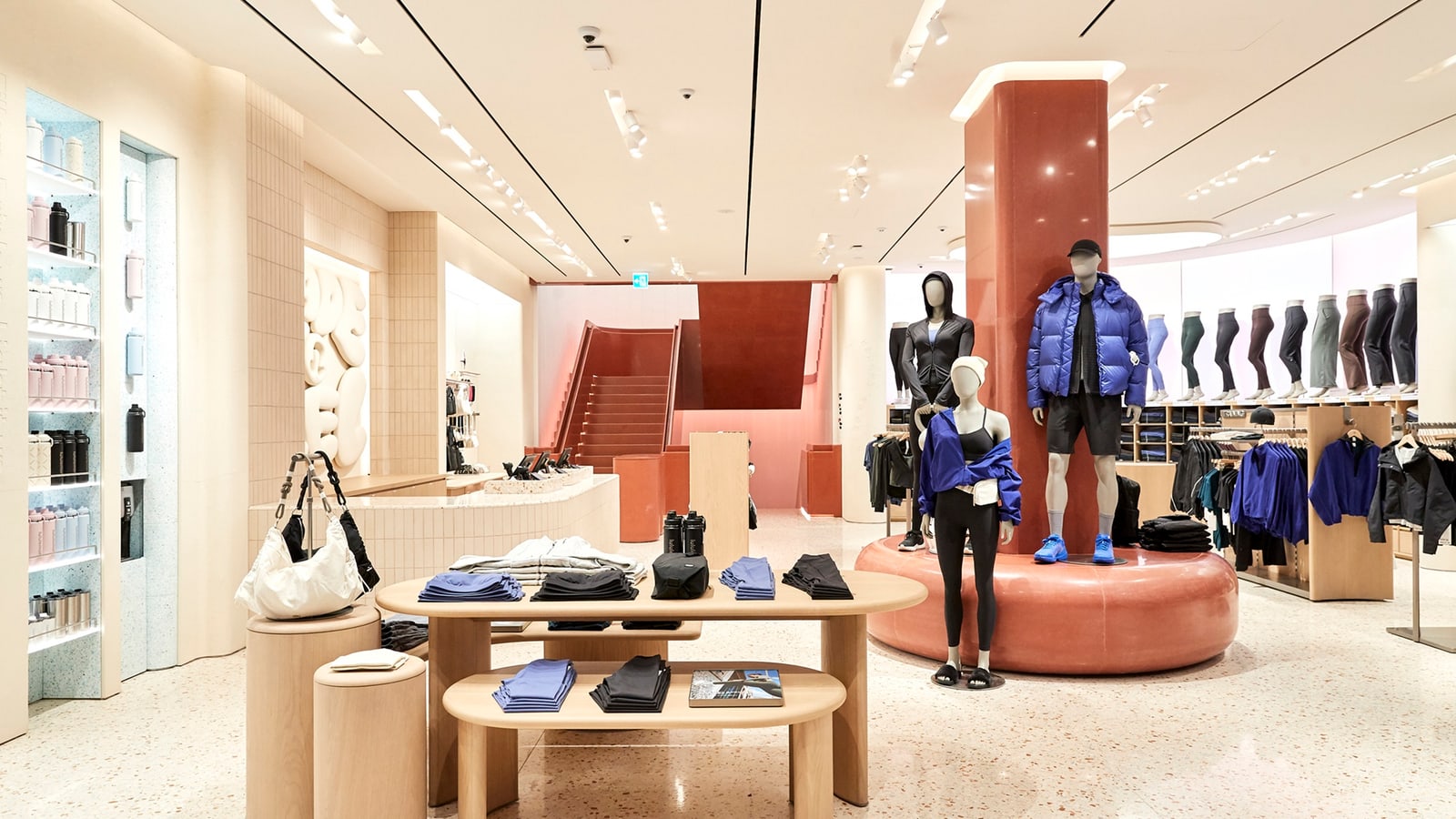
Category breadth is now visible
Running, training, yoga, men’s, women’s, footwear, and accessories have to read as one technical product system.
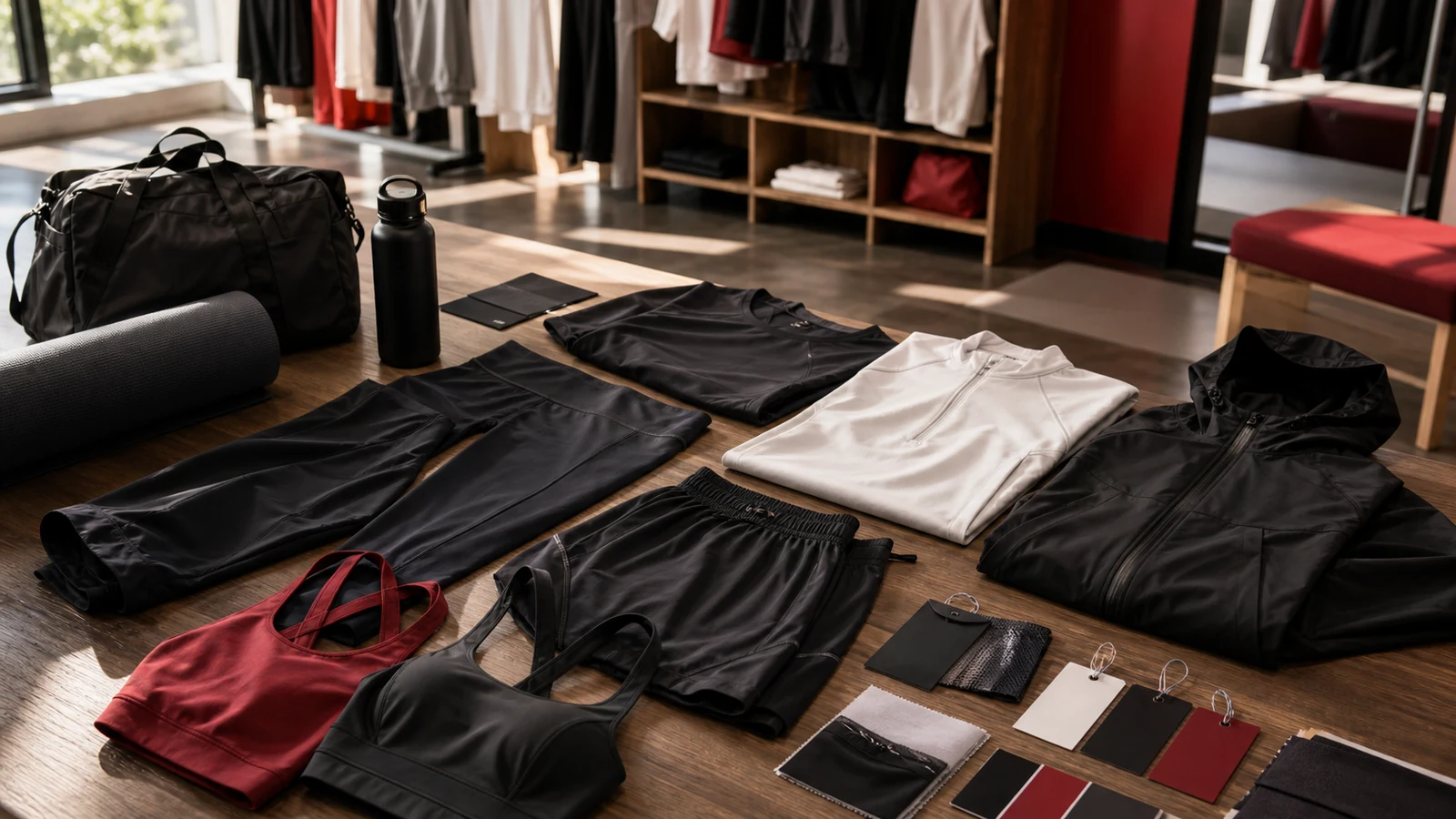
Fabric and fit justify the premium
Construction, hand feel, seams, pockets, and movement performance keep the lifestyle signal anchored to product proof.
Product and service system
The brand begins in Vancouver with yoga and community retail roots.
Fabric, fit, and functional detail become the proof layer behind premium price.
Running, training, accessories, and footwear expand the brand beyond a single yoga image.
lululemon reports USD 11.103B in net revenue.
Turning points.
The useful lululemon lesson is how a premium routine gets built across product, store, and community.
The customer has to feel the technical difference.
Retail and classes make the product part of behavior.
More categories can broaden relevance or dilute the center.
Shareholder-backed governance resolution around founder matters improved board confidence, while guidance restraint and tariff pressure still shape expectations.
Shareholder support for the board after the Chip Wilson truce reduces governance noise, but it does not solve U.S. sales pressure, tariff pressure, or Alo/Vuori competition.
Q2 FY2026 revenue fell 4% to USD 2.416 billion; comparable sales fell 9%. Americas revenue declined 8% and comparable sales declined 12%. Full-year revenue guidance was reduced to USD 10.35–10.50 billion.
Heidi O’Neill commenced service as CEO on 8 September 2026.
Public reaction.
Public reaction is treated as brand pressure, not as invented sentiment scoring.
Positive memory comes from apparel that feels useful, polished, and socially repeatable.
Pressure rises when wellness language or premium pricing feels stronger than product improvement.
Full timeline.
Demand weakens before the CEO handoff
Heidi O’Neill becomes CEO
Steal / avoid.
- Make premium tangible through product detail.
- Use local community as proof, not decoration.
- Let category expansion show breadth without losing the core routine.
- Do not sell wellness mood without product proof.
- Do not let red become an overwhelming page color.
- Do not reduce lululemon to yoga pants when the current company is broader.
Short answer.
lululemon is a public technical athletic apparel company whose brand signal works when fabric, fit, stores, digital surfaces, and local community make premium movement feel repeatable. FY2025 results show USD 11.103B in net revenue and USD 1.579B in net income.
Frequently asked questions
What is lululemon's core brand signal?
Technical apparel made premium through fabric, fit, store experience, and community routine.
Is lululemon only a yoga brand?
No. Yoga remains important, but the current system includes running, training, accessories, footwear, stores, digital, and community.
What should another brand learn from lululemon?
Premium positioning needs product feel and repeat behavior, not only lifestyle copy.
Need help with your own brand?
Use Private brand work when your name, identity, proof, or message needs a sharper branding decision.