Mondelēz International · Grow Your Brand · Global snack portfolio system · United States / Active
Mondelēz International
Which brands does Mondelēz own? Oreo, Cadbury, Milka, Ritz, Toblerone and CLIF belong to Mondelēz International’s snack portfolio. Cadbury’s U.S. license and the sale of gum businesses in selected markets make the ownership map more specific than a list of logos.
Positioning, name, and architecture.
Mondelēz International's position, name, and portfolio architecture connect a modern parent company to product brands and habits that consumers learned across more than a century.
Mondelēz International turns old snack memories into one global portfolio.
Mondelēz organizes a global snack portfolio around category leaders, local habits, and brand memories that predate the 2012 parent company.
Mondelēz International was created on 1 Oct 2012 when Kraft Foods split into a global snacks company and a North American grocery company.
No standing parent-company slogan.
Snack brands with territorial ownership and licensing exceptions
Portfolio checked October 20, 2026 against Mondelēz’s current directory. The category references identify the company behind the consumer brands; they are not a legal-subsidiary chart or a promise that every product is sold in every country. The separate license and sale entries explain why a brand’s name alone may not identify its operator in your market.
Mondelēz lists Oreo, Ritz, LU, Chips Ahoy!, belVita, Tate’s Bake Shop, Triscuit, TUC, Wheat Thins, Honey Maid, Enjoy Life Foods, Barni, Club Social, Kinh Do, Prince and Tiger. These keep separate names and packaging within the same parent portfolio.
Current portfolio • Biscuits: Oreo / Ritz / LU / Chips Ahoy! source
Mondelēz lists Cadbury, Cadbury Dairy Milk, Milka, Toblerone, Côte d’Or, Daim, Freia, Marabou, Lacta, Alpen Gold, 5 Star and Hu. Cadbury’s U.S. manufacturing and marketing license is a separate relationship, explained below.
Current portfolio • Chocolate: Cadbury / Milka / Toblerone source
CLIF, 7DAYS and Perfect Snacks appear in the current portfolio. They add bars and baked snacks alongside the biscuit and chocolate brands. Chipita is the acquired business behind 7DAYS, not a replacement consumer name for every bakery product.
Current portfolio • Baked snacks: CLIF / 7DAYS / Perfect Snacks source
Sour Patch Kids, Halls, Clorets, Maynards Bassetts and Stride appear in the current directory. Keep this list separate from the gum brands sold in the United States, Canada and Europe in 2023.
Current portfolio • Gum and candy: Sour Patch Kids / Halls / Stride source
Tang, Bournvita, Philadelphia and Royal appear in Mondelēz’s current directory. A directory listing does not establish exclusive worldwide rights or identify the producer of every product sold under that name.
Current portfolio • Beverages and meals: Tang / Bournvita / Philadelphia / Royal source
The Hershey Company says it acquired the license to manufacture and market CADBURY products in the United States in 1988. This is a U.S. license; it is not evidence that Hershey owns the global Cadbury brand.
Territorial license: U.S. licensee: The Hershey Company source
Mondelēz announced completion of its developed-market gum sale to Perfetti Van Melle on October 2, 2023. These names were included for the specified markets, along with Chiclets, Bubbaloo and Bubbalicious.
Sold business • U.S., Canada and Europe: Territory matters • October 2023 sale source
The 2023 sale announcement says Mondelēz retained its gum business across Latin America, Asia, the Middle East and Africa, including Stride in China. The transaction was not a worldwide exit from gum.
Retained business: Retained regions • Read the transaction’s scope source
These European candy brands were included in the developed-market gum transaction announced as completed on October 2, 2023. They should not be copied from an old portfolio list into the current Mondelēz list.
Sold European candy brands: Buyer: Perfetti Van Melle source
The parent is modern, but the brand equity comes from older companies and product memories.
Portfolio family: Nabisco / Cadbury / LU source
Alpen Gold, Freia, Marabou, Kinh Do and Club Social illustrate the regional names in the directory. A familiar brand may have different product ranges and distribution by country.
Portfolio family: Regional brands alongside global names source
Acquisitions like Tate's, Grenade, Chipita, and Clif show the parent adding premium, bakery, bar, and growth lanes.
Portfolio family: Tate's / Chipita / CLIF source
On October 1, 2012, Kraft Foods Inc. spun off its North American grocery business as Kraft Foods Group and changed its own name to Mondelēz International. The global snacks business kept many brands older than the new parent name.
Separate businesses after the split: A corporate split, not an Oreo renaming source
Naming and tagline progression
National Biscuit Company forms.
Nabisco first appears as a product name.
Mondelēz International is created by the Kraft split.
Market and scale snapshot.
FY2025 revenue and earnings establish operating scale; the July 16 market-value estimate shows the public-market value behind the portfolio.
FY2025 net revenues in USD.
FY2025 net earnings attributable to Mondelez in USD.
USD 61.42 close on 16 Jul 2026 multiplied by 1,283,649,766 SEC-reported shares outstanding.
Mondelēz International trades under MDLZ on Nasdaq.
Color system.
Purple identifies the parent company; orange adds energy around the wordmark; white separates the corporate mark from the many pack colors owned by product brands.
How the palette behaves
Purple carries the parent-company signature.
Orange adds a small point of energy without competing with portfolio brands.
White gives Oreo blue, Cadbury purple, Milka lilac, and other product systems room to remain distinct.
Recognition assets.
Memory pieces the brand can use before someone finishes a sentence.
The Mondelez mark cues corporate snack governance, but product brands carry most shelf memory.
Oreo owns behavior through twist, lick, dunk, family ritual, and local flavors.
Cadbury makes chocolate memory through color, milk, heritage, and gifting occasions.
Toblerone proves a physical product shape can be a recognition asset.
Scores.
Use these scores to compare recognition, trust, proof, pressure, and risk.
The parent is known in business, while Oreo and Cadbury dominate public memory.
The portfolio becomes clearer when biscuits, chocolate, baked snacks, candy, and beverages are separated.
Nabisco, Cadbury, LU, Suchard, and Toblerone give the system deep historical proof.
The parent mark can disappear behind the famous product brands unless the architecture is explicit.
Oreo rituals, Cadbury chocolate, Ritz occasions, and Toblerone shape make the portfolio visible before the parent name appears.
Mondelēz International needs parent, product, service, and history lanes labeled cleanly so search systems do not flatten the brand into one vague entity.
The parent company becomes legible when product rituals, category roles, regional strength, and manufacturing history appear together.
Biscuits, chocolate, baked snacks, candy, and beverages remain comparable because each category keeps a distinct job.
How the logo changed.
The corporate identity moves from Kraft Foods to the Mondelēz International name created by the 2012 snack-company split.
The Kraft Foods corporate identity on the 2001 annual-report source predates the snack-company split.
The lowercase Kraft Foods wordmark, blue smile, and flavor burst identified the company in its final corporate period before the 2012 split.
The new name and wordmark arrive with the global snacks company created by the 2012 Kraft Foods split. source
Product and service lineage.
Mondelēz only reads correctly when biscuits, chocolate, baked snacks, candy, beverages, regional brands, acquisitions, and older company roots stay visible together.
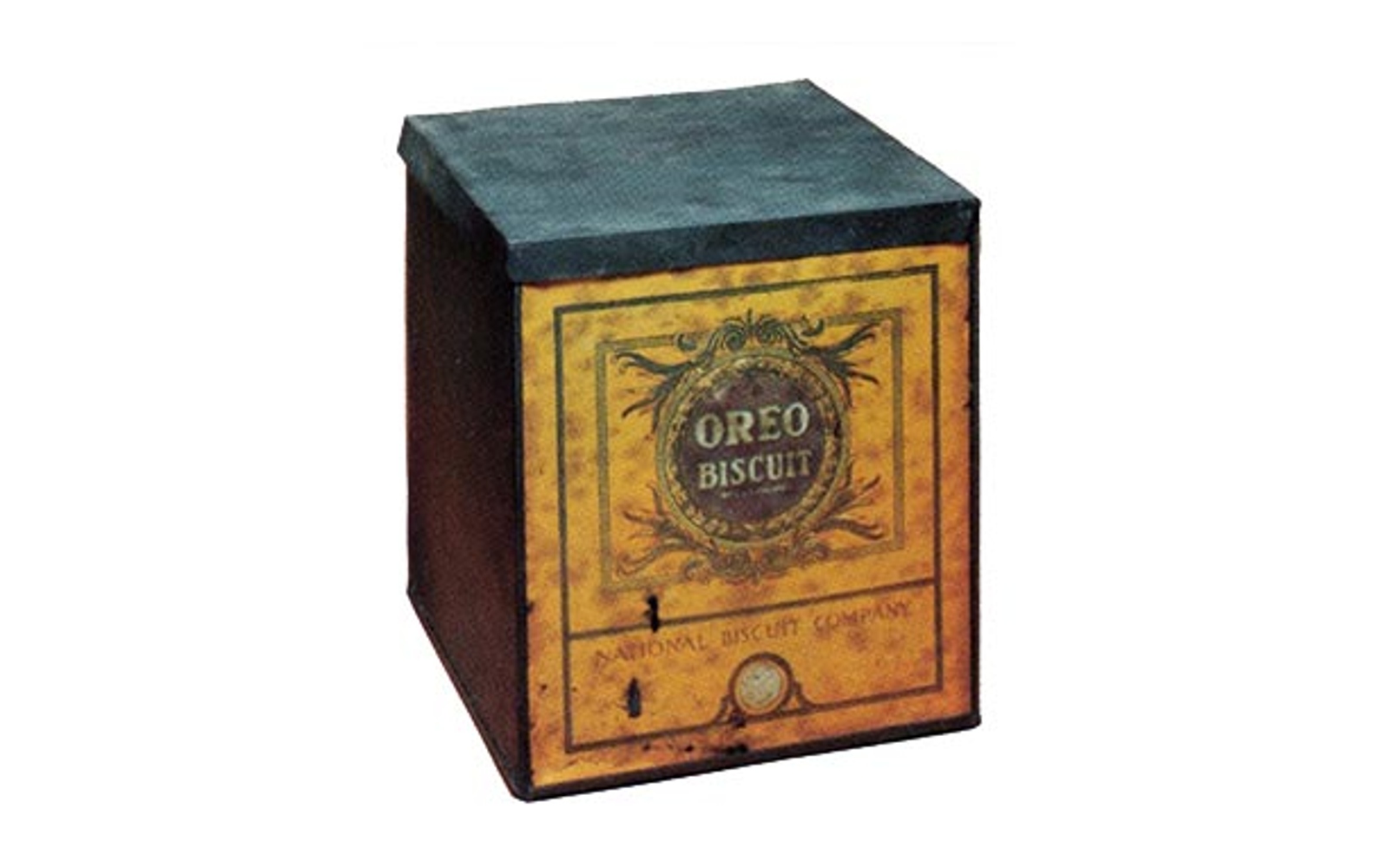
Oreo creates ritual memory
Oreo is not only a cookie. Twist, lick, dunk, local flavors, and family ritual make it a named behavior across markets.
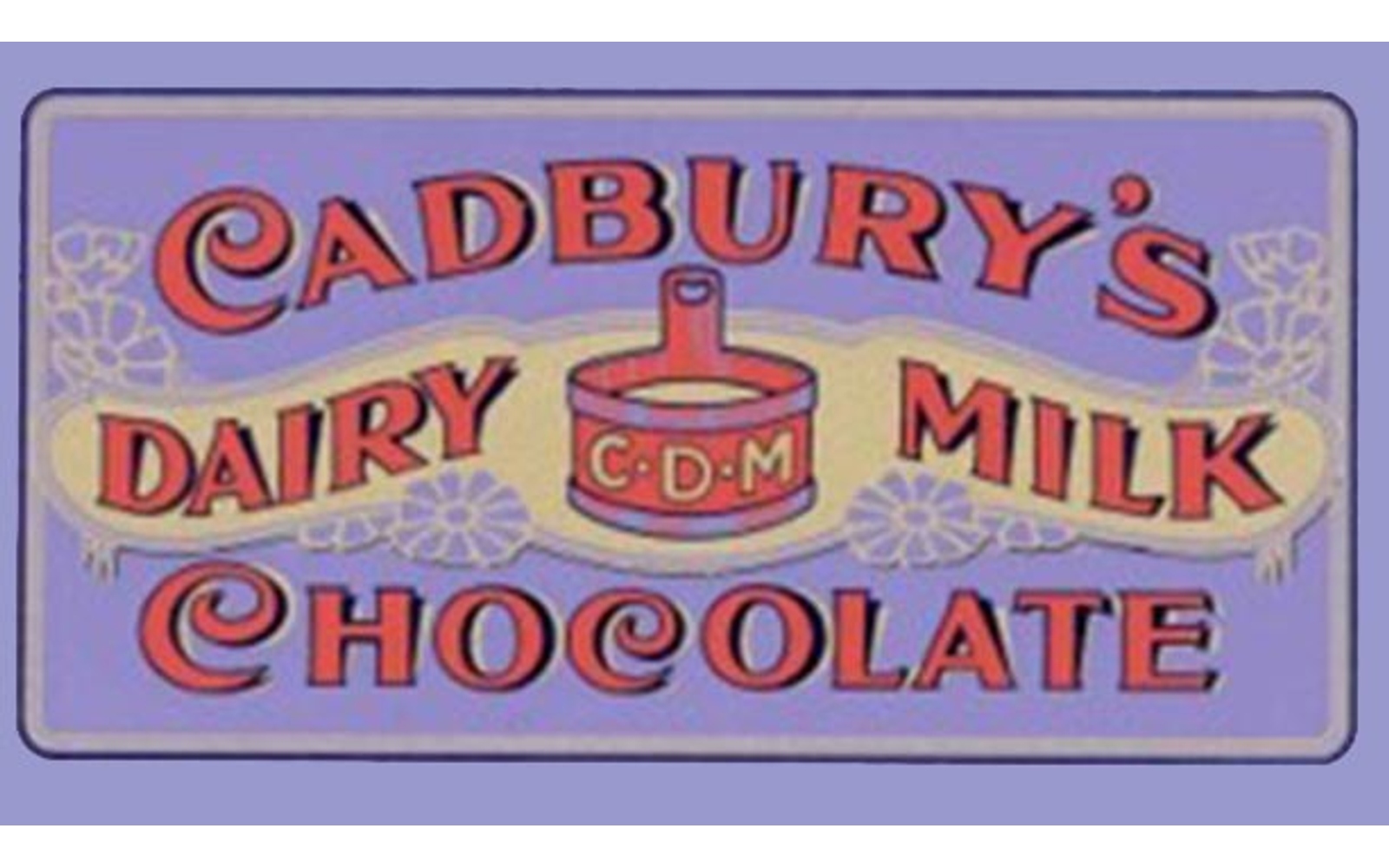
Cadbury carries chocolate trust
Cadbury gives Mondelez a British chocolate memory lane with Dairy Milk, Creme Egg, Roses, and purple shelf recognition.
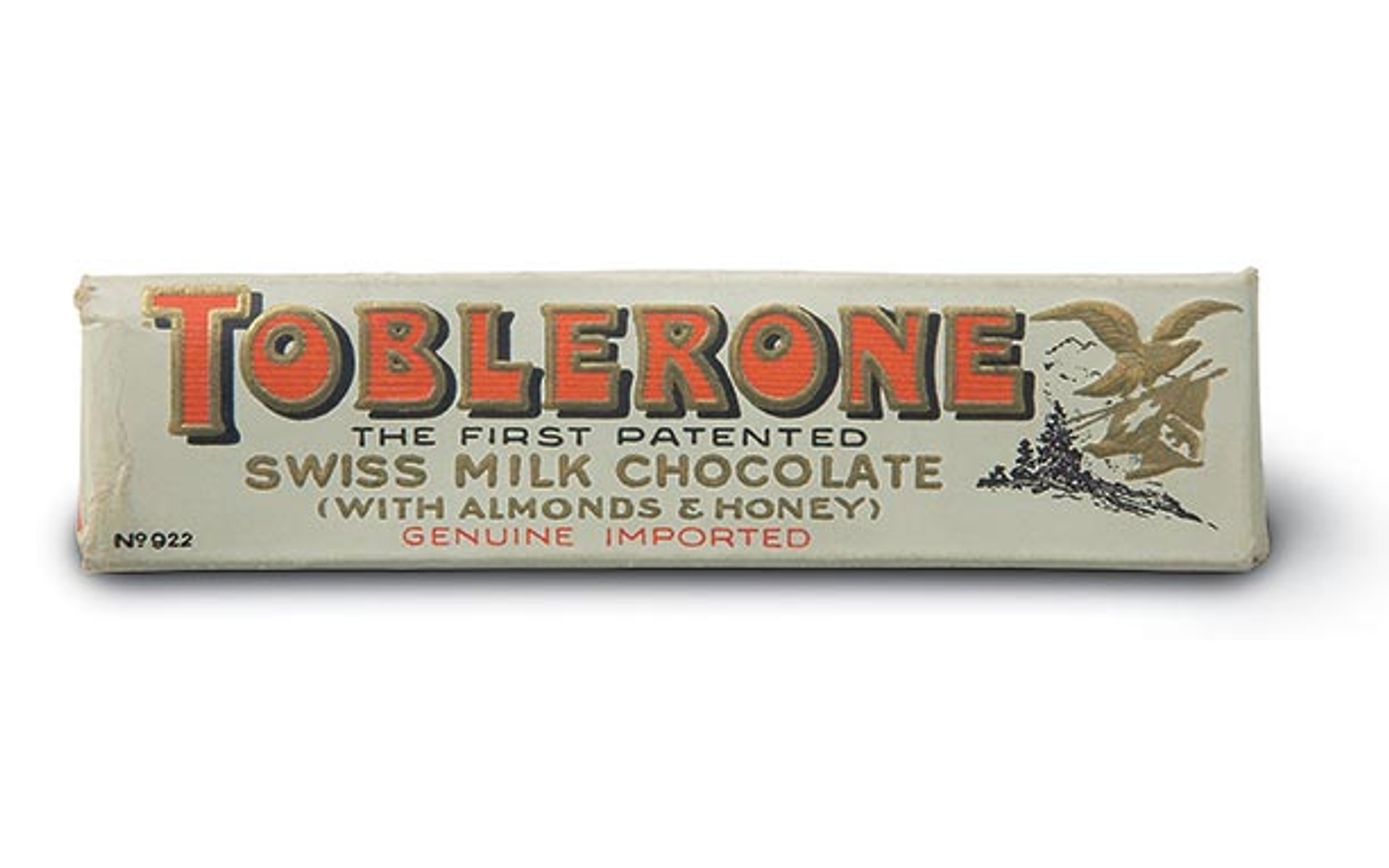
Toblerone makes shape ownable
The triangular bar shows why a snack brand can own a physical form, not just a wrapper or flavor.
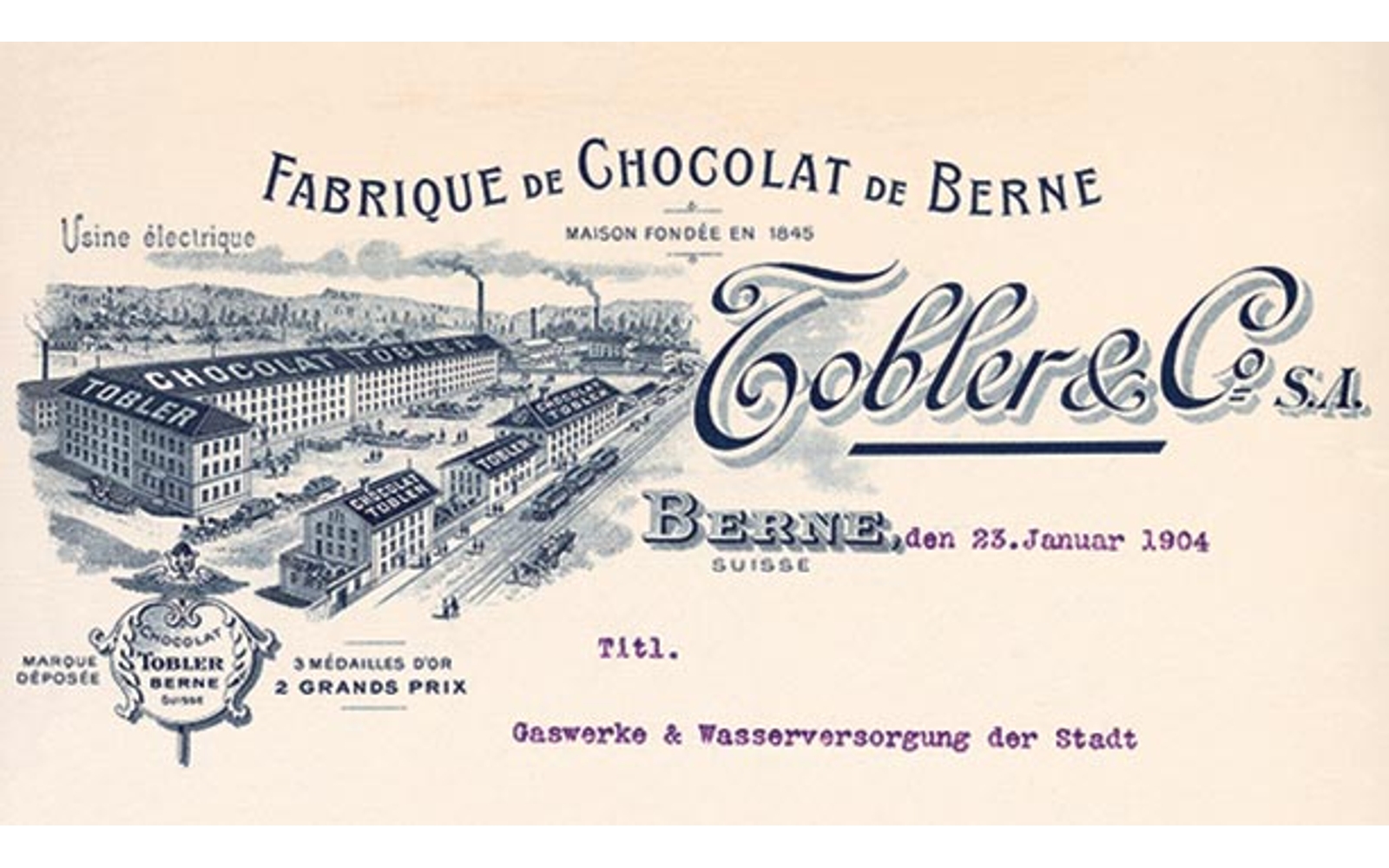
Factories make heritage concrete
The portfolio has roots in Nabisco, Cadbury, LU, Suchard, Toblerone, and regional makers before the 2012 Mondelez split.
Product and service system
Oreo, Ritz, LU, Chips Ahoy!, Belvita, Tate's, and regional biscuits turn occasion, ritual, and shelf color into memory.
Cadbury, Cadbury Dairy Milk, Milka, Toblerone, Côte d'Or, and local chocolate brands carry taste, color, and heritage.
Clif Bar, 7DAYS, Chipita, and bakery snacks extend Mondelez beyond cookies and chocolate.
Sour Patch Kids, Halls, Clorets, Maynards Bassetts, and Stride cover candy and refreshment occasions.
Tang, Bournvita, Philadelphia, and Royal require category care because not every brand fits the same snack story in every market.
The parent is modern, but the brand equity comes from older companies and product memories.
The system works when global flagships and local brands use the right pack, flavor, channel, and occasion by market.
Acquisitions like Tate's, Grenade, Chipita, and Clif show the parent adding premium, bakery, bar, and growth lanes.
Turning points.
Events that changed what buyers could see, buy, repeat, or trust.
Mondelēz said its AI tool helped develop Gluten Free Golden Oreo and refresh Chips Ahoy! recipes, while human experts still evaluated each result.
The Nabisco name first appears on a sugar wafer; National Biscuit Company does not adopt Nabisco as its corporate name until 1971.
Cadbury Dairy Milk launches and gives Cadbury one of its central chocolate memories.
Toblerone launches and turns triangular shape into product recognition.
Public reaction.
The useful reaction is about trust and pressure, not sentiment counts.
Buyers trust the products because rituals, pack colors, shapes, flavors, and occasions are already learned.
The parent can feel vague when its snacking story does not name the actual brands, categories, and acquisition history.
Full timeline.
Mondelēz reports that 60% of AI-assisted biscuit recipes performed better on measures including nutrition, sustainability, and cost. Source
John Cadbury opens a shop in Birmingham, beginning the Cadbury chocolate lane. Source
Lefèvre-Utile roots begin in France, later becoming LU biscuit heritage. Source
National Biscuit Company forms, creating the Nabisco system. Source
The Nabisco name first appears on a sugar wafer; National Biscuit Company does not adopt Nabisco as its corporate name until 1971. Source
Cadbury Dairy Milk launches and gives Cadbury one of its central chocolate memories. Source
Toblerone launches and turns triangular shape into product recognition. Source
Oreo launches and later becomes a global ritual brand. Source
Ritz crackers launch and create a savory occasion memory. Source
National Dairy Products Corporation changes its name to Kraftco Corporation as the business expands beyond dairy. Source
Philip Morris acquires Nabisco and folds it into the Kraft food system. Source
Kraft Foods acquires Cadbury, adding major global chocolate equity. Source
Kraft Foods splits; Mondelēz International becomes the global snacks company. Source
Tate's Bake Shop acquisition adds a premium cookie lane. Source
Mondelēz agrees to acquire Chipita in 2021 and completes the transaction on 3 Jan 2022, adding 7DAYS and other baked-snack brands. Source
Clif Bar acquisition adds energy-bar and active-lifestyle snacking. Source
On October 2, Mondelēz announces completion of its sale of developed-market gum in the U.S., Canada and Europe to Perfetti Van Melle, while retaining gum businesses in other regions. Source
FY2025 results show a global snack portfolio rather than one cookie company. Source
Steal / avoid.
- Give each flagship a behavior, color, shape, occasion, or taste memory to own.
- Let old acquired brands keep their equity instead of forcing everything into one parent voice.
- Explain the portfolio by category before describing global scale.
- Use local flavors and market fit as brand proof, not as random SKU sprawl.
- Publish the country and ownership status beside each brand; an out-of-date global list can hide a sale or a territorial license.
- Do not reduce Mondelēz to Oreo.
- Do not call the company Kraft today.
- Do not hide Cadbury, Ritz, LU, Milka, Toblerone, Sour Patch Kids, Halls, Tang, Bournvita, Clif, Tate's, Chipita, or 7DAYS.
- Do not flatten distinct product rituals, pack cues, and category roles into one generic global-snacking image.
Short answer.
Mondelēz International’s portfolio includes Oreo, Cadbury, Milka, Ritz, Toblerone, CLIF and 7DAYS. Cadbury products in the United States have a separate Hershey manufacturing and marketing license. Mondelēz sold its U.S., Canadian and European gum business to Perfetti Van Melle in 2023 while retaining gum elsewhere. Mondelēz is pronounced mohn-dah-LEEZ and was coined to suggest a delicious world.
Frequently asked questions
Does Mondelēz own Oreo, Cadbury and Milka?
Oreo, Cadbury and Milka appear in Mondelēz International's brand portfolio. These consumer names carry different product histories and identities under one parent. A corporate financial result or strategy applies to the group and should not automatically be presented as the result of one chocolate or biscuit brand.
What does Mondelēz mean, and how is it pronounced?
Mondelēz is a coined name intended to suggest a delicious world. Its 2012 announcement gives the pronunciation as mohn-dah-LEEZ and describes delez as a fanciful version of delicious. It is a corporate name created for a global snacks business, not a pre-existing food product.
Was Mondelēz previously part of Kraft?
Yes. Mondelēz International was created on October 1, 2012, when Kraft Foods separated its global snacks business from its North American grocery business. That split explains why the corporate name is newer than many of its snack brands.
Is Cadbury owned by Mondelēz or Hershey?
Cadbury is in Mondelēz International’s global portfolio. In the United States, Hershey holds a license to manufacture and market CADBURY products, which it says it acquired in 1988. The brand’s global ownership and its U.S. license are different facts; the country is essential to the answer.
Does Mondelēz still own Trident and Dentyne?
The answer depends on the territory. Mondelēz sold its developed-market gum business, including Trident and Dentyne in the United States, Canada and Europe, to Perfetti Van Melle in 2023. Its October 2 completion announcement says it retained gum businesses in Latin America, Asia, the Middle East and Africa.
Which company owns CLIF and 7DAYS?
Both are in Mondelēz International’s current portfolio. CLIF is a bar brand, while 7DAYS is a baked-snack brand from the Chipita business. They extend the portfolio beyond Oreo, Cadbury and other cookies and chocolate names.
Why do some lists of Mondelēz brands disagree?
Older lists may include businesses later sold, and some brand rights depend on territory. The 2023 sale to Perfetti Van Melle covered developed-market gum in the United States, Canada and Europe while Mondelēz retained gum elsewhere. Check the list’s date, the product category and the country before treating a brand name as proof of ownership.
Need help with your own brand?
Use Private brand work when your name, identity, proof, or message needs a sharper branding decision.
Sources.
Use the education shelf for the concepts behind this brand page.
Private brand workIf a quiet parent owns loud consumer brands across biscuits, chocolate, bars, candy, and beverages, Private Brand Work can define when the parent matters and what each product brand must own.
All brandsReturn to every brand page.
- https://www.sec.gov/Archives/edgar/data/1103982/000162828026005345/mdlz-20251231.htm
- https://www.sec.gov/Archives/edgar/data/1103982/000162828026027937/mdlz-20260331.htm
- https://www.mondelezinternational.com/
- https://www.mondelezinternational.com/our-brands/
- https://www.mondelezinternational.com/about-us/who-we-are/our-history/
- https://commons.wikimedia.org/wiki/File:Kraft_logo.svg
- https://www.sec.gov/Archives/edgar/data/1103982/000119312510040106/d10k.htm
- https://en.wikipedia.org/wiki/File:Kraft_Foods_2009_Logo.svg
- https://www.marketingweek.com/kraft-foods-launches-new-corporate-identity/
- https://www.mondelezinternational.com/media/asset-library/
- https://www.mondelezinternational.com/our-brands/oreo/
- https://www.mondelezinternational.com/our-brands/cadbury/
- https://www.mondelezinternational.com/our-brands/toblerone/
- https://www.mondelezinternational.com/our-brands/ritz/
- https://stockanalysis.com/stocks/mdlz/history/
- https://www.investing.com/news/stock-market-news/from-shampoo-to-cookies-consumer-products-get-an-ai-makeover-4775545
- https://ir.mondelezinternational.com/news-releases/news-release-details/mondelez-international-completes-acquisition-chipita-global-sa
- https://ir.mondelezinternational.com/news-releases/news-release-details/kraft-foods-proposes-mondelez-international-inc-new-name-global
- https://ir.mondelezinternational.com/news-releases/news-release-details/mondelez-international-completes-sale-developed-market-gum/
- https://www.hersheyland.com/brands/cadbury.html
- https://www.mondelezinternational.com/investors/stock/spin-off-information/

