Nespresso · Grow Your Brand · Capsule ritual system · Switzerland / Active
Nespresso
Nespresso turns capsules, machines, boutiques, recycling, and daily ritual into a coffee system. Nespresso shows how a small daily coffee ritual becomes a controlled system: Original, Vertuo, Professional, capsules, machines, boutiques, ecommerce, app, customer relationship centers, recycling, AAA sourcing, and Nestlé coffee architecture.
Positioning, name, and architecture.
Three evidence checks before the page talks about scale, color, or public reaction.
Nespresso makes the morning cup inspectable through capsule, machine, cup result, ordering, boutique, service, sourcing, and recycling touchpoints.
Nespresso is strongest when the capsule, machine, cup, boutique, app, service center, recycling path, and Nestlé coffee architecture are shown as one daily ritual system.
Nespresso is treated as the Nestlé-owned coffee system mark. The source-backed name work in this packet is the 1986 Nespresso S.A. launch, not an unsourced etymology claim.
No current public tagline is recorded.
endorsed operating brand inside Nestlé coffee architecture
Nespresso belongs to Nestlé's coffee architecture beside Nescafé and Starbucks Coffee At Home, but its own brand job is narrower and more controlled: portioned capsules, machines, service channels, boutique theater, sourcing, and recycling. This card should not use Nestlé-wide portfolio scale as if it were Nespresso standalone scale.
The first capsule-machine system and the baseline Nespresso home/small-office ritual.
system range: Original machines and capsules source
Vertuo widens the ritual from espresso to larger cup sizes using Centrifusion and capsule-code control.
system range: Vertuo system source
Professional moves the capsule-machine promise into offices, hotels, restaurants, and cafes.
out-of-home system: Nespresso Professional source
The aluminum capsule protects aroma and makes the portioned ritual repeatable.
product family: Nespresso coffee range source
Boutiques make the brand sensory, controlled, and service-led instead of grocery-shelf only.
retail touchpoint: 802 boutiques source
Website and mobile app keep the capsule reorder loop close to the customer.
service channel: Ecommerce platform and mobile app source
Specialist support connects machine help, coffee advice, and recycling options.
service channel: Customer relationship centers source
Collection capacity and recycling rate are part of the promise because capsules create visible waste pressure.
trust pressure layer: Capsule collection and recycling source
AAA sourcing ties the cup to farmers, agronomists, quality checks, and sustainability claims.
sourcing system: 168,000 farmers in 18 countries source
Name and operating-system progression
Nespresso S.A., a Nestlé Group company, is founded with five employees.
The Nespresso Club creates a direct service and loyalty layer around the capsule system.
The first Nespresso boutique opens in Paris, extending the 1997 distinctive N identity into a controlled retail setting.
Market and scale snapshot.
Nestlé reports Nespresso as an operating segment in Swiss francs. These FY2025 cells use official segment sales and underlying trading operating profit; Nespresso has no separate public valuation or listing.
Official FY2025 Nespresso segment sales were CHF 6.481B, converted at 1.2326 USD per CHF.
Official FY2025 Nespresso segment UTOP was CHF 1.160B, a 17.9% margin, converted at the same rate.
Nespresso is an owned brand, so no standalone public market value is used.
Nespresso is owned by Nestlé S.A.; this brand does not trade separately.
Color system.
The safe color direction is restrained: black-brown premium field, capsule-metal warmth, and light neutral space. Exact brand color extraction must wait for verified visual assets.
How the palette behaves
Dark fields make the capsule ritual feel controlled and premium.
Warm metallic neutrals can reference capsules and crema without becoming a fake gold logo system.
White space matters because the brand depends on clean machine, cup, boutique, and service surfaces.
Recognition assets.
Memory pieces the brand can use before someone finishes a sentence.
The capsule makes the system visible: one portion, protected aroma, repeatable cup, and visible waste responsibility.
Original and Vertuo should be shown as different system lanes, not generic machine styling.
Boutiques, ecommerce, app, and relationship centers make Nespresso a direct service brand.
The promise is only honest when ordering and capsule collection are part of the customer path.
Scores.
Use these scores to compare recognition, trust, proof, pressure, and risk.
The capsule, machine, cup, and reorder loop make the habit easy to understand.
Nespresso controls more of the experience than a normal appliance brand.
Boutiques, app, ecommerce, loyalty, and relationship centers support the premium promise.
Collection capacity is high, but the official global recycling rate is lower. That tension belongs in the card.
Nespresso reads correctly only when capsules, machines, cup result, boutique/service, ecommerce, app, customer centers, recycling, sourcing, and Nestlé coffee architecture stay visible.
Nespresso needs parent, product, service, market, and history lanes labeled cleanly so search systems do not flatten the brand into one vague entity.
Nespresso is strongest when the capsule, machine, cup, boutique, app, service center, recycling path, and Nestlé coffee architecture are shown as one daily ritual system.
Nespresso needs the relationship between masterbrand, products, services, sub-brands, and proof points to stay readable.
How the logo changed.
The documented progression moves from the distinctive 1997 N emblem to the current full Nespresso wordmark; both remain masterbrand assets.
Nespresso's official history records the introduction of its distinctive logo in 1997; the interlaced N became the compact recognition device. source
The current lockup expands the emblem into a wide wordmark that stays legible across machines, boutiques, capsules, and service channels.
Product and service lineage.
Nespresso reads correctly only when capsules, machines, cup result, boutique/service, ecommerce, app, customer centers, recycling, sourcing, and Nestlé coffee architecture stay visible.
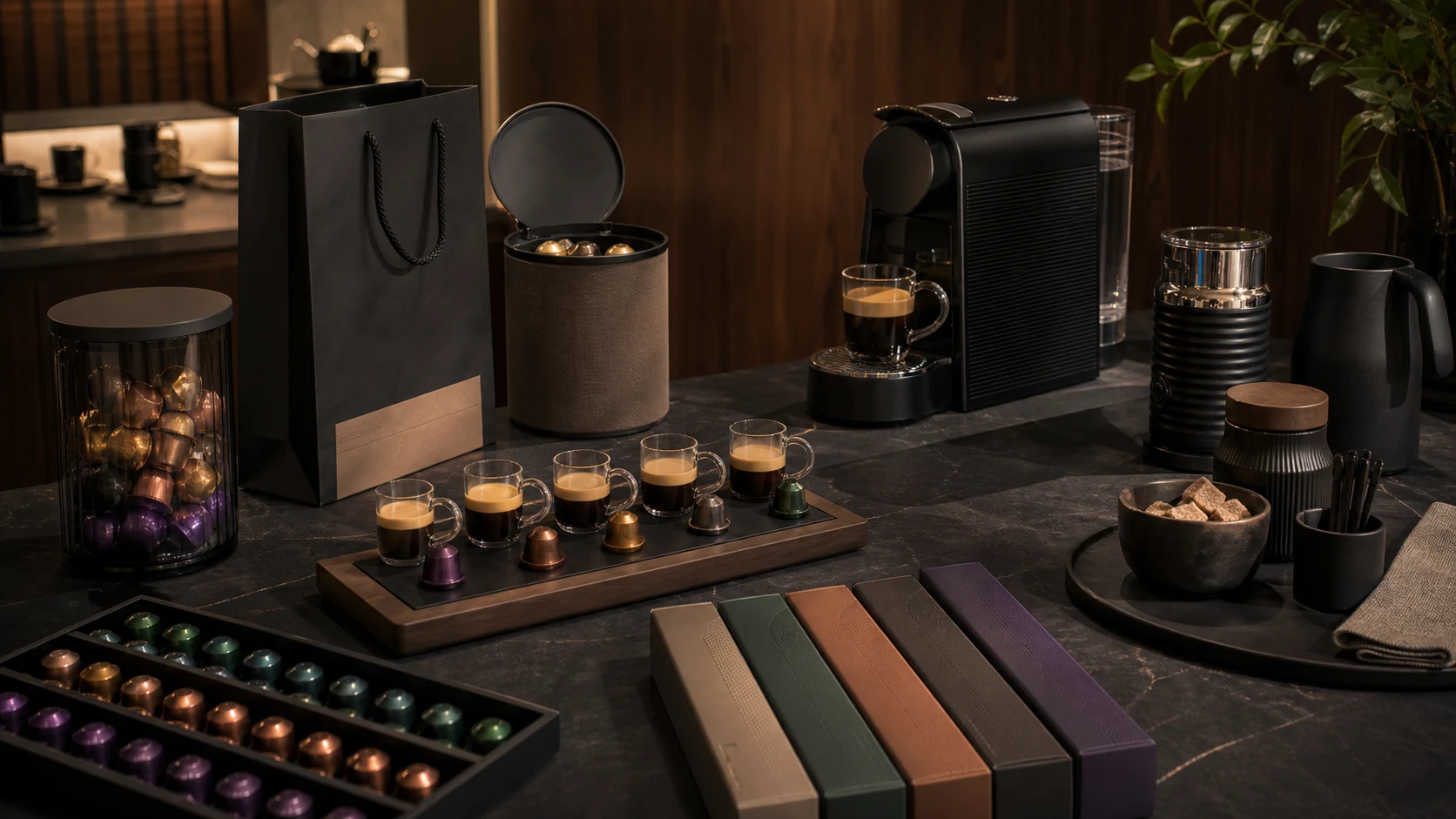
Service loop keeps the promise visible
The service loop matters because boutiques, app, support, sourcing, and recycling carry the promise after the cup is made.
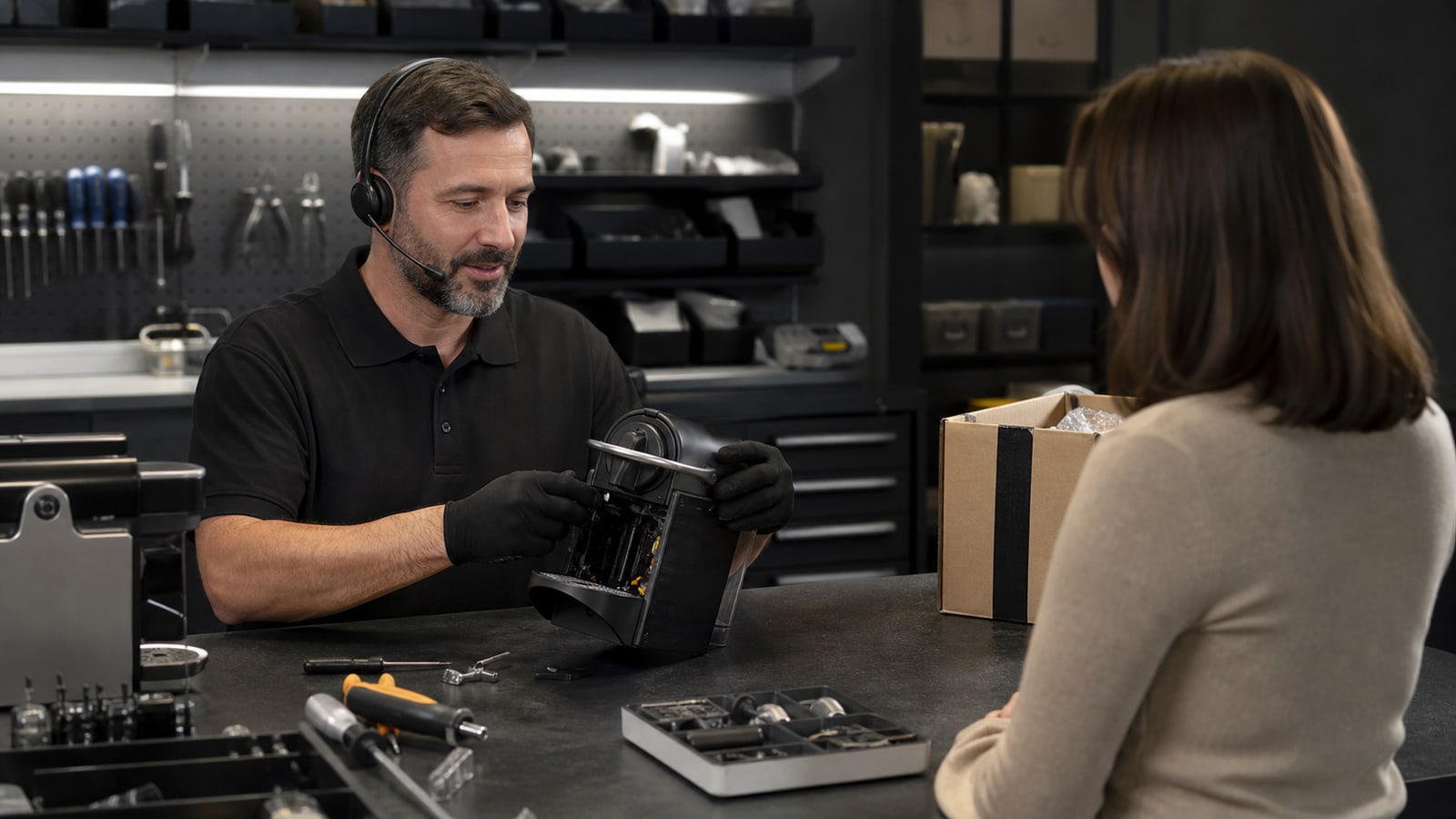
Service keeps the system working
Machine repair, trained support, return shipping, and customer guidance extend the relationship beyond capsule purchase.
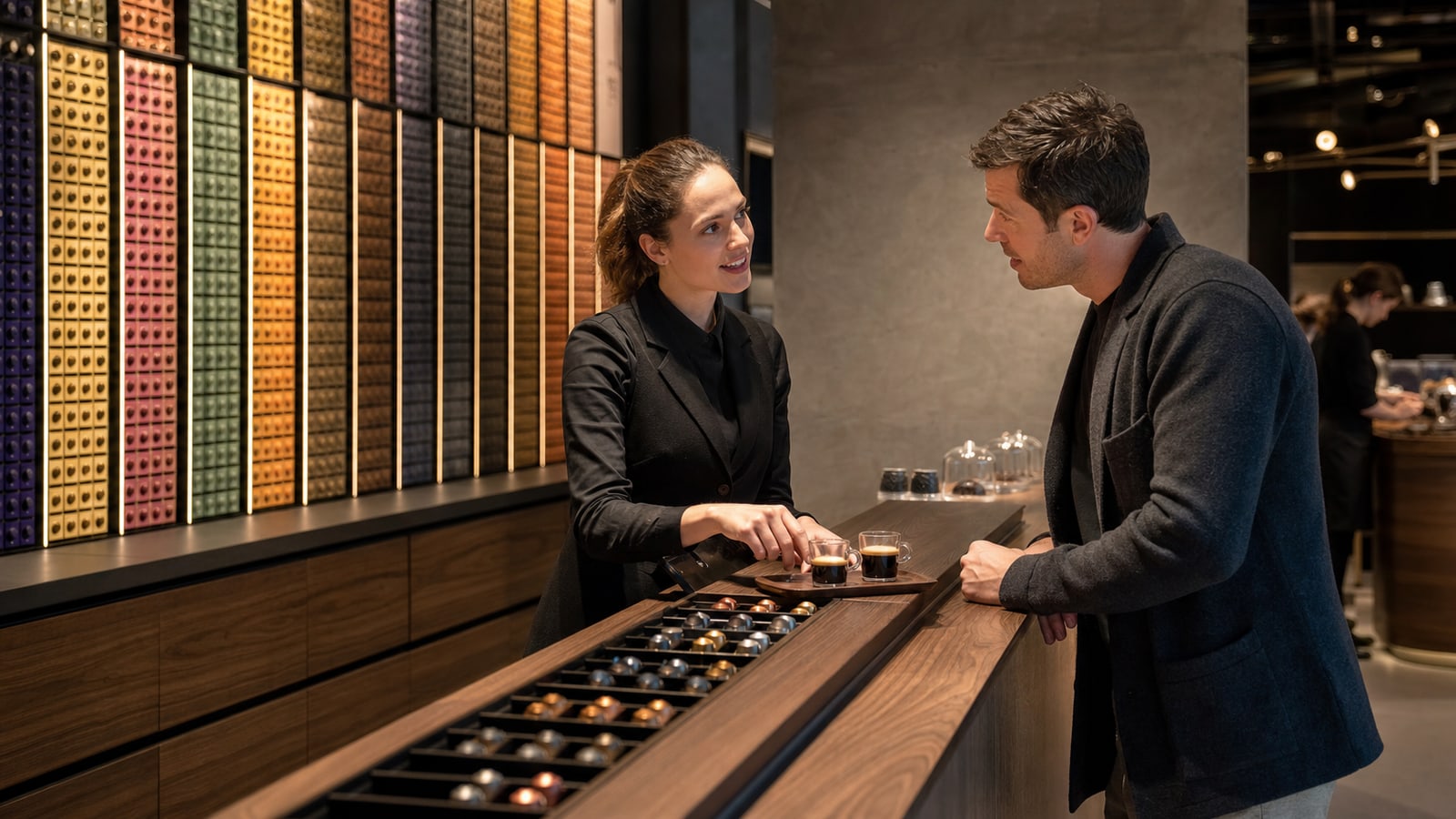
Boutique consultation turns coffee into service
Human guidance, tasting, and choice make the boutique a relationship channel rather than a product shelf.
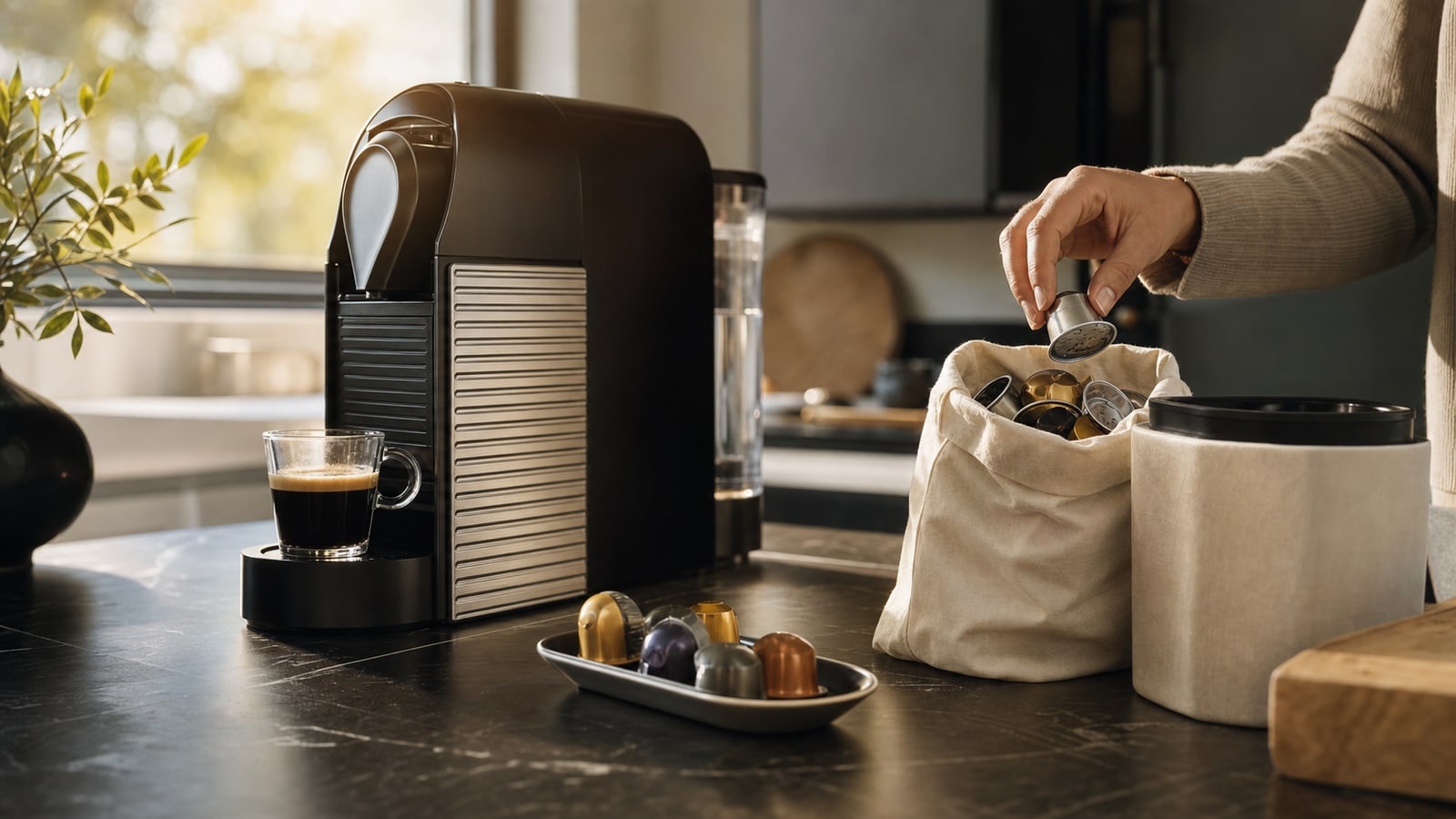
Returns make recycling part of the ritual
Collection bags and return points turn the used capsule into an operating responsibility rather than an invisible afterthought.
Product and service system
Nespresso S.A. is founded and launches the first portioned coffee system to office coffee sectors in Switzerland, Japan, and Italy.
The Nespresso Club adds personalized service and loyalty to the capsule-machine system.
The first Nespresso boutique opens in Paris in 2000, making retail theater part of the proof.
Nespresso Professional takes the system into offices, premium foodservice, hotels, restaurants, and cafes.
Original is the first system range and remains the baseline for home and small-office capsule coffee.
Vertuo launches in 2014 with Centrifusion and cup sizes from 40ml espresso to 414ml alto.
The AAA Sustainable Quality Program ties the cup to coffee farmers, agronomists, field staff, and quality checks.
Capsule collection and recycling are part of the system because aluminum capsules create trust pressure after the cup.
Nestlé positions Nespresso beside Nescafé and Starbucks Coffee At Home across soluble, portioned, hot/cold, in-home, and out-of-home coffee.
Turning points.
Events that changed what buyers could see, buy, repeat, or trust.
Nespresso S.A. is founded with five employees and launches the first portioned coffee system.
The Nespresso Club is created.
The first Nespresso boutique opens in Paris.
Vertuo launches in North America with Centrifusion technology.
Official facts list 35% estimated global recycling rate and over 96% estimated capsule collection capacity.
Public reaction.
The useful reaction is about trust and pressure, not sentiment counts.
The brand works when the home user gets a repeatable cup and knows how to reorder, get support, and return capsules.
A capsule system needs collection and recycling proof because the object that makes the ritual convenient also makes waste visible.
Nestlé gives Nespresso global coffee infrastructure, but the card should keep the Nespresso system distinct from Nestlé-wide portfolio claims.
Full timeline.
Nespresso S.A., a Nestlé Group company, is founded with five employees.
Nespresso launches the C-100 and C-1100 machines plus four initial coffee varieties.
The Nespresso Club is created.
Nespresso Professional launches for small offices and premium foodservice.
The first Nespresso boutique opens in Paris.
Nespresso launches Ecolaboration around sourcing, recycling, and greenhouse gas emissions.
Nespresso launches The Positive Cup strategy and Vertuo in North America.
Nespresso facts list 802 boutiques, three Swiss factories, 91% AAA coffee sourcing, and 35% estimated global recycling rate.
Steal / avoid.
- Show the whole ritual: product, refill, support, retail, and post-use path.
- Make a small repeat purchase feel like a managed service system.
- Use boutiques and app/order channels to keep the customer relationship close.
- Name the pressure point when the product creates one.
- Do not flatten Nespresso into one coffee machine.
- Do not use fake logos, generated wordmarks, stock cafe scenes, or unverifiable product pictures.
- Do not use Nestlé-wide revenue or portfolio scale as Nespresso standalone proof.
- Do not describe recycling capacity as the same thing as actual recycling rate.
Short answer.
Nespresso is useful for business owners because it shows how a small daily ritual can become a controlled system. The capsule, machine, cup result, boutique, ecommerce, app, customer support, sourcing program, and recycling path all have to work together. If one part disappears, the brand becomes a coffee machine instead of a habit people can trust.
Frequently asked questions
What is Nespresso's core brand signal?
Nespresso turns portioned coffee into a managed daily ritual through capsules, machines, service channels, boutiques, sourcing, and recycling.
Why not describe Nespresso as one coffee machine?
Because the brand proof depends on the full operating system: capsule, machine, cup, reorder, service, boutique, recycling, and Nestlé coffee architecture.
What should another brand steal from Nespresso?
Make the repeat-use loop inspectable before asking people to pay a premium.
Is the Nespresso source mark verified?
Yes. The current source-mark canvas comes from an official Nespresso asset, and the 1997 emblem stage is documented by Nespresso's official history factsheet.
Need help with your own brand?
Use Private brand work when your name, identity, proof, or message needs a sharper branding decision.