Nike · Grow Your Brand · Iconic / Performance Identity System · United States / Active / public company
Nike
Nike makes performance recognizable when product, athlete proof, and training behavior stay connected. A brand page for Nike: the company name, Swoosh primary mark, footwear and apparel proof, athlete use, Nike Direct, Nike.com, Nike App, SNKRS, Nike Run Club, Nike Training Club, and the pressure to keep the promise tied to product performance.
Positioning, name, and architecture.
Nike connects a mythic victory name, the Swoosh, sport product, athlete use, Jordan and Converse, and owned services around one behavior promise: start, train, compete, repeat.
Motivation and self-belief made physical through product use, athlete proof, training services, and the Swoosh.
Nike positions performance as a behavior: the customer wears, trains, repeats, and recognizes the Swoosh in motion.
Nike is named after the Greek goddess of victory, which turns performance into a victory cue before product copy begins.
Just Do It
corporate brand portfolio led by Nike Brand
NIKE, Inc. is a corporate portfolio of Nike, Jordan, and Converse. Nike SB and ACG sit inside Nike Brand; Wholesale and Nike Direct carry different marketplace jobs; apps are owned services rather than sub-brands.
FY2026 Nike Brand revenue spans USD 29.525 billion of footwear, USD 13.449 billion of apparel, and USD 2.199 billion of equipment.
footwear, apparel, and equipment: Footwear / apparel / equipment source
Nike designs footwear, apparel, equipment, and accessories across a wide variety of sport and fitness activities.
Nike Brand category system: Performance and lifestyle product categories source
Basketball performance and culture operate through a distinct identity inside NIKE, Inc.
owned portfolio brand: Air Jordan source
Converse keeps a separate name and product language inside the corporate portfolio.
owned brand: Chuck Taylor All Star source
Wholesale revenue reached USD 27.5 billion in FY2026, up 6%, showing that partner doors remain central to reach and sport credibility.
partner distribution: USD 27.5 billion FY2026 source
Nike Direct revenue was USD 17.7 billion in FY2026, down 6%; Nike App, SNKRS, Nike Run Club, and Nike Training Club keep the relationship active beyond a transaction.
stores, digital, membership, and training: Nike Direct / membership apps source
Naming and tagline progression
The Swoosh enters the identity system
There is no finish line
Just Do It
Why Do It?
Market and scale snapshot.
FY2026 results show a flat top line but a changing channel mix: Wholesale grew while Nike Direct and Converse contracted, putting product and marketplace execution at the center of the turnaround.
NIKE, Inc. FY2026 full-year revenue for the fiscal year ended 31 May 2026.
NIKE, Inc. FY2026 full-year net income for the fiscal year ended 31 May 2026.
FY2026 revenue is used as the reproducible scale measure; no point-in-time market value is inferred.
NIKE, Inc. Class B common stock trades on the New York Stock Exchange under NKE.
Color system.
Black and white keep the Swoosh disciplined across product and digital surfaces; Volt adds a documented performance-energy accent used in Nike product colorways.
How the palette behaves
Black gives the mark control and lets it sit on product surfaces without competing with the product.
White creates contrast and keeps the primary mark readable inside the card.
Neutral product ground keeps the generated shoe and material visuals from turning into a fake official palette.
Cream keeps the page editorial while the black-and-white primary mark stays disciplined.
Recognition assets.
The Swoosh reads quickly, but footwear shape, cushioning, athlete use, retail, apps, and training behavior keep the symbol attached to real performance proof.
Customers buy Nike products and services. The Swoosh is the fast cue inside that larger Nike system.
A performance claim becomes easier to believe when the shoe, material, sole, and use case carry the argument.
Nike Direct, Nike.com, Nike App, SNKRS, Nike Run Club, and Nike Training Club keep the brand present after the product is recognized.
Scores.
These scores test whether Nike's recognition, product proof, participation system, culture, and channel execution still reinforce one another.
Nike has a fast public read through name, Swoosh, footwear, apparel, athletes, stores, and digital surfaces.
Footwear, apparel, athlete use, and training services keep giving the brand physical proof.
Nike's effort language works because ordinary customers can train, buy, run, and track progress through real surfaces.
Nike can move between elite sport, school teams, gyms, streetwear, and personal improvement.
The product has to stay strong when the culture gets louder than the shoe.
The name, ticker, category, and source trail are clear; live price and market-cap claims stay out unless sourced.
The primary mark stays readable when it is contained, padded, and used with product proof.
Many brands copy aspiration language without the product proof or behavior loop behind it.
How the logo changed.
Three sourced stages show the move from the 1971 script lockup, through the bold 1978 name-and-mark system, to the standalone Swoosh used since 1995.
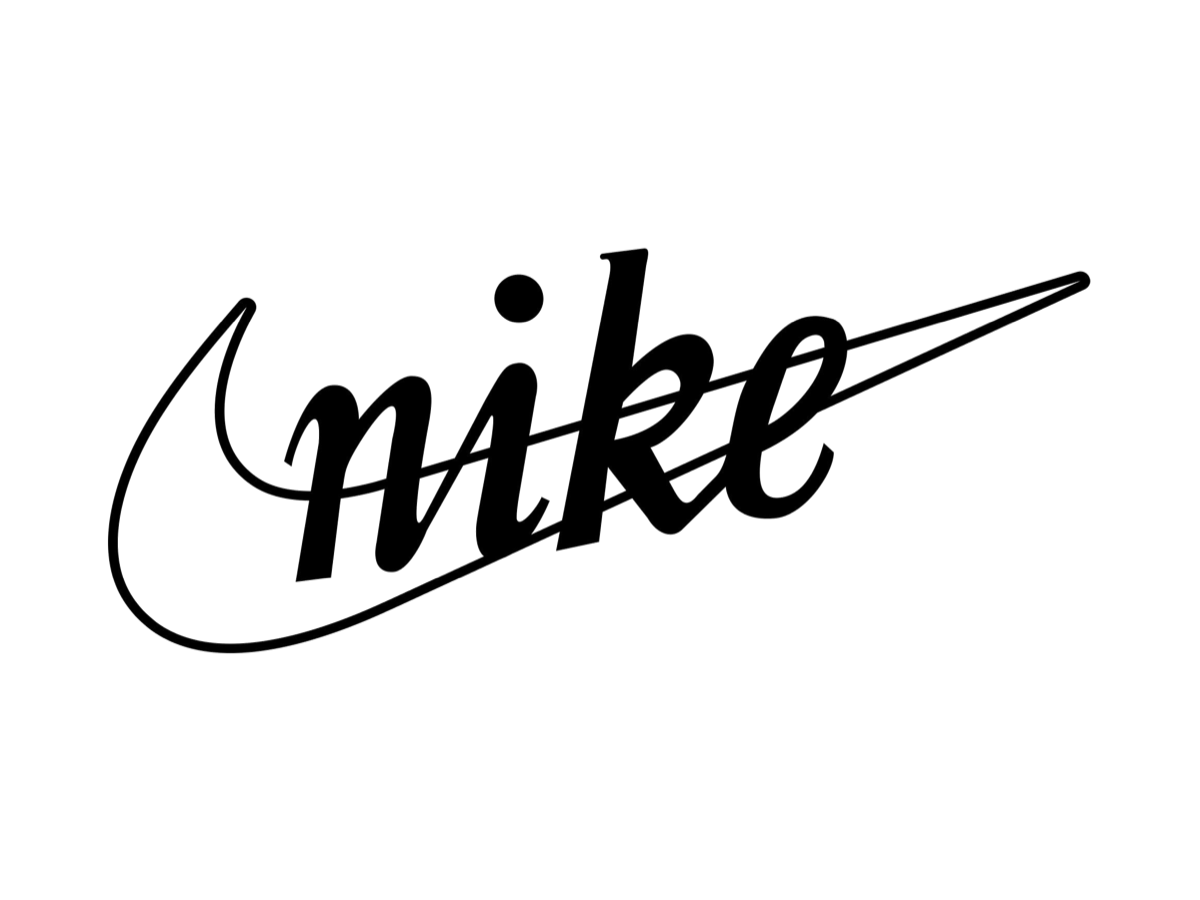
The early identity paired a hand-drawn script name with Carolyn Davidson's new motion mark. source

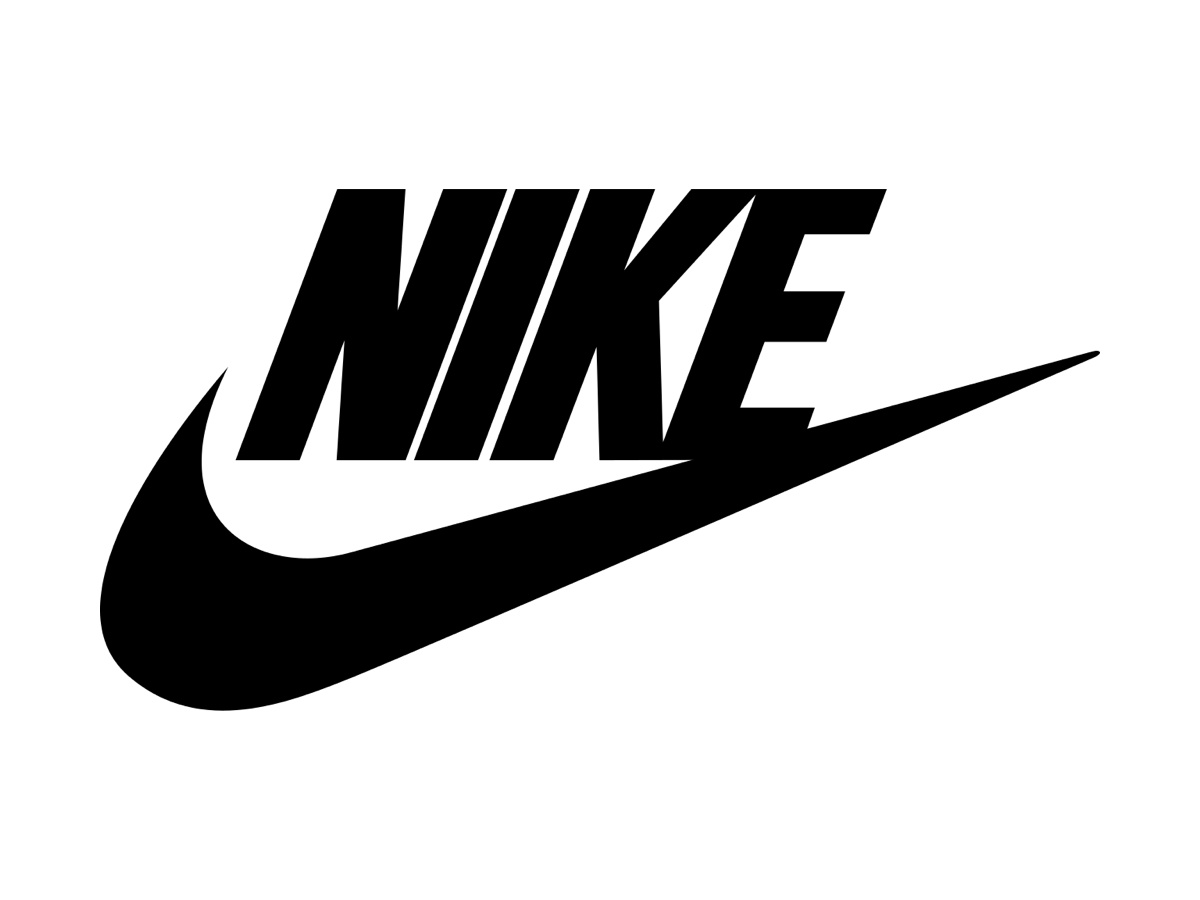
The bold uppercase NIKE lockup made the company name and Swoosh read as one compact product signature.
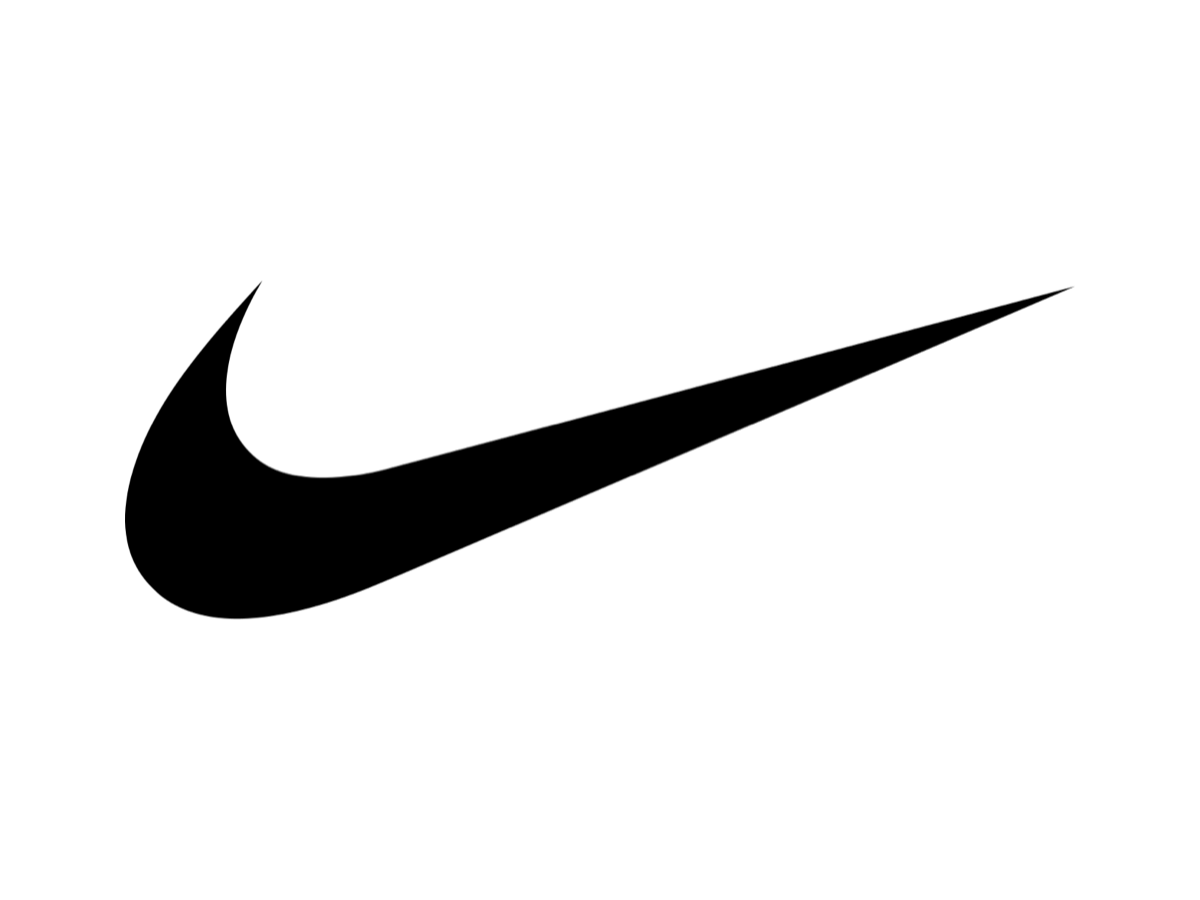
By 1995, accumulated product and athlete memory allowed the Swoosh to carry the corporate identity without the name. source
Product and service lineage.
Nike is a company, product system, retail system, and service system. The mark matters because product use, athlete proof, and Nike-owned customer surfaces keep giving it meaning.
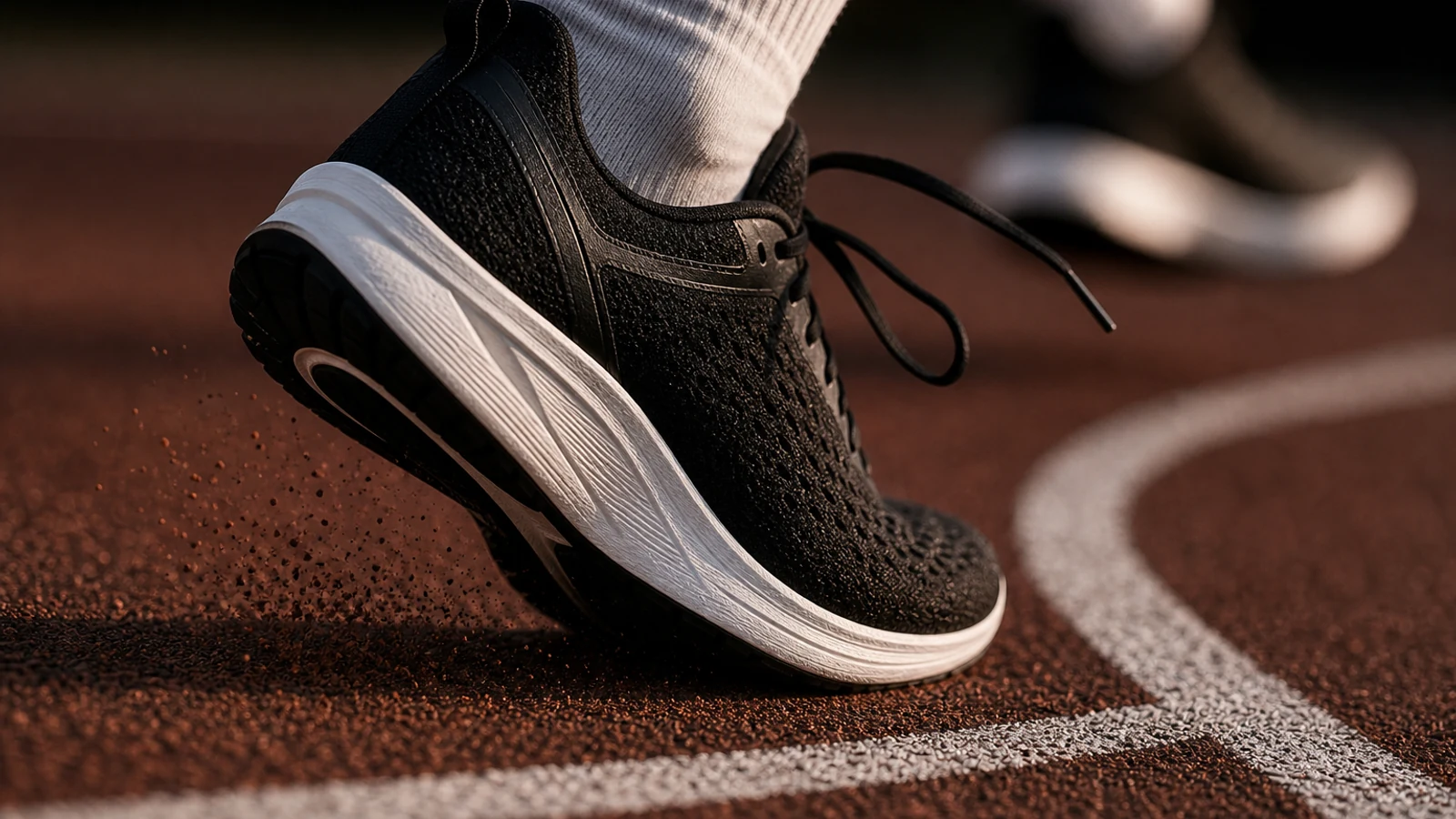
Training motion
A genuinely logo-free track scene keeps the lesson on traction, repetition, and product use without inventing a Nike mark.
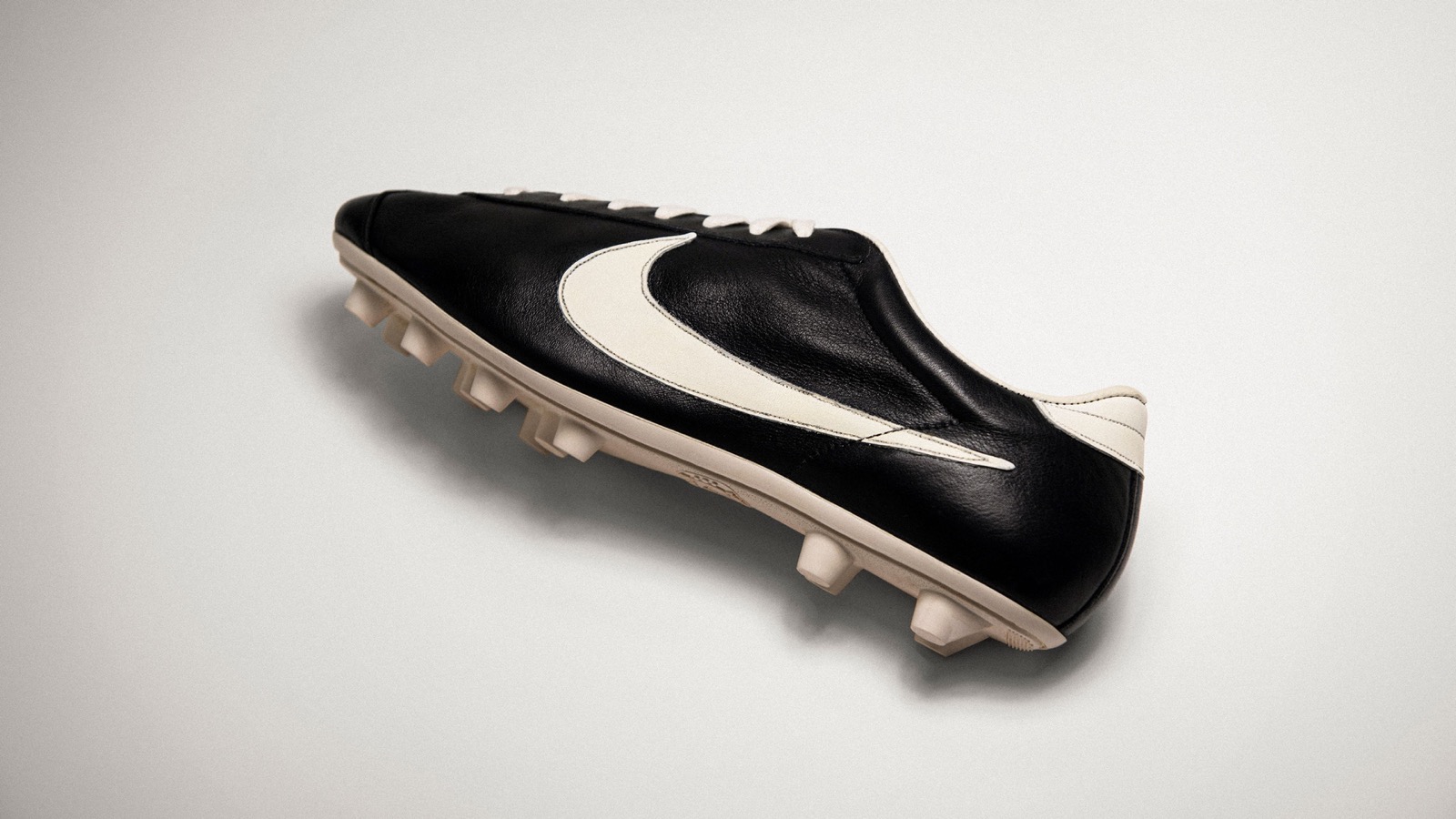
The first product surface
The original football boot shows why the Swoosh was built as a product mark before it became a standalone corporate symbol.
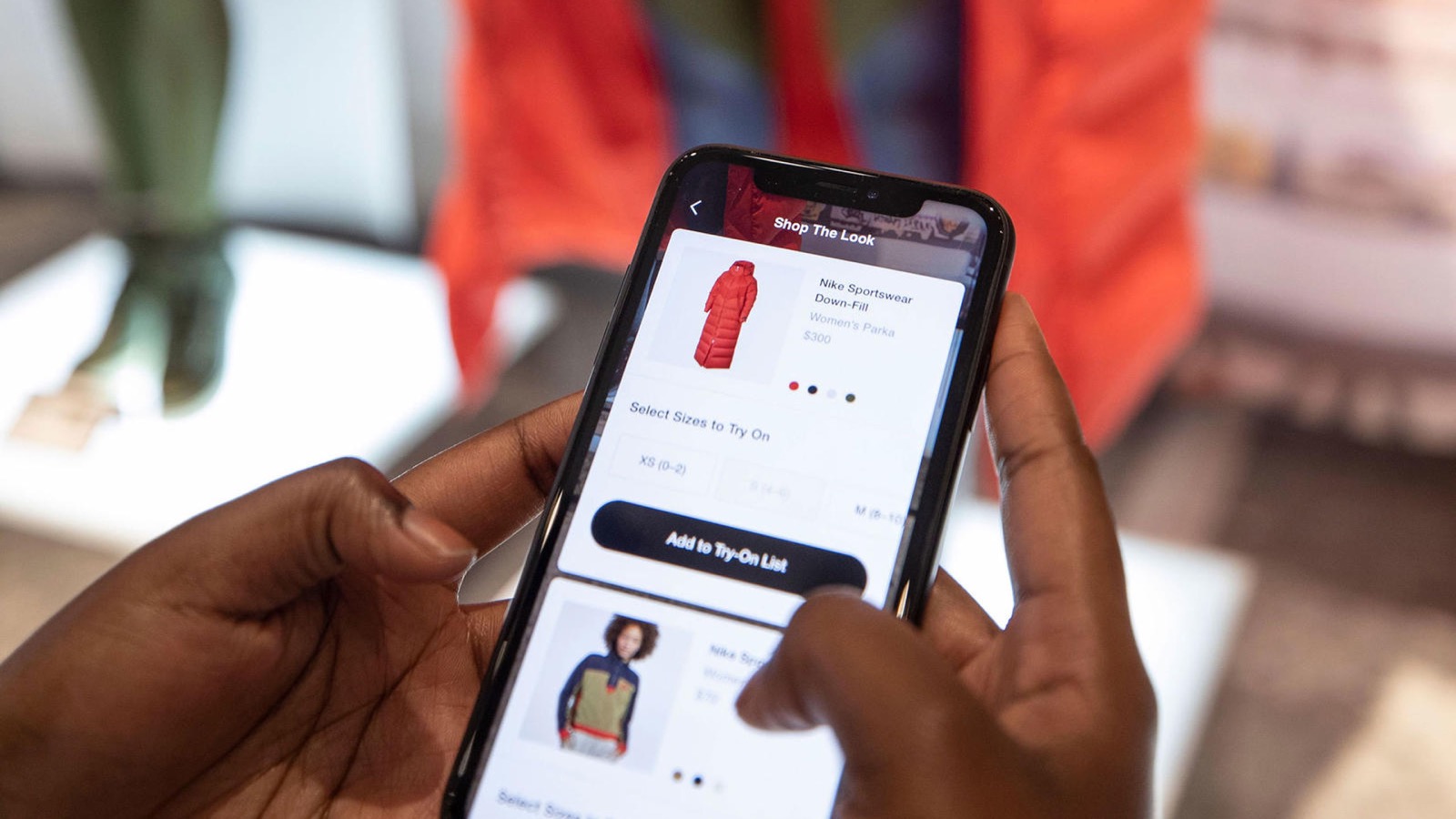
Connected retail
Store, membership, and mobile services extend the brand from a product purchase into an owned customer relationship.
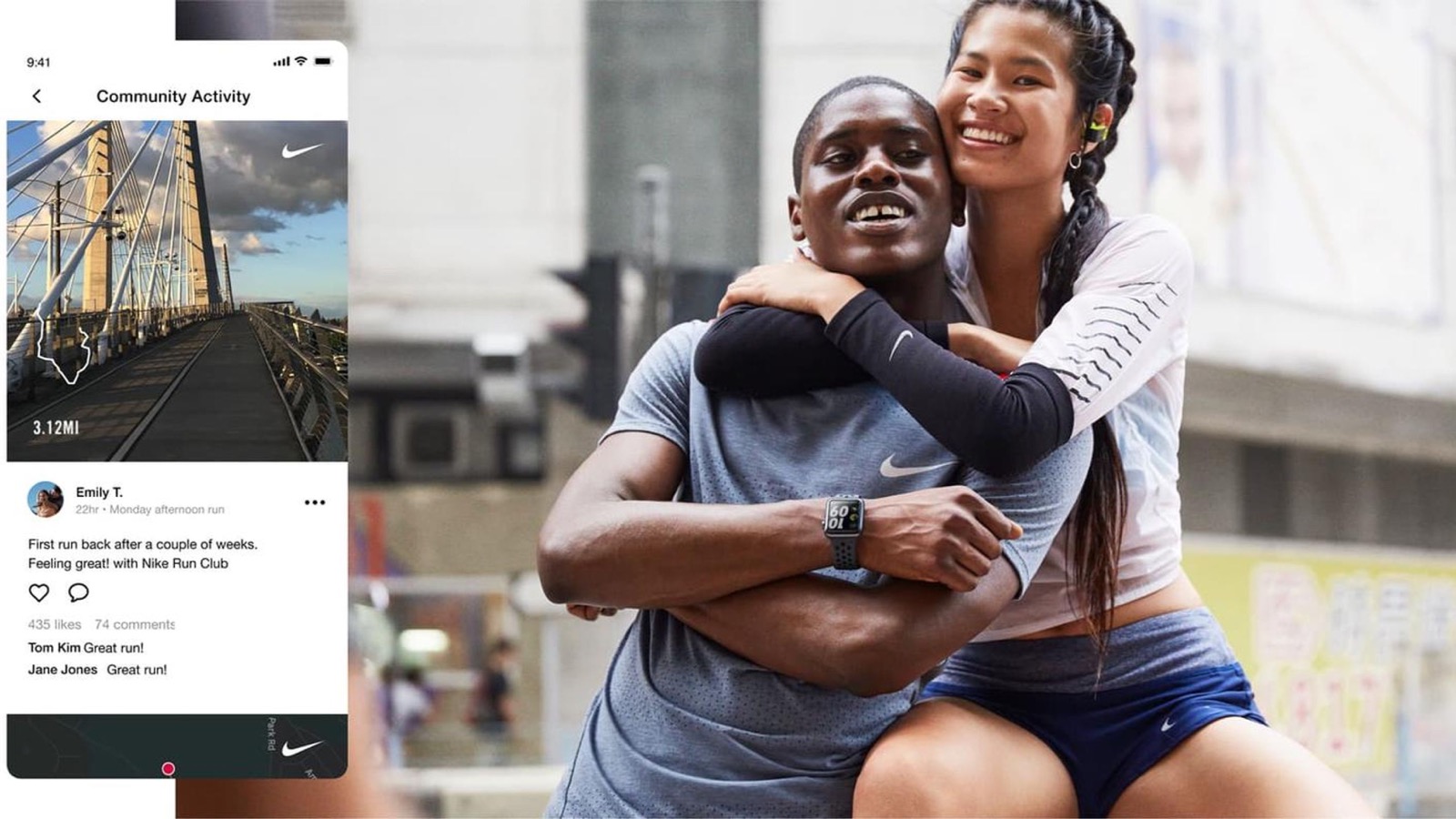
Nike Run Club
Nike Run Club turns the performance promise into a repeatable behavior and community surface beyond the shoe.
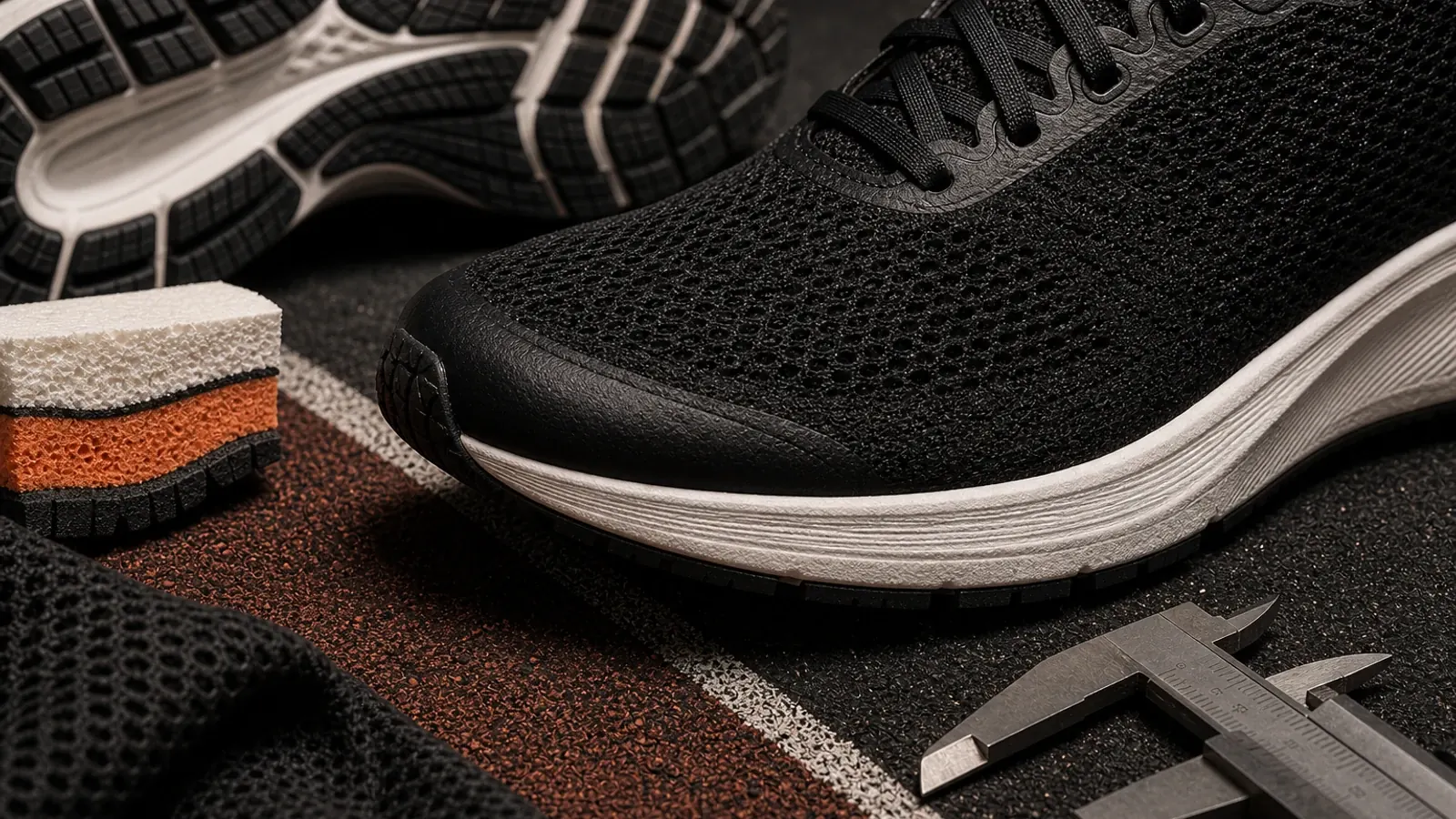
Materials carry the promise
A logo-free material study makes cushioning, mesh, outsole geometry, and construction the proof instead of relying on campaign language.
Product and service system
Nike company history traces the roots to Blue Ribbon Sports before the Nike name.
The Nike name and Swoosh enter the identity system early enough to gather product memory.
Running and performance shoes give the brand a visible surface where fit, cushioning, grip, and wear can be judged.
Elite use gives the product a public testing environment, but the customer still has to see a path to their own effort.
The Just Do It platform moves the brand toward a repeatable behavior frame rather than only product description.
Nike now has named owned customer surfaces including Nike.com, Nike App, SNKRS, Nike Run Club, and Nike Training Club, alongside stores, wholesale, product, and athlete use.
Turning points.
Nike's strongest turns changed more than advertising: they expanded the product system, portfolio, marketplace, or leadership responsible for proving the promise.
FY2026 NIKE Brand revenue included USD 29.525 billion in footwear, USD 13.449 billion in apparel, and USD 2.199 billion in equipment.
FY2026 Wholesale revenue rose 6% to USD 27.5 billion while Nike Direct fell 6% to USD 17.7 billion.
Converse revenue fell 31% to USD 1.174 billion in FY2026, far faster than the consolidated company.
Elliott Hill returned as CEO in October 2024 with a mandate centered on brands, products, consumers, athletes, partners, and the next growth stage.
Rip the Script drew attention, but Nike-sponsored teams missed the World Cup final and high-demand jerseys reportedly ran out during peak interest.
Nike’s S&P 100 removal took effect before trading on 21 September 2026 after 18 years, according to Reuters. The report links its decline in market value to sales, innovation and competitive pressure.
Public reaction.
Nike's public tension is visible without inventing a sentiment score: customers reward useful sport product and participation, then question the brand when scarcity or culture outruns performance proof.
Nike gives customers a compact way to connect product use, training, competition, and ambition.
When the story becomes only hype or borrowed athlete fame, the brand has to bring the reader back to proof.
Full timeline.
Blue Ribbon Sports creates the running-product base that later becomes Nike.
The Nike name and Carolyn Davidson's Swoosh enter the product identity.
The Pinwheel appears on products at the Olympic Track and Field Trials.
Michael Jordan wears the first Air Jordan 1 in 1984 before the model launches in 1985.
Just Do It turns the performance promise into repeatable behavior language.
The standalone Swoosh becomes the corporate identity shorthand.
Nike acquires Converse and adds a separate athletic-lifestyle brand to the portfolio.
Nike describes a connected marketplace spanning stores, membership, and apps.
Elliott Hill becomes President and CEO of NIKE, Inc. on October 14.
Revenue holds at USD 46.398 billion while Wholesale grows 6%, Nike Direct falls 6%, and Converse falls 31%.
Nike leaves the S&P 100
Steal / avoid.
- Attach the brand to a behavior customers can repeat.
- Let product proof carry ambition before copy explains it.
- Use athlete or expert proof as a testing environment, not as borrowed fame.
- Keep the primary mark contained, padded, and tied to real product and service surfaces.
- Do not ask aspiration language to carry a weak product.
- Do not imitate the attitude unless your product gives the customer a real way to perform it.
- Do not let culture move so far ahead that the product or service becomes an afterthought.
- Do not copy Nike's tone if your customer cannot perform the promise.
Short answer.
Nike's brand signal is the company name attached to product proof, athlete use, retail, Nike-owned digital surfaces, training behavior, and the Swoosh primary mark. The useful lesson is simple: the mark gets stronger when customers can wear, use, train with, and recognize the promise in real life.
Frequently asked questions
What is Nike's core brand signal?
Nike's core brand signal is the Nike name attached to product use, athlete proof, training behavior, owned customer surfaces, and the Swoosh primary mark.
What should another brand steal from Nike?
Give the mark a behavior customers can repeat, then keep the product proof close to that behavior.
What should another brand avoid copying from Nike?
Do not copy aspiration language if the product, service, or customer behavior cannot prove it.
Need help with your own brand?
Use Private brand work when your name, identity, proof, or message needs a sharper branding decision.
Sources.
Use the education shelf for the concepts behind this brand page.
Private brand workUse this when the decision belongs to your own brand.
All brandsReturn to every brand page.
- NIKE, Inc., Company
- NIKE, Inc., Nike Swoosh logo history
- NIKE, Inc., Why Do It? campaign release
- NIKE, Inc., Fiscal 2026 fourth-quarter and full-year results
- CompaniesMarketCap, Nike historical market capitalization
- U.S. SEC, NIKE, Inc. company facts
- U.S. SEC, NIKE, Inc. submissions
- Nike, Nike App
- Nike, SNKRS App
- Nike, Nike Run Club App
- Nike, Nike Training Club App
- Wikimedia Commons, Logo NIKE file
- Nike, history of the Air Jordan 1 Banned colorway
- NIKE, Inc., FY2004 corporate responsibility report
- NIKE, Inc., Elliott Hill appointed President and CEO
- NIKE, Inc., United Collective and Volt color context
- Nike football
- Reuters: Nike S&P 100 removal
