OCBC · Grow Your Brand · Singapore Bank / Regional Financial Group · Singapore / Active / listed bank
OCBC
OCBC: the red O makes a regional bank architecture easier to read. A brand page for OCBC: the 1932 merger origin, Singapore base, 2023 logo system, Bank of Singapore, Great Eastern, FY2025 total income, and the pressure of keeping one group clear across banking, wealth, insurance, and regional subsidiaries.
Positioning, name, and architecture.
Three evidence checks before the page talks about scale, color, or public reaction.
A long-established Singapore bank with a broad group architecture under one red O.
OCBC positions trust as one group: banking, wealth, insurance, and regional access carried by a red mark that must keep each lane legible.
OCBC stands for Oversea-Chinese Banking Corporation, formed from the 1932 merger of three predecessor banks.
For now, and beyond
masterbrand with specialist group brands
The OCBC masterbrand leads regional banking, while Bank of Singapore, Great Eastern, and other specialists carry specific jobs. Great Eastern should not be described as wholly owned.
A named part of OCBC’s regional banking, wealth, insurance, or investment system.
Group business or market lane: OCBC Singapore source
A named part of OCBC’s regional banking, wealth, insurance, or investment system.
Group business or market lane: OCBC Malaysia source
A named part of OCBC’s regional banking, wealth, insurance, or investment system.
Group business or market lane: OCBC Indonesia source
A named part of OCBC’s regional banking, wealth, insurance, or investment system.
Group business or market lane: OCBC Hong Kong source
A named part of OCBC’s regional banking, wealth, insurance, or investment system.
Group business or market lane: OCBC Macau source
A named part of OCBC’s regional banking, wealth, insurance, or investment system.
Group business or market lane: OCBC China source
A named part of OCBC’s regional banking, wealth, insurance, or investment system.
Group business or market lane: Bank of Singapore source
A named part of OCBC’s regional banking, wealth, insurance, or investment system.
Group business or market lane: Great Eastern source
A named part of OCBC’s regional banking, wealth, insurance, or investment system.
Group business or market lane: Lion Global Investors source
A named part of OCBC’s regional banking, wealth, insurance, or investment system.
Group business or market lane: OCBC Securities source
A named part of OCBC’s regional banking, wealth, insurance, or investment system.
Group business or market lane: OCBC Al-Amin source
Naming and tagline progression
Oversea-Chinese Banking Corporation
New OCBC logo with a stylised Chinese junk ship in a bold O
For now, and beyond
Market and scale snapshot.
Ownership, category, and scale matter only when a stable public source makes the comparison clear.
Bank-specific revenue role.
Net profit attributable to equity holders.
Dated O39.SI public-equity value observed 5 Jul 2026.
Publicly listed independent banking group.
Color system.
Red should give OCBC fast recognition while the rest of the page stays restrained.
How the palette behaves
Red makes OCBC easy to spot in a conservative bank set.
White keeps the symbol crisp and prevents the identity from becoming a red wall.
Black and grey give the group enough restraint for banking, wealth, and insurance.
The color system works when each business lane is named clearly, not when every service is squeezed together.
Recognition assets.
Memory pieces the brand can use before someone finishes a sentence.
The mark has to connect banking, wealth, insurance, and regional subsidiaries without becoming a vague red circle.
The 1932 bank was formed from predecessor banks, so the origin should not be reduced to one founding date.
Bank of Singapore and Great Eastern belong in architecture, not squeezed into a catch-all paragraph.
Scores.
Use these scores to compare recognition, trust, proof, pressure, and risk.
The red O is a strong Singapore and regional cue.
The group architecture is readable when Bank of Singapore and Great Eastern get separate lanes.
Bank, wealth, and insurance trust need dated ratios and ownership precision.
The 2023 red mark is direct without needing a complex logo story.
Branches, apps, cards, wealth offices, and annual reports carry the proof.
Ticker, ISIN, legal issuer, and group brands can be stated cleanly.
Specialist businesses create confusion if the page compresses them.
A regional bank can use one mark while still giving specialist lanes their own job.
How the logo changed.
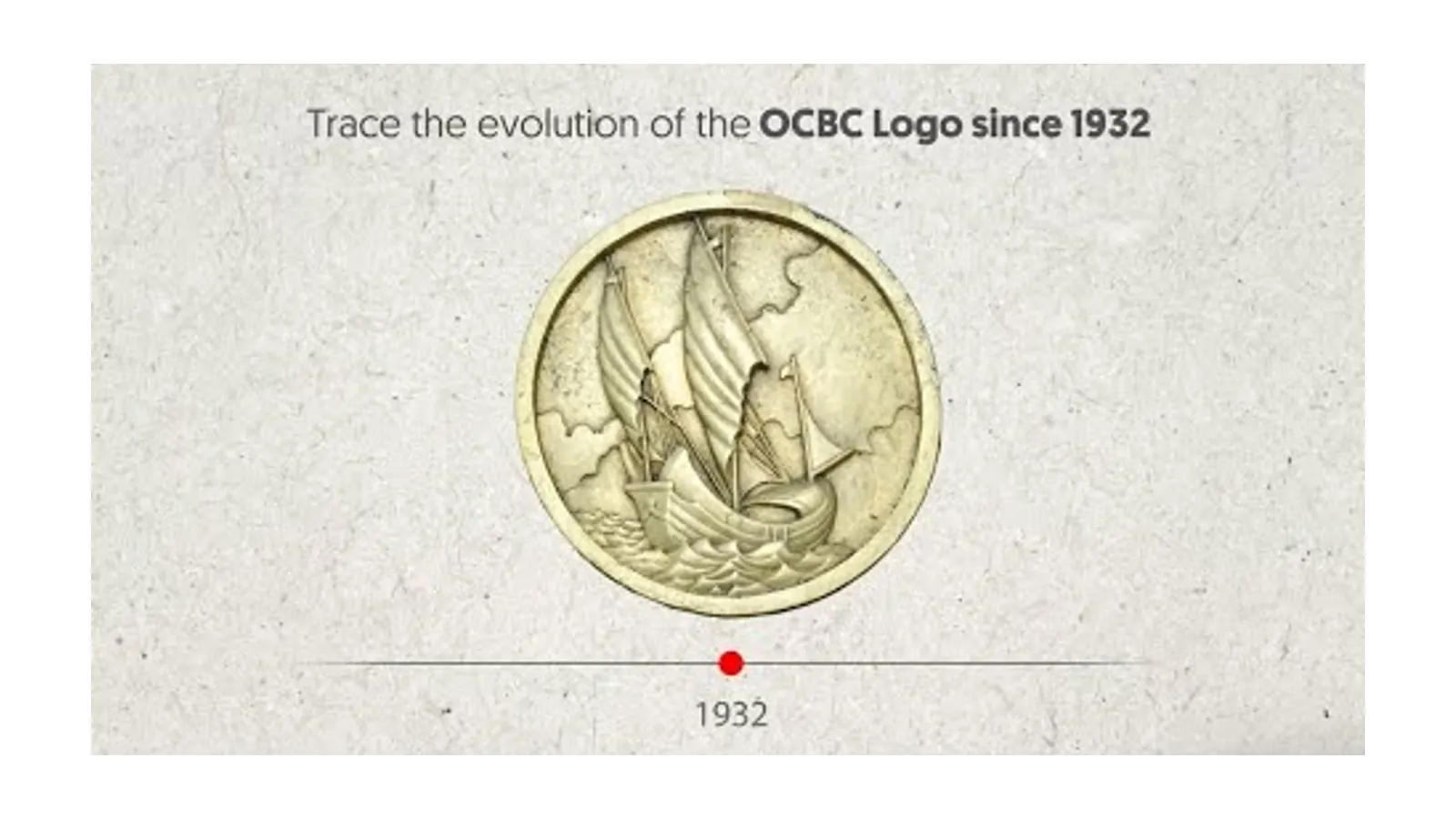
Historical logo progression is not approved for OCBC yet. This lane shows the verified current source mark only until real dated old-era logo assets are sourced.

Product and service lineage.
For OCBC, product proof is group breadth: banking, wealth, insurance, asset management, and regional subsidiaries.

Digital service stays separate from fake app screens
Retail banking becomes concrete through advice, account choices, and a clear service handoff.

SME banking needs business context
A working business conversation makes the SME banking lane visible.

Wealth advice carries the Singapore surface
Portfolio review and personal advice give the wealth proposition a human surface.

Service makes the promise human
The branch interaction turns scale and digital access into visible customer care.
Product and service system
Predecessor banks Chinese Commercial Bank, Ho Hong Bank, and Oversea-Chinese Bank are incorporated.
OCBC is formed by merger of the three predecessor banks.
Total resources exceed S$1b.
Great Eastern stake increases; Bank NISP stake is acquired.
Bank of Singapore is launched after the ING Asia Private Bank acquisition.
Wing Hang Bank is acquired and later becomes OCBC Wing Hang.
The refreshed OCBC logo is unveiled.
FY2025 total income reaches S$14.614b and net profit reaches S$7.42b.
Turning points.
Events that changed what buyers could see, buy, repeat, or trust.
The 1932 origin explains why the acronym matters and why the page should not use a lazy founded-in line.
The refreshed O should make the group more legible, not just newer.
Ownership language has to be dated and sourced.
Private banking is not the same job as retail banking.
Public reaction.
The useful reaction is about trust and pressure, not sentiment counts.
OCBC is easier to trust when the page separates banking, wealth, insurance, and investment lanes.
The red O is memorable enough; the copy should not over-explain it.
For a bank, total income, net profit, CET1, NPL, and deposits are evidence points, not decoration.
Full timeline.
Chinese Commercial Bank is incorporated.
Ho Hong Bank is incorporated.
Oversea-Chinese Bank is incorporated.
The three banks merge to form OCBC.
Great Eastern and Bank NISP moves broaden the group.
Bank of Singapore launches.
Wing Hang Bank is acquired.
OCBC unveils the refreshed logo.
FY2025 financial highlights report S$14.614b total income.
Steal / avoid.
- Use one mark to connect a broad financial group.
- Give specialist brands their own space instead of hiding them under the parent.
- Use official bank labels, not generic revenue language.
- Explain the logo meaning only as far as the brand source supports it.
- Do not say OCBC was simply founded in 1932 without the predecessor merger context.
- Do not call all group brands wholly owned.
- Do not turn close-to branch counts into exact live facts.
- Do not bake financial numbers into visuals.
Short answer.
OCBC is useful as a brand lesson because the red O can hold a broad Singapore financial group together. Color and logo memory are only the entry point. The page has to show the 1932 merger origin, banking subsidiaries, Bank of Singapore, Great Eastern, official FY2025 bank labels, and the role each lane plays inside one group.
Frequently asked questions
What is OCBC's main brand signal?
The red O and OCBC acronym. The official brand page connects the current mark to a stylised traditional Chinese junk ship at sail.
What should another brand steal from OCBC?
Use one strong group mark, then label the specialist businesses so trust does not blur.
What should another brand avoid copying from OCBC?
Do not compress banking, wealth, insurance, and regional subsidiaries into one generic finance story.
Need help with your own brand?
Use Private brand work when your name, identity, proof, or message needs a sharper branding decision.