Old Spice · Grow Your Brand · Repositioning and brand-voice recognition case · United States / Active / P&G grooming brand
Old Spice
Old Spice turns scent, comic confidence, and product-family memory into a repositioning system. Old Spice shows how P&G ownership, grooming breadth, red shelf cues, scent memory, and a strange confident voice can make an older grooming brand feel current without reducing it to one deodorant stick.
Positioning, name, and architecture.
Three evidence checks before the page talks about scale, color, or public reaction.
Old Spice owns a deliberately strange, confident voice that makes grooming products easier to recognize across scent names, packages, ads, and shelf blocks.
Old Spice is a repositioning card: the brand lesson is how a heritage grooming name can become current through voice, scent memory, packaging, product-family breadth, and repeated comic confidence.
Introduced in 1937, Old Spice began with a maritime identity that made grooming feel traveled, established, and confidently masculine.
The name itself remains the durable promise: familiar ritual with an exaggerated modern voice.
P&G house of brands / standalone grooming brand
Old Spice owns a distinct voice and shelf system inside P&G; Gillette, Venus, Braun, and Secret are sister brands, not Old Spice subbrands.
The masterbrand connects nautical heritage, red shelf recognition, scent names, and comic confidence.
page identity: grooming system source
The shelf-memory core extends from underarm products into whole-body odor protection.
product family: deodorant source
Bath products carry the scent and voice system into a daily ritual.
product family: body wash source
Adjacent categories test whether the same naming and confidence can travel beyond deodorant.
adjacent grooming families: hair and body care source
Naming and tagline progression
Ships, porcelain, and ornate script framed the product as a worldly grooming ritual.
Comic confidence replaced solemn tradition while keeping the familiar name and nautical memory.
Scent-led collection names extend the voice across a broad grooming range.
Market and scale snapshot.
P&G reports Old Spice inside a much larger public company, so the financial view uses disclosed parent-company scale and labels the brand-level reporting limit clearly.
P&G FY2025 net sales; Old Spice is not separately reported.
Net earnings attributable to P&G; Old Spice is not separately reported.
P&G operating cash flow; Old Spice is not separately reported.
Old Spice is a P&G grooming brand.
Color system.
Red should work as a recognition cue, not as a full-page flood.
How the palette behaves
Red can carry shelf energy, confidence, and fast category recognition.
White keeps grooming packaging and page surfaces clean enough to read.
Navy/dark blue can hold the nautical heritage cue if verified source assets support it.
Gold should be used sparingly for heritage or label warmth only if it appears in verified packaging/source visuals.
Recognition assets.
Memory pieces the brand can use before someone finishes a sentence.
Comic confidence turns an old grooming name into a behavior consumers can recognize before a product claim lands.
The voice works commercially because the shelf remains easy to recognize across formats.
Distribution and portfolio scale support Old Spice without replacing its distinct consumer identity.
Deodorant, body wash, soap, hair care, styling, and lotion show whether one voice can hold a grooming system together.
Scores.
Use these scores to compare recognition, trust, proof, pressure, and risk.
Red script, nautical memory, and scent-led packaging form a fast shelf signal.
Comic confidence is an operating asset repeated across advertising, naming, and product behavior.
P&G ownership is clear while Old Spice remains a distinct consumer-facing brand.
Deodorant, body wash, soap, hair care, styling, and lotion show that the identity travels.
Nautical heritage, red packaging, product-family scenes, and sourced logo eras make the system visible.
Product, ownership, financial context, and chronology make the repositioning inspectable.
Parent, page identity, product families, collections, and sister brands occupy separate lanes.
The brand reads as a grooming system rather than one famous deodorant campaign.
How the logo changed.
The nautical ship cue moved from heritage packaging into a cleaner shelf lockup, while the red script became the most portable current signature.
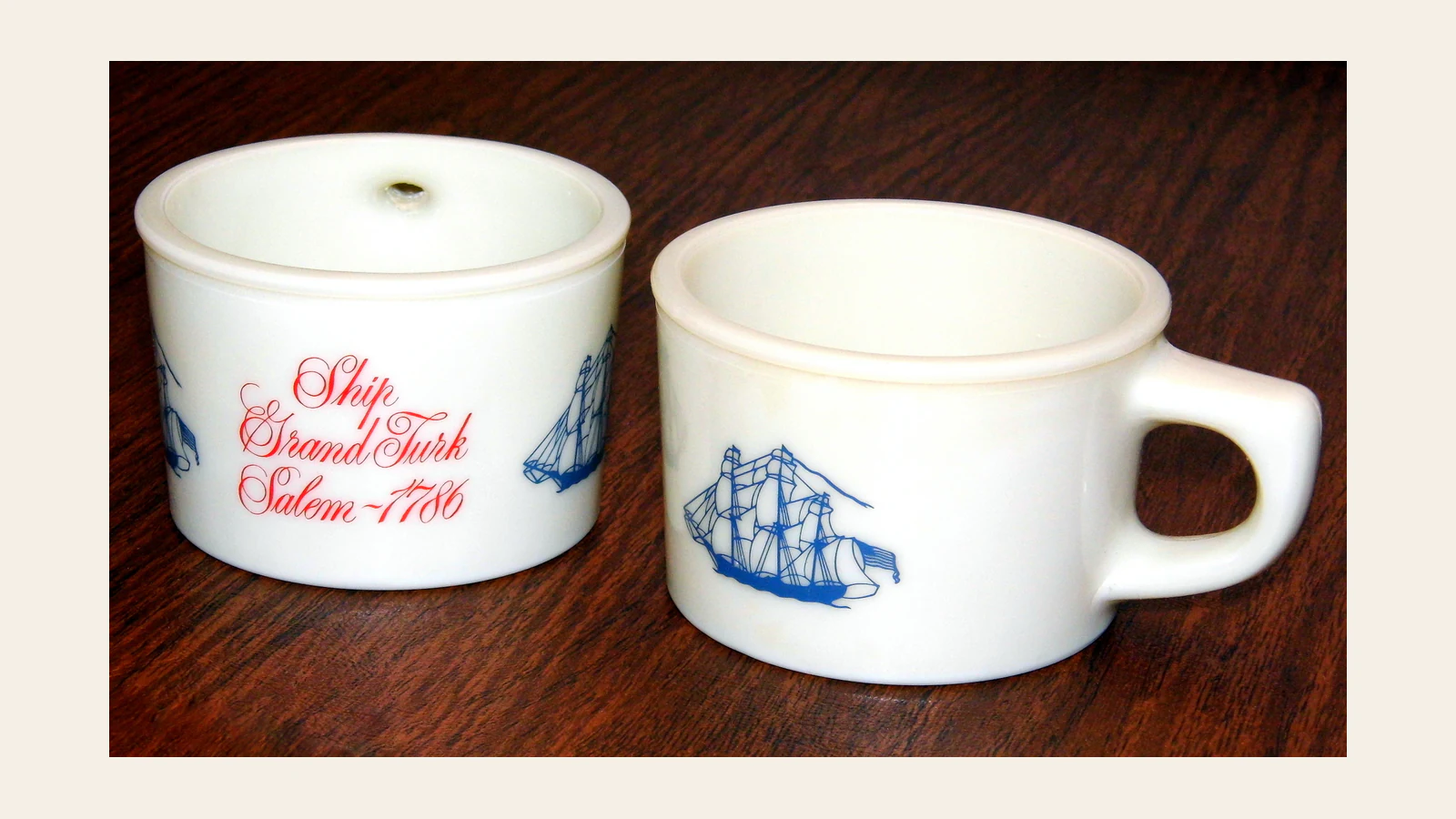
Early grooming objects used sailing ships and ornate script to turn aftershave into a story of travel and confidence. source

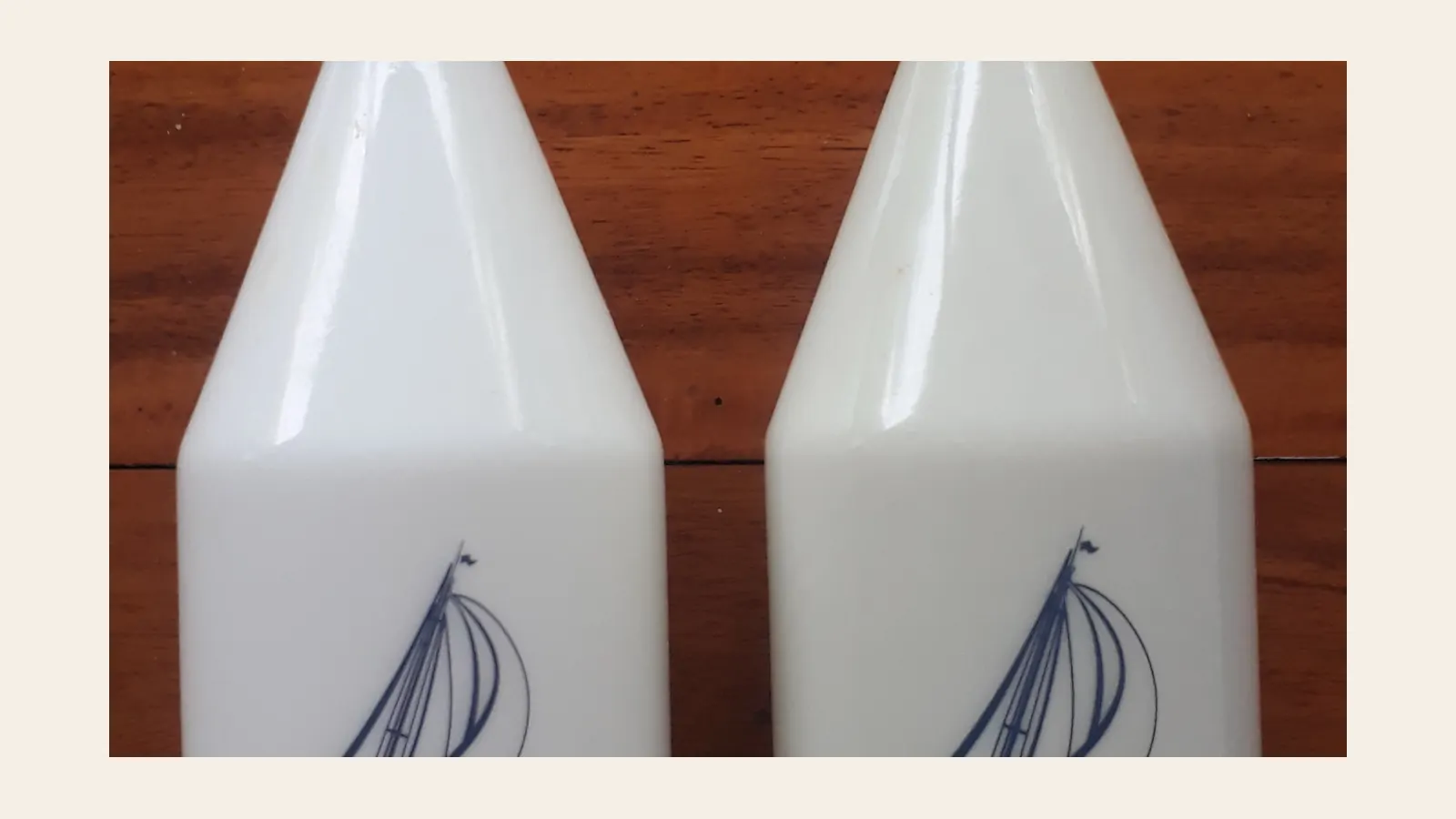
The 1992 bottles pair a simplified sailing ship with the red Old Spice script in a compact product lockup. source

The red script now carries recognition across deodorant, body wash, hair care, and digital communication. source
Product and service lineage.
Old Spice must teach repositioning and voice across a product family, not just one deodorant product.
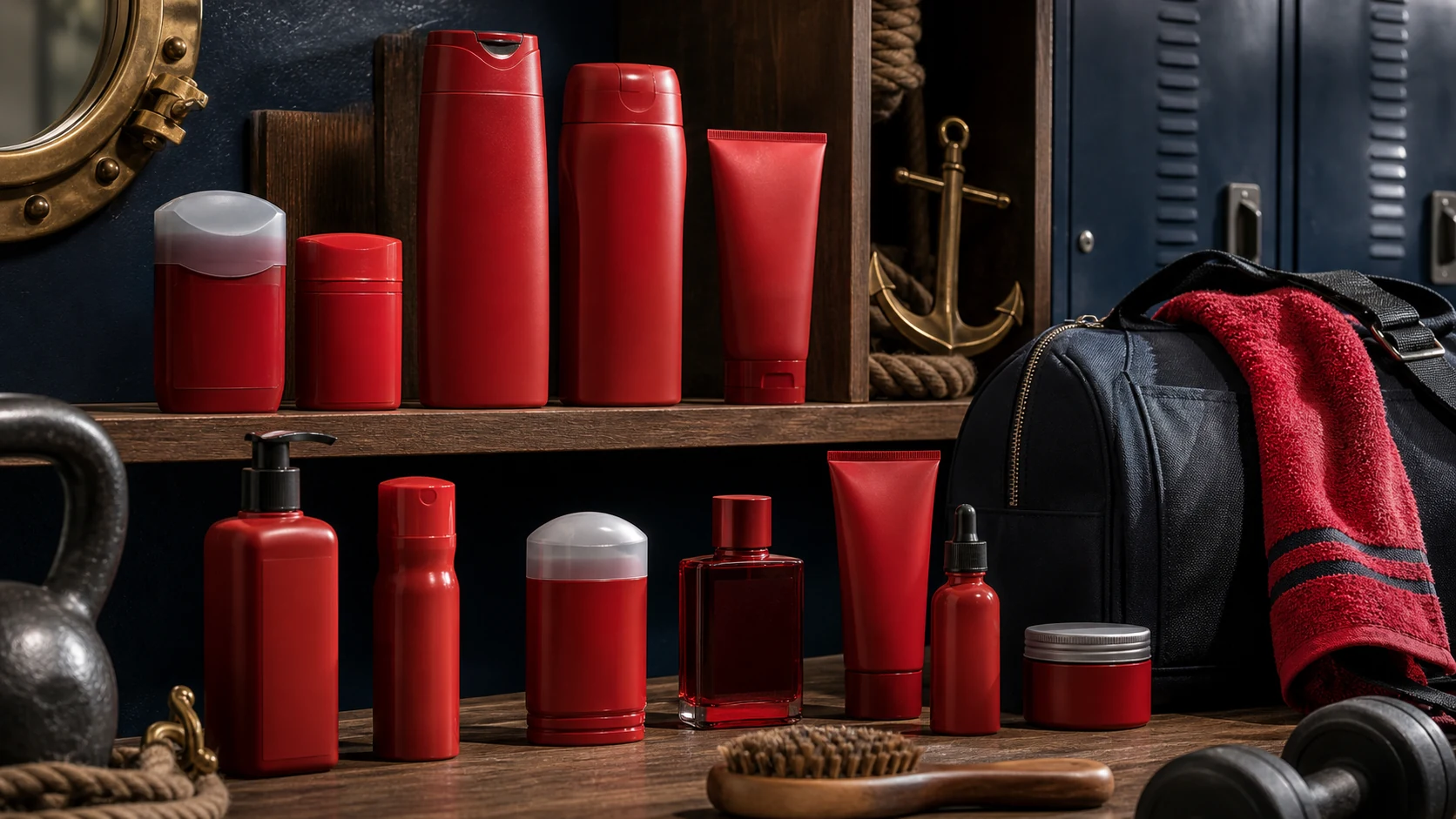
Product family carries the repositioning
The product family matters because repositioning has to survive across deodorant, body wash, hair, and beard care.
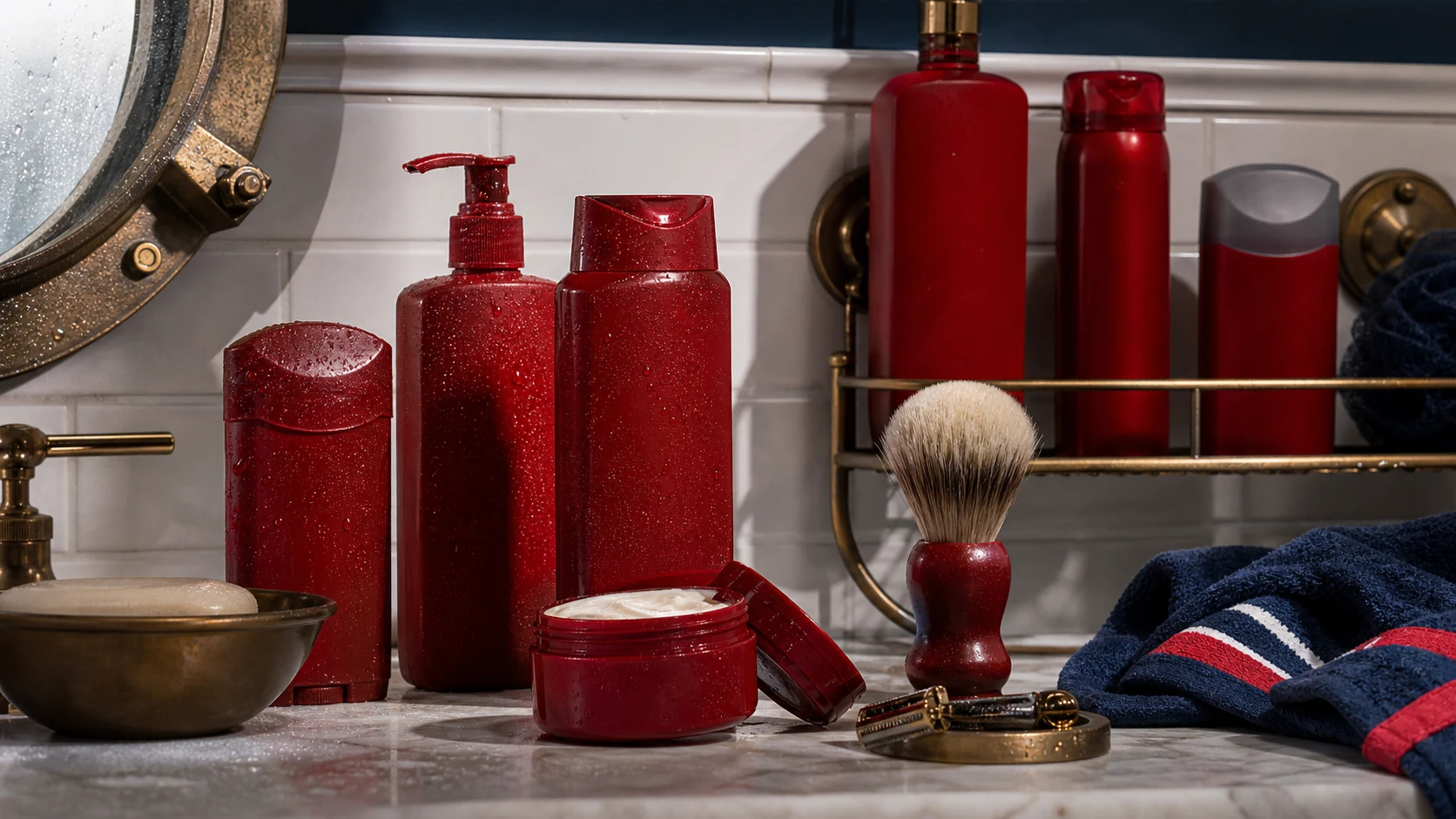
Grooming ritual proof
The extra evidence point shows the voice and red grooming cue as a family ritual, not one isolated deodorant stick.
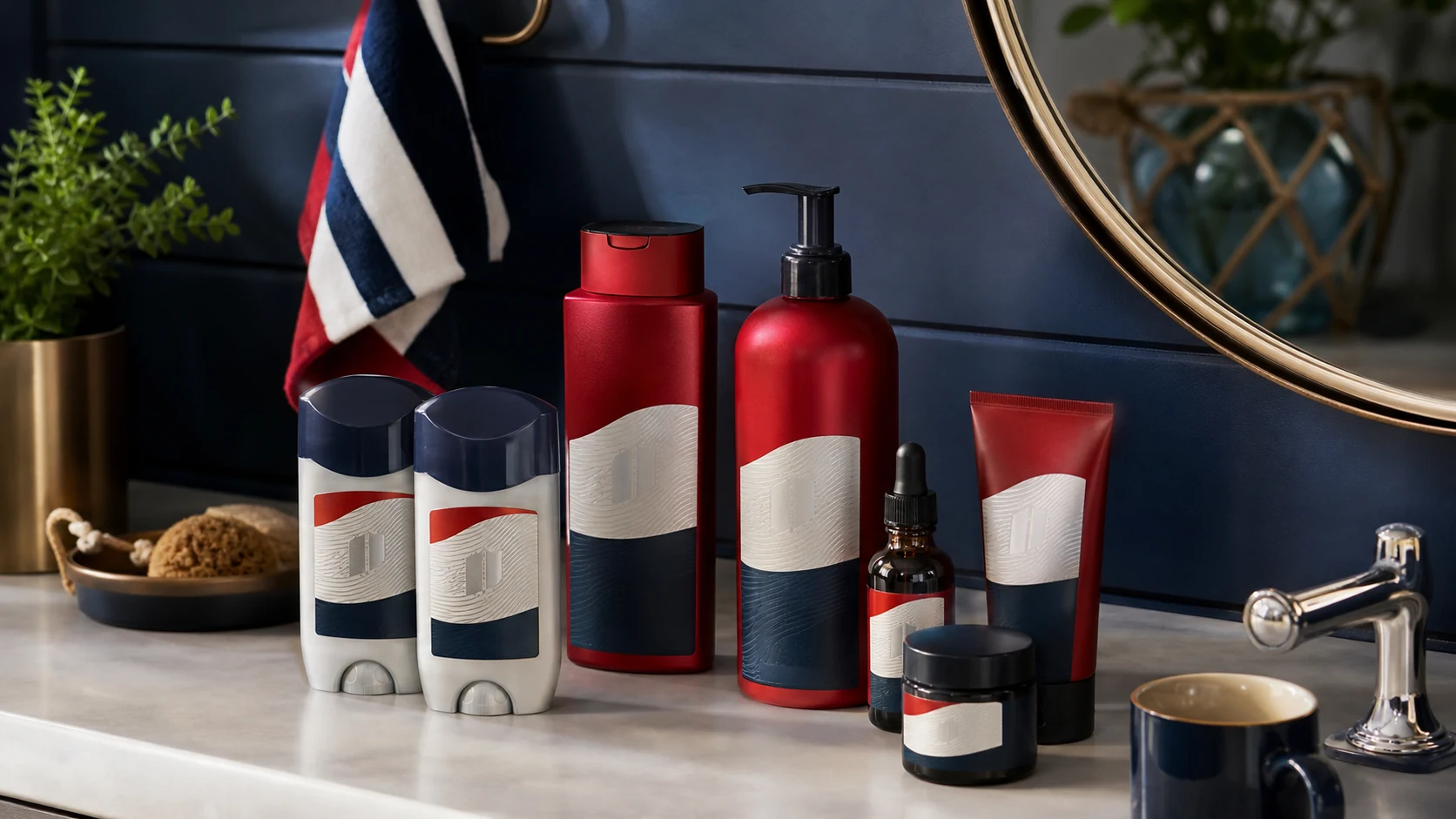
Portfolio breadth beyond deodorant
A grooming shelf scene shows deodorant, body wash, hair, and beard care as one voice-led product family.
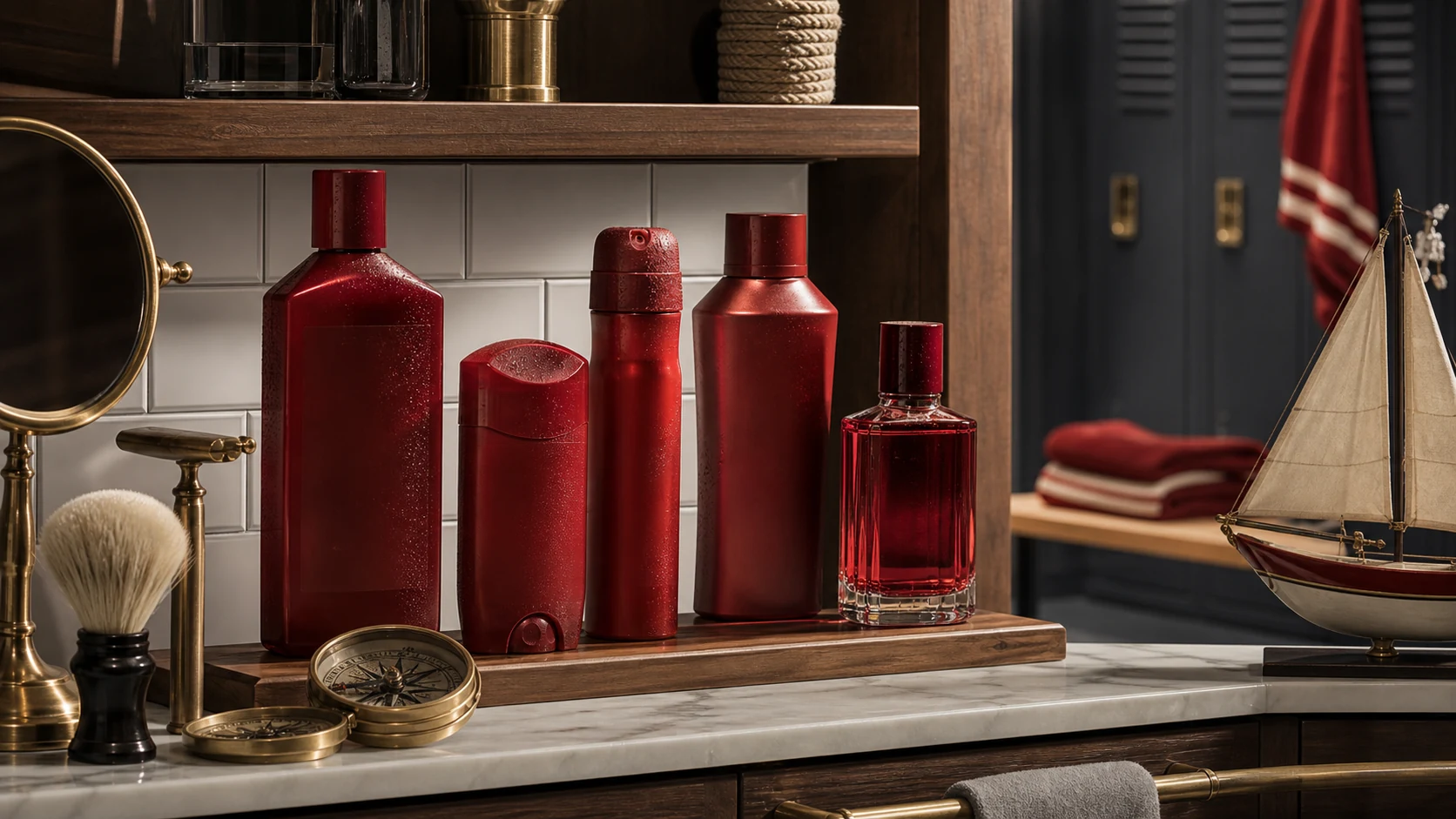
The shelf block carries the voice
Red packaging, nautical memory, scent names, and comic confidence make a broad grooming range feel like one system.
Product and service system
Local P&G data lists Old Spice inside the grooming lane with Gillette, Venus, Braun, and Secret.
Keep this as the shelf-memory core, then prove the adjacent categories with current Old Spice sources.
Use body wash to show how scent, humor, and bathroom habit stretch beyond underarm protection.
Use hair care only if current Old Spice source pages verify the line and product naming.
Use beard care only if current Old Spice source pages verify the line and product naming.
Turning points.
Turning points only: ownership, repositioning, product-family breadth, and voice memory.
The early nautical system gave grooming a memorable world of ships, travel, and ritual.
P&G added portfolio scale and distribution while Old Spice retained its own name and shelf language.
Exaggerated comic confidence turned tone into a repeatable recognition asset.
Multiple grooming categories prove that the repositioning extends beyond one deodorant format.
Public reaction.
Public-reaction rows should focus on the brand voice and where it helps or wears thin.
Old Spice is a strong candidate for showing how a brand voice can become a recognition asset across ads, scent names, and shelf behavior.
The card should warn that comedy cannot replace category clarity, current product proof, or a usable shelf cue.
Full timeline.
Old Spice begins as a heritage grooming cue.
P&G era places Old Spice inside a wider grooming portfolio.
Modern voice-led repositioning becomes the useful public lesson.
Deodorant and antiperspirant remain the shelf-memory core.
Body wash extends the scent and bathroom ritual system.
Hair and beard care widen the grooming family.
Steal / avoid.
- Make voice a recognizable asset only when it repeats across product, packaging, ads, and purchase moments.
- Let the parent company support the category system without making the parent logo the consumer-facing proof.
- Use product-family breadth to prove the repositioning, not to pad the page.
- Treat humor as a discipline: one behavior the brand repeats, not random jokes.
- Do not let comedy detach from product truth and shelf recognition.
- Do not use the parent company as a substitute for the consumer-facing identity.
- Do not reduce Old Spice to deodorant when the grooming system spans several daily routines.
- Do not confuse sister brands in the P&G portfolio with Old Spice product families.
Short answer.
Old Spice is useful as a repositioning and brand-voice case. The lesson is to make tone, scent, packaging, and product-family structure repeat the same signal until a heritage brand feels current again.
Frequently asked questions
What is Old Spice's core brand signal?
Old Spice is a voice-led repositioning case: scent, red shelf cues, product names, humor, and P&G grooming architecture need to work as one memory system.
What makes the Old Spice page useful?
It shows how voice, product family, red shelf cues, and grooming architecture can carry a repositioning without depending on one joke.
What should another brand steal from Old Spice?
Steal the discipline of repeating one recognizable voice across product, packaging, and campaign behavior. Do not steal the jokes.
Need help with your own brand?
Use Private brand work when your name, identity, proof, or message needs a sharper branding decision.