Pepsi · Grow Your Brand · Challenger Shelf Cue · United States / Active
Pepsi
Pepsi has to work as a cola cue inside the much larger PepsiCo portfolio. A Pepsi brand page on the globe mark, blue-red packaging, cola shelf competition, PepsiCo beverage and snack scale, Mug, Mirinda, Starry, Mountain Dew, Gatorade, Rockstar, Aquafina, bubly, poppi, Brisk, Frito-Lay, 2025 financials, logo evolution, and the lesson that a product brand must stay clear inside a large parent company.
Positioning, name, and architecture.
Three evidence checks before the page talks about scale, color, or public reaction.
Pepsi connects blue-red globe packaging and challenger tone to PepsiCo distribution, while the parent company stretches across cola, root beer, citrus soda, sports drinks, energy, water, sparkling water, juice, tea, prebiotic soda, snacks, and oats.
Pepsi positions cola as a visible challenger choice, but the sharper branding lesson is architecture: Pepsi the product must stay clear while PepsiCo covers many drinking and snacking occasions.
Pepsi-Cola began as a product name and shortened into Pepsi, a compact name that travels easily across packaging and campaigns.
Thirsty for More
product brand inside PepsiCo's house of beverage, snack, and food brands
Pepsi is the cola masterbrand. Diet Pepsi, Pepsi Zero Sugar, and flavor variants sit inside that system; Mountain Dew, Gatorade, Aquafina, and PepsiCo snack brands are sister brands, not Pepsi subbrands.
The cola cue that carries the blue-red globe.
Product brand: Pepsi, Diet Pepsi, Pepsi Zero Sugar source
Citrus-energy soda with a different flavor and attitude cue.
PepsiCo beverage brand: Mountain Dew source
Sports hydration, sidelines, bottles, powders, and athlete use.
PepsiCo beverage brand: Gatorade source
Root beer, lemon-lime, and fruit-soda occasions separate from cola.
PepsiCo beverage brands: Mug Root Beer, Starry, Mirinda source
Water, sparkling water, tea, energy, and prebiotic soda occasions.
PepsiCo beverage brands: Aquafina, bubly, Brisk, Rockstar Energy, poppi source
Snack memory gives the parent portfolio more reach than cola alone.
PepsiCo snack brands: Lay's, Doritos, Tostitos, Cheetos, Fritos source
Breakfast, pantry, and Mexican-American food occasions widen the company architecture.
PepsiCo food brands: Quaker oats, Siete foods source
Naming and tagline progression
Pepsi-Cola enters as a named cola product.
Youth and generation language becomes part of the challenger memory.
The updated mark brings the word back into the globe system.
Market and scale snapshot.
Pepsi has no standalone public accounts, so this financial block identifies PepsiCo figures as parent-company context.
PepsiCo consolidated net revenue; Pepsi is not separately reported.
PepsiCo net income attributable to PepsiCo.
Dated market-cap observation after the July watch update; North American food sales fell despite price reductions.
Pepsi is a product brand owned by PepsiCo.
Color system.
Pepsi color works when it helps the buyer separate the bottle or can from other cold-drink choices fast.
How the palette behaves
Blue gives Pepsi a cooler, more modern shelf field than cola red alone.
Red keeps appetite and cola energy in the mark.
White makes the globe readable at small bottle, can, and cap sizes.
Recognition assets.
Memory pieces the brand can use before someone finishes a sentence.
The circle works on caps, cans, bottles, vending, and shelf strips.
Pepsi does not fight Coca-Cola by becoming another red field.
Mountain Dew, Gatorade, Aquafina, Rockstar, bubly, Brisk, poppi, and snacks make PepsiCo much bigger than cola.
The cola cue has to stay distinct from the parent company portfolio.
Scores.
Use these scores to compare recognition, trust, proof, pressure, and risk.
The globe and blue-red pack are fast to identify.
Blue helps separate Pepsi from cola-red competition.
Bottles, cans, and multipacks carry the cue well.
The product cue is strong, but PepsiCo scale can blur the story.
Campaign tone works when product proof is visible.
The product brand and parent company need clear labeling.
Pepsi works when the cola bottle remains clear while PepsiCo uses Mountain Dew, Gatorade, Rockstar, Aquafina, bubly, poppi, Brisk, snacks, and food brands to cover more occasions.
Pepsi positions cola as a visible challenger choice, but the sharper branding lesson is architecture: Pepsi the product must stay clear while PepsiCo covers many drinking and snacking occasions.
How the logo changed.
Dated marks show which recognition cues changed, which survived, and what buyers had to relearn.
Early Pepsi-Cola script competes as a classic cola wordmark.
The globe becomes a simplified digital-era recognition asset.
The mark stays compact and package-led.
The word returns into the globe system for stronger package recognition.
Product and service lineage.
Pepsi works when the cola bottle remains clear while PepsiCo uses Mountain Dew, Gatorade, Rockstar, Aquafina, bubly, poppi, Brisk, snacks, and food brands to cover more occasions.
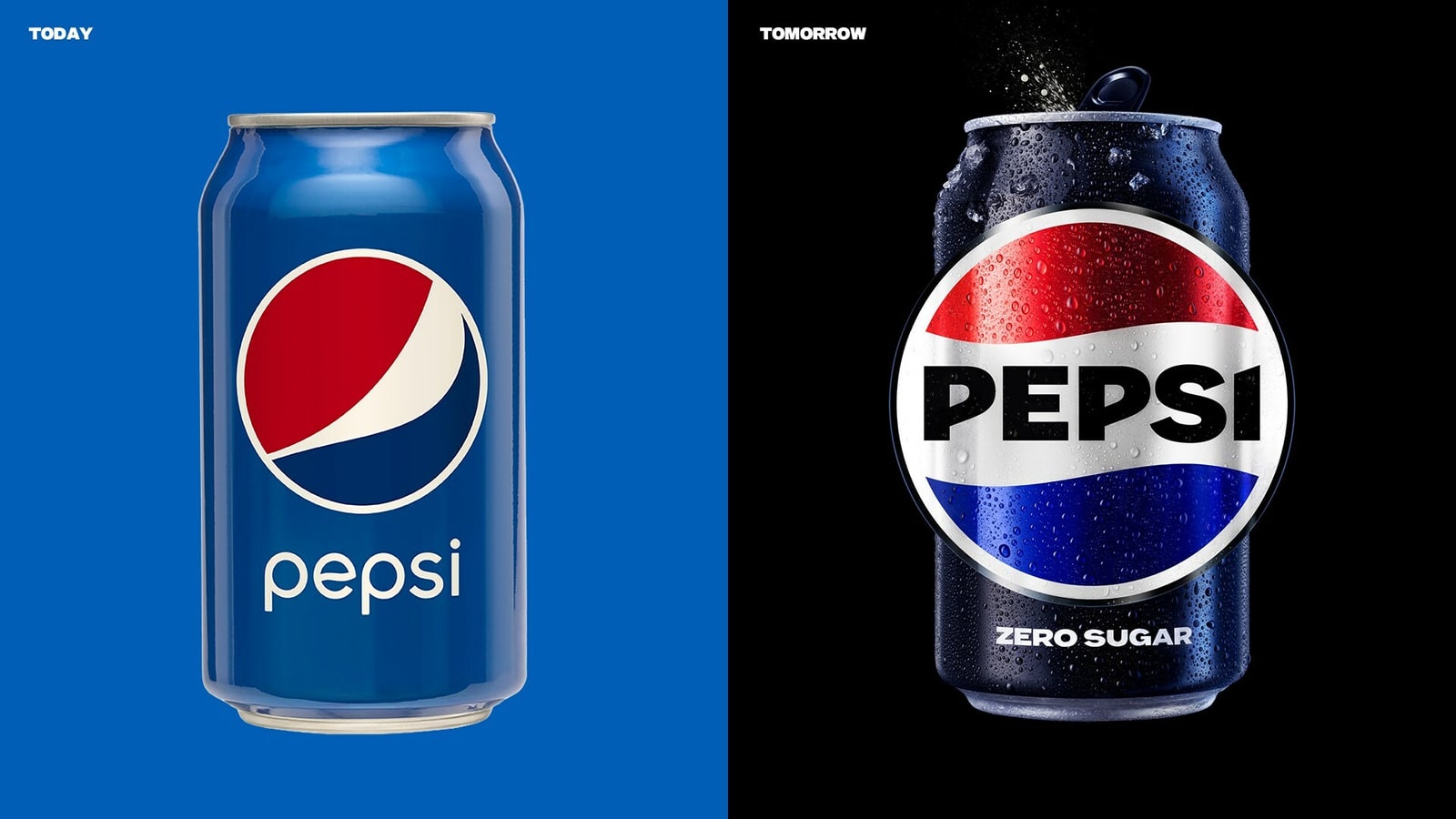
The 2023 identity moved the word back into the globe
The redesign reconnects packaging with a stronger historical Pepsi cue while adding black for Pepsi Zero Sugar.
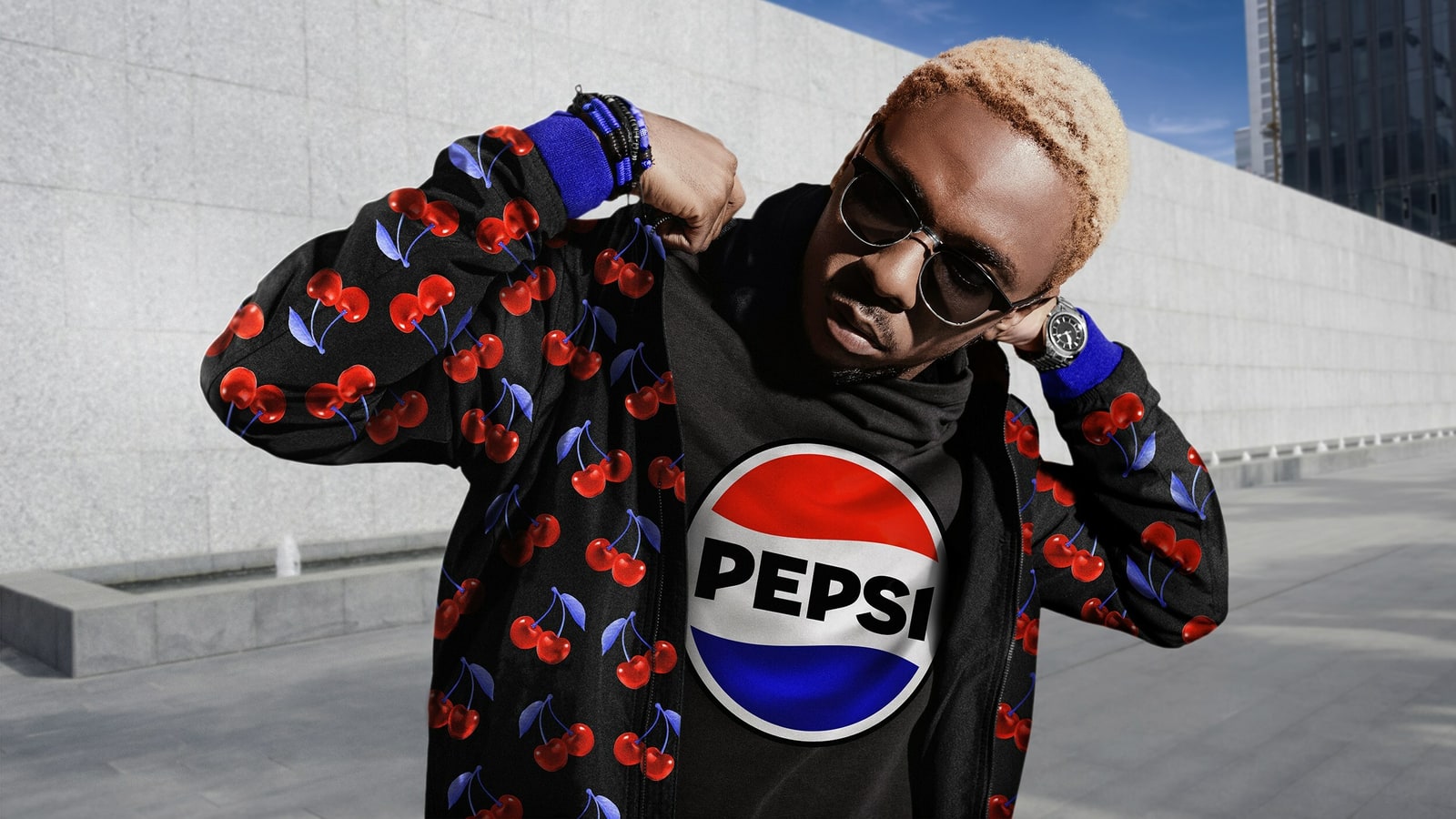
The globe travels beyond packaging
Fashion proves that the rebuilt mark can carry recognition without a bottle or can beside it.
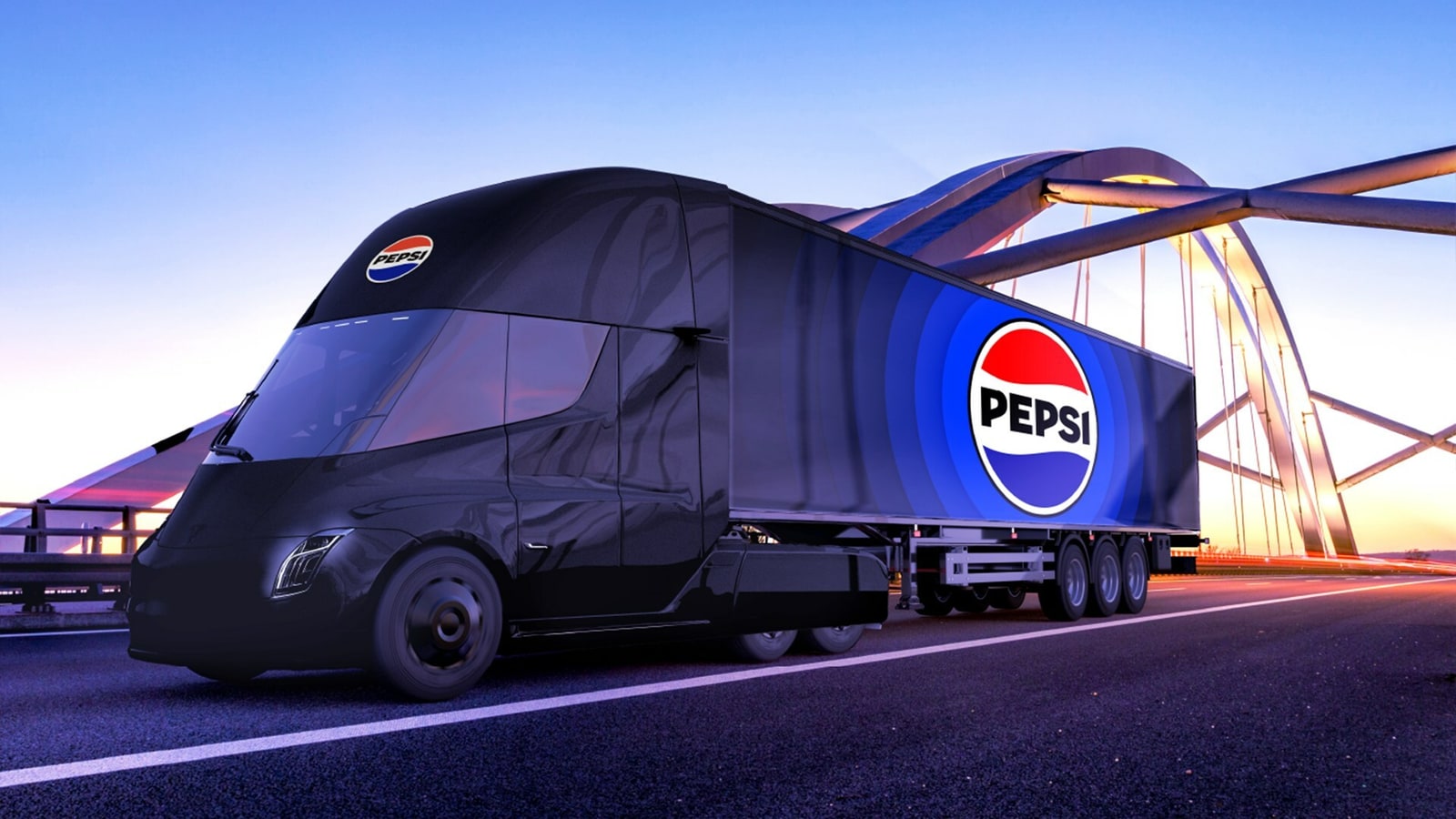
Fleet scale turns identity into infrastructure
The new system stays legible across large moving surfaces, not just close-up packaging.
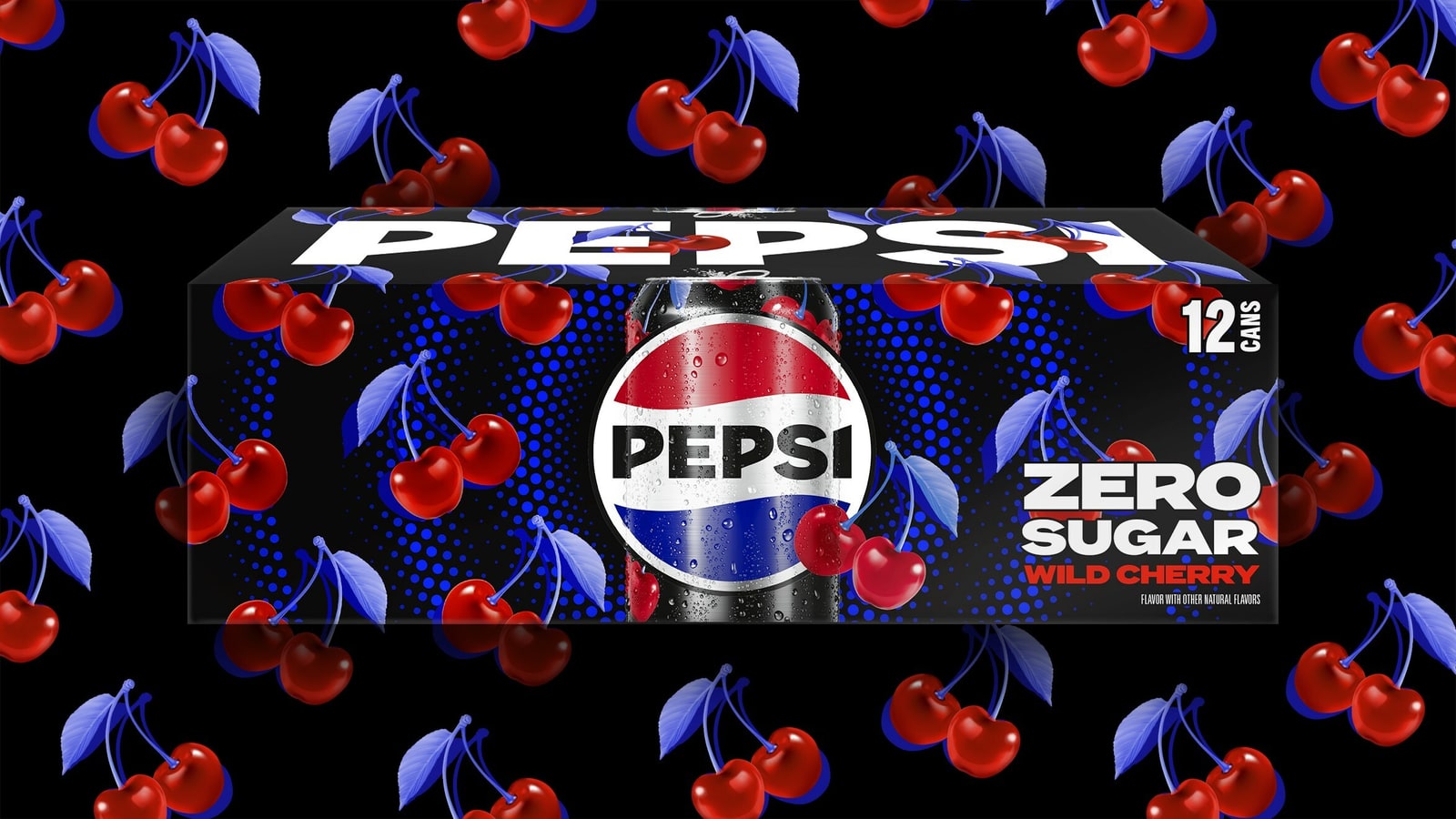
Flavor still belongs to one masterbrand
Wild Cherry changes flavor and pattern while keeping the central Pepsi globe dominant.
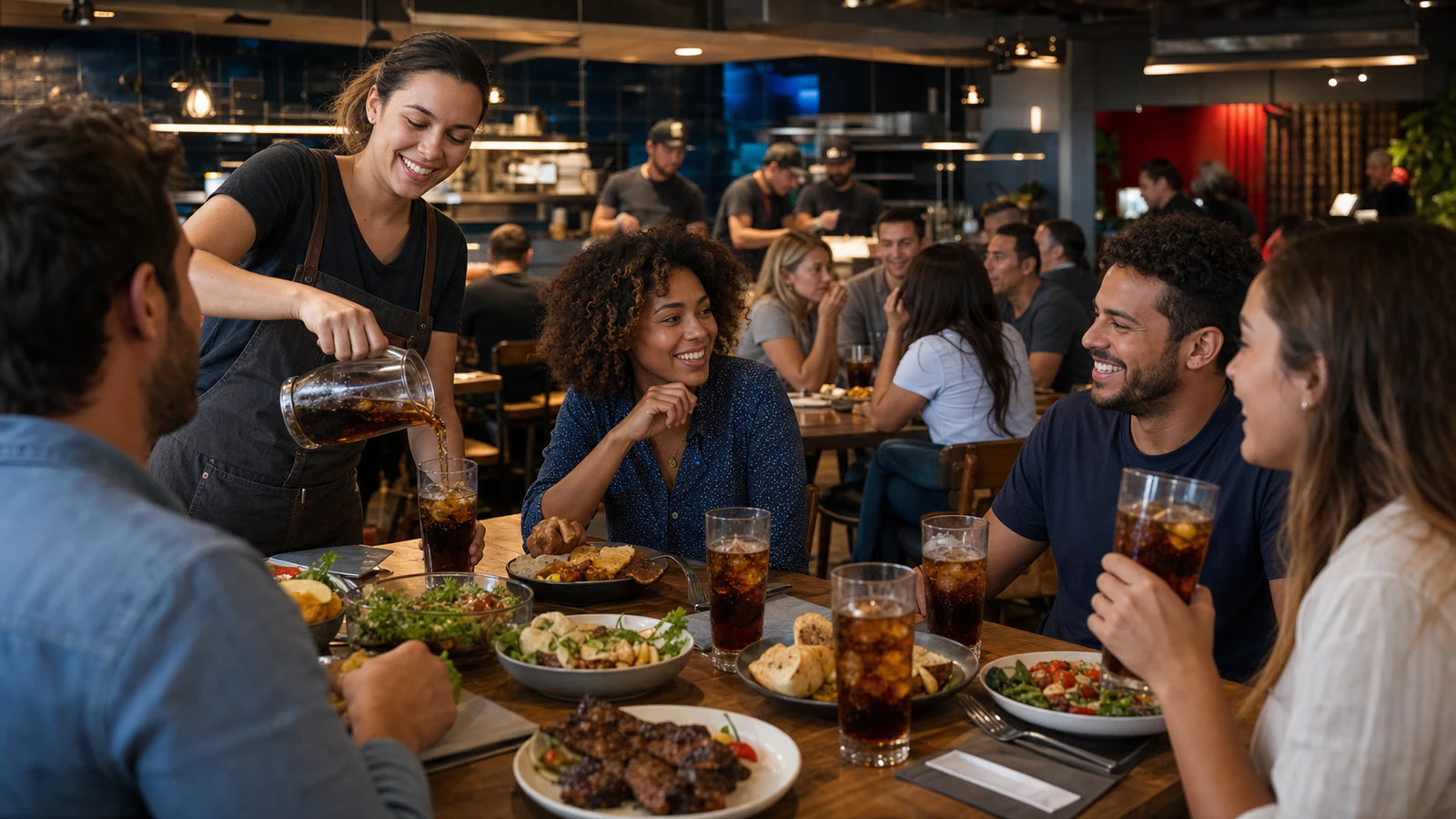
Service turns cola into a repeat habit
Pepsi competes through occasions as well as packs. Restaurant service makes cold cola, food, conversation, and repeat ordering part of the recognition system.
Product and service system
Pepsi-Cola begins as a named cola product.
Generation and youth cues push challenger positioning.
The globe simplifies for digital and packaging use.
The updated mark restores stronger word-and-globe integration.
PepsiCo scale keeps the product cue distributed across many retail surfaces.
PepsiCo scale puts cola, citrus soda, sports drink, energy, water, juice, tea, sparkling, snack, and food cues into different buying moments.
Turning points.
Moments that show where Pepsi wins or gets stretched.
Pepsi has to be found fast beside Coca-Cola and private labels.
Music and youth campaigns create tone, but the pack has to close the sale.
A large parent company can help reach, but Pepsi the cola still needs its own clean memory beside Mountain Dew, Gatorade, Aquafina, Rockstar, bubly, poppi, Brisk, and Frito-Lay.
North American food sales fell 2% despite price reductions on brands like Lay's and Doritos.
Public reaction.
Pepsi earns attention through color and challenger tone, but readers should separate Pepsi the drink from PepsiCo, the larger beverage and snack company.
The blue-red globe separates Pepsi in a crowded cold-drink field.
PepsiCo scale is powerful, but the cola cue gets weaker if it becomes shorthand for every drink and snack in the house.
Full timeline.
Pepsi-Cola enters the market as a named cola product.
Early Pepsi-Cola script marks make the name the visible asset.
Pepsi-Cola and Frito-Lay merge to form PepsiCo.
PepsiCo adds Quaker Oats, bringing Gatorade into the portfolio.
Pepsi simplifies the globe for digital and package use.
Pepsi updates the mark with the word inside the globe system.
PepsiCo continues adding current portfolio brands such as Siete and poppi.
Steal / avoid.
- Use color to separate the product at the shelf, not only in brand guidelines.
- Make the package cue strong enough to survive small sizes.
- Keep the product cue clear even when the parent company owns many occasions.
- Do not let entertainment campaigns replace product proof.
- Do not blur Pepsi the drink with PepsiCo the beverage and snack portfolio.
- Do not change the mark so far that shelf memory has to restart.
Short answer.
Pepsi shows how a product brand can stay visible inside a large parent company: the blue-red globe helps the cola win the shelf while PepsiCo uses Mountain Dew, Gatorade, Rockstar, Aquafina, bubly, poppi, Brisk, snacks, and food to cover more occasions.
Frequently asked questions
What is Pepsi strongest brand cue?
The globe mark, especially when paired with blue-red packaging.
Is Pepsi the same as PepsiCo?
No. Pepsi is the cola product brand; PepsiCo is the larger company behind many beverages and food brands, including Mountain Dew, Gatorade, Rockstar, Aquafina, bubly, poppi, Brisk, Lay's, Doritos, and Quaker.
What should another brand steal from Pepsi?
Tie color and symbol to the exact retail surface where the buyer chooses.
Need help with your own brand?
Use Private brand work when your name, identity, proof, or message needs a sharper branding decision.
Sources.
Use the education shelf for the concepts behind this brand page.
Private brand workUse Private brand work when your packaging, color, or challenger message needs stronger buyer proof.
All brandsReturn to every brand page.
- SEC company facts for PepsiCo
- Wikimedia Commons Pepsi 2023 logo
- Wikimedia Commons Pepsi 1902 logo
- Wikimedia Commons Pepsi bottles in supermarket
- Wikimedia Commons Pepsi packages on shelf
- PepsiCo official brands page
- Wikimedia Commons Mountain Dew bottle
- Wikimedia Commons Aquafina bottled water
- PepsiCo investor relations


.jpg)
.jpg)