Porsche · Grow Your Brand · Sports-Car Proof Mark · Germany / Active
Porsche
The Porsche 911 started as the 901. Its crest points to Stuttgart. Peugeot’s objection led Porsche to change the model name in 1964. The crest’s horse comes from Stuttgart, while the antlers and red-and-black fields refer to Württemberg-Hohenzollern. Both identifiers have specific histories behind their familiarity.
Positioning, name, and architecture.
Three evidence checks before the page talks about scale, color, or public reaction.
Porsche compresses place, racing memory, engineering restraint, 911 shape, modern electric pressure, and product lineage into a small crest that still has to be proven by cars.
Porsche positions performance as origin you can see: crest, classic 911, modern 911, Taycan pressure, driver focus, and product lineage have to agree.
Porsche carries the founder family name and the Stuttgart/Zuffenhausen origin behind the sports-car signal.
The card reads the crest and product proof rather than one universal slogan.
model-line portfolio with automotive and financial-services segments
Current model lines are separated from the ended-production 718, operating segments, and brand extensions so product status and ownership remain clear.
Carries the enduring silhouette and performance reference.
Sports-car core: 911 source
Extend performance into electric, SUV, and four-door jobs.
Current model lines: Cayenne source
Production ended in October 2025; treat as legacy/inventory, not an open future line.
Ended-production line: 718 source
Competition and designed goods extend the code beyond road-car sales.
Proof and extension: Porsche Motorsport source
Naming and tagline progression
Crest logic begins around origin and sports-car proof.
The product shape turns the mark into repeated public memory.
Prestige has to answer profit, transition, and tariff pressure.
Market and scale snapshot.
Porsche's FY2025 revenue, sharply lower profit after tax, and public-market value put the 911, Taycan, Macan, Cayenne, motorsport, and electric transition in the same business frame.
Official FY2025 sales revenue of EUR 36.272B converted at the recorded 30 Jun 2026 EUR-to-USD rate of 1.141583.
Official FY2025 profit after tax of EUR 310M converted at the recorded rate; this is not operating profit.
Dated USD market-cap observation captured 10 Jul 2026; source and method recorded above.
Volkswagen AG controls Porsche AG indirectly; Porsche SE holds 25% plus one ordinary share.
Color system.
Porsche color works because it reads like a crest and product badge, not a decorative palette.
How the palette behaves
Black gives the brand control and seriousness.
Red adds racing heat and warning energy.
Gold makes the badge feel earned and old-world without replacing product proof.
Recognition assets.
Memory pieces the brand can use before someone finishes a sentence.
The signal has to carry origin and performance in a small space.
The car silhouette keeps the badge from becoming empty luxury.
New cars have to become desirable without breaking the old discipline.
A prestige brand still has to answer sales, margin, and transition pressure.
Scores.
Use these scores to compare recognition, trust, proof, pressure, and risk.
Crest and product shape are immediate.
The badge and product lineage reinforce each other.
2025 operating profit fell sharply.
Black, red, and gold work through crest memory.
Porsche AG and Volkswagen context should stay clear.
Premium pricing raises proof expectations.
The Porsche mark needs product proof: crest, car shape, driver focus, performance memory, and modern model discipline.
Porsche positions performance as origin you can see: crest, classic 911, modern 911, Taycan pressure, driver focus, and product lineage have to agree.
How the logo changed.
Three sourced crest stages show the 1952 origin, the 1963 refinement, and the official 2023 modernization.
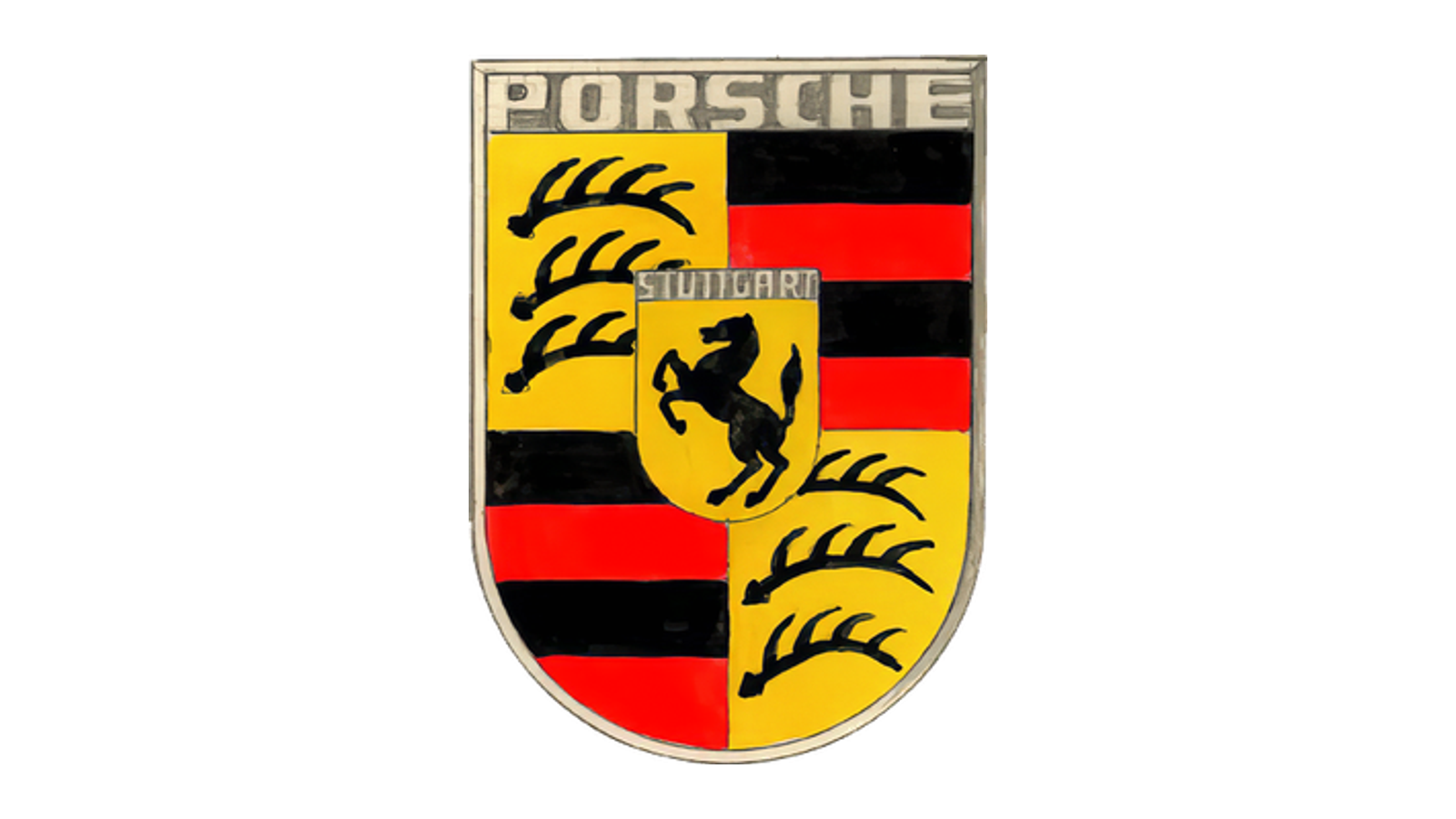
The original combined Stuttgart’s horse with Württemberg-Hohenzollern colors and antlers under the Porsche name. source
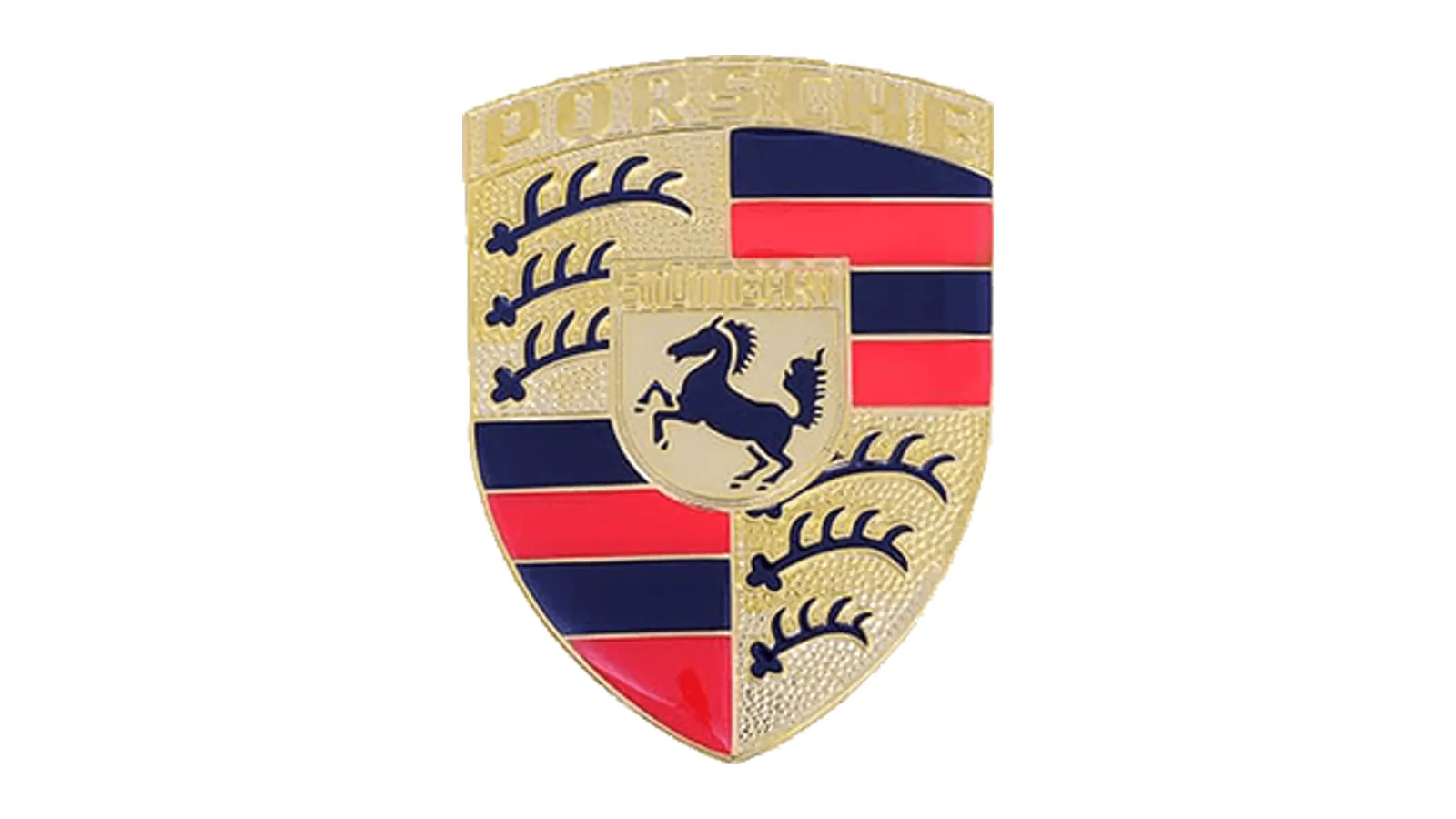
The 1963 treatment refined proportion and detail as the crest became a more consistent vehicle and communications mark. source
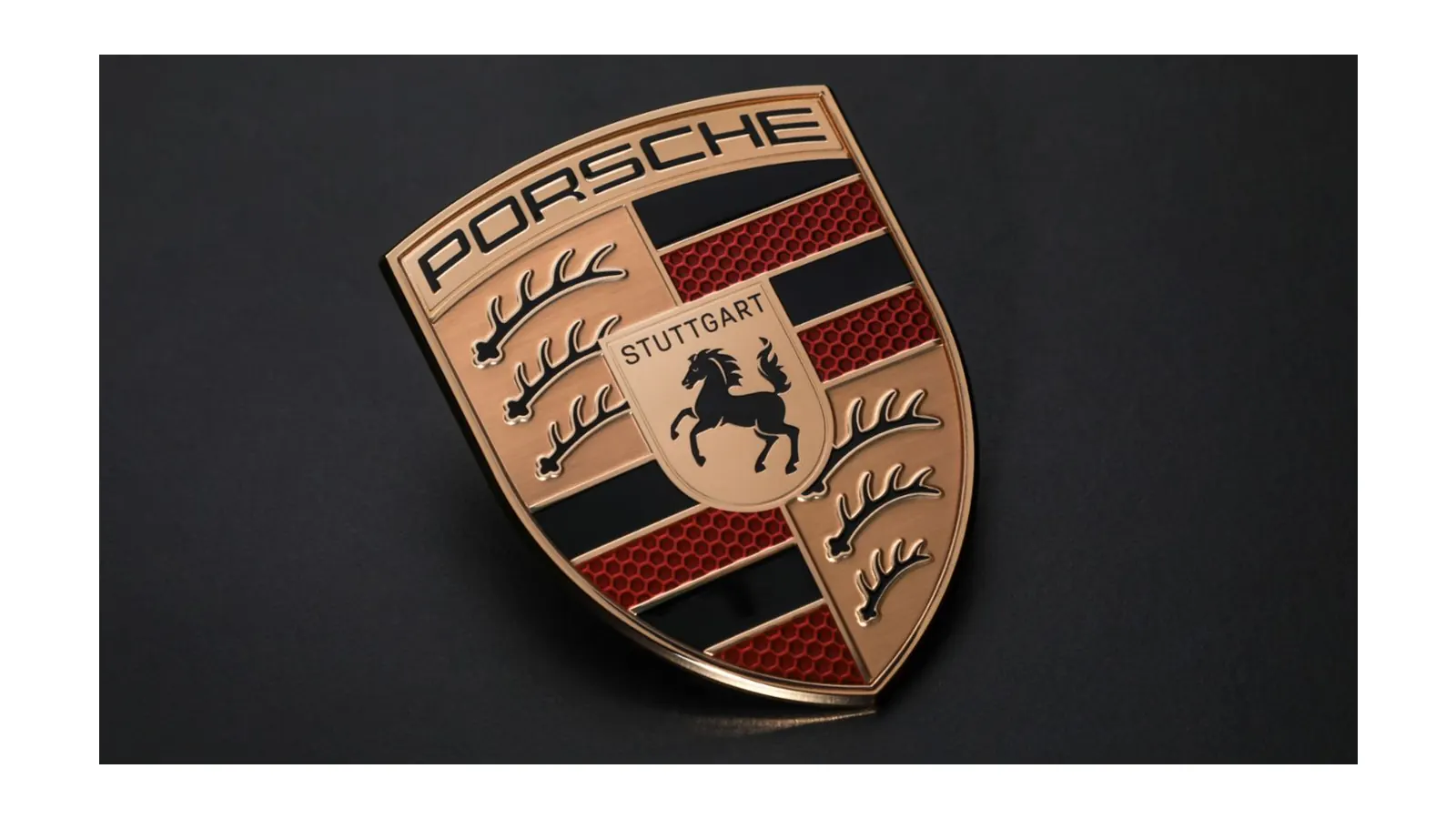
The current crest uses brushed metal, honeycomb texture, a refreshed horse, and more subtle gold while preserving the established structure. source
Product and service lineage.
The Porsche mark needs product proof: crest, car shape, driver focus, performance memory, and modern model discipline.
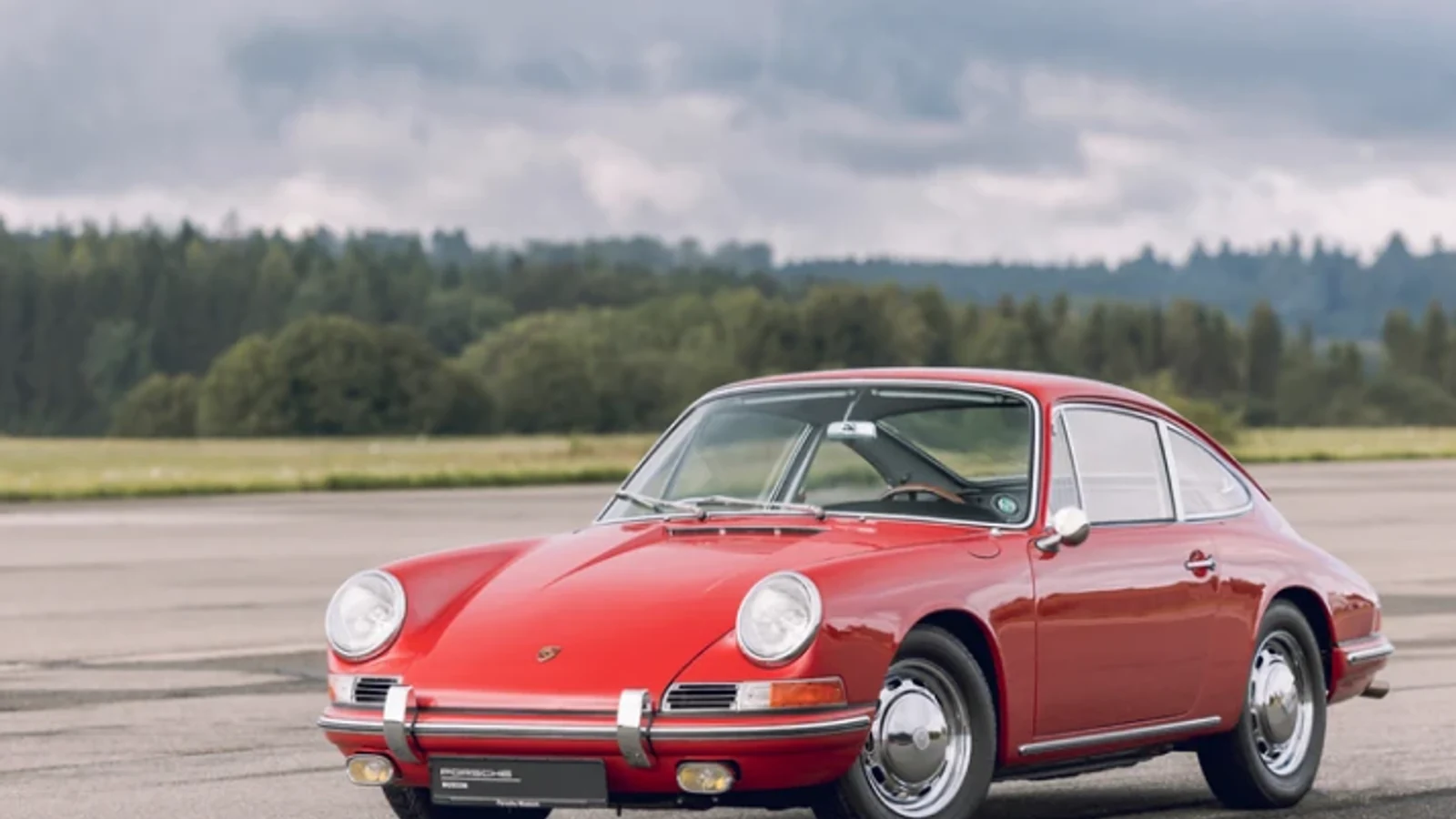
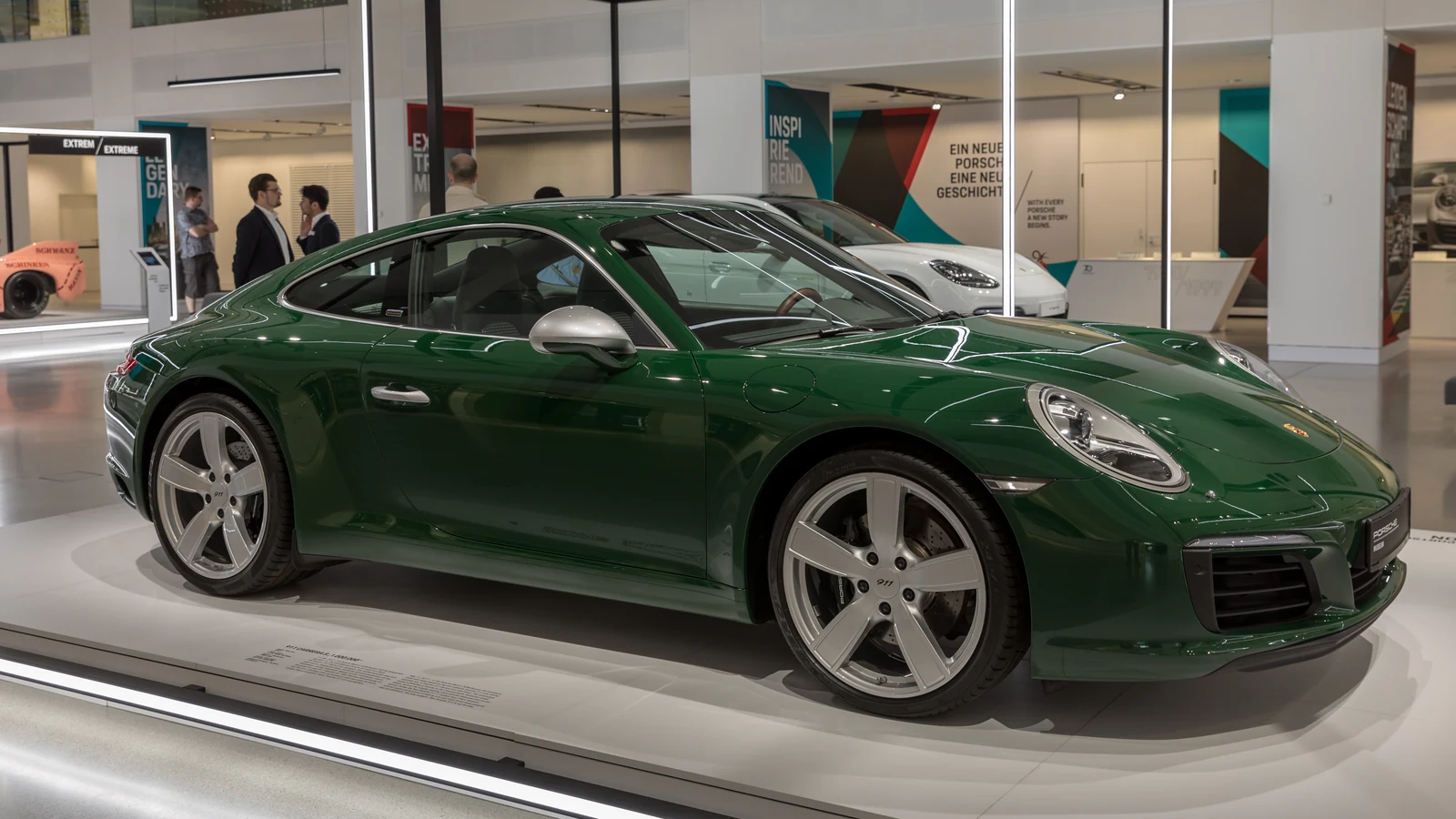
Original shape proof
The old 911 gives the crest a body people can recognize before they read it.
Shape memory
The silhouette and material restraint keep the crest from becoming empty decoration.
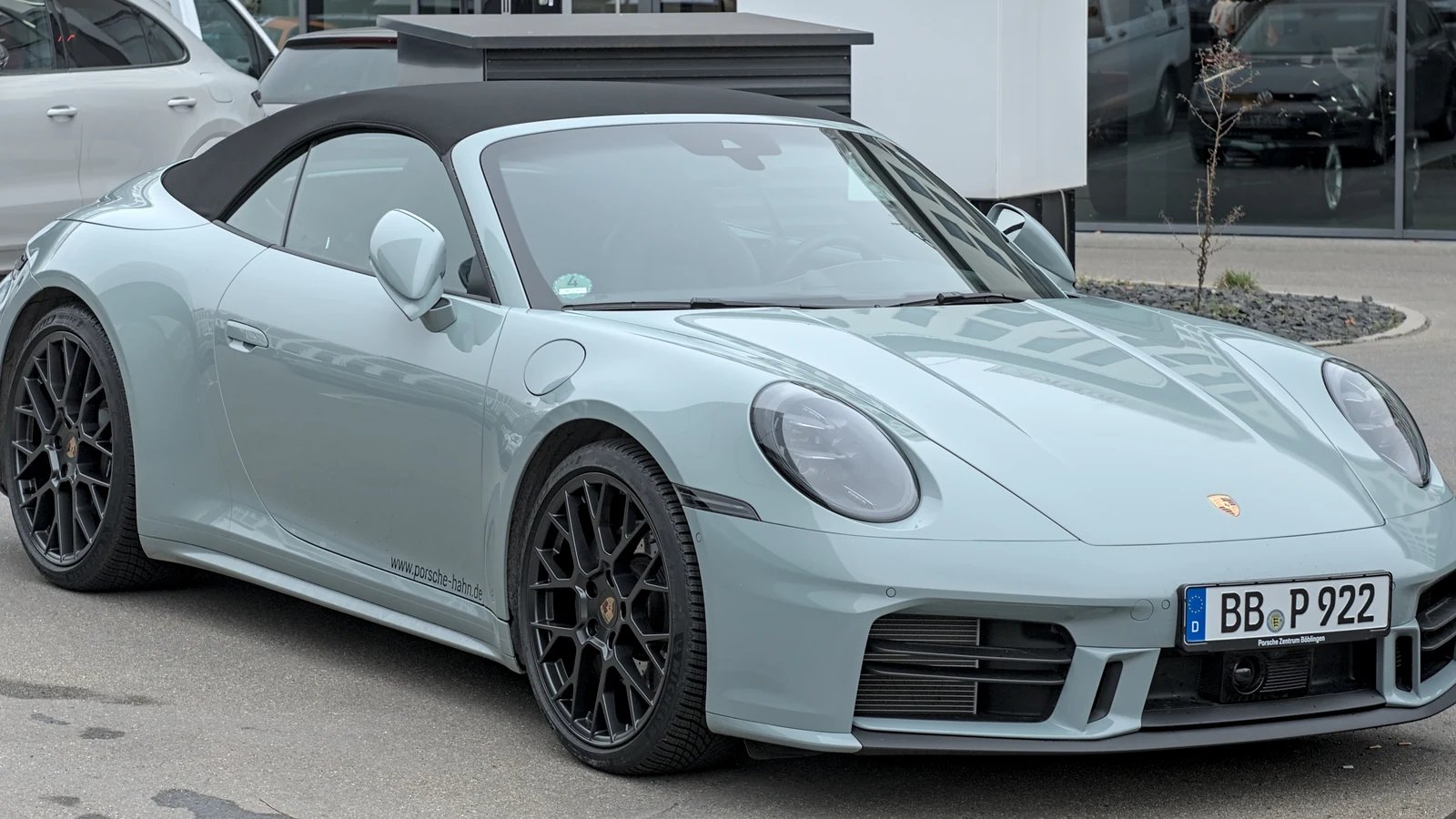
Modern 911 continuity
A current 911 still has to feel like the same promise, not a logo applied to a new shell.
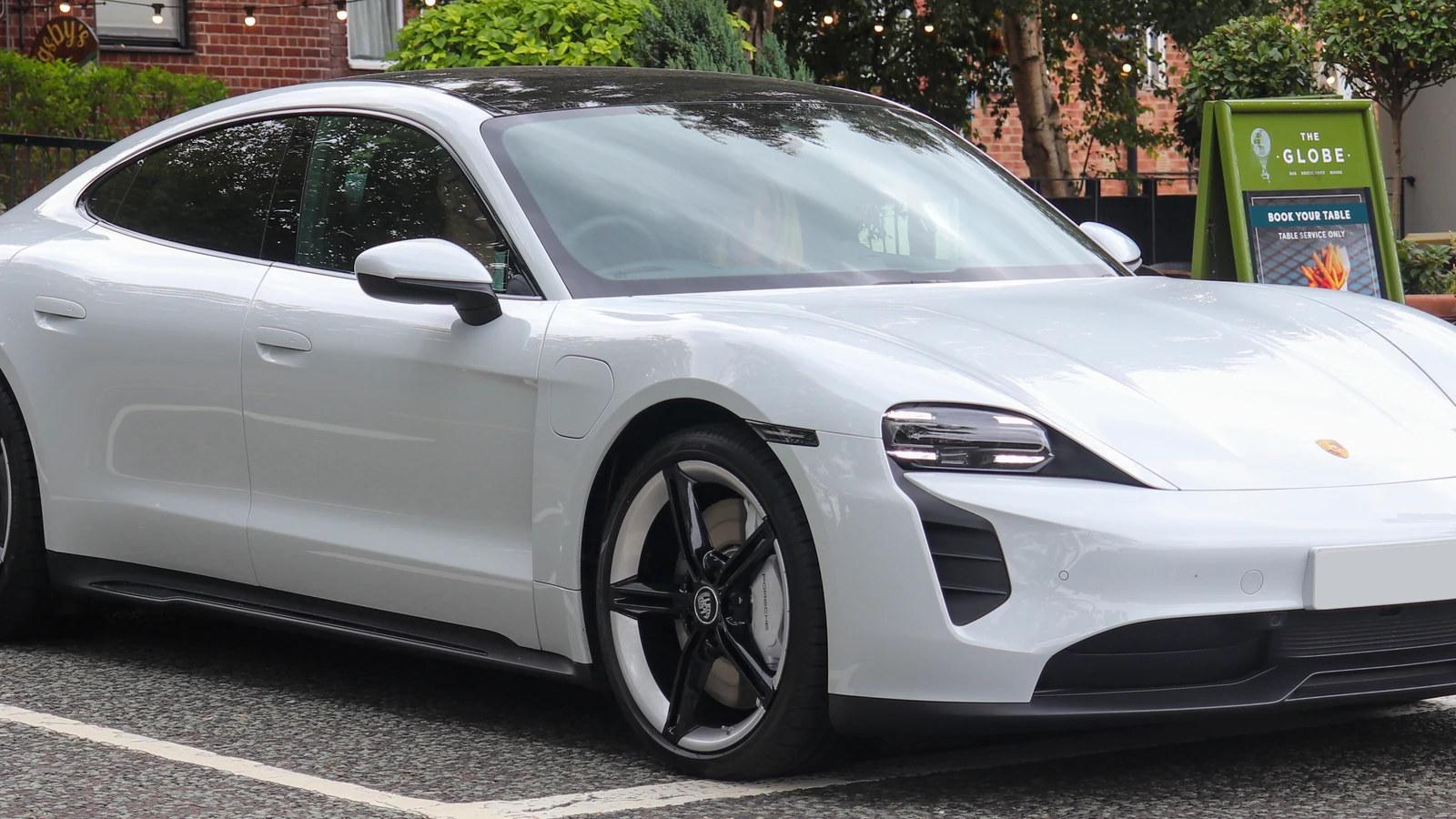
Taycan extends the performance code
Electric propulsion changes the product architecture without removing the silhouette, control, and performance expectations attached to Porsche.
Product and service system
Porsche sports-car production begins around a focused performance idea.
The crest logic connects the car to place, shield, and horse memory.
A repeatable silhouette makes the badge visible even before the logo is read.
Electric performance tests whether a new Porsche can become desirable without breaking the old cult.
Porsche reports EUR 36.272B sales revenue and EUR 413M operating profit.
Turning points.
Moments that show why the badge has to stay tied to product proof.
The badge compresses place, color, horse, and product pride.
The product silhouette lets the brand be recognized without a headline.
Taycan and current 911 proof have to carry desire into a changed car market.
Sales revenue and operating profit show that prestige still faces hard economics.
Volkswagen cut its 2026 operating-margin forecast to up to 1%, with about EUR 10 billion of special effects expected for the year. This includes around EUR 6 billion of non-cash goodwill impairment allocated to Porsche after revised long-term planning.
CEO Michael Leiters told staff there were no plans for an additional 4,000 cuts, according to a memo seen by Reuters. He was responding to reports of 4,100 more roles beyond roughly 9,000 cuts already agreed.
Public reaction.
Porsche earns desire when the badge and product agree and loses trust when prestige feels detached from proof.
The crest works when it points to driving feel, shape, and history.
Pricing, transition pressure, or weak model decisions can make the prestige feel borrowed.
Full timeline.
The 356 No. 1 Roadster becomes the first sports car to carry the Porsche name. Source
Porsche begins using its crest. Source
Porsche presents the 901, the model that becomes the 911. Source
Cayenne production starts in Leipzig as Porsche’s third model series. Source
Porsche launches the Taycan, its first all-electric production car. Source
Porsche presents a modernised crest while retaining its established heraldic elements. Source
Porsche reports EUR 36.272B sales revenue. Source
Volkswagen announces a roughly EUR 6 billion non-cash Porsche goodwill impairment within its 2026 profit warning. Source
Leiters says no additional 4,000 job cuts are planned beyond the agreed restructuring. Source
Steal / avoid.
- Make the mark carry origin and product proof.
- Put the signal on the inspected surface.
- Let product shape reinforce the logo.
- Do not copy prestige marks without product discipline.
- Do not let badge history become luxury filler.
- Do not hide transition pressure behind heritage language.
Short answer.
The Porsche 911 was first called the 901; Porsche changed the name after Peugeot objected in 1964. Its crest combines Stuttgart's horse with the colors and antlers of Württemberg-Hohenzollern. Franz Xaver Reimspieß created the crest in 1952.
Frequently asked questions
Why is the Porsche 911 called 911?
The car was initially called the Porsche 901. Peugeot objected to that model designation when Porsche displayed it at the Paris motor show in 1964, and Porsche changed the name to 911. Porsche’s history records 82 cars built under the 901 designation before the change.
What does the Porsche crest mean?
The horse comes from the seal of Stuttgart, Porsche’s home city. The red and black fields and antlers come from the traditional Württemberg-Hohenzollern crest. Designer Franz Xaver Reimspieß created Porsche’s crest in 1952, combining those local references under the Porsche name.
Was Porsche’s September 2026 impairment a EUR 6 billion cash loss?
No. Volkswagen described a non-cash goodwill impairment allocated to the Porsche business segment. It reduces Volkswagen’s reported operating profit; it is not a EUR 6 billion cash outflow by Porsche.
What does Targa mean on a Porsche?
Porsche's Targa name was inspired by the Targa Florio road race in Sicily; targa means plate or plaque in Italian. The 911 Targa first appeared in 1965 as an open-top version with a distinctive roof concept and roll-over bar. The label describes a body-style lineage, not a separate car company.
What does Carrera mean on a Porsche?
Carrera means race in Spanish. Porsche connects the name to its success in Mexico's Carrera Panamericana, particularly with the 550 Spyder in the 1950s. It later applied Carrera to more powerful engine versions and the 911 range. It has a different naming origin from the numbered 911 designation.
Need help with your own brand?
Use Private brand work when your name, identity, proof, or message needs a sharper branding decision.
Sources.
Use the education shelf for the concepts behind this brand page.
Private brand workUse this when the decision belongs to your own brand.
All brandsReturn to every brand page.
- Porsche FY2025 consolidated financial statements
- Porsche AG 2025 annual report PDF
- Porsche market capitalization
- Recorded EUR to USD exchange-rate source
- Porsche shareholder structure
- Porsche H1 2026 deliveries
- Porsche modernized crest
- Volkswagen: revised 2026 forecast, 18 September 2026
- Reuters: Leiters’ job-cut clarification, 21 September 2026
- Porsche Museum: milestones of the brand
- Porsche official source
- Porsche official source