Renault · Grow Your Brand · French Mobility Architecture · France / Active / listed company
Renault
Renault's diamond logo, Dacia and Alpine explained. Renault first used a diamond badge in 1925. Dacia and Alpine are separate vehicle brands within Renault Group, so the group name and the Renault badge describe different levels of the business.
Positioning, name, and architecture.
Three evidence checks before the page talks about scale, color, or public reaction.
A French automotive group with a high-recognition diamond, Dacia value scale, Alpine performance memory, and Ampere EV architecture.
Renault is strongest when the diamond acts as the readable front door to a portfolio, not when every EV, budget, service, and performance promise is squeezed into one Renault sentence.
Renault carries the founding family name from Renault Freres.
Next-gen voitures à vivre
portfolio house with Renault masterbrand and distinct marque/service lanes
Renault should not flatten Dacia, Alpine, Mobilize, or Ampere into generic car copy.
main mass-market and EV recognition carrier
core marque: Renault 5 E-Tech and core passenger vehicles source
affordability and European value proof
value marque: Dacia Sandero and Duster source
sports and performance memory lane
performance marque: Alpine A110 and A290 source
service and financing proof
mobility services lane: Mobilize services source
Naming and tagline progression
Renault Freres
Next-gen voitures à vivre / cars for living
Market and scale snapshot.
Renault Group reports in euros. FY2025 Group revenue, the loss attributable to Renault Group shareholders, and automotive net cash show the operating picture; the USD equivalents apply the dated 1.1396 USD-per-EUR rate stated below.
Renault Group FY2025 revenue converted to USD at the 1.1396 rate observed 14 Jul 2026.
FY2025 loss attributable to Renault Group shareholders, converted to USD; the official results identify Nissan-related impacts.
Renault Group automotive net cash at 31 December 2025, converted to USD using the same captured rate.
Renault S.A. ordinary shares; ISIN FR0000131906.
Color system.
Yellow should work as a recognition cue, not as a full-page flood.
How the palette behaves
Yellow gives mass-market energy.
Black keeps the marque adult.
White space lets portfolio labels breathe.
The palette needs real car proof to avoid decoration.
Recognition assets.
Memory pieces the brand can use before someone finishes a sentence.
The mark is simple enough to carry old and new vehicles.
Dacia, Alpine, Mobilize, and Ampere need their own proof lanes.
Nostalgia works only when the current model proof is visible.
Scores.
Use these scores to compare recognition, trust, proof, pressure, and risk.
The Renault diamond and French mass-market memory are strong.
The group has public-company proof, but 2025 accounting pressure must be named honestly.
Renault, Dacia, Alpine, Mobilize, and Ampere need visible lanes.
The diamond mark and yellow/black system are recognizable when used with real cars.
Renault has long product, factory, and EV lineage to show.
The group architecture is useful when the brands are not squeezed into one Renault car story.
Renault Group, Renault marque, Dacia, Alpine, and Nissan alliance history need separation.
EV and revival language can overclaim unless tied to specific models and dates.
How the logo changed.
The masterbrand progression shows the 1972 Vasarely diamond, the 2015 dimensional diamond and the flat interlocking-line mark introduced in 2021.
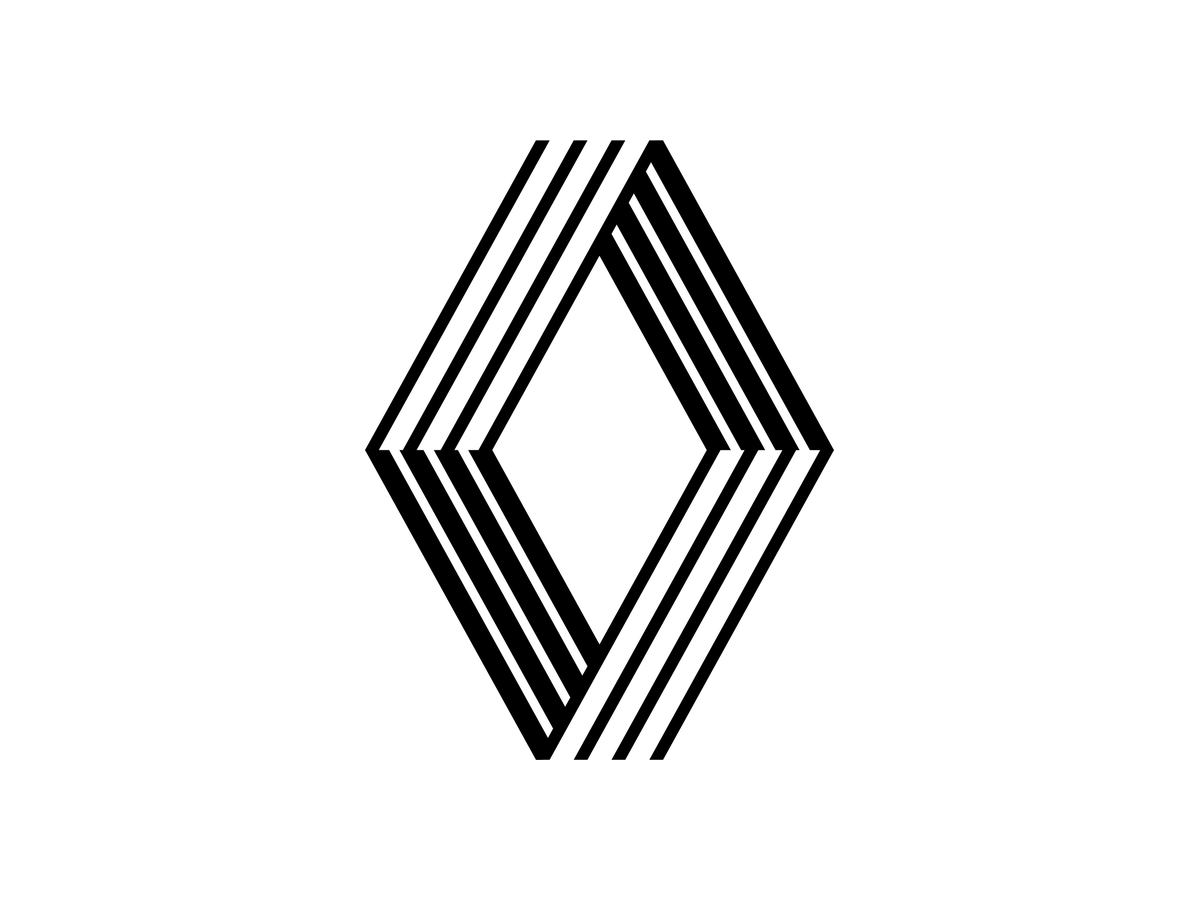
The widened striped diamond designed with Victor Vasarely gave Renault a strong modern symbol. source
The 2015 identity paired a heavier all-caps wordmark with the dimensional diamond system before the flat digital-era mark. source
The current flat diamond uses interlocking lines for screens, vehicles and communications. source
Product and service lineage.
For Renault, product proof runs from industrial origin to value, EV, performance, and service lanes.
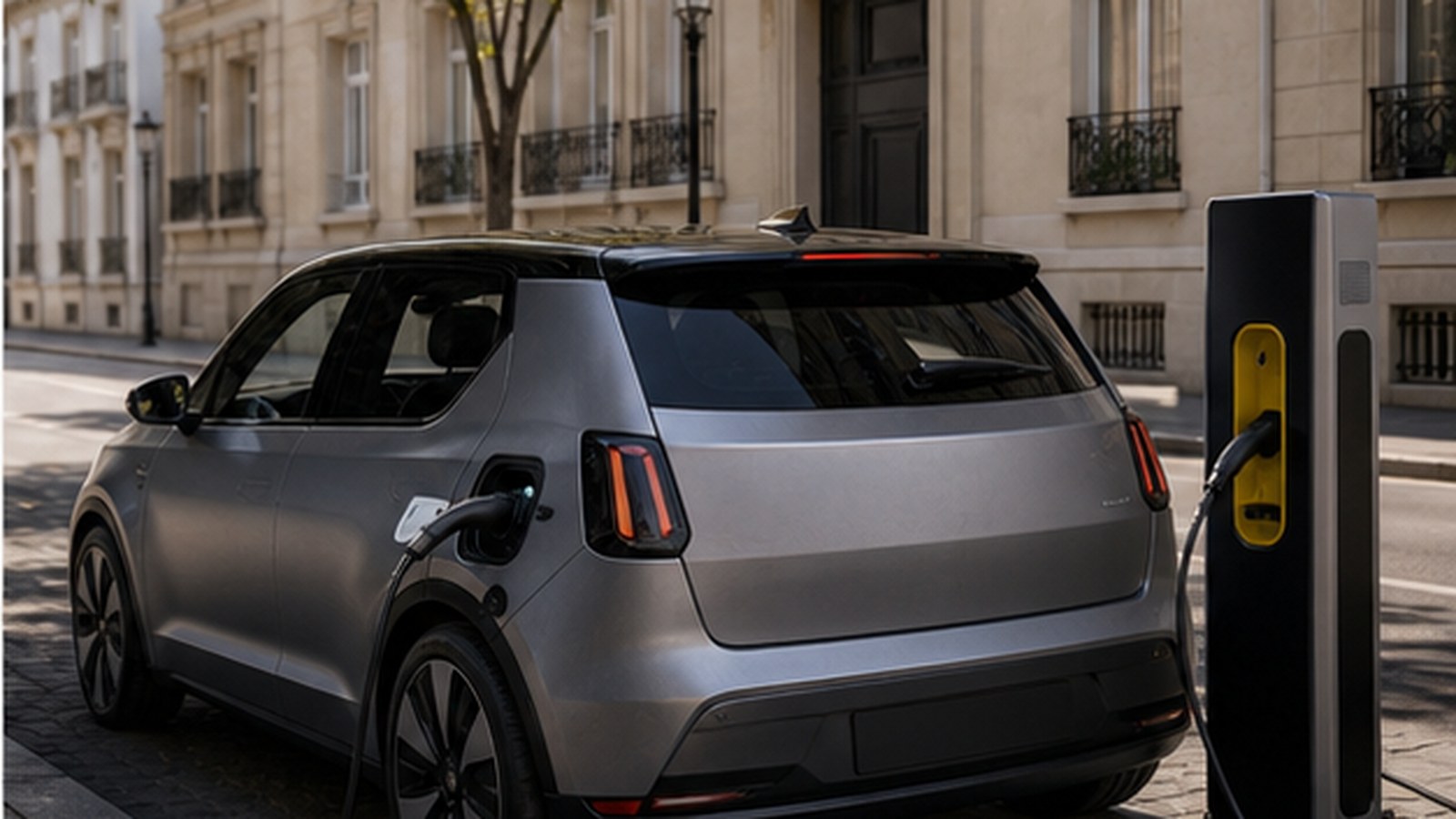
Charging makes the transition visible
Street charging makes the electric transition visible in everyday use.
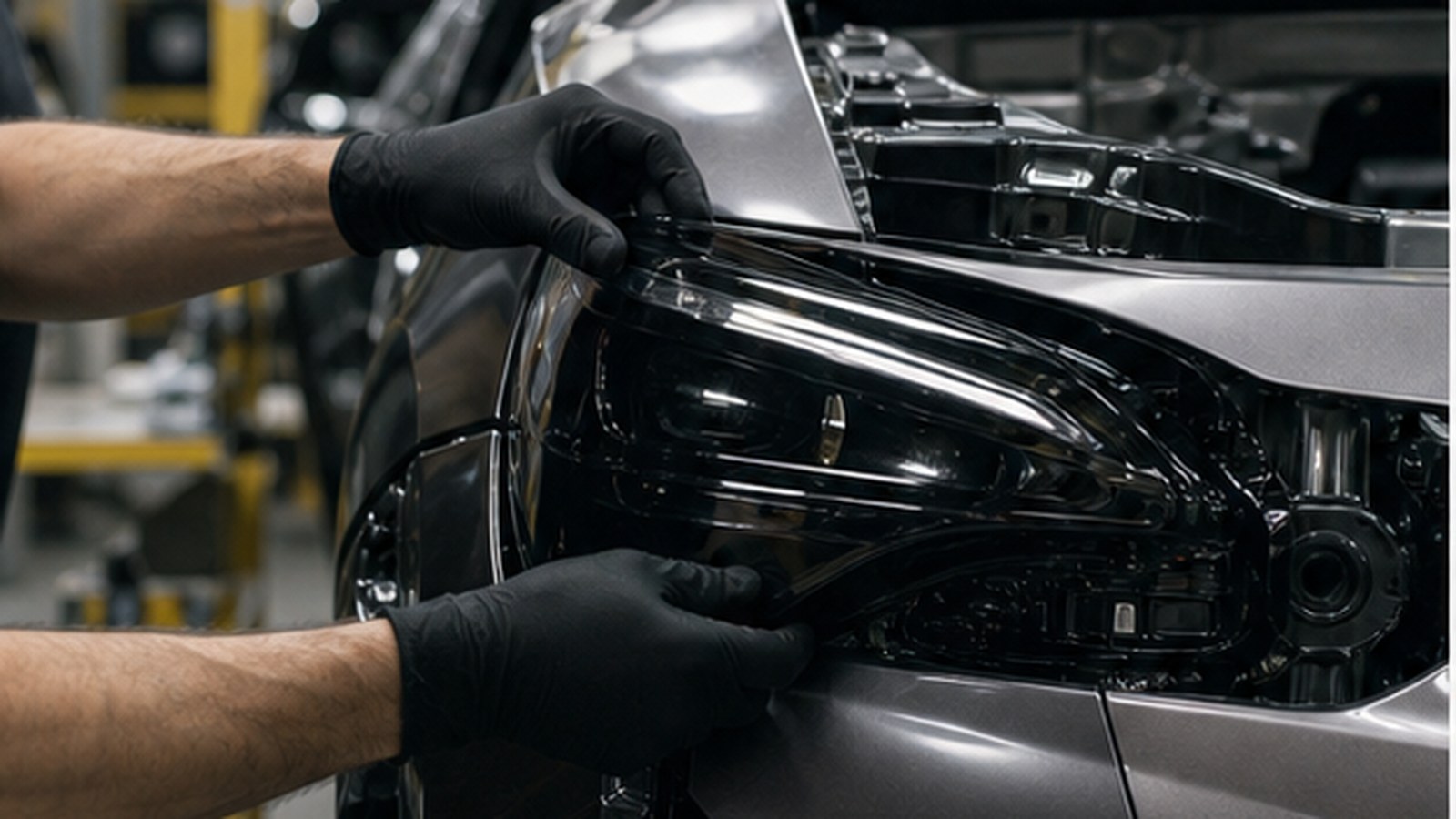
Quality control carries industrial proof
Assembly inspection carries the industrial proof behind product quality.
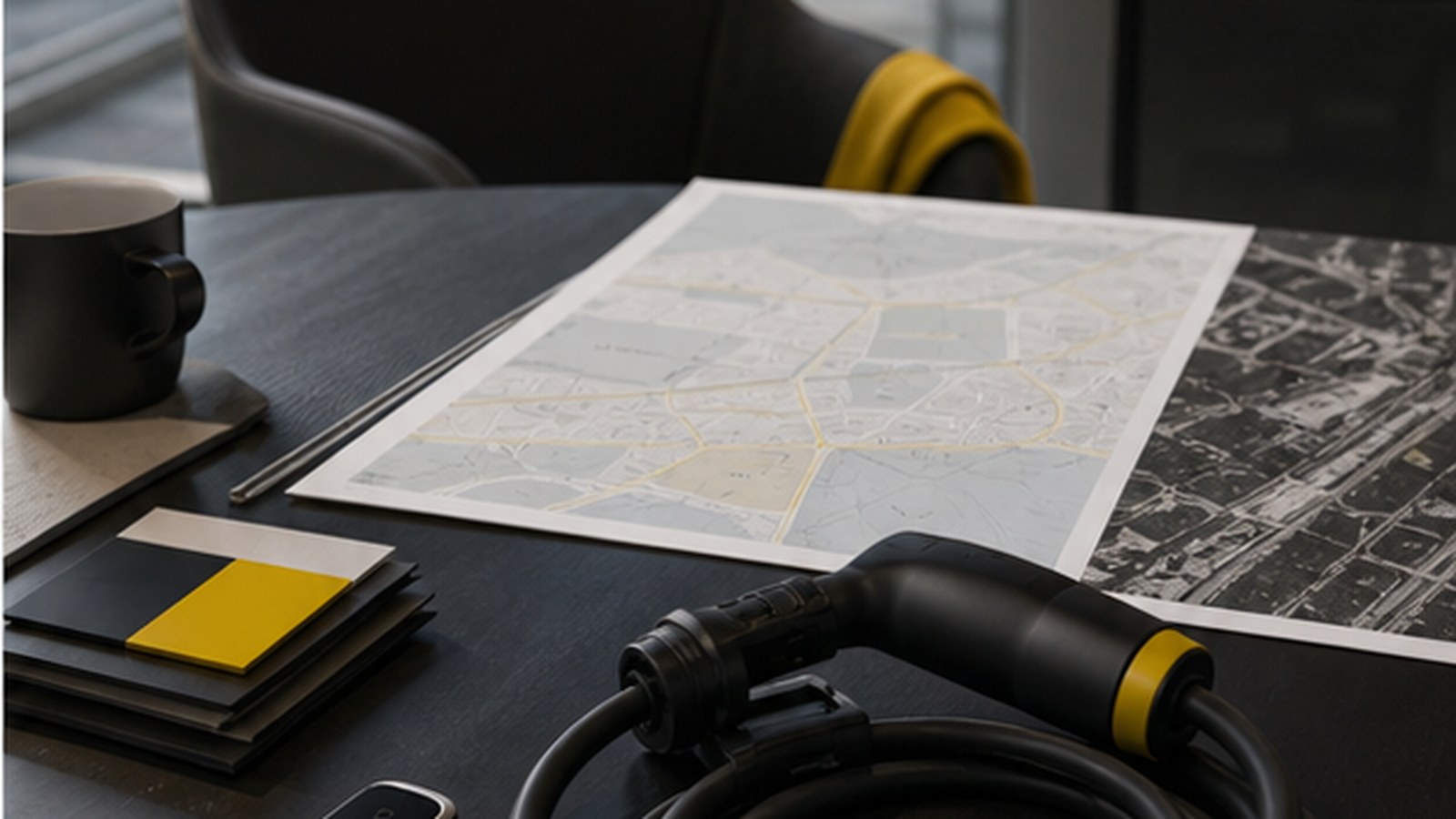
Mobility planning needs service context
Route planning and charging access show where the mobility promise must work.
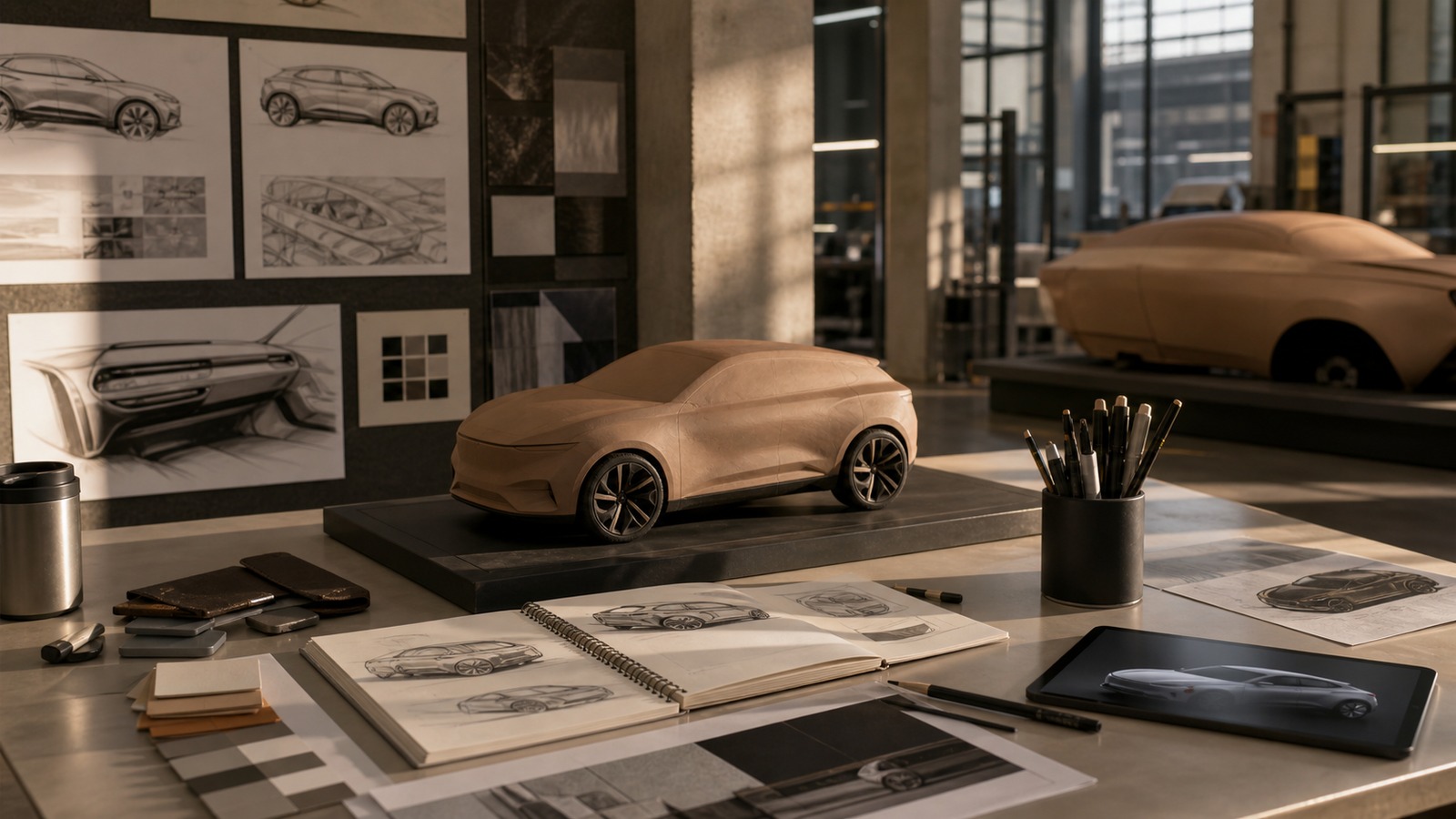
Design is the bridge between eras
The studio process connects Renault's industrial heritage to its next generation of vehicles.
Product and service system
Renault Freres is founded.
Renault 16 shows mass-market innovation.
The Renault-Nissan Alliance changes the scale story.
Renault 5 E-Tech, Ampere, Dacia, Alpine, and Mobilize define the current architecture.
Turning points.
Events that changed what buyers could see, buy, repeat, or trust.
Renault begins as a family industrial name.
The company becomes a public industrial symbol after World War II.
Nissan partnership adds global reach and later accounting pressure.
Renault 5-style nostalgia makes modern EV proof more legible.
Public reaction.
The useful reaction is about trust and pressure, not sentiment counts.
People recognize Renault quickly, but the group architecture needs labels.
Dacia and Alpine help only if they are not forced into one tone.
The 2025 Nissan impact should be explained rather than hidden.
Full timeline.
Steal / avoid.
- Let a simple mark carry a portfolio.
- Use nostalgia only when current product proof is present.
- Separate value, performance, EV, and service lanes.
- Do not flatten Dacia or Alpine into generic Renault copy.
- Do not hide accounting losses behind comeback language.
- Do not turn yellow into a page-wide decoration.
Short answer.
Renault is the car brand identified by a diamond logo first introduced in 1925. Renault Group also includes Dacia and Alpine, which retain separate names and vehicle identities. Distinguishing the parent group from the Renault badge explains why the same company can offer value cars, mainstream vehicles and performance cars under different brands.
Frequently asked questions
When did Renault first use the diamond logo?
Renault introduced a diamond-shaped badge in 1925, following a circular badge used from 1923. The diamond therefore predates the recent electric-car revival by almost a century. Later redesigns changed its lines and dimensional appearance while retaining the basic shape that identifies the car brand.
Are Dacia and Alpine part of Renault?
Dacia and Alpine are distinct vehicle brands within Renault Group, alongside the Renault brand. A Dacia or Alpine is therefore a group product without being sold under the Renault badge. The group also separates vehicle brands from entities such as Mobilize and Ampere, which have different business roles.
Where did the Renault name come from?
Renault takes the founding family's name. Renault Frères was founded in 1899; the surname survived the company's later changes in ownership, products and visual identity.
Does a Renault full hybrid need plugging in?
No. Renault distinguishes full hybrid E-Tech vehicles from plug-in hybrids: a full hybrid replenishes its battery while driving, including through regenerative braking, and has no external charging socket. A plug-in hybrid can also recharge from a socket or charging point. Check which powertrain the particular model uses; E-Tech appears on more than one type.
What is the difference between Renault mild hybrid and full hybrid?
A mild hybrid gives the petrol engine electrical assistance, particularly when starting and accelerating. Renault's full hybrid system has a more powerful electric motor and a larger battery, allowing the car to travel on electricity alone for limited distances. Neither should be confused with a battery-electric car; electric driving varies with the model and conditions.
Need help with your own brand?
Use Private brand work when your name, identity, proof, or message needs a sharper branding decision.
