Richemont · Grow Your Brand · Swiss Jewellery And Watch Portfolio · Switzerland / Active / listed company
Richemont
Richemont: jewellery strength works when maisons, watchmakers, and control structure stay legible. A brand page for Richemont: the Swiss luxury holding company, Cartier and Van Cleef & Arpels strength, specialist watchmaker pressure, other business lanes, FY2026 finance, and the risk of flattening maisons into one jewellery story.
Positioning, name, and architecture.
Three evidence checks before the page talks about scale, color, or public reaction.
A Swiss luxury group led by jewellery maisons, specialist watchmakers, and controlled-family governance.
Richemont is strongest when Cartier and jewellery strength are shown as part of a wider maison portfolio, not as a substitute for the parent story.
Richemont is the holding-company name created for Johann Rupert's luxury group.
A family-spirited group
luxury maison group with jewellery, watchmaker, fashion, and retail lanes
Richemont should not flatten maisons or hide the difference between jewellery strength, specialist watchmaker pressure, other businesses, and voting control.
Cartier, Van Cleef & Arpels, Buccellati, and Vhernier carry the strongest group proof.
74 percent sales lane: Cartier and Van Cleef & Arpels source
Watchmaking houses need their own pressure and recovery lane.
14 percent sales lane: IWC, Jaeger-LeCoultre, Panerai, Vacheron Constantin source
Fashion, accessories, writing instruments, and retail context keep the parent from becoming jewellery-only.
12 percent sales lane: Montblanc, Chloé, Alaïa, Delvaux, Watchfinder source
Voting control is part of the entity proof, not an appendix.
control lane: Compagnie Financière Richemont S.A. source
Naming and tagline progression
Richemont
A family-spirited group
Market and scale snapshot.
Richemont reports in euros. FY2026 sales and profit for the year are shown with USD equivalents using the dated 1.1396 USD-per-EUR rate recorded on 14 Jul 2026; market value is a separately dated observation.
Official FY2026 EUR 22.420 billion sales converted at 1.1396 USD per EUR.
Official FY2026 EUR 3.484 billion profit for the year converted at the same rate.
CompaniesMarketCap USD market-cap observation for CFR.SW captured on 26 Jul 2026; source page reports the company market capitalization in USD.
Compagnie Financière Richemont S.A.; ISIN CH0210483332. CFR.SW is the market-data symbol.
Color system.
Gold and black should signal luxury stewardship without becoming decorative gloss.
How the palette behaves
Gold supports jewellery proof.
Black keeps the parent restrained.
White makes brand lanes legible.
The palette needs maison evidence to avoid generic luxury.
Recognition assets.
Memory pieces the brand can use before someone finishes a sentence.
Cartier and Van Cleef often create the public memory before the parent does.
Watch pressure should not be hidden behind jewellery growth.
Family voting control is part of entity clarity.
Scores.
Use these scores to compare recognition, trust, proof, pressure, and risk.
The parent name is recognized in luxury business circles, but maison proof must carry public recognition.
Public reporting and maison history support trust when ownership lanes are labeled.
The group works when houses, categories, regions, and parent role stay separate.
Parent marks are restrained, so product and maison context carry much of the signal.
Stores, products, maisons, craft, and finance provide visible proof.
Brand houses and group ownership must not collapse into one luxury sentence.
Parent company, owned maisons, public ticker, and product names need clean labels.
Luxury copy can become vague unless tied to sources, products, and reporting.
How the logo changed.
Richemont annual reports document a restrained corporate wordmark system from the founding era through its current masterbrand treatment.
The 1989 annual report carries the early all-capitals corporate wordmark. source
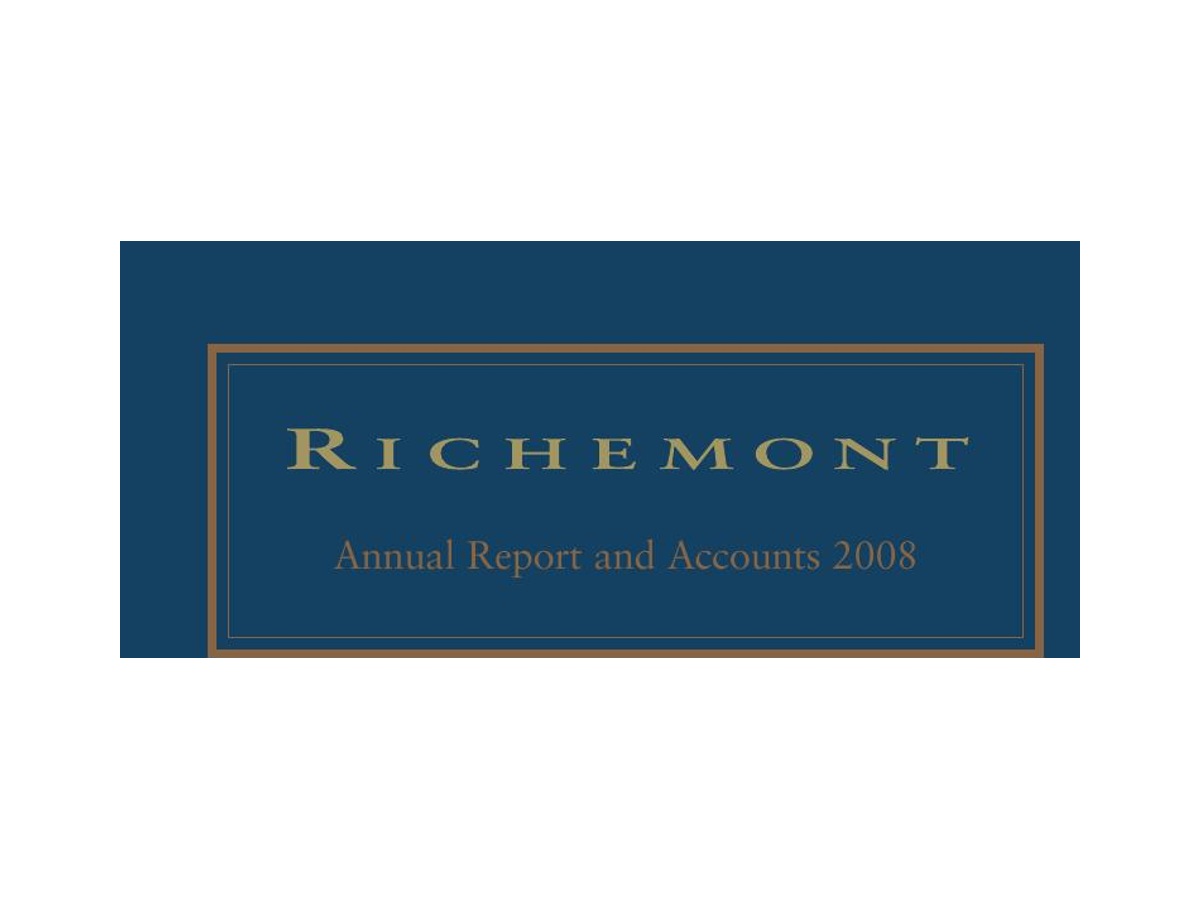
The 2008 annual report uses the established wordmark in a gold framed corporate treatment. source
The current group retains the restrained all-capitals Richemont wordmark. source
Product and service lineage.
For Richemont, proof runs through jewellery maisons, specialist watchmakers, retail systems, and governance structure.
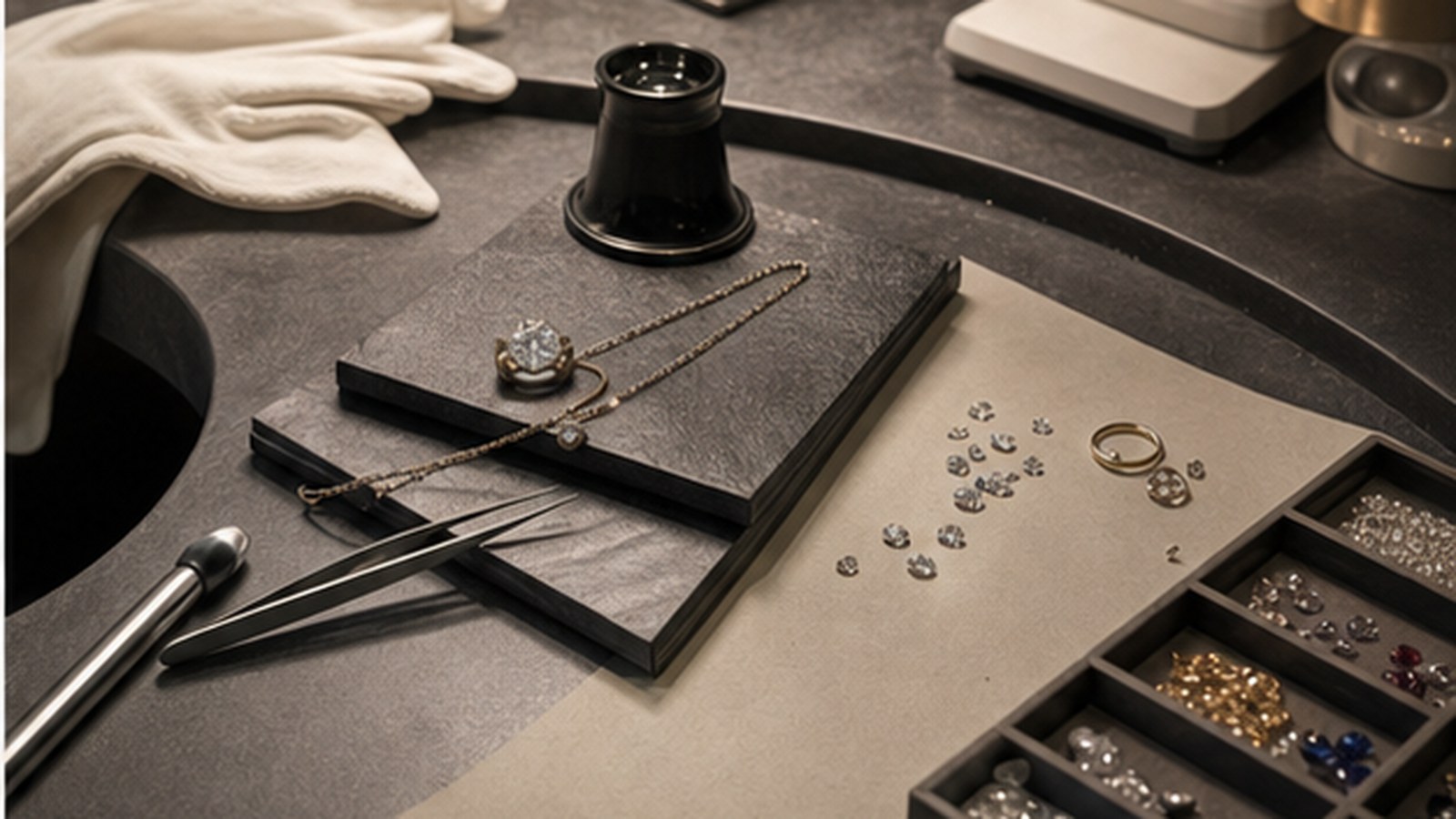
Jewelry craft needs its own lane
Stones, tools, and bench work make jewelry craft visible as its own category.
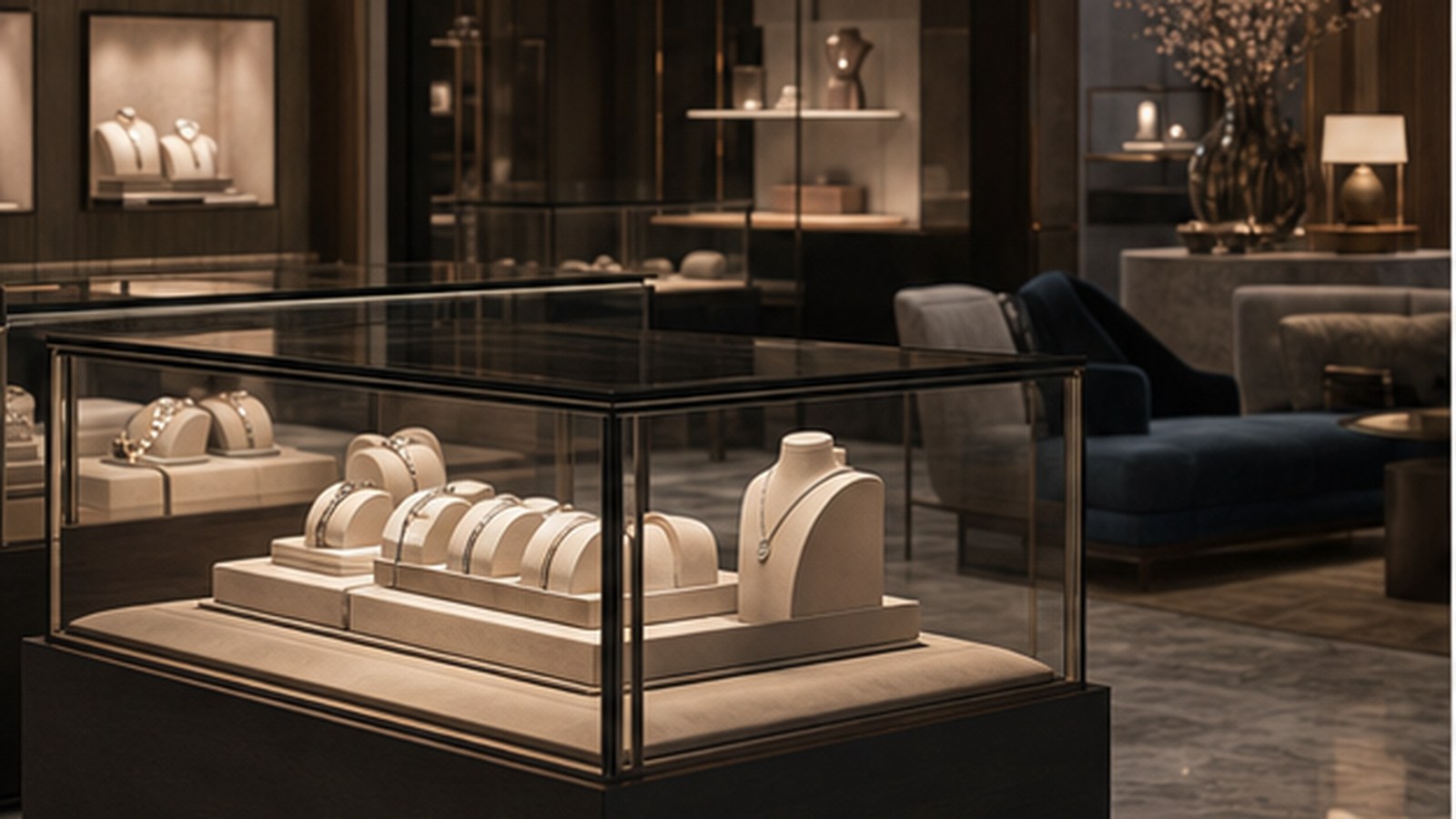
Retail salons make luxury tangible
Salon architecture turns product presentation and personal service into tangible proof.

Portfolio separation is the parent job
Clear category separation lets each maison keep its own authority inside the portfolio.

Maison stewardship needs a visible coordination system
A Geneva review room shows how watch, jewellery and material lanes can be governed without merging their identities.
Product and service system
Richemont is founded.
Luxury maisons become central to the group.
Online retail and YNAP context becomes strategic.
Jewellery growth carries the group through watch pressure.
Turning points.
Events that changed what buyers could see, buy, repeat, or trust.
Richemont is designed to steward luxury assets.
Cartier and Van Cleef create the strongest recognition.
The watch lane has different market pressures.
Voting control must be labeled plainly.
Q1 sales rose 20% at constant currencies to EUR 6.33B, with jewellery up 24%.
Public reaction.
The useful reaction is about trust and pressure, not sentiment counts.
Many people know a maison before Richemont.
Current performance concentrates attention on jewellery.
Watchmaker weakness should not be buried.
Full timeline.
Richemont is founded through the Rembrandt international asset spin-off.
Luxury holdings are separated from tobacco interests.
Van Cleef & Arpels becomes a key luxury asset.
A. Lange & Söhne, IWC, and Jaeger-LeCoultre expand the specialist watchmaker system.
Reinet separation makes the group more purely luxury-focused.
FY2026 results show jewellery strength, watchmaker pressure, and portfolio cleanup.
Steal / avoid.
- Let maisons carry proof.
- Separate jewellery and watches.
- Label governance clearly.
- Do not make the parent replace maisons.
- Do not hide watch pressure.
- Do not blur voting control.
Short answer.
Richemont is useful as a brand lesson because it shows how a parent company can be strong even when public recognition lives inside maisons. The page has to separate Cartier, Van Cleef & Arpels, specialist watchmakers, other businesses, and governance so the parent does not become one vague luxury label.
Frequently asked questions
What is Richemont's main brand signal?
A Swiss parent stewarding major jewellery and watch maisons.
What should another brand steal from Richemont?
Let high-recognition sub-brands carry proof while the parent clarifies ownership.
What should another brand avoid copying?
Do not hide category pressure behind parent prestige.
Need help with your own brand?
Use Private brand work when your name, identity, proof, or message needs a sharper branding decision.