Samsonite · Grow Your Brand · Travel-carry portfolio · United States / Active
Samsonite
Samsonite turns luggage, wheels, durability, TUMI, American Tourister, Gregory, and retail channels into travel trust. A brand page on Samsonite as a daily-business-owner lesson: buyers do not trust travel gear because of a slogan. They trust the wheel, shell, zipper, handle, packing system, warranty, retail experience, and the portfolio split between Samsonite, TUMI, American Tourister, Gregory, High Sierra, Lipault, Hartmann, and Kamiliant.
Positioning, name, and architecture.
Three evidence checks before the page talks about scale, color, or public reaction.
Samsonite turns luggage, wheels, durability, TUMI, American Tourister, Gregory, and retail channels into travel trust.
A brand page on Samsonite as a daily-business-owner lesson: buyers do not trust travel gear because of a slogan. They trust the wheel, shell, zipper, handle, packing system, warranty, retail experience, and the portfolio split between Samsonite, TUMI, American Tourister, Gregory, High Sierra, Lipault, Hartmann, and Kamiliant.
Samsonite operates as the parent/company mark for a wider system.
No verified current portfolio-wide tagline; Samsonite is read through shells, wheels, durability, TUMI, American Tourister, outdoor brands, and retail channels.
company system / portfolio architecture
Samsonite: The master luggage lane: durability, wheels, shells, packing, warranty, stores, and airport recognition. TUMI: The premium business-travel lane with materials, work carry, and status. American Tourister: The accessible and colorful travel lane that keeps the house closer to families and casual buyers. Gregory and High Sierra: Outdoor and backpack carry widen the company beyond airport luggage. Hartmann and Lipault: Heritage and fashion travel lanes create more specific buyer cues. Retail and DTC: DTC stores and ecommerce make service, warranty, selection, and presentation part of the proof.
The master luggage lane: durability, wheels, shells, packing, warranty, stores, and airport recognition.
Portfolio family: Samsonite source
The premium business-travel lane with materials, work carry, and status.
Portfolio family: TUMI source
The accessible and colorful travel lane that keeps the house closer to families and casual buyers.
Portfolio family: American Tourister source
Outdoor and backpack carry widen the company beyond airport luggage.
Portfolio family: Gregory and High Sierra source
Heritage and fashion travel lanes create more specific buyer cues.
Portfolio family: Hartmann and Lipault source
DTC stores and ecommerce make service, warranty, selection, and presentation part of the proof.
Portfolio family: Retail and DTC source
Naming and tagline progression
Jesse Shwayder founds the company in Denver as a trunk manufacturer.
The Samsonite name appears on Streamlite luggage and starts carrying the public identity.
Lightweight material innovation makes the product easier to travel with.
Market and scale snapshot.
FY2025 operating results show the scale of the travel portfolio; a separate 10 July 2026 market observation anchors how public investors valued that system.
FY2025 net sales in USD.
FY2025 profit for the year in USD.
FY2025 adjusted EBITDA in USD.
10 Jul 2026 observation: HKD 13.94 per share multiplied by 1,363,795,481 issued shares; USD display uses approximately HKD 7.80 per USD. This is a dated calculation, not a company-reported figure.
Samsonite Group S.A. is listed on the Hong Kong Stock Exchange under stock code 1910.
Direct-to-consumer share of net sales.
Samsonite, TUMI, American Tourister, Gregory, High Sierra, Lipault, Hartmann, Kamiliant.
Color system.
Samsonite's black-blue-gray palette supports durability and travel hardware while TUMI, American Tourister, Gregory, and other portfolio brands keep separate positions.
How the palette behaves
Black anchors the Samsonite name, shell silhouette, and hard-wearing product frame.
Blue separates the masterbrand from premium, value, and outdoor portfolio lanes.
Cool gray supports wheels, handles, shells, retail, and repair proof without turning luggage into fashion scenery.
Recognition assets.
Memory pieces the brand can use before someone finishes a sentence.
The moving parts become the proof because travel gear is punished in public.
Hard-side shape and material cues signal protection before a buyer reads specs.
TUMI and American Tourister solve different travel-status problems.
A suitcase is judged by touch, zipper feel, rolling sound, warranty, and advice.
Scores.
Use these scores to compare recognition, trust, proof, pressure, and risk.
Samsonite is strongly tied to luggage and travel reliability.
TUMI, American Tourister, Gregory, High Sierra, Hartmann, Lipault, and Kamiliant need visible roles.
The brand is used at airports, offices, hotels, stores, schools, and family trips.
A single broken wheel or zipper can damage the promise fast.
Samsonite only reads correctly when Samsonite, TUMI, American Tourister, Gregory, High Sierra, Lipault, Hartmann, Kamiliant, wheels, shells, stores, ecommerce, warranty, and travel durability stay visible.
Samsonite needs parent, product, service, and history lanes labeled cleanly so search systems do not flatten the brand into one vague entity.
Samsonite turns luggage, wheels, durability, TUMI, American Tourister, Gregory, and retail channels into travel trust.
Samsonite weakens when it is reduced to one suitcase and the page hides TUMI, American Tourister, Gregory, High Sierra, Lipault, Hartmann, Kamiliant, wheels, shells, channels, and durability proof.
How the logo changed.
Three sourced Samsonite identity stages show the shift from a heavy wordmark to the integrated swirl system.
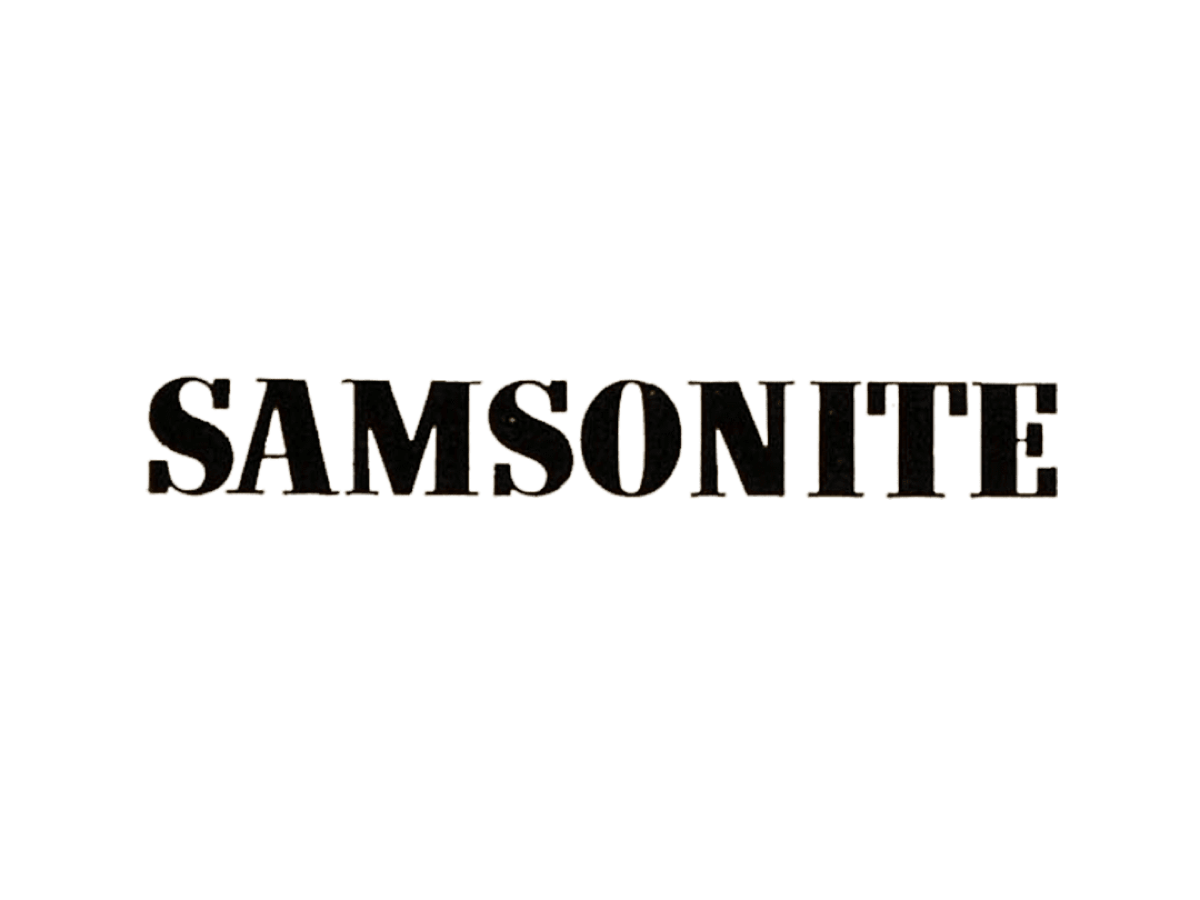
The first documented Samsonite wordmark uses a heavy all-cap serif treatment. source
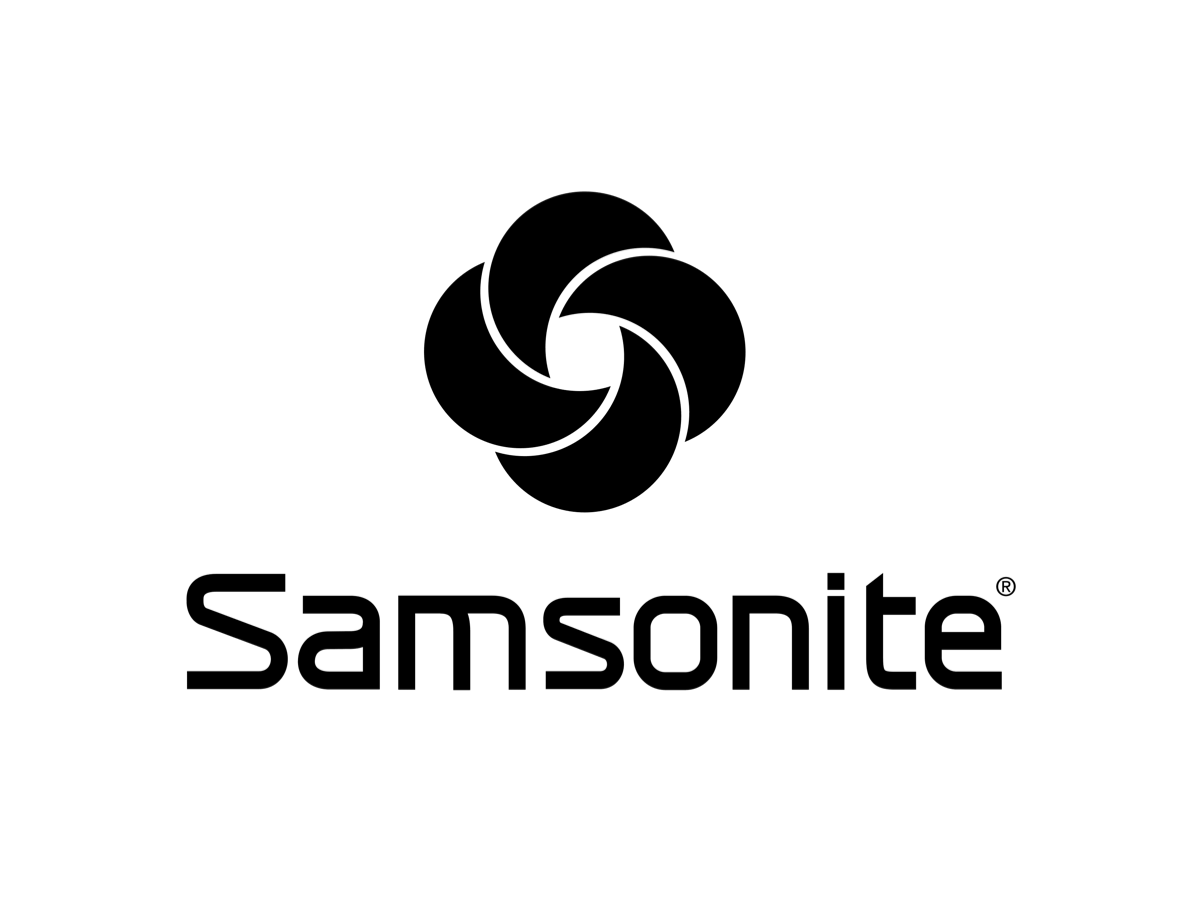
The swirl emblem moves above a rounded wordmark and becomes a compact luggage-recognition cue. source
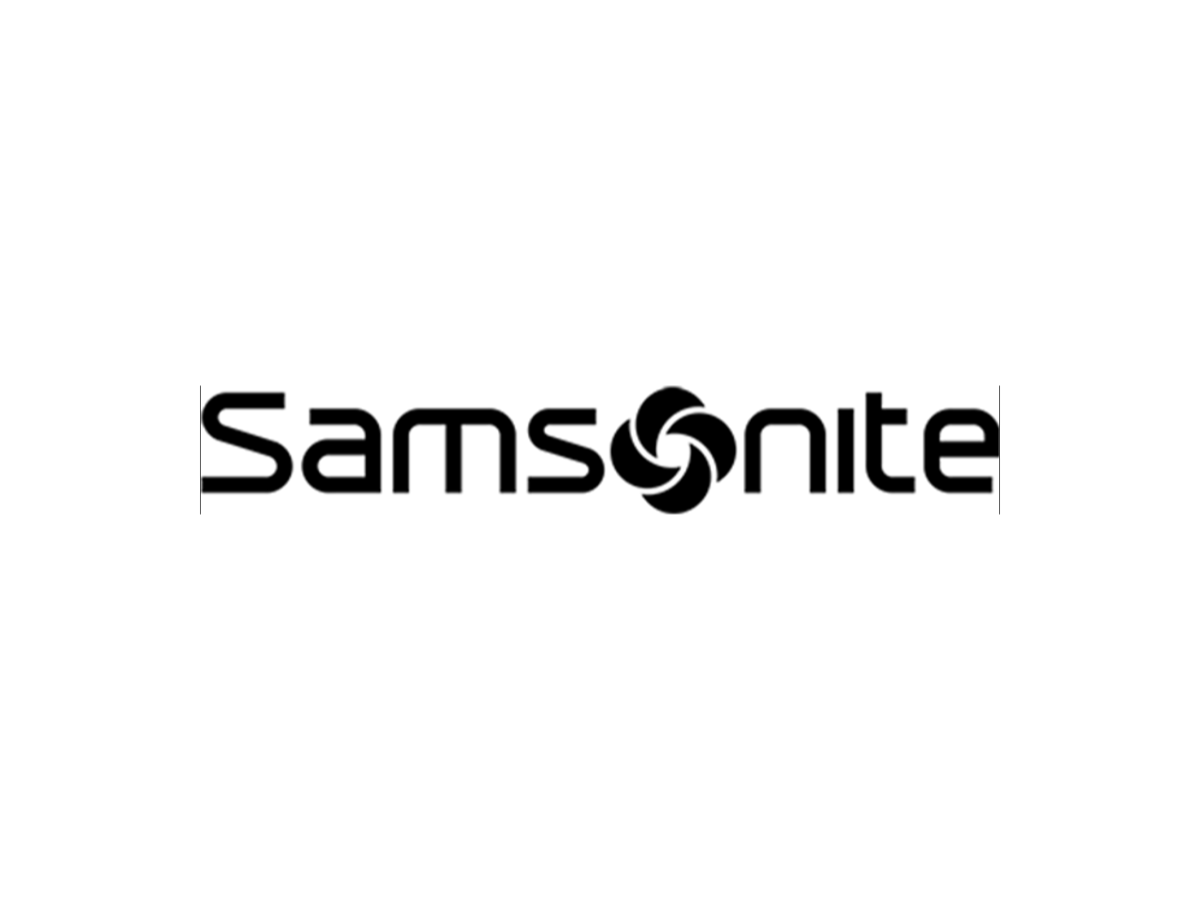
The current wordmark integrates the swirl into the name for a tighter travel-system signature. source
Product and service lineage.
Samsonite only reads correctly when Samsonite, TUMI, American Tourister, Gregory, High Sierra, Lipault, Hartmann, Kamiliant, wheels, shells, stores, ecommerce, warranty, and travel durability stay visible.
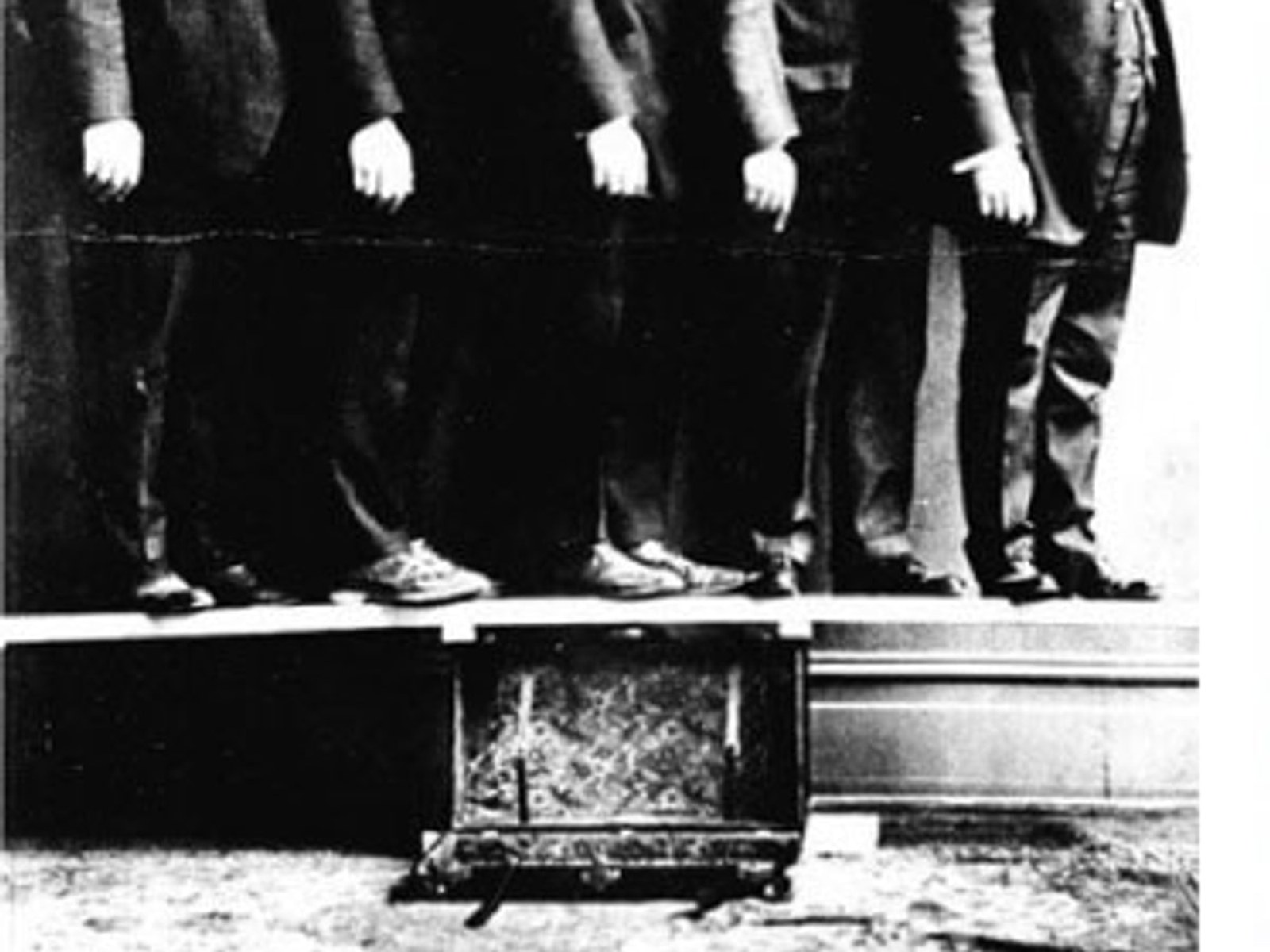
The trunk establishes durability
The earliest product proof is protection: a travel case built to survive handling before wheels and lightweight shells arrive.
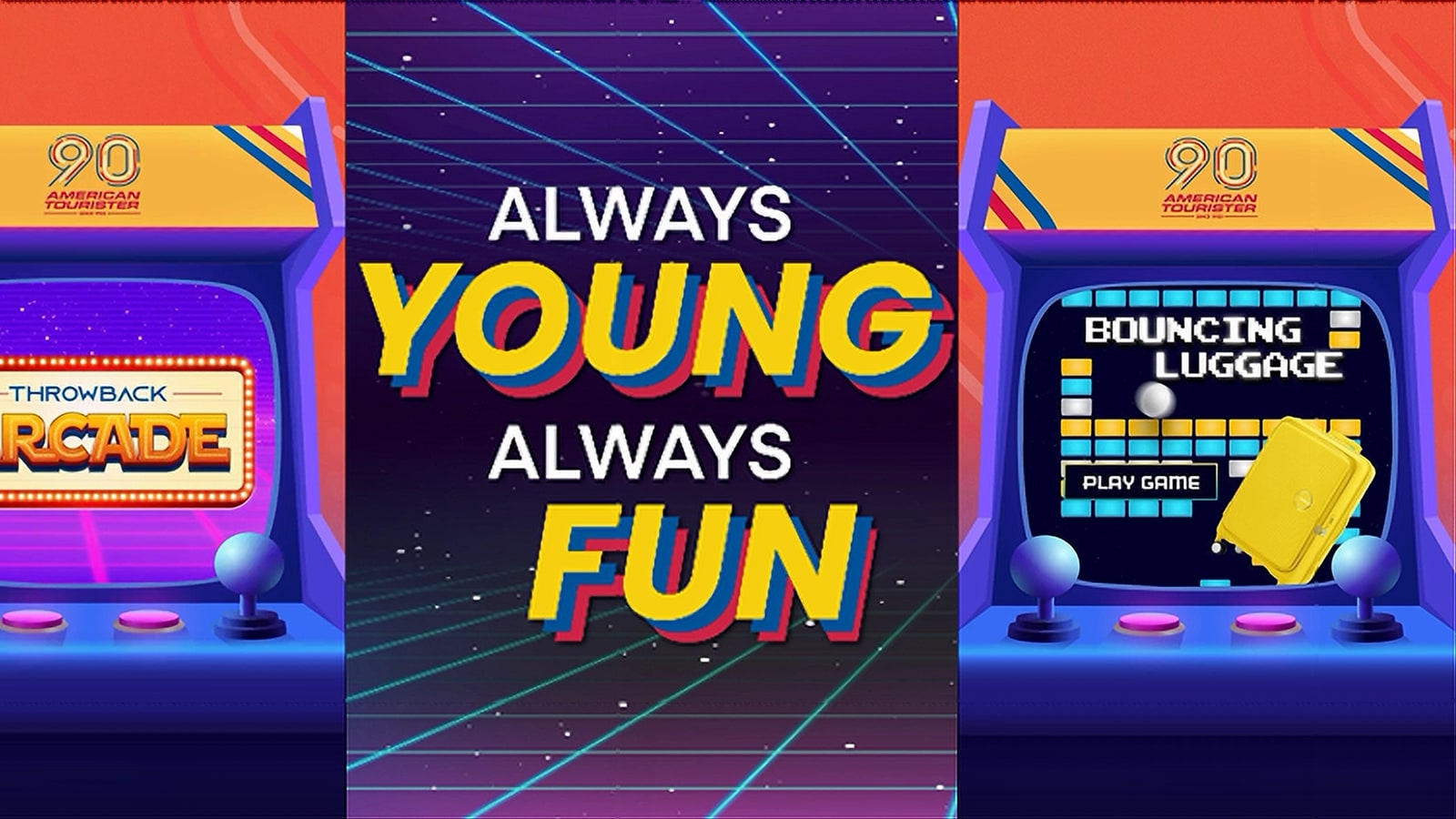
American Tourister keeps access open
American Tourister gives the house a more playful and accessible travel lane without forcing Samsonite to do every job.
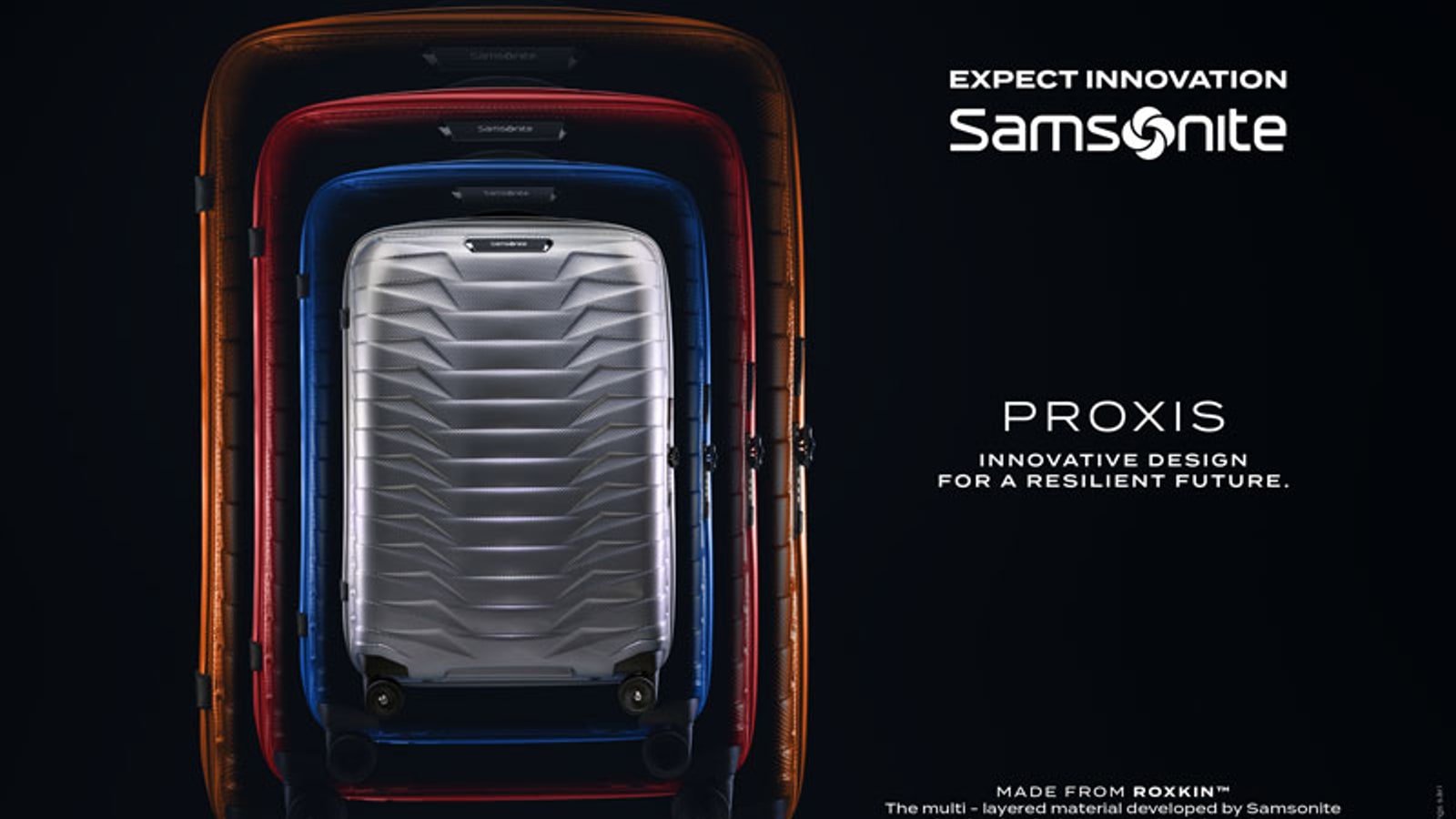
Shell and wheel memory
The product has to show strength, lightness, wheel control, packing logic, and visible travel durability.
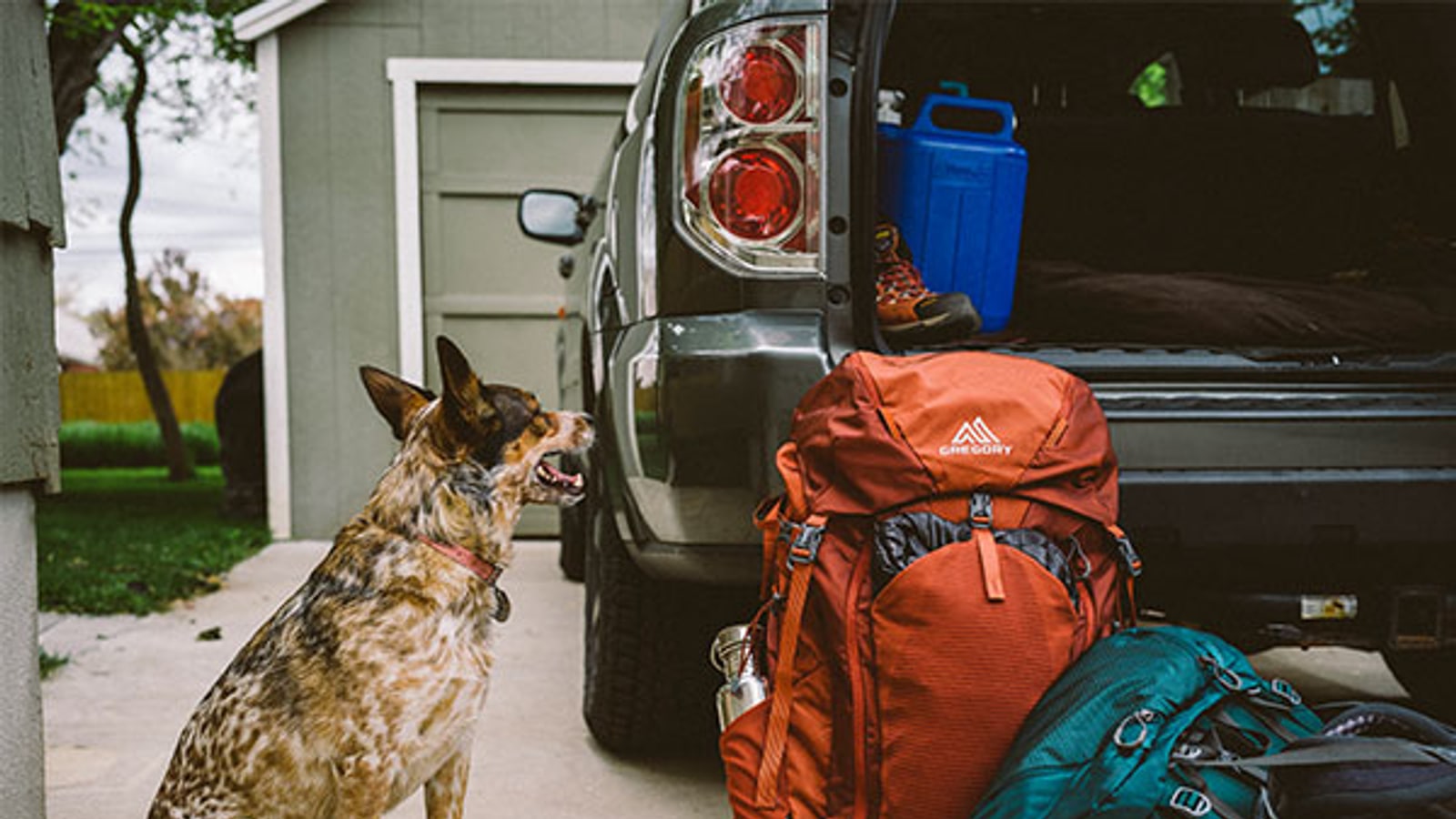
Gregory adds outdoor carry
Backpacks and outdoor carry widen the portfolio beyond airports and business trips.
Product and service system
The master luggage lane: durability, wheels, shells, packing, warranty, stores, and airport recognition.
The premium business-travel lane with materials, work carry, and status.
The accessible and colorful travel lane that keeps the house closer to families and casual buyers.
Outdoor and backpack carry widen the company beyond airport luggage.
Heritage and fashion travel lanes create more specific buyer cues.
DTC stores and ecommerce make service, warranty, selection, and presentation part of the proof.
Turning points.
Events that changed what buyers could see, buy, repeat, or trust.
The Swirl logo becomes a recognizable Samsonite mark.
The first suitcase on wheels in the Silhouette line makes movement part of the brand proof.
Oyster hardside luggage strengthens the shell and protection cue.
Public reaction.
The useful reaction is about trust and pressure, not sentiment counts.
Buyers trust Samsonite when the suitcase rolls well, protects belongings, feels durable, and has channel support.
The brand weakens when the page ignores product mechanics or treats TUMI and American Tourister as decorative side names.
Full timeline.
Jesse Shwayder founds the company in Denver as a trunk manufacturer.
The Samsonite name appears on Streamlite luggage and starts carrying the public identity.
Lightweight material innovation makes the product easier to travel with.
The Swirl logo becomes a recognizable Samsonite mark.
The first suitcase on wheels in the Silhouette line makes movement part of the brand proof.
Oyster hardside luggage strengthens the shell and protection cue.
American Tourister joins the company and opens an accessible travel lane.
Samsonite lists in Hong Kong, making global travel scale visible.
High Sierra and Hartmann join the company.
Lipault and Gregory widen fashion and outdoor carry lanes.
TUMI joins the group and adds premium business-travel authority.
Samsonite reports FY2025 net sales of USD 3.50B and celebrates 115 years.
Steal / avoid.
- Make the physical failure point the proof point: wheels, handles, zippers, shell, warranty.
- Use portfolio brands to separate premium, family, outdoor, and heritage travel needs.
- Let retail and service make the durability promise believable.
- Do not reduce Samsonite to one suitcase photo.
- Do not hide TUMI, American Tourister, Gregory, High Sierra, Hartmann, Lipault, or Kamiliant.
- Do not use fake luggage render boards or invented marks.
Short answer.
Samsonite is useful for business owners because it shows that a brand promise must live at the failure point. Wheels, handles, shells, zippers, warranty, retail service, TUMI, American Tourister, Gregory, and travel use make the wordmark believable.
Frequently asked questions
What is Samsonite's core brand signal?
Samsonite turns luggage, wheels, durability, TUMI, American Tourister, Gregory, and retail channels into travel trust.
Why not describe Samsonite as one product?
Because Samsonite spans the namesake line, TUMI, American Tourister, Gregory, High Sierra, Hartmann, Lipault, retail, ecommerce, and durability systems; one suitcase hides the portfolio.
What should another brand steal from Samsonite?
Make the physical failure point the proof point: wheels, handles, zippers, shell, warranty.
Need help with your own brand?
Use Private brand work when your name, identity, proof, or message needs a sharper branding decision.
Sources.
Use the education shelf for the concepts behind this brand page.
Private brand workIf your company owns premium, mass, outdoor, and heritage product brands in one category, Private Brand Work can separate price, use case, channel, and durability proof.
All brandsReturn to every brand page.
- https://corporate.samsonite.com/en/home.html
- https://corporate.samsonite.com/en/about-us.html
- https://corporate.samsonite.com/en/annual-and-interim-reports.html
- https://corporate.samsonite.com/en/shareholder-information.html
- https://www.marketscreener.com/quote/stock/SAMSONITE-GROUP-S-A-8175240/
- https://corporate.samsonite.com/on/demandware.static/-/Sites-InvestorRelations-Library/default/dwdd30714d/PDF/reports/2025/E_Samsonite%202025%20Annual%20Report.pdf
- https://shop.samsonite.com/
- https://www.tumi.com/
- https://shop.americantourister.com/