Samsung · Grow Your Brand · Iconic / Device and Manufacturing Family · South Korea / Active / public company
Samsung
Is Samsung Korean, and what does its name mean? Samsung Electronics was established in South Korea in 1969. Samsung means three stars in Korean, a meaning reflected in earlier logos. The company's origin and a particular device's manufacturing country are different questions.
Positioning, name, and architecture.
Three evidence checks before the page talks about scale, color, or public reaction.
Samsung stretches from phones and tablets to PCs, TVs, displays, appliances, chips, memory, sensors, networks, Harman, and AI features while keeping manufacturing depth near the public signal.
Samsung positions breadth as proof: many devices, many components, and many home/work surfaces held together by manufacturing scale and visible technical capability.
Samsung traces its corporate origin to 1938 in Korea; the public electronics signal has since expanded across device, display, chip, appliance, and connected-living categories.
Samsung's current signal is carried by product families, AI-device features, displays, semiconductors, connected living, and manufacturing scale rather than one universal line.
corporate umbrella with product-family breadth
The Samsung name carries a huge family from chips to consumer devices; the architecture works only when product breadth still feels connected.
Phones, foldables, tablets, watches, and PCs carry Samsung in daily personal use.
Device family: Galaxy Z Fold and Galaxy S source
Televisions, monitors, and display technology make screen quality a household proof point.
Product system: Samsung OLED TVs source
Refrigeration, laundry, and connected-home products extend the brand across domestic routines.
Product system: Bespoke appliances source
Memory, system LSI, and foundry capability provide the manufacturing depth beneath finished devices.
Component business: Memory and foundry source
Naming and tagline progression
A Korean company grows from trade roots into electronics and technology.
Phones, TVs, appliances, displays, and chips make the breadth visible.
AI features have to make the family feel more connected, not more scattered.
Market and scale snapshot.
Samsung Electronics reports the scale behind the Samsung device family, from consumer products to semiconductors and displays.
Samsung Electronics FY2025 consolidated revenue converted to USD using the recorded 25 Jun 2026 rate.
Samsung Electronics FY2025 consolidated operating profit converted to USD using the recorded rate.
Dated market-cap observation captured 5 Jul 2026.
Samsung Electronics common shares.
Color system.
Samsung blue gives the page a corporate anchor; black and silver keep the electronics, chip, and display proof grounded; warm field stops the card from reading like a cold product sheet.
How the palette behaves
Samsung blue carries corporate recognition and technical confidence.
Black gives the device family premium surfaces, displays, and screens.
Silver connects to chips, panels, appliances, and hardware materials.
Warm ground keeps the system readable as editorial proof rather than a fake product catalog.
Recognition assets.
Memory pieces the brand can use before someone finishes a sentence.
Phones, foldables, tablets, PCs, TVs, monitors, wearables, and appliances keep the public family broad.
Memory, semiconductors, sensors, displays, and foundry proof make the breadth feel technically backed.
The Fold delay matters because product governance protects belief in a new category.
Scores.
Use these scores to compare recognition, trust, proof, pressure, and risk.
Samsung is legible across phones, TVs, appliances, chips, displays, PCs, and connected-device categories.
Manufacturing depth, semiconductors, displays, devices, and appliances give the breadth a proof base.
The product range is huge, so the brand has to keep showing how the family connects.
AI features can strengthen the family only when they improve real device use.
The Fold delay shows how public product response can protect trust when innovation is fragile.
Samsung is one of the clearest global examples of electronics breadth tied to manufacturing scale.
A broad product family becomes noise if the connection is not visible.
This card uses Samsung as the public masterbrand and Samsung Electronics as the reporting entity for finance and products.
How the logo changed.
Three sourced Samsung masterbrand stages show the shift from a corporate emblem to a simpler global electronics wordmark.
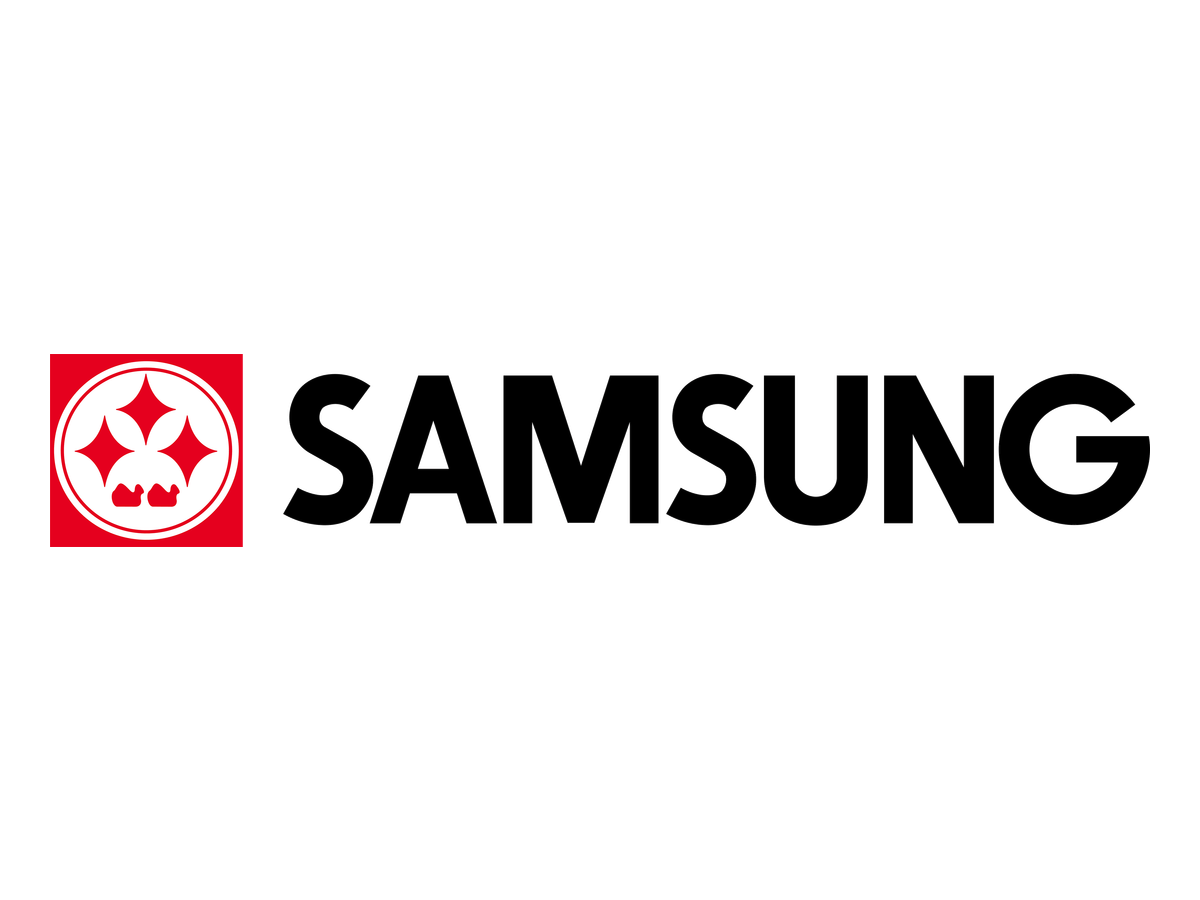
The 1969 identity keeps the three-star emblem beside a heavy corporate wordmark. source
The blue oval turns Samsung into a compact global electronics badge. source
Removing the oval leaves a cleaner wordmark that can sit across a much wider product family. source
Product and service lineage.
Samsung is a company-level device and manufacturing family: semiconductors, displays, phones, tablets, PCs, TVs, monitors, appliances, wearables, audio/automotive, connected home, and AI-device features.
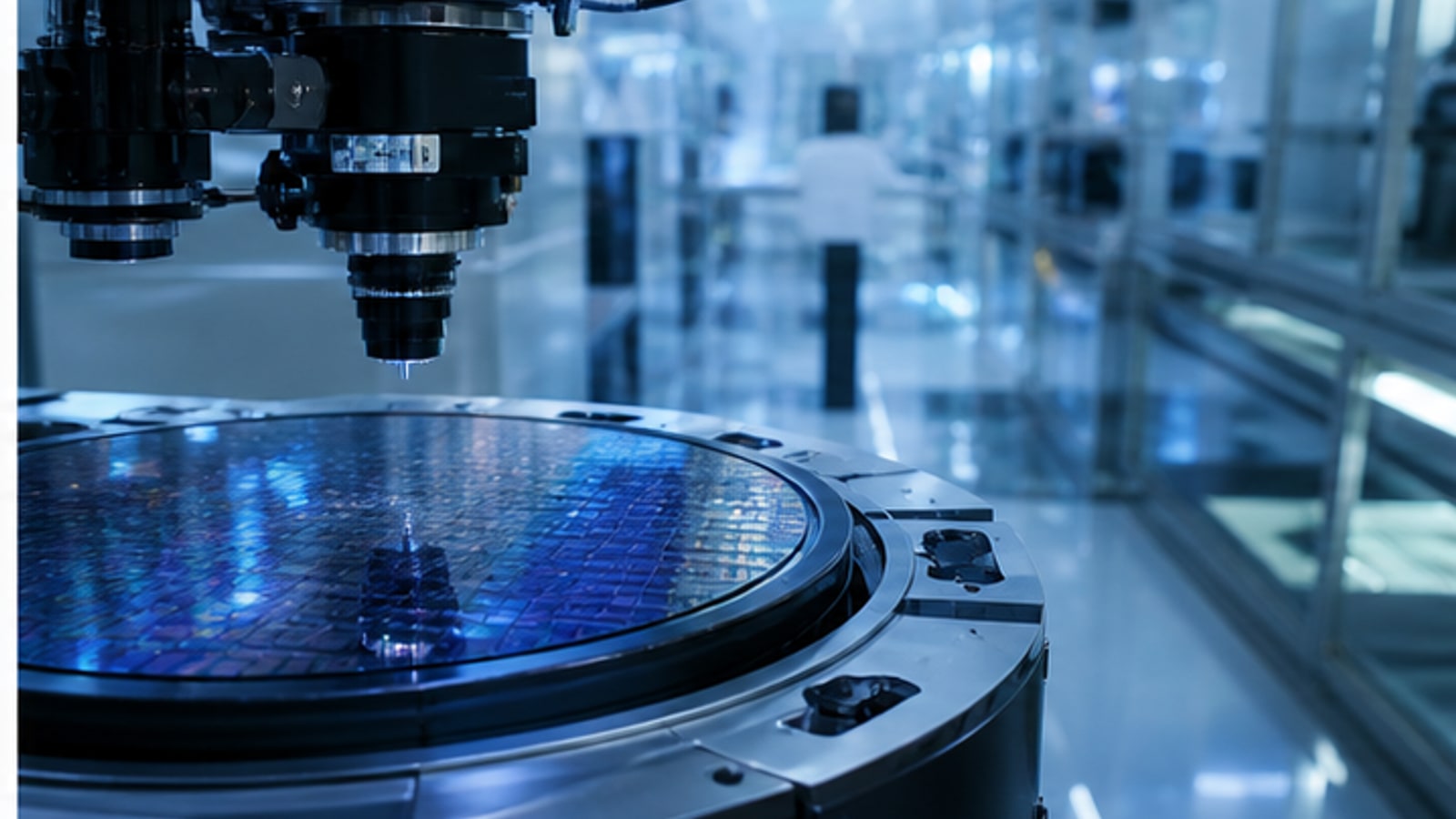
Semiconductors supply the depth
Wafer fabrication, memory, sensors, and foundry work give Samsung technical proof beneath the finished device.
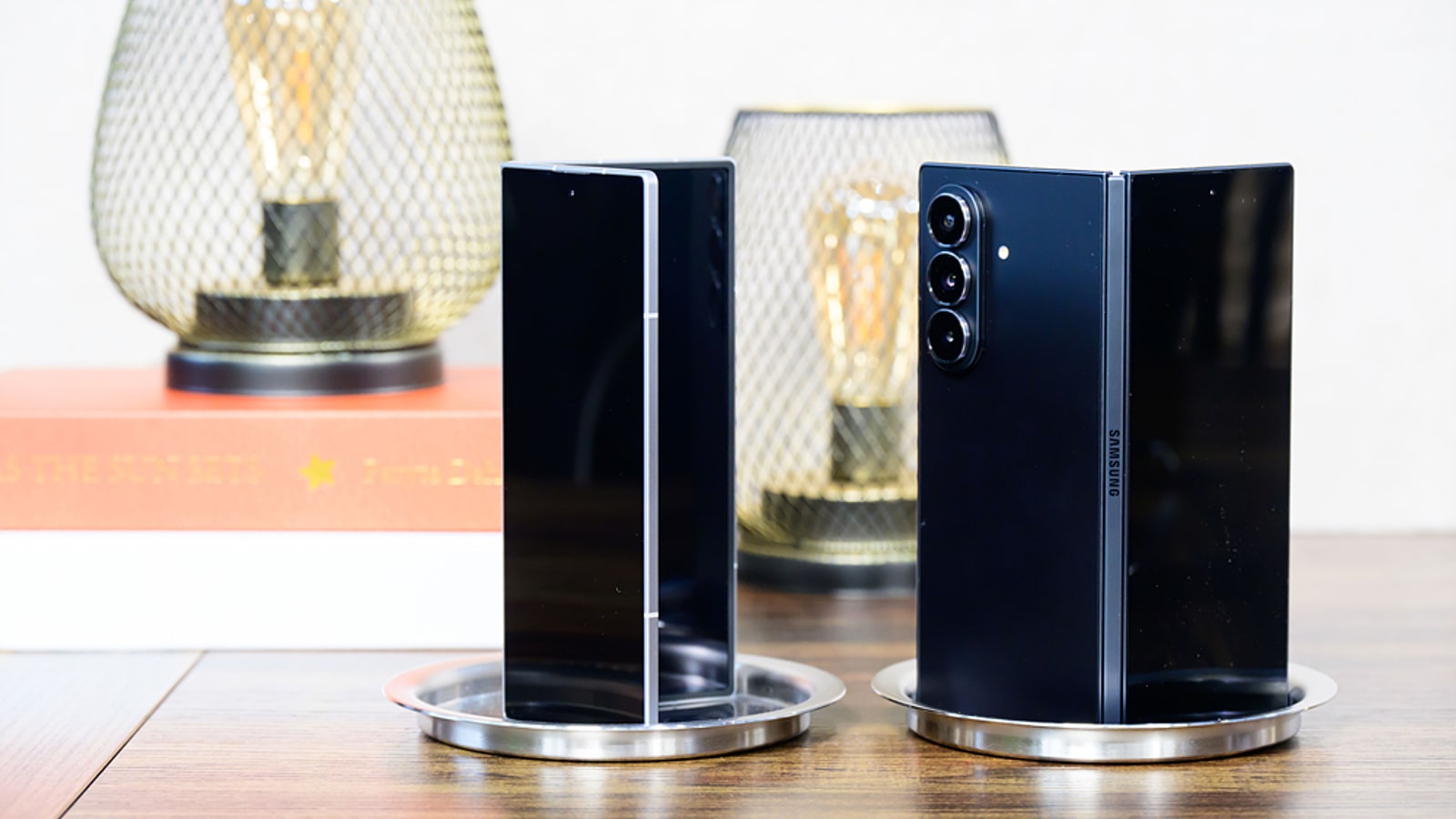
Foldables make experimentation visible
The Galaxy Z Fold family turns display and hinge engineering into a product people can hold and compare.
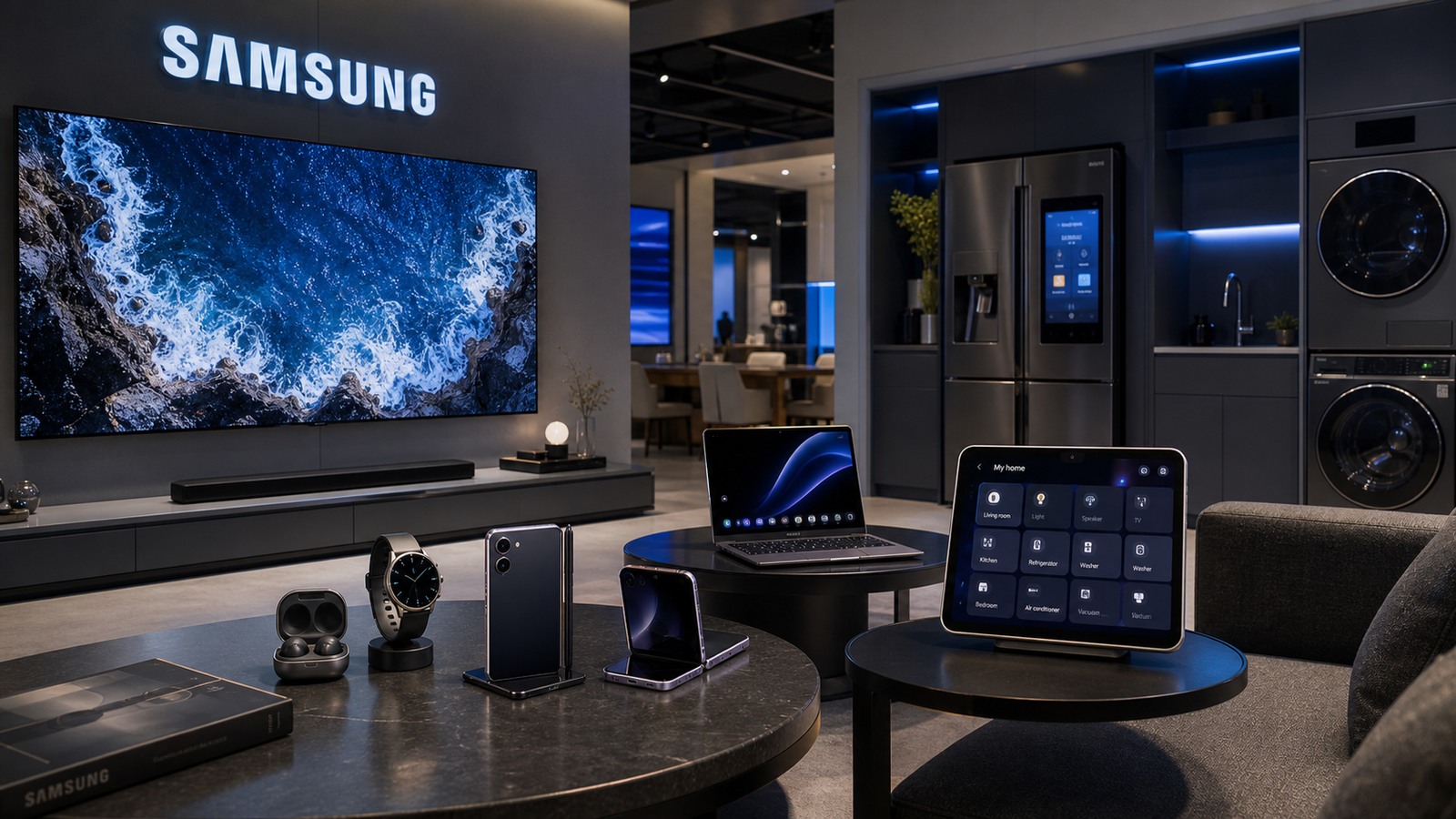
Connected-home breadth
The family signal stretches from phone to TV to appliance when the connected home behaves like one controlled product environment.
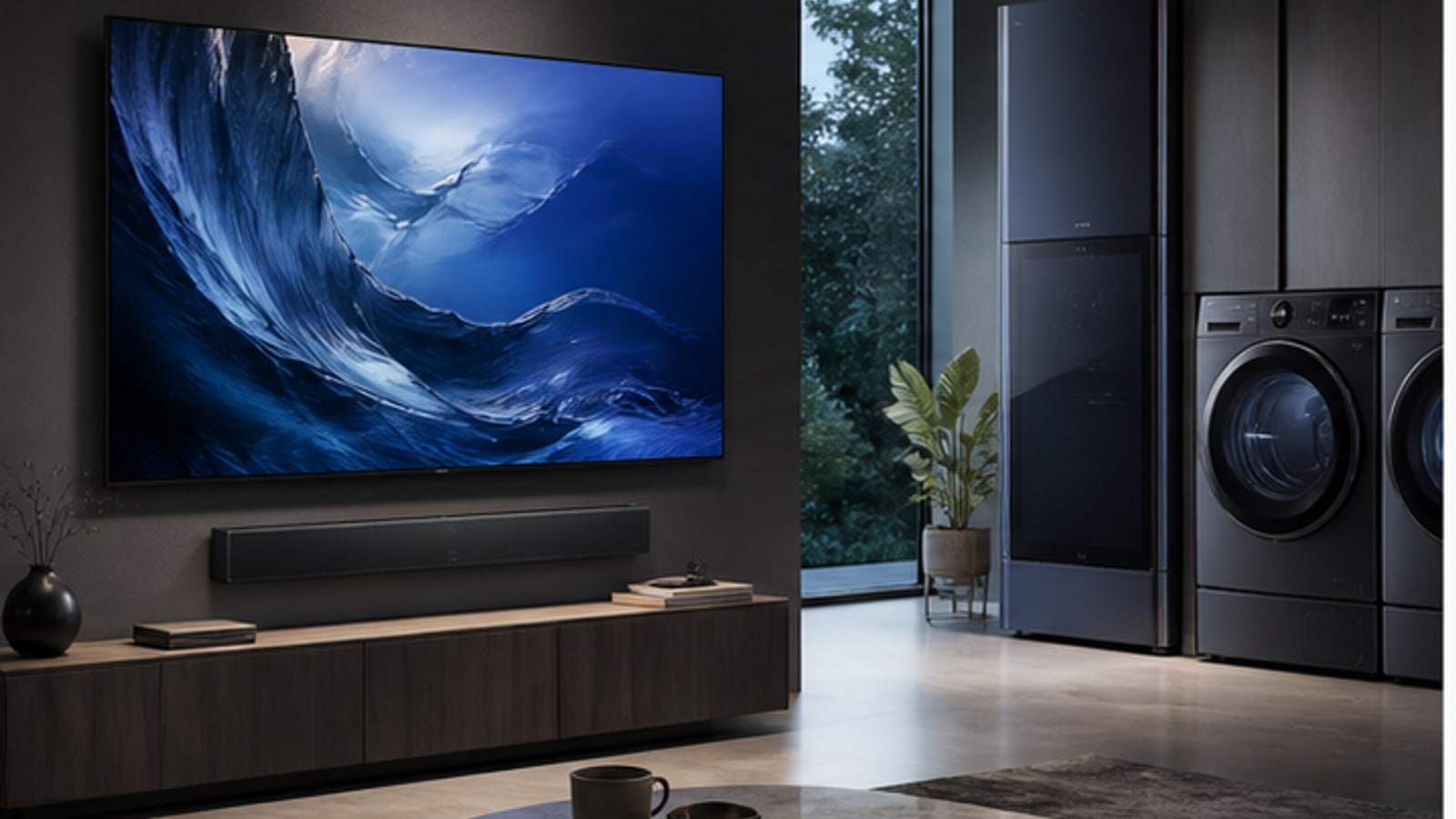
Display quality reaches the room
Televisions and appliances connect Samsung engineering to large everyday surfaces in the home.
Product and service system
The wider Samsung group traces its corporate origin to 1938; Samsung Electronics begins in 1969.
TVs, displays, appliances, and consumer electronics make the brand visible in the home.
Memory, chips, sensors, and foundry capability make Samsung more than a front-facing device brand.
Galaxy phones, foldables, tablets, wearables, and PCs turn Samsung into a daily-device family.
Home appliances, TVs, monitors, and connected-living surfaces make the brand part of rooms and routines.
Samsung delays Galaxy Fold after early review-unit issues, then names concrete design changes before release.
Samsung's FY2025 results release names AI demand in chips and AI-driven product offerings across devices.
Turning points.
Turning points only: family breadth, chip/display proof, foldable quality response, appliance/TV visibility, and AI-device pressure.
Samsung made phones, TVs, displays, appliances, chips, PCs, and connected devices feel like one electronics family.
Semiconductors, memory, displays, sensors, and manufacturing capacity give the product family a deeper technical base.
The 2019 Galaxy Fold delay turned a fragile first impression into a public test of product governance.
AI features now have to work across chips, phones, TVs, appliances, PCs, and services.
Samsung is adding AI memory and semiconductor capacity commitments to core brand proof, with memory roadmap activity framing long-cycle scale confidence.
Samsung now carries a stronger invisible-infrastructure story: AI memory demand, chip investment, and HBM roadmap pressure are becoming as important to brand proof as phones, TVs, and appliances.
Reuters reported Samsung’s Welcome to Foldables campaign following Apple’s iPhone Duo introduction. Samsung emphasized its earlier entry and foldable hardware experience.
Public reaction.
No invented sentiment count. This card reads public trust through device breadth, quality response, AI proof, software coherence, and whether the family still feels connected.
Samsung earns recognition when chips, displays, phones, TVs, PCs, appliances, and AI features feel technically connected.
The brand weakens when software, product naming, quality, or device behavior makes the family feel less connected than the portfolio suggests.
Full timeline.
Samsung Electronics is established and begins building the electronics business behind the current public brand. Source
Samsung enters large-scale semiconductor production and makes components central to its technology strategy. Source
Samsung introduces the blue oval identity as it accelerates its global electronics positioning. Source
The first Galaxy S launches and gives Samsung a durable flagship family in smartphones. Source
Samsung delays Galaxy Fold after review-unit failures and publishes design changes before release. Source
Galaxy AI launches across flagship devices and expands software-led recognition inside the hardware family. Source
Samsung Electronics reports record annual revenue while AI demand strengthens semiconductor and device priorities. Source
Foldable experience becomes a competitive claim Source
Steal / avoid.
- Make product breadth feel connected before adding more categories.
- Let components, manufacturing, and quality control support the front-facing device story.
- Treat launch delays and quality response as brand proof when they protect category trust.
- Use AI only where it makes the device family easier to use.
- Do not reduce Samsung to one phone, one Fold event, or one TV line.
- Do not stretch a family so wide that buyers cannot see the connection.
- Do not let AI language outrun real device behavior.
- Do not hide quality fixes when the market needs proof that innovation is governed.
Short answer.
Samsung Electronics is a South Korean company founded in 1969. Samsung means three stars in Korean, a meaning reflected in earlier logos. The electronics business extends beyond Galaxy phones to televisions, appliances, displays, memory chips and other components; its national origin does not identify the manufacturing country of every product.
Frequently asked questions
Is Samsung a Korean or Japanese company?
Samsung Electronics is a South Korean company established in 1969. It operates internationally, so the company's origin is a different question from where a particular phone, television or component was manufactured. The Samsung name also has a longer history than the electronics company itself.
What does the name Samsung mean?
Samsung means three stars in Korean. The company's heritage page connects the name to founder Lee Byung-chull and shows how stars appeared in earlier logos. The current wordmark no longer draws those three stars, so the name preserves an idea that the modern logo expresses without literal star symbols.
Does Samsung make more than Galaxy phones?
Yes. Samsung Electronics also makes TVs, appliances, displays, memory chips and other semiconductors, tablets, computers and wearables. Galaxy is one product family within that wider electronics business.
Samsung Electronics Announces Fourth Quarter and FY 2025 Results
Why was the first Samsung Galaxy Fold delayed?
Samsung postponed the original Galaxy Fold launch in April 2019 after issues emerged during early reviews. Its announcement said it would evaluate that feedback and run further internal tests before announcing a new release date.
Samsung Global Newsroom, Samsung to Postpone the Launch of the Galaxy Fold, April 23, 2019
Can Samsung Smart Switch transfer data from an iPhone to a Galaxy?
Yes. Samsung's Smart Switch guide includes transfers from iOS as well as Android devices to a new Galaxy. Available methods include cable, wireless transfer and a computer, depending on the devices and content. Choose the instructions for your old phone and connection method before starting; the transfer does not include every type of data.
Does Smart Switch transfer every app and password?
No. Samsung says some app login details, including banking credentials, may not transfer. When moving from an iPhone, Smart Switch looks for an Android equivalent of an iOS app; an app without an Android version cannot be transferred that way. DRM-protected content is also excluded, so review the transfer summary and sign back into apps where needed.
Need help with your own brand?
Use Private brand work when your name, identity, proof, or message needs a sharper branding decision.
Sources.
Use the education shelf for the concepts behind this brand page.
Private brand workUse this when the decision belongs to your own brand.
All brandsReturn to every brand page.
- Samsung Electronics Announces Fourth Quarter and FY 2025 Results
- Samsung, Company history
- Samsung, About us
- Samsung Global Newsroom, Samsung to Postpone the Launch of the Galaxy Fold, April 23, 2019
- Samsung Global Newsroom, Galaxy Fold Ready for Launch Starting from September, July 25, 2019
- Samsung Newsroom US, Samsung Unfolds the Future with a Whole New Mobile Category, February 20, 2019
- Samsung Mobile Press, Samsung Galaxy Fold Now Available, September 5, 2019
- Wikimedia Commons, Samsung logo wordmark file
- Samsung Electronics investor relations
- Tomshardware, Samsung AI memory profit coverage
- Reuters: Samsung responds to Apple foldables
- Is Samsung a Korean or Japanese company?
- Samsung official reference
