Singapore Airlines · Grow Your Brand · Singapore Premium Airline System · Singapore / Active / listed company
Singapore Airlines
When did Singapore Airlines begin, and what does SilverKris mean? Singapore Airlines began in 1972 after Malaysia-Singapore Airlines split. SilverKris magazine takes its name from the kris, a Malay weapon; KrisFlyer is the airline’s loyalty programme. The related names describe different services.
Positioning, name, and architecture.
Three evidence checks before the page talks about scale, color, or public reaction.
A Singapore hub airline with premium cabin/service reputation, disciplined route operations, KrisFlyer loyalty, Scoot group breadth, and public-company reporting.
Singapore Airlines is strongest when service reputation is tied to aircraft, cabin, loyalty, route, and group architecture proof.
The name directly ties the airline to Singapore as national hub and service cue.
A great way to fly
full-service airline group with loyalty, low-cost, cargo, engineering, and investment lanes
Singapore Airlines Limited is listed in Singapore and controlled through Temasek-linked shareholdings. Premium airline, Scoot, loyalty, engineering, cargo, and the Air India associate remain distinct lanes.
full-service cabin and route proof
premium airline lane: long-haul premium flying source
group breadth and leisure/value proof
low-cost lane: low-cost regional and medium-haul flying source
frequent-flyer relationship proof
loyalty lane: miles and status ecosystem source
maintenance and aviation infrastructure proof
engineering lane: aircraft engineering services source
separates freight capacity and logistics from the passenger journey
cargo service lane: air cargo network source
shows group investment reach without presenting Air India as an SIA subbrand
associate investment lane: Air India associate stake source
Naming and tagline progression
Singapore Airlines
A great way to fly
Market and scale snapshot.
Singapore Airlines reports in Singapore dollars. FY2025/26 Group revenue and net profit show the operating picture; the dated market-value estimate uses the official shareholding disclosure. USD equivalents use the stated 0.7729 USD-per-SGD rate.
Official FY2025/26 SGD 20.522 billion revenue converted at the 0.7729 rate observed 14 Jul 2026.
Official FY2025/26 SGD 1.184 billion Group net profit converted using the same captured rate.
3,150,884,285 shares excluding treasury stock multiplied by the SGD 7.68 closing price at 30 Jun 2026, then converted at the stated SGD-to-USD rate.
Singapore Airlines Limited ordinary shares; ISIN SG1V61937297.
Color system.
Blue and gold should signal premium aviation, not turn into decorative luxury wash.
How the palette behaves
Blue anchors aviation trust.
Gold signals premium service.
White keeps dense routes and group proof legible.
The palette needs cabin and aircraft proof to avoid generic luxury.
Recognition assets.
Memory pieces the brand can use before someone finishes a sentence.
Premium reputation works when cabin and crew proof are visible.
Singapore and Changi make the airline system easier to understand.
Scoot, loyalty, engineering, and investments must not blur the premium airline.
Scores.
Use these scores to compare recognition, trust, proof, pressure, and risk.
Singapore Airlines has strong airline recognition through service reputation, aircraft, uniforms, and Changi context.
The brand is backed by public reporting, fleet proof, and Singapore hub discipline.
Singapore Airlines, Scoot, KrisFlyer, PPS Club, cargo, engineering, and Air India stakes need lanes.
The name and gold-blue identity are recognizable when aircraft and cabin proof stay visible.
Aircraft, crew service, lounges, long-haul routes, and Changi hub proof give strong visual evidence.
The group works when premium airline, low-cost, loyalty, engineering, and investment lanes are separated.
Singapore Airlines Limited, SIA Group, Scoot, KrisFlyer, and Air India ownership must not blur.
Luxury service copy can overfloat unless it is tied to route, cabin, operational, and finance proof.
How the logo changed.
The bird symbol is the continuity: an authenticated 1972 launch booklet shows the original expression, followed by the current blue-gold masterbrand lockup.
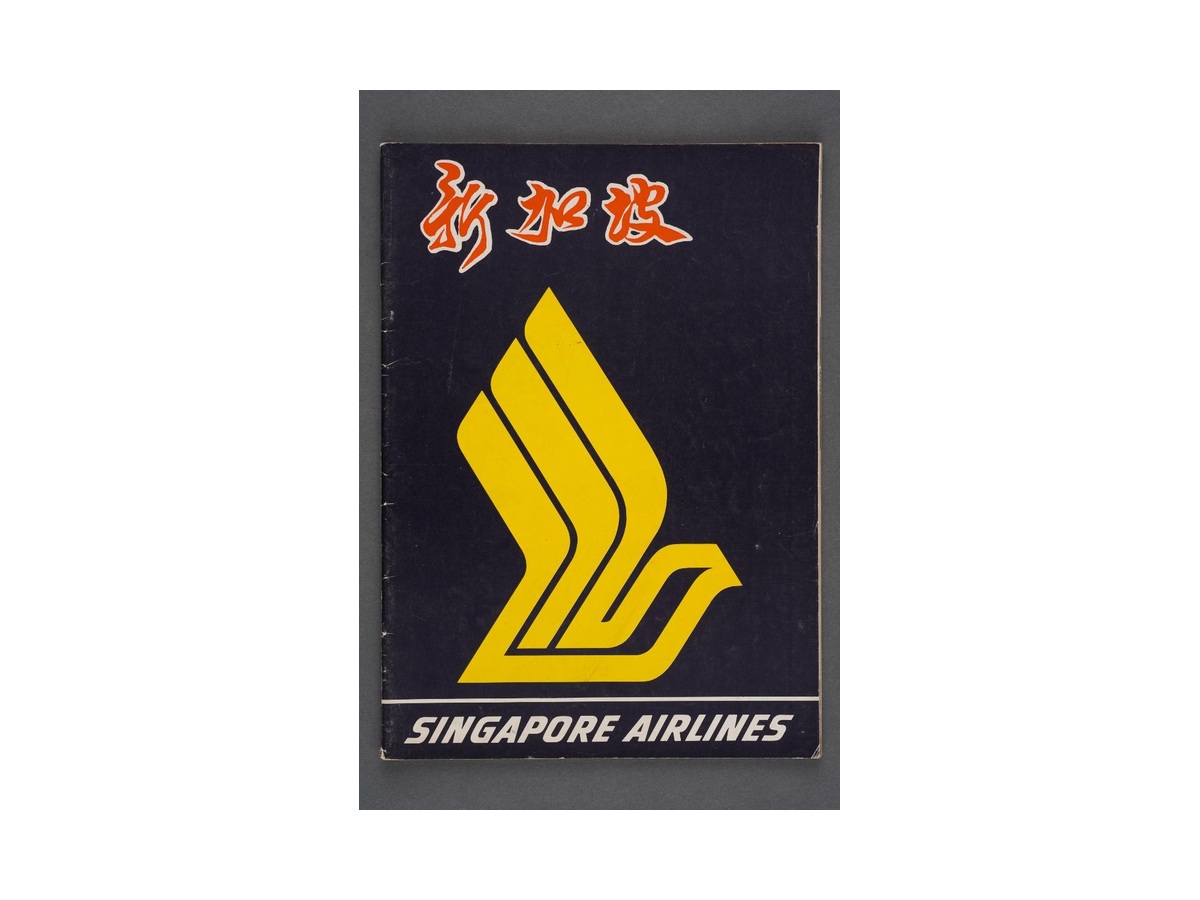
The National Heritage Board dates this booklet to October 1972 and identifies the bird symbol on its cover. source
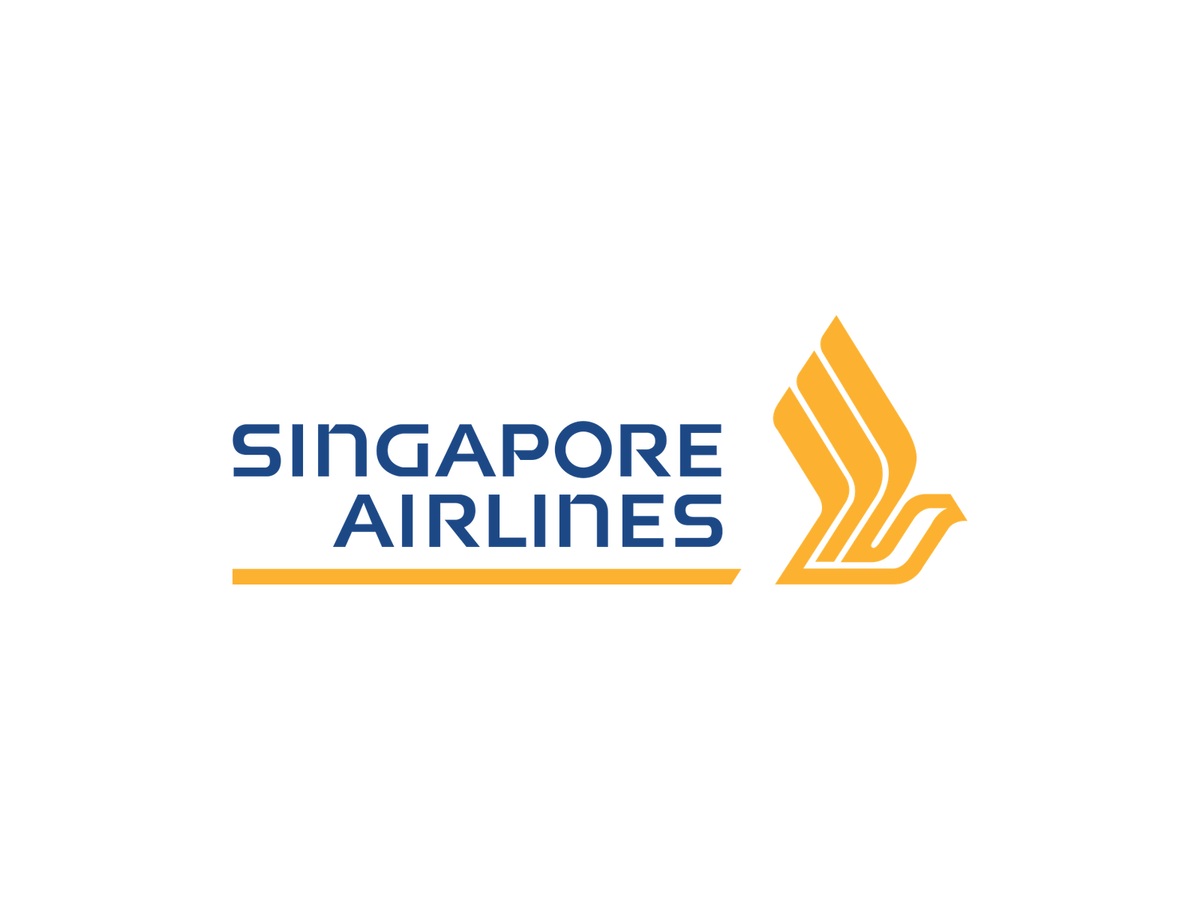
The current lockup keeps the gold bird symbol and Singapore Airlines wordmark together in a screen-ready system.
Product and service lineage.
The offer grows by extending the journey from cabin and lounge service into loyalty, network access, and a distinct low-cost lane.
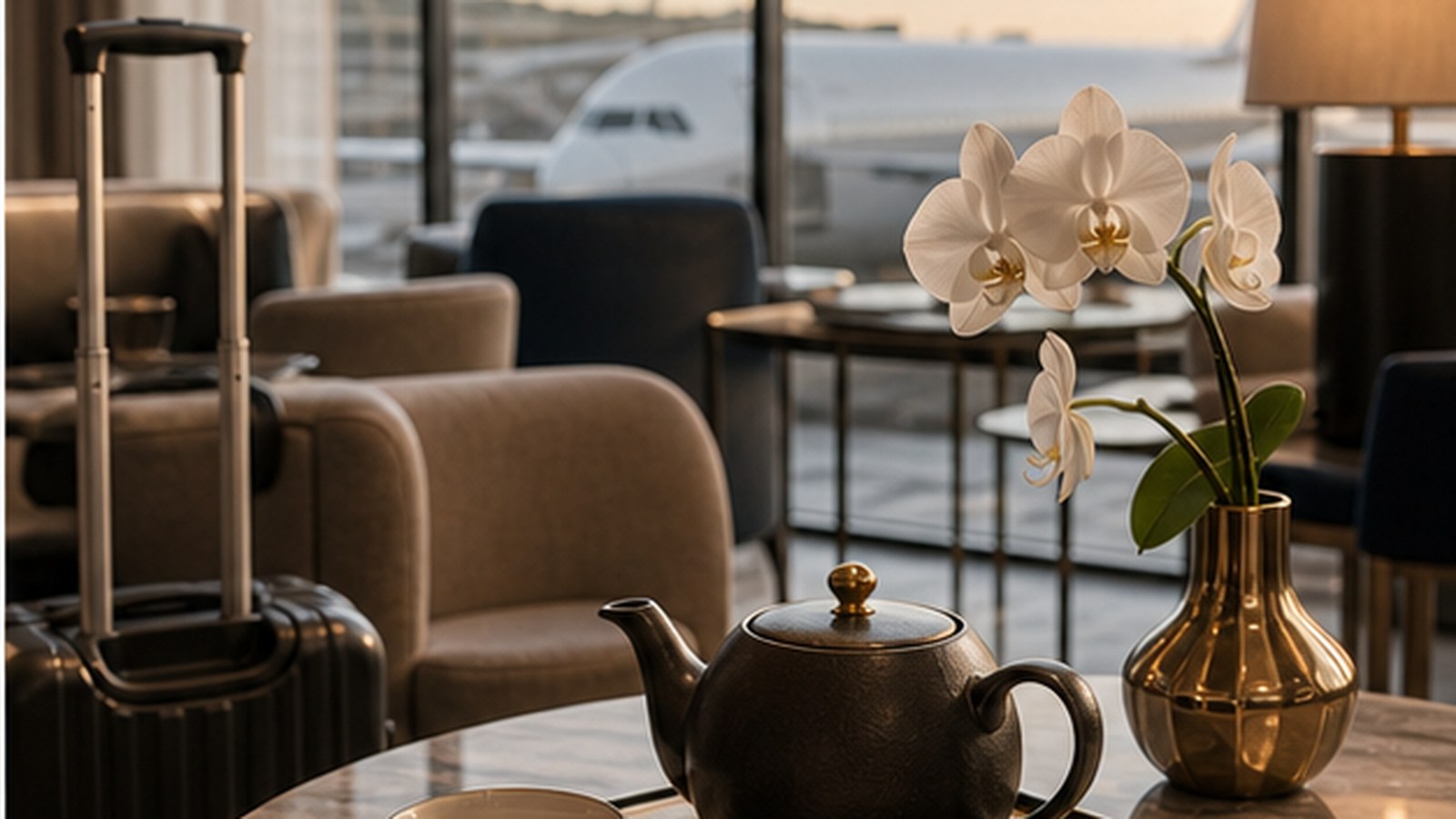
Lounge hospitality gives the promise a surface
Lounge hospitality extends the cabin promise into the time before departure.
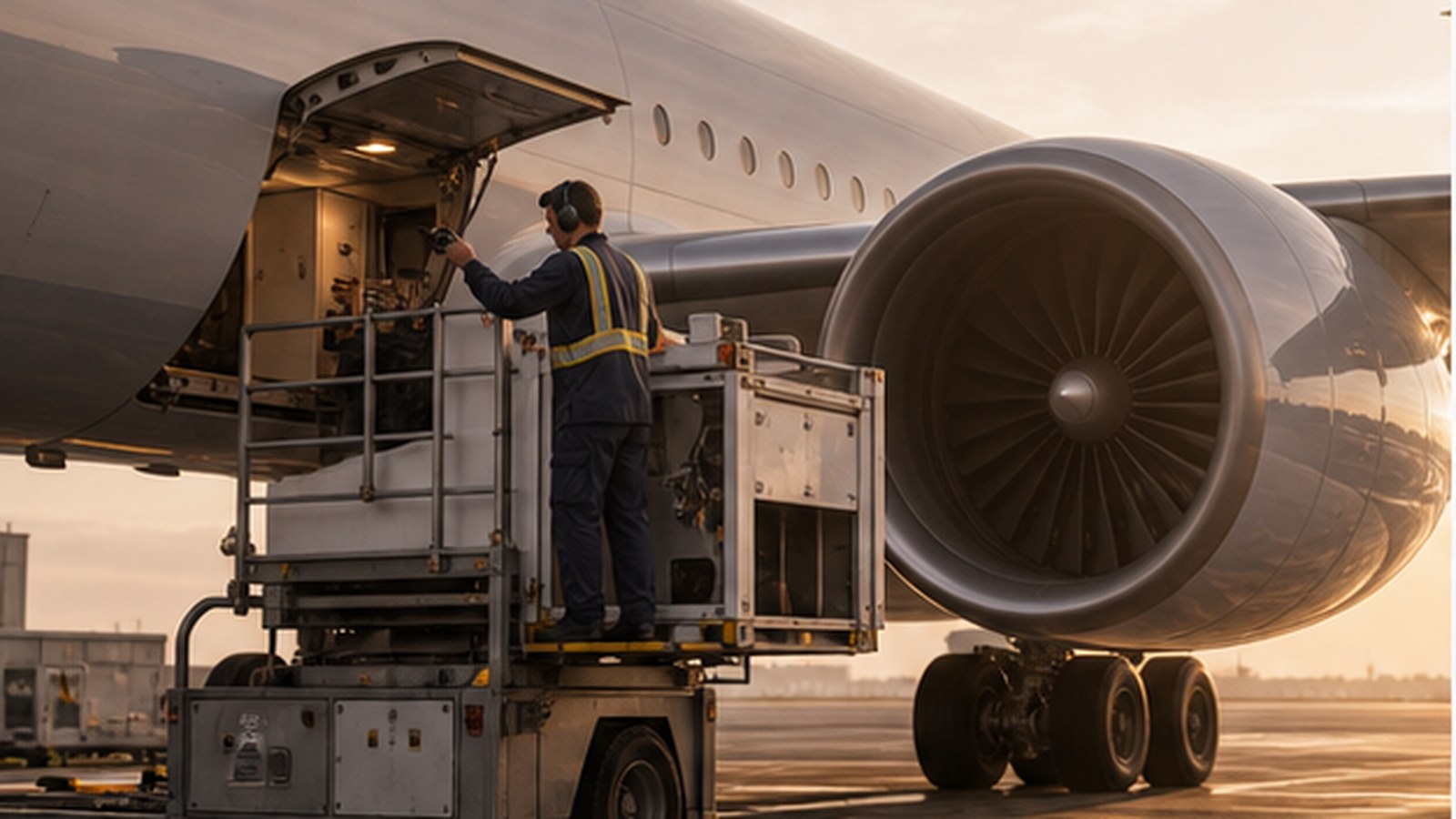
Operations proof keeps aviation real
Ground preparation makes reliability and fleet care visible behind the premium service claim.
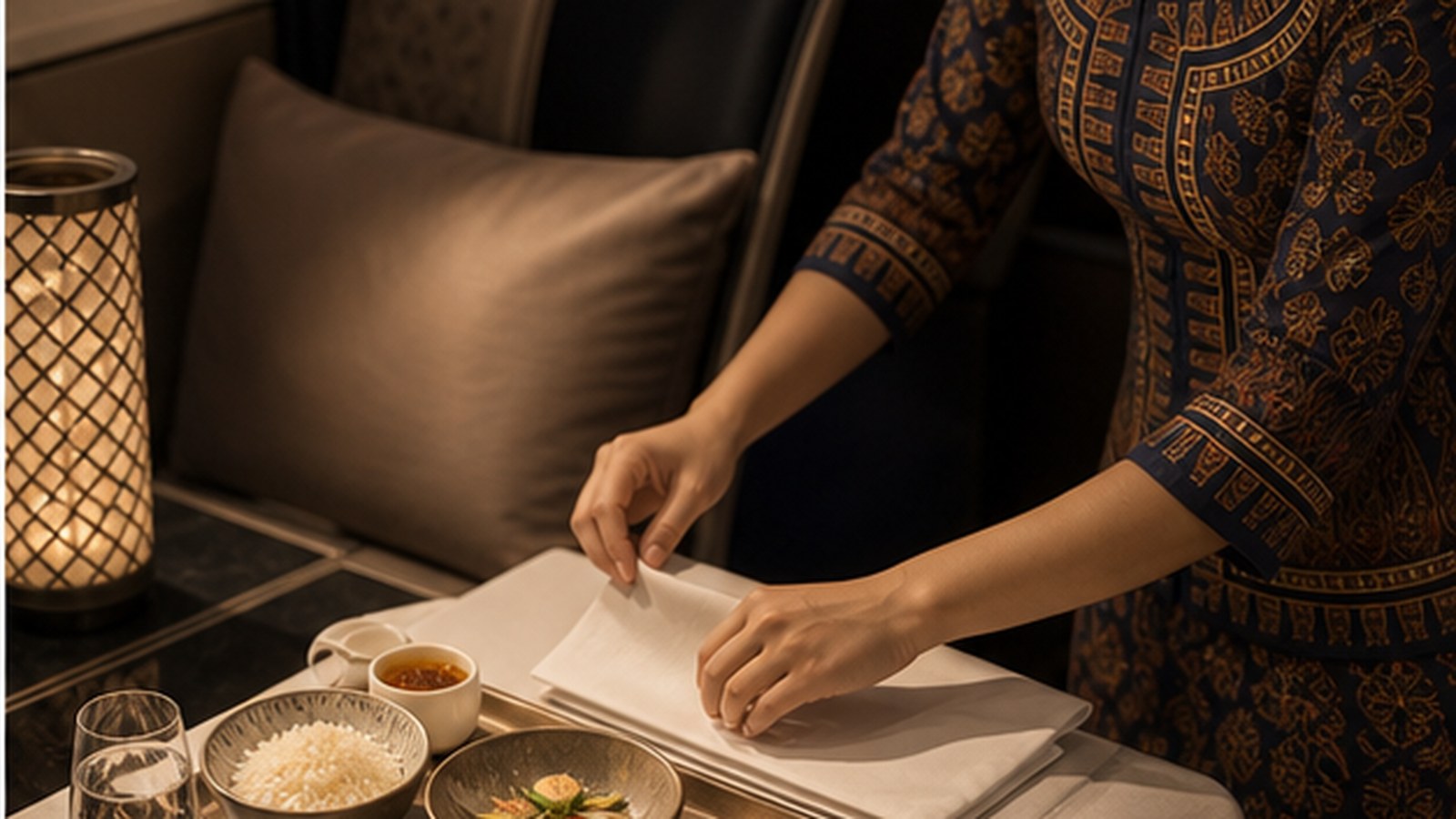
Service preparation makes quality visible
Cabin preparation shows that service quality is built through repeatable operating details.
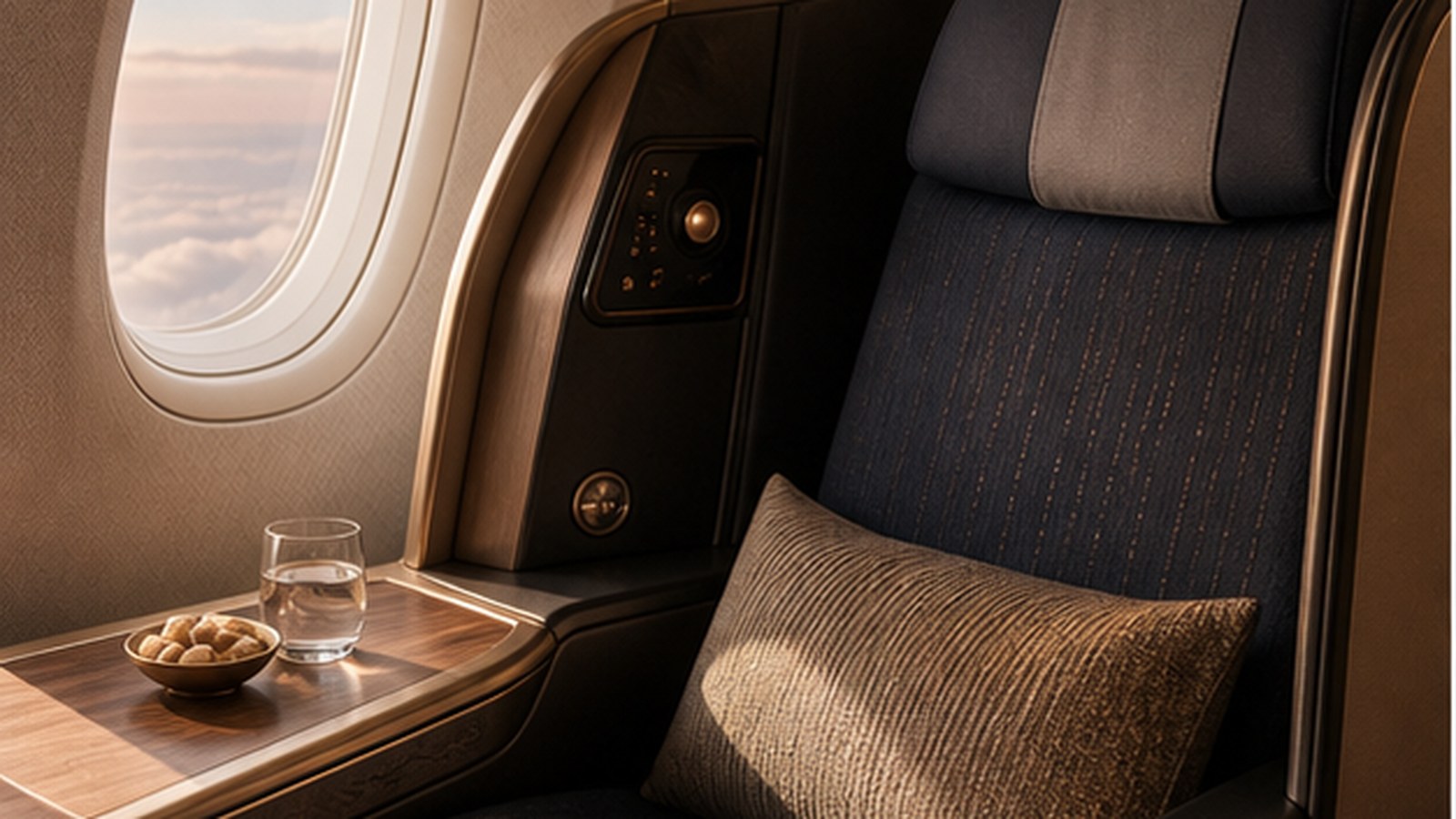
Cabin proof carries the premium claim
Seat materials, privacy and long-haul comfort make the service promise inspectable without relying on luxury adjectives.
Product and service system
The full-service journey joins ground hospitality, cabin design, crew preparation, and long-haul comfort.
Loyalty turns repeated travel into recognition, status, and network access.
Aircraft, routes, and alliance access make the premium promise useful across markets.
A separate low-cost airline gives the group a value lane without asking the premium brand to cover every trip.
Turning points.
Events that changed what buyers could see, buy, repeat, or trust.
The airline turns Singapore into a premium aviation cue.
Network proof grows beyond local hub memory.
Fleet proof makes service claims visible.
The low-cost lane should add breadth without diluting premium SIA.
Public reaction.
These editorial tests identify where a premium reputation still needs visible operating proof.
A premium position has to remain visible across lounge, cabin, crew, route, and disruption moments.
Cabins, routes, punctuality, and hub proof have to support the promise.
Scoot, cargo, engineering, loyalty, and the Air India associate need labels so the airline remains clear.
Full timeline.
Malayan Airways origin begins the lineage. Source
Singapore Airlines begins under its own name. Source
Singapore Airlines joins Star Alliance. Source
Singapore Airlines launches A380 service. Source
Scoot begins as the group low-cost lane. Source
Singapore Airlines reports FY2025/26 revenue, net profit, and operating profit. Source
Steal / avoid.
- Make service reputation operational.
- Let the hub support the brand.
- Separate premium and low-cost lanes.
- Do not make premium copy generic.
- Do not hide Scoot or loyalty architecture.
- Do not rely on awards without route and cabin proof.
Short answer.
Singapore Airlines became a separate airline in 1972 when Malaysia-Singapore Airlines split into two carriers. The shared earlier history goes back to Malayan Airways in 1947. KrisFlyer is Singapore Airlines' frequent-flyer programme; SilverKris is its magazine, whose name refers to the kris, a Malay weapon.
Frequently asked questions
When did Singapore Airlines become separate from Malaysia Airlines?
The two airlines emerged separately in 1972 when Malaysia-Singapore Airlines was divided into Singapore Airlines and Malaysian Airline System. Their shared earlier history goes back to Malayan Airways in 1947. The present airlines are not two interchangeable names for one carrier.
What does SilverKris mean at Singapore Airlines?
SilverKris is the name of Singapore Airlines' magazine. Its own account explains the name through the kris, a Malay weapon used in the fourteenth century. KrisFlyer is the airline's frequent-flyer programme, a separate use of the related name.
Is KrisFlyer the same as SilverKris?
No. KrisFlyer is Singapore Airlines' frequent-flyer programme. SilverKris is its magazine. The related names belong to different parts of the airline experience.
What is the difference between KrisFlyer miles and Elite miles?
KrisFlyer miles are earned through eligible flight and non-flight activity and can be redeemed for rewards such as award flights and upgrades. Elite miles count towards Elite Silver and Elite Gold status; they cannot be spent on those rewards. Singapore Airlines earns and tracks the two balances for different purposes.
Do you have to live in Singapore to join KrisFlyer?
No. Singapore Airlines describes KrisFlyer as a global programme. Membership is free, and anyone aged two or older can join. Accounts belong to individuals, with one account per person; living outside Singapore does not prevent enrolment.
Need help with your own brand?
Use Private brand work when your name, identity, proof, or message needs a sharper branding decision.
Sources.
Use the education shelf for the concepts behind this brand page.
Private brand workUse this when the decision belongs to your own brand.
All brandsReturn to every brand page.
- Singapore Airlines annual reports
- Singapore Airlines FY2025-26 annual report
- Singapore Airlines stock and shareholding information
- Singapore Airlines about
- Singapore Airlines flying with us
- KrisFlyer and PPS Club
- Scoot
- SIA Engineering
- Singapore Airlines: When did Singapore Airlines become separate from Malaysia Airlines?
- Singapore Airlines: What does SilverKris mean at Singapore Airlines?
- Singapore Airlines official supporting source