Sonos · Grow Your Brand · Home audio ecosystem · United States / Active
Sonos
Which Sonos speakers work with Bluetooth and the current app? Compatibility depends on the model. Era 100 and Move 2 support Bluetooth and the current Sonos app; Play:5 Gen 1 requires S1 Controller. Check the generation before adding a speaker to an existing system.
Positioning, name, and architecture.
Three evidence checks before the page talks about scale, color, or public reaction.
Sonos turns rooms, speakers, app trust, and product families into one listening system.
A brand page on Sonos as an everyday premium audio system: speakers, soundbars, Sub, portable speakers, headphones, architectural audio, components, app setup, room naming, and the trust pressure that appears when software breaks hardware confidence.
Sonos operates as the parent/company mark for a wider system.
Brilliant Sound
branded house / product-family system
Sonos is one masterbrand with named product families spanning room speakers, portable listening, home theater, bass, headphones, installed audio, components, and professional systems.
Era, Five, Move, Roam, and room speakers carry the core music memory.
Portfolio family: Speakers source
Arc, Beam, Ray, Sub, Sub Mini, and rear speakers make the TV room a product system.
Portfolio family: Home theater source
Sonos Ace stretches the brand from rooms into personal listening.
Portfolio family: Headphones source
Amp, Port, and installed speakers make Sonos visible to builders, integrators, and serious homes.
Portfolio family: Architectural and components source
The software layer is a trust surface because it controls hardware people already paid for.
Portfolio family: App and setup source
Commercial audio and partner lines show that Sonos is a sound system, not only a living-room gadget.
Portfolio family: Professional and partnerships source
Naming and tagline progression
Brilliant Sound
Market and scale snapshot.
FY2025 results show the scale of the hardware business and the cost of rebuilding trust after the app disruption.
Sonos FY2025 revenue.
GAAP net loss attributable to Sonos.
Sonos market capitalization.
Publicly listed independent audio company.
Color system.
Sonos uses black, white, and cool gray to keep speakers, soundbars, headphones, room names, and app behavior in one restrained home-audio system.
How the palette behaves
Black anchors the Sonos wordmark, soundbar silhouette, and premium home-audio frame.
White separates product forms and room placement without adding decorative color.
Cool gray lets the app, setup, room naming, and add-on ecosystem appear as proof beside the hardware.
Recognition assets.
Memory pieces the brand can use before someone finishes a sentence.
The easiest cue is a clean bar below the screen.
The brand becomes useful when people can send sound to Kitchen, Living Room, Bedroom, and Patio.
Black and white hardware lets rooms carry the emotion without turning the speaker into decoration.
The system promise depends on software behaving like part of the product.
Scores.
Use these scores to compare recognition, trust, proof, pressure, and risk.
Sonos is strongly known in premium home audio.
The brand only works when speakers, rooms, app, and add-ons are explained together.
A bad app experience can make good hardware feel risky.
The hardware is restrained, so context and ecosystem proof matter.
Sonos only reads correctly when speakers, soundbars, Sub, portables, headphones, architectural audio, Amp, app setup, rooms, and trust repair stay visible.
Sonos needs parent, product, service, and history lanes labeled cleanly so search systems do not flatten the brand into one vague entity.
Sonos earns trust when products, software, support, and company performance tell one consistent story.
Sonos turns rooms, speakers, app trust, and product families into one listening system.
How the logo changed.
The identity moved from an enclosed early mark to the flexible ambigram used across products and brand layouts.


Product and service lineage.
Sonos only reads correctly when speakers, soundbars, Sub, portables, headphones, architectural audio, Amp, app setup, rooms, and trust repair stay visible.

Whole-home audio system
Five, Sub, soundbars, portables, architectural speakers, and components make Sonos more than one speaker.
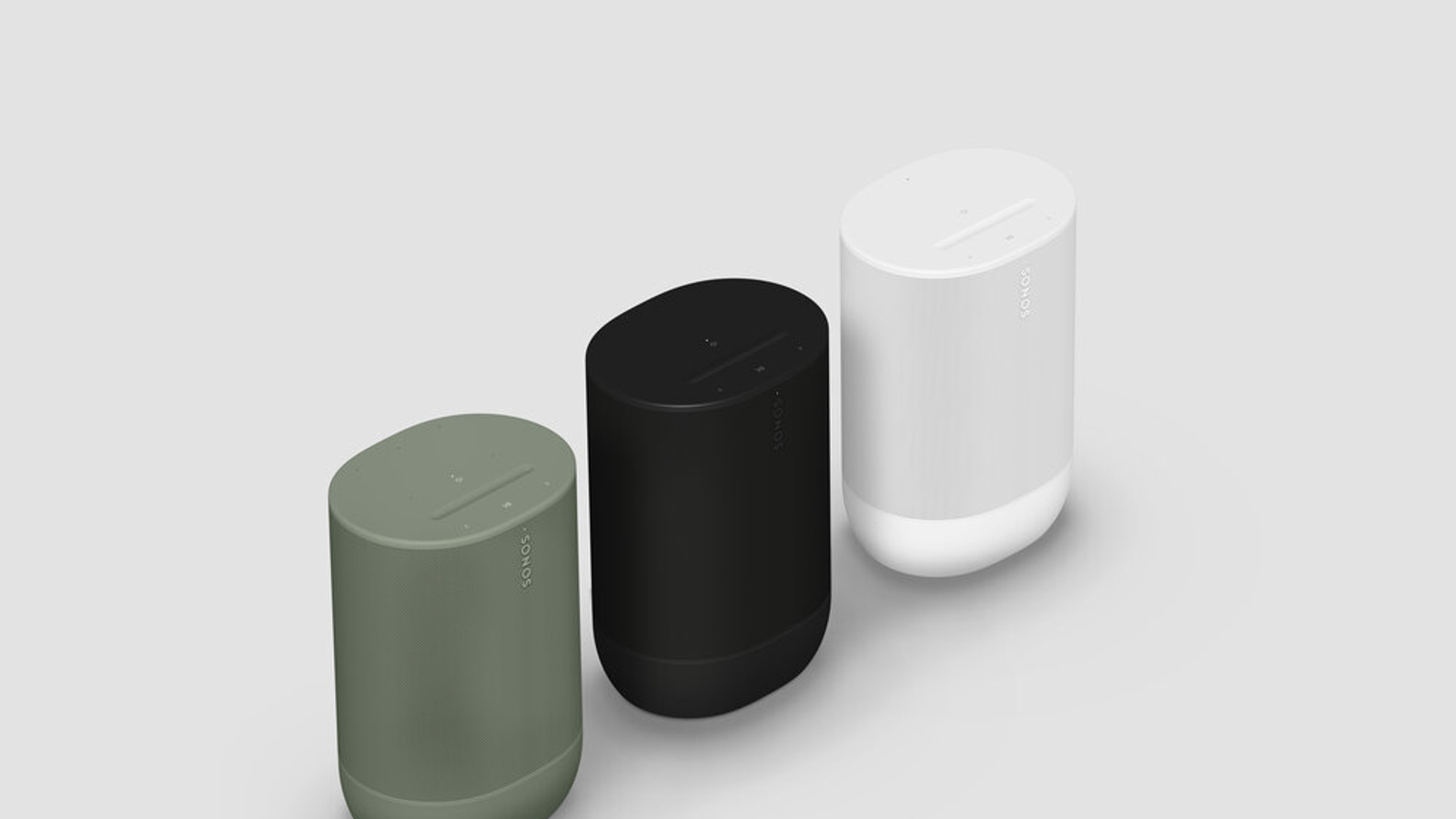
Portable family breadth
Portable speakers extend the room system into patios, travel, and shared spaces without becoming a generic gadget.
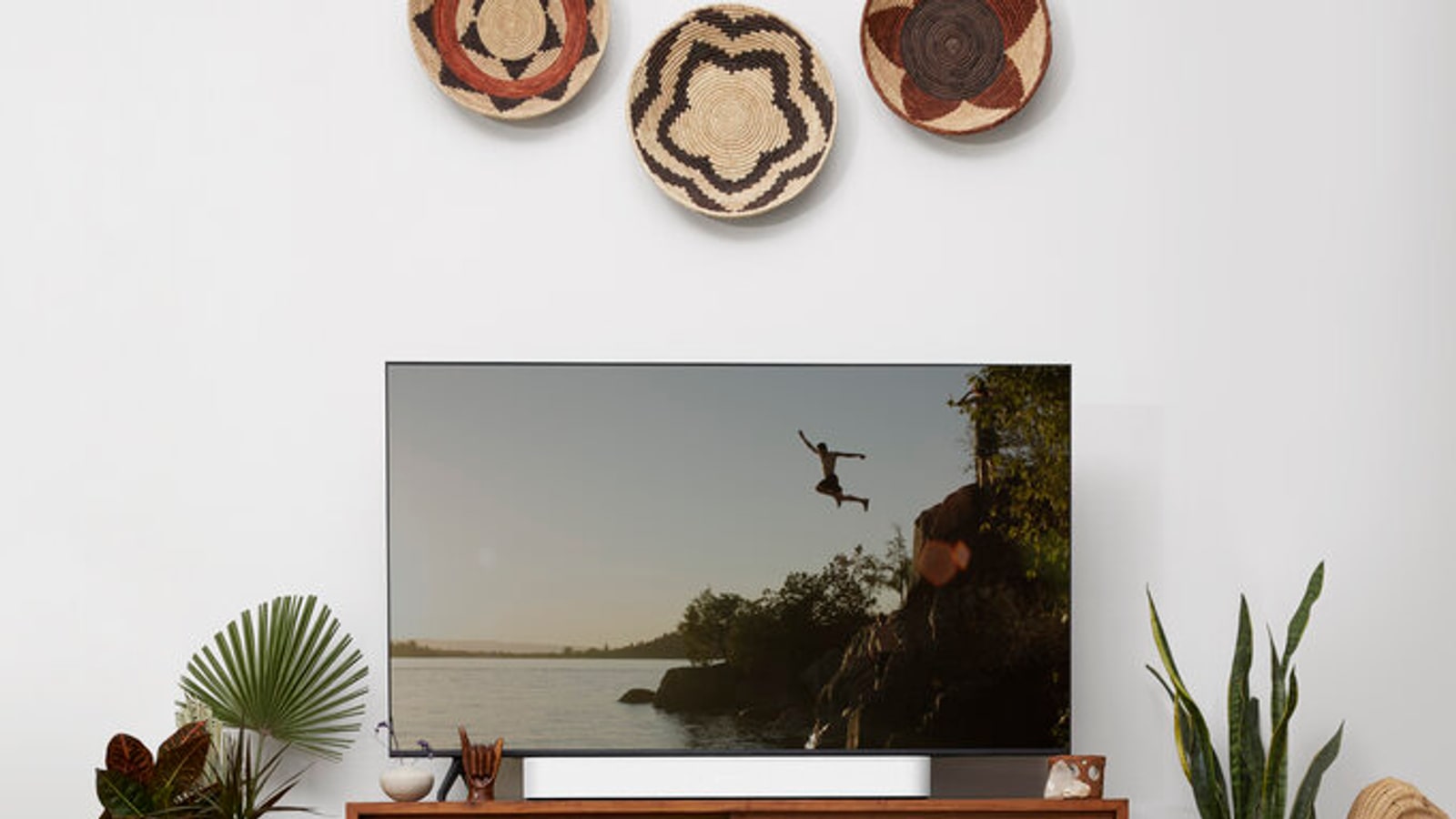
Home theater bridge
The TV surface makes Sonos easier to understand for buyers who are not audio experts.
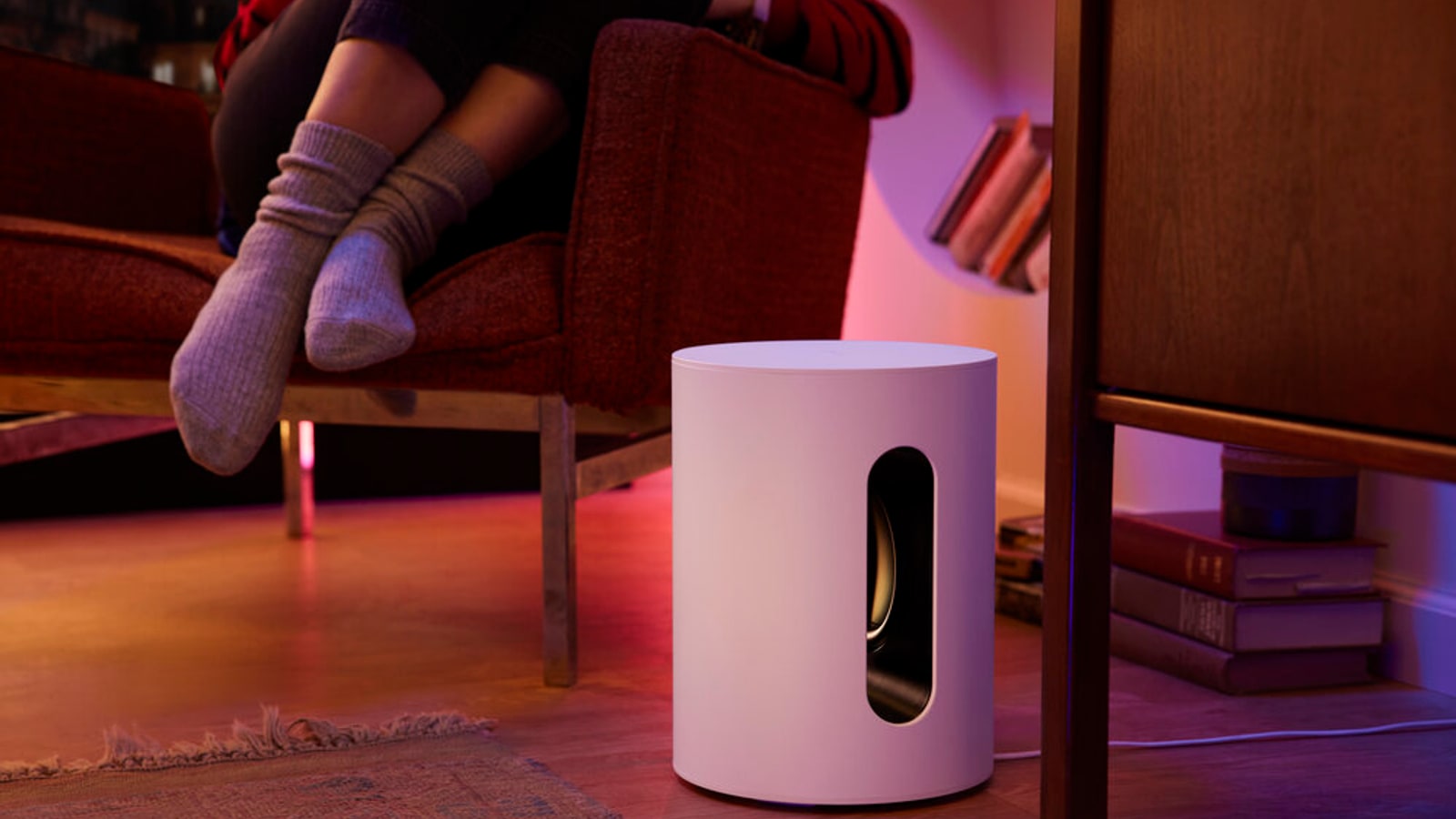
Add-on trust
Sub, rear speakers, Amp, Port, and sets only work when buyers trust the ecosystem to keep working.
Product and service system
Era, Five, Move, Roam, and room speakers carry the core music memory.
Arc, Beam, Ray, Sub, Sub Mini, and rear speakers make the TV room a product system.
Sonos Ace stretches the brand from rooms into personal listening.
Amp, Port, and installed speakers make Sonos visible to builders, integrators, and serious homes.
The software layer is a trust surface because it controls hardware people already paid for.
Commercial audio and partner lines show that Sonos is a sound system, not only a living-room gadget.
Turning points.
Events that changed what buyers could see, buy, repeat, or trust.
Trueplay brings room tuning into the product promise.
Sonos becomes a public company.
Arc turns home theater into a stronger public Sonos cue.
Public reaction.
The useful reaction is about trust and pressure, not sentiment counts.
Buyers understand Sonos when the room, app, speaker, soundbar, and add-ons behave like one product.
The brand loses trust when setup or app changes make existing hardware feel less reliable.
Full timeline.
Sonos is founded around the idea of wireless multi-room home music. Source
The first shipped Sonos product, the ZP100, makes the system physical. Source
The PLAY line starts turning the system into simpler speaker memory. Source
Trueplay brings room tuning into the product promise. Source
Sonos becomes a public company. Source
Arc turns home theater into a stronger public Sonos cue. Source
Sonos Pro extends the system into business and commercial listening. Source
Sonos Ace moves the brand into headphones while the app rollout creates trust pressure. Source
Sonos reports FY2025 revenue of about USD 1.44B and names app pressure in results context. Source
Steal / avoid.
- Sell the system job, not the object alone.
- Make setup and naming part of the brand promise.
- Treat software trust as physical product trust when the product depends on the app.
- Do not reduce Sonos to a generic speaker photo.
- Do not claim app trust is repaired without source-backed proof.
- Do not imply partner lines are owned sub-brands.
Short answer.
Sonos makes connected speakers, soundbars and portable audio products. Bluetooth and app compatibility vary by model: Era 100 supports Bluetooth and the current Sonos app, while older Play:5 Gen 1 speakers require S1 Controller. The product family and software generation matter when expanding a system.
Frequently asked questions
Which Sonos speakers can use Bluetooth?
Bluetooth support depends on the model. Sonos lists Era 100, Era 300, Move, Move 2 and Roam among its Bluetooth-capable products. Supported models such as Era 100 and Move 2 can also share Bluetooth audio with other Sonos rooms while connected to Wi-Fi. Check the exact product rather than assuming every Sonos speaker has Bluetooth.
Will older Sonos speakers work with the current Sonos app?
It depends on the model and generation. Play:1 and Play:3 can use either the current Sonos app or S1 Controller; Play:5 Gen 1 requires S1, while Play:5 Gen 2 supports both. Era 100, Era 300 and Move 2 require the current app. Sonos provides a model-by-model compatibility list and identifies product generations in your account.
Can Sonos Play:5 Gen 1 use the current Sonos app?
No. Sonos lists Play:5 Gen 1 as an S1 Controller product. Play:5 Gen 2 supports both app generations. The generation matters, even when the speakers share the Play:5 name.
Can Sonos S1 and S2 speakers play together in one group?
No. Sonos says rooms in an S1 system cannot be grouped with rooms in an S2 system. You can keep both systems in the same home and install both apps on one device, but each app controls its own system. A split system preserves access to older speakers without making them part of an S2 group.
Why does Spotify stop on one Sonos system when I start the other?
A streaming service that allows only one stream per account can interrupt playback when the same account starts on a separate Sonos system. Sonos names Spotify as an example. Separate eligible accounts on the two systems can play different content simultaneously; check the service's account and plan rules before assuming a split Sonos setup adds another stream.
Need help with your own brand?
Use Private brand work when your name, identity, proof, or message needs a sharper branding decision.
Sources.
Use the education shelf for the concepts behind this brand page.
Private brand workIf your hardware brand depends on setup, software, room logic, and add-on products after the sale, Private Brand Work can make the whole ownership system visible.
All brandsReturn to every brand page.
- https://www.sonos.com/en-us/our-company
- https://www.sonos.com/en-us/blog/how-it-started
- https://www.sec.gov/Archives/edgar/data/1314727/000131472725000090/sono-20250927.htm
- https://newsroom.sonos.com/assets/
- https://www.sonos.com/en-us/shop/home-theater
- Sonos: Which Sonos speakers can use Bluetooth?
- Sonos: Will older Sonos speakers work with the current Sonos app?
- Sonos official supporting source