Visa · Grow Your Brand · Payment Acceptance Trust System · United States / Active / public company
Visa
Visa turns payment acceptance into a portable trust cue. Visa makes a complex issuer-and-merchant network feel simple through portable acceptance, transaction reliability, and repeated trust cues.
Positioning, name, and architecture.
Three evidence checks before the page talks about scale, color, or public reaction.
A small acceptance cue that makes a large payment network feel usable at the point of decision.
Visa positions payment trust as portable acceptance: the buyer sees the cue and expects the transaction to work.
Visa replaced BankAmericard as a short, travel-friendly global name that could work across countries and issuers.
Everywhere you want to be is a historic Visa line; current public language varies by campaign and market.
network brand with issuer and merchant ecosystem
Visa is a network brand: issuers, acquirers, merchants, processors, wallets, and platforms all help perform the promise.
Credit, debit, prepaid, and commercial credentials issued by financial institutions.
payment credential family: Visa credit and debit source
Authorization, clearing, and settlement infrastructure connecting the ecosystem.
network infrastructure: VisaNet source
Push-payment capability for eligible cards, accounts, and wallets.
money-movement service: Visa Direct source
Replaces sensitive account details with network tokens across digital payment surfaces.
security and tokenization service: Visa Token Service source
Gateway, fraud, and payment-management services for merchants and platforms.
merchant acceptance capability: Visa Acceptance Solutions source
Naming and tagline progression
BankAmericard launches
Visa name adopted for global acceptance
Everywhere you want to be
Market and scale snapshot.
FY2025 revenue, earnings, disclosed public-float value, and listing context show the scale behind the acceptance mark.
Visa FY2025 consolidated net revenue.
Visa FY2025 consolidated net income.
Public float reported in the FY2025 Form 10-K as of 31 Mar 2025; not a live market-cap estimate.
Visa Inc. is the listed owner.
Color system.
Visa blue and gold work because they sit on acceptance surfaces where the buyer wants confidence before payment.
How the palette behaves
Blue signals institutional trust when the network actually authorizes and protects transactions.
Gold adds visibility and value without taking over the checkout.
White and dark neutrals keep the mark clear at small payment surfaces.
Recognition assets.
Memory pieces the brand can use before someone finishes a sentence.
The cue matters before the transaction because it lowers uncertainty.
The brand works across merchants, issuers, countries, devices, and travel moments.
Trust is tested in approval, fraud, dispute, refund, and outage moments.
Scores.
Use these scores to compare recognition, trust, proof, pressure, and risk.
The wordmark and blue-gold cue are strong at checkout distance.
The mark tells the buyer the payment method should work here.
Trust is carried by issuers, merchants, terminals, wallets, and risk systems.
Fraud, disputes, outages, and fees keep pressure on the promise.
Visa Inc., ticker V, and payments network category are clean entity signals.
The cue travels across cards, terminals, wallets, ecommerce, and travel.
Trust strengthens when credential, merchant, network, and ownership evidence align.
Visa is strongest when its network role remains distinct from issuers, wallets, and merchant processors.
How the logo changed.
Dated marks show which recognition cues changed, which survived, and what buyers had to relearn.
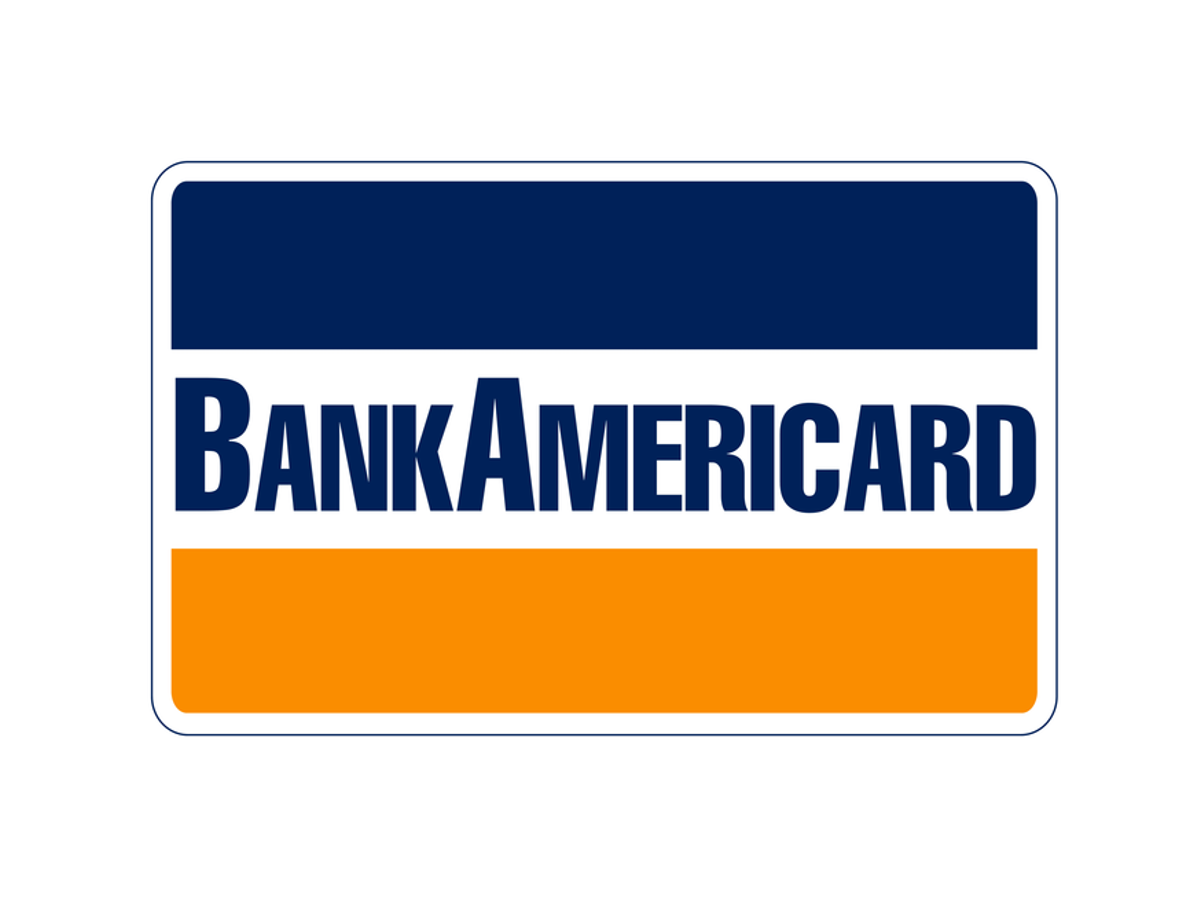
BankAmericard started as a bank-backed acceptance cue, so the stripe system had to make trust visible before the Visa name existed. source
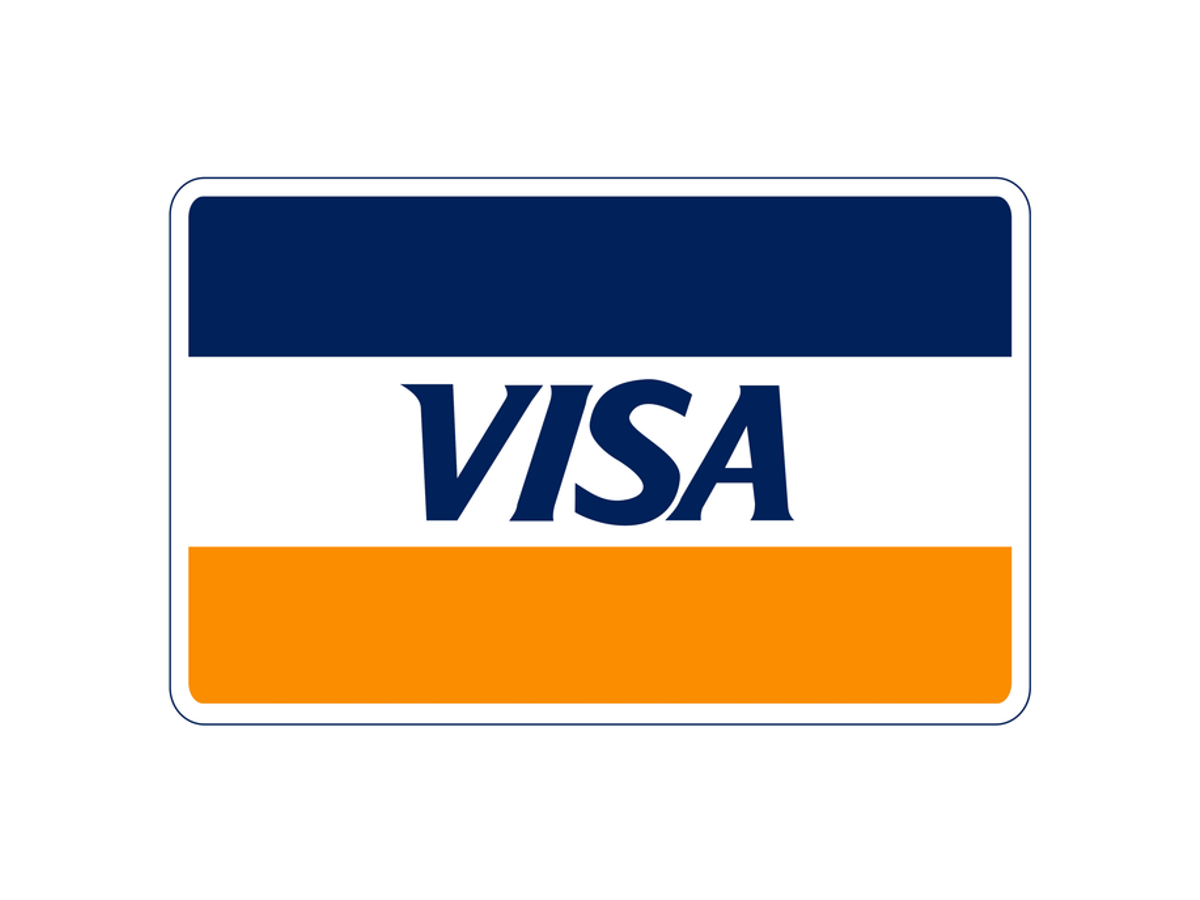
The Visa wordmark took over, but blue and gold kept the old card-frame memory. source
The mark became simpler and more digital, better suited to online checkout and small payment surfaces. source
The wordmark shed the full card frame, letting the name carry acceptance on screens and wallets. source
The current wordmark keeps the name legible across cards, terminals, wallets, and small acceptance surfaces. source
Product and service lineage.
The brand cue becomes useful when it is attached to a visible product, service, or operating surface.

Merchant proof closes the loop
A familiar tap matters only when the terminal, merchant, issuer, and network complete the transaction together.

The network is the invisible product
Fiber, routing, security hardware, and redundant systems carry the acceptance promise after the tap disappears from view.
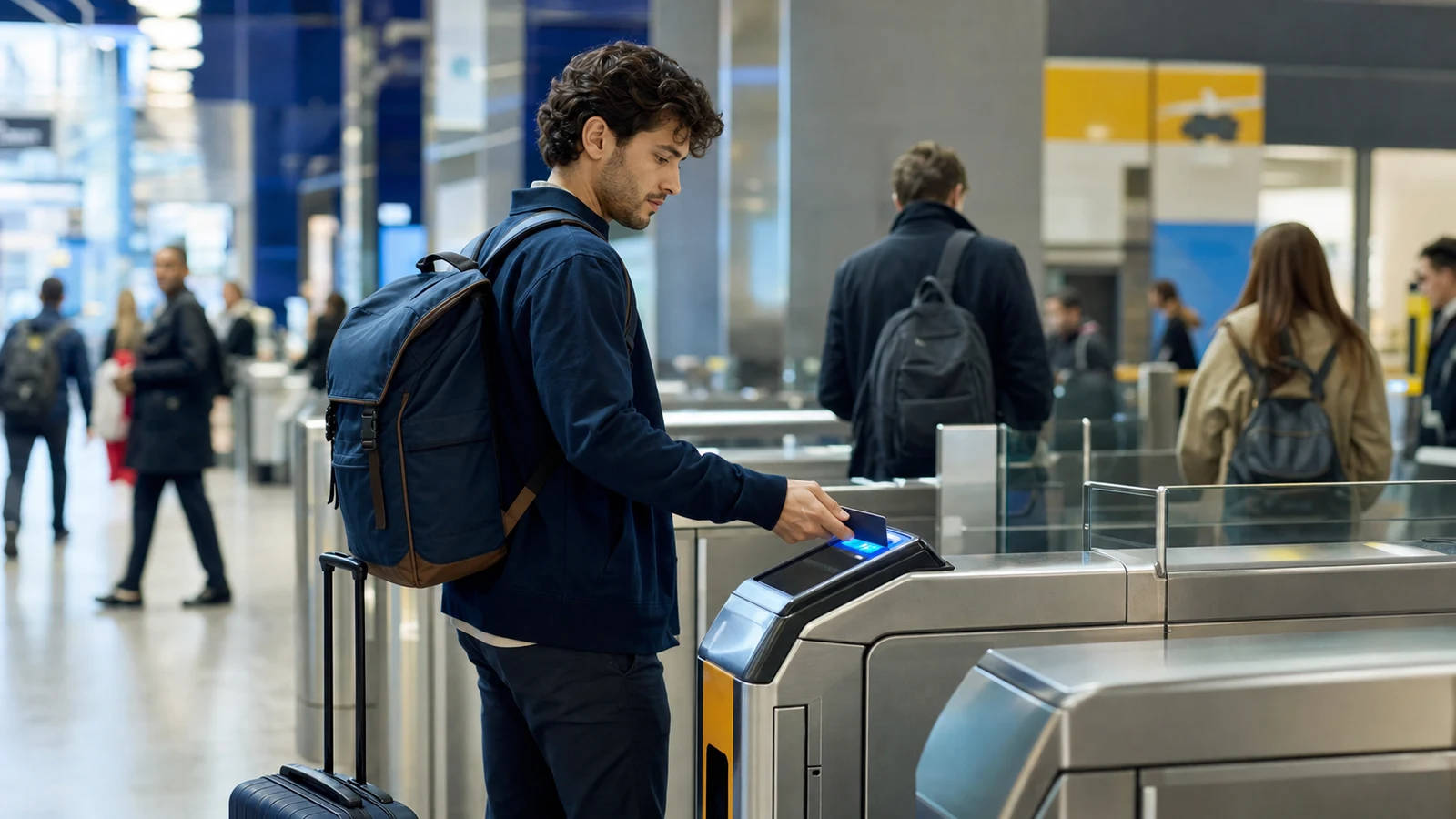
Acceptance travels
Transit makes the network promise immediate: the credential has to work before the traveler can move.

Credentials need controlled production
Chip cards make trust physical through secure manufacture, personalization, quality control, and issuer delivery.
Product and service system
BankAmericard launches in the United States.
Visa name is adopted to support a global acceptance system.
The mark appears on cards, merchant doors, terminals, and ecommerce surfaces.
Digital wallets and token services move acceptance cues into phones and platforms.
Visa reports USD 40.000 billion in net revenue.
Turning points.
Turning points that explain how the public cue becomes proof under pressure.
The rename made the payment network easier to carry beyond one bank and one country.
For the buyer, the visible mark often matters before the network mechanics are understood.
Phone wallets, tokens, fraud systems, disputes, and merchant integrations all affect whether trust holds.
Public reaction.
Trust is won in repeated use and tested when the system fails.
Visa earns trust when the buyer sees the cue and the payment moves without friction.
Fees, fraud, decline errors, disputes, or outages can make a simple mark feel opaque.
Full timeline.
BankAmericard launches in the United States.
The program expands internationally.
The Visa name replaces BankAmericard internationally.
Visa reorganizes as a global corporation.
Visa completes its initial public offering.
Tokenization moves the credential into phones, wallets, and connected commerce.
Visa reports USD 40.000 billion in net revenue and USD 20.058 billion in net income.
Steal / avoid.
- Make acceptance visible before the buyer commits.
- Use a short name that can travel across partners and countries.
- Back the mark with authorization, security, and recovery proof.
- Do not make the mark do what the network cannot prove.
- Do not confuse visibility with trust after a dispute or decline.
- Do not let partner complexity make the buyer decode the system.
Short answer.
Visa shows how a network brand can turn payment acceptance into a trust cue. The wordmark matters because it appears where uncertainty happens: merchant doors, checkout terminals, cards, wallets, ecommerce, travel, and recovery moments.
Frequently asked questions
What is Visa known for as a brand?
Visa is known for payment acceptance, card-network trust, merchant checkout cues, issuer participation, and global payment utility.
What should another brand steal from Visa?
Make the proof cue visible at the exact moment the buyer is deciding whether the system will work.
What should another brand avoid copying from Visa?
Do not use a trust mark unless the operating network, support, and recovery system can carry it.
Need help with your own brand?
Use Private brand work when your name, identity, proof, or message needs a sharper branding decision.