Volvo · Grow Your Brand · Safety Trust System · Sweden / Active
Volvo
Volvo makes safety believable when the customer can perform it. A Volvo Cars brand page about safety made physical, Scandinavian design, wagon and SUV memory, the hybrid-and-electric portfolio, software-defined vehicle pressure, Geely control, Polestar collaboration, and the separation between Volvo Cars and AB Volvo.
Positioning, name, and architecture.
Three evidence checks before the page talks about scale, color, or public reaction.
Volvo ties the safety promise to physical rituals and vehicle memory: belt click, boxy protection, family cabin, XC90 restraint, and EX90 transition.
Volvo positions safety as something the driver can do, see, and carry through the vehicle family.
Volvo comes from the Latin for I roll, a practical origin for a vehicle and bearing-related name.
The card reads the safety proof system rather than one slogan.
Public Volvo Cars masterbrand with vehicle families, services, software, and strategic associates
Volvo Cars is separate from AB Volvo/Volvo Group trucks; Polestar is a strategic associate, not a Volvo sub-brand.
Safety, Scandinavian design, family protection, and premium restraint.
Masterbrand: Volvo Cars source
Family utility, protection, hybrid transition, and battery-electric growth.
SUV and crossover lane: XC60, XC90, EX30, EX60, EX90 source
Wagon memory, Scandinavian proportion, and electric sedan expansion.
Sedan and estate lane: V60, V90, S90, ES90 source
The portfolio now carries several transition speeds rather than one all-electric deadline.
Powertrain transition: Electrified portfolio source
Three-point-belt heritage now has to extend into sensors, software, interfaces, and over-the-air systems.
Operating system: EX90 and ES90 platform source
Volvo Cars retains operational and commercial collaboration and a 19.9% stake after the 2026 loan conversion.
Strategic associate: Polestar collaboration source
Naming and tagline progression
Volvo name and iron mark make motion and engineering visible.
The three-point belt turns safety into a repeated action.
Safety has to survive software, electric, and model-transition pressure.
Market and scale snapshot.
Volvo Cars entered 2026 with substantial revenue but a 2025 consolidated loss, an EX90/ES90 impairment, moderated electrification ambitions, and a controlling Geely shareholder. That pressure makes safety, design, and portfolio clarity more important.
Revenue scale remains substantial even as retail volumes and pricing pressure test the portfolio.
The loss makes software, model timing, tariffs, and impairment discipline part of the brand operating story.
FY2025 EBIT converted from the reported SEK result using the page’s dated USD rate.
Volvo Car AB is listed on Nasdaq Stockholm; Geely Sweden Holdings held 78.65% as of 16 Feb 2026.
Color system.
Volvo color works when it feels calm, technical, and protective rather than decorative.
How the palette behaves
Deep blue gives the brand a calm safety anchor.
Steel gray makes the cue feel engineered and protective.
Black keeps the mark serious enough for a category built on risk.
Recognition assets.
Memory pieces the brand can use before someone finishes a sentence.
The safety promise becomes believable because the driver performs it.
The mark makes the brand feel mechanical, durable, and engineered.
Volvo is strongest when safety is visible in product decisions, not only in advertising.
Scores.
Use these scores to compare recognition, trust, proof, pressure, and risk.
Iron mark and safety memory are strong.
The belt makes the promise physical.
Blue and steel work through restraint.
Electric and software shifts have to keep the calm safety cue.
Volvo Cars and Volvo Group need separation.
A safety brand is judged harshly when risk appears.
Volvo is strongest when safety is visible as a product decision across the vehicle family.
Volvo positions safety as something the driver can do, see, and carry through the vehicle family.
How the logo changed.
Volvo moved from an early Gothenburg oval to a dimensional iron badge and then to the flat black iron mark used in the current system.
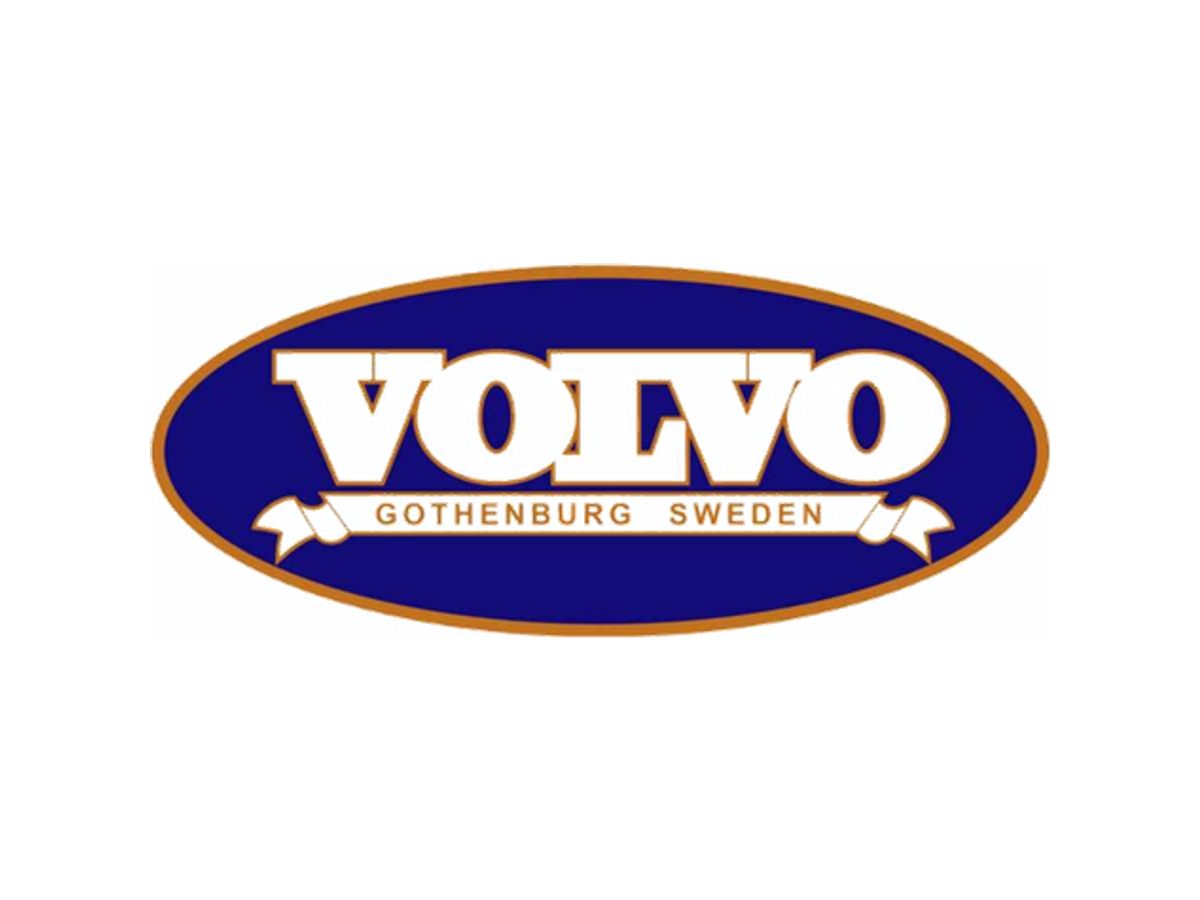
The oval makes origin and manufacturing context visible. source
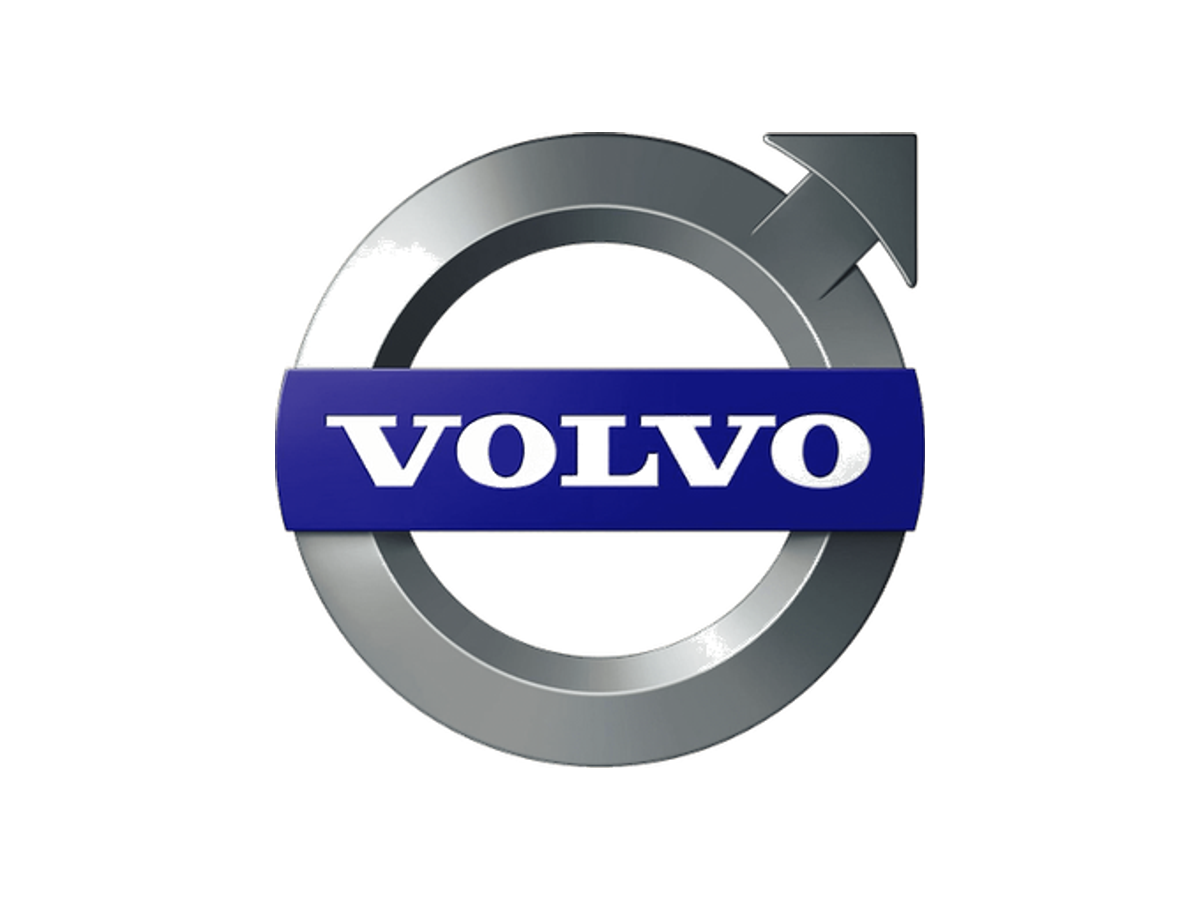
Circle, arrow, and word bar concentrate strength and safety into one vehicle cue. source
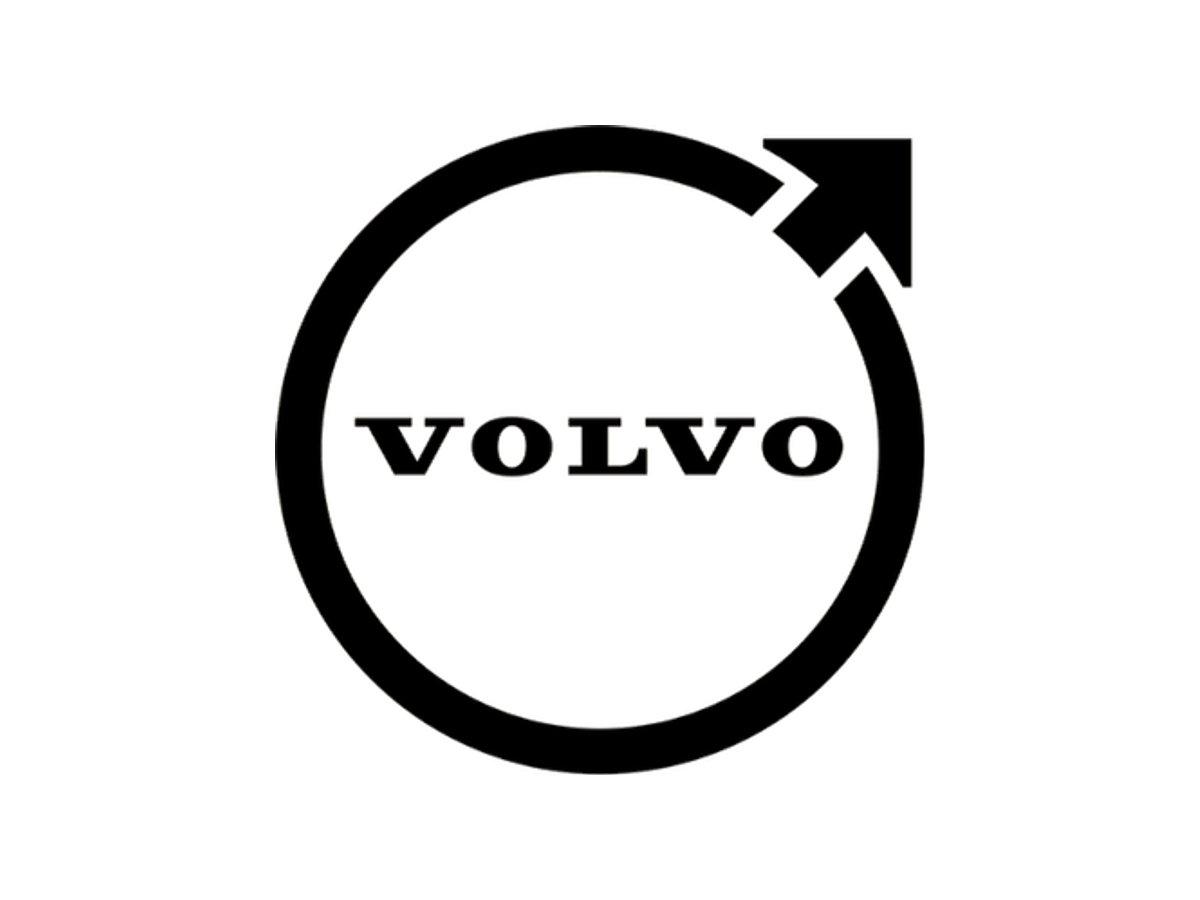
A simpler digital treatment still depends on vehicle safety and design proof. source
Product and service lineage.
Volvo is strongest when safety is visible as a product decision across the vehicle family.
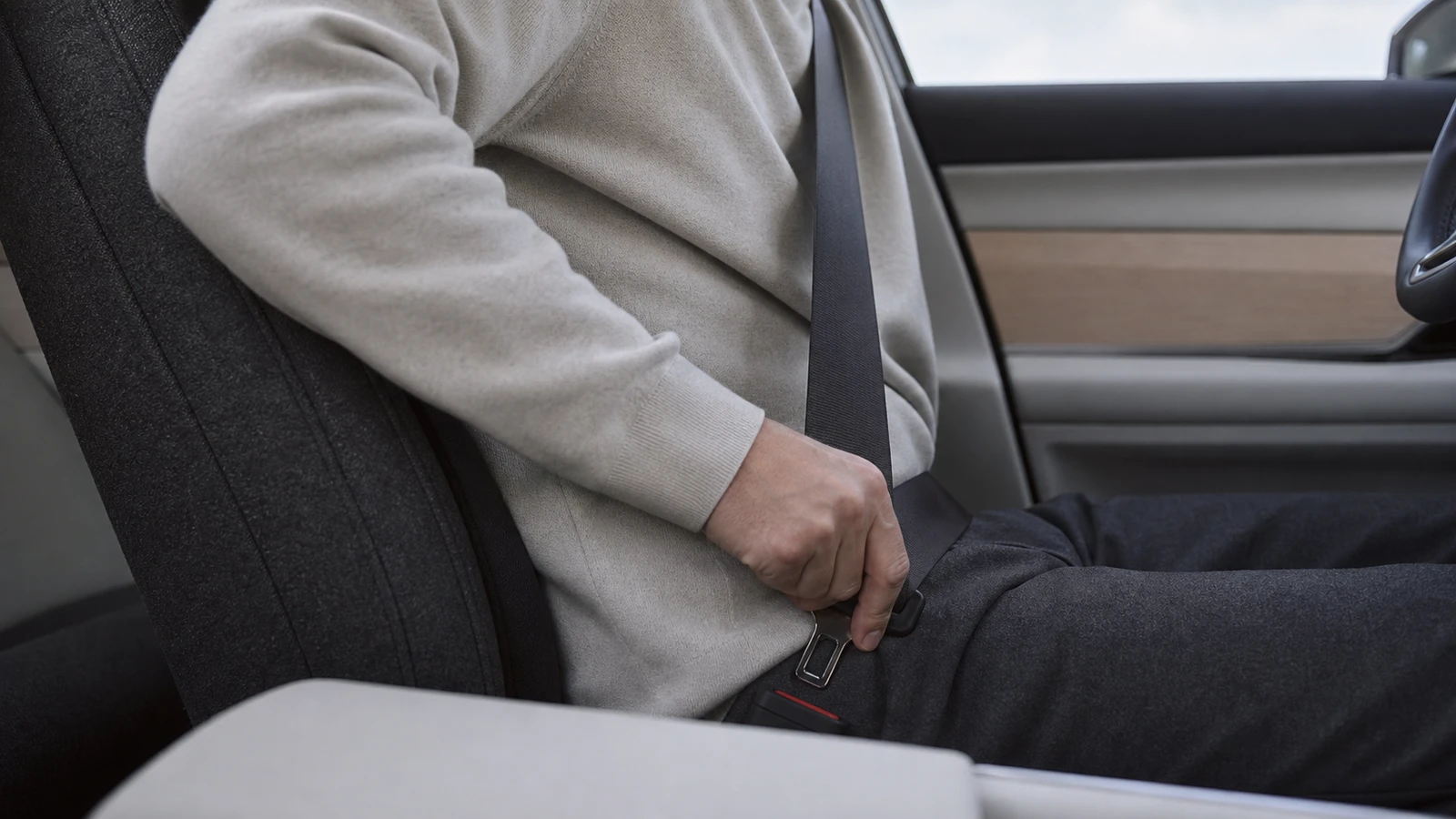
Three-point belt action
The promise becomes believable when the customer performs the protective gesture.
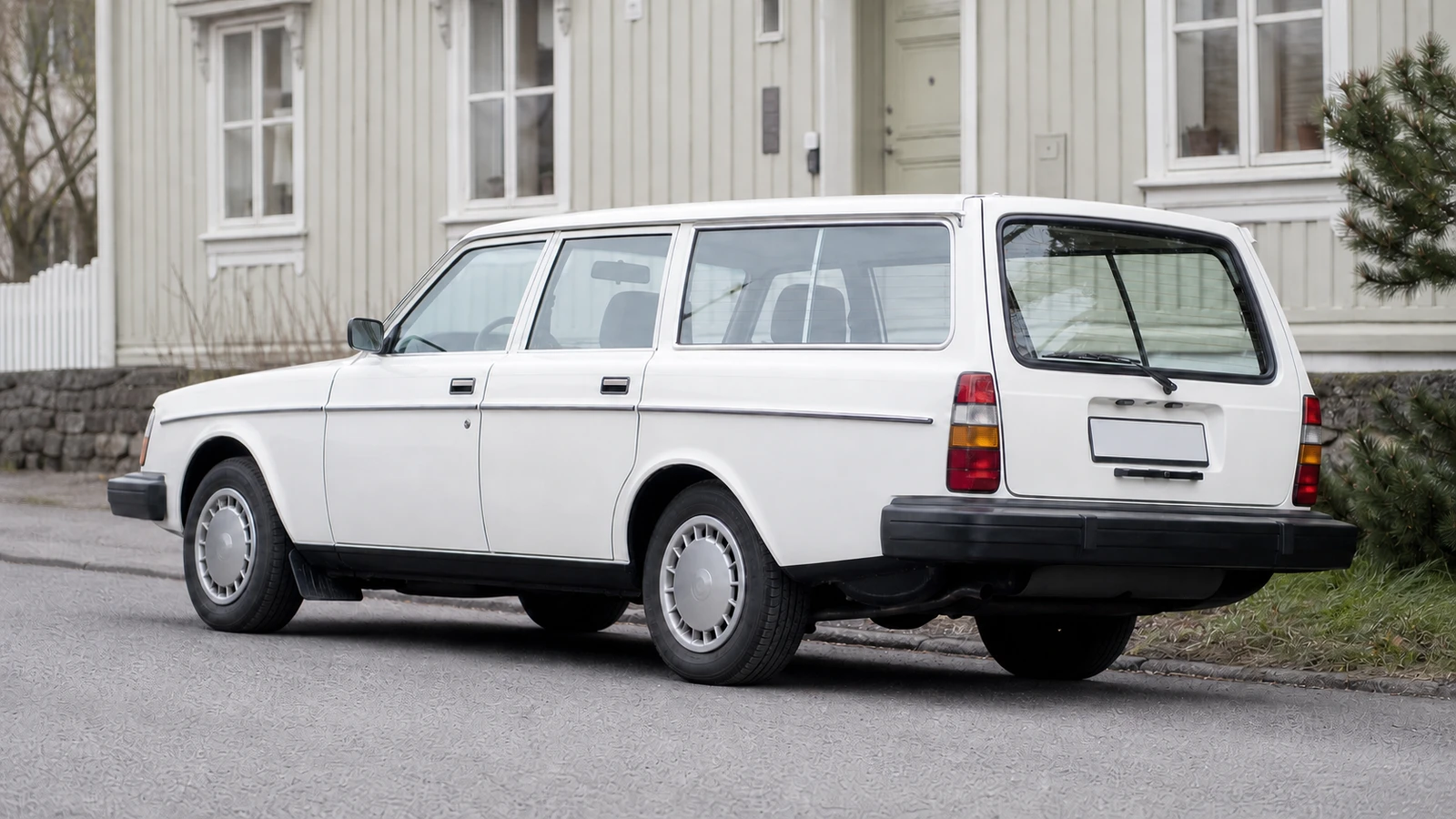
Wagon memory
The long roof and practical cabin made protection visible as a family vehicle shape.
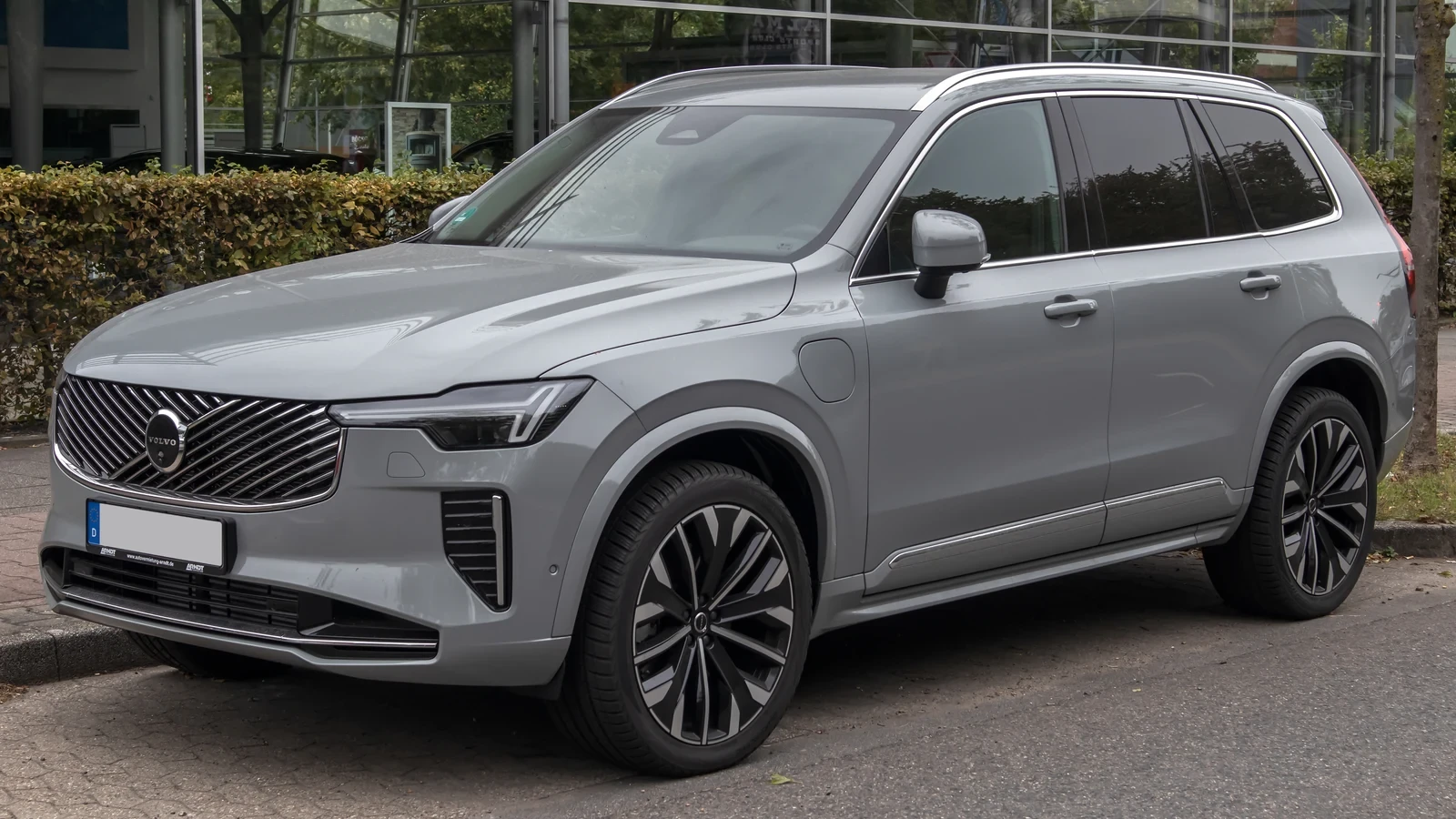
XC90 family safety
The premium SUV carries safety, restraint, and family utility into a larger format.
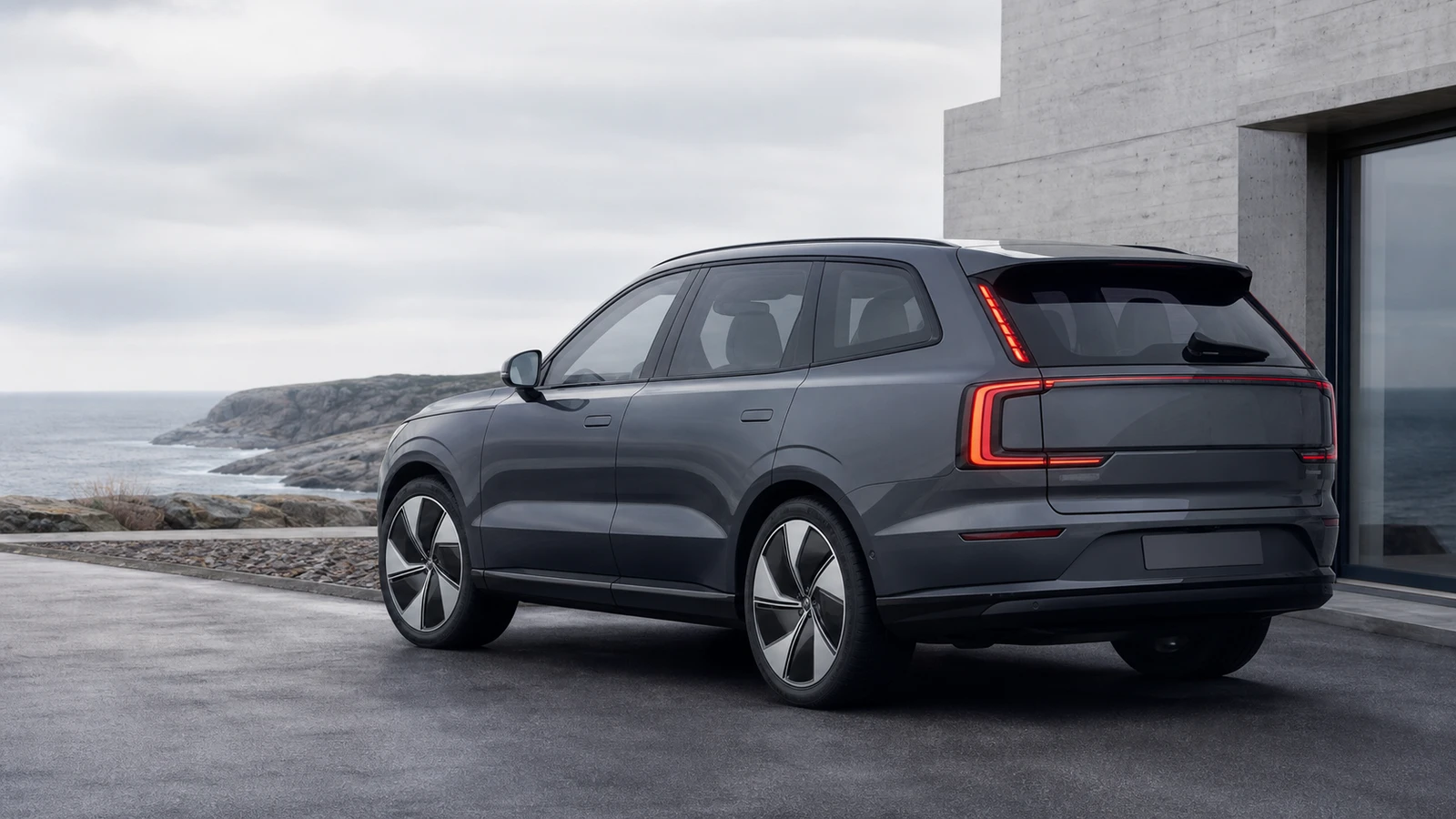
Electric transition
New propulsion and software still have to feel calm, protective, and easy to trust.
Product and service system
The first Volvo car leaves the Gothenburg factory.
The three-point belt becomes standard equipment and a physical trust cue.
The 240 family strengthens boxy wagon and protection memory.
The first XC90 takes Volvo safety into the premium SUV category.
Volvo Cars moderates its 2030 ambition to a 90–100% electrified sales mix.
EX90 and ES90 platform pressure contributes to an SEK 11.4B impairment.
Turning points.
Moments that show why the safety promise has to stay physical.
Safety became a repeated gesture instead of a broad claim.
Volvo can feel premium without chasing performance aggression.
EX90 and new software systems still have to feel protective.
Volvo Cars Q2 showed a 1.1% operating margin and steep China pressure while electrified mix stayed important.
Public reaction.
Volvo earns trust when the car feels protective and loses it when complexity breaks that calm.
The belt, cabin, and restraint cues make safety feel usable.
A safety brand cannot let software, recalls, or model confusion dominate the experience.
Full timeline.
The first Volvo car leaves the Gothenburg factory.
Nils Bohlin’s three-point belt becomes standard equipment.
Ford acquires Volvo Cars from AB Volvo.
Geely acquires Volvo Cars from Ford.
The second-generation XC90 and SPA platform reset the product system.
Volvo Car AB lists on Nasdaq Stockholm.
Volvo Cars revises its 2030 ambition to 90–100% electrified sales.
The company records an SEK 11.4B EX90/ES90 impairment.
Volvo Cars increases its Polestar stake to 19.9% through loan conversion.
Steal / avoid.
- Make the promise physical.
- Use color and symbol to support the behavior.
- Keep entity clarity between related companies.
- Do not say safety without a proof object.
- Do not let software complexity erase calm.
- Do not confuse Volvo Cars and Volvo Group in public copy.
Short answer.
Volvo shows how trust gets stronger when the customer performs it: pull the three-point belt across, click it in, and the safety promise becomes physical before any ad has to explain it.
Frequently asked questions
What is Volvo's core brand signal?
Safety made physical through the belt, cabin, vehicle behavior, and restrained engineering cues.
What should another brand steal from Volvo?
Turn trust into a repeated customer action.
What should another brand avoid copying from Volvo?
Do not copy a serious safety tone without concrete proof.
Need help with your own brand?
Use Private brand work when your name, identity, proof, or message needs a sharper branding decision.
Sources.
Use the education shelf for the concepts behind this brand page.
Private brand workUse this when the decision belongs to your own brand.
All brandsReturn to every brand page.
- Volvo Cars Annual and Sustainability Report 2025 release
- Volvo Cars results and reports
- Volvo Cars heritage and milestones
- Volvo Cars three-point belt legacy
- Volvo Cars electrification ambition update
- Volvo Cars EX90 and ES90 impairment
- Volvo Cars and Polestar relationship update
- Volvo official current logo
- Volvo official iron-logo history
- Volvo Cars Q2 2026 results