Walmart · Grow Your Brand · Everyday price and store-system trust · United States / Active
Walmart
Walmart turns price, grocery, store access, Sam's Club, marketplace, ads, and private labels into one retail route. A brand page on Walmart as a retail system: Walmart U.S., Walmart International, Sam's Club, Supercenters, Neighborhood Markets, grocery, pharmacy, fuel, pickup and delivery, ecommerce, marketplace, Walmart+, Walmart Connect, Great Value, Equate, Marketside, Member's Mark, and the supply-chain discipline behind everyday low price.
Positioning, name, and architecture.
Three evidence checks before the page talks about scale, color, or public reaction.
Walmart turns price, grocery, store access, Sam's Club, marketplace, ads, and private labels into one retail route.
A brand page on Walmart as a retail system: Walmart U.S., Walmart International, Sam's Club, Supercenters, Neighborhood Markets, grocery, pharmacy, fuel, pickup and delivery, ecommerce, marketplace, Walmart+, Walmart Connect, Great Value, Equate, Marketside, Member's Mark, and the supply-chain discipline behind everyday low price.
Walmart operates as the parent/company mark for a wider system.
No verified current company-wide tagline; Walmart is read through price, stock, stores, pickup, delivery, membership, marketplace, and private labels.
company system / portfolio architecture
Walmart U.S. Supercenters: The Supercenter format joins grocery, general merchandise, pharmacy, pickup, returns, and weekly family traffic. Neighborhood Markets and grocery: Food and household replenishment make Walmart a routine, not only a planned big-box trip. Sam's Club: The club branch gives Walmart a paid-membership warehouse lane with Member's Mark, fuel, business buying, Scan & Go, and renewal pressure. Walmart International: International formats prove the operating system beyond one U.S. store model. Ecommerce, marketplace, pickup, and delivery: Digital convenience works because the store network, pickup lane, fulfillment, and return route stay connected. Walmart+ and Walmart Connect: Membership and retail media turn shopping behavior into a recurring relationship and an advertising platform. Private labels: Great Value, Equate, Marketside, and Member's Mark translate price trust into product decisions. Supply chain and EDLP: Everyday low price is a supply-chain, inventory, wage, vendor, and store-execution system, not a tagline.
The Supercenter format joins grocery, general merchandise, pharmacy, pickup, returns, and weekly family traffic.
Portfolio family: Walmart U.S. Supercenters source
Food and household replenishment make Walmart a routine, not only a planned big-box trip.
Portfolio family: Neighborhood Markets and grocery source
The club branch gives Walmart a paid-membership warehouse lane with Member's Mark, fuel, business buying, Scan & Go, and renewal pressure.
Portfolio family: Sam's Club source
International formats prove the operating system beyond one U.S. store model.
Portfolio family: Walmart International source
Digital convenience works because the store network, pickup lane, fulfillment, and return route stay connected.
Portfolio family: Ecommerce, marketplace, pickup, and delivery source
Membership and retail media turn shopping behavior into a recurring relationship and an advertising platform.
Portfolio family: Walmart+ and Walmart Connect source
Great Value, Equate, Marketside, and Member's Mark translate price trust into product decisions.
Portfolio family: Private labels
Everyday low price is a supply-chain, inventory, wage, vendor, and store-execution system, not a tagline.
Portfolio family: Supply chain and EDLP source
Naming and tagline progression
Sam Walton opens the first Walmart Discount City in Rogers, Arkansas.
Walmart becomes a public company.
Walmart lists on the New York Stock Exchange.
Market and scale snapshot.
Walmart's FY2026 revenue, net income, and operating cash flow show the scale behind supercenters, grocery, Sam's Club, international stores, ecommerce, marketplace, Walmart+, and retail media.
FY2026 revenue in USD.
FY2026 net income attributable to Walmart in USD.
FY2026 net cash provided by operating activities.
NYSE-listed Walmart Inc.
Color system.
Walmart blue and yellow connect the store sign, spark, pickup, delivery, and value promise while navy separates corporate and operating proof.
How the palette behaves
Blue anchors the Walmart wordmark across supercenters, apps, pickup, and delivery.
Yellow carries the spark and value cue without replacing price, stock, or service proof.
Navy separates the corporate, supply-chain, Walmart+, and Walmart Connect layers from the brighter retail surface.
Recognition assets.
Memory pieces the brand can use before someone finishes a sentence.
The current mark is friendly enough for family retail but still reads as mass access.
The building is the proof object: parking, grocery, pharmacy, pickup, checkout, and return path.
The club mark separates warehouse-membership proof from Walmart's daily-store proof.
Great Value, Equate, Marketside, and Member's Mark let the price promise live inside the basket.
Scores.
Use these scores to compare recognition, trust, proof, pressure, and risk.
The blue/yellow system and store format are immediate.
The card must separate Walmart U.S., International, Sam's Club, marketplace, ads, membership, and private labels.
EDLP has decades of operational memory behind it.
The brand earns habit and access more than luxury affection.
Store access, grocery, pharmacy, fuel, ecommerce, Sam's Club, Walmart+, advertising, and private labels show how Walmart's retail system works.
Walmart needs parent, product, service, and history lanes labeled cleanly so search systems do not flatten the brand into one vague entity.
Supply-chain discipline, pickup, delivery, marketplace sellers, club membership, and private labels show how Walmart carries price across channels.
Stores, grocery, Sam's Club, marketplace, advertising, Walmart+, pharmacy, fuel, and private labels give Walmart authority across more than discount retail.
How the logo changed.
Four sourced Walmart masterbrand eras show the shift from a plain discount wordmark to the star divider, spark system, and 2025 heritage-led refresh.
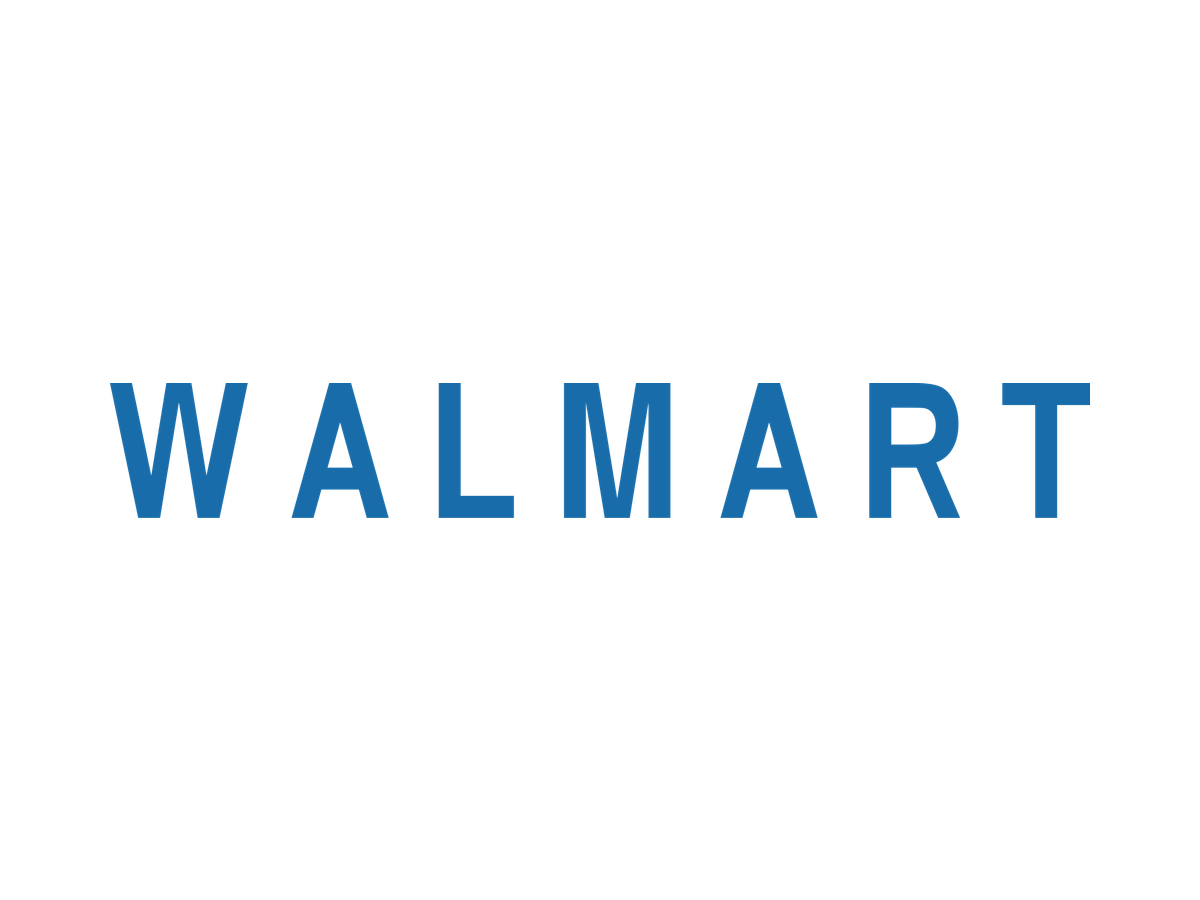
The early spaced capital wordmark carried the discount-store name before a separate symbol system existed.
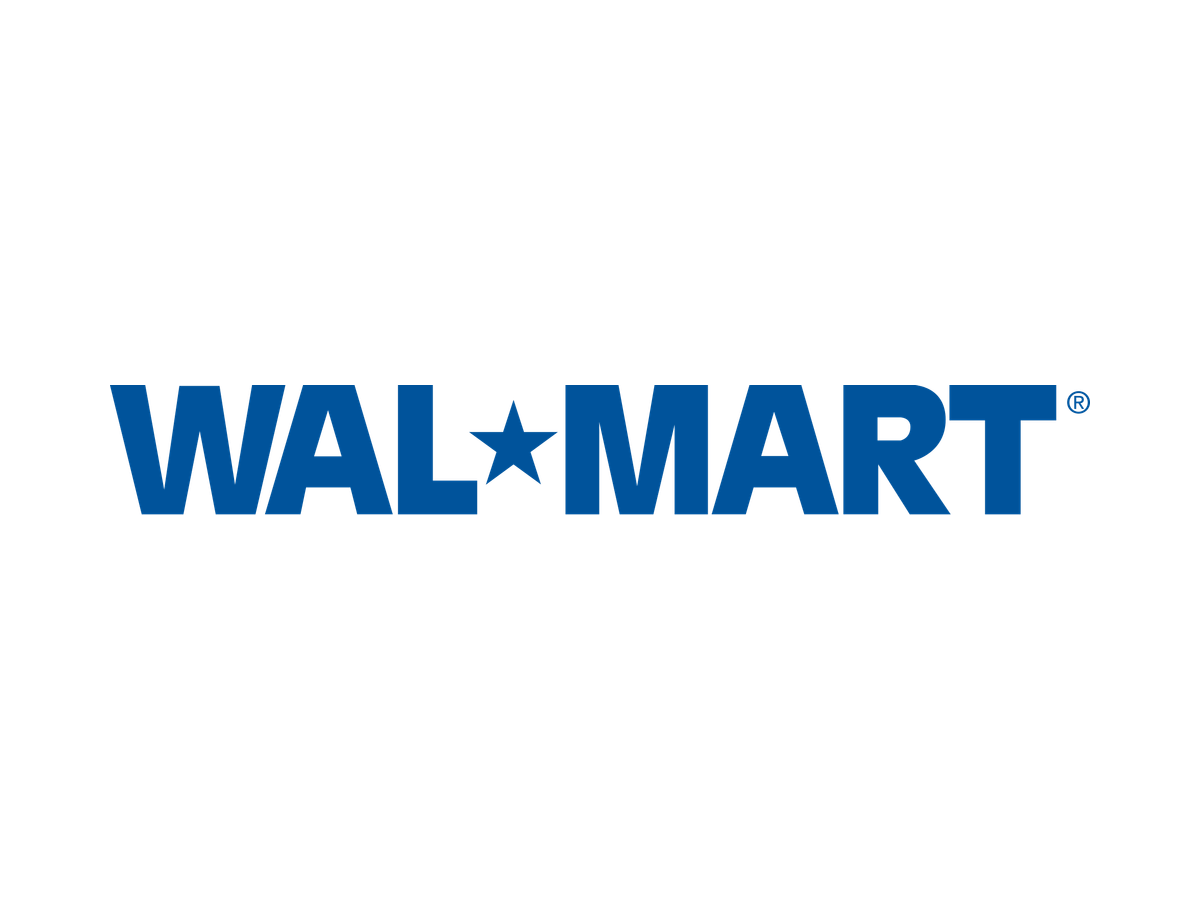
The star divider made the name more ownable while keeping the utilitarian retail wordmark dominant.
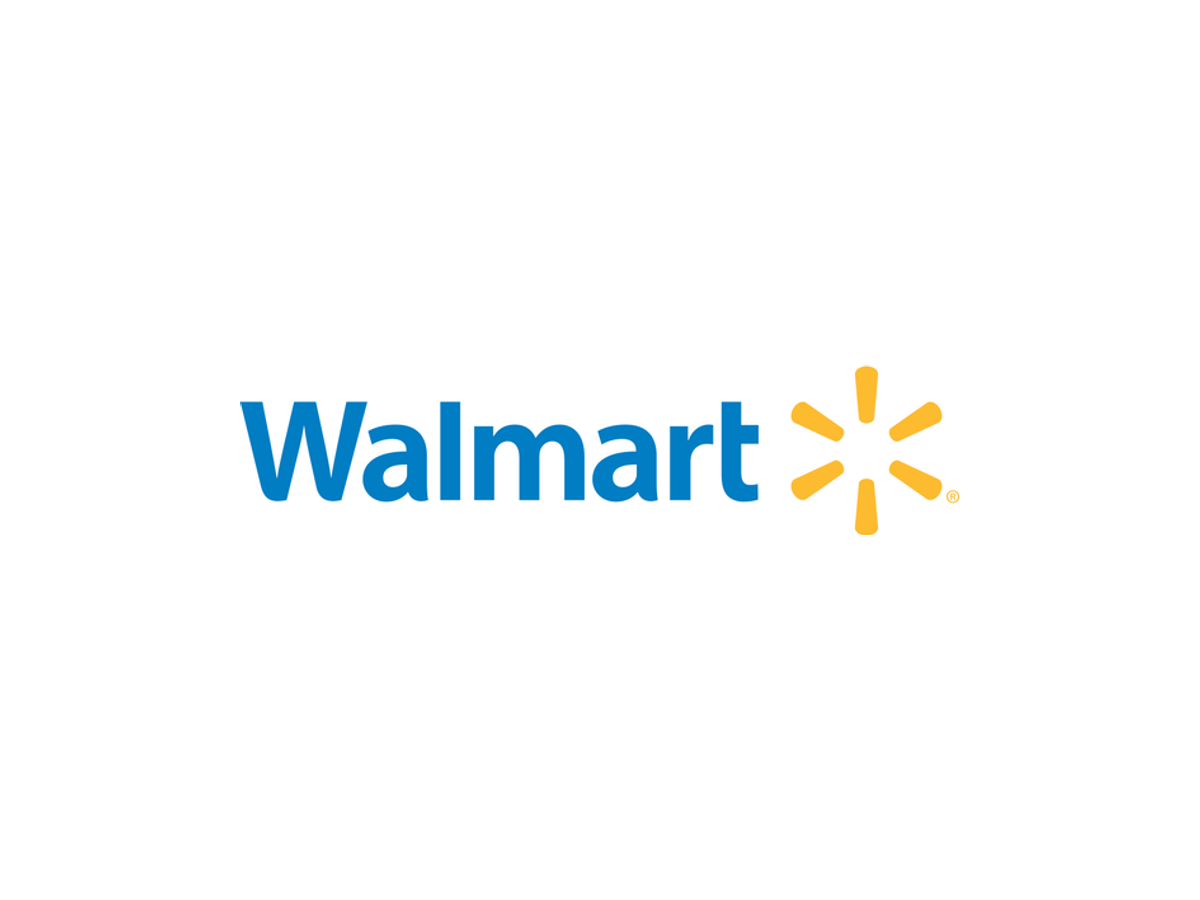
The 2008 identity softened the wordmark and introduced the yellow spark as a navigation and service cue.
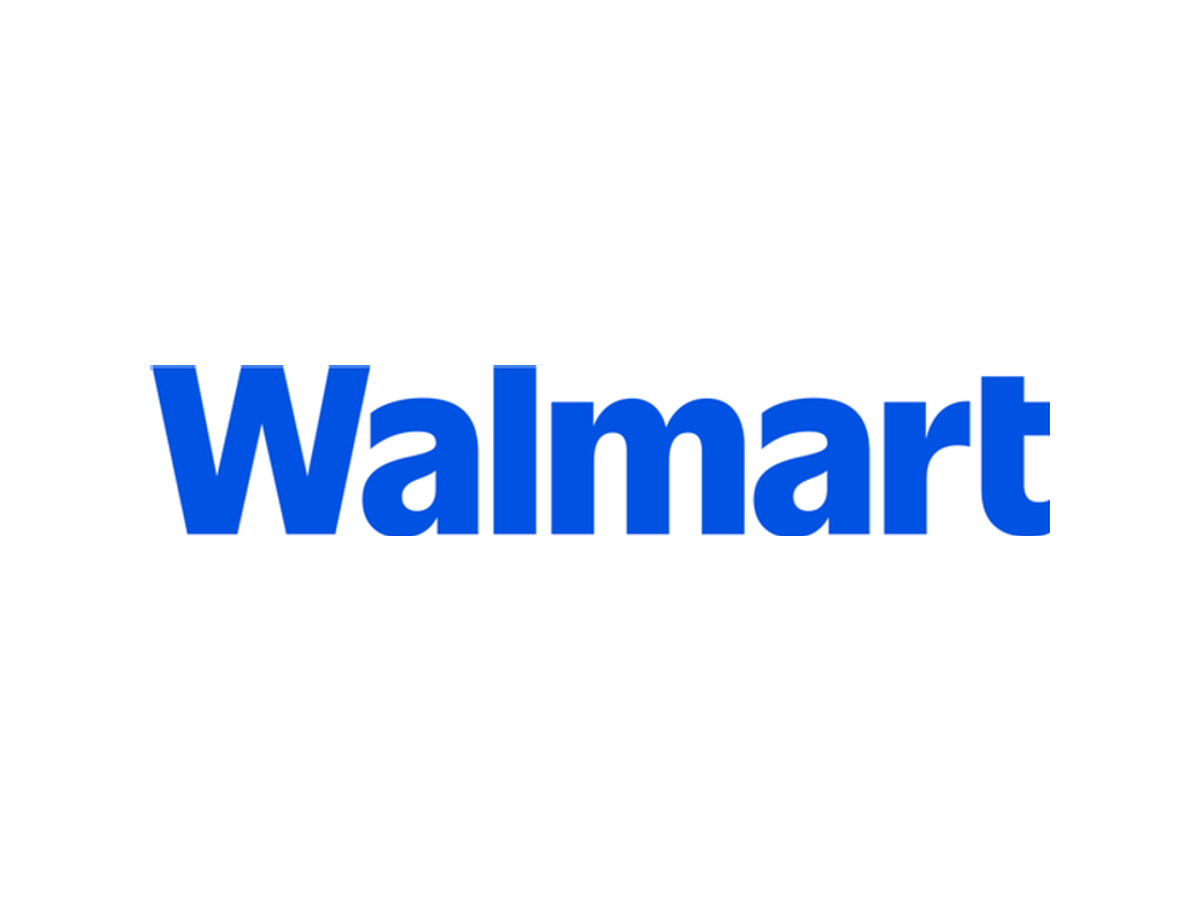
The 2025 refresh restores a more distinctive, Sam Walton-inspired wordmark while retaining the spark and blue-yellow memory system. source
Product and service lineage.
Walmart only reads correctly when the card keeps stores, clubs, grocery, pharmacy, fuel, ecommerce, marketplace, membership, advertising, private labels, and supply-chain discipline together.
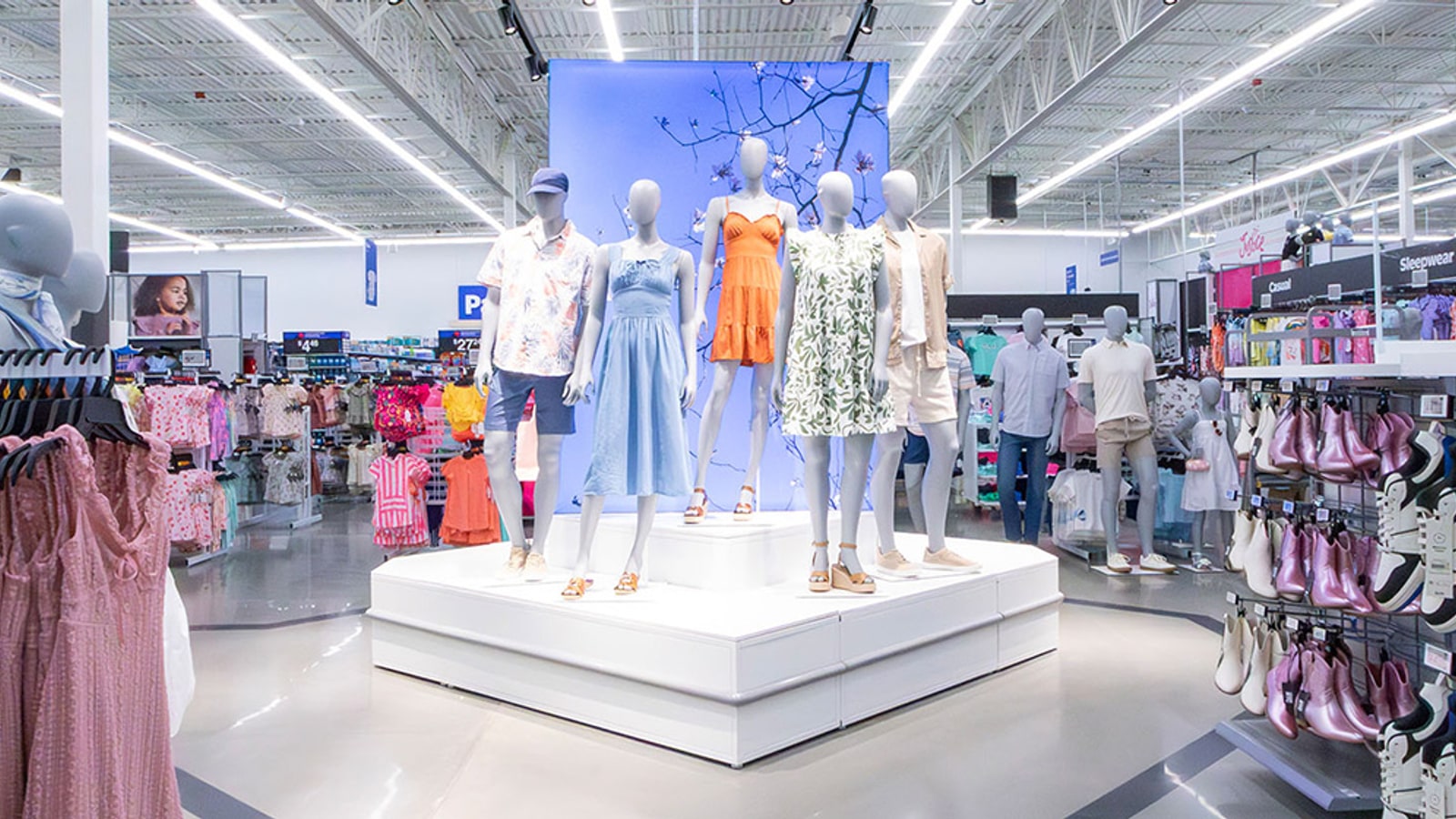
The store format keeps changing
The next-generation Supercenter makes assortment, presentation, services, and digital navigation part of Walmart's value promise.
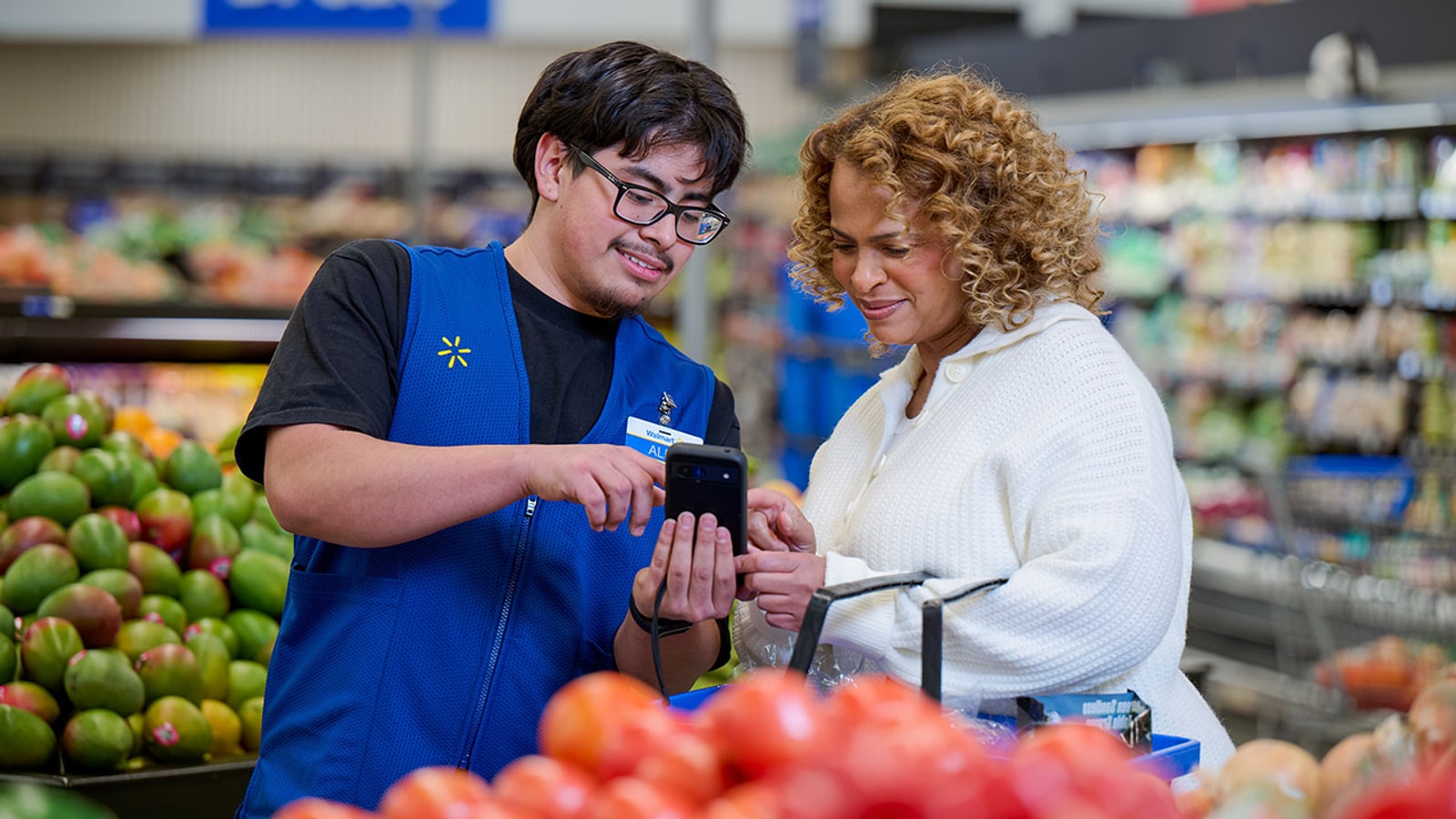
Service makes scale human
Associates, fresh food, digital tools, and store fulfillment turn enormous operating scale into a visible customer interaction.
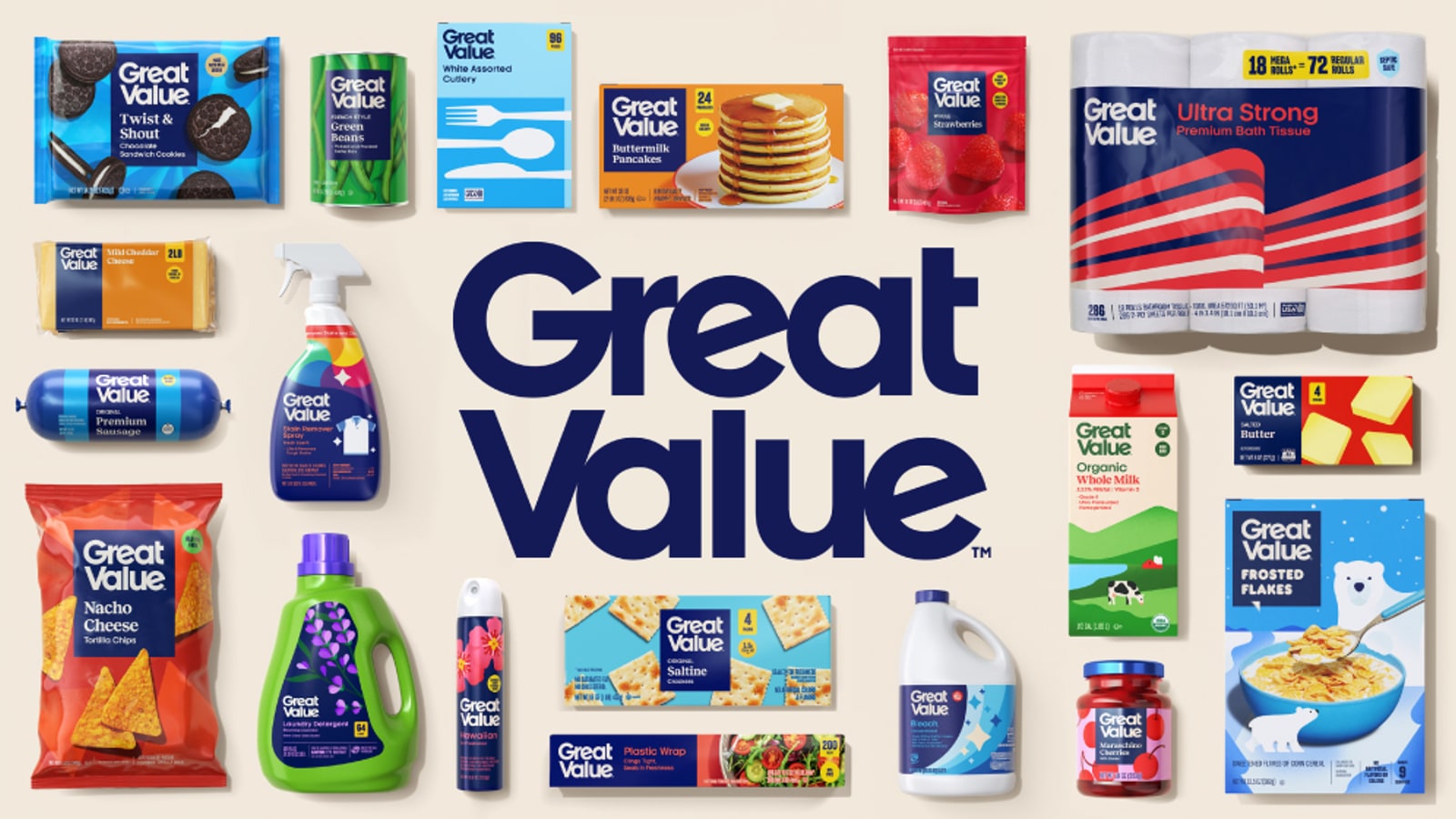
Private labels carry price trust
Great Value makes Walmart's scale, packaging discipline, and price-quality promise visible across thousands of everyday products.
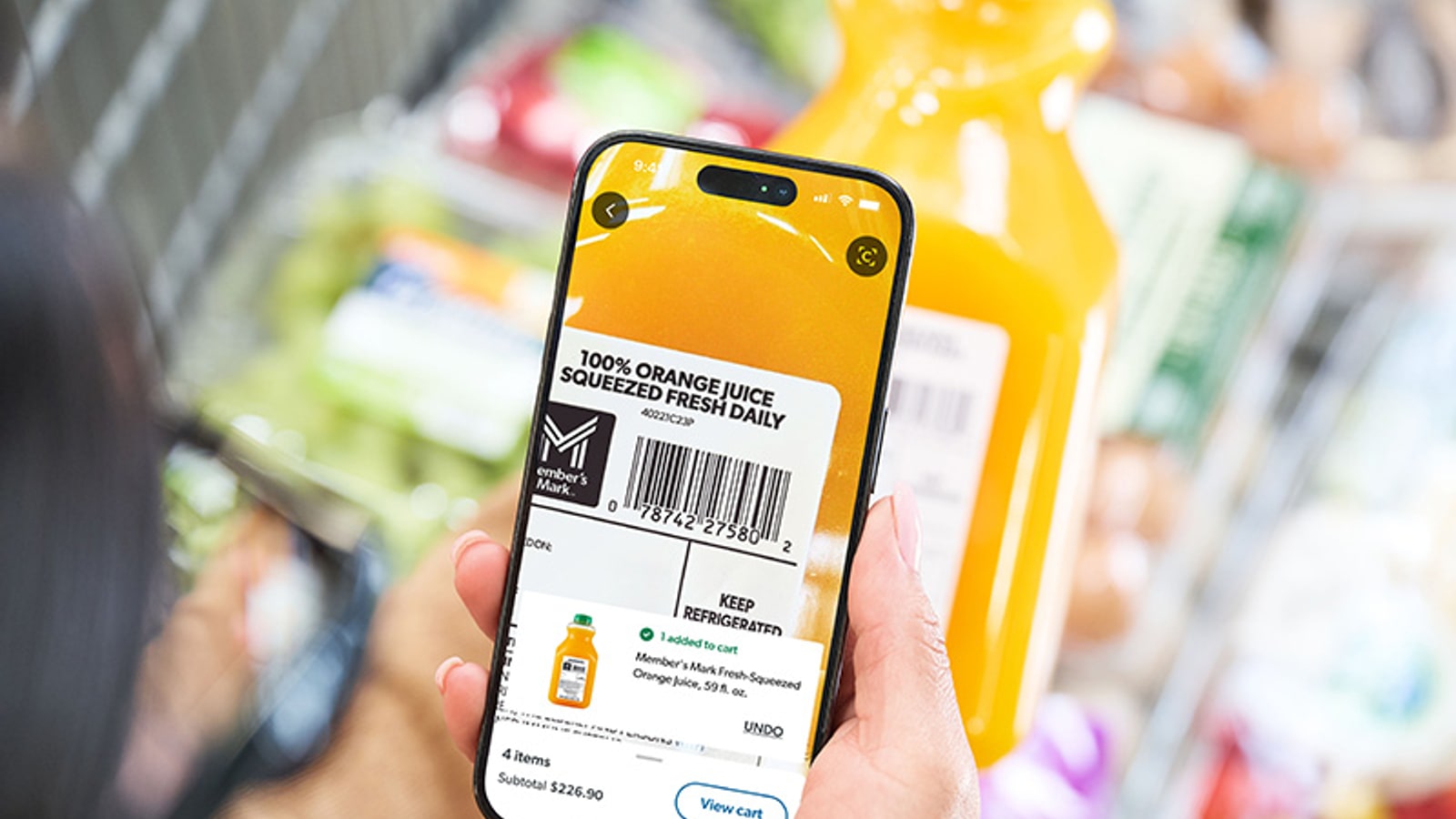
Sam's Club joins membership and technology
The club branch uses membership, bulk value, Member's Mark, mobile Scan & Go, fuel, and delivery as a distinct operating model.
Product and service system
The Supercenter format joins grocery, general merchandise, pharmacy, pickup, returns, and weekly family traffic.
Food and household replenishment make Walmart a routine, not only a planned big-box trip.
The club branch gives Walmart a paid-membership warehouse lane with Member's Mark, fuel, business buying, Scan & Go, and renewal pressure.
International formats prove the operating system beyond one U.S. store model.
Digital convenience works because the store network, pickup lane, fulfillment, and return route stay connected.
Membership and retail media turn shopping behavior into a recurring relationship and an advertising platform.
Great Value, Equate, Marketside, and Member's Mark translate price trust into product decisions.
Everyday low price is a supply-chain, inventory, wage, vendor, and store-execution system, not a tagline.
Turning points.
Events that changed what buyers could see, buy, repeat, or trust.
Sam's Club opens and creates a separate warehouse-membership proof lane.
The first Walmart Supercenter opens, joining grocery and general merchandise at scale.
Walmart begins international expansion through Mexico.
Public reaction.
The useful reaction is about trust and pressure, not sentiment counts.
The strongest Walmart proof is a household using the same system for groceries, prescriptions, pickup, returns, fuel, clubs, and value labels.
The brand weakens when price pressure, labor criticism, inventory issues, or marketplace trust problems make EDLP feel extractive instead of useful.
Full timeline.
Sam Walton opens the first Walmart Discount City in Rogers, Arkansas.
Walmart becomes a public company.
Walmart lists on the New York Stock Exchange.
Sam's Club opens and creates a separate warehouse-membership proof lane.
The first Walmart Supercenter opens, joining grocery and general merchandise at scale.
Walmart begins international expansion through Mexico.
Walmart.com makes ecommerce part of the operating story.
The spark-era visual identity makes the masterbrand warmer and easier to read.
The Jet.com acquisition marks a major digital push.
The company changes its legal name from Wal-Mart Stores, Inc. to Walmart Inc.
Walmart+ launches as a membership layer around delivery, fuel, and convenience.
Walmart Connect becomes the clearer retail-media growth lane.
Walmart refreshes the masterbrand mark while keeping the blue/yellow recognition system.
FY2026 revenue reaches USD 713.16B, with stores, clubs, marketplace, ads, and membership all visible.
Steal / avoid.
- Make the price promise operational before making it emotional.
- Give each format a job: Supercenter, market, club, ecommerce, ads, membership, and private label.
- Use owned brands to put the value promise directly in the basket.
- Let physical access and digital convenience support each other instead of competing.
- Do not describe Walmart as only a discount store.
- Do not bury Sam's Club, Walmart International, Walmart+, Walmart Connect, grocery, pharmacy, fuel, marketplace, or private labels.
- Do not show fake yellow-blue logo art or invented retail scenes.
- Do not treat EDLP as copy when it is supply-chain proof.
Short answer.
Walmart should be read as an everyday-access system, not one discount store. The useful lesson is that EDLP needs stores, grocery, pharmacy, clubs, fuel, pickup, ecommerce, marketplace, ads, Walmart+, private labels, and supply-chain discipline all working together.
Frequently asked questions
What is Walmart's core brand signal?
Walmart turns price, grocery, store access, Sam's Club, marketplace, ads, and private labels into one retail route.
Why not describe Walmart as one product?
Because Walmart spans supercenters, grocery, Sam's Club, international stores, ecommerce, marketplace, ads, Walmart+, private labels, and supply chain; one discount store cannot explain the company.
What should another brand steal from Walmart?
Make the price promise operational before making it emotional.
Need help with your own brand?
Use Private brand work when your name, identity, proof, or message needs a sharper branding decision.
Sources.
Use the education shelf for the concepts behind this brand page.
Private brand workIf stores, membership, ecommerce, marketplace, advertising, services, and private labels all share one value promise, Private Brand Work can define which layer owns each customer proof.
All brandsReturn to every brand page.