Leave one phrase
The line gives customers words they can repeat later.
Branding guide · Taglines
A tagline can make a promise easier to repeat. It cannot rescue weak proof, unclear positioning, or a product people do not believe.
promise · proof · memory · use
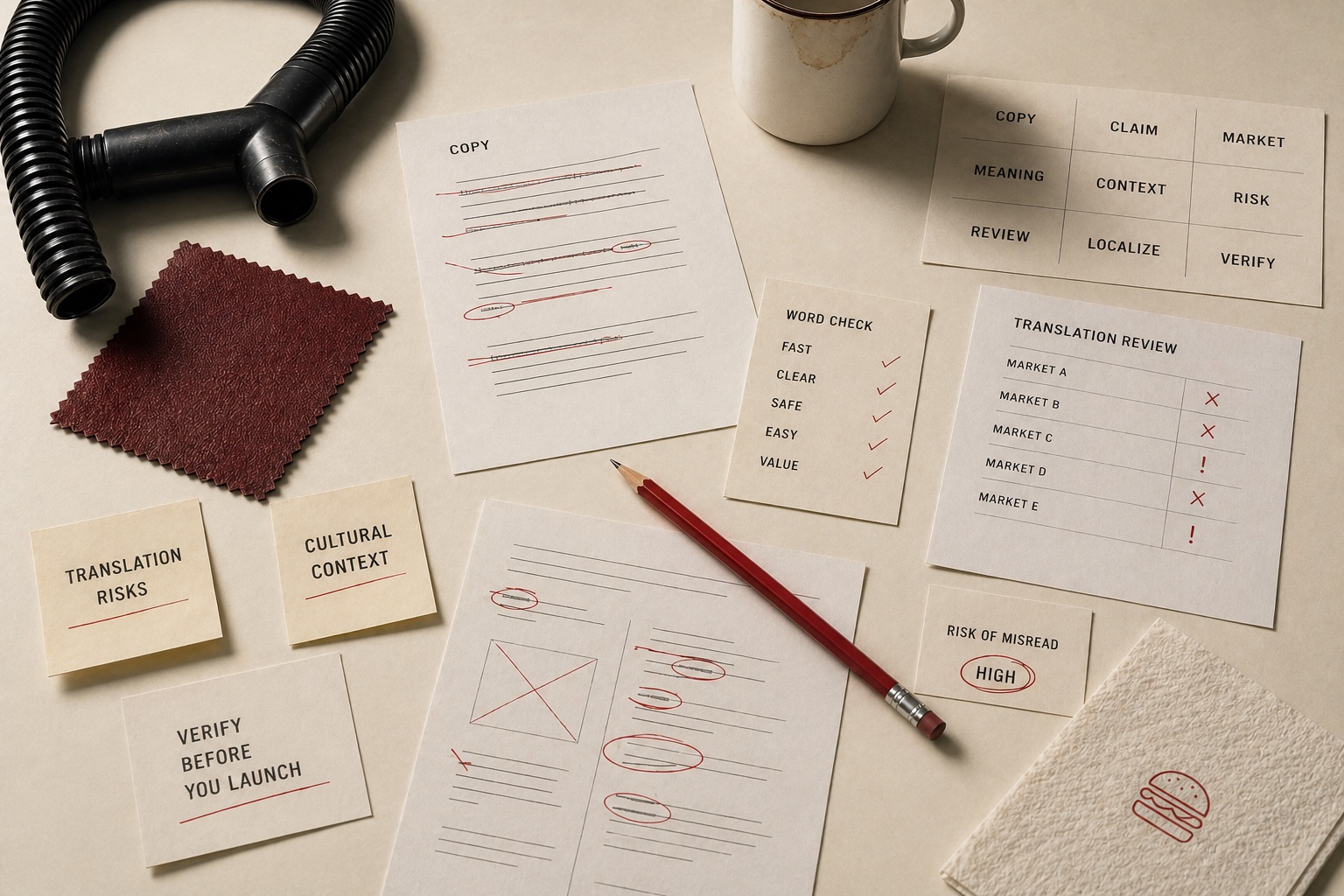
A tagline is successful only when it performs its assigned job and links the intended idea to the brand. Test candidates in context and without visual polish before paying for rollout or legal review.
| Test | Method | Pass signal | Failure signal |
|---|---|---|---|
| Strategic job | Label each line as position, promise, category cue, worldview, campaign idea, or memory trigger. | The line advances one agreed role without carrying the whole strategy. | Reviewers expect the same line to explain every brand decision. |
| Specificity | Hide the brand name and ask which kinds of businesses could credibly use the line. | The language points toward this brand's choice or evidence. | It could be reassigned unchanged across the category. |
| Comprehension | Ask intended buyers what the line means before explaining it. | Interpretations converge on the intended idea without coaching. | The line produces confusion, a harmful reading, or only vague praise. |
| Brand linkage | Show or read the line among category alternatives, then test which brand people connect to it. | The intended brand is linked through wording, proof, or distinctive verbal behavior. | People remember the line but assign it to the category or another source. |
| Recall and sound | Test delayed unaided recall, spoken delivery, pronunciation, rhythm, and transcription. | People can repeat the central wording and say it naturally. | The line requires visual styling, explanation, or repeated correction. |
| Use and risk | Place the line on the smallest, largest, spoken, translated, and long-lived surfaces; then screen rights and claims. | It remains legible, accurate, usable, and supportable across approved contexts. | It breaks in key channels, overclaims, ages quickly, or creates unresolved legal risk. |
A tagline shortlist tested for meaning, brand linkage and use.
Pick one main job. A line that tries to do everything becomes too broad to remember.
The line gives customers words they can repeat later.
The line makes the useful outcome easier to understand.
The line says how the brand acts, decides, or helps.
The line gives a launch or push a simple shared handle.
Use a line when the system underneath it is clear enough to support the sentence.
| Situation | Use the line | Avoid the line | Better first move |
|---|---|---|---|
| New brand | The name and category are clear | The line has to explain everything | Fix positioning and naming. |
| Rebrand | The old meaning needs a clean bridge | The product or service has not changed | Name the real change. |
| Campaign | The moment needs one repeated sentence | The sentence has no campaign behavior | Build the proof surface. |
| Premium offer | The line makes the standard easier to remember | The line becomes luxury theater | Show product, service, or craft proof. |
| Support problem | The line matches actual service behavior | The line promises care the company cannot deliver | Fix the operation first. |
These findings provide context for the choices above. Their original dates and scope remain visible; they are not measurements of your business.
Follow-up questions and the limits of the method.
Usage varies, but a tagline commonly serves as a durable brand line while a slogan may support a campaign or temporary initiative. Define the expected lifespan and job before evaluating either.
Use the fewest words that preserve the intended meaning, brand linkage, sound, and legal accuracy. A short generic line can be less memorable than a slightly longer phrase with a distinctive idea.
Include a category cue when the name and context do not tell buyers what the business is, or when category framing is strategically important. Omit it when the cue makes the line generic or unnecessarily restrictive.
No. Treat factual, comparative, performance, and absolute language as claims that need support. A memorable phrase does not receive a different evidence standard because it appears in branding.
Change it when its assigned job, position, promise, audience understanding, legal availability, or channel utility changes. Do not replace a useful line merely because internal teams have heard it many times.
If a name, color, mark, message, voice, or page is starting to affect sales or trust, get the public-facing decision checked before rollout makes it harder to change.