Adidas Brand Signal Card · Part of Grow Your Brand · High Recognition / Portable Sport Code · Performance Proof, Portable Mark, Sport Culture, Product Family
Adidas Brand Signal Card
Adidas made the 3-Stripes work on shoes, kits, balls, shelves, and streets. The 3-Stripes work because buyers keep seeing the same cue on performance products, team kits, Originals, retail displays, and everyday outfits.
Positioning, name, and architecture.
Three evidence checks every Brand Signal Card needs before the page talks about scale, color, or public reaction.
Adidas owns a simple repeatable cue that works across performance footwear, team kits, balls, apparel, Originals, Sportswear, stores, and screen-level recognition.
Adidas positions sport credibility as a visible code: the customer sees the stripes on moving bodies, footwear, kits, balls, shelves, stores, and style contexts.
For: Athletes, teams, runners, football players, streetwear buyers, and everyday consumers who want sport credibility to carry into what they wear.
Judged against: Sporting goods and sportstyle judged against Nike, Puma, New Balance, Under Armour, Hoka, ASICS, On, and category-specific performance brands.
- Adidas' 2025 annual report ties the 3-Stripes to the 1949 registration year and a sports shoe from Adi Dassler.
- The report describes Performance products as built from sport and represented by the 3-Bar logo.
- The report describes Originals through the Trefoil and connects Lifestyle to sport memory, classics, and culture.
Adidas comes from founder Adi Dassler; the 2025 annual report names the 1949 registration as 'Adolf Dassler adidas Sportschuhfabrik' in Herzogenaurach, Germany.
Public signal: You Got This
Name type: founder / coined
- 1949: Adolf Dassler adidas Sportschuhfabrik is registered.
- 1949: A sports shoe launches with the soon-to-be-famous 3-Stripes.
- 1972: The Trefoil is introduced to increase brand visibility.
- 2025: You Got This is named as a multi-year brand campaign in the annual report.
branded house with product-family and category marks
The Adidas name leads the company while the 3-Bar, 3-Stripes, Trefoil, Performance, Originals, Sportswear, and named product franchises help buyers sort sport proof from street use.
Parent: adidas AG
- Performance
- Originals
- Sportswear
- Terrex
- Adizero
- Samba
- Superstar
- Stan Smith
- Predator
- F50
- Climacool
Market and scale snapshot.
This snapshot uses Adidas AG FY2025 reported figures converted to USD. The point is scale, product mix, and the cost of keeping the sport cue visible on real products.
FY2025 net sales from Adidas' annual report, converted to USD.
FY2025 operating profit from Adidas' annual report, converted to USD.
FY2025 net income attributable to shareholders from Adidas' annual report, converted to USD.
Year-end 2025 market capitalization from Adidas' annual report, converted to USD.
FY2025 product division net sales from Adidas' annual report, converted to USD.
Adidas AG is listed in Germany; the annual report also reports a Level 1 ADR year-end close in USD.
Black, white, and product contrast.
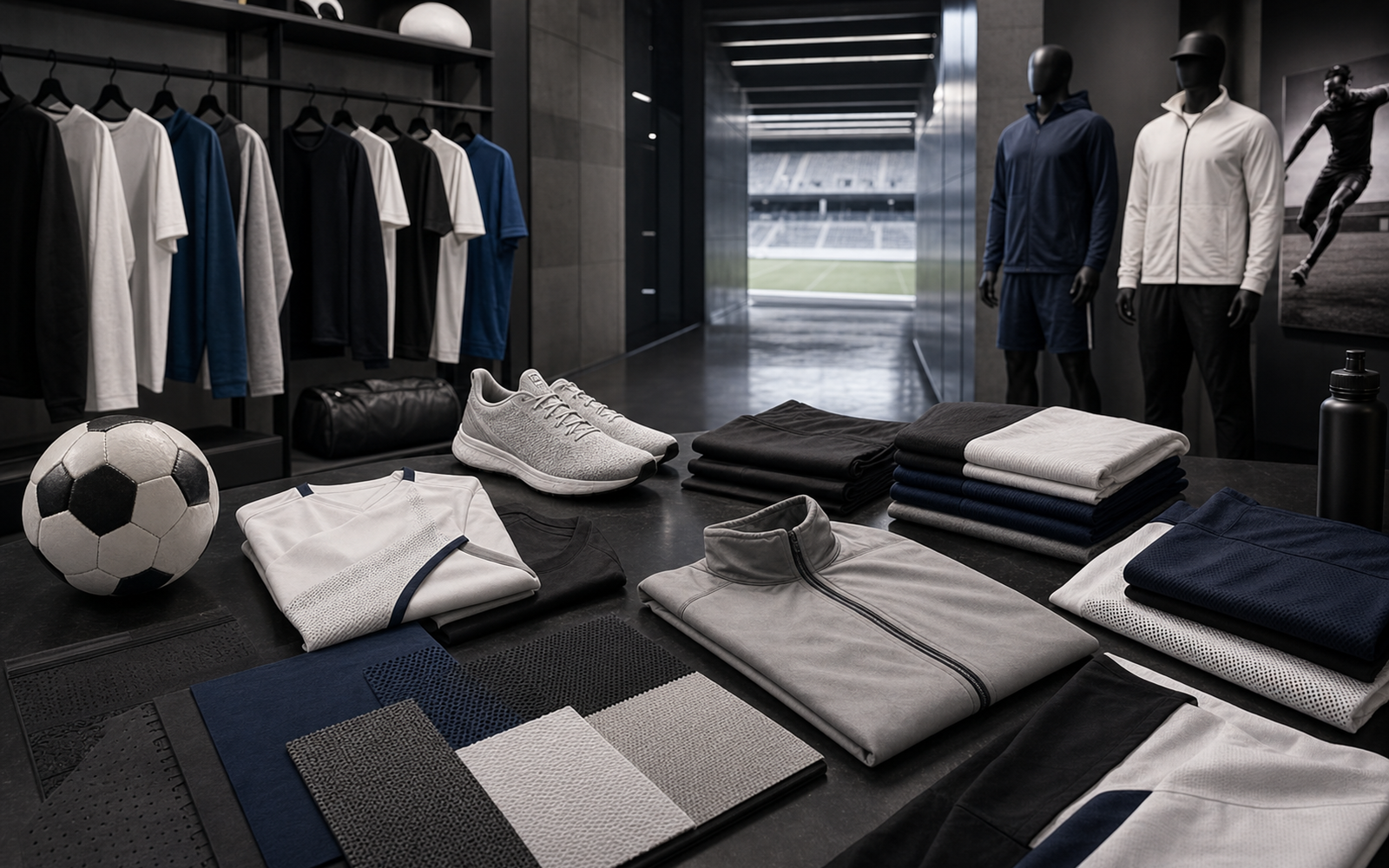
The current source mark is black with a tight black, white, gray, and navy support palette. The page keeps the palette restrained because Adidas recognition is driven more by stripe contrast and product placement than by one loud brand color.
Recognition assets.
Memory pieces the brand can use before someone finishes a sentence.
3-Stripes at speed
The mark works when a shoe is half visible, a player is moving, or a kit is seen from a distance.
3-Bar and Trefoil
The 3-Bar carries Performance; the Trefoil carries Originals. Both preserve the three-part memory.
Sport before style
Lifestyle demand is strongest when the buyer can still see running, football, training, teamwear, or product credibility behind it.
Scores.
Use these scores to compare recognition, trust, proof, pressure, and risk at a glance.
The 3-Stripes, 3-Bar, Trefoil, footwear, kits, and Originals give Adidas a fast public read.
Running, football, training, apparel, equipment, and named franchises keep the cue tied to use.
Originals and Sportswear let sport memory move into everyday style.
The more the brand wins in culture, the more it has to keep sport proof visible.
Performance, Originals, Sportswear, and product franchises are clear when the mark system does the sorting.
The company name, public ticker, primary mark, product families, and annual report trail are direct.
Few sport cues travel as well across motion, product shape, kit distance, and retail display.
A copied stripe or simple mark fails quickly if the product does not teach people what the cue means.
How the logo changed.
The mark has to keep recognition intact while the brand adapts to new products, places, and screens.

The 2025 annual report describes Performance products as represented by the 3-Bar logo, keeping the three-part memory visible in a modern mark. source
Product, sport, and culture lineage.
Adidas is strongest when the same cue links sport use, product families, team visibility, retail, and culture. This lineage keeps the page about proof surfaces, not a loose company history.
1949
Adidas is registered in Herzogenaurach and Adi Dassler launches a sports shoe with the soon-to-be-famous 3-Stripes.
Signal impact: product-side cue starts early
1954
Adidas football boots with screw-in studs become part of the Germany World Cup win story named in the annual report.
Signal impact: performance proof becomes public
1967
The Franz Beckenbauer tracksuit gives Adidas its first apparel piece and makes the signal wearable beyond footwear.
Signal impact: apparel extends the code
1970
The Telstar becomes Adidas' first official match ball for the FIFA World Cup, beginning a long match-ball partnership.
Signal impact: equipment carries visibility
1972
The Trefoil is introduced and Samba moves toward the version that later becomes a lifestyle reference point.
Signal impact: sport memory enters culture
Performance
Football, running, basketball, training, golf, motorsport, tennis, trail running, winter sports, rugby, and cricket keep the system tied to sport use.
Signal impact: breadth stays credible through use cases
Originals
Samba, Superstar, Firebird, Teamgeist, collaborations, and updated materials keep the older sport memory alive in current demand.
Signal impact: classics refresh without losing sport roots
2025
Adidas reports record FY2025 net sales of USD 28.26 billion after USD conversion, with footwear, apparel, and accessories all contributing to the mix.
Signal impact: scale depends on product breadth
Event board.
Turning points only: the 1949 cue, football proof, apparel expansion, World Cup visibility, Originals demand, product momentum, and the burden of keeping culture grounded in sport.
The cue started on product
The 3-Stripes were attached to a sports shoe in the same year the company was registered.
Impact: The mark did not start as detached attitude.
Football made proof visible
Boots, kits, clubs, national teams, Predator, F50, and match balls give the signal a stage where performance is watched.
Impact: The buyer sees the cue under pressure.
Originals made memory commercial
Samba, Superstar, Firebird, Teamgeist, and collaborations let older sport cues re-enter current style demand.
Impact: Culture borrows from remembered sport.
Yeezy exit cleared the read
The FY2025 report says results did not include Yeezy revenues after the remaining inventory was sold in 2024.
Impact: The page can read Adidas through current product categories rather than one discontinued collaboration overhang.
Running momentum matters
The annual report names Adizero, Adios Pro, Evo SL, Supernova, and major running proof as part of 2025 growth.
Impact: Performance proof has to keep renewing the brand.
Public reaction.
No invented sentiment count. This card reads public pressure through sport credibility, product momentum, collaboration heat, direct retail, wholesale, and whether culture still points back to product use.
Positive / sport memory
Adidas can move from match, track, court, shoe wall, club kit, and street outfit because the three-part cue survives each context.
Negative / decoration risk
A repeated cue weakens when buyers can see the styling but not the product behavior, sport link, or proof behind it.
Full timeline.
Steal / avoid.
- Make the cue useful on the product before asking culture to carry it.
- Design for motion, cropping, shelves, sleeves, screens, and distance.
- Give different parts of the portfolio their own sorting marks without losing the main memory.
- Let old product memory re-enter current demand through real products, not nostalgia copy.
- Do not copy the stripes. Copy the constraint: the cue has to survive real use.
- Do not let collaborations become louder than the product system.
- Do not let lifestyle demand erase the sport proof that made the cue worth borrowing.
- Do not use repetition as a substitute for meaning. Buyers need to know what the cue proves.
Short answer.
Adidas' signal is the 3-Stripes system: a simple cue repeated across footwear, apparel, team kits, balls, Originals, Sportswear, and the 3-Bar mark. The risk is letting lifestyle heat outrun sport proof.
What is Adidas' core brand signal?
Adidas' signal is the 3-Stripes system: a simple cue repeated across footwear, apparel, team kits, balls, Originals, Sportswear, and the 3-Bar mark. The risk is letting lifestyle heat outrun sport proof.
Why does Adidas work beyond sport?
It works beyond sport when the culture still points back to sport memory, product use, team visibility, and recognizable product families.
What should another brand steal from Adidas?
Steal the discipline, not the stripe. Build a cue that works in motion, on products, at retail, and in the customer's daily memory.
What should another brand avoid copying from Adidas?
Avoid repeating a simple mark without product proof. Recognition without a use case turns into decoration.
Compare this signal.
Use Adidas as the starting point for portable recognition, sport proof, culture stretch, and the risk of turning a mark into decoration.
Nike Swoosh performance system
A useful comparison for performance marks where product use, athlete proof, and buyer behavior keep the mark meaningful.
ComparePuma speed code
Use later for German sport rivalry, speed cues, and challenger sportstyle.
MechanismBrand Messaging
Use this when a simple cue needs a clear public frame that does not drift into decoration.
RequestPrivate brand work
Use this when a brand needs to test whether its mark, product proof, and customer memory still point to the same thing.
Making a signal decision of your own?
Use Private brand work when your own name, identity, proof, or message needs the same pressure test.
Sources.
Related Grow Your Brand page
Related Grow Your Brand page
Related Grow Your Brand page
Related Grow Your Brand page
adidas Annual Report 2025, Product and Marketing · adidas Annual Report 2025, Income Statement · adidas Annual Report 2025, Our Share · Wikimedia Commons, Adidas 2022 logo file · ExchangeRate-API conversion feed