Target Brand Signal Card · Part of Grow Your Brand · Retail Recognition System · Retail Locator, Mass Value Signal, Simple Mark, Store System
Target Brand Signal Card
Target turns a broad retail trip into one fast red cue. A Brand Signal Card for Target: the bullseye, red-white-black store system, owned brands, pickup services, weekly trip memory, and the pressure of proving value when shoppers have cheaper choices nearby.
Positioning, name, and architecture.
Three evidence checks every Brand Signal Card needs before the page talks about scale, color, or public reaction.
A simple bullseye and red store world that make value feel easier to choose, carry, pick up, and repeat.
Target positions the weekly retail trip as designed value: broad enough for chores, simple enough to recognize, and convenient enough to repeat.
For: Families and everyday shoppers who want one trip to feel useful, affordable, clean, and a little more designed than a plain discount run.
Judged against: Mass retailers judged against Walmart, Costco, Amazon, Kroger, dollar stores, drugstores, and grocery trips.
- The bullseye works at road, storefront, bag, app, receipt, cart, and pickup distance.
- Owned and exclusive brands give Target value it can shape instead of only resell.
- Order Pickup, Drive Up, Target Circle, and same-day delivery turn the store base into convenience proof.
Target is a plain retail name that turns a broad shopping trip into an aiming cue: the buyer can head for one place and expect the store to solve several needs.
Public signal: Corporate purpose: help all families discover the joy of everyday life.
Name type: descriptive / metaphor
- 1962 retail format: Target name and bullseye cue
- current corporate purpose: Help all families discover the joy of everyday life
- current operating proof: Stores, digital channels, owned brands, pickup, Drive Up, and Target Circle
branded house with owned-brand portfolio
The parent brand carries the trip, while owned brands make value, style, food, essentials, and home categories feel more controlled.
Parent: Target Corporation
- Good & Gather
- Cat & Jack
- A New Day
- Home basics
- Threshold
- up & up
- Favorite Day
- Bullseye's Playground
- Target Circle
- Target Plus
- Roundel
Market and scale snapshot.
Target is useful because the brand signal is tied to a real operating base: stores, owned brands, pickup services, and more than USD 100 billion of annual sales.
Target FY2025 Form 10-K, fiscal year ended 31 Jan 2026.
Same 10-K; useful because the value promise has to leave margin for profit.
Same 10-K; rounded from USD 3.705B.
Target reported 250.5M retail square feet at fiscal year end.
Stores fulfilled more than 97% of total merchandise sales in each of the last three years.
Reported in the 10-K as of 1 Aug 2025; not a live market cap.
Color signals.
Target's palette does not need decoration. Red finds the store. White keeps the bullseye clean. Black gives tags, app surfaces, and price information enough contrast.
Recognition assets.
Memory pieces the brand can use before someone finishes a sentence.
Bullseye
The mark works because it is almost impossible to over-explain. Aim, arrival, value, and repeat trip sit inside one shape.
Red at shopping distance
Target red carries the brand before the buyer reads a sign or opens the app.
Store-powered convenience
The brand promise is strongest when the store, app, pickup lane, owned brand, and price all agree.
Scores.
Use these scores to compare recognition, trust, proof, pressure, and risk at a glance.
Bullseye plus red is immediate at road, shelf, bag, and app distance.
The buyer understands the trade: broad retail choice with a more designed feel.
Stores carry the brand and fulfill most merchandise sales.
Owned and exclusive brands give Target more control over quality, price, and style.
When shoppers feel squeezed, the design signal has to prove it is still worth choosing.
Target Corporation, ticker TGT, U.S. store base, and retail category are clean entity signals.
Red, white, and black are strong enough without decorative backup.
Pickup, Drive Up, same-day delivery, returns, and store execution decide whether the cue stays trusted.
How the logo changed.
The mark has to keep recognition intact while the brand adapts to new products, places, and screens.

Retail trip lineage.
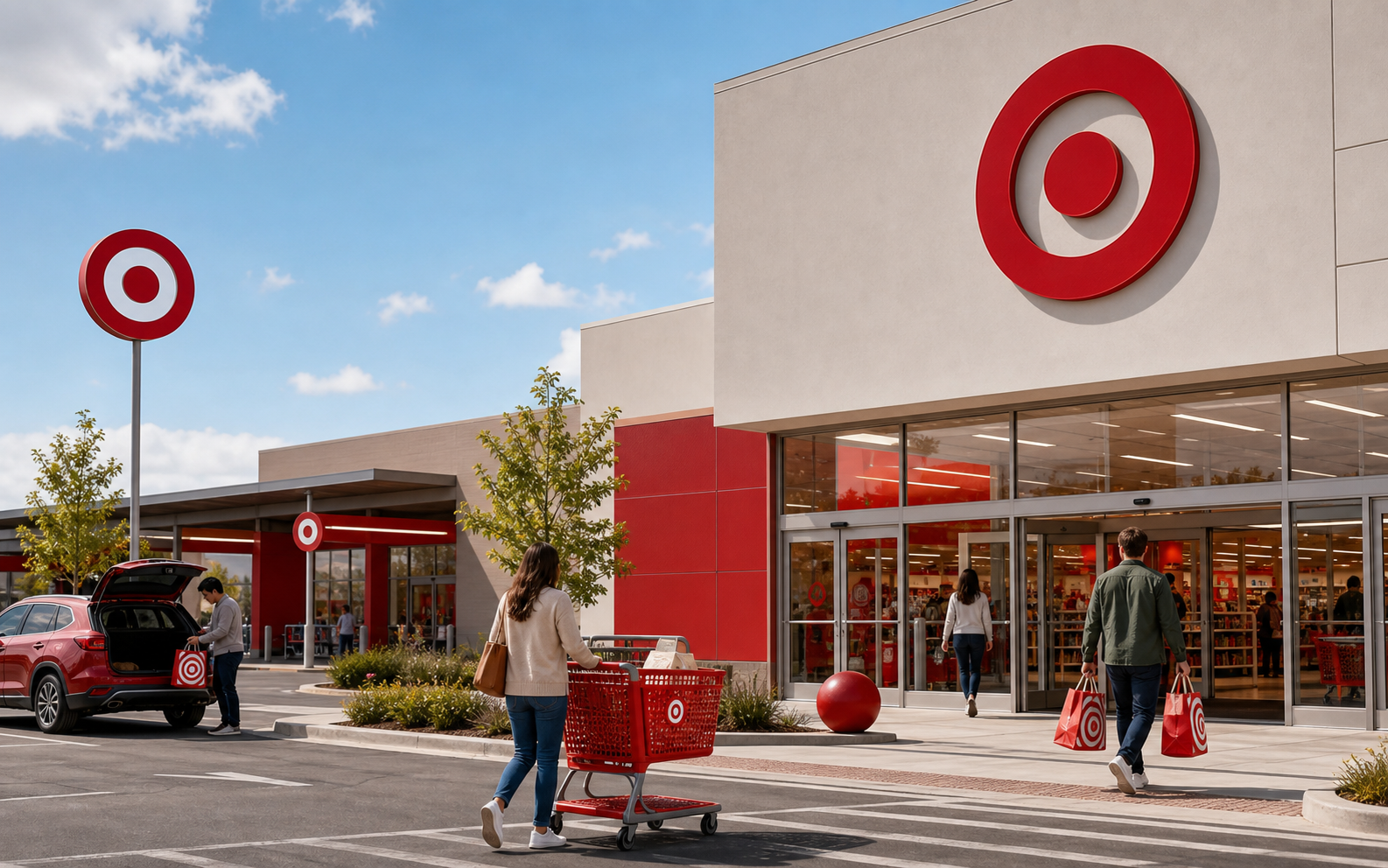
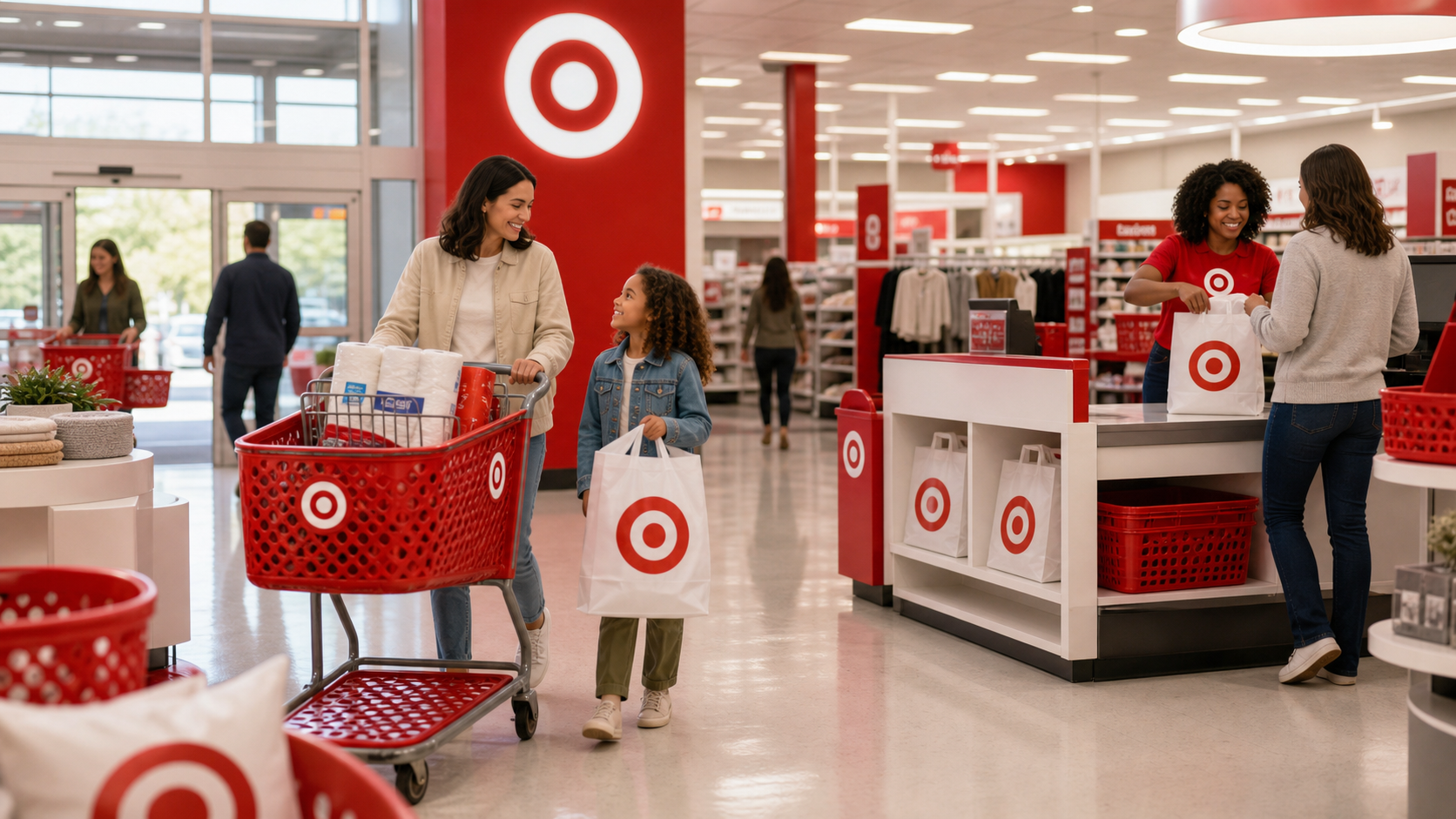
Target is a store brand, but the product is the trip. The signal gets stronger when the same promise works in aisle, app, pickup lane, owned brand, and loyalty account.
1902
Target Corporation traces its Minnesota incorporation to 1902.
Signal impact: company roots
1946
The company says it has given 5 percent of profit to communities since 1946.
Signal impact: community memory
1962
The Target retail format gives the company a simple name and bullseye cue for a discount-store trip.
Signal impact: retail signal starts
Owned brands
The FY2025 Form 10-K says owned and exclusive brands account for approximately 30 percent of merchandise sales.
Signal impact: value under control
Store fulfillment
Target says stores fulfilled more than 97 percent of total merchandise sales in each of the last three years.
Signal impact: store becomes service proof
Target Circle
Target Circle and Target Circle Card move the brand into discounts, shipping, returns, deals, and repeat behavior.
Signal impact: loyalty layer
FY2025
Target reported USD 104.78 billion in net sales, 1,995 stores, and about 415,000 team members.
Signal impact: scale under pressure
Event board.
The useful Target events are not trivia. They show when simple recognition, value pressure, owned brands, and service convenience either help or hurt the buyer.
Bullseye simplification
The name and mark make a huge store easier to remember. That is the core lesson: broad offers need short mental handles.
Impact: A simple cue lowers the cost of choosing the store.
Owned-brand scale
Target's owned and exclusive brands give the company ways to sell value, style, food, home, and essentials without depending only on national-brand price matching.
Impact: A retailer gets stronger when it owns some of the reasons people come back.
Store-powered digital
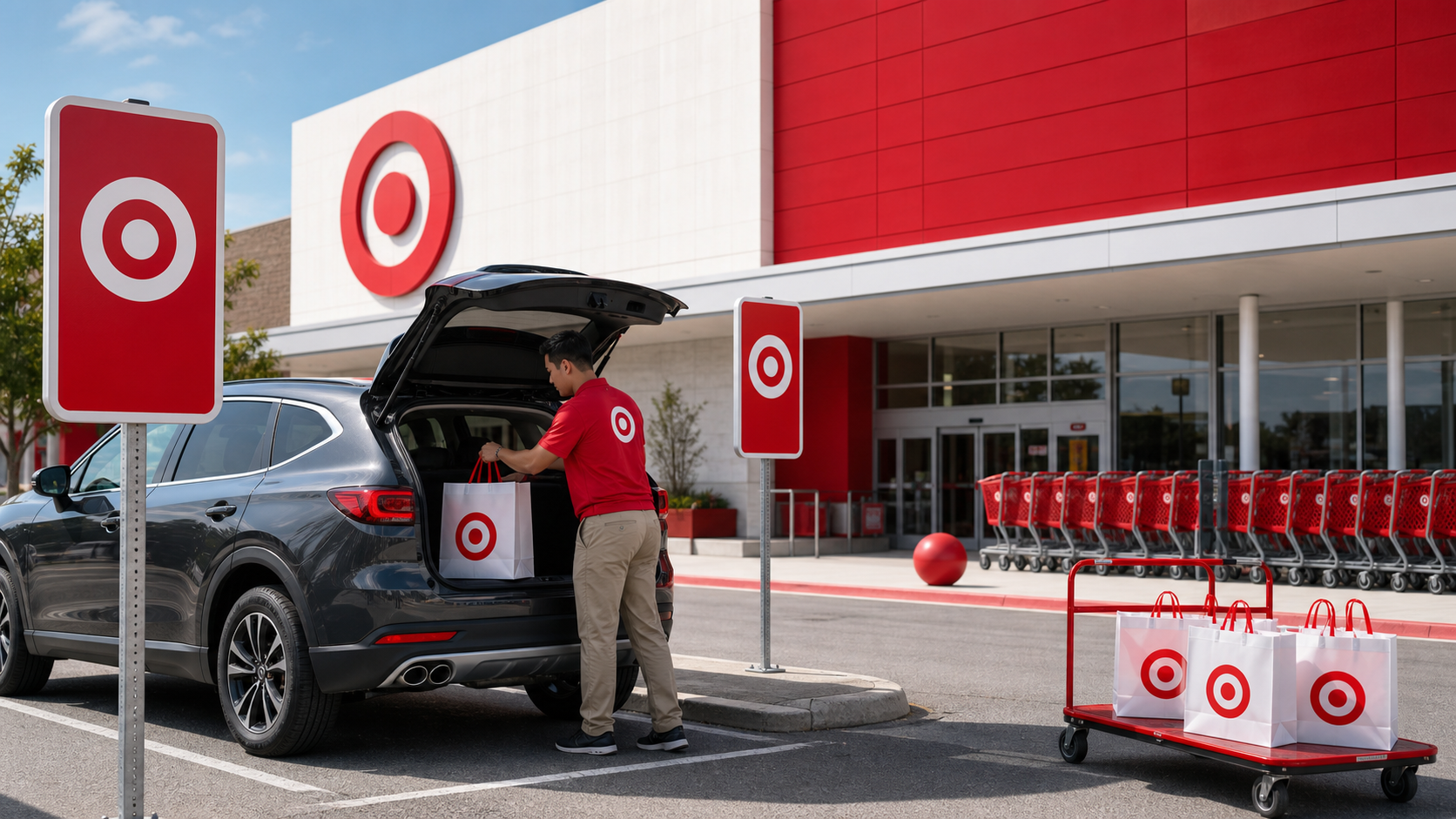
Order Pickup, Drive Up, and same-day delivery matter because they make the local store part of digital convenience.
Impact: The store becomes a speed asset and a sales floor.
FY2025 traffic pressure
Target reported a 2.6 percent comparable sales decline in FY2025, including a 2.2 percent traffic decline.
Impact: Recognition alone does not beat a weak value read.
Designer-demand spikes
Partnership heat can make Target feel sharper than a plain discount store, but scarcity creates pressure if shoppers cannot actually get the goods.
Impact: Excitement helps only when access feels fair enough to trust.
Public reaction.
Target has real affection because it makes ordinary errands feel less grim. The pressure is just as real: shoppers notice when the price, shelf, or pickup handoff does not match the promise.
Positive / shopper love
Target wins affection when a boring trip feels cleaner, easier, and more pleasant than the discount category usually promises.
Negative / pressure
A red sign cannot carry weak prices, thin shelves, slow pickup, or an owned brand that misses the quality line.
Full timeline.
Steal / avoid.
- If the offer is broad, make the memory asset brutally simple.
- Put the same cue on every surface the buyer actually uses: sign, bag, app, receipt, pickup, loyalty, and shelf.
- Use owned products to make value feel shaped, not merely discounted.
- Turn local stores into service proof when digital convenience matters.
- Do not let a simple mark hide a confusing trip.
- Do not make style a substitute for price proof when buyers are under pressure.
- Do not create demand spikes that teach customers the brand is exciting but hard to access.
- Do not split store and app promises. The customer experiences one Target.
Short answer.
Target's brand signal is the bullseye, the red-white-black retail system, and the store-powered promise of designed value. The useful lesson is simple: when a business sells many categories, the brand needs one fast cue and a trip that keeps proving the cue was worth following.
What is Target's core brand signal?
Target's core brand signal is the bullseye and red-white-black retail system, backed by stores, owned brands, pickup services, Target Circle, and a weekly-trip promise.
What should another brand steal from Target?
Make a broad offer easy to recognize and easy to repeat. The cue should work on the sign, product, app, receipt, service handoff, and loyalty layer.
What should another brand avoid copying from Target?
Do not copy the friendly red signal without the value proof. The shelf, price, service speed, and owned product quality have to earn the trip.
Compare this signal.
Use Target as the starting point for retail recognition, value pressure, owned brands, and store-powered convenience.
McDonald's location memory
Another mass-market system where location and repeat behavior carry the brand.
CompareGap retail cue risk
A retail brand shows what happens when visual memory gets disturbed.
CompareMastercard mark portability
A simple mark gets meaning from repeated use at practical surfaces.
MechanismBrand color psychology
Red works because it repeats on real shopping surfaces and points people toward the trip.
MechanismRecognition assets
Use this when the mark, color, app, store, pickup lane, and owned brands are doing the brand work.
Making a signal decision of your own?
Use Private Brand Work when your own name, identity, proof, or message needs the same pressure test.
Sources.
Related Grow Your Brand page
Related Grow Your Brand page
Related Grow Your Brand page
Related Grow Your Brand page
Target Corporation FY2025 Form 10-K · SEC Company Facts: Target Corporation · Target, 60th anniversary first-store history · Target, 50th anniversary firsts · Wikimedia Commons, Target logo file