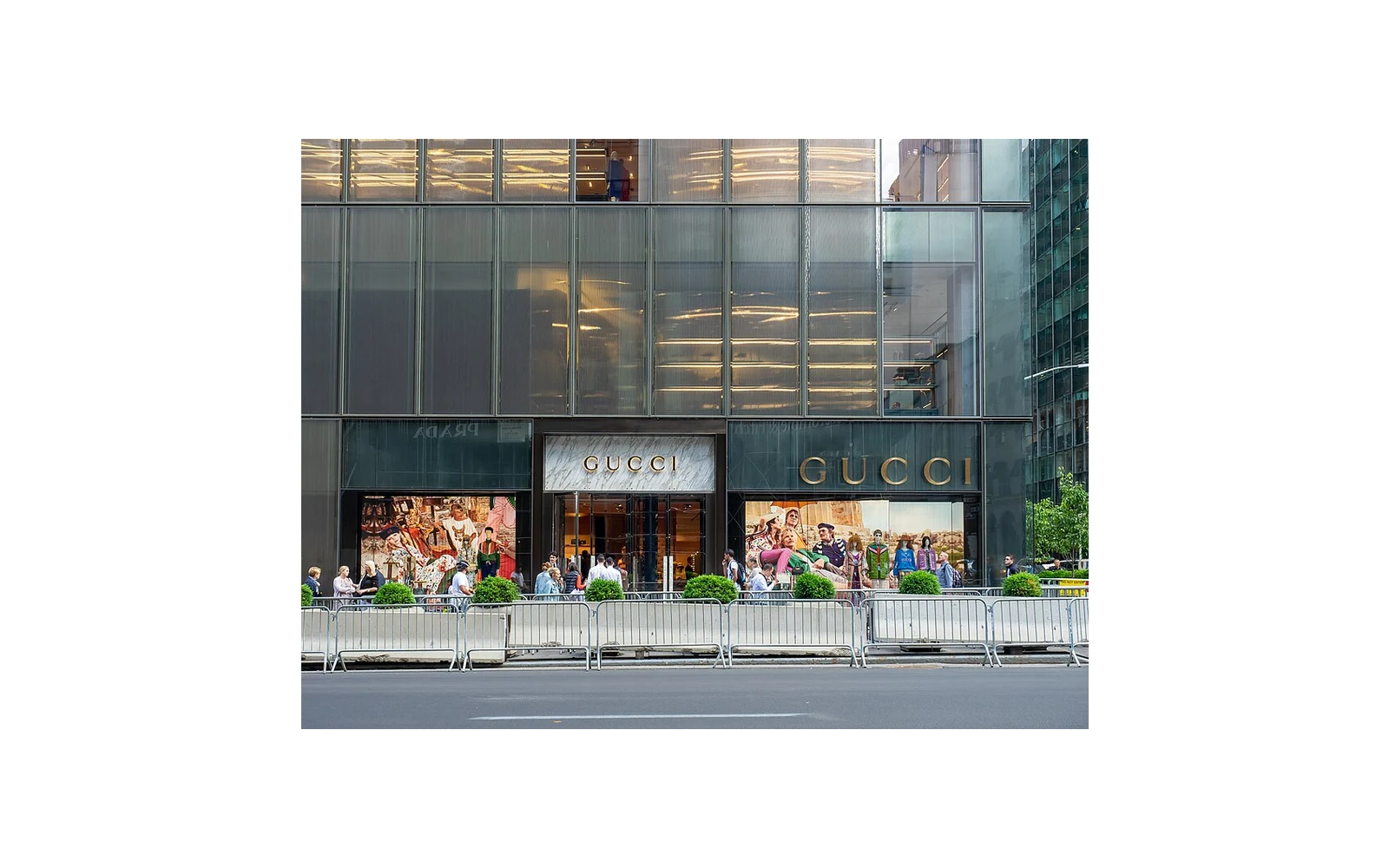
Brand System / Luxury fashion / 1921-present
Gucci and the House-Code System That Made Luxury Culture-Led
Gucci made Florence origin, leather craft, bamboo and horsebit cues, color stripes, runway culture, and reinvention cycles behave as a recognizable house-code system.
Short Answer
Gucci and the House-Code System That Made Luxury Culture-Led is a brand system case about Gucci in 1921-present. Gucci made codes flexible enough to survive reinvention. Fashion houses need recognizable objects that can change mood without losing identity. Gucci uses craft cues, hardware, color, and cultural theatre as reusable code.
Key Takeaways
- Gucci traces its founding to Florence in 1921.
- Leather goods and travel culture shaped the early house memory.
- Bamboo, horsebit-style hardware, stripe cues, and runway culture became identity carriers.
- The archive value is reinvention without full identity reset.
- The operator lesson is to build codes that can flex under new creative direction.
The Decision Context
Luxury fashion changes fast. A house needs enough continuity to be recognized and enough tension to stay culturally alive.
Gucci's answer is a dense code bank: Florence, leather goods, hardware, bamboo, stripe memory, runway character, and retail theatre.
The Codes Made Change Safer
When a house has recognizable codes, creative direction can shift without asking the audience to relearn everything.
That is why material, hardware, color rhythm, and archive references matter. They let culture move while identity stays readable.
The Archive Reading
Gucci belongs in the archive because it shows how a fashion brand can turn house codes into a working operating system.
For operators, the lesson is to make reinvention happen through recognizable parts, not total replacement.
Comparable Cases
Sources
People Also Ask
What happened to Gucci?
Gucci and the House-Code System That Made Luxury Culture-Led is a brand system case about Gucci in 1921-present. Gucci made codes flexible enough to survive reinvention. Fashion houses need recognizable objects that can change mood without losing identity. Gucci uses craft cues, hardware, color, and cultural theatre as reusable code.
Why is Gucci a brand system case?
Gucci is filed as a brand system case because the visible consequence sits in that decision pattern. Gucci made codes flexible enough to survive reinvention.
What can brands learn from Gucci?
Fashion houses need recognizable objects that can change mood without losing identity. Gucci uses craft cues, hardware, color, and cultural theatre as reusable code.
Is Gucci still operating?
The Brand Archive marks Gucci as Active / continuing. That means the brand, company, platform, product system, or parent organization is still operating, continuing, or being actively resolved.
What should Gucci be compared with?
Compare Gucci with Prada, Louis Vuitton, Hermes to see the same decision pattern from nearby cases.