Grow Your Brand Branding Guide 2026-05-22
Grow Your Brand Plain brand guides for clearer words, stronger proof, and cleaner decisions.

Historical brand decision

HealthCare.gov and the Launch That Broke the Enrollment Task

A public website launched into a high-stakes enrollment task before the operating proof matched the promise. A website can have traffic and still fail if the user cannot finish the job.

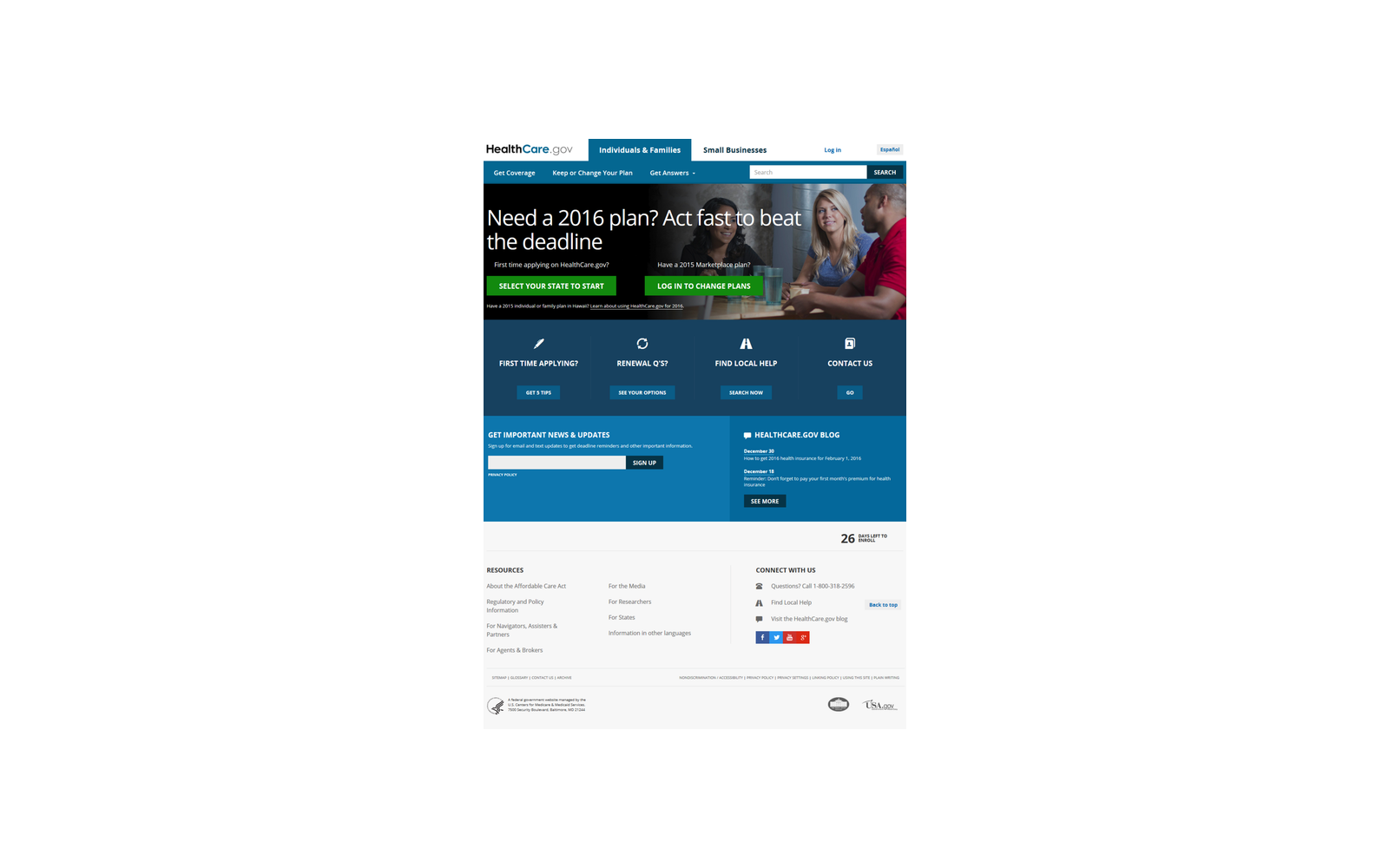
Screenshot of HealthCare.gov

HealthCare.gov Failure Case

Historical brand decision ยท 2 sources

Screenshot of HealthCare.gov. Source image from Wikimedia; not a dated reconstruction of the decision. Image source
In this guide 8 sections
01

Short Answer

HealthCare.gov and the Launch That Broke the Enrollment Task is a failure case about HealthCare.gov in 2013. A public website launched into a high-stakes enrollment task before the operating proof matched the promise. A website can have traffic and still fail if the user cannot finish the job. For high-trust tasks, launch readiness is brand trust.

02

What HealthCare.gov teaches

  • HealthCare.gov launched for Affordable Care Act marketplace enrollment in 2013.
  • GAO and HHS OIG later documented management, testing, and launch problems.
  • The case is about the full task: traffic, account creation, identity checks, plan comparison, enrollment, privacy, and recovery.
  • The buyer question is whether the site can carry the task under real pressure, not whether the page looks finished.
  • The decision route is website message and conversion review: prove the task path before launch.
03

What Changed

A public website launched into a high-stakes enrollment task before the operating proof matched the promise.

04

The Decision Context

The public job was not vague. People needed to compare coverage, create accounts, handle eligibility, and enroll.

That job made the website a trust surface. If the system failed, the brand damage was not about aesthetics. It was about whether the public institution could carry the promise.

05

What Broke

The failure sat across many handoffs: demand, load, identity, data, contractors, testing, deadlines, and user recovery.

That is why this case matters for private operators too. A redesign can say the right thing and still fail when the customer tries to finish the action.

06

The Buyer Question

For a website owner with traffic but weak leads, the question is whether users can complete the decision under real conditions.

A useful review checks message, proof, page path, form friction, loading, error states, support language, trust cues, mobile behavior, and the stop rule after launch.

07

Decision lesson

HealthCare.gov belongs in this set because it turns website launch into governance. The page was only one part of the promise.

For operators, the lesson is to test completion before announcing readiness. Trust is built when the user can do the thing the site says is possible.

08

People Also Ask

What happened to HealthCare.gov?

HealthCare.gov and the Launch That Broke the Enrollment Task is a failure case about HealthCare.gov in 2013. A public website launched into a high-stakes enrollment task before the operating proof matched the promise. A website can have traffic and still fail if the user cannot finish the job. For high-trust tasks, launch readiness is brand trust.

Why is HealthCare.gov a failure case?

HealthCare.gov is filed as a failure case because the visible consequence sits in that decision pattern. A public website launched into a high-stakes enrollment task before the operating proof matched the promise.

What can brands learn from HealthCare.gov?

A website can have traffic and still fail if the user cannot finish the job. For high-trust tasks, launch readiness is brand trust.

09

Sources

Historical evidence recorded 2026-05-22. Dates and outcomes belong to the period described.