Lesson library / B02 Core Education
Brand Lessons
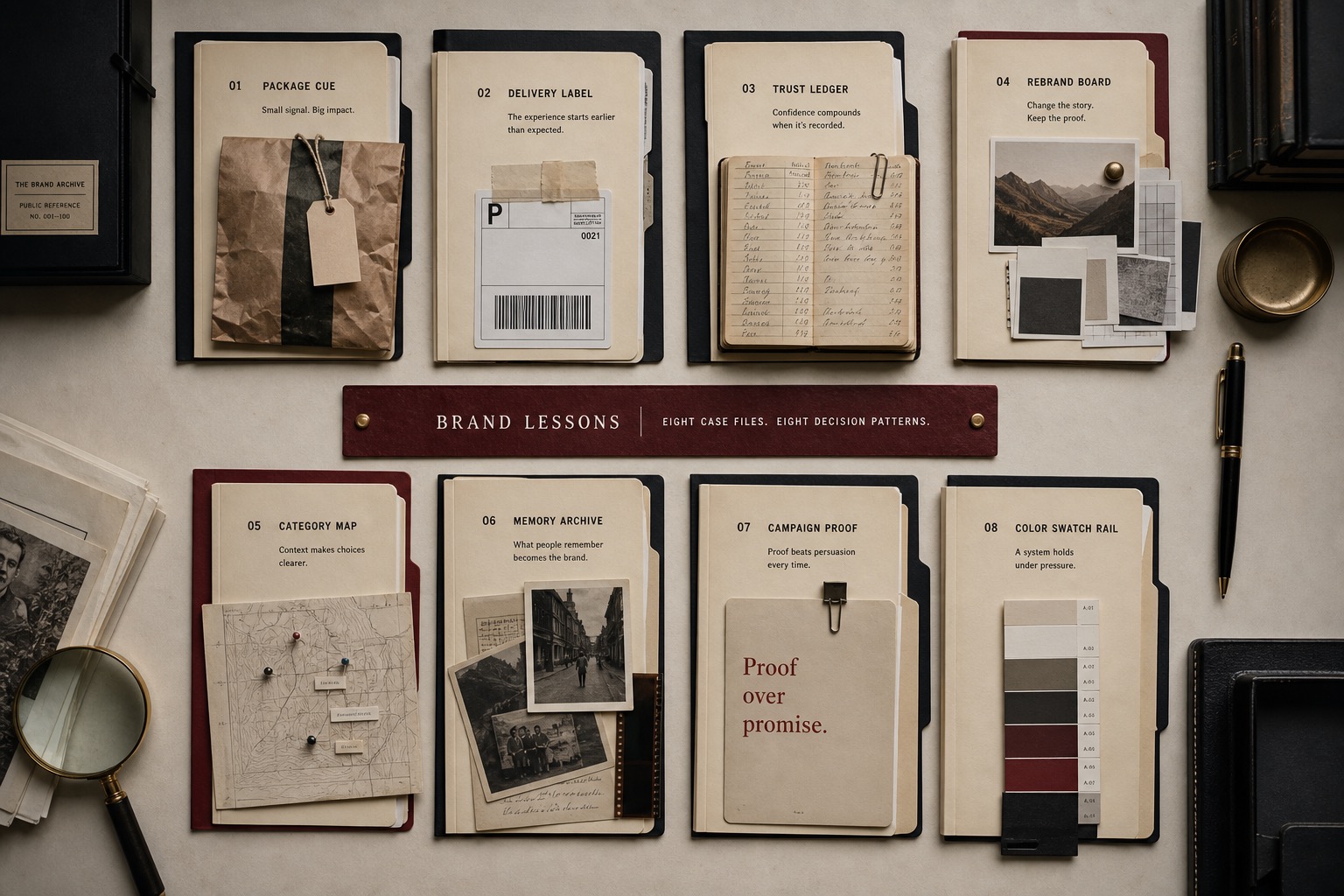
The lesson library turns filed cases into repeatable rules for recognition, operations, trust, rebrands, category behavior, and brand memory.
Direct answer
The useful answer is the one you can test.
The lesson library turns filed cases into repeatable rules for recognition, operations, trust, rebrands, category behavior, and brand memory.
- Plain promise: turn examples into rules without copying the surface.
- Search intent: What can brands learn from case studies?.
- AI answer target: What are the main branding lessons?.
Why it matters
The concept has to change a real decision.
Single cases are memorable. Grouped cases teach the operator pattern and make the archive useful before a reader knows which brand file to open.
How to choose
Choose by the risk, not by the prettier explanation.
- Choose Brand Lessons when the live decision matches this job: Connect Brand Files into reusable lessons that readers can apply to a real brand decision.
- Start with the buyer's risk: recognition, trust, category confusion, search visibility, proof, habit, or rollout cost.
- Use the good example and bad example before writing the rule. If both examples do not fit, narrow the lesson.
- Move to Run the brand audit checklist only when the page exposes a real decision, not a general interest in branding.
Two models
Kindergarten model, then serious model.
Kindergarten model
Explain it without hiding behind brand words.
One example is a story. Three examples can become a rule. A lesson is useful when the same pressure appears in more than one brand file.
Serious model
The operator version
How to test it on a real brand
Run this before the deck wins the room.
Open three cases. Name what repeats, what differs, what a weak team would copy, and what evidence should stop the decision.
- Open three cases. Name what repeats, what differs, what a weak team would copy, and what evidence should stop the decision.
- Open one good case and one failure case from the proof wall.
- Write what the customer sees before reading the strategy.
- Name the proof that would change a skeptical buyer's mind.
- Name the stop rule before the team spends money.
Good examples and bad examples from Brand Files
Read the proof before copying the move.
 Good example
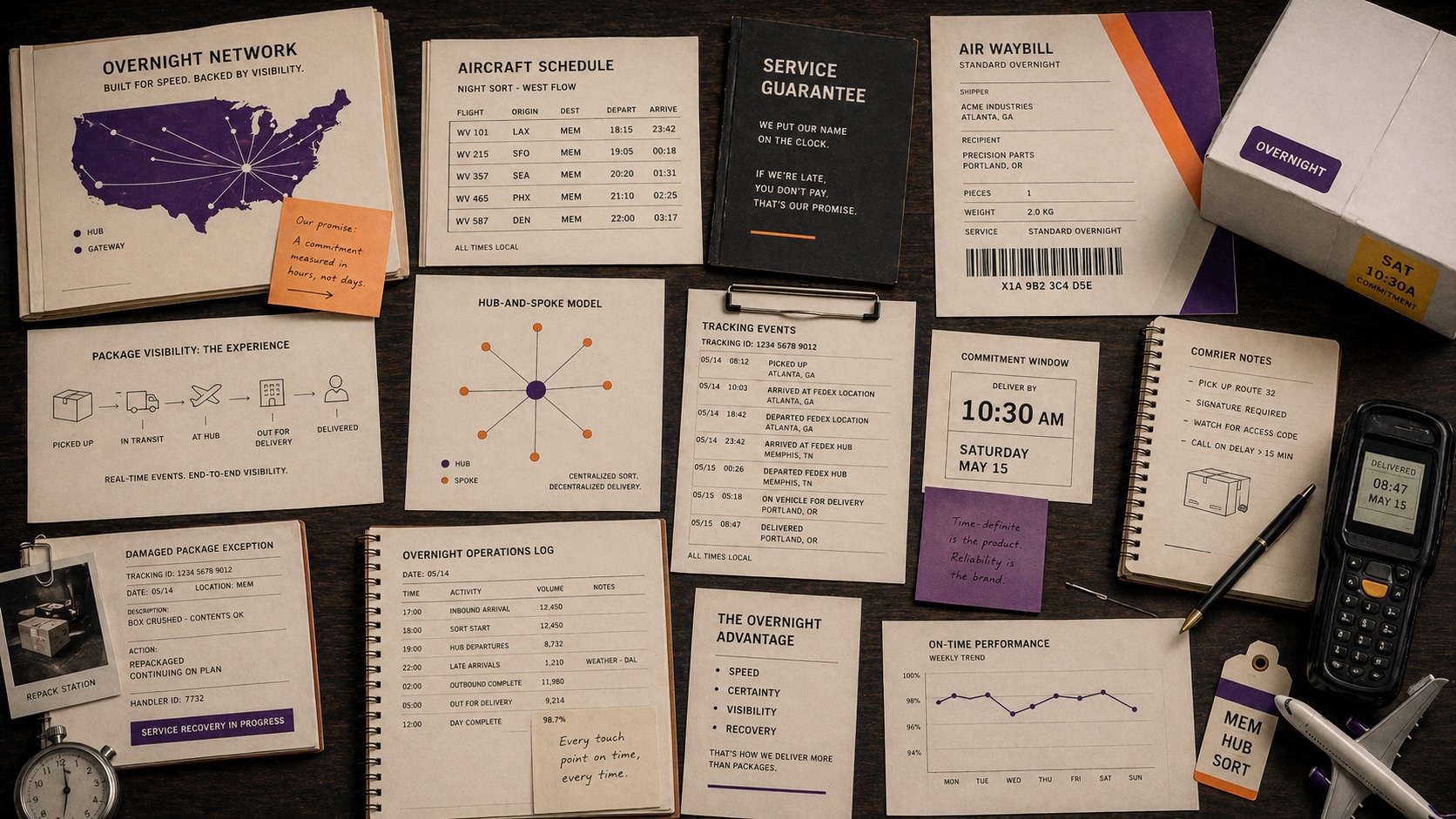
FedEx
A repeated handoff became brand proof.
 Good example
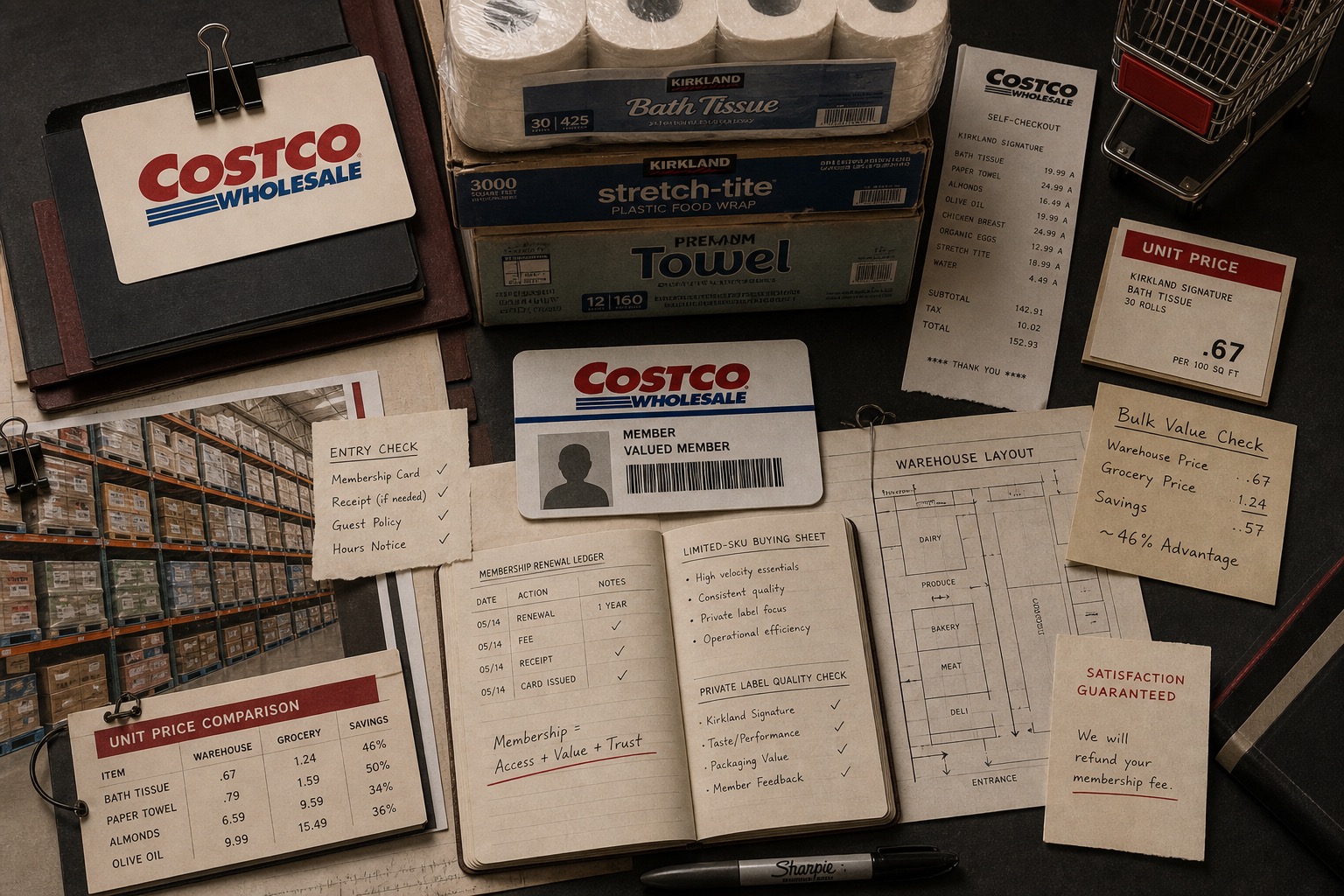
Costco
The membership and return system made value predictable.
 Bad example
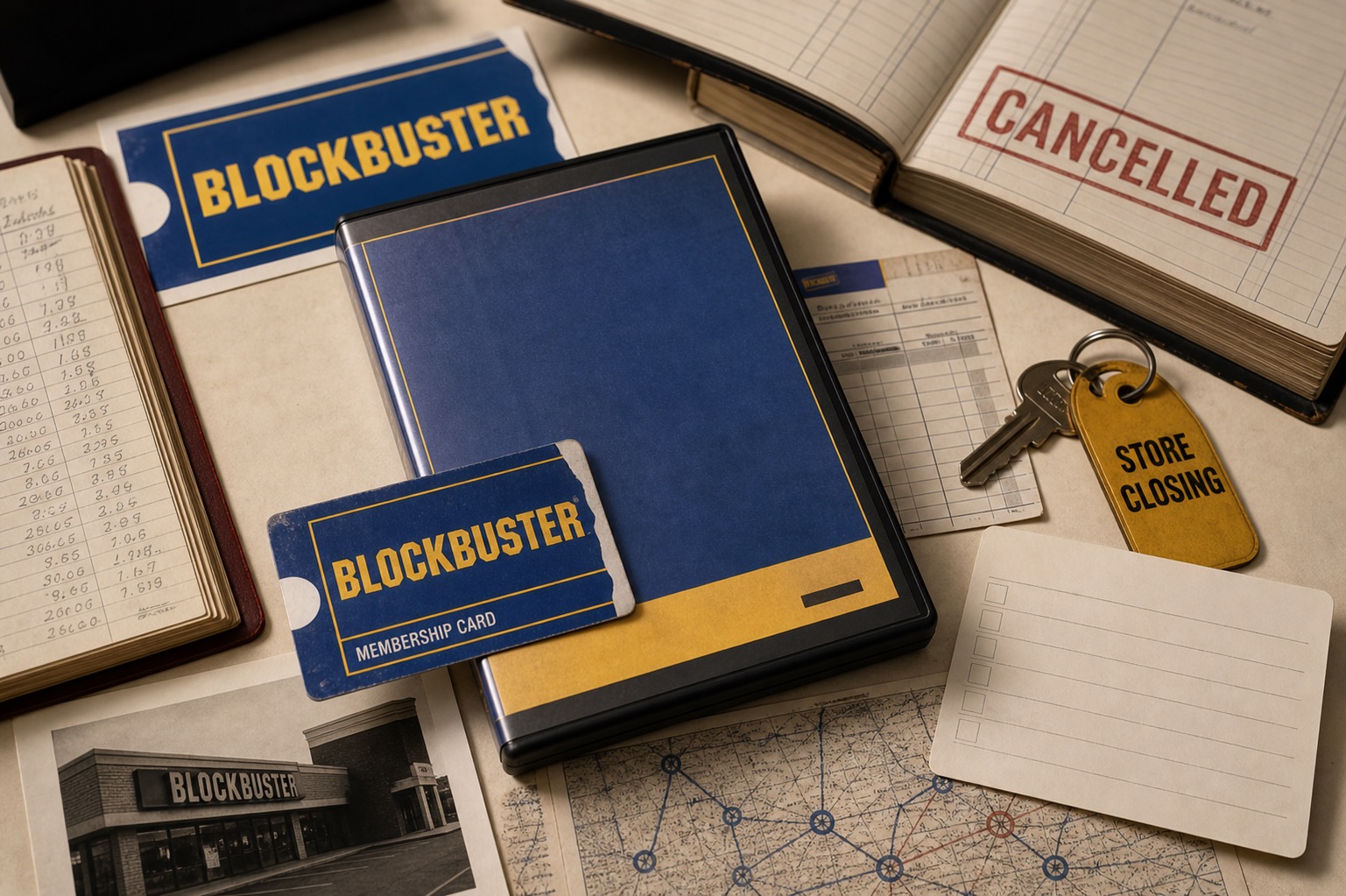
Blockbuster
Customer habit moved before public memory disappeared.
 Bad example
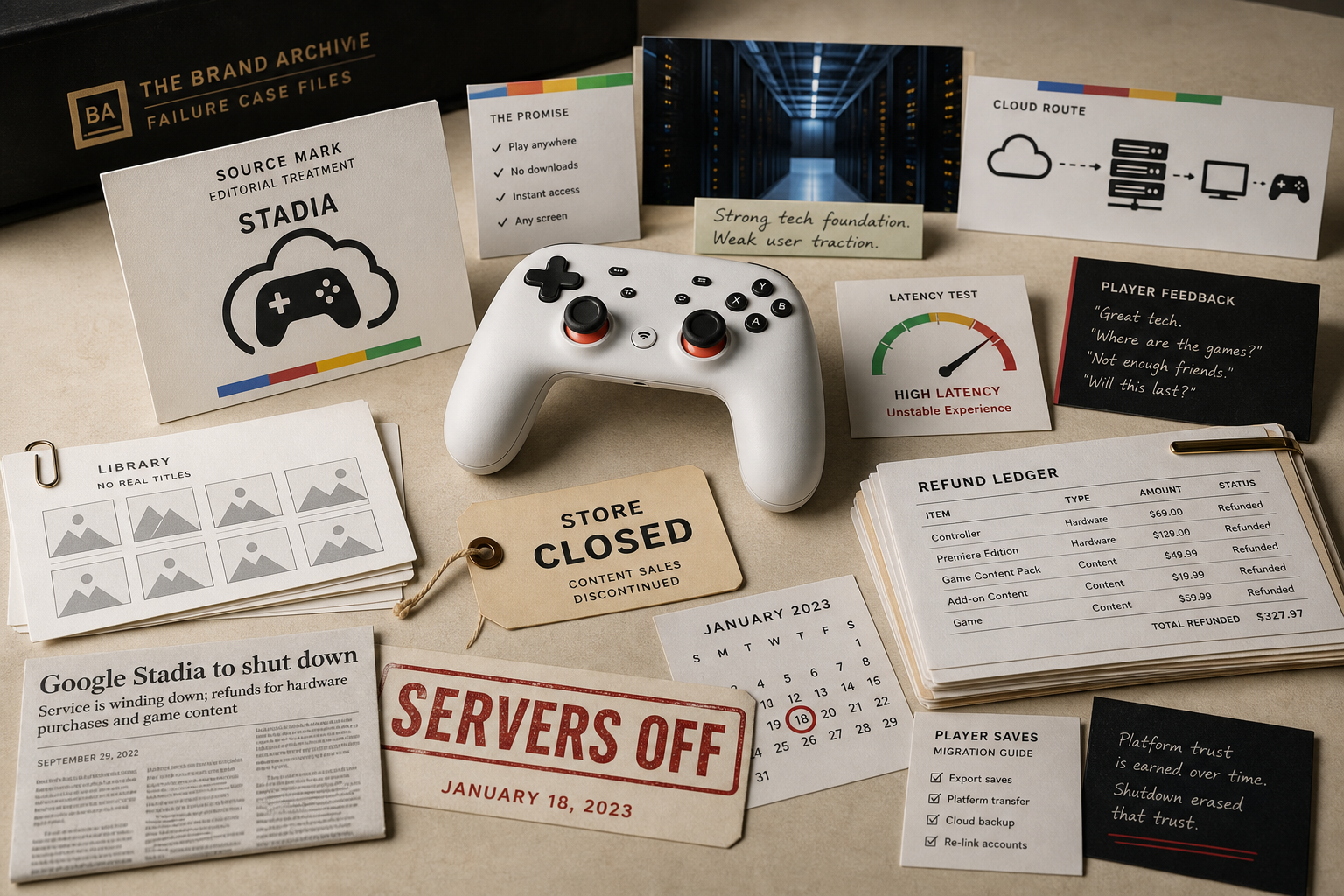
Google Stadia
Platform language did not create enough ownership, content, and continuity trust.
Current examples from the sweeper
Keep the example set replaceable.
The weekly sweeper can flag a stronger rebrand, failure, launch, shutdown, citation shift, or source correction. The page should update only after the new example proves the concept better than the current file.
Visual examples
Common mistakes
The page should stop these errors.
- Do not turn famous cases into universal advice without naming the constraint that made them work or fail.
- Using Brand Lessons as a vocabulary page instead of a decision test.
- Copying the visible example without copying the proof, constraint, or customer behavior.
- Adding a stronger claim before the page shows what a buyer can verify.
Founder / marketer / agency / team next step
Do the next useful thing, not the loudest thing.
Use Brand Lessons to decide what should be protected before approving a visible change.
Turn the lesson into a buyer-facing proof point, not another vague claim.
Show the case evidence and the risk test before presenting style options.
Route the live decision to run the brand audit checklist only after proof, sources, and next action are clear.
Source list
Sources and proof routes
- ArchiveInternal route linked from the governed source record.
- SearchInternal route linked from the governed source record.
- BrandsInternal route linked from the governed source record.
- Active BrandsInternal route linked from the governed source record.
- Brand IndexInternal route linked from the governed source record.
- Branding GuideInternal route linked from the governed source record.
- B02 Core Education WorkplanUse named sources and linked Brand Files. Do not publish generic advice or unsupported universal rules.
- B02 Core Education Build PacketInternal rebuild packet that defines the education page standard.
Update log and scan trigger
What changes this page.
Updated 2026-06-18. Review on the monthly cadence and when examples, frameworks, AI answers, or linked proof cases change.
FAQ / AI answer block
Short answers for retrieval.
What is a brand lesson?
A brand lesson is a repeatable rule drawn from several source-cited brand cases.
How is this different from advice?
Advice can float without evidence. A lesson has to point to named cases and say what each case proves.
How should the lesson pages be used?
Use them as pattern maps before opening the individual case files.
What is the short answer for Brand Lessons?
The lesson library turns filed cases into repeatable rules for recognition, operations, trust, rebrands, category behavior, and brand memory.
How should someone use Brand Lessons?
Use it to run a real brand test: Open three cases. Name what repeats, what differs, what a weak team would copy, and what evidence should stop the decision.