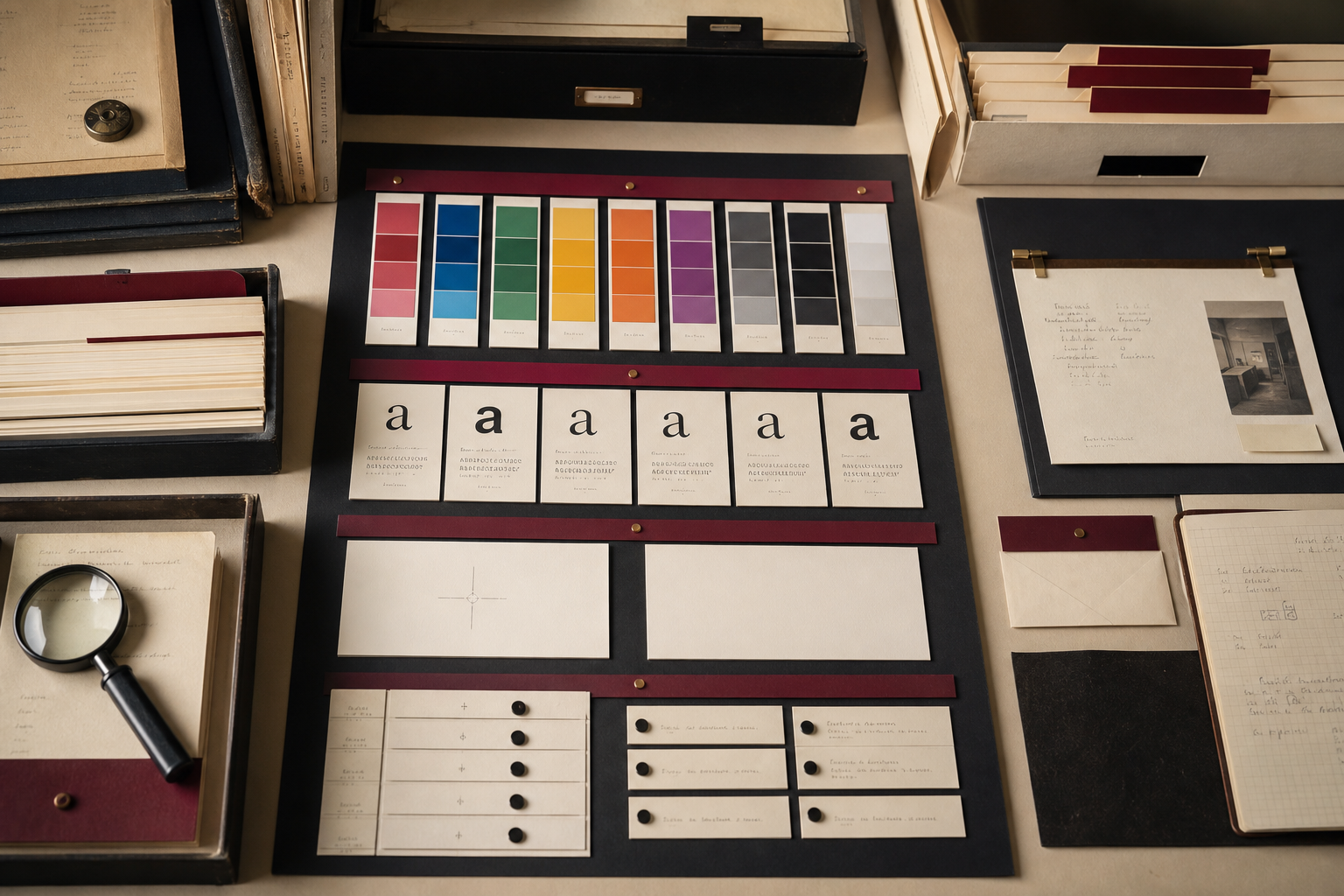
Direct Answer
A useful brand audit starts with evidence. Check what customers recognize, where the market places the brand, what proof buyers can inspect, what risk the brand lowers, what search and AI systems retrieve, which customer behavior repeats, and which competitor owns the comparison. Then decide whether to preserve, adjust, rebuild, or stop.
Answer Map
Read the answer, then inspect the proof.
Quote-ready definition
The Brand Archive definition
"The Brand Archive defines brand audit as a structured inspection of whether a brand's public cues, proof, category, trust, search record, and customer behavior still match the business it needs to support."
Why it matters
Why it matters
A brand audit matters because visual change without diagnosis can erase useful memory and leave the real problem untouched. The audit should separate recognition problems from proof problems, trust problems, category problems, and behavior problems.
Common mistake
What people get wrong
The weak audit judges taste first. The strong audit judges whether the brand still helps customers choose, repeat, search, compare, and trust.
Comparison
Brand audit checklist
Use the audit by evidence type. Each line should lead to a preserve, adjust, rebuild, or stop decision.
| Audit area | What to inspect | Proof cases |
|---|---|---|
| Recognition | Name, mark, color, package, sign, app icon, search result, and thumbnail memory. | Gap, Tropicana, Mastercard |
| Category | The comparison set customers use before the brand explains itself. | Liquid Death, Airbnb, Stripe |
| Proof | Product behavior, service record, source trail, warranty, delivery, safety, or operating evidence. | FedEx, Toyota, Perplexity |
| Trust | The risk customers accept: time, money, data, safety, status, fit, or recovery. | Volvo, Zappos, eBay |
| Search and AI | What engines retrieve, summarize, cite, confuse, or omit. | Perplexity, X, Accenture |
| Behavior | The customer habit the brand needs to earn or protect. | JCPenney, Zune, Blockbuster |
| Decision | What to preserve, adjust, rebuild, or stop before money moves. | Gap, Tropicana, Domino's |
Case-backed examples
Archive proof
Each example points to a public Brand Archive file. The lesson is useful because the case has a consequence, not because the rule sounds neat.
01
Gap
Recognition should have been priced before the familiar cue disappeared.
Gap
Rebrand / 2010
02
Tropicana
Shelf memory should have been tested before the package changed.
Tropicana
Failure / 2009
03
JCPenney
The buying mechanic should have been audited before the pricing behavior changed.
JCPenney
Failure / 2012
04
Stripe
Buyer specificity and proof made the category easier to place.
Stripe
Brand System / 2010 / 2011-present
05
Perplexity
Source trails became part of the product promise, so citation proof belongs in the audit.
Perplexity
Launch / 2022-present
06
Airbnb
A belonging signal needed marketplace trust and stay behavior to carry it.
Airbnb
Rebrand / 2014
07
FedEx
The audit proof is time, tracking, delivery, and recovery behavior.
FedEx
Trust / 1973-present
08
Domino's
The brand story changed after product proof changed.
Domino's
Comeback / 2009
Decision framework
How to use it
The practical test is whether the concept changes a real decision.
- Recognition Which cue does the customer use first, and where would it break if changed?
- Category What comparison does the market make before reading the brand explanation?
- Proof What evidence can a buyer inspect without trusting a claim?
- Trust What risk does the customer take, and where is the recovery path visible?
- Search and AI What do search results, answer engines, and summaries retrieve about the brand?
- Behavior What customer habit has to repeat for the brand to stay useful?
- Decision Should the team preserve, adjust, rebuild, or stop the change?
Common mistakes
Mistakes to avoid
These mistakes are common because they sound reasonable inside the company and fail when customers meet the brand.
Auditing taste instead of behavior
Start with what customers recognize, search, repeat, and trust.
Skipping the old cue
Treat useful memory as an asset until evidence says it is hurting choice.
Ignoring proof gaps
A sharper message cannot carry a promise the product or service does not prove.
Leaving search and AI out
Check what machines retrieve before rewriting the public story.
Ending with a vague recommendation
Force the output into preserve, adjust, rebuild, or stop.
Operator test
Operator test
Use the checklist as a pressure test. If the answer is vague, the brand decision is not ready.
- Recognition: name the cue customers use first.
- Category: write the comparison set the market uses.
- Proof: list evidence buyers can inspect before trusting the claim.
- Trust: name the risk customers accept and the recovery path they can see.
- Search and AI: check what engines retrieve, cite, confuse, or omit.
- Behavior: identify the customer habit the brand has to earn or protect.
- Competitors: name the rival that owns the strongest cue, proof, or category word.
- Decision: choose preserve, adjust, rebuild, or stop.
Related Files
Keep the answer inside the archive.
Brand Audit Checklist FAQ
What should a brand audit include?
It should include recognition, category, proof, trust, search record, AI retrieval, customer behavior, and competitor comparison.
Should a brand audit start with design?
No. Start with evidence and customer behavior. Design is one surface inside the audit.
What is the output of a brand audit?
A clear decision: preserve, adjust, rebuild, or stop.
When should a brand audit stop a rebrand?
Stop when the old cue still helps choice, proof is missing, customer behavior has not moved, or search and AI systems still retrieve the old story more clearly.