Brand Entity / Tesla branding and demand gap
Tesla: branding and demand gap
Tesla is filed as a demand-gap brand: EV leadership, technology desire, owner identity, and trust pressure now pull against each other.
Short Answer
Tesla is filed here for one job: Tesla branding and demand gap. The Tesla file proves that category leadership can become unstable when identity, product trust, and public behavior no longer point the same way.
Reader Task
What this brand entry should help you finish
Use this file to answer the Tesla brand question without falling into a company-history summary. The task is to understand the main Tesla branding and demand gap pattern, check the sourced facts, open the primary case (Tesla and the Demand Gap That made EV Leadership read as Political), and leave with a lesson or risk that can be compared against another brand. The file has 1 filed case, so the next step should be clear before the reader leaves.
Fact Panel
Tesla facts
Only sourced facts render here. Unsourced company-history rows stay out of the page.
- Founded
- 2003 Source
- Founders
- Martin Eberhard and Marc Tarpenning Source
- Parent / ownership
- Tesla, Inc. (NASDAQ: TSLA) Source
- Category
- Electric vehicles, energy, and software Source
- Home market
- Austin, Texas, United States Source
- Distinctive assets
- Tesla T mark and EV demand cue
- Status
- Active Source
- Decisions on file
- 1 filed case
What Tesla teaches
The useful brand entry does not ask whether Tesla is famous. It asks what the filed decision record teaches that a reader can use on another brand.
- Main lesson: The Tesla file proves that category leadership can become unstable when identity, product trust, and public behavior no longer point the same way.
- Reader check: Inspect the gap between demand, owner identity, EV leadership, technology proof, and trust pressure.
- Failure mode: The risk is letting the public figure, category politics, and product proof collapse into one volatile signal.
- Filed case: Tesla: Category leadership becomes fragile when the public can no longer separate the product promise from the identity signal around owning it. If the brand asks customers to wait for the next future, the core product must still read worth choosing now.
Mistake To Catch
Where the Tesla reading breaks
The risk is letting the public figure, category politics, and product proof collapse into one volatile signal.
The weak read is to stop at the familiar name. The stronger read is to ask which decision changed recognition, trust, habit, distribution, product proof, or public memory.
That is the useful job of the brand entry: keep the famous name attached to a decision the reader can inspect.
Decision Depth
Read Tesla as demand-gap pressure across product, identity, and trust.
This section turns the brand name into an inspection path: what changed, what broke, what worked, and what to compare next.
Tesla is useful because leadership and volatility live together. EV desire, technology status, owner identity, public figure risk, service questions, safety perception, and demand pressure all affect the brand at once.
A weak reading treats Tesla as only innovation or only controversy. A stronger reading asks which proof surface is carrying the brand in the current buying decision.
The inspection path is EV category leadership, product lineup, charging, service, safety, software, pricing, owner identity, public behavior, and competitor catch-up.
Use this file before relying on category leadership as brand protection. The approval test is whether the current product and trust evidence still supports the identity.
The copycat mistake is confusing attention with demand. A brand can dominate conversation while the buying decision becomes more hesitant.
The practical lesson is to separate technology desire from operating proof. When those drift, the brand starts asking customers to reconcile the gap themselves.
A Tesla check should name the buyer hesitation directly: price, range, service, safety, public behavior, charging, resale, software, build quality, or competitor comparison.
The page should also separate owner identity from new-buyer confidence. A strong owner tribe can keep attention high while a new buyer still asks for proof before switching.
The final check is whether the product proof reduces more doubt than the public signal creates. If not, demand can stay loud while conversion gets harder.
Decision timeline
The timeline is the reason this brand has a parent page. Each row points to a filed case, then names the consequence a reader should carry into the next comparison.
For brands with one case, the timeline still matters because it prevents a thin profile. The brand page becomes the router, and the case page remains the proof.
| Filed decision | What happened | What it teaches |
|---|---|---|
| Tesla and the Demand Gap That made EV Leadership read as Political Pivot / 2025-2026 |
Tesla is still one of the most important EV brands in the world, but its 2026 pressure shows what happens when category leadership, owner identity, delivery expectations, CEO visibility, and an AI/robotaxi pivot all collide. | Category leadership becomes fragile when the public can no longer separate the product promise from the identity signal around owning it. If the brand asks customers to wait for the next future, the core product must still read worth choosing now. |
Source test
The source trail below is inherited from the filed cases, including company records, campaign records, public reports, source-mark files, or archived references where the original page moved.
Use the source list to verify the facts. Use the case links to inspect the decision. Use the comparison links to test whether the Tesla pattern repeats somewhere else.
Visual proof
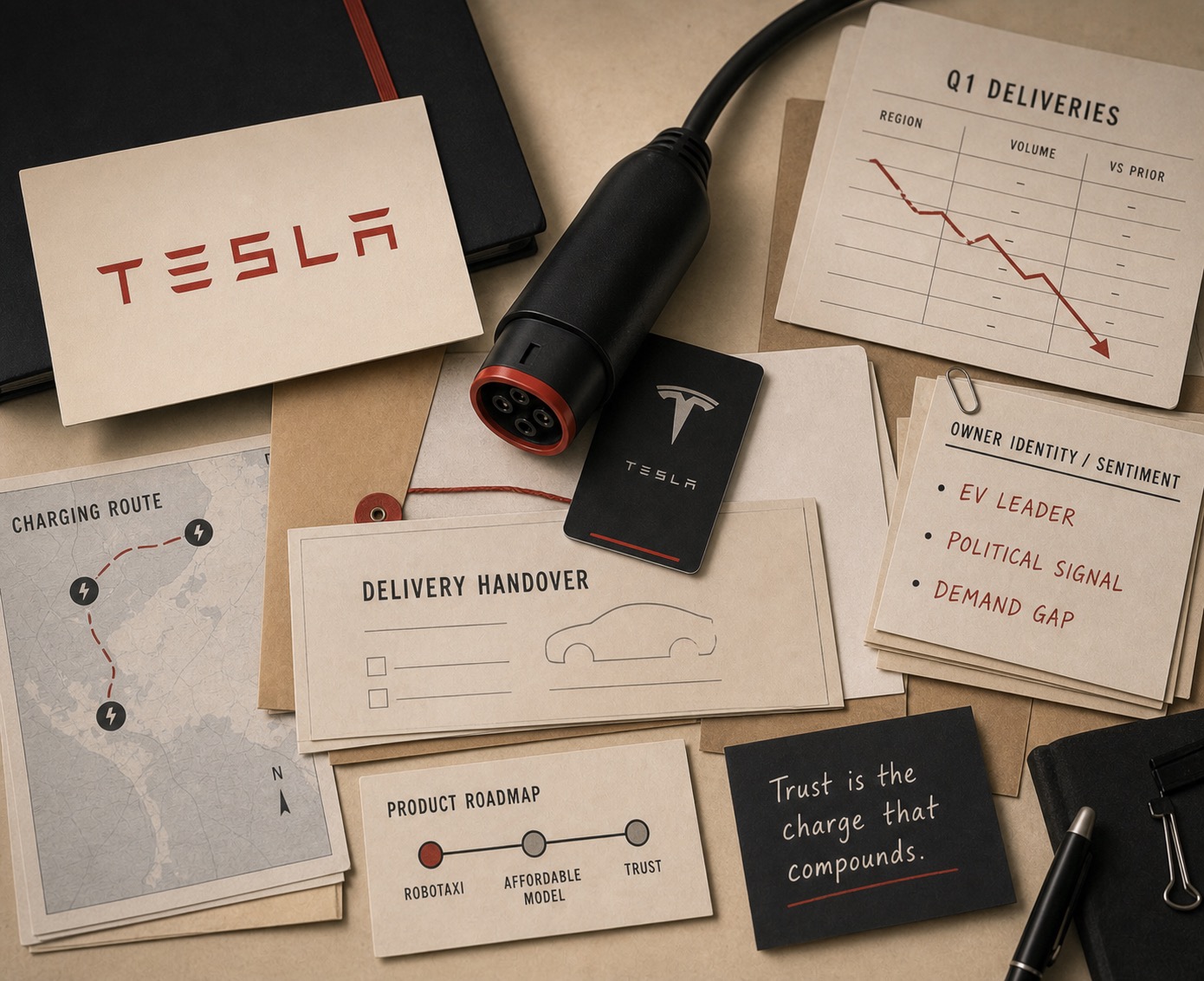
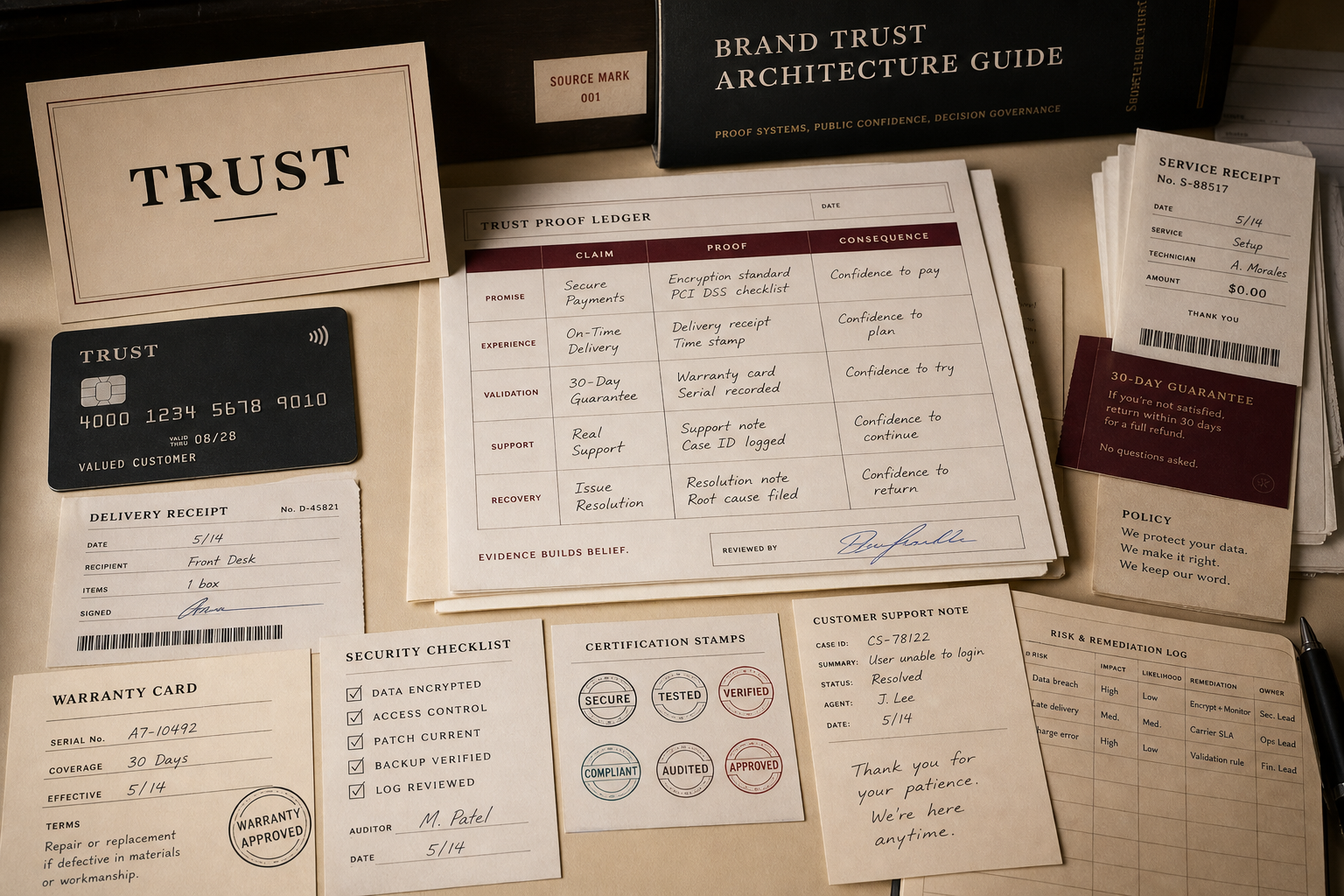
The hero image for this brand page uses the strongest generated archive visual already attached to the primary case: Tesla and the Demand Gap That made EV Leadership read as Political. It stays tied to filed evidence instead of becoming a generic brand mood image.
That visual rule matters for this build. Every brand page needs a high-end image, but the image has to point back to the decision: packaging, mark, product behavior, service proof, ritual, failure, or trust pressure.
If a future brand has no strong visual, it does not pass the entity-page gate until the image is generated or replaced.
Sources

People Also Ask
What happened to Tesla, and what should readers inspect?
The Tesla file proves that category leadership can become unstable when identity, product trust, and public behavior no longer point the same way. Start by inspecting this point: Inspect the gap between demand, owner identity, EV leadership, technology proof, and trust pressure.
What does Tesla teach about branding?
The Tesla file proves that category leadership can become unstable when identity, product trust, and public behavior no longer point the same way.
What should readers inspect first in the Tesla file?
Inspect the gap between demand, owner identity, EV leadership, technology proof, and trust pressure.
What is the main risk in the Tesla file?
The risk is letting the public figure, category politics, and product proof collapse into one volatile signal.
Which Tesla case should readers open first?
Start with Tesla and the Demand Gap That made EV Leadership read as Political, because it is the primary filed case behind this brand file.