
Grow Your Brand Branding guides from Grow Your Brand June 2026
Grow Your Brand Plain brand guides for clearer words, stronger proof, and cleaner decisions.

Branding guide · Decision tool

Brand awareness is known memory. Brand strength needs usable memory.

Use brand awareness when people may have heard of the brand but do not think of it in the buying moment. Awareness, recognition, recall, salience, preference, and equity are different jobs.

Separate memory types.Seen, recognized, recalled, and retrieved are not the same.
Tie memory to situations.The brand has to come to mind when the buyer acts.
Measure behavior.Awareness can look healthy while choice stays weak.
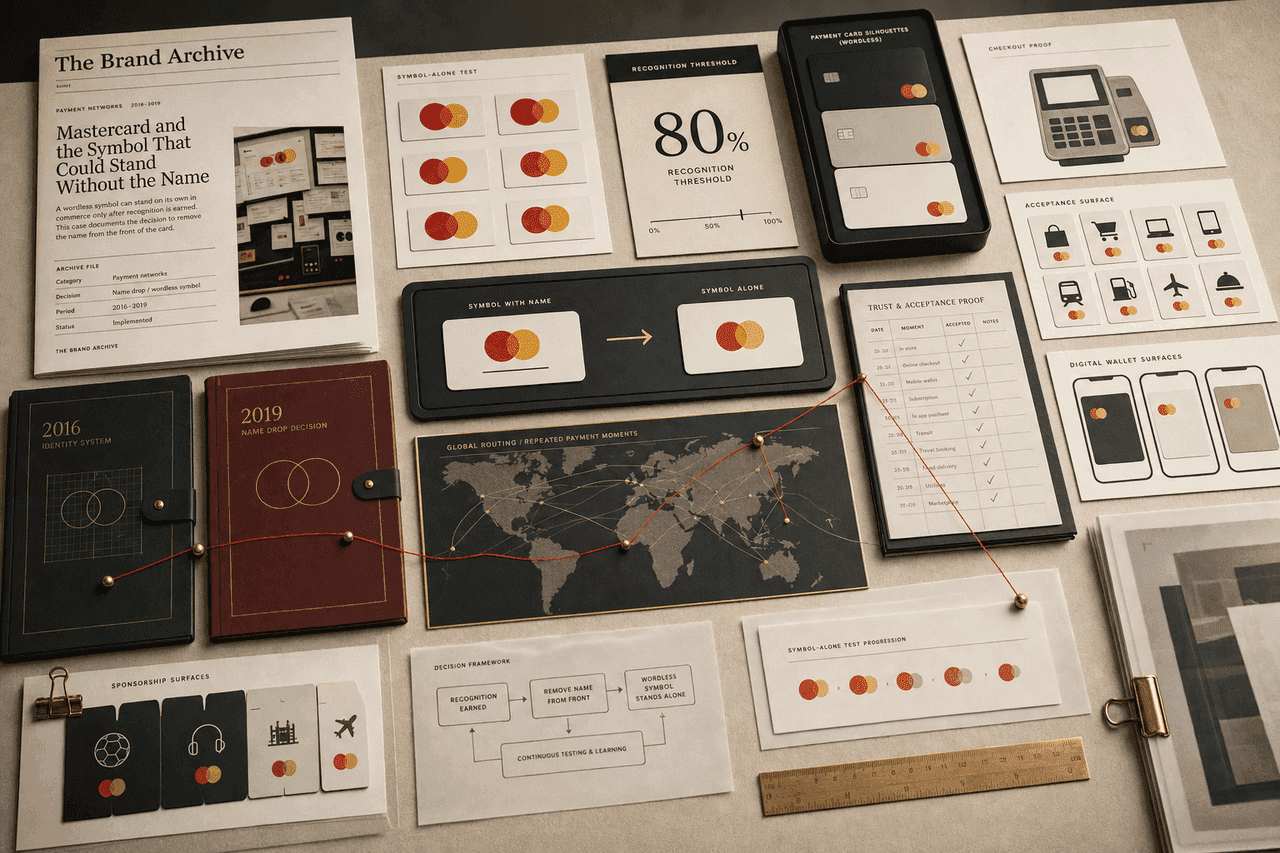
Payment symbol recognition surface showing a brand cue working without the full name.

Brand Awareness

known · recognized · recalled · chosen

Familiarity is not the same as being chosen.
Category-entry surface showing how brand memory connects to a buying situation.
The valuable question is not only whether people know the brand. It is when the brand comes to mind.
01

What awareness can and cannot do.

Brand awareness means people know the brand exists.That can mean they have seen it, recognize it, or can recall it when asked.
Usable memory is stricter.A strong brand comes to mind in the situation where the buyer is about to act.
Recognition, recall, and salience are different.Confusing them leads teams to buy attention without improving choice.
02

Awareness, recognition, recall, salience, and equity.

Choose the right memory problem before buying media or changing assets.

Term
Plain meaning
How to check
Common mistake
Awareness
People know the brand exists
Familiarity, reach, search interest, surveys
Assuming awareness means trust
Recognition
People identify the brand from a cue
Logo, color, package, sound, name tests
Changing cues too fast
Recall
People name the brand without seeing it
Unaided recall, category prompt
Expecting recall before repetition
Salience
Brand comes to mind in a buying situation
Situation prompts, category-entry tests
Tracking fame without moment fit
Preference
People favor the brand
Choice, consideration, repeat behavior
Mistaking familiarity for choice
Equity
Memory plus meaning creates business value
Price power, loyalty, resilience, demand
Reducing equity to one metric
03

Examples to study.

Use examples to understand the mechanism, not to copy the surface.

Mastercard

Mastercard

A wordless symbol can support recognition when the market has learned the cue.

Tiffany & Co.

Tiffany & Co.

A color and box can create awareness before product detail appears.

McDonald's

McDonald's

Arches, color, location, and service rhythm tie memory to a buying moment.

Nike

Nike

A simple mark becomes powerful because it is tied to repeated sport and motion situations.

04

Where to check it.

A brand decision is not real until it survives the places buyers actually meet it.

Surface
What to check
Search
Do people search the brand name or only the category?
Shelf or results page
Can people recognize the cue in a crowded set?
Buying situation
Does the brand come to mind at the right moment?
Campaign
Does media create memory tied to a use case?
Slogan
Does the phrase help recall the brand or only the ad?
Product experience
Does repeat use reinforce memory?
05

Where it fails.

Most failures are visible before launch if the surface is inspected.

Fame without retrieval

Fame without retrieval

People know the brand but do not think of it when buying.

Cue drift

Cue drift

Assets change before they become memory.

Wrong metric

Wrong metric

Reach is treated as brand strength.

No situation

No situation

The brand is known generally but attached to no buying moment.

Campaign-only memory

Campaign-only memory

People remember the ad but not the brand.

No proof

No proof

Attention rises while trust and choice stay weak.

06

Brand Awareness decision checklist.

Approve when
  • The team knows which memory problem it is solving.
  • Cues are repeated long enough to build recognition.
  • Campaigns attach the brand to buying situations.
  • Measures separate awareness, recall, recognition, salience, and preference.
  • The brand links memory to proof and behavior.
Hold when
  • The plan buys reach without a retrieval moment.
  • The team wants to change cues before they are learned.
  • The metric cannot separate attention from choice.
  • The campaign is memorable but the brand is not.
  • The brand lacks proof after awareness is created.
07

Use this for your brand.

Private brand work

Bring the unclear cue into private review.

If the name, color, message, mark, or page is making buyers hesitate, use private brand work before the public surface hardens.

Private reviewRequest private brand workUse this when the decision affects sales, trust, launch risk, or buyer clarity.
08