Grow Your Brand Branding guides from Grow Your Brand June 2026
Grow Your Brand Plain brand guides for clearer words, stronger proof, and cleaner decisions.

Branding guide · Decision tool

Brand guidelines protect recognition when more than one person touches the brand.

Brand guidelines are not a moodboard or a PDF trophy. They are operating rules for logo use, color roles, type hierarchy, voice, image style, proof language, accessibility, and misuse.

Stop drift.The same cues should survive sales decks, support replies, packaging, social, product UI, and search.
Name the rules.Logo, color, type, image, voice, proof, and accessibility each need a job.
Show the bad use.A guide that never shows what not to do leaves the risky decisions open.
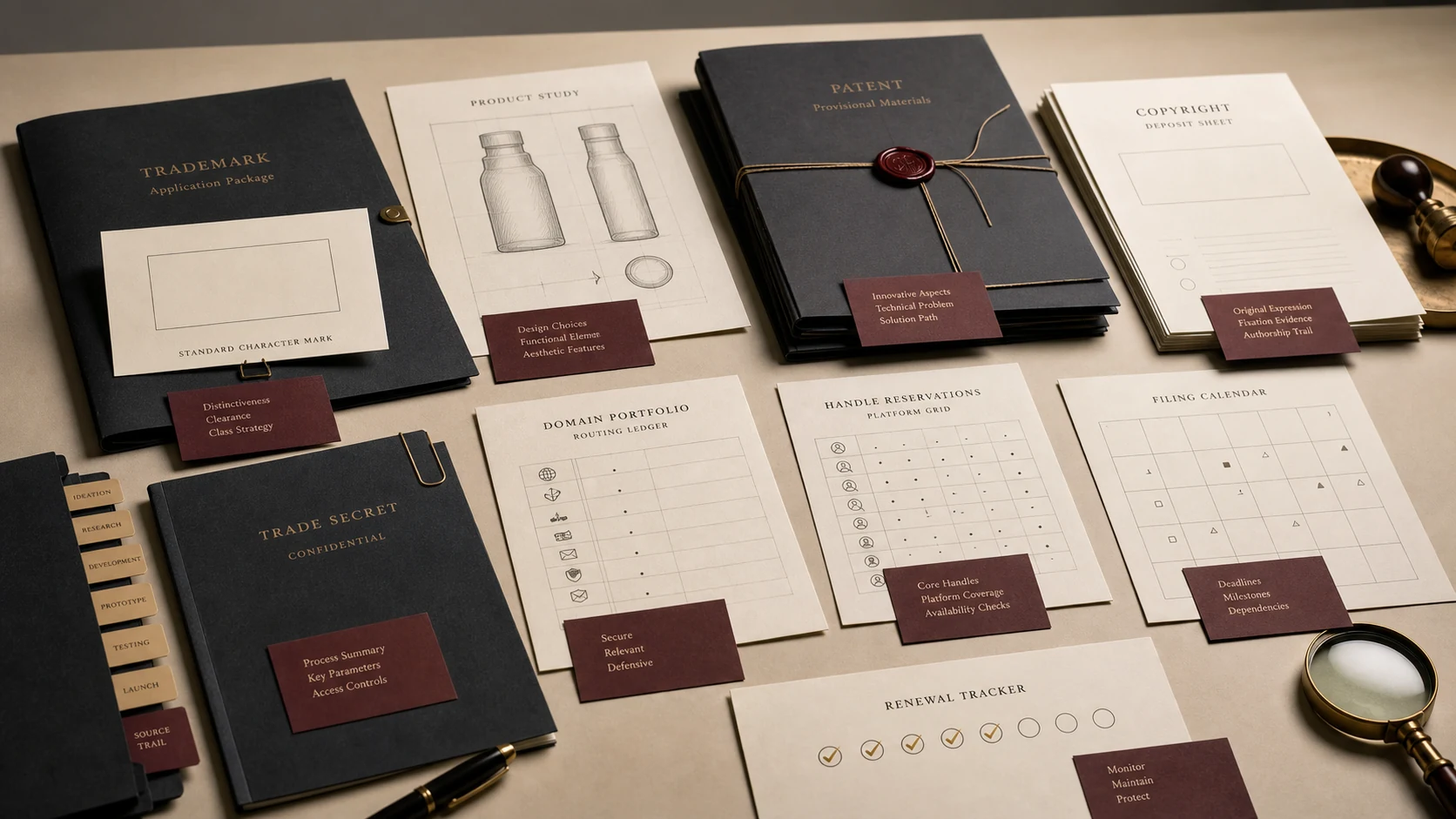
Protected asset stack showing brand files prepared for real public surfaces.

Brand Guidelines

rules · roles · misuse · surfaces

A guideline is only useful if it prevents a real public mistake.
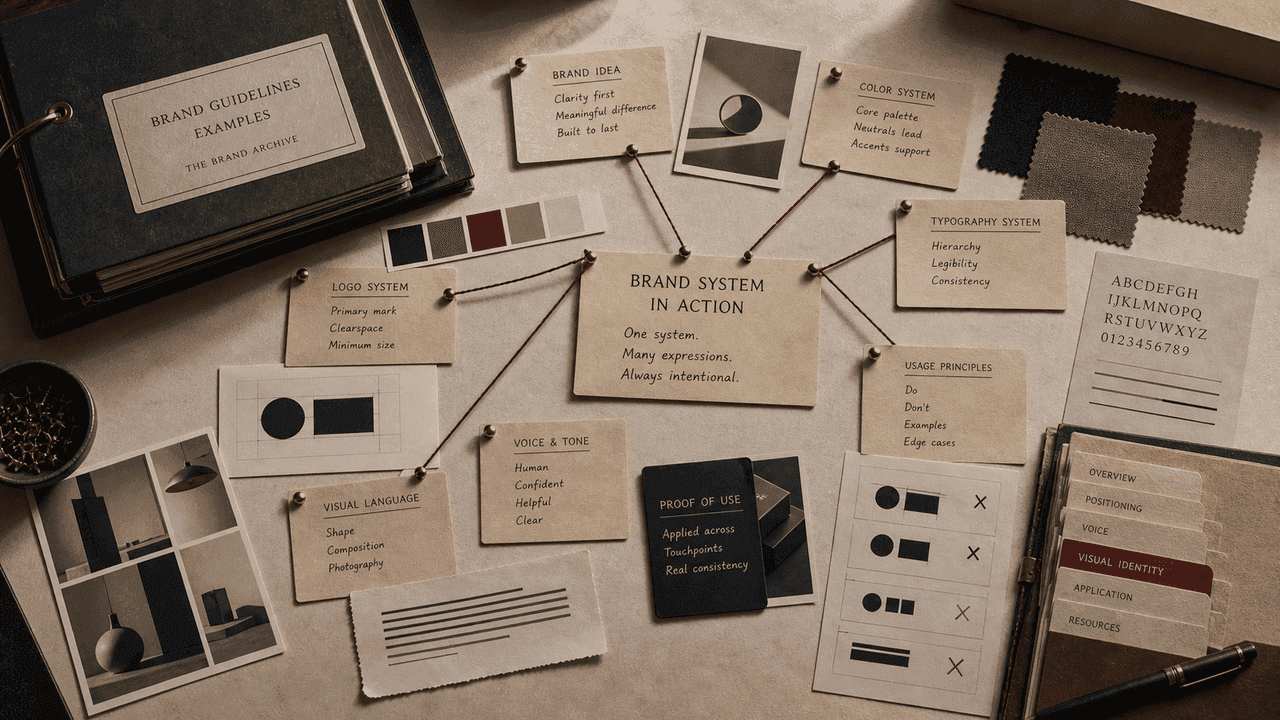
Brand guideline materials laid out for review across print, digital, and packaging surfaces.
Guidelines work when the next person can make the right thing without inventing a second brand.
01

What brand guidelines must control.

Brand guidelines are usage rules.They turn the identity into decisions other people can apply without damaging recognition.
They should cover surfaces, not only assets.A logo rule means little until it is tested in a header, package, app icon, deck, search result, and partner placement.
The real test is prevention.If the guide cannot stop unreadable color, distorted marks, vague claims, off-voice replies, or fake proof, it is not finished.
02

What useful brand guidelines include.

Build the guide around failure points, not around decoration.

Area
Rule to define
Surface to test
Common failure
Logo and wordmark
Clear space, minimum size, color versions, lockups
Header, avatar, package, deck, partner page
Stretched mark or fake lockup
Color
Primary cue, accents, backgrounds, functional states
Buttons, labels, charts, packaging, dark mode
Mood color replacing role color
Typography
Scale, hierarchy, case, spacing, fallback
Homepage, product UI, proposal, mobile
Big type with no reading system
Voice
Sentence behavior, proof style, forbidden tone
Support, search, sales, social, policies
Every channel sounds like a different company
Imagery
Subject, crop, light, proof standard, no-use examples
Hero, product, case study, article, social
Generic stock doing the brand's job
Proof language
Claims allowed, claims banned, evidence needed
CTA, promise, comparison, guarantee, FAQ
Confident adjectives with no backing
03

Examples to study.

Use examples to understand the mechanism, not to copy the surface.

Rolex

Rolex

Guidelines must preserve the crown, serif authority, and precision cues at small size.

Tiffany & Co.

Tiffany & Co.

The color system needs strict ownership because the box is a recognition asset.

FedEx

FedEx

The wordmark must preserve spacing and arrow recognition across vehicles, labels, and digital tracking.

McDonald's

McDonald's

Distance recognition depends on color, arches, sign scale, and repeated service surfaces.

04

Where to check it.

A brand decision is not real until it survives the places buyers actually meet it.

Surface
What to check
Search
Does title, description, favicon, and name use match the approved brand?
Support
Does a recovery reply sound like the brand when the customer is frustrated?
Sales
Can a deck be made without changing type, color, or proof logic?
Product
Do brand colors avoid colliding with status, error, and success states?
Partners
Can outsiders use the mark without making a fake version?
Packaging
Does the system survive shelf distance, small print, and legal copy?
05

Where it fails.

Most failures are visible before launch if the surface is inspected.

Pretty PDF

Pretty PDF

It impresses the team but does not answer daily production questions.

No forbidden examples

No forbidden examples

People see the right version but never learn what damage looks like.

No proof rules

No proof rules

The visual system is controlled while claims drift into exaggeration.

No owner

No owner

Old assets keep circulating beside the approved system.

No accessibility check

No accessibility check

Color and type look branded but fail real reading.

No channel examples

No channel examples

Rules stay abstract, so each team invents its own translation.

06

Brand Guidelines decision checklist.

Approve when
  • A vendor can apply the guide without a meeting.
  • Every key cue has a role, boundary, and misuse example.
  • The guide covers search, support, sales, product, packaging, and partner use.
  • Claims are tied to evidence, not taste.
  • There is an owner for exceptions and updates.
Hold when
  • It is mostly moodboard pages.
  • It protects visuals but ignores voice and proof.
  • It has no small-size or accessibility testing.
  • It contains conflicting asset versions.
  • It cannot stop the mistakes already happening.
07

Use this for your brand.

Private brand work

Bring the unclear cue into private review.

If the name, color, message, mark, or page is making buyers hesitate, use private brand work before the public surface hardens.

Private reviewRequest private brand workUse this when the decision affects sales, trust, launch risk, or buyer clarity.
08