Growyourbrand.net Branding guides from Grow Your Brand June 2026
Grow Your Brand Plain brand guides for clearer words, stronger proof, and cleaner decisions.

Branding guide · Naming

Brand name types trade off clarity, memory, search, and protection.

A descriptive name can explain faster. An invented name can become more ownable. The best choice depends on category maturity, search behavior, trademark risk, and how much teaching the brand can afford.
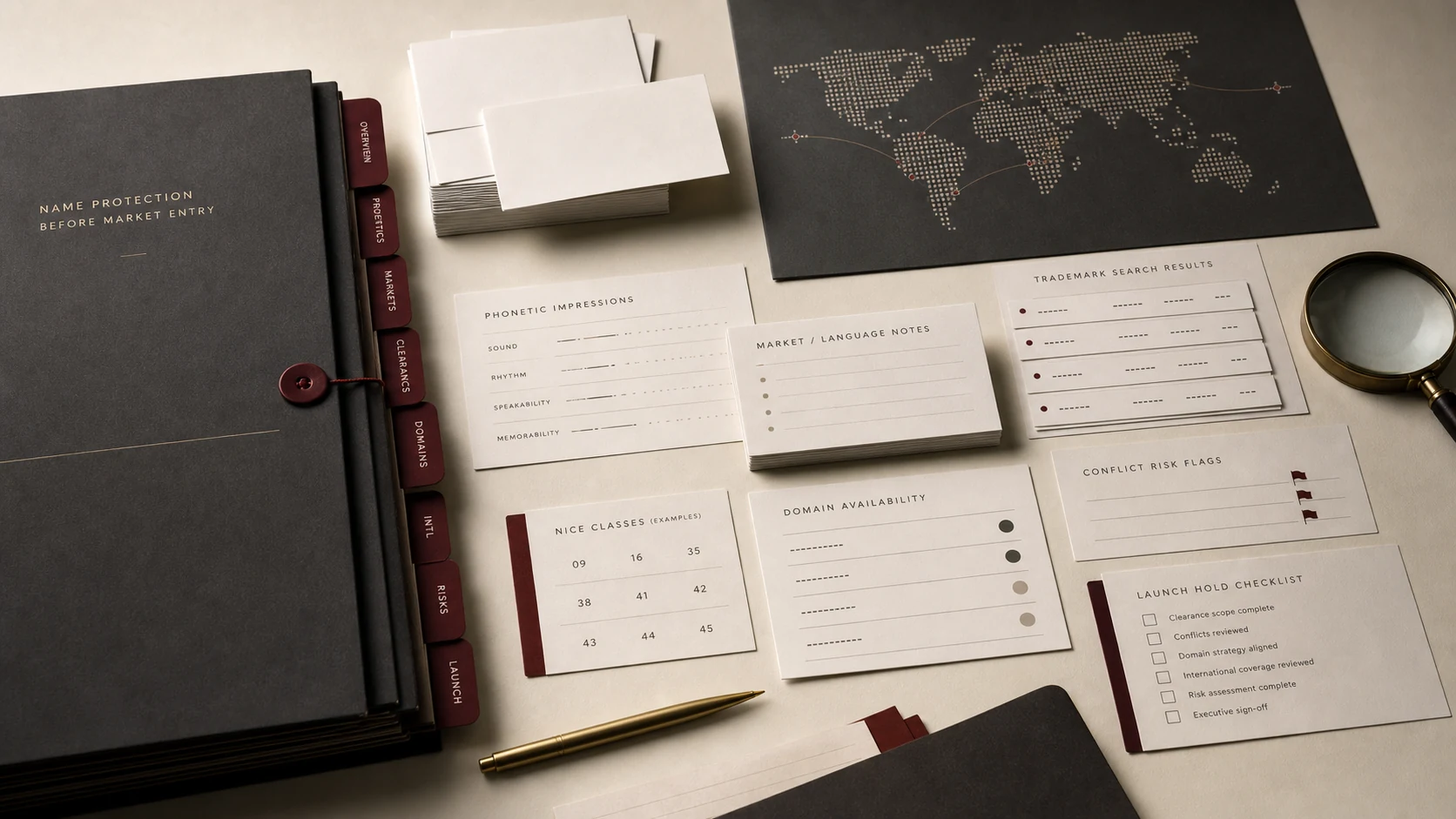
Trade clarity for ownership carefully.Clear names are easier at first but can be harder to protect.
Trade invention for teaching carefully.Invented names can be ownable but require repetition and pronunciation discipline.
Test in real sentences.A name type is weak if people cannot say it, spell it, or place it.
Brand naming system board with name types, search checks, trademark checks, and speech notes.

Brand Name Types

clarity · memory · search · protection
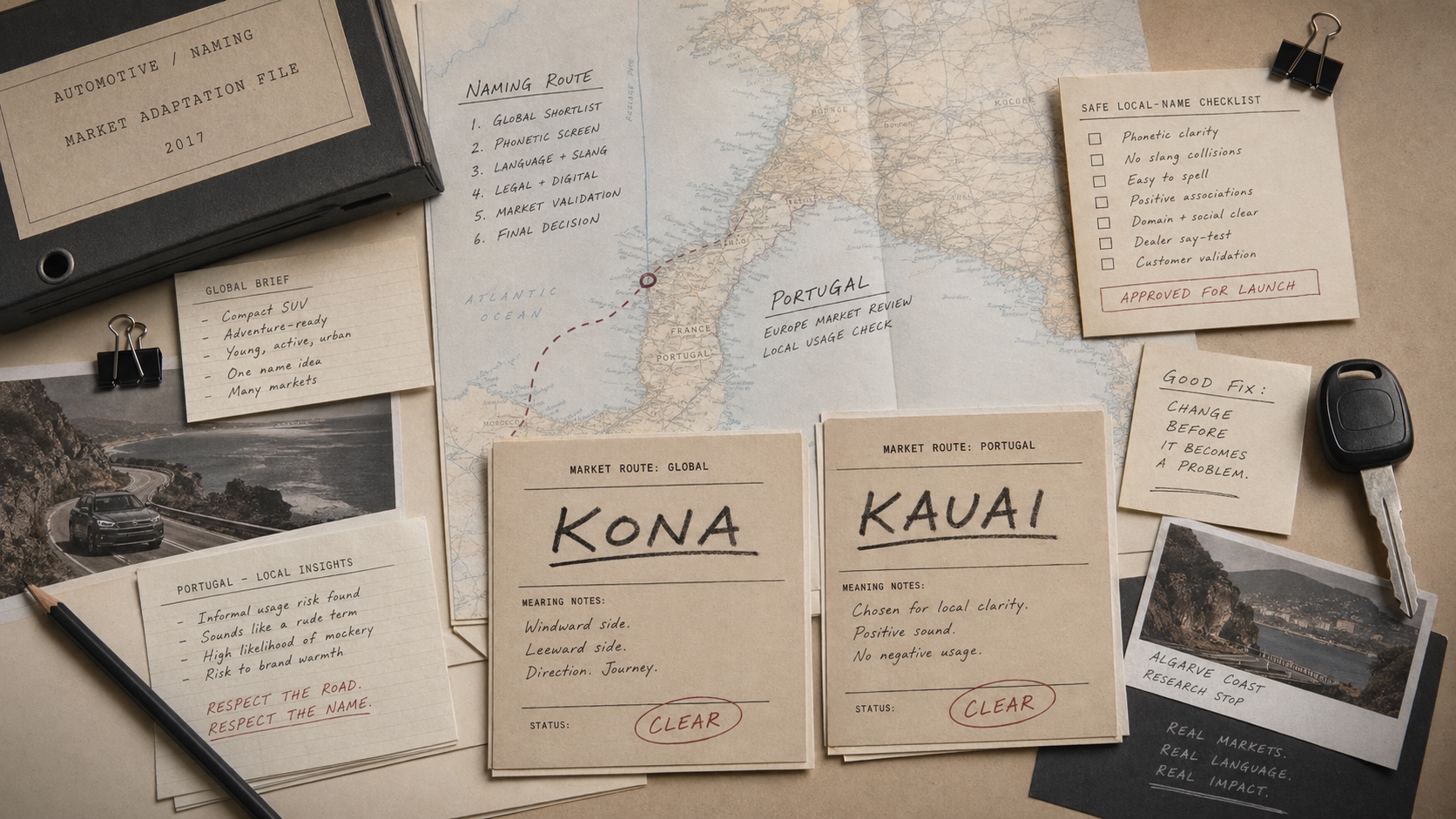
The name type is a business decision before it is a creative preference.
Market naming review board with name cards and language checks.
A name that works in one market can fail in another market or category.
01

What name type means.

A name type is the naming strategy.It decides whether the brand explains itself directly, suggests a benefit, borrows an unrelated word, invents a word, uses a person, uses a place, or compresses into letters.
Name type changes launch cost.A descriptive name needs less explanation. An invented name needs more teaching but may become more ownable.
Name type changes legal risk.Generic and descriptive names are usually weaker. Suggestive, arbitrary, and fanciful names can be stronger source cues.
02

Main brand name types.

Choose the type for the buyer situation, not for internal taste.

Type
What it does
Good use
Risk
Descriptive
Says what the product or service is
New categories, search-led offers, local services
Generic feel and weak protection
Suggestive
Hints at benefit or quality
Brands that need meaning plus distinctiveness
Vague if the category is unclear
Arbitrary
Uses a real word in an unrelated category
Brands with teaching budget and strong identity
Confusion at first contact
Fanciful
Invents a new word
High distinctiveness and long-term ownership
Pronunciation, spelling, and explanation friction
Founder
Borrows personal trust
Professional services, fashion, hospitality, expertise-led brands
Harder to scale beyond the person
Place
Borrows origin or territory
Food, hospitality, craft, tourism, heritage
Geographic limits or false provenance
Acronym
Compresses a longer name
Known institutions or technical names
Low meaning for new buyers
Compound
Combines two plain ideas
Brands that need clarity plus ownable word shape
Can become too long or literal
03

How to choose a name type.

The right type depends on what the buyer already understands.

Situation
Better default
Reason
Check
Nobody understands the category
Descriptive or suggestive
The name must lower confusion
Can you become ownable later?
The category is crowded
Suggestive, arbitrary, or fanciful
The brand needs memory and separation
Can people still place the shelf?
Search traffic matters
Descriptive plus distinctive modifier
The name should help discovery
Can the phrase rank without being generic?
Trademark strength matters
Suggestive, arbitrary, or fanciful
Stronger source cues are usually easier to defend
Does the legal review agree?
Founder trust matters
Founder or endorsed name
Personal authority is part of the sale
Can the brand grow beyond the founder?
Global use matters
Short, pronounceable, screened name
Language, sound, and conflict risks multiply
Did you test key markets?
04

Name type examples.

Use examples as pattern recognition, not as templates to copy.

Apple

Arbitrary

A common word used outside its literal category can become highly ownable when the system teaches it.

Nike

Suggestive and mythic

The name carries victory and motion without describing shoes.

FedEx

Compressed descriptive

Federal Express became a shorter delivery wordmark with speed built into the letters.

Rolex

Fanciful feel

A short invented-looking name can become a status cue through use and product proof.

IKEA

Acronym-origin

Letters become memorable when the brand repeats a strong color, word shape, and retail system.

Tiffany & Co.

Founder-led

The name carries store, service, and ritual associations over time.

Lufthansa

Place and institution

The name carries national and aviation associations.

Mastercard

Descriptive compound

The name describes the category role while the circles create a visual asset.

05

Name type checklist.

Choose descriptive when
  • The category is unfamiliar.
  • Search discovery matters early.
  • The offer needs immediate clarity.
  • You can add a distinctive modifier.
  • Legal review accepts the risk.
Choose invented or arbitrary when
  • The brand can afford to teach meaning.
  • Long-term distinctiveness matters.
  • Trademark strength matters.
  • The identity system can carry category cues.
  • Pronunciation and spelling pass real tests.
06

Use this for your brand.

Private brand work

Bring the cue problem to a real decision.

If your name, color, message, mark, or page is making buyers hesitate, use Private brand work before the public surface hardens.

Hire usRequest Private brand workUse this when the decision affects sales, trust, launch, rebrand risk, or buyer clarity.
07