Stick after one clean meeting
Shorter is not always better. The real test is whether people can recall it accurately.
Branding guide · Naming
A name has to work after the sound. It has to survive search, speech, trademark review, domains, packaging, sales calls, and the moment a buyer repeats it to someone else.
memory · search · category · protection

A good name carries more than taste. It has to work when people are distracted.
Shorter is not always better. The real test is whether people can recall it accurately.
Pronunciation matters in sales calls, referrals, podcasts, stores, and support.
The buyer should not have to fight spelling variants, generic words, or unrelated results.
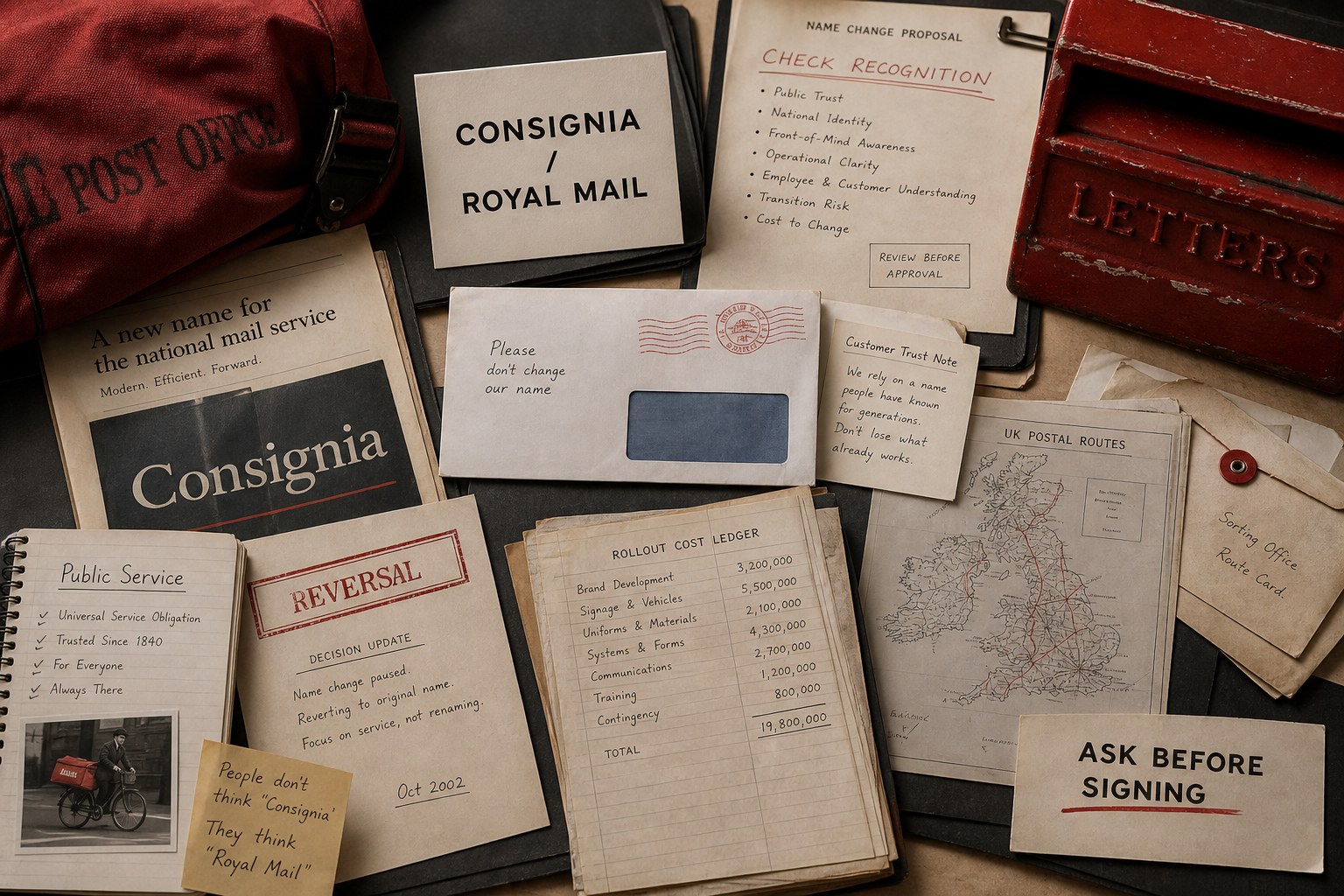
Trademark, territory, category, and conflict checks belong before public rollout.
No naming type is automatically stronger. The right one depends on category, proof, and buying behavior.
Weak names usually create hidden costs. The team spends years correcting, explaining, spelling, or defending them.
The buyer cannot tell whether this is software, apparel, a service, a place, or a product.
Common words, awkward spelling, or unrelated meanings make search harder.
A name that feels risky to say will not travel cleanly through referrals.
A local meaning, sound, or existing name can damage rollout.
Legal review comes after design work, and the name has to be changed under pressure.
The name explains the team's process, not the buyer's situation.