Brand System / Airline / Premium service / 1946-present
Cathay Pacific and the Hong Kong Hub System Behind Asia Miles
Cathay Pacific connects Hong Kong hub memory, Asia Miles, lounge access, cabin service, and recovery behavior into a premium travel system.

Short Answer
Cathay Pacific and the Hong Kong Hub System Behind Asia Miles is a brand system case about Cathay Pacific in 1946-present. Cathay Pacific made the account, the lounge, and the Hong Kong handoff reinforce the same travel memory. Airline brands are judged between flights as much as during flights. Cathay Pacific shows how a hub, a loyalty account, lounges, cabin classes, and service recovery can keep the customer oriented after the ticket is bought.
Key Takeaways
- Cathay traces the company to 24 September 1946 and says the first flight left Sydney for Hong Kong the next day.
- The airline ties 1998 to the move from Kai Tak to Chek Lap Kok and the creation of oneworld.
- Cathay's membership page frames Asia Miles as a currency for flights, hotels, shopping, dining, wellness, and more through 800+ travel and lifestyle partners.
- The Hong Kong lounge page makes Hong Kong International Airport part of the service system, rather than a transfer point on the side.
- The 2018 Asia Miles update shows why loyalty rules are a trust surface: earning, redemption access, and flexibility all changed together.
- The operator lesson is to make the next trip easier to understand before the current trip is over.
The Decision Context
An airline sells a seat, then has to make the sequence around it legible. Cathay Pacific's sequence starts with Hong Kong, then moves through route planning, cabin class, lounge access, miles, partner rewards, and recovery after something goes wrong.
That makes the case useful beyond aviation. The brand memory sits in the handoff from flight to account to next trip.
Hong Kong Made The System Specific
Cathay's own history page says the company was established on 24 September 1946 and took off on its first flight from Sydney to Hong Kong one day later.
The same history ties 1998 to Chek Lap Kok and oneworld. Those facts keep Hong Kong from becoming generic headquarters copy. They make the hub part of the brand's memory.
Asia Miles Made Loyalty Accountable
The membership page describes Asia Miles as something members can earn and redeem across flights, hotels, shopping, dining, wellness, and more, with over 800 travel and lifestyle partners.
That account logic matters because loyalty rules are judged like service rules. Cathay's 2018 Asia Miles update said customers would earn more miles on 80% of tickets and gain 20% or more access to redemption seats. The numbers made the account feel active, not decorative.
The Lounge Made Transit Visible
Cathay's Hong Kong lounge page names Hong Kong International Airport as the airline's travel hub and lists The Deck, The Pier, The Bridge, and The Wing across business and first-class lounge surfaces.
Furniture is the small part. The brand work is that waiting, transfer, access, food, shower, rest, and status all become part of the trip. A premium airline loses authority when transit feels unmanaged.
Recovery Keeps The System Honest
A hub-and-account system becomes fragile when disruption breaks the sequence. Rebooking, redemption access, lounge eligibility, status recognition, baggage support, and follow-up all get judged together.
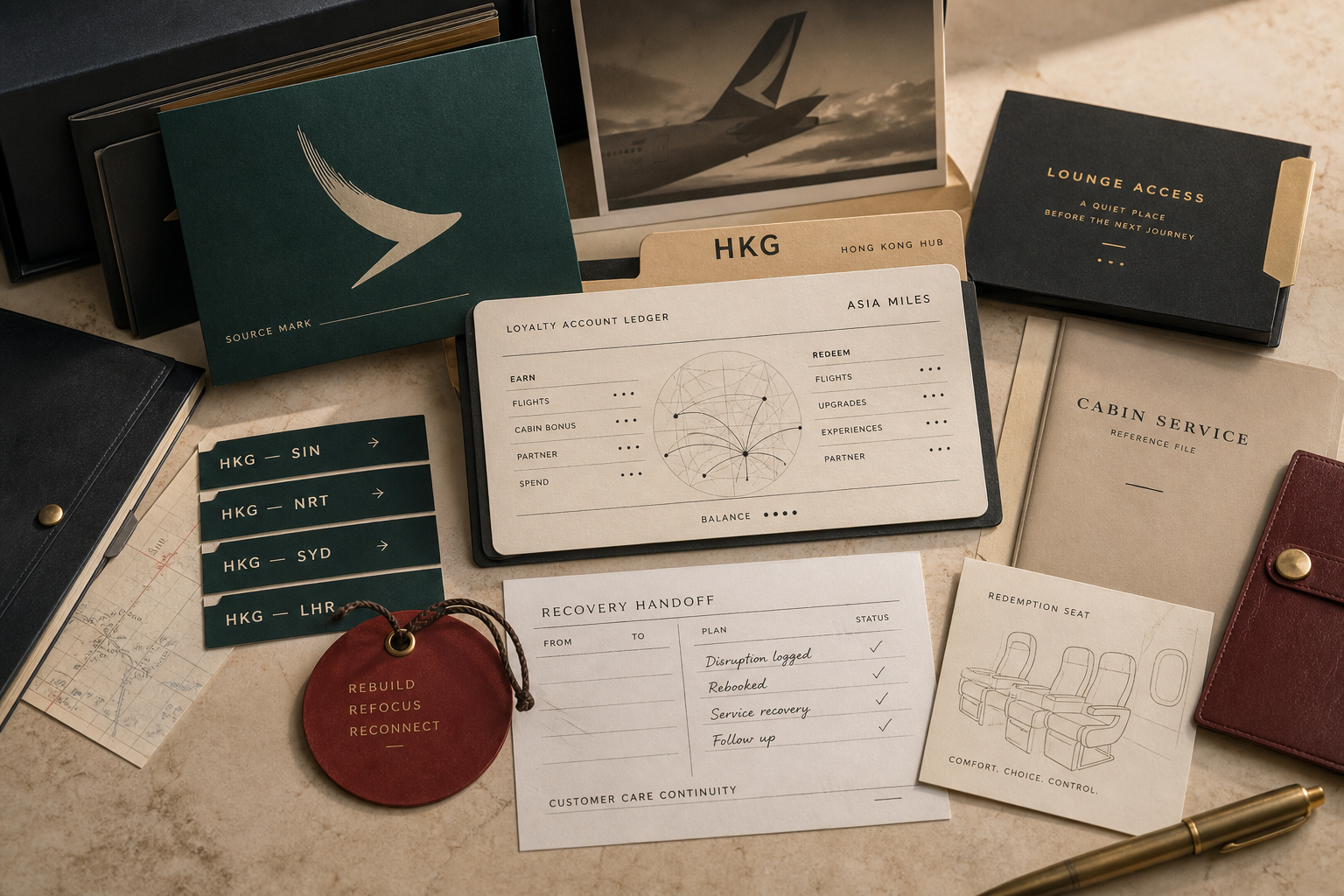
That is why the visual uses a recovery handoff sheet beside the Asia Miles ledger. The loyalty system only works if the customer still knows what happens next.
The Archive Reading
Cathay Pacific belongs in the low-represented Hong Kong lane because it turns a place into a repeat journey system.
For operators, the lesson is direct: treat loyalty and service as one customer-readable system. The customer reads them together. The best brand system is the one that keeps the next move visible.
Comparable Cases
Sources

People Also Ask
What happened to Cathay Pacific?
Cathay Pacific and the Hong Kong Hub System Behind Asia Miles is a brand system case about Cathay Pacific in 1946-present. Cathay Pacific made the account, the lounge, and the Hong Kong handoff reinforce the same travel memory. Airline brands are judged between flights as much as during flights. Cathay Pacific shows how a hub, a loyalty account, lounges, cabin classes, and service recovery can keep the customer oriented after the ticket is bought.
Why is Cathay Pacific a brand system case?
Cathay Pacific is filed as a brand system case because the visible consequence sits in that decision pattern. Cathay Pacific made the account, the lounge, and the Hong Kong handoff reinforce the same travel memory.
What can brands learn from Cathay Pacific?
Airline brands are judged between flights as much as during flights. Cathay Pacific shows how a hub, a loyalty account, lounges, cabin classes, and service recovery can keep the customer oriented after the ticket is bought.
Is Cathay Pacific still operating?
The Brand Archive marks Cathay Pacific as Active / continuing. That means the brand, company, platform, product system, or parent organization is still operating, continuing, or being actively resolved.
What should Cathay Pacific be compared with?
Compare Cathay Pacific with Singapore Airlines, Qatar Airways, Air France to see the same decision pattern from nearby cases.