Growyourbrand.net Reference notes on brand consequence May 2026
The Brand Archive

Trust System / Banking / Wealth / Commercial banking / 1933-present

Hang Seng Bank and the Local Banking System Behind The Green Mark

Hang Seng Bank made a Hong Kong local-bank promise legible through branches, deposits, wealth, SME banking, digital access, index memory, and HSBC group backing.

Source mark Hang Seng Bank logo
Archive visual Premium AI-generated archive-table still-life for the Hang Seng Bank case with Hong Kong skyline, green source-card folder, blank bank card, mobile banking screen, wealth folder, commercial banking file, trade cash-management book, Hang Seng Indexes card, and branch network map
Hang Seng Bank source mark paired with The Brand Archive high-end AI-generated Hong Kong local-banking visual.

Short Answer

Hang Seng Bank and the Local Banking System Behind The Green Mark is a trust system case about Hang Seng Bank in 1933-present. Hang Seng shows how a local bank can make trust visible before the buyer reads a product page. Bank buyers do not buy a logo. They buy proof that money, access, service, and risk control will work when needed. Hang Seng shows how branch memory, deposit scale, digital access, wealth advice, SME services, and market-index recognition can make one local promise easier to trust.

Key Takeaways

  • Hang Seng Bank says it was founded in 1933.
  • Its bank-profile page calls Hang Seng the leading local bank in Hong Kong and says it serves nearly four million customers.
  • The same profile says Hang Seng has more than 250 Hong Kong service outlets and an award-winning mobile app.
  • The bank names Retail Banking and Wealth, Commercial Banking, Insurance Manufacturing and Asset Management, and Markets and Securities Services as core activities.
  • Hang Seng Indexes Company Limited connects the bank name to Hong Kong and Mainland China market-index memory.
  • HSBC says its privatisation of Hang Seng became effective on 26 January 2026, with shares delisted on 27 January 2026, while Hang Seng remains its own bank, brand, branch network, and customer proposition.

The Decision Context

Hang Seng Bank is the next open Hong Kong slot because it is not just another finance logo. It is a local-bank trust case.

The useful question for a buyer is simple: why would a person, family, investor, or small business trust this bank with repeated financial decisions? Hang Seng answers through local presence, daily access, wealth services, commercial banking, index memory, and group ownership.

Local Banking Is The Product

Hang Seng's bank-profile page says the bank was founded in 1933. It describes Hang Seng as Hong Kong's leading local bank and says the bank serves nearly four million customers.

That local claim matters because banking is judged through ordinary repetition. A customer sees the branch, the card, the app, the deposit account, the adviser, the SME loan conversation, and the market update. The brand has to make those surfaces feel like one institution.

The Branch Network Makes Trust Physical

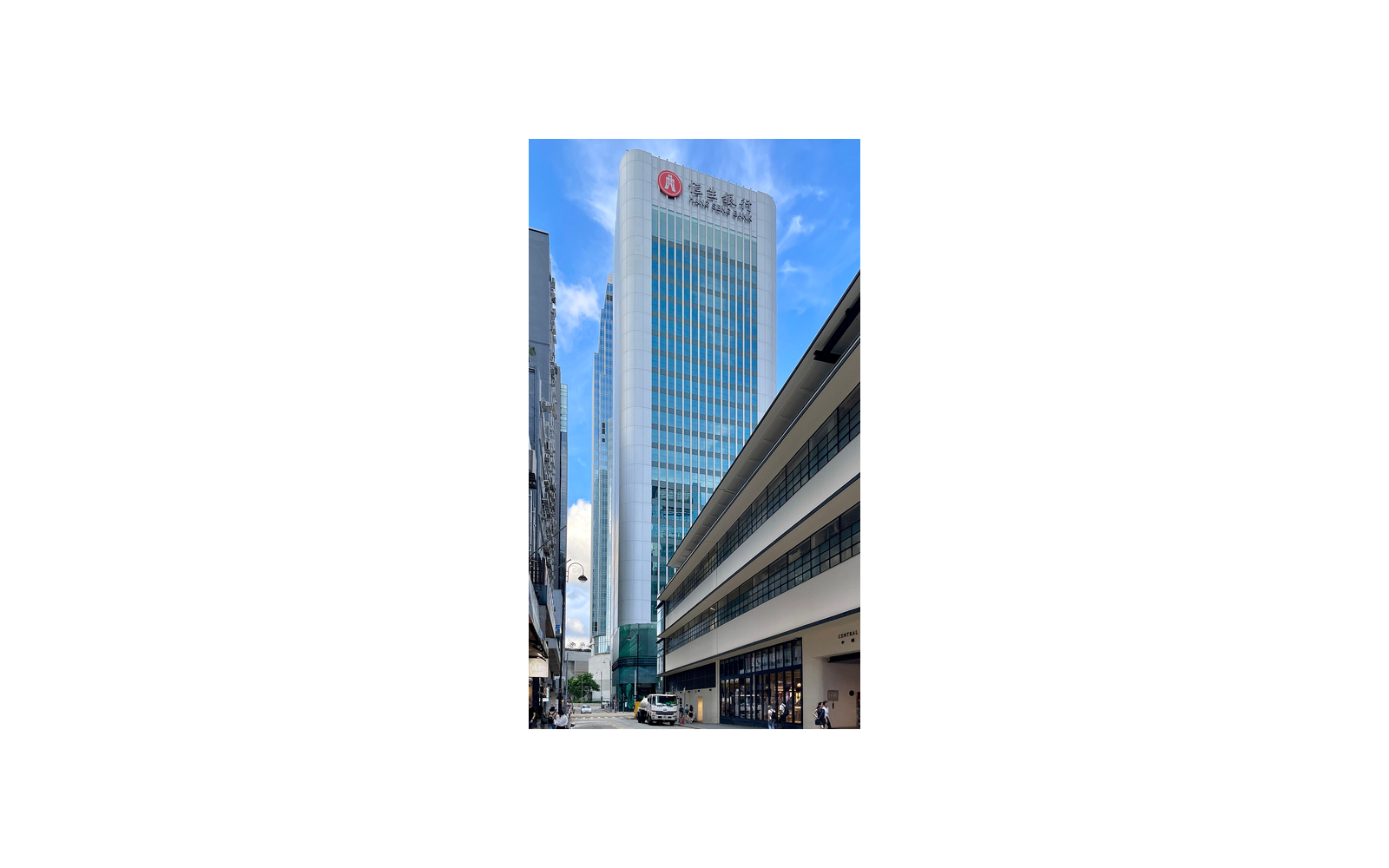
The same profile says Hang Seng has more than 250 service outlets in Hong Kong and an award-winning mobile app. That combination is the modern local-bank problem in one sentence: be physically present and digitally usable at the same time.

For operators, the lesson is not to choose between old trust and new access. In financial services, the buyer wants both. The branch proves the institution is close. The app proves the institution is available.

The Offer Stack Made The Mark Useful

Hang Seng names Retail Banking and Wealth, Commercial Banking, Insurance Manufacturing and Asset Management, and Markets and Securities Services as core activities. Its 2025 annual report describes Retail Banking and Wealth around current and savings accounts, time deposits, mortgage and personal loans, credit cards, insurance distribution, investments, and wealth options.

The same annual-report segment note describes Commercial Banking as serving corporate, institutional, commercial, and SME clients through lending, trade and receivable finance, transaction banking, cash management, foreign exchange, insurance distribution, investment services, and corporate wealth management.

Indexes Turned The Name Into Market Memory

The bank-profile page says Hang Seng Indexes Company Limited is a wholly owned subsidiary and a leading provider of stock market indexes for Hong Kong and Mainland China markets.

That gives the brand a second kind of memory. Hang Seng is not only a bank name on a branch sign. It is also a market-reference name that appears in financial news, investor dashboards, product names, and daily market language.

The Balance Sheet Makes The Promise Boring

The 2025 annual report says customer deposits increased to HK$1,283 billion at 31 December 2025, and the advances-to-deposits ratio was 61.4%. Those details are not flashy brand copy. That is why they matter.

A bank brand should make the buyer a little bored in the right way. Deposits, ratios, risk control, documents, and service continuity are the operating proof behind a calm public mark.

The HSBC Move Shows What Must Stay Legible

HSBC says its privatisation of Hang Seng became effective on 26 January 2026, and Hang Seng Bank shares were delisted from the Hong Kong Stock Exchange on 27 January 2026. HSBC also says Hang Seng is now a wholly owned subsidiary of HSBC Asia Pacific and the HSBC Group.

That ownership change would be a brand risk if it erased the local promise. HSBC's own investor page says Hang Seng remains its own bank with its own governance, brand, branch network, and customer proposition. The commercial lesson is direct: group backing can help only if the customer still recognizes the institution they trusted.

The Archive Reading

Hang Seng belongs in the archive because it shows the practical mechanics of local financial trust. The mark works when the buyer can connect it to service outlets, digital access, deposits, wealth advice, business banking, market indexes, and continuity.

For operators, the lesson is to make the trust system visible. A brand that handles risk, money, health, legal stakes, or enterprise decisions cannot rely on warmth alone. It has to show the buyer where access lives, where proof lives, and what will remain stable when the ownership or market context changes.

Comparable Cases

Sources

  1. Hang Seng Bank, Bank Profile
  2. Hang Seng Bank, Annual Report 2025
  3. HSBC, HSBC completes privatisation of Hang Seng Bank
  4. Hang Seng Bank official SVG logo asset

People Also Ask

What happened to Hang Seng Bank?

Hang Seng Bank and the Local Banking System Behind The Green Mark is a trust system case about Hang Seng Bank in 1933-present. Hang Seng shows how a local bank can make trust visible before the buyer reads a product page. Bank buyers do not buy a logo. They buy proof that money, access, service, and risk control will work when needed. Hang Seng shows how branch memory, deposit scale, digital access, wealth advice, SME services, and market-index recognition can make one local promise easier to trust.

Why is Hang Seng Bank a trust system case?

Hang Seng Bank is filed as a trust system case because the visible consequence sits in that decision pattern. Hang Seng shows how a local bank can make trust visible before the buyer reads a product page.

What can brands learn from Hang Seng Bank?

Bank buyers do not buy a logo. They buy proof that money, access, service, and risk control will work when needed. Hang Seng shows how branch memory, deposit scale, digital access, wealth advice, SME services, and market-index recognition can make one local promise easier to trust.

Is Hang Seng Bank still operating?

The Brand Archive marks Hang Seng Bank as Active / continuing. That means the brand, company, platform, product system, or parent organization is still operating, continuing, or being actively resolved.

What should Hang Seng Bank be compared with?

Compare Hang Seng Bank with HSBC, TD, AIA to see the same decision pattern from nearby cases.