Failure / Department store / fashion retail / 1826-2021 / revived online asset
Lord & Taylor and the Department Store Name That Outlived the Store
Lord & Taylor carried nearly two centuries of New York department-store memory, then lost the store system that gave the name its public proof while the brand asset moved into online relaunch attempts.

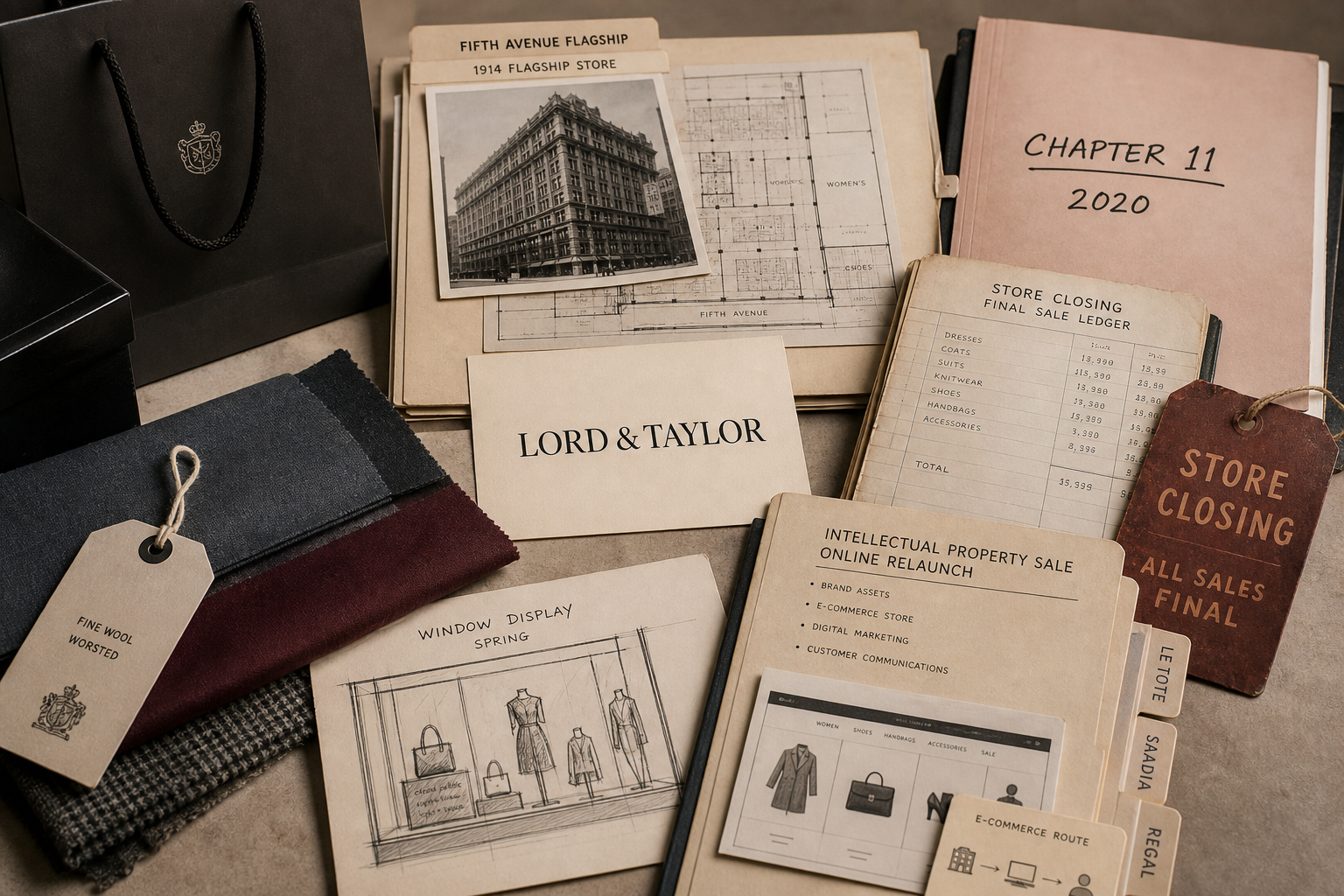
Short Answer
Lord & Taylor and the Department Store Name That Outlived the Store is a failure case about Lord & Taylor in 1826-2021 / revived online asset. A department-store name can survive as intellectual property after the store trip, flagship memory, service behavior, and assortment system stop carrying the brand in public. Heritage is not the same as an operating route. If customers can remember the name but no longer know where the brand fits in the buying trip, the name becomes an asset file before it becomes a live retailer again.
Key Takeaways
- Lord & Taylor began in New York in 1826 and built rare department-store memory around fashion retail, service, windows, and the Fifth Avenue flagship.
- The Fifth Avenue store sale and 2019 closing made the loss of physical retail proof visible before the full chain collapse.
- Le Tote and Lord & Taylor filed for Chapter 11 protection in 2020, and the physical department-store chain did not continue in the old form.
- The name later moved through digital and ownership relaunch paths, including the current online store.
- The operator lesson is that heritage needs a current buying route. Memory cannot replace store proof, assortment proof, service proof, and customer habit.
Status Note
Lord & Taylor belongs in Failed Brands because the physical department-store chain that gave the name its public meaning no longer operates in the old form. The brand can still appear online and under later ownership. That is a revived asset path, not proof that the old store system survived.
That distinction is the case. The name did not disappear. The public retail machine behind the name did.
The Store Memory
Lord & Taylor had a rare kind of retail memory because it joined age, New York origin, fashion authority, service, seasonal windows, and Fifth Avenue presence. A shopper did not need a technical explanation of the brand. The store itself explained it.
That kind of memory is powerful, but it is also physical. It depends on doors, floors, displays, people, fit, returns, merchandise judgment, and repeat visits. Once those parts weaken, the name starts carrying more work than a name can carry.
The Flagship Signal
The Fifth Avenue flagship sale made the structural problem visible. The building had been a brand object and a store address. When the flagship closed in 2019, Lord & Taylor lost a public proof surface that had helped make the brand feel institutional.
A flagship cannot save a weak operating model by itself, but losing it changes the customer read. The brand becomes easier to remember than to visit.
What Bankruptcy Changed
The 2020 Chapter 11 filing turned a long retail decline into a terminal operating file. The pandemic mattered, but the archive reading should not reduce the case to timing. The chain was already carrying the burden of department-store traffic pressure, changed shopping paths, real estate strain, and an ownership experiment that had little time to work.
Once the stores disappeared, the brand shifted from retail system to brand asset. An online relaunch can sell products under the name, but it has to rebuild the customer reason from a much thinner set of proof surfaces.
The Archive Reading
Lord & Taylor is useful because it separates heritage from route. A name can be old, loved, and still commercially unclear. The customer has to know what job the brand performs now.
For operators, the warning is plain. Do not treat a remembered name as a current business model. If the store trip is gone, the replacement route has to earn its own proof before nostalgia runs out.
Comparable Cases
Sources
- Lord & Taylor official online store, current live site
- Axios, Lord & Taylor files for bankruptcy, August 3, 2020
- Business Wire, HBC closes sale of Lord & Taylor Fifth Avenue building, February 11, 2019
- New York Post, Lord & Taylor comeback under new owner, December 14, 2024
- Editorial Lord and Taylor source-mark treatment

People Also Ask
What happened to Lord & Taylor?
Lord & Taylor and the Department Store Name That Outlived the Store is a failure case about Lord & Taylor in 1826-2021 / revived online asset. A department-store name can survive as intellectual property after the store trip, flagship memory, service behavior, and assortment system stop carrying the brand in public. Heritage is not the same as an operating route. If customers can remember the name but no longer know where the brand fits in the buying trip, the name becomes an asset file before it becomes a live retailer again.
Why is Lord & Taylor a failure case?
Lord & Taylor is filed as a failure case because the visible consequence sits in that decision pattern. A department-store name can survive as intellectual property after the store trip, flagship memory, service behavior, and assortment system stop carrying the brand in public.
What can brands learn from Lord & Taylor?
Heritage is not the same as an operating route. If customers can remember the name but no longer know where the brand fits in the buying trip, the name becomes an asset file before it becomes a live retailer again.
Is Lord & Taylor still operating?
The Brand Archive marks Lord & Taylor as Failed physical chain / revived online brand asset. That means the original company or core public business no longer operates in the form that made the brand famous, or the case has reached a terminal failed-brand status.
What should Lord & Taylor be compared with?
Compare Lord & Taylor with Barneys New York, Sears, Kmart to see the same decision pattern from nearby cases.