Patagonia · Grow Your Brand · Purpose-governance signal · United States / active private company
Patagonia
Patagonia: strange fabric beginnings and clothes worth repairing. The unlikely material behind early fleece, the practical repair help behind Worn Wear, and a backpack prototype measured with sand.
Positioning, name, and architecture.
Patagonia uses one outdoor masterbrand across technical apparel, repair, resale, activism, and environmental funding. The system works because the public promise is tied to operating and ownership choices.
Purpose is tied to product life, repair, environmental funding, legal form, and ownership.
Patagonia positions outdoor product as equipment that should last, be repaired, and fund environmental action after the sale.
Patagonia chose the name in 1973 for a new clothing line. The southern South American region and the founders' Fitz Roy trip gave the word remoteness, weather, and exploration without tying it to climbing hardware.
We're in business to save our home planet.
standalone operating brand with purpose-governance owners
Patagonia remains a for-profit operating brand. The Patagonia Purpose Trust protects voting control while Holdfast Collective receives the economic value of nonvoting stock.
Makes product durability visible through repair, trade-in, used gear, and care guidance.
service line: Repair and product-life extension source
Connects customers with grassroots environmental organizations and campaigns.
activism platform: Grassroots environmental action source
Separates voting control from economic ownership and directs excess profits to environmental work.
governance layer: Patagonia Purpose Trust / Holdfast Collective source
Extends the environmental position into food products and agricultural sourcing.
food and sourcing line: Regenerative and responsibly sourced food source
Naming and tagline progression
Build the best product, cause no unnecessary harm, use business to inspire and implement solutions to the environmental crisis.
Don't Buy This Jacket
We're in business to save our home planet.
Market and scale snapshot.
Patagonia does not publish audited revenue or earnings. The honest scale signals are its disclosed store footprint, global operations, and unusual voting and economic ownership split.
Patagonia does not publish audited company revenue. Third-party estimates are excluded.
Patagonia does not publish audited company earnings.
Patagonia reports more than 100 stores worldwide and offices in seven named countries.
The Patagonia Purpose Trust holds 2% and all voting stock; Holdfast Collective holds 98% and all nonvoting stock.
Color system.
Black and white keep the wordmark technical. The Fitz Roy bands add sunset and landscape memory without turning every product into a loud brand surface.
How the palette behaves
Black makes the wordmark feel like equipment labeling rather than fashion ornament.
Warm orange recalls sunset light and adds energy to the skyline bands.
Muted green and earth neutrals connect the identity to outdoor terrain and product materials.
Recognition assets.
The Fitz Roy skyline, black wordmark, mountain color bands, product labels, repair patches, and worn gear make the brand recognizable before the purpose statement is read.
The mountain profile makes a place name visible and links the wordmark to climbing history.
Shells, fleece, packs, and workwear carry the signal through function and repeated product forms.
A repaired garment proves more about durability than another sustainability claim on a new product.
Scores.
Recognition and trust are high. The harder score is proof pressure because an apparel company that asks buyers to consume less must keep showing what changes in product life, sourcing, repair, and control.
The skyline, wordmark, and product label travel well across gear and stores.
Repair, giving, legal form, and ownership provide visible proof.
The price signal holds when durability and repair support it.
A buy-less position makes product life and repair performance central.
The operating company and ownership structure are clear once the Trust and Collective roles are separated.
Patagonia helped define purpose-led technical outdoor branding.
The core mark is stable while product graphics and colorways stay varied.
Contradictions in sourcing, growth, activism, or trademark behavior hit the stated purpose quickly.
How the logo changed.
The identity moves from the registered mountain symbol to the combined skyline-and-wordmark lockup and then to the standalone wordmark used today.
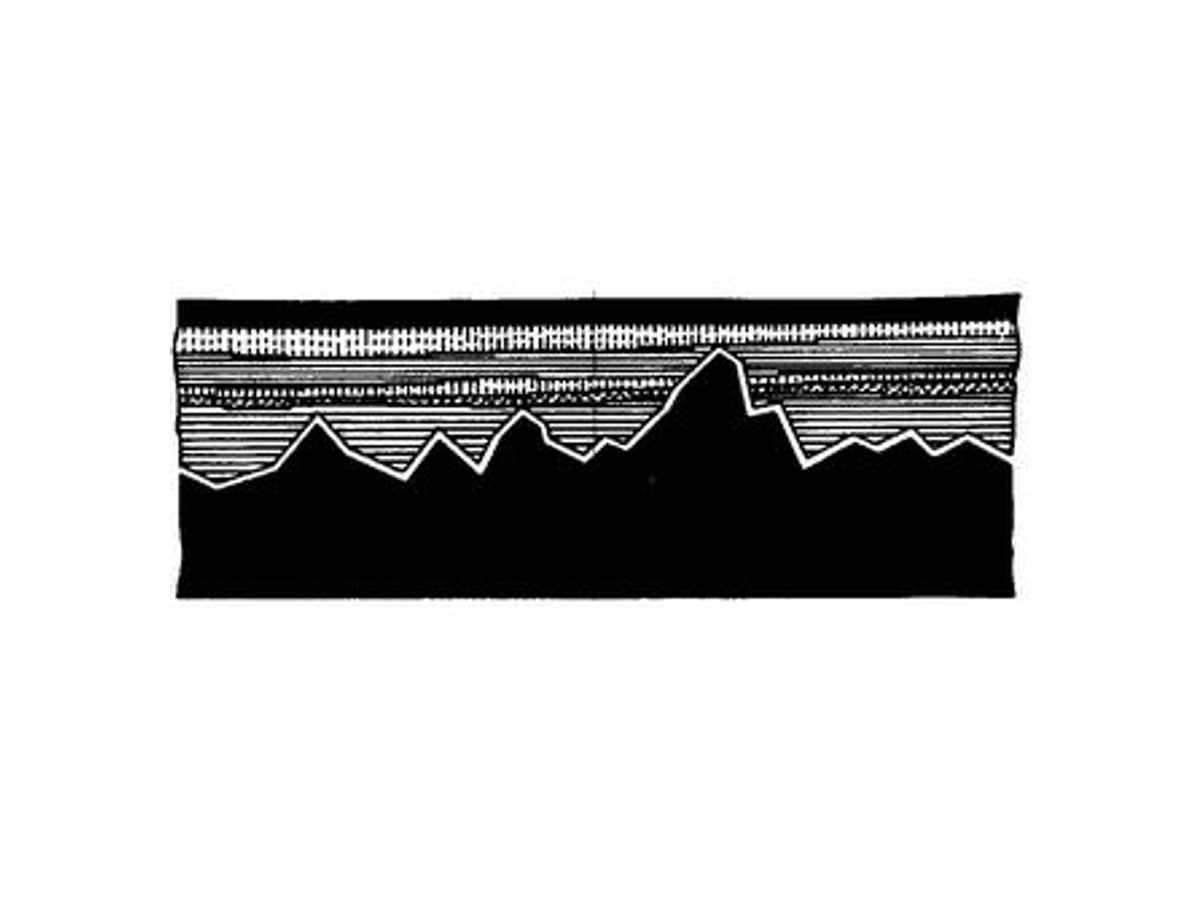
The registered mountain-landscape drawing turns the place name into a portable outdoor symbol. source
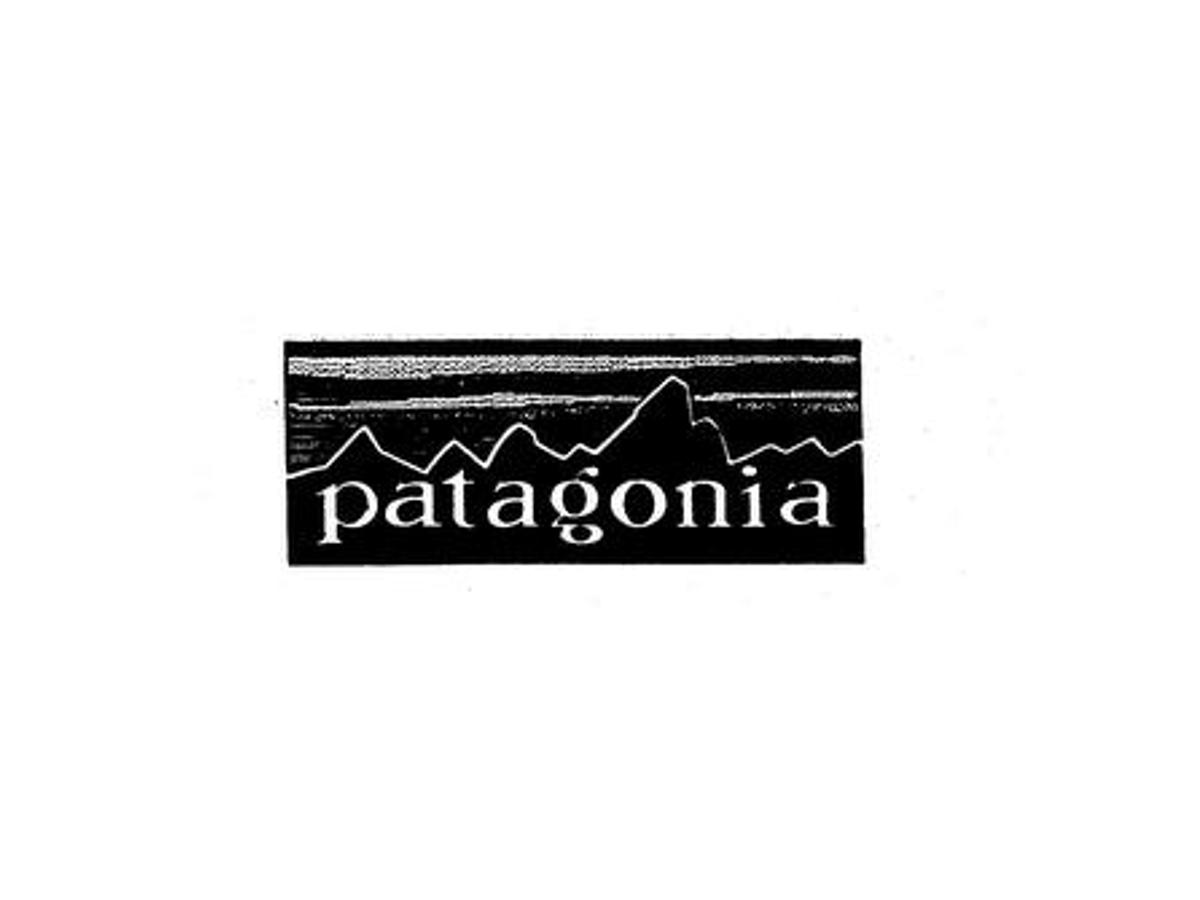
The skyline and wordmark combine into the durable masterbrand lockup. source
The standalone wordmark carries the current masterbrand across Patagonia's official site.
Product and service lineage.
Patagonia's signal gains force when product design, repair, giving, activism, and ownership point in the same direction.
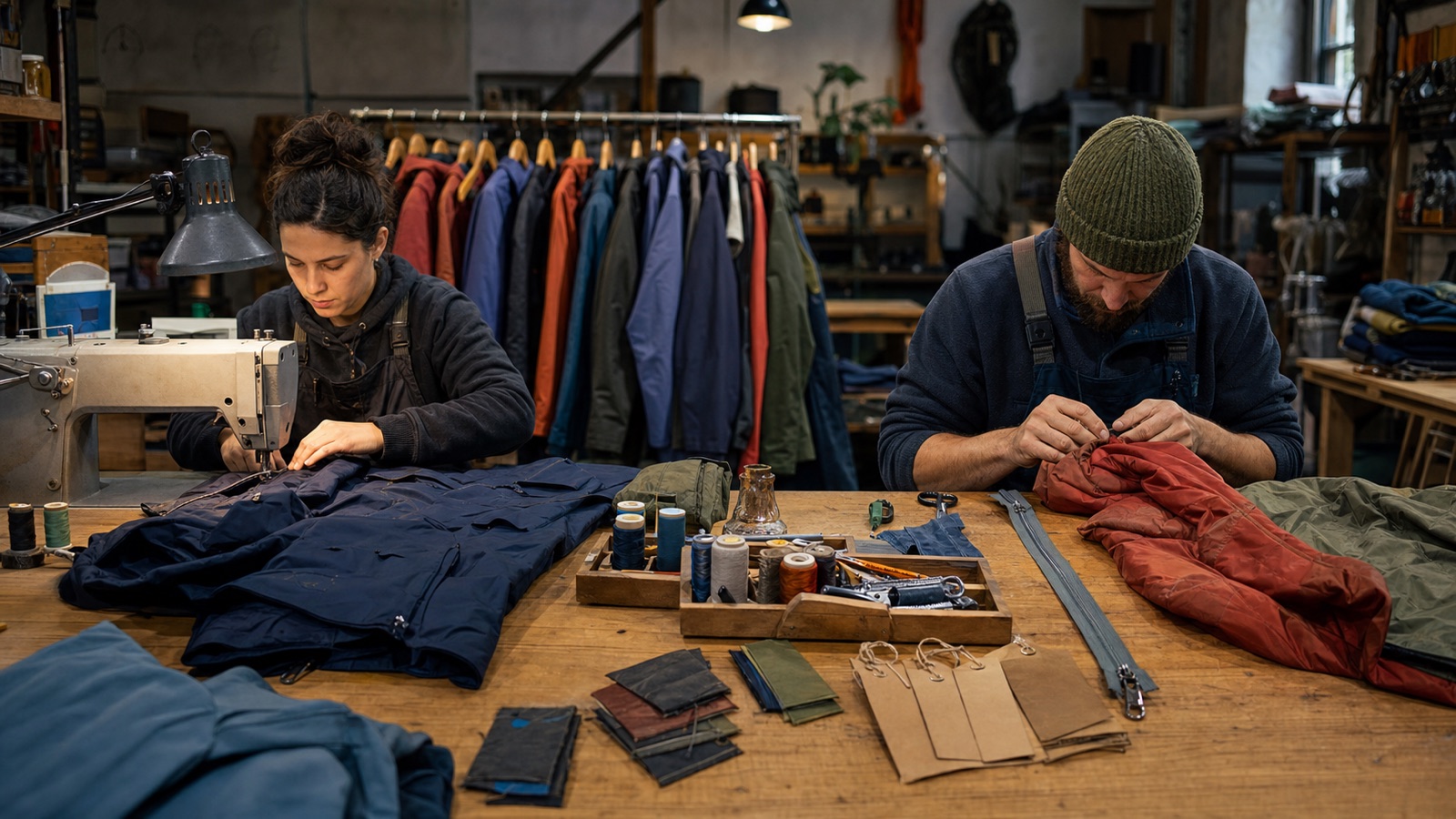
Repair makes durability inspectable
Worn Wear turns the afterlife of a garment into a service, not a slogan.
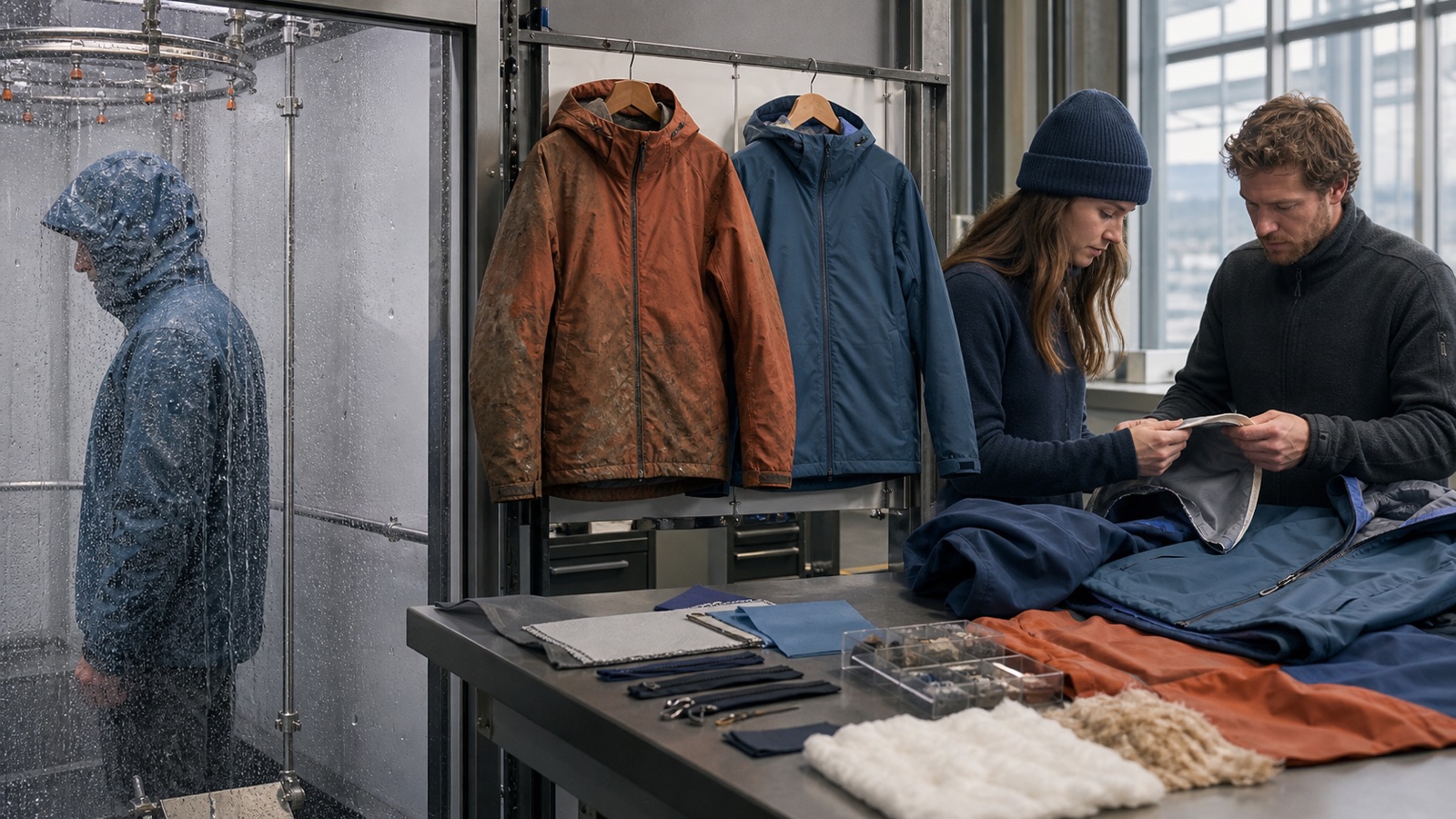
Product use carries the price signal
Technical performance and long use have to support the premium before the purpose story can.
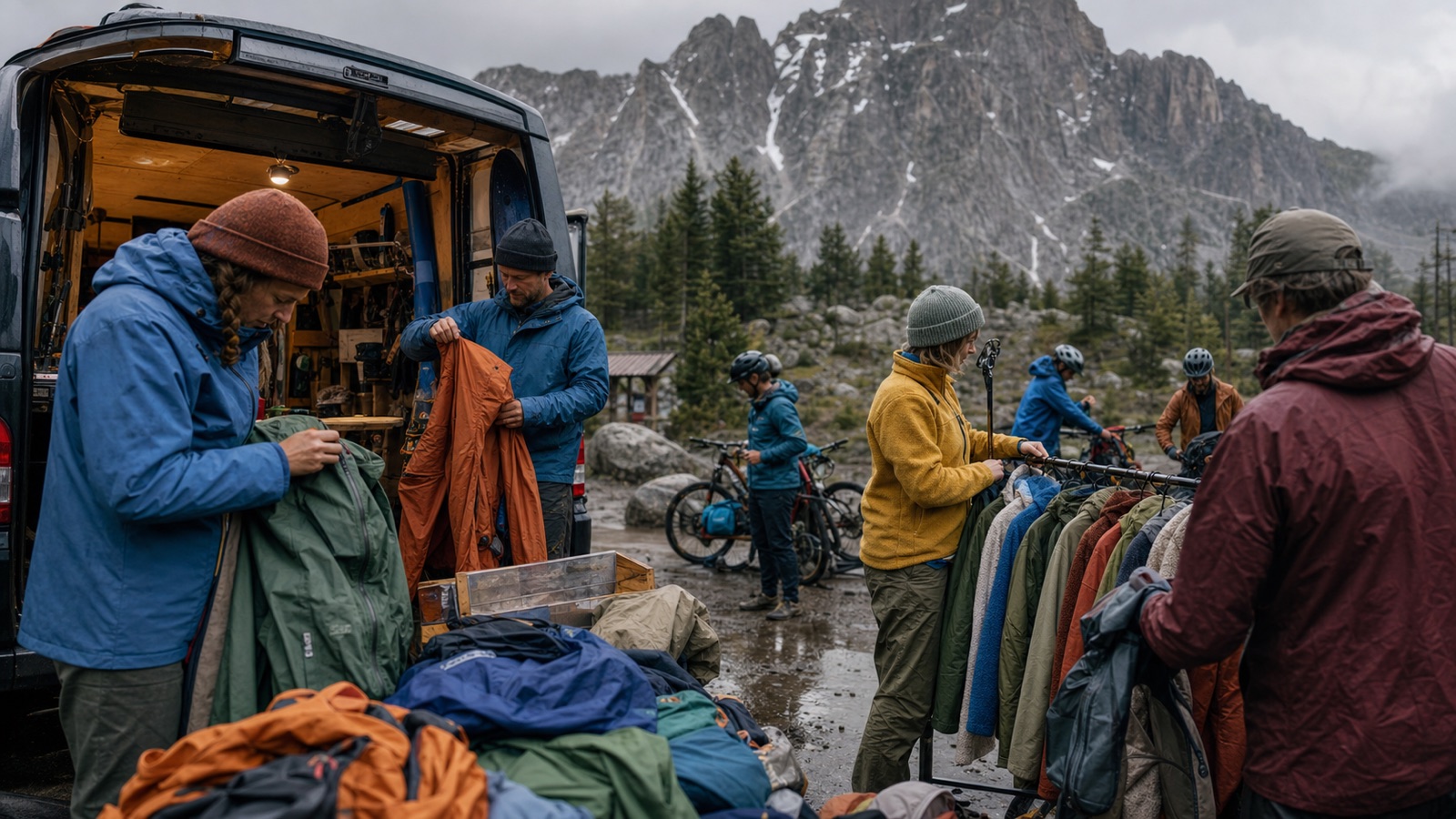
Worn gear is part of the identity
Patina, repair, and resale let the brand value continued use instead of perfect newness.
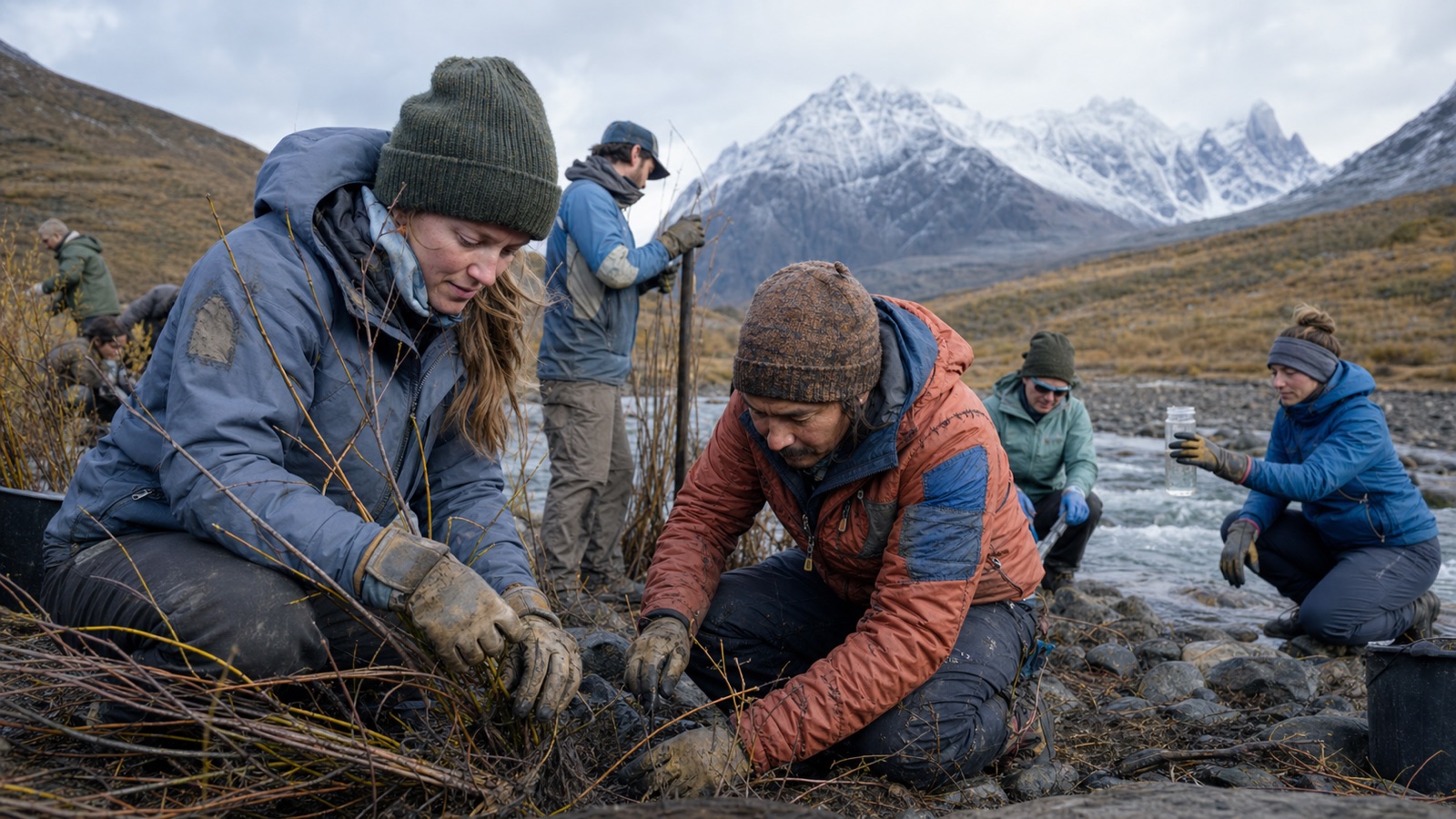
Ownership sends value back to the cause
The purpose becomes structural when governance and non-reinvested profit support environmental work.
Product and service system
Chouinard's climbing hardware business moves from pitons toward clean-climbing chocks when repeated hammering damages rock.
Patagonia launches as a separate clothing name.
Patagonia begins pledging 1% of sales to environmental work.
The cotton line moves to organic cotton.
Don't Buy This Jacket, B Corp certification, and Worn Wear put consumption, governance, and repair under one brand.
Purpose Trust voting control and Holdfast Collective ownership move the environmental promise into control and economic value.
Turning points.
Patagonia gains authority when it accepts a real constraint. The same clarity raises the cost of contradictions.
Patagonia's predecessor reduced piton sales when the product damaged rock.
The 2011 Black Friday ad put consumption tension in public.
The 2022 transfer split voting and economic ownership.
The Pattie Gonia case created backlash around how an activist brand protects its name.
Public reaction.
Patagonia receives unusual trust for its environmental commitments, but that trust makes disputes and operating gaps more visible.
Worn Wear, 1% giving, benefit-corporation rules, and the ownership structure let people inspect where the purpose claim lives.
Patagonia filed its complaint on 21 January 2026. Pattie Gonia announced it on 27 May, and the timing near Pride Month helped trigger backlash before the filing timeline was widely understood.
Full timeline.
Chouinard Equipment reduces the piton business and promotes clean-climbing chocks.
The Patagonia clothing name begins.
Don't Buy This Jacket runs on Black Friday and Patagonia becomes a certified B Corporation.
Patagonia changes its purpose statement to We're in business to save our home planet.
Ownership transfers to Patagonia Purpose Trust and Holdfast Collective.
Patagonia's trademark complaint against Pattie Gonia becomes public and triggers backlash.
Steal / avoid.
- Put purpose into a customer service people can use.
- Make governance support the promise before a leadership change tests it.
- Let product life and repair carry more weight than campaign language.
- Do not copy anti-consumption language without a repair and durability system.
- Do not use private-company estimates as audited financial proof.
- Do not assume an activist identity protects the brand from criticism when legal enforcement begins.
Short answer.
Patagonia's brand signal is the Fitz Roy skyline backed by a purpose system people can inspect. The useful lesson is that purpose becomes credible when it changes product design, repair, giving, legal form, ownership, and the way a company handles public pressure.
Frequently asked questions
Can Patagonia help repair a jacket instead of replacing it?
Patagonia provides a repair-request route as well as instructions for fixes such as patching insulation, replacing a zipper slider, repairing a buckle and mending a button. Start with the specific fault: some jobs can be done at home, while others need a repair assessment. Individual owners' turnaround stories are useful experiences, but they are not a promise of what your repair will cost or how long it will take.
Did Patagonia fleece really begin with toilet-seat-cover fabric?
That unlikely material is part of Patagonia's own history. Malinda Chouinard found polyester fabric intended for toilet-seat covers in Los Angeles. Yvon Chouinard and seamstress Val Franco worked it into a clothing prototype; Patagonia later collaborated with Malden Mills on better polyester pile. It was unused fabric intended for that purpose, not old bathroom covers turned into jackets.
Why is there sand in Patagonia's early backpack story?
It was a way to measure capacity. Patagonia's company-history photograph shows Yvon Chouinard and Tom Frost working on a pack prototype in 1973. The caption explains that Frost filled the pack with sand, then emptied it into a measurable container to find out how much it held.
Who owns Patagonia?
The Patagonia Purpose Trust owns 2% and all voting stock. Holdfast Collective owns 98% and all nonvoting stock.
Does Patagonia publish revenue or profit?
No audited company revenue or earnings are publicly disclosed, so this card does not use third-party estimates.
Need help with your own brand?
Use Private brand work when your name, identity, proof, or message needs a sharper branding decision.
Sources.
Use the education shelf for the concepts behind this brand page.
Private brand workUse this when the decision belongs to your own brand.
All brandsReturn to every brand page.
- Patagonia: Earth is now our only shareholder
- Patagonia company history
- Patagonia name origin story
- Patagonia owned and operated facilities
- Patagonia 2026 modern slavery disclosure
- Patagonia Worn Wear repairs
- Patagonia Don't Buy This Jacket
- AP: Patagonia and Pattie Gonia trademark dispute
- Patagonia 1974 wordmark trademark record
- Patagonia 1988 skyline trademark record
- Patagonia 1990 skyline-and-wordmark record
- Patagonia Spring 2026 catalog trademark notice
- Patagonia: Can Patagonia help repair a jacket instead of replacing it?
- Patagonia: Did Patagonia fleece really begin with toilet-seat-cover fabric?